Skip to Content Facebook Feature Image

Brazil's Lula vows to veto bill that could reduce Bolsonaro's prison sentence

News

Brazil's Lula vows to veto bill that could reduce Bolsonaro's prison sentence
News

News

Brazil's Lula vows to veto bill that could reduce Bolsonaro's prison sentence

2025-12-19 01:54 Last Updated At:12-22 16:01

SAO PAULO (AP) — Brazil’s President Luiz Inácio Lula da Silva said Thursday he will veto a bill that could significantly reduce the 27-year prison sentence of former President Jair Bolsonaro, who was arrested in November for attempting a coup.

The Senate passed the bill late Wednesday, following approval by the Chamber of Deputies.

More Images
Brazilian President Luiz Inacio Lula da Silva speaks during a year-end press conference at Planalto presidential palace in Brasilia, Brazil, Thursday, Dec. 18, 2025. (AP Photo/Eraldo Peres)

Brazilian President Luiz Inacio Lula da Silva speaks during a year-end press conference at Planalto presidential palace in Brasilia, Brazil, Thursday, Dec. 18, 2025. (AP Photo/Eraldo Peres)
Brazilian President Luiz Inacio Lula da Silva speaks during a year-end press conference at Planalto presidential palace in Brasilia, Brazil, Thursday, Dec. 18, 2025. (AP Photo/Eraldo Peres)
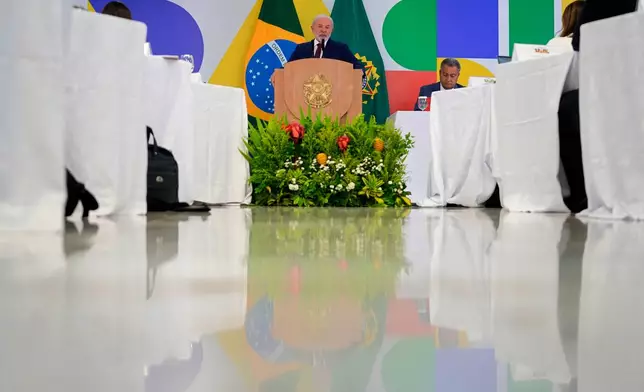
Brazilian President Luiz Inacio Lula da Silva speaks during a year-end press conference at Planalto presidential palace in Brasilia, Brazil, Thursday, Dec. 18, 2025. (AP Photo/Eraldo Peres)
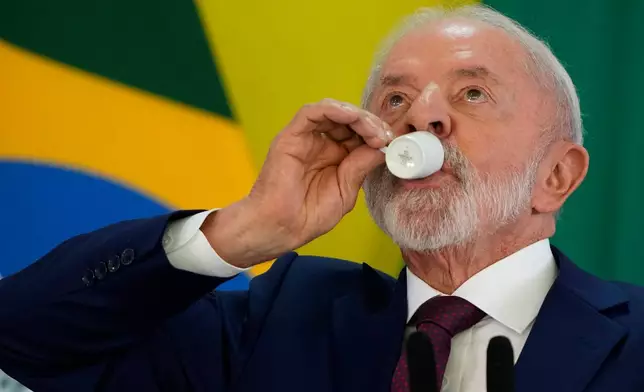
Brazilian President Luiz Inacio Lula da Silva takes a sip of coffee during a year-end press conference at Planalto presidential palace in Brasilia, Brazil, Thursday, Dec. 18, 2025. (AP Photo/Eraldo Peres)

Brazilian President Luiz Inacio Lula da Silva takes a sip of coffee during a year-end press conference at Planalto presidential palace in Brasilia, Brazil, Thursday, Dec. 18, 2025. (AP Photo/Eraldo Peres)

Brazilian President Luiz Inacio Lula da Silva speaks during a year-end press conference at Planalto presidential palace in Brasilia, Brazil, Thursday, Dec. 18, 2025. (AP Photo/Eraldo Peres)

Brazilian President Luiz Inacio Lula da Silva speaks during a year-end press conference at Planalto presidential palace in Brasilia, Brazil, Thursday, Dec. 18, 2025. (AP Photo/Eraldo Peres)

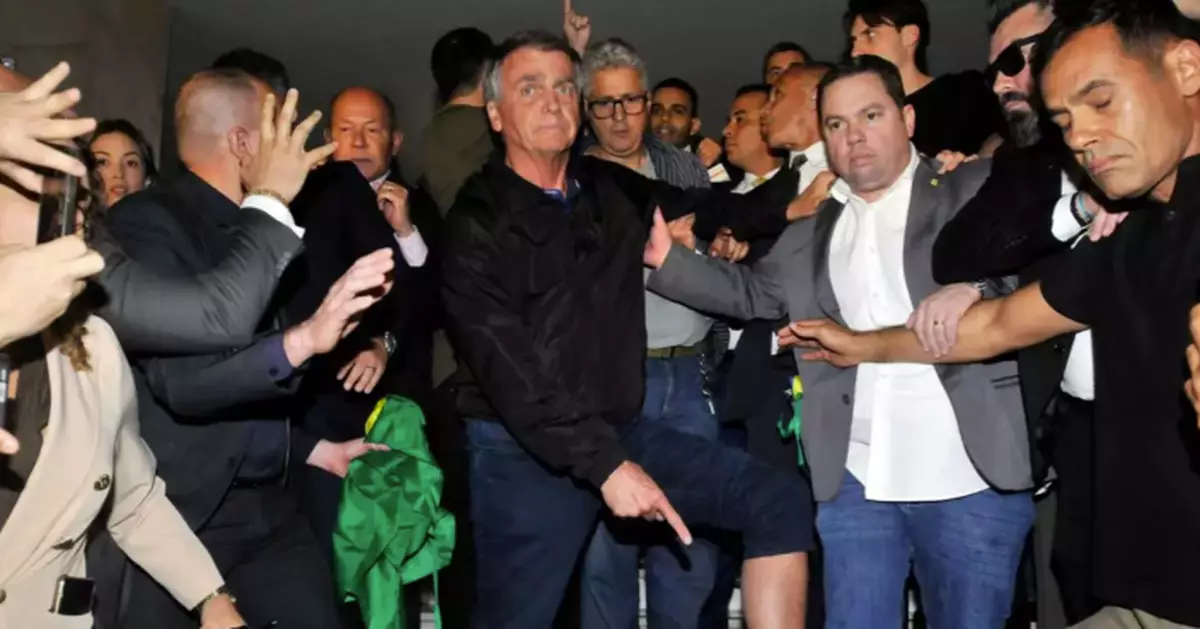
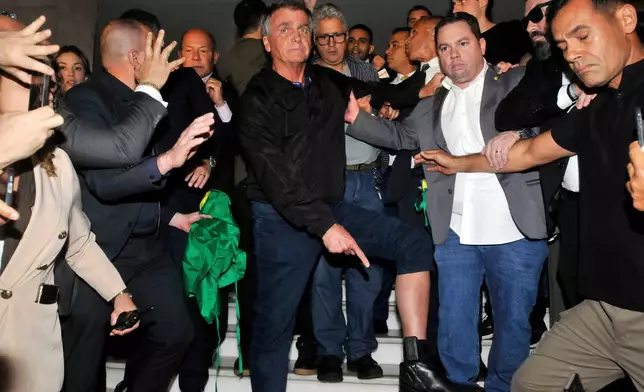
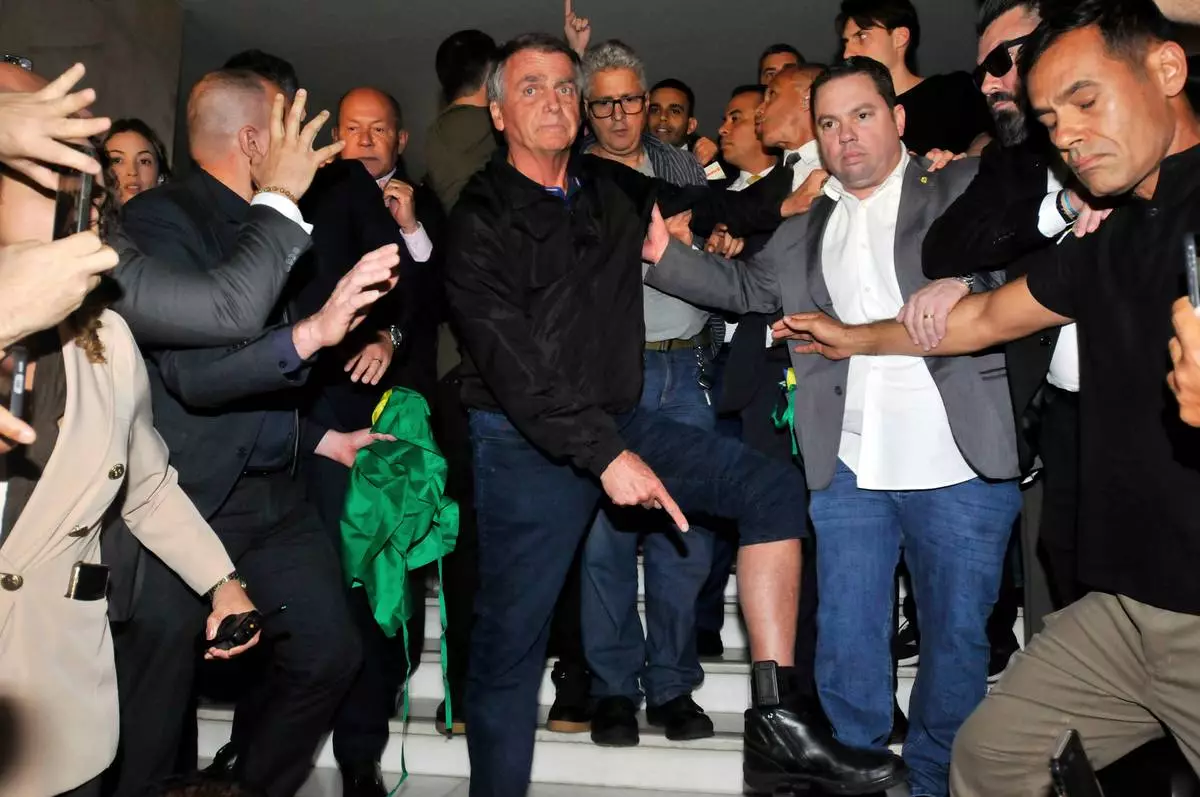
Brazil's former President Jair Bolsonaro points to his electronic ankle monitor that the Supreme Court ordered him to wear, at Congress in Brasilia, Brazil, July 21, 2025. (AP Photo/Minervino Junior, CB/D.A Press, File)

Brazil's former President Jair Bolsonaro points to his electronic ankle monitor that the Supreme Court ordered him to wear, at Congress in Brasilia, Brazil, July 21, 2025. (AP Photo/Minervino Junior, CB/D.A Press, File)

“With all due respect to the National Congress, when it reaches my desk, I will veto it," Lula told journalists in Brasilia, noting that those who committed crimes against Brazilian democracy “will have to pay for their acts.”

The text is also expected to be challenged at the Supreme Court.

The bill reduces the final sentences of defendants convicted under multiple charges stemming from the coup attempt, including Bolsonaro.

The former president’s lawyers appealed to the Supreme Court after his conviction, saying his prison term was excessive. They also argued that the sentences for abolishing the rule of law and attempting a coup should not be added because they arose from a single episode.

The proposed law would speed up sentence progression from harsher to more lenient prison regimes for those convicted.

There is no consensus on how much time Bolsonaro would actually serve if the bill takes effect. Under current rules, the former president could move to a less restrictive prison system after 7 years if he met legal requirements while incarcerated.

Paulinho da Força, the bill’s rapporteur in the Chamber of Deputies, has estimated that period could be cut to just over two years if the law passes.

The bill would also allow sentence reductions of up to two-thirds for crimes committed in a crowd, benefiting defendants convicted of storming public buildings during the Jan. 8, 2023, insurrection in Brasilia.

Under the bill, those who did not finance or lead the actions could receive reductions ranging from one-third to two-thirds.

Sen. Flávio Bolsonaro, the eldest son of the former president and a prospective presidential candidate in next year’s election, praised fellow lawmakers for approving the bill, calling it a “first step.”

“There shouldn’t even be a debate about amnesty, but about annulling the farce that the entire process was,” he said.

Sen. Bolsonaro is expected to challenge Lula, who is seeking a fourth nonconsecutive term, as the candidate of Bolsonaro’s Liberal Party in the 2026 presidential race.

On Sunday, tens of thousands of Brazilians protested against the bill. Demonstrations took place in the capital Brasilia and in other major cities across the country, including Sao Paulo, Florianopolis, Salvador and Recife.

Follow the AP’s coverage of Latin America and the Caribbean at https://apnews.com/hub/latin-america

Brazilian President Luiz Inacio Lula da Silva speaks during a year-end press conference at Planalto presidential palace in Brasilia, Brazil, Thursday, Dec. 18, 2025. (AP Photo/Eraldo Peres)

Brazilian President Luiz Inacio Lula da Silva speaks during a year-end press conference at Planalto presidential palace in Brasilia, Brazil, Thursday, Dec. 18, 2025. (AP Photo/Eraldo Peres)
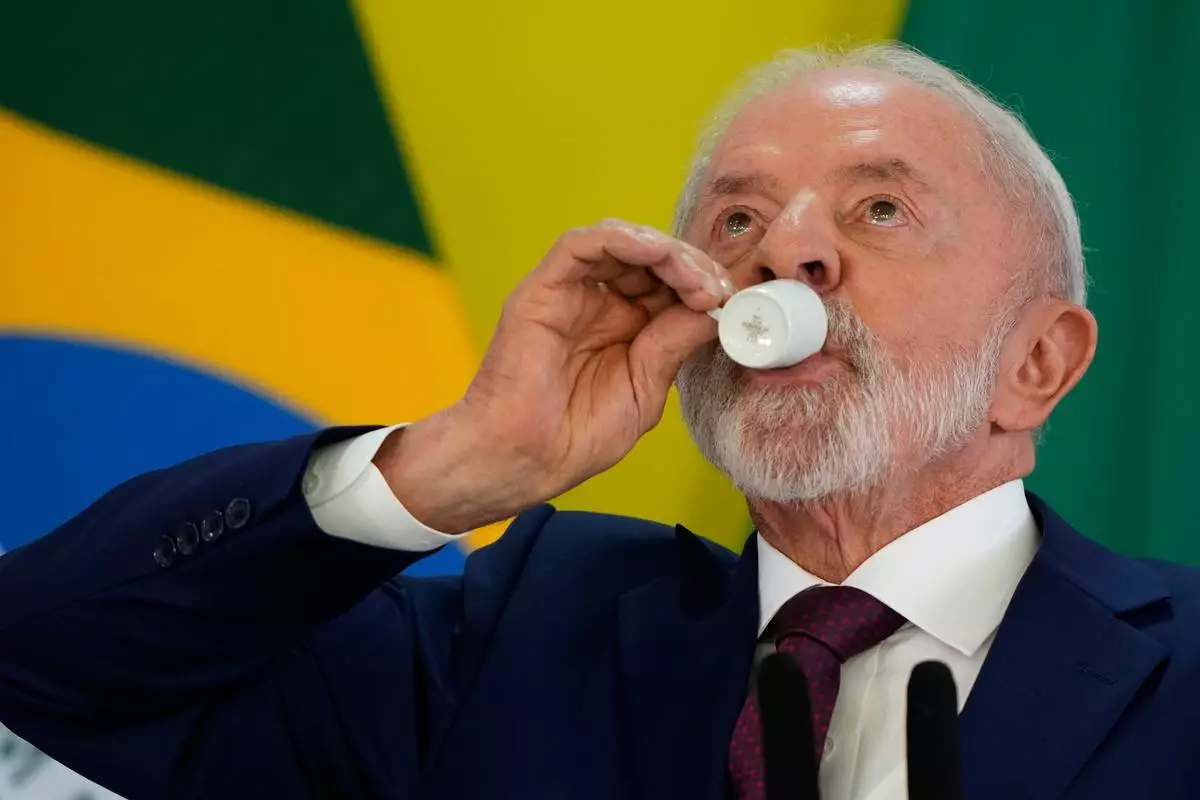
Brazilian President Luiz Inacio Lula da Silva speaks during a year-end press conference at Planalto presidential palace in Brasilia, Brazil, Thursday, Dec. 18, 2025. (AP Photo/Eraldo Peres)

Brazilian President Luiz Inacio Lula da Silva speaks during a year-end press conference at Planalto presidential palace in Brasilia, Brazil, Thursday, Dec. 18, 2025. (AP Photo/Eraldo Peres)
Brazilian President Luiz Inacio Lula da Silva takes a sip of coffee during a year-end press conference at Planalto presidential palace in Brasilia, Brazil, Thursday, Dec. 18, 2025. (AP Photo/Eraldo Peres)

Brazilian President Luiz Inacio Lula da Silva takes a sip of coffee during a year-end press conference at Planalto presidential palace in Brasilia, Brazil, Thursday, Dec. 18, 2025. (AP Photo/Eraldo Peres)

Brazilian President Luiz Inacio Lula da Silva speaks during a year-end press conference at Planalto presidential palace in Brasilia, Brazil, Thursday, Dec. 18, 2025. (AP Photo/Eraldo Peres)

Brazilian President Luiz Inacio Lula da Silva speaks during a year-end press conference at Planalto presidential palace in Brasilia, Brazil, Thursday, Dec. 18, 2025. (AP Photo/Eraldo Peres)

Brazil's former President Jair Bolsonaro points to his electronic ankle monitor that the Supreme Court ordered him to wear, at Congress in Brasilia, Brazil, July 21, 2025. (AP Photo/Minervino Junior, CB/D.A Press, File)


Brazil's former President Jair Bolsonaro points to his electronic ankle monitor that the Supreme Court ordered him to wear, at Congress in Brasilia, Brazil, July 21, 2025. (AP Photo/Minervino Junior, CB/D.A Press, File)

Dolores Huerta and the late César Chavez are both labor rights icons credited with leading a movement that pushed growers to negotiate for better wages and working conditions for farmworkers.

Their legacies are getting new attention after allegations emerged that Chavez, who died in 1993, sexually abused Huerta and other women and girls. Several celebrations honoring Chavez planned around the country for later this month have been canceled.

Chavez and Huerta co-founded the National Farm Workers Association in 1962, which became the United Farm Workers of America a few years later when it merged with the Agricultural Workers Organizing Committee.

The rise of the movement is one of the most important events in U.S. history and is the most important event in U.S. Latino history, said Paul Ortiz, a Cornell University labor history professor. United Farm Workers made the most important sustained changes in the working conditions of agricultural workers in the nation's history, he said.

Agricultural workers "from Hawaii to Florida to New York to Southern California had tried to organize to improve their wages and working conditions, literally for centuries, going back to slavery times,” Ortiz said. “And almost every effort failed, some catastrophically.”

Chavez and Huerta are credited with efforts that prompted California to pass the first state law recognizing farmworkers’ right to collective bargaining.

Both have streets and schools named after them. Several states have designated March 31, Chavez's birthday, as a day to commemorate him, and former President Barack Obama declared it a federal commemorative holiday in 2014.

Here's a look at their lives and legacies:

Chavez is known for his early organizing in the fields, a hunger strike, a grape boycott and eventual victory in getting growers to negotiate with farmworkers for better wages and working conditions.

Born in Yuma, Arizona, Chavez grew up in a Mexican American family that traveled around California picking lettuce, grapes, cotton and other seasonal crops.

Chavez protested poor pay and often-miserable working conditions. There were no toilets in the fields for workers and they had to weed fields with short-handled hoes that forced them to bend over for hours at a time.

The farmworker movement lifted worker wages, banned short-handed hoes and established state-mandated clean drinking water and restrooms in the fields, according to a National Park Service document supporting the creation of a national monument in Chavez's honor.

In 1966, he led a march that started with a few activists in Delano, California, and ended in Sacramento with 10,000 people, according to Obama's 2014 proclamation. Some 17 million people joined a boycott of grapes, which forced growers to accept some of the first farmworker contracts in history, the proclamation said.

Chavez began the first credit union for farmworkers, health clinics, daycare centers and job-training programs, the Cesar Chavez Foundation said on its website.

“He was, for his own people, a Moses figure,” then-President Bill Clinton said in 1994 when posthumously awarding Chavez the Presidential Medal of Freedom.

Chavez died the year before in California at age 66.

The labor and civil rights leader secured higher wages, health benefits, pensions and pesticide protections for farmworkers during her decades of organizing and advocacy on their behalf.

Now 95, Huerta helped organize the 1965 Delano strike of 5,000 grape workers and was the lead negotiator in the workers contract that followed, according to the National Women’s History Museum.

A single mother, Huerta gave up a stable teaching career to organize. She was jailed over 20 times for protests and seriously injured in 1988 while demonstrating. She later championed women’s rights, encouraged Latinas to run for office and founded the Dolores Huerta Foundation to combat discrimination, poverty and inequality.

She coined the iconic slogan “Sí, se puede” — meaning “Yes, we can” -- in 1972 while rallying Arizona farmworkers against a law banning boycotts and strikes. She defied claims it was impossible to organize there.

Huerta received the Presidential Medal of Freedom in 2012 and in 1993 became the first Latina inducted into the National Women’s Hall of Fame.

Associated Press writers Susan Montoya Bryan and Fernanda Figueroa contributed to this report.

A sign for SE César E Chávez Boulevard is seen on Wednesday, March 18, 2026, in Portland, Ore. (AP Photo/Jenny Kane)

A sign for SE César E Chávez Boulevard is seen on Wednesday, March 18, 2026, in Portland, Ore. (AP Photo/Jenny Kane)

FILE - United Farm Workers leader Dolores Huerta, center, leads a rally in San Francisco's Mission District on Nov. 19, 1988, along with Howard Wallace, president of the San Francisco chapter of the UFW, left, and Maria Elena Chavez, 16, the daughter of Cesar Chavez, right, as part of a national boycott of what the UFW claims is the dangerous use of pesticides on table grapes. (AP Photo/Court Mast, File)

FILE - United Farm Workers leader Dolores Huerta, center, leads a rally in San Francisco's Mission District on Nov. 19, 1988, along with Howard Wallace, president of the San Francisco chapter of the UFW, left, and Maria Elena Chavez, 16, the daughter of Cesar Chavez, right, as part of a national boycott of what the UFW claims is the dangerous use of pesticides on table grapes. (AP Photo/Court Mast, File)

Refurbished statues of Cesar Chavez and Dolores Huerta is seen at the studio of Napa artist and sculptor Mario Chiodo, Wednesday, Dec. 17, 2025. (Kent Porter/The Press Democrat)

Refurbished statues of Cesar Chavez and Dolores Huerta is seen at the studio of Napa artist and sculptor Mario Chiodo, Wednesday, Dec. 17, 2025. (Kent Porter/The Press Democrat)

Recommended Articles