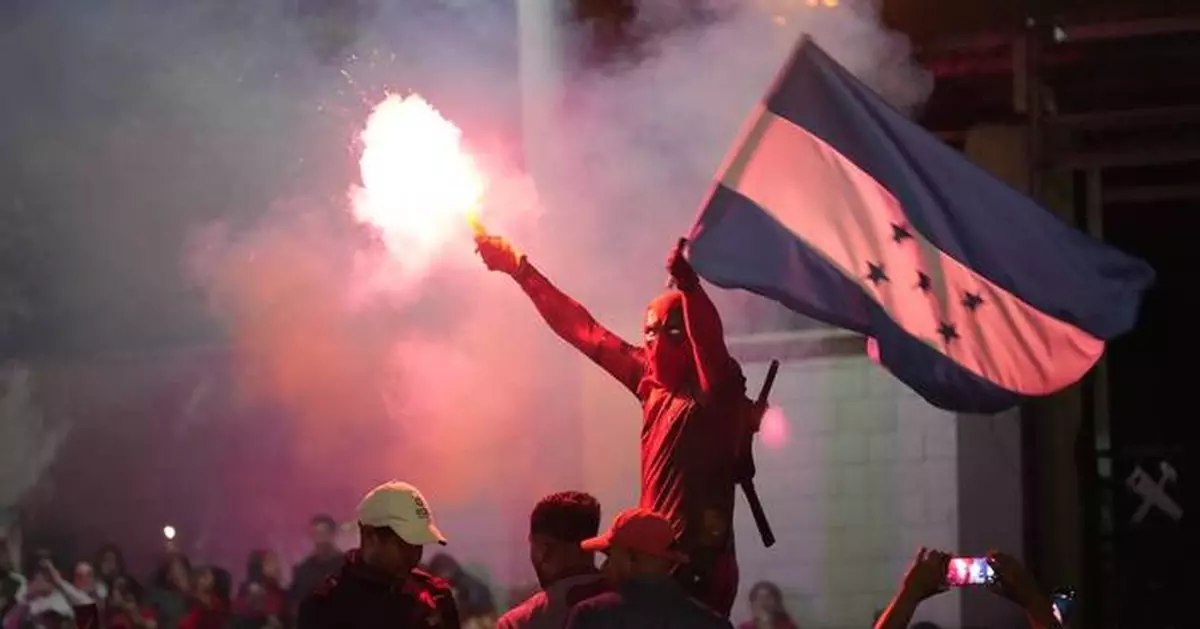
TEGUCIGALPA (AP) — Honduras electoral officials on Thursday launched a special count of the final set of votes in the country's November presidential election, after three weeks of uncertainty, swirling accusations and pressure from the Trump administration to wrap up the results.
The special count includes 2,792 ballot boxes from the Nov. 30 election. It's unclear how long it will take.
So far, electoral authorities had counted 99.80% of the ballots, but the election is marked by razor thin margins and accusations of a number of regularities, which have prompted the special count.
Ana Paola Hall, president of the National Electoral Council, said the count was being carried out in the "presence of national and international observers.”
The process had been paralyzed due to disputes over the final count, fueling wider political uncertainty and U.S. demands to wrap up vote tallies. On Wednesday night, the U.S. State Department warned Honduran electoral authorities to “immediately” finalize results and that any calls to disrupt the process would “be met with consequences.”
“The voices of 3.4 million Hondurans must be respected and upheld,” the department said on X.
The country’s two leading candidates, both conservatives, are neck-and-neck, in a clear repudiation of the country's ruling leftist President Xiomara Castro and her LIBRE, or Liberty and Re-foundation party.
Nasry Asfura, of the conservative National Party, leads with 40.54% of the vote, while Salvador Nasralla, of the also conservative Liberal Party, has 39.3%.
Rixi Moncada, who ran for the ruling progressive LIBRE, or Liberty and Re-foundation party, is in third place with 19.28% of the votes.
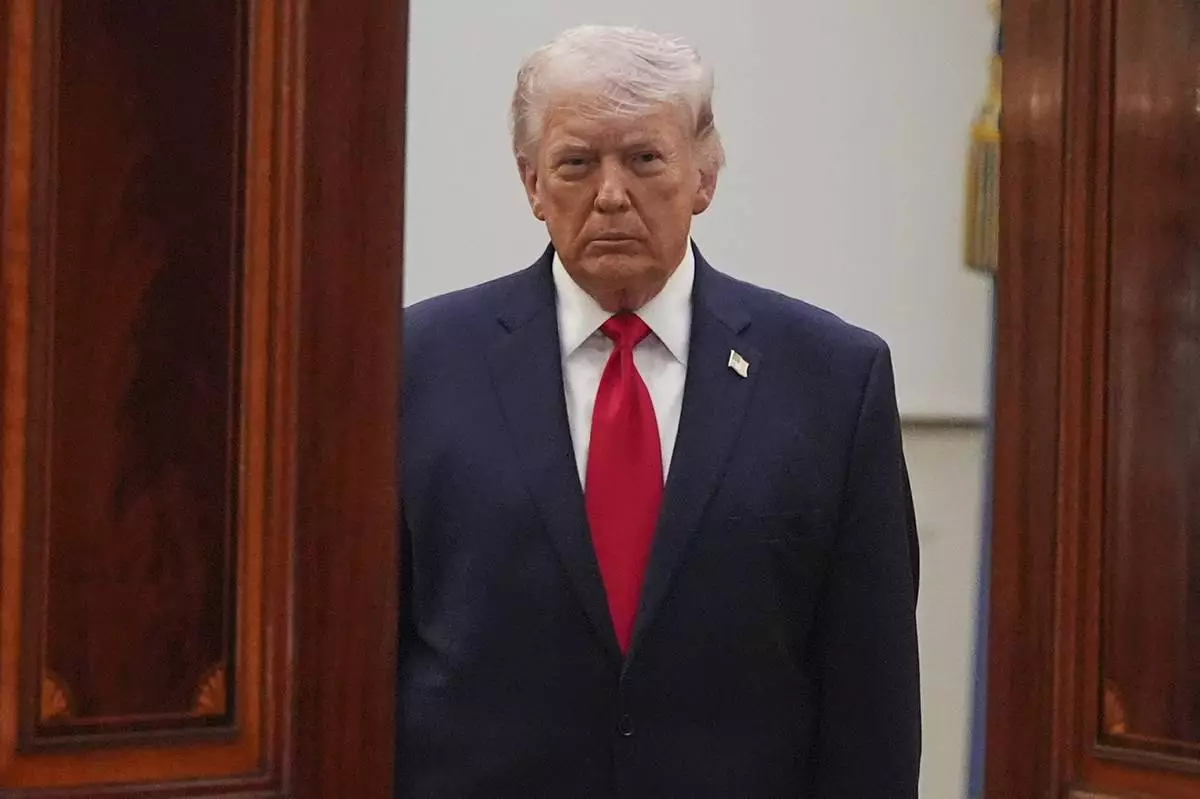
U.S. President Donald Trump backed Asfura in the lead up to the election, fueling accusations of election intervention by his opponents, namely Castro.
For Castro, the election was a political reckoning — she was elected in 2021 on a promise to reduce violence and root out corruption in Honduras. Castro, is the wife of former President Manuel “Mel” Zelaya, who was removed from power in a 2009 coup.
She was among a group of progressive leaders in Latin American elected on a hopeful message of change, but are now being cast out after failing to deliver on their vision.
“LIBRE paid the price of finally getting to the presidency, to the driving seat and not being able to deliver what it promised,” said Tiziano Breda, a senior analyst for Latin America and Caribbean at Armed Conflict Location & Event Data.
In addition to supporting Asfura, Trump also pardoned former Honduras President Juan Orlando Hernández, sentenced last year to 45 years in prison for his role in a drug trafficking operation by a U.S. court.
LIBRE has previously called for the election results to be annulled because of Trump's curveballs thrown in the midsts of its election, and analysts warned that the party may be slow-walking the vote counting process in a push to milk any political leverage it has left. But they added there's little the ruling party can do because their loss was so definitive.
On Thursday, Castro announced in a speech that she would honor the results of the election.
“Even in these difficult circumstances, I have been respectful of the law and the Constitution of the Republic, and to maintain peace in our country ... I will respect the winner,” Castro said.
Janetsky reported from Mexico City.
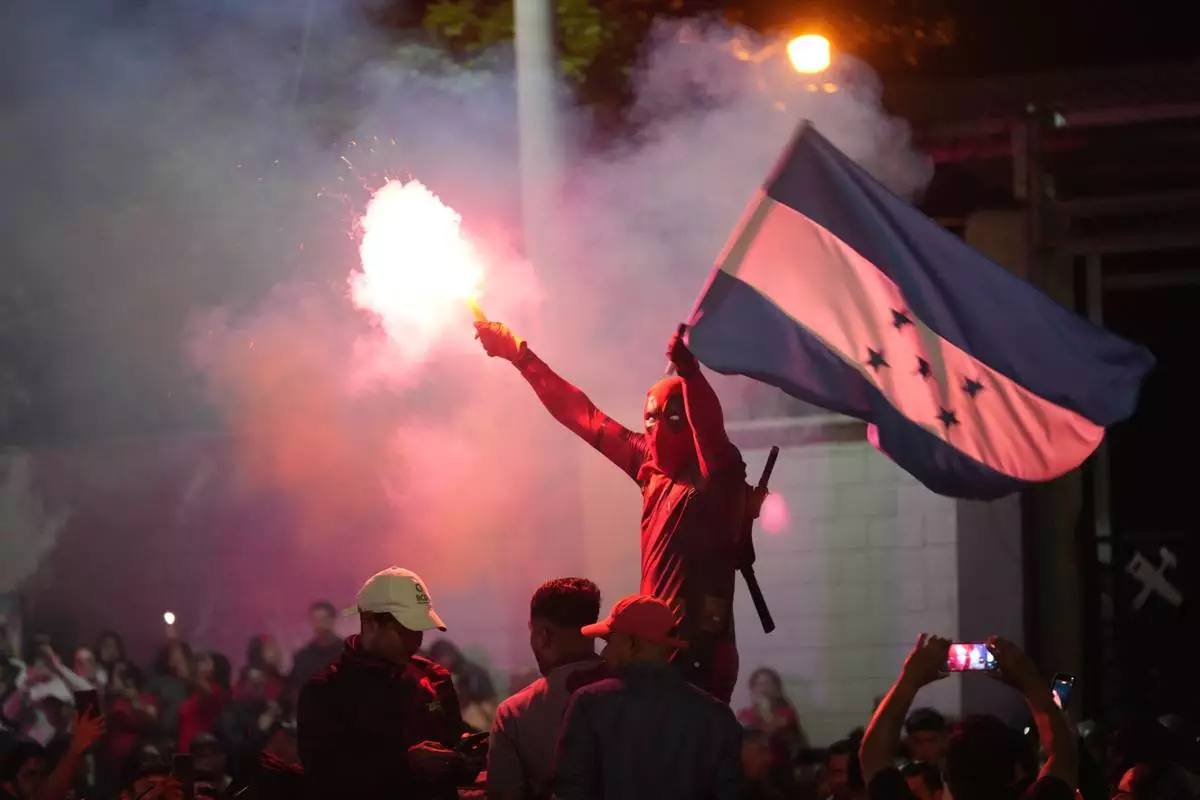
Supporters of the party LIBRE, Liberty and Refoundation, protest the general election results in Tegucigalpa, Honduras, Tuesday, Dec. 9, 2025. (AP Photo/Moises Castillo)
STARKE, Fla. (AP) — A man convicted of fatally shooting a man and his girlfriend during a home invasion robbery was put to death Thursday evening in a record 19th execution in Florida this year.
Frank Athen Walls, 58, was pronounced dead at 6:11 p.m. following a three-drug injection at Florida State Prison near Starke. Walls was convicted of two counts of murder and other charges and sentenced to death in 1988. The Florida Supreme Court later reversed the conviction and ordered a new trial, and Walls was again convicted and sentenced to death in 1992 for the murders of Edward Alger and his girlfriend, Ann Peterson.
The curtain to the death chamber went up precisely at the scheduled 6 p.m. execution time. Walls was already strapped to the gurney and covered mostly by a blanket with his left arm extended and an IV in place. A Catholic priest was seated at the foot of the gurney with his right hand extended toward Walls’ lower leg or foot.
Walls then apologized in a brief statement, said Alex Lanfranconi, a spokesman for Gov. Ron DeSantis, relaying the last words from the scene.
"Good evening, everyone. I appreciate the opportunity to say what’s on my heart. If any of the members of the family are here, I am sorry for all of the things I did, the pain I caused, and all of that you have suffered all these years,” Walls was quoted as saying.
After the statement, the execution began while the priest remained, apparently praying beside Walls.
Walls began to breathe heavily for several minutes and appeared to lose consciousness. A warden then shook Walls several times and shouted his name, getting no response. Walls' breathing eventually stopped. A medic was called in several minutes later, and the inmate was then pronounced dead. At that point, the priest knelt on the floor and made the sign of the cross.
Court records indicate Walls broke into the Florida Panhandle mobile home of Alger, an Eglin Air Force Base airman, and his girlfriend in July 1987. Walls tied the couple up, but Alger managed to break free and attack Walls. Walls cut Alger’s throat and then shot him in the head when the airman continued to fight. Walls then attacked Peterson and shot her as she struggled.
Walls was arrested the day after the bodies were found when his roommate tipped off police about Walls’ odd behavior. During a search of the home, investigators reported finding items from the crime scene, and Walls later admitted to the killings.
After Walls' conviction, DNA evidence linked him to the May 1987 rape and killing of a woman, Audrey Gygi. Walls pleaded no contest, avoiding another trial and possible death sentence. Walls also admitted responsibility for the killings of Tommie Lou Whiddon in March 1985 and Cynthia Sue Condra in September 1986 as part of a deal with prosecutors.
DeSantis, the Republican who signed the death warrant, has ordered more executions in a single year than any Florida governor since the death penalty was reinstated in the U.S. in 1976. The previous state record was eight executions in 2014. DeSantis said earlier this year that his goal is to bring justice to victims’ families who have waited decades for the death sentences to be carried out.
The U.S. Supreme Court denied Walls’ request for a stay of execution on Thursday afternoon. Earlier in the day, Walls met with one visitor as well as a spiritual adviser and had a meal of steak, chicken and cheesecake, authorities said.
Including Walls, a total of 47 men have died by court-ordered execution so far this year in the U.S., and more than a dozen other people are scheduled to be put to death in 2026. Florida has executed more people than any other state this year, followed by Alabama, South Carolina and Texas with five each.
All Florida executions are carried out by an injection using a sedative, a paralytic and a drug that stops the heart, according to the state Department of Corrections.
Follow David Fischer on the social platform Bluesky: @dwfischer.bsky.social
This undated photo provided by the Florida Department of Corrections shows Frank Athen Walls. (Florida Department of Correction via AP)