BANGKOK (AP) — Thailand on Thursday helped launch a global effort to fight the spread of online scams that include criminal enterprises based largely in Southeast Asia estimated to bilk billions of dollars annually from victims around the world.
Thailand's Ministry of Foreign Affairs and the United Nations Office on Drugs and Crime hosted a conference in Bangkok on Wednesday and Thursday culminating in the announcement of the new initiative called the Global Partnership Against Online Scams.
Click to Gallery
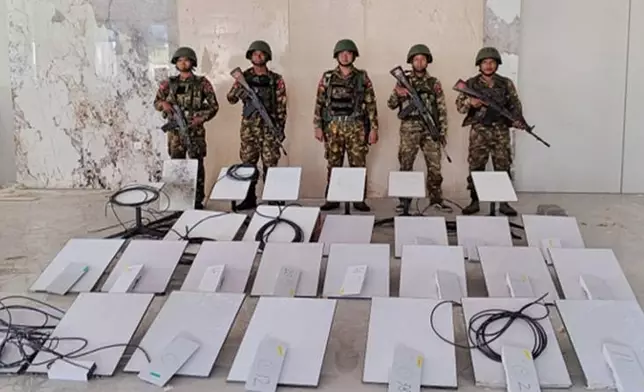
FILE - In this image provided by the Myanmar military on Oct. 19, 2025, soldiers stand next to Starlink satellite internet devices as they seize KK Park online scam center in Myawaddy township, Karen State, Myanmar. (The Myanmar Military True News Information Team via AP, File)
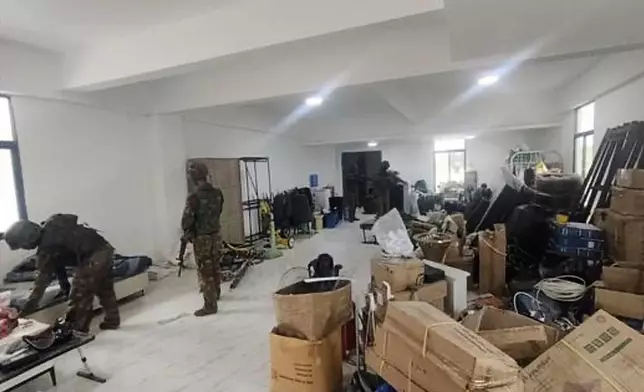
FILE - In this image provided by the Myanmar military on Oct. 19, 2025, soldiers raid the KK Park online scam center in Myawaddy township, Karen State, Myanmar. (The Myanmar Military True News Information Team via AP, File)
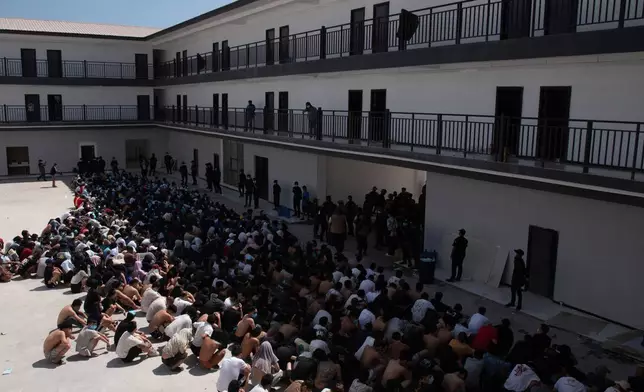
FILE - People from China, Vietnam and Ethiopia, believed to have been trafficked and forced to work in scam centers, sit with their faces masked while in detention after being released from the centers in Myawaddy district in eastern Myanmar, Wednesday, Feb. 26, 2025. (AP Photo/Thanaphon Wuttison, File)
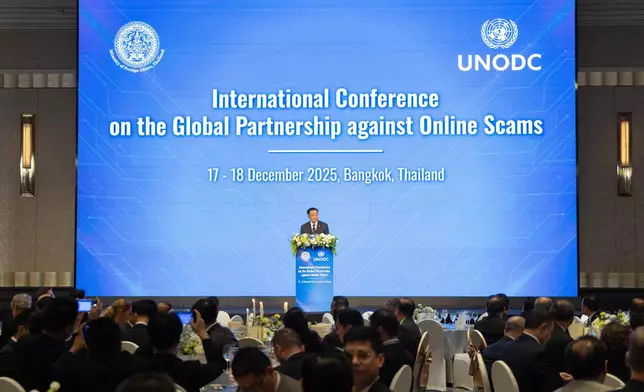
Thai Prime Minister Anutin Charnvirakul delivers his keynote speech during the International Conference on the Global Partnership against Online Scams in Bangkok, Thailand, on Wednesday, Dec. 17, 2025. (AP Photo/Anton L. Delgado)
Thai Prime Minister Anutin Charnvirakul answers journalists' questions during the International Conference on the Global Partnership against Online Scams in Bangkok, Thailand, on Wednesday, Dec. 17, 2025. (AP Photo/Anton L. Delgado)
Thai Prime Minister Anutin Charnvirakul said in his keynote speech Wednesday that online scams “reveal a deeper problem — a collective vulnerability that no country can address alone.”
The partnership agreement signed by conference participants Thailand, Bangladesh, Nepal, Peru and the United Arab Emirates will include political commitment, law enforcement, victim protection and public awareness and cross-border collaboration, a statement said.
The conference received assistance from the private sector including internet giants Meta and TikTok.
Meta, the corporate owner of Facebook, Instagram and WhatsApp, presented a threat report underlining the increased use of artificial intelligence by scam networks and protocols the company is using in its attempts to stop scams on its social media platforms.
Social media application TikTok signed on to the conference's closing statement, becoming one of the first private sector members of the partnership. The company on Thursday also said it had signed agreements with major investors to form a new TikTok U.S. joint venture.
TikTok, which primarily focuses on short-form videos is one of the world's most popular social media platforms but has faced challenges from various governments including the U.S. over its Chinese ownership, the European Union over transparency breaches, Canada regarding child protection protocols and data sharing in Indonesia.
Scam centers, which extort money from victims online through bogus investment schemes and faked loved interests, have proliferated across Southeast Asia. Scam victims lost between $18 billion and $37 billion in 2023, the UNODC estimates.
The importance of private partnerships in anti-scam initiatives was stressed throughout the two-day conference in Thailand's capital, which was attended by more than 300 participants from nearly 60 countries.
Brian Hanley, Asia-Pacific director of the Global Anti-Scam Alliance, which TikTok joined this month, explained it will be harder to combat criminal networks without “all the major stakeholders at the table."
“Scams are exploiting, not only transnational boundaries, but also the seams across various platforms from banks, telcos, to social media platforms,” Hanley said.
The alliance describes itself as a collective effort to combat the scam problem by governments, law enforcement, consumer protection organizations and companies involved in social media, cybersecrity and other aspects of the internet.
“TikTok is the one that we’re talking about today, but hopefully tomorrow everyone’s joining,” Hanley said. “We’re starting to get critical mass and momentum as everyone realizes it’s affecting their bottom lines and consumer trust.”
Recent scam center raids in Myanmar, victim repatriation issues in Thailand and the death of a South Korean student forced into scam work in Cambodia have spurred demand for regional action.
Cambodia is known as a hub for scam compounds and has been criticized by its neighbor Thailand, but the two countries are engaged in an armed conflict and Cambodia was not represented at the conference.
Similar pledges to fight scam networks were made by members of the Association of Southeast Asian Nations in the months leading up to the Bangkok conference.
They include the United Nations Convention against Cybercrime, which more than 70 countries signed in October in Vietnam. U.N. Secretary-General António Guterres called the document “a vow that no country, no matter their level of development, will be left defenseless against cybercrime.”
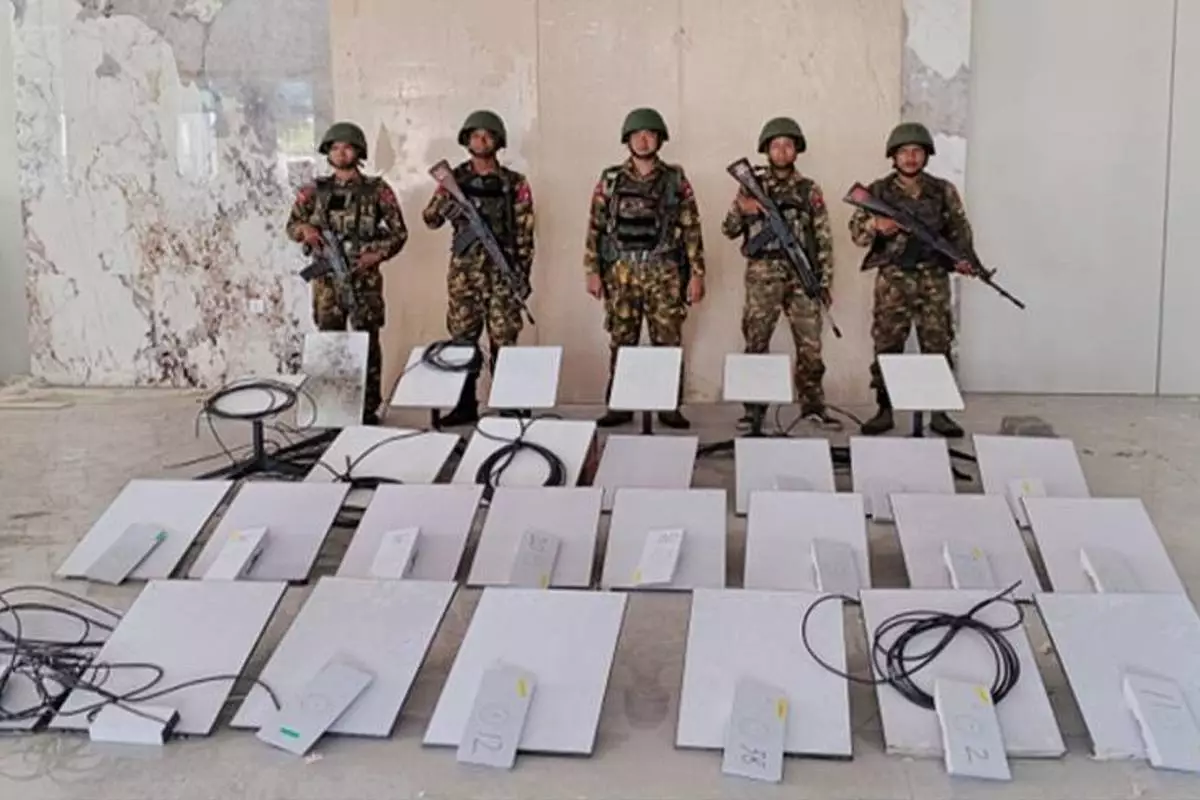
FILE - In this image provided by the Myanmar military on Oct. 19, 2025, soldiers stand next to Starlink satellite internet devices as they seize KK Park online scam center in Myawaddy township, Karen State, Myanmar. (The Myanmar Military True News Information Team via AP, File)
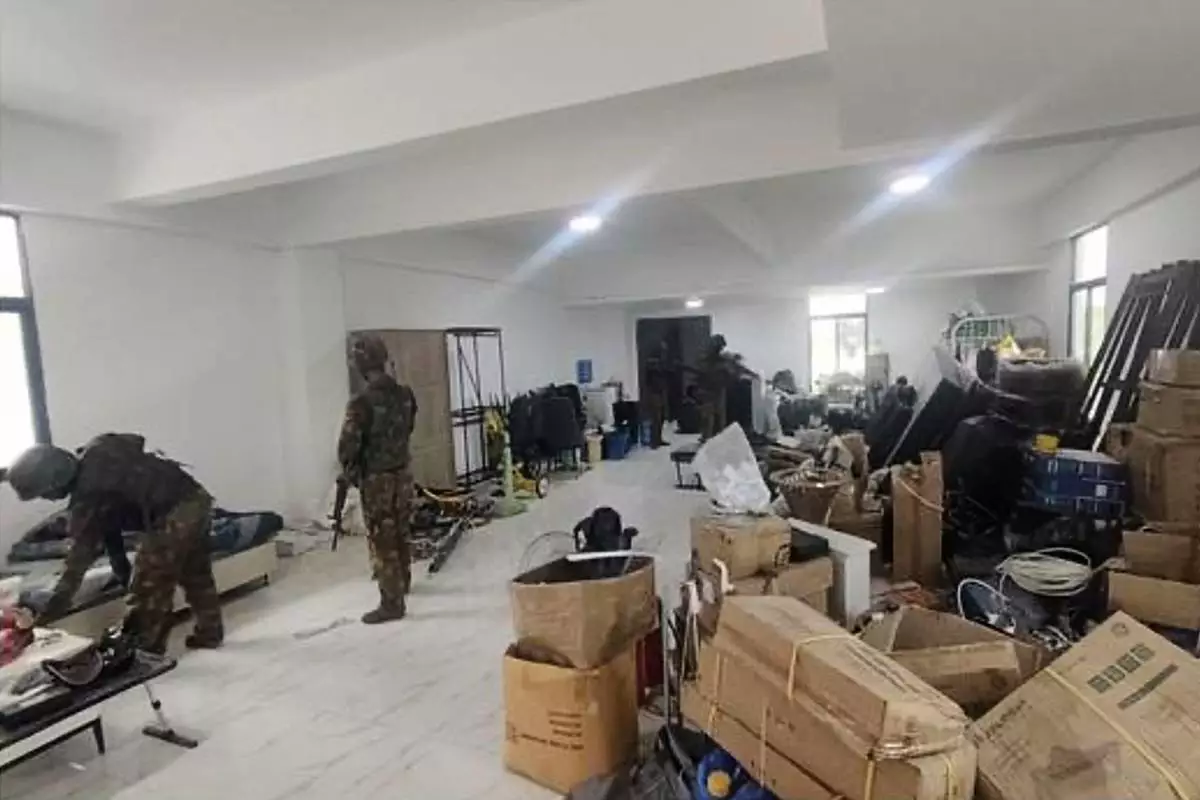
FILE - In this image provided by the Myanmar military on Oct. 19, 2025, soldiers raid the KK Park online scam center in Myawaddy township, Karen State, Myanmar. (The Myanmar Military True News Information Team via AP, File)
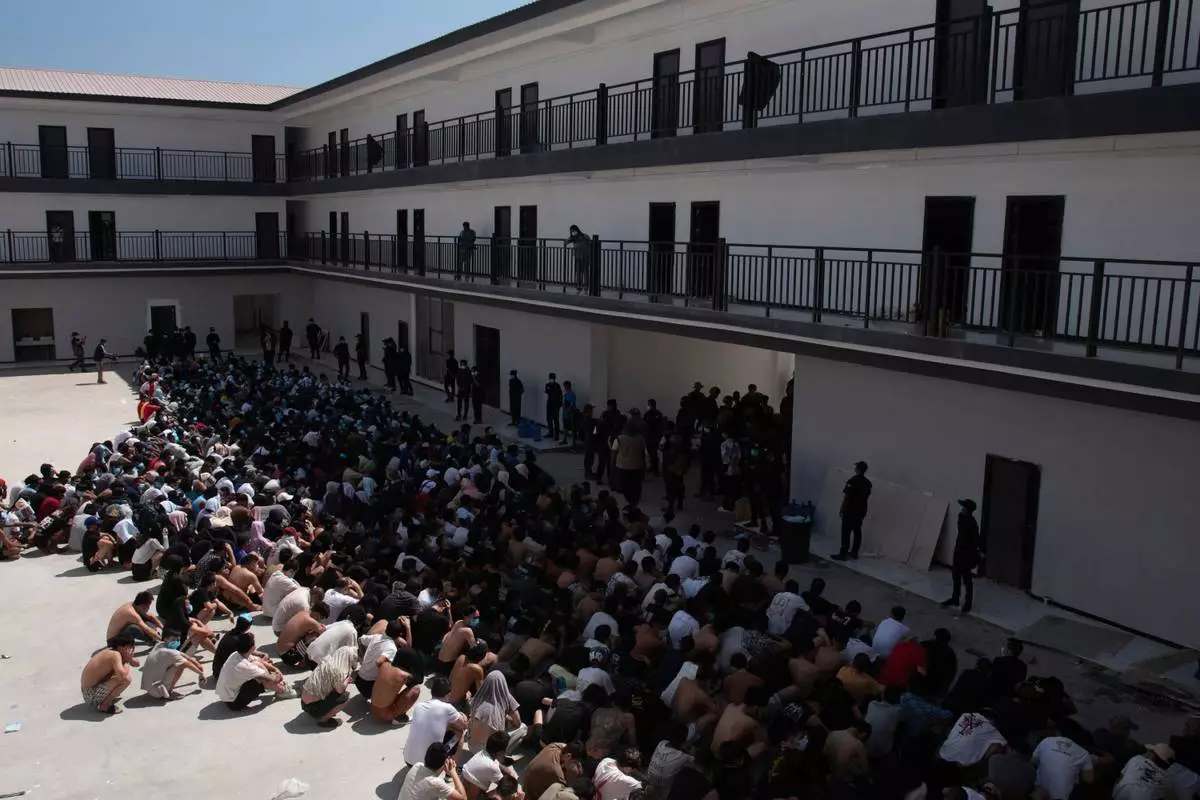
FILE - People from China, Vietnam and Ethiopia, believed to have been trafficked and forced to work in scam centers, sit with their faces masked while in detention after being released from the centers in Myawaddy district in eastern Myanmar, Wednesday, Feb. 26, 2025. (AP Photo/Thanaphon Wuttison, File)
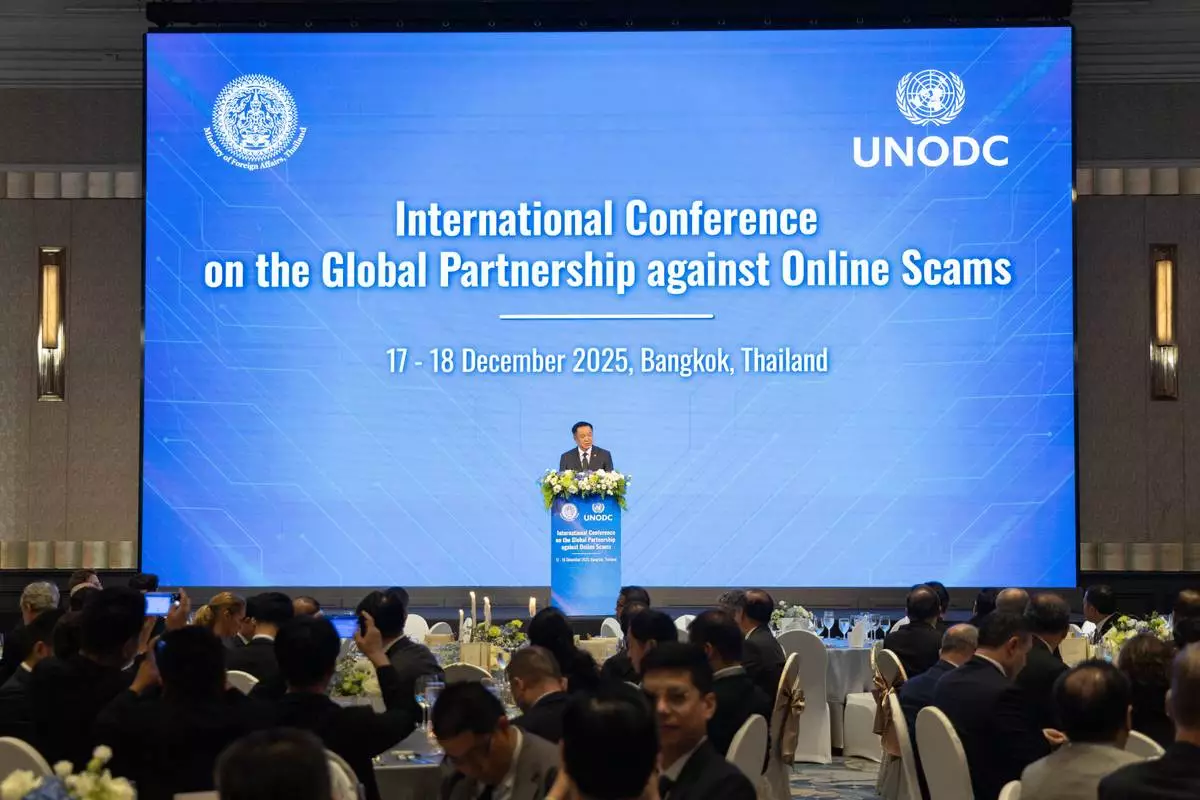
Thai Prime Minister Anutin Charnvirakul delivers his keynote speech during the International Conference on the Global Partnership against Online Scams in Bangkok, Thailand, on Wednesday, Dec. 17, 2025. (AP Photo/Anton L. Delgado)

Thai Prime Minister Anutin Charnvirakul answers journalists' questions during the International Conference on the Global Partnership against Online Scams in Bangkok, Thailand, on Wednesday, Dec. 17, 2025. (AP Photo/Anton L. Delgado)
A man suspected in the fatal shootings at Brown University and of a Massachusetts Institute of Technology professor has been found dead in a New Hampshire storage facility after a five-day search that spanned several New England states, authorities said Thursday,
Claudio Neves Valente, 48, a former Brown student and Portuguese national, was found dead Thursday evening from a self-inflicted gunshot wound, said Col. Oscar Perez, the Providence police chief. Perez said as far as investigators know, the Neves Valente acted alone.
Investigators believe he is responsible for both the shooting at Brown and the killing of a Massachusetts Institute of Technology professor two days later at his Brookline home, nearly 50 miles (80 kilometers) away, U.S. attorney for Massachusetts Leah B. Foley said.
Two students were killed and nine were wounded in the shooting Saturday in a Brown University lecture hall. The investigation had shifted Thursday when authorities said they were looking into a connection between the Brown attack and the fatal shooting of 47-year-old MIT professor Nuno F.G. Loureiro.
Brown University President Christina Paxson said Neves Valente was enrolled at Brown from the fall of 2000 to the spring of 2001. He was admitted to the graduate school to study physics beginning in September 2000. “He has no current affiliation with the university,” she said.
Valente and Loureiro attended the same academic program at a university in Portugal between 1995 and 2000, Foley said. Loureiro graduated from the physics program at Instituto Superior Técnico, Portugal’s premier engineering school, in 2000, according to his MIT faculty page. The same year, Neves Valente was let go from a position at the Lisbon university, according to an archive of a termination notice from the school’s then-president in February 2000.
Neves Valente had studied at Brown on an F1 visa. He eventually obtained legal permanent residence status in September 2017, Foley said. His last known residence was in Miami.
President Donald Trump suspended on Thursday the green card lottery program that allowed Neves Valente into the U.S.
Homeland Security Secretary Kristi Noem said in a post on the social platform X that at Trump’s direction she is ordering the United States Citizenship and Immigration Services to pause the program. The diversity visa program makes up to 50,000 green cards available each year by lottery to people from countries that are little represented in the United States, many of them in Africa.
The FBI previously said it knew of no links between the two shootings.
Police credited a Brown University custodian who had several encounters with Neves Valente as providing the crucial tip that led to the shooting suspect.
“When you do crack it, you crack it. And that person led us to the car, which led us to the name,” Rhode Island Attorney General Peter Neronha said.
After police shared images of a person of interest, the janitor recognized him and posted his suspicions on social media forum Reddit, where he was a regular commenter. Other Reddit users urged him tell the FBI, and the witness said he did.
But it took days before police say they interviewed him after publicizing a video where Neves Valente appeared to run away from the other man. The Reddit commenter didn’t respond to questions from The Associated Press earlier week but returned to the forum on Wednesday night to say that he was just interviewed by investigators.
“Respectfully, I have said all I have to say on the matter to the right people,” the Reddit commenter wrote Wednesday night, adding hope that the person of interest “is apprehended soon so the authorities can get to the bottom of this.”
His tip gave investigators a key detail: a Nissan sedan with Florida plates. That enabled Providence police officers to tap into a network of more than 70 street cameras operated around the city by surveillance company Flock Safety. Those cameras track license plates and other vehicle details.
After leaving Rhode Island for Massachusetts, Providence officials said the suspect stuck a Maine license plate over the rental car’s plate to help conceal his identity.
Video footage showed Neves Valente entering an apartment building near Loureiro's. About an hour later, he was seen entering the storage facility where he was found dead, Foley said.
There are still “a lot of unknowns” in regard to motive, Neronha said. “We don’t know why now, why Brown, why these students and why this classroom,” he said.
Frustration had mounted in Providence that the person behind the attack managed to get away and that a clear image of their face hadn’t emerged.
Although Brown officials say there are 1,200 cameras on campus, the attack happened in an older part of the engineering building that has few, if any, cameras. And investigators believe the shooter entered and left through a door that faces a residential street bordering campus, which might explain why the cameras Brown does have didn’t capture footage of the person.
In such targeted and highly public attacks, the shooters typically kill themselves or are killed or arrested by police, said Katherine Schweit, a retired FBI agent and expert on mass shootings. When they do get away, searches can take time.
In the 2013 Boston Marathon bombing, it took investigators four days to catch up to the two brothers who carried it out. In a 2023 case, Army reservist Robert Card was found dead of an apparent suicide two days after he killed 18 people and wounded 13 others in Lewiston, Maine.
The man accused of killing conservative political figure Charlie Kirk in September turned himself in about a day and a half after the attack on Utah Valley University's campus. And Luigi Mangione, who has pleaded not guilty to murder charges in the killing of UnitedHealthcare CEO Brian Thompson in Manhattan last year, was arrested five days later at a McDonald's in Pennsylvania.
This story was updated to delete a reference to MIT being an Ivy League school.
Richer and Tucker reported from Washington. Associated Press reporters Mark Scolforo in Harrisburg, Pennsylvania, Hannah Schoenbaum in Salt Lake City, Audrey McAvoy in Honolulu, and Hallie Golden in Seattle contributed reporting.
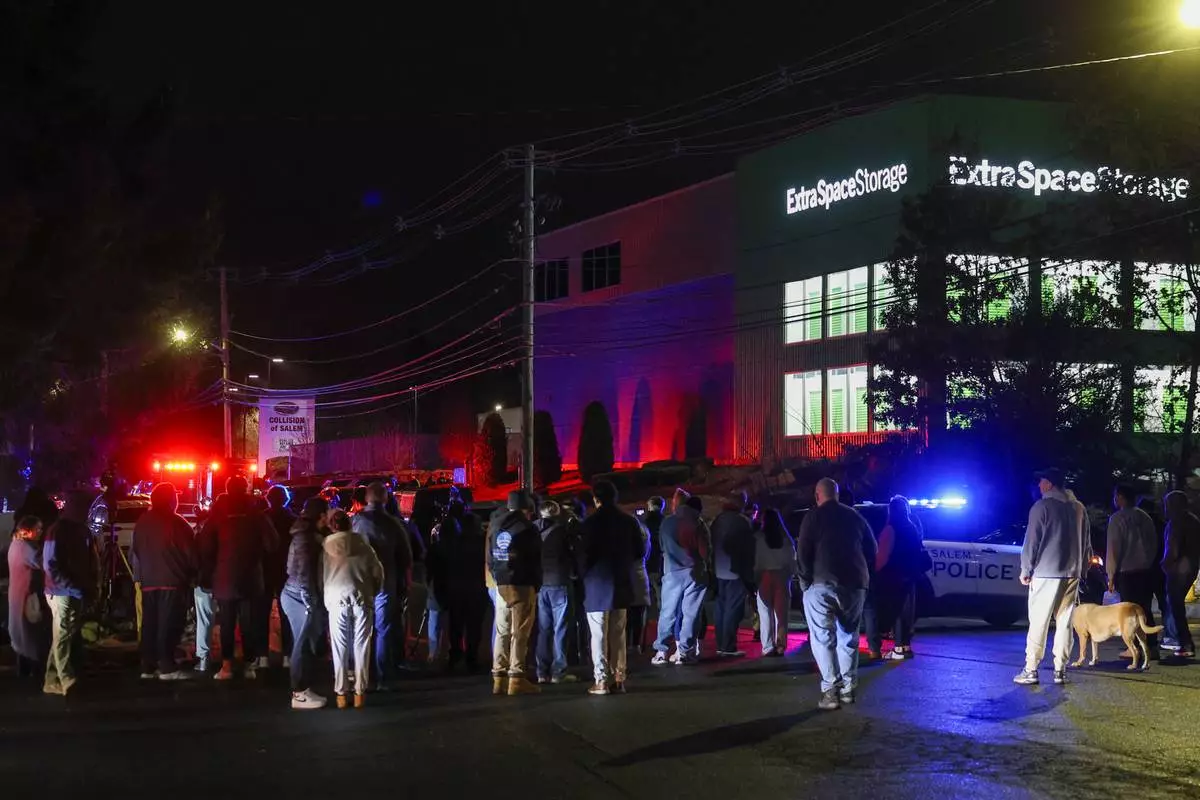
People gather outside a storage facility where a suspect in the shooting at Brown University was found dead, Thursday, Dec. 18, 2025, in Salem, N.H. (AP Photo/Reba Saldanha)
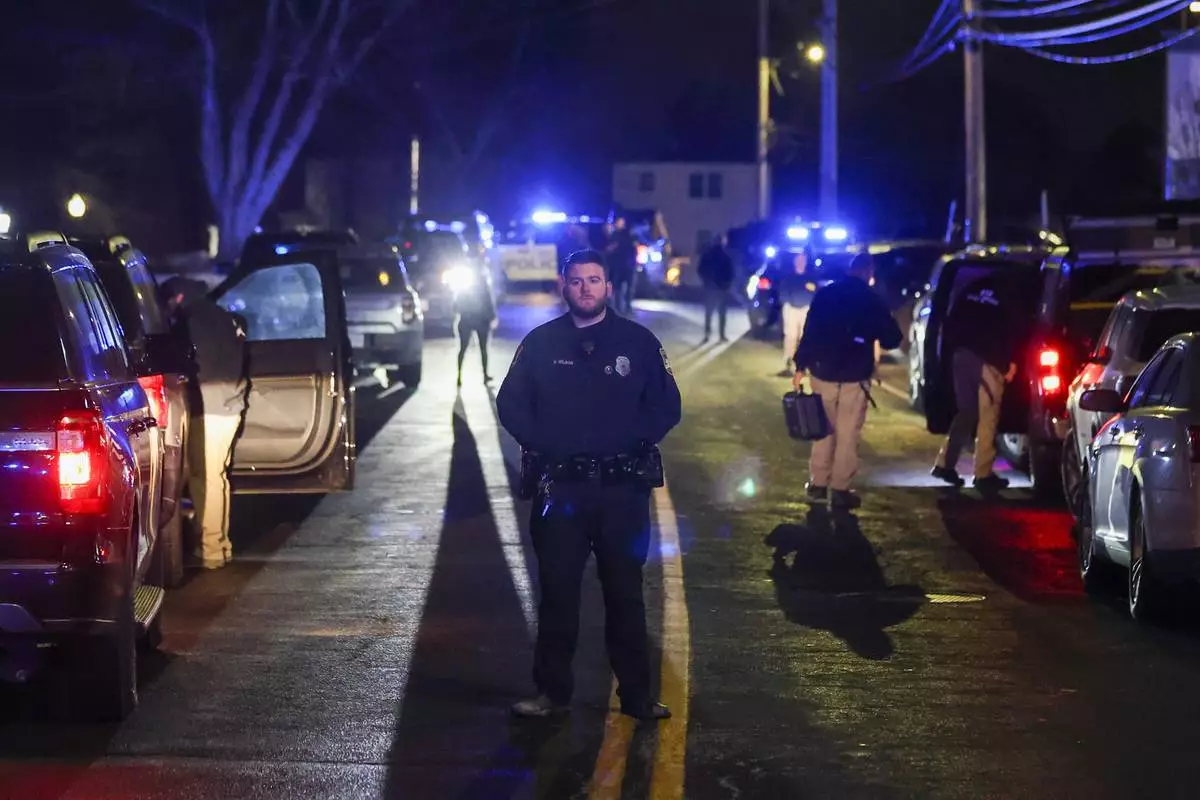
Law enforcement officers are seen outside a storage facility where a suspect in the shooting at Brown University was found dead, Thursday, Dec. 18, 2025, in Salem, N.H. (AP Photo/Reba Saldanha)
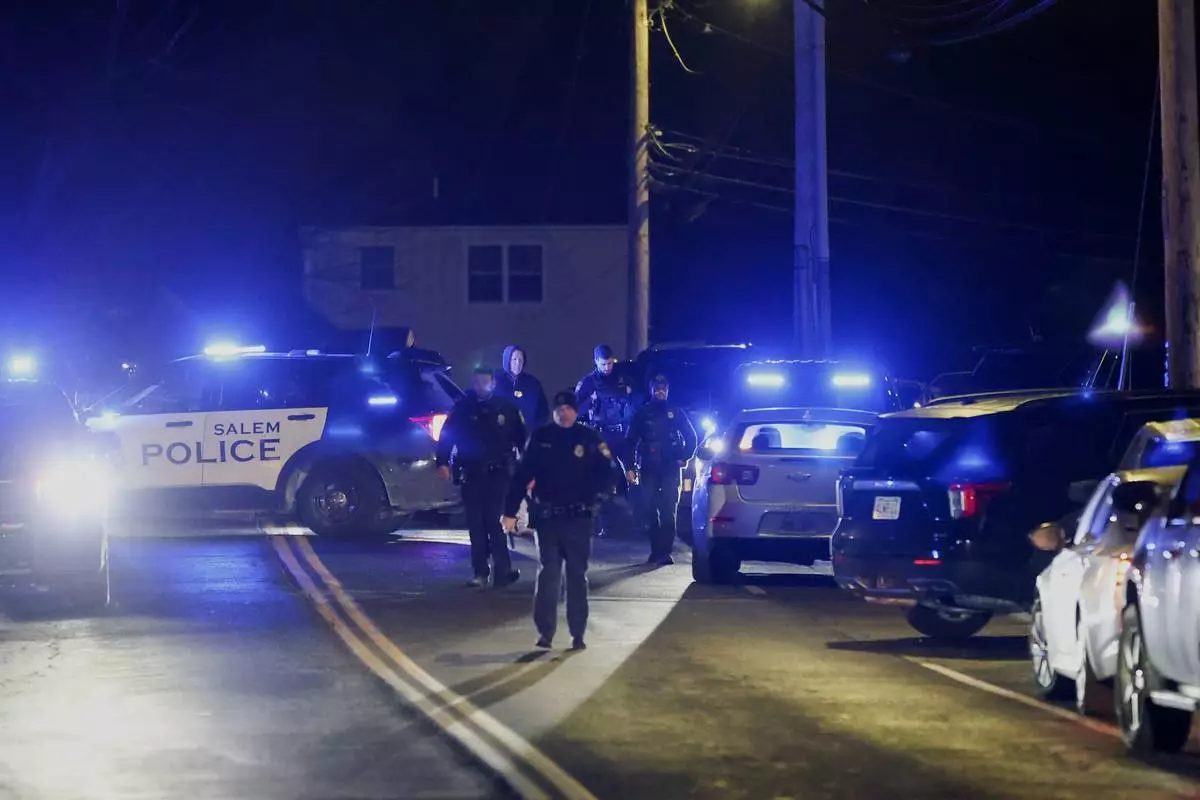
Law enforcement officers search the area for the Brown University shooting suspect, Thursday, Dec. 18, 2025, in Salem, N.H. (AP Photo/Reba Saldanha)
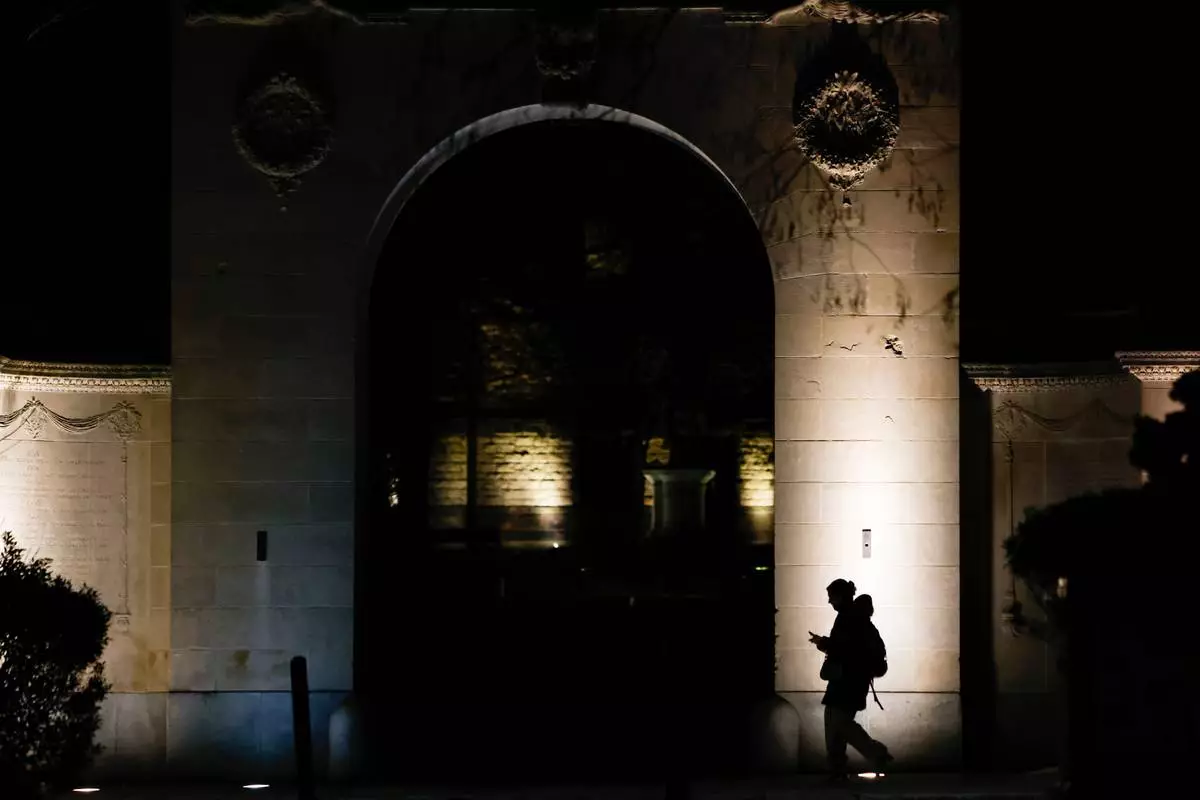
A pedestrian walks along Brown University's campus on Thayer St. in Providence, R.I., Wednesday, Dec. 17, 2025. (Lily Speredelozzi/The Sun Chronicle via AP)
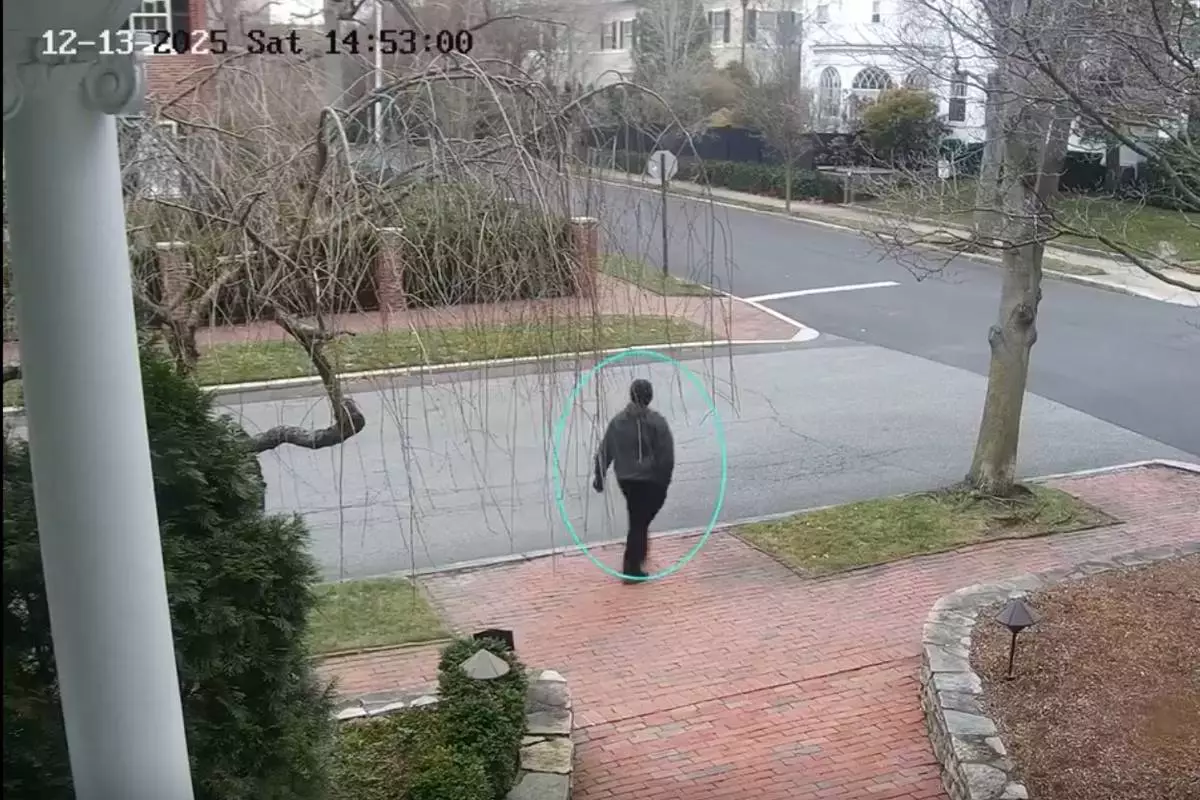
This image taken from video provided by the FBI shows a person of interest in the investigation of the shooting that occurred at Brown University, in Providence, R.I., Saturday, Dec. 13, 2025. (FBI via AP)
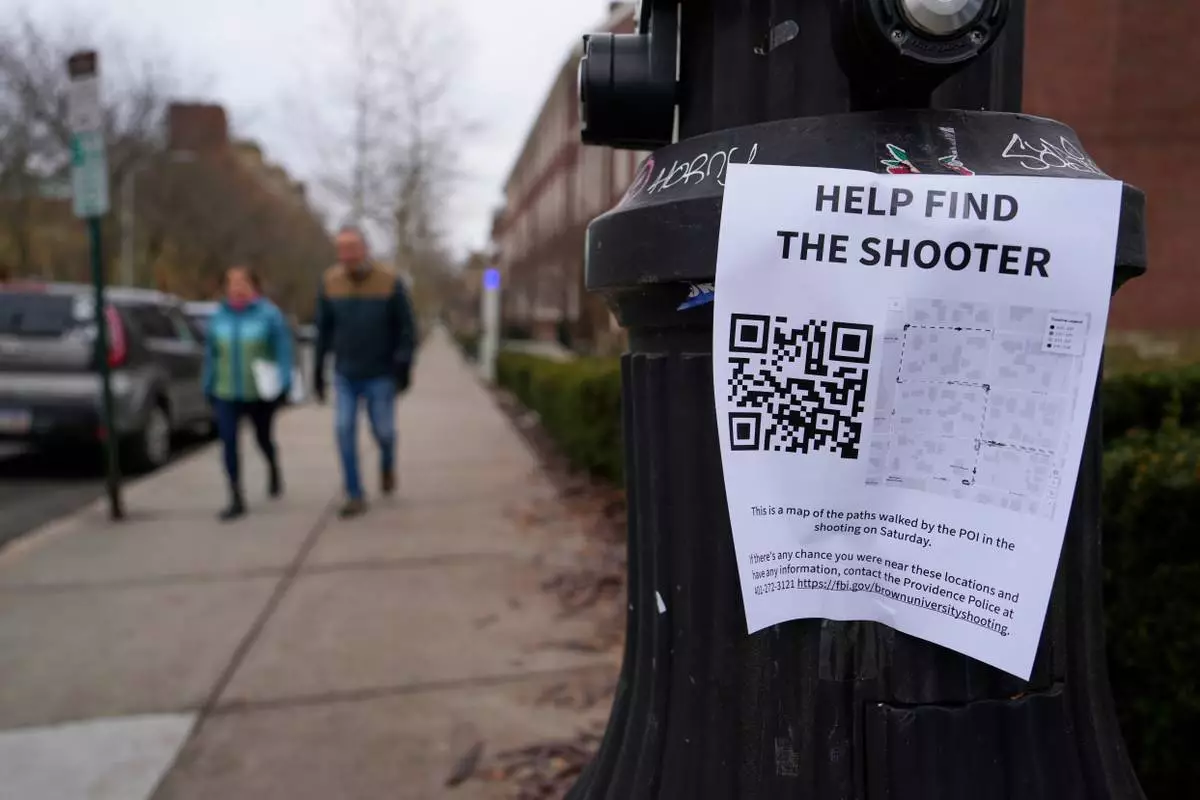
A poster seeking information about the campus shooting suspect is seen on the campus of Brown University, Wednesday, Dec. 17, 2025, in Providence, R.I. (AP Photo/Robert F. Bukaty)
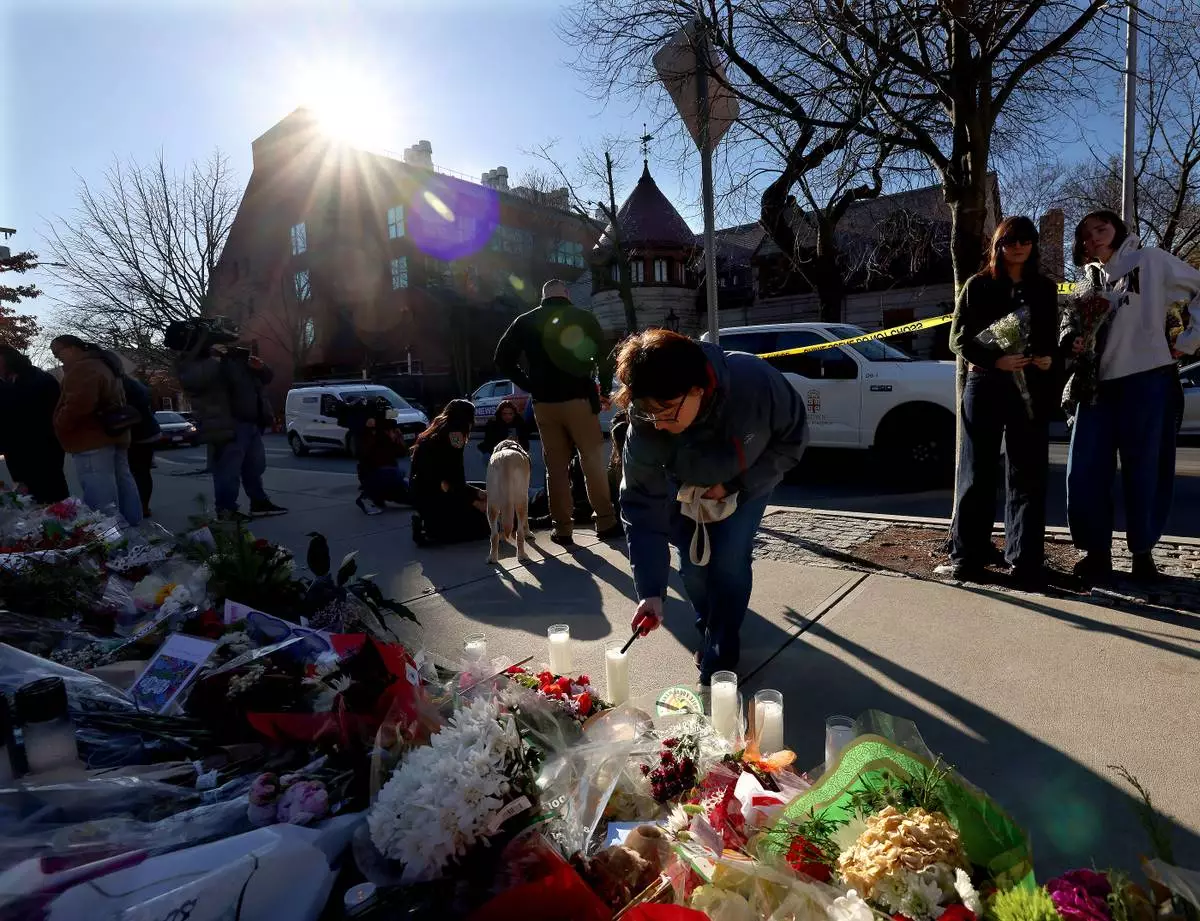
A woman lights a candle at a memorial set up in front of the Barus and Holley engineering building at Brown University in Providence, RI, Thursday, Dec. 18, 2025. (AP Photo/ Mark Stockwell)
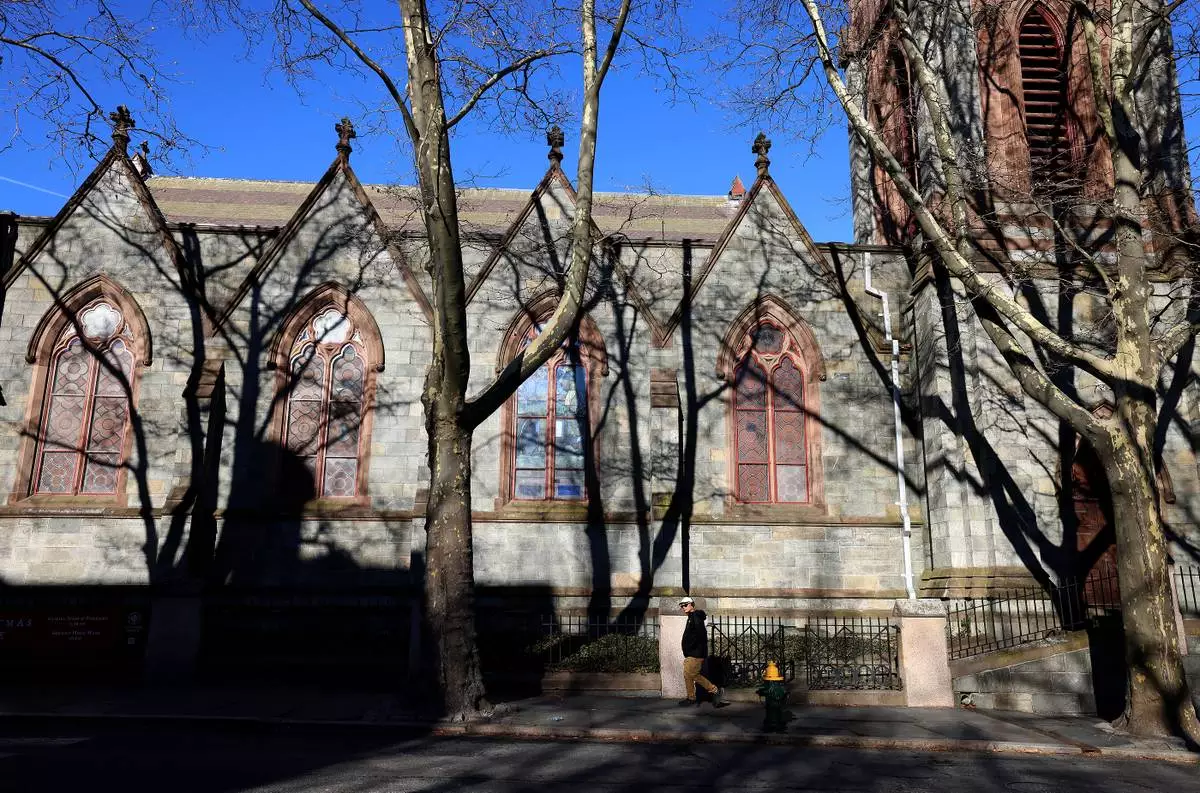
A Brown University student walks past a church on the Providence, RI, campus, Thursday, Dec. 18, 2025. (AP Photo/ Mark Stockwell)