SEOUL, South Korea--(BUSINESS WIRE)--Dec 19, 2025--
SOLUM announced the expansion of its strategic partnership with i-charging, a leading innovator in electric mobility technology, to strengthen collaboration in next-generation product development, global market expansion, and sustainable e-mobility solutions.
This press release features multimedia. View the full release here: https://www.businesswire.com/news/home/20251209333734/en/
As part of this expanded partnership, Pedro Silva, CEO of i-charging, and his leadership team visited SOLUM's manufacturing hub in Vietnam to explore deeper areas of cooperation. The visit highlighted SOLUM's advanced production capabilities — including precision quality control, intelligent automation, and scalable manufacturing capacity — reinforcing its position as a trusted technology partner in the rapidly growing e-mobility industry.
Building on i-charging's recent adoption of SOLUM's Power Module for its latest EV chargers, both companies focused discussions on developing innovative products and strengthening long-term cooperation based on mutual trust, respect, and a shared vision for the future of sustainable mobility.
Pedro Silva, CEO of i-charging, stated:
" At i-charging, innovation begins with people, and so do partnerships. We are delighted to connect SOLUM, i-charging, and end customers into one partnership built on trust and respect. When technology is created through human connection, it becomes more flexible, more meaningful, and better aligned with real-world needs. We believe that long-term partnerships and a shared sense of purpose will define the future of e-mobility ."
DongKyun Ryu, EVP and Head of the ANP Solution Biz. Division at SOLUM, added:
" We are pleased to share a common vision with i-charging in pursuing people-centered innovation through this expanded partnership. Together, we aim to go beyond business growth, creating sustainable, forward-looking solutions driven by human-centered innovation, and contributing to the advancement of global mobility ."
SOLUM and i-charging remain committed to advancing sustainable, efficient, and reliable charging solutions that support the world's transition toward cleaner and smarter mobility.
About i-charging
i-charging was born in 2019 from the desire to create technology-based products, enhancing innovation, differentiation, design, and quality within the most sophisticated segments of electric mobility infrastructure.
Aiming to be a technological reference in the electric mobility sector, it believes in the possibility of achieving more sustainably by adopting new tools and methodologies and leveraging its know-how with global ambition.
For more information, please visit www.i-charging.tech.
About SOLUM
Founded in 2015 as a spin-off from Samsung Electro-Mechanics, SOLUM is a publicly traded company listed on the KOSPI stock exchange. The company has established itself as a global leader in power solutions, display technologies, and electronic shelf labels (ESL), driving innovation across retail and mobility sectors. With a strong commitment to customer-centric innovation and sustainable transformation, SOLUM continues to develop high-quality solutions that empower businesses to operate more efficiently in an increasingly digital world. For more information, please visit https://www.solum-group.com/.

Pedro Silva, CEO of i-charging, and his leadership team visited SOLUM's manufacturing hub in Vietnam to explore deeper areas of cooperation, highlighting SOLUM's advanced production capabilities (Photo: SOLUM)
COPENHAGEN, Denmark (AP) — More than 200 years after being sunk by Adm. Horatio Nelson and the British fleet, a Danish warship has been discovered on the seabed of Copenhagen Harbor by marine archaeologists.
Working in thick sediment and almost zero visibility 15 meters (49 feet) beneath the waves, divers are working against the clock to unearth the 19th-century wreck of the Dannebroge before it becomes a construction site in a new housing district being built off the Danish coast.
Denmark’s Viking Ship Museum, which is leading the monthslong underwater excavations, announced its findings on Thursday, 225 years to the day since the Battle of Copenhagen in 1801.
“It’s a big part of the Danish national feeling,” said Morten Johansen, the museum’s head of maritime archaeology.
A great deal has been written about the battle “by very enthusiastic spectators, but we actually don’t know how it was to be onboard a ship being shot to pieces by English warships and some of that story we can probably learn from seeing the wreck, Johansen said.
In the Battle of Copenhagen, Nelson and the British fleet attacked and defeated Denmark’s navy as it formed a protective blockade outside the harbor.
Thousands were killed and wounded during the brutal hourslong naval clash, considered one of Nelson’s “great battles.” The intention was to force Denmark out of an alliance of Northern European powers, including Russia, Prussia and Sweden.
At the center of the fighting was the Danish flagship, the Dannebroge, commanded by Commodore Olfert Fischer.
The 48-meter (157-foot) Dannebroge was Nelson’s main target. Cannon fire tore through its upper deck before incendiary shells sparked a fire aboard.
“(It was) a nightmare to be on board one of these ships,” Johansen said. “When a cannonball hits a ship, it’s not the cannonball that does the most damage to the crew, it’s wooden splinters flying everywhere, very much like grenade debris.”
The battle also is believed to have inspired the phrase “to turn a blind eye.” After deciding to ignore a superior’s signal, Nelson, who had lost sight in his right eye, reportedly remarked: “I have only one eye, I have a right to be blind sometimes.”
Nelson eventually offered a truce and a ceasefire was later agreed with Denmark’s Crown Prince Frederik.
The stricken Dannebroge slowly drifted northward and exploded. Records say the sound created a deafening roar across Copenhagen.
Marine archaeologists have discovered two cannons, uniforms, insignia, shoes, bottles and even part of a sailor’s lower jaw, perhaps one of the 19 unaccounted-for crew members who likely lost their lives that day.
The dig site will soon be enveloped by construction work for Lynetteholm, a megaproject to build a new housing district in the middle of Copenhagen Harbor that is expected to be completed by 2070.
Marine archaeologists began surveying the area late last year, targeting a spot thought to match the flagship’s final position.
Experts say the sizes of the wooden parts found match old drawings. Dendrochronological dating, the method of using tree rings to establish the age of wood, match the year the ship was built. They also say the darkened dig site is full of cannonballs, a hazard for divers navigating waters darkened by clouds of silt stirred up from the seabed.
“Sometimes you can’t see anything, and then you really have to just feel your way, look with your fingers instead of with your eyes,” diver and maritime archaeologist Marie Jonsson said.
Chronicled in books and painted on canvases, the 1801 battle is deeply embedded in Denmark’s national story.
Archaeologists hope their discoveries may help reexamine the event that shaped the Scandinavian country and perhaps uncover personal stories of those who went into battle on that day 225 years ago.
“There are bottles, there are ceramics, and even pieces of basketry,” Jonsson said. “You get closer to the people onboard.”
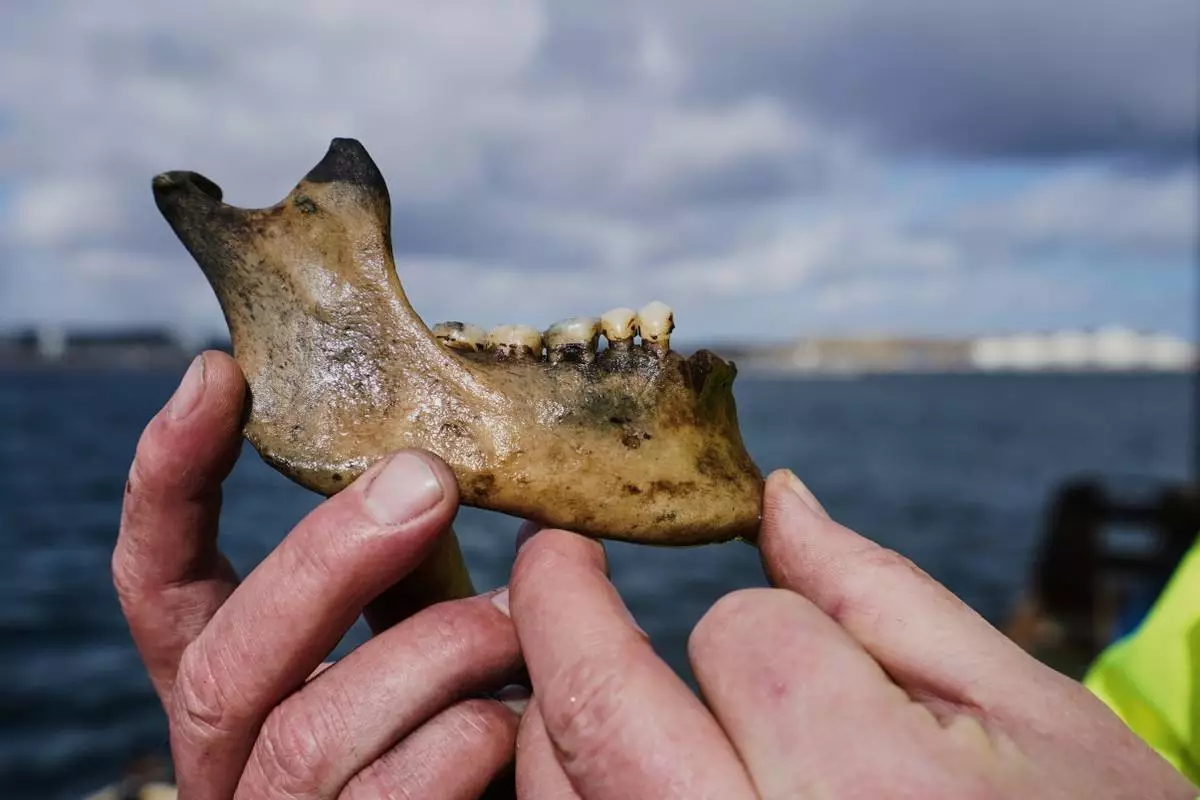
Morten Johansen, head of maritime archaeology at Denmark's Viking Ship Museum, shows part of a human lower jawbone recovered from the wreck of Danish flagship "Dannebroge" that sank during the Battle of Copenhagen in 1801, in Copenhagen, Denmark, Tuesday, March 31, 2026. (AP Photo/James Brooks)
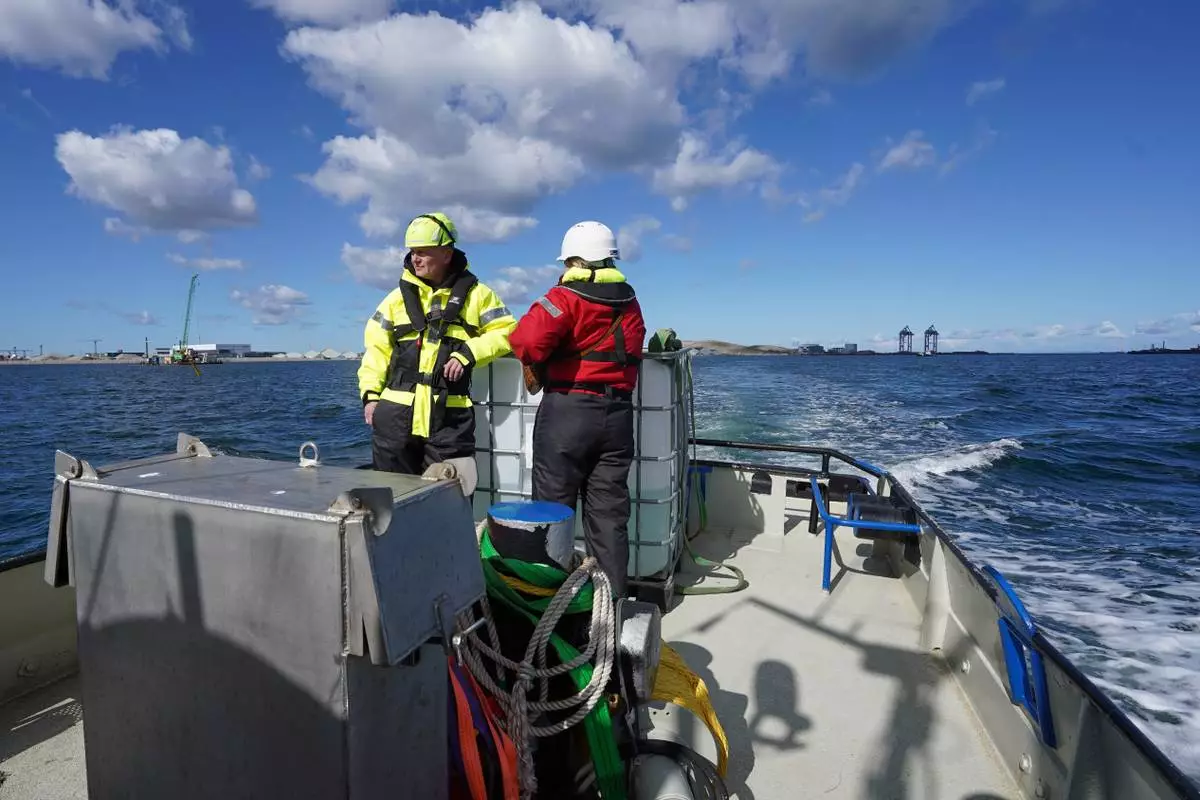
Archaeologists sail with boat through the harbor in Copenhagen, Denmark, Tuesday, March 31, 2026. (AP Photo/James Brooks)
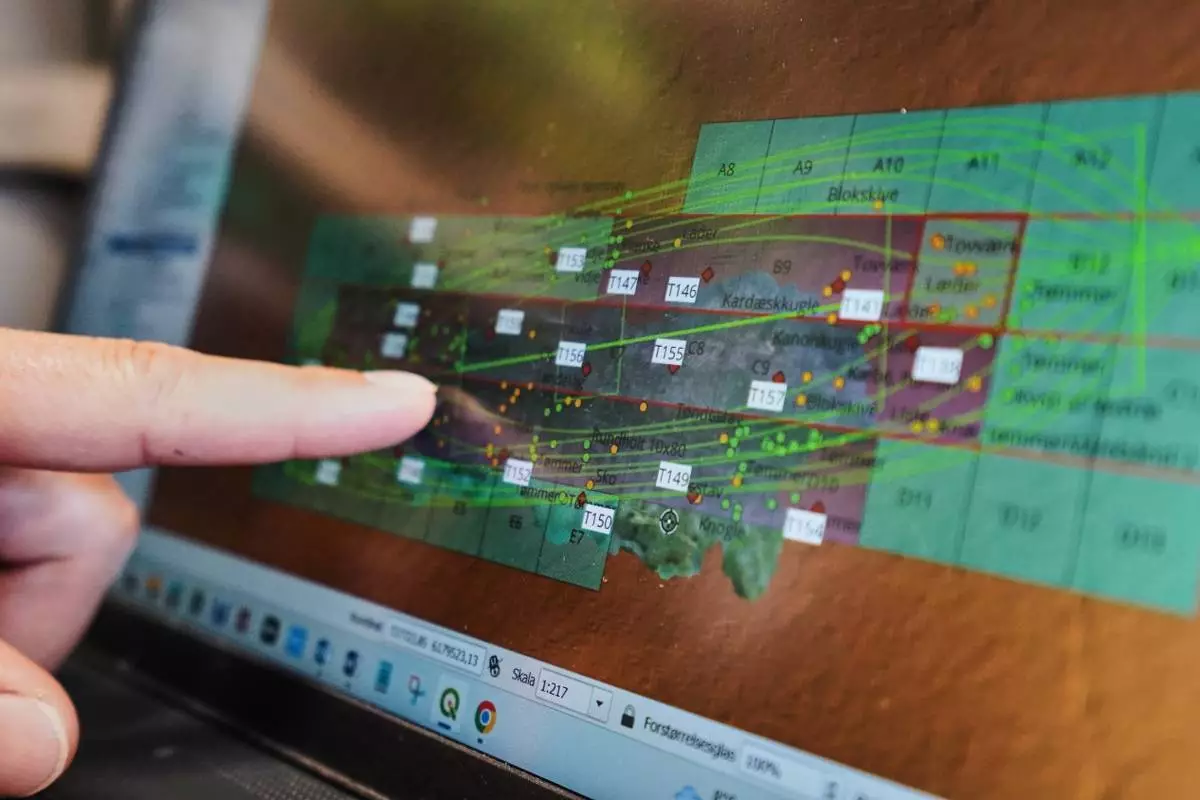
An archaeologist points to a computer screen, showing a map of the wreck of Danish flagship "Dannebroge" that sank during the Battle of Copenhagen in 1801. in Copenhagen, Denmark, Tuesday, March 31, 2026. (AP Photo/James Brooks)
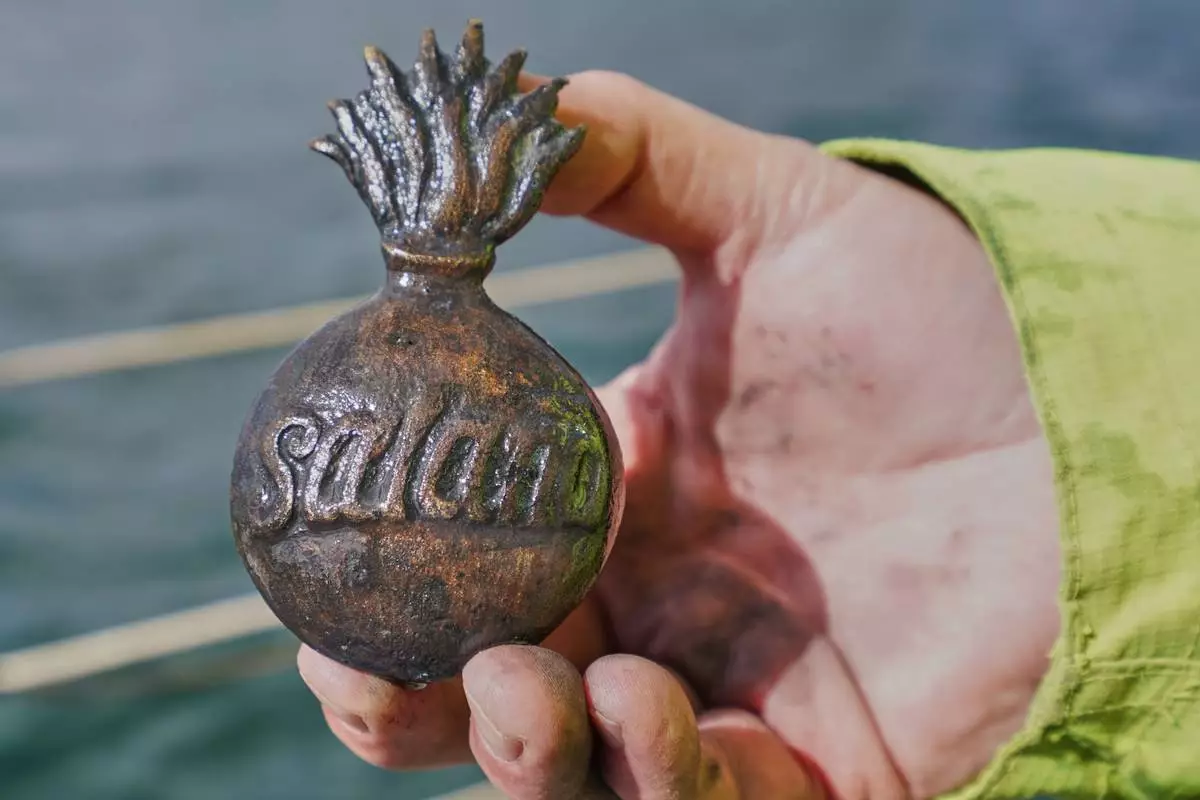
Morten Johansen, head of maritime archaeology at Denmark's Viking Ship Museum, shows a metal insignia recovered from the wreck of Danish flagship "Dannebroge" that sank during the Battle of Copenhagen in 1801, in Copenhagen, Denmark, Tuesday, March 31, 2026. (AP Photo/James Brooks)
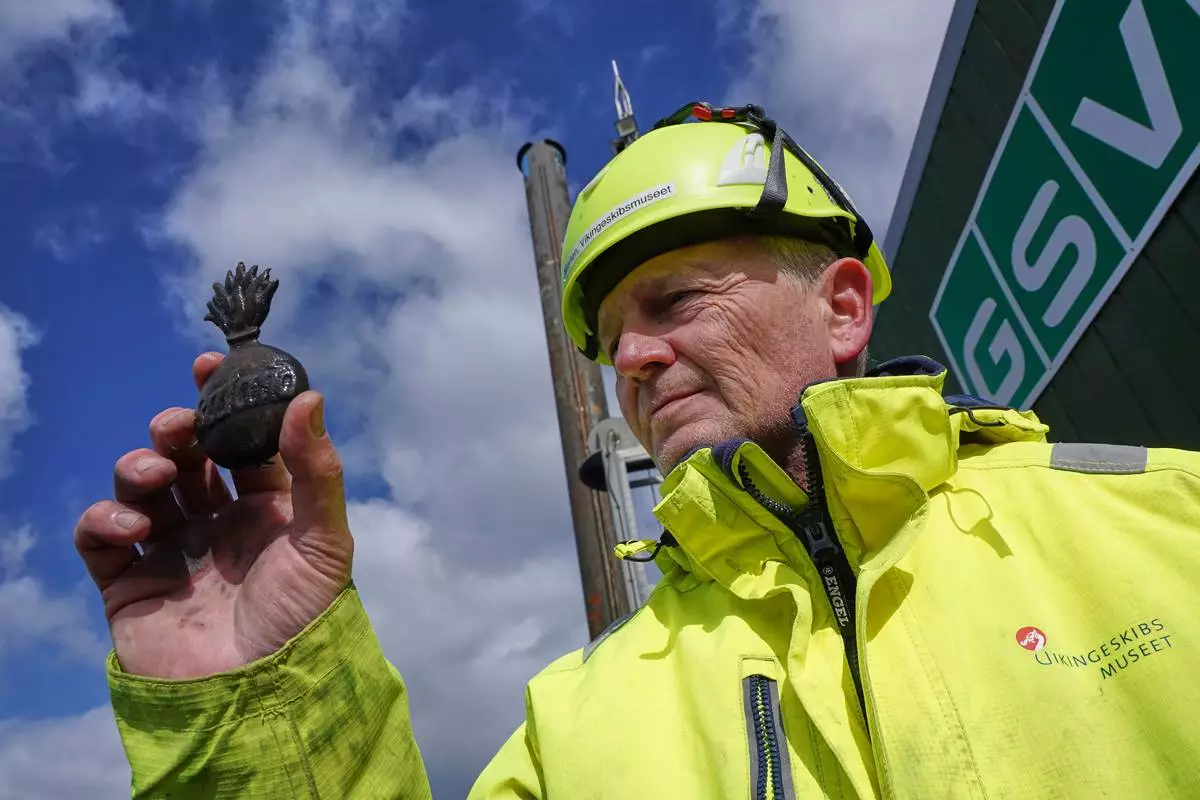
Morten Johansen, head of maritime archaeology at Denmark's Viking Ship Museum, shows a metal insignia recovered from the wreck of Danish flagship "Dannebroge" that sank during the Battle of Copenhagen in 1801, in Copenhagen, Denmark, Tuesday, March 31, 2026. (AP Photo/James Brooks)