MADISON, Wis. (AP) — Wisconsin Republicans threatened Friday to impeach embattled judge Hannah Dugan if she doesn't resign immediately after she was convicted of obstruction for helping an immigrant evade federal officers, saying her time serving the people of the state is over.
Federal prosecutors in April accused the judge of distracting federal officers trying to arrest a Mexican immigrant outside her courtroom and leading the man out through a private door. A jury convicted her of felony obstruction late Thursday after a four-day trial.
Dugan faces up to five years in prison when she's sentenced, though federal judges have discretion to go lower. No sentencing date has been set.
The Wisconsin Constitution bars convicted felons from holding public office. The state Judicial Commission, which disciplines state judges, and Milwaukee County Chief Judge Carl Ashley, Dugan's boss, haven't responded to questions Friday about when Dugan's office will officially become vacant. Under state law, a vacancy doesn't begin until a convicted office holder is sentenced.
Assembly Speaker Robin Vos and Majority Leader Tyler August, both Republicans, on Friday morning threatened to impeach Dugan if she doesn't immediately resign. They cited a legal opinion issued by then-Attorney General Bronson La Follette in 1976 that a state senator lost his seat the moment he was convicted of a felony.
“Wisconsinites deserve to know their judiciary is impartial and that justice is blind,” Vos and August said in a joint statement. “Judge Hannah Dugan is neither, and her privilege of serving the people of Wisconsin has come to an end.”
Dugan's defense team has not responded to a message seeking comment.
The case against Dugan played out against a background of political turmoil over President Donald Trump's sweeping immigration crackdown. Democrats insisted the administration was trying to make an example of Dugan to blunt judicial opposition to the operation. Trump's administration branded Dugan an activist judge and posted photos of her being led away in handcuffs.
U.S. Attorney General Pam Bondi posted Friday that “NO ONE IS ABOVE THE LAW.”
“No one can obstruct law enforcement as they carry out their basic duties,” she said in a social media post. “This Department of Justice will not waver as our agents and law enforcement partners continue to make America Safe Again.”
Dugan never took the stand. Steve Biskupic, her lead attorney, said that he didn’t understand how the jury could have reached a split verdict since the elements of both charges were so similar. Her team is expected to appeal the verdict.
A coalition of 13 advocacy groups, including Common Cause Wisconsin and the League of Women Voters Wisconsin, said “higher courts must carefully review the serious constitutional questions this case raises about due process, judicial authority, and federal overreach.”
The Democracy Defenders Fund, a group that says it works to defend “the foundations of our democracy,” sent a fundraising email shortly after the verdicts were handed down to help cover Dugan's legal expenses.
“This case is far from over,” the group's executive chair, Norm Eisen, said in the email. “Higher courts will have the opportunity to determine whether this prosecution crossed the lines that protect the judiciary from executive overreach.”
John Vaudreuil, a former U.S. attorney in Madison, said Dugan faces an uphill fight to overturn the verdict. Appellate courts typically view evidence in the light most favorable to the government.
Vaudreuil wasn't surprised to see a split verdict, saying the jury likely felt she intentionally tried to “throw some sand into the gears” but didn't go as far as concealing the immigrant in the general sense of the word, like hiding him in her house.
“The two charges gave them two different ways to look at the evidence,” he said.
Vaudreuil said he expects U.S. District Judge Lynn Adelman to set a sentencing date within the next few days, but sentencing could be months away because the government needs time to examine Dugan's background for a pre-sentencing report.
On April 18, immigration officers went to the Milwaukee County courthouse after learning 31-year-old Eduardo Flores-Ruiz had reentered the country illegally and was scheduled to appear before Dugan for a hearing in a state battery case.
Dugan confronted agents outside her courtroom and directed them to Ashley's office. After the agents left, she led Flores-Ruiz and his attorney out a private jury door. Agents spotted Flores-Ruiz in the corridor, followed him outside and arrested him after a foot chase. The U.S. Department of Homeland Security announced in November he had been deported.
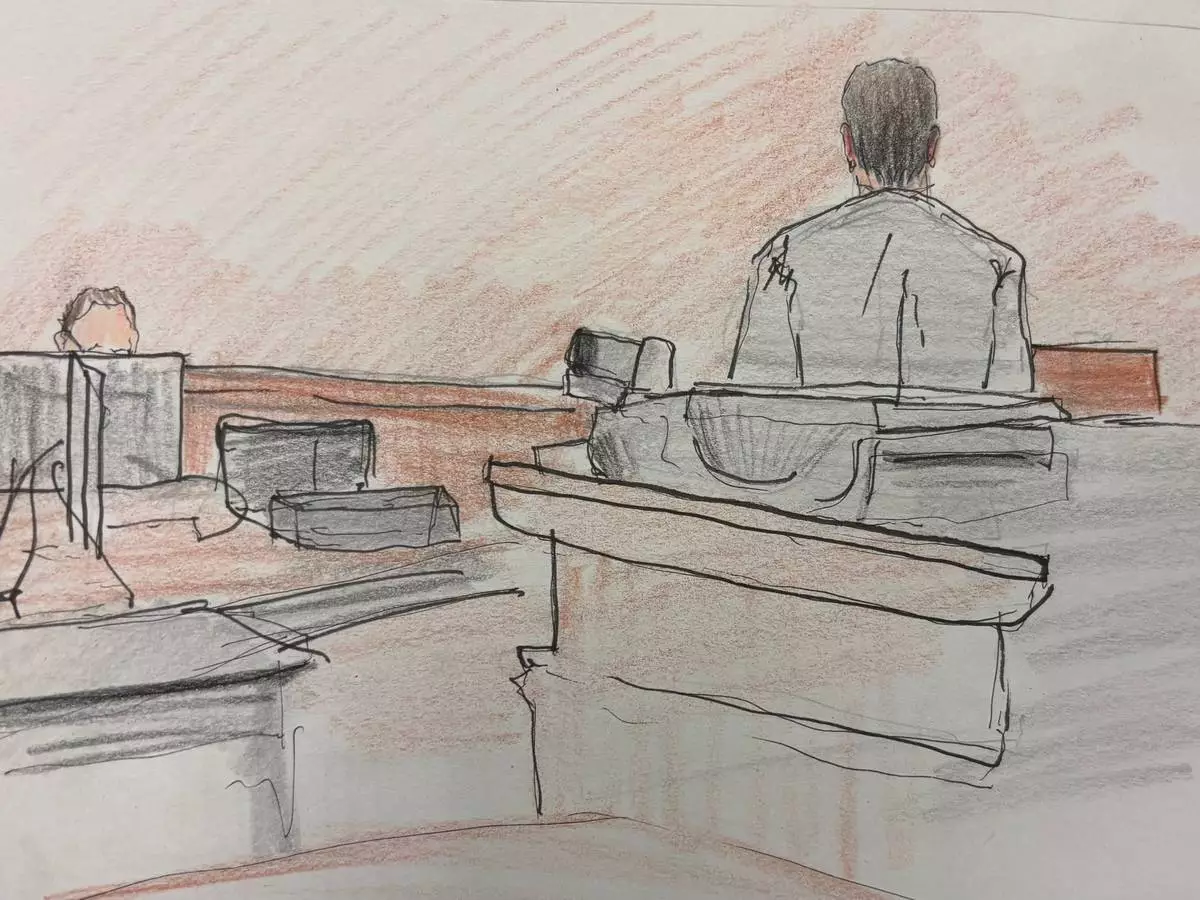
This courtroom sketch depicts the prosecution presenting their closing argument at Milwaukee County Circuit Judge Hannah Dugan's trial in court, Thursday, Dec. 18, 2025 in Milwaukee, Wis. (Adela Tesnow via AP, Pool)
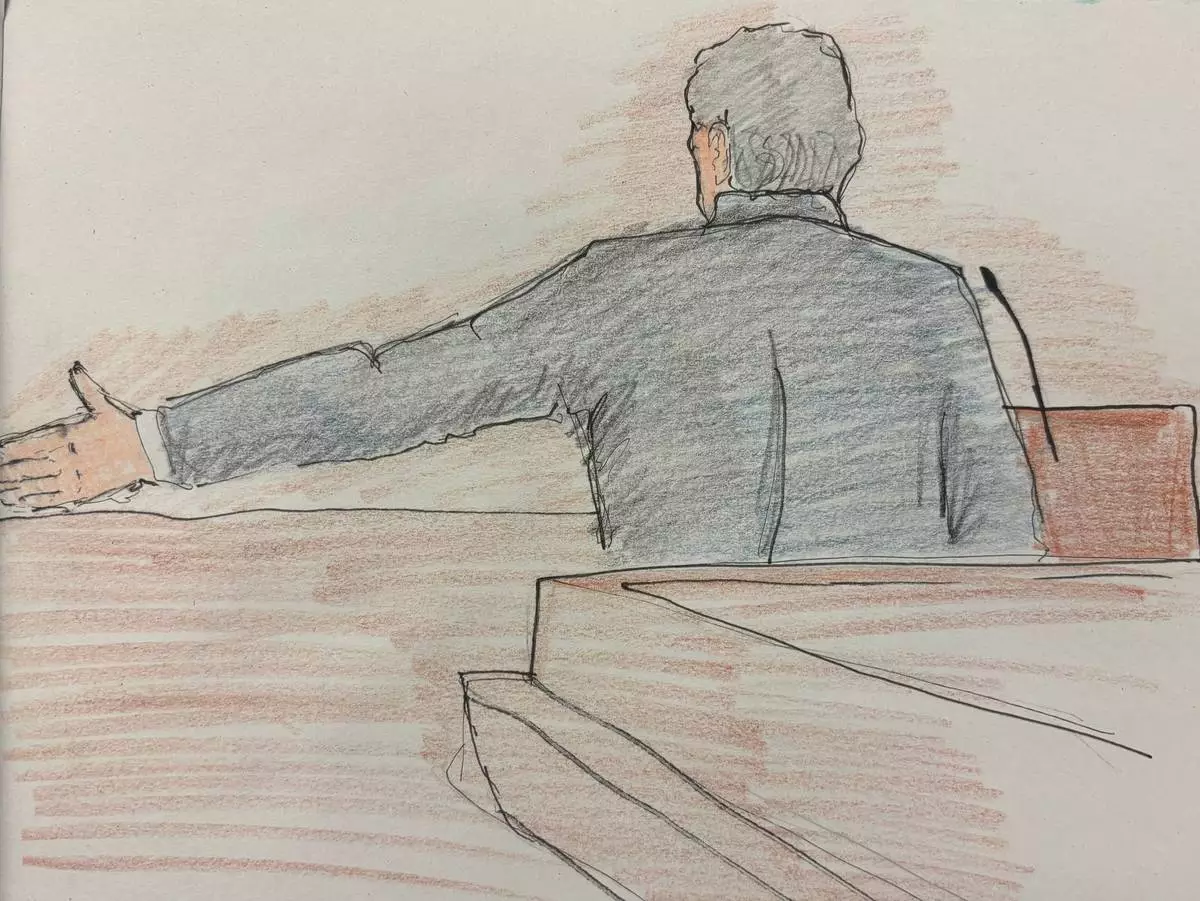
This courtroom sketch depicts the defense attorney giving their closing argument to the jury at Milwaukee County Circuit Judge Hannah Dugan's trial in court, Thursday, Dec. 18, 2025 in Milwaukee, Wis. (Adela Tesnow via AP, Pool)
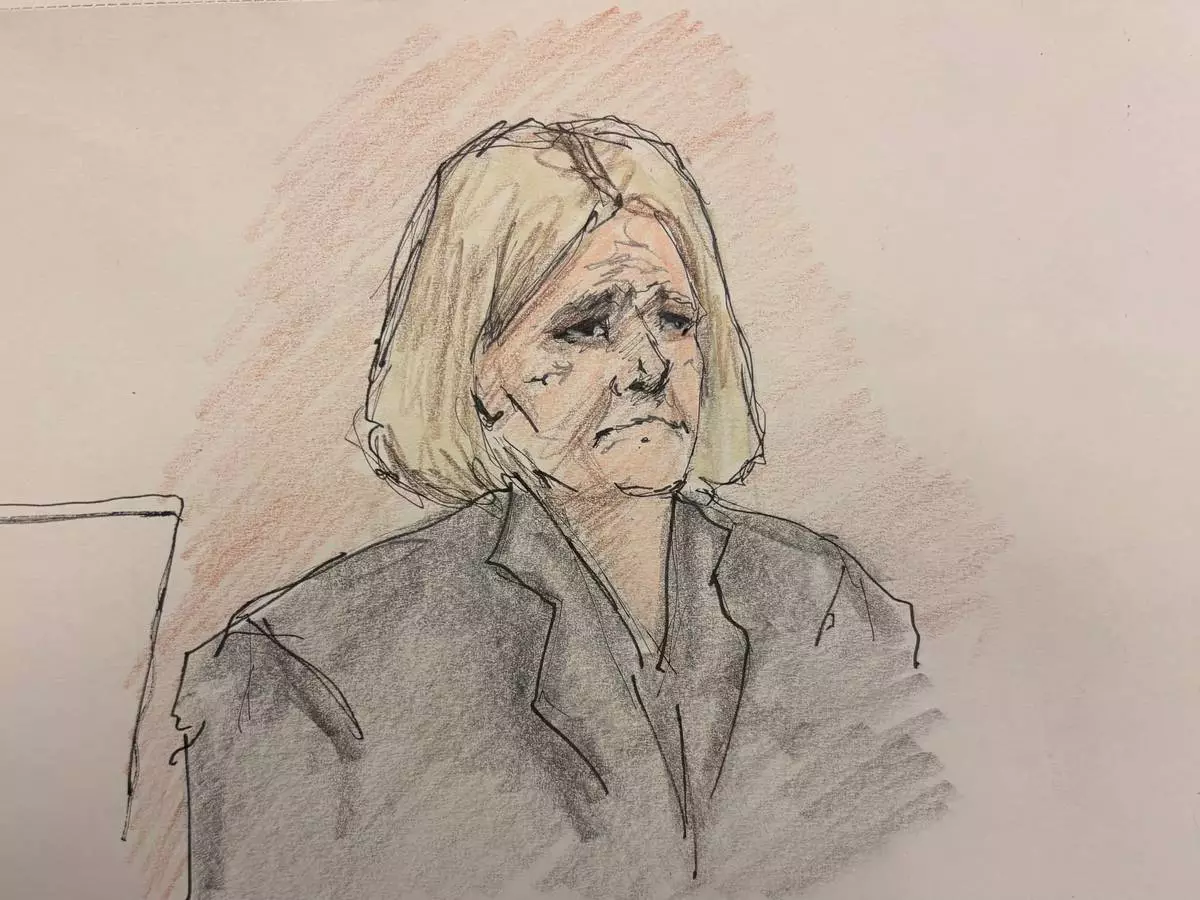
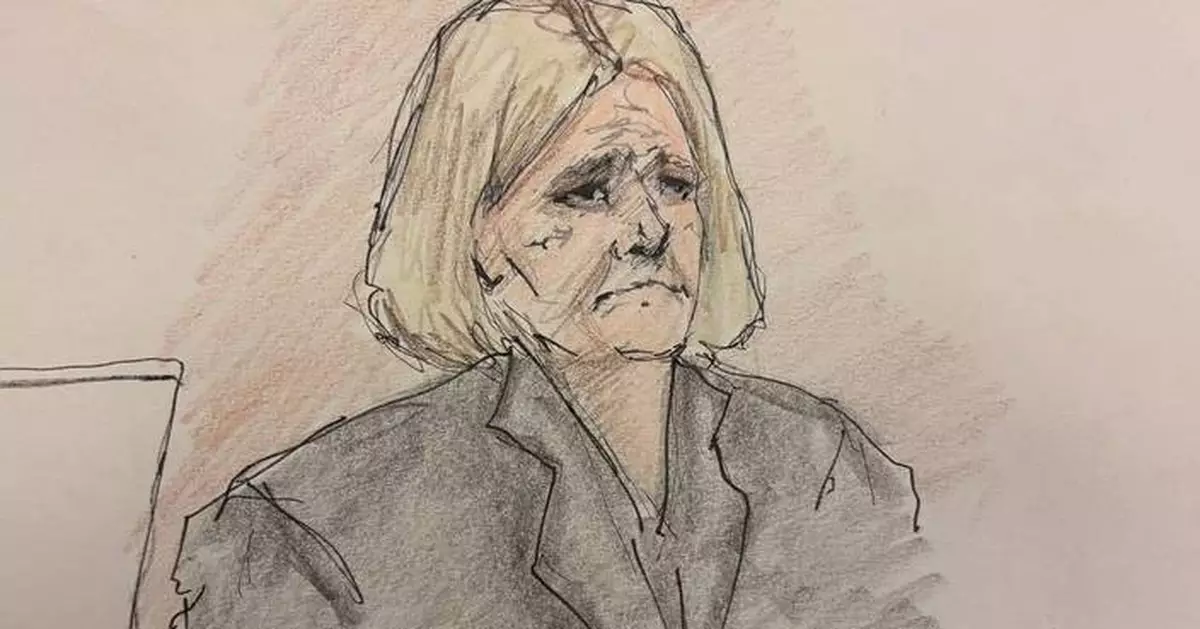
This courtroom sketch depicts Judge Hannah Dugan during the closing arguments at her trial in court, Thursday, Dec. 18, 2025 in Milwaukee, Wis. (Adela Tesnow via AP, Pool)
Investigators on Friday were trying to sort out why a former Brown University student allegedly opened fire on the campus decades after he dropped out and later gunned down an esteemed Massachusetts college professor he attended school with in Portugal in the 1990s.
Claudio Neves Valente, who, like Massachusetts Institute of Technology professor Nuno F.G. Loureiro, was a Portuguese national living in the U.S., was found dead Thursday night from a self-inflicted gunshot wound, said Providence's police chief, Col. Oscar Perez.
The discovery of the 48-year-old Neves Valente's body at a New Hampshire storage facility ended the nearly weeklong hunt for the person who killed two students and wounded nine others in a Brown lecture hall last Saturday. Investigators believe the onetime Brown student killed Loureiro in his home in Brookline, a Boston suburb about 50 miles (80 kilometers) north of Providence, on Monday. Perez said as far as investigators know, Neves Valente acted alone.
Portugal’s foreign minister, Paulo Rangel, said Friday that the government was taken aback by revelations that a Portuguese man is the main suspect in the mass shooting at Brown and the killing of Loureiro. Police in Portugal said they were contacted by U.S. authorities Thursday once Neves Valente was named.
Rangel said Portugal has provided “very broad cooperation” in the case. He said in comments to the national news agency Lusa that “the investigation is far from over.”
Brown University President Christina Paxson said Neves Valente was enrolled there as a graduate student studying physics from the fall of 2000 to the spring of 2001.
“He has no current affiliation with the university,” she said.
Neves Valente and Loureiro attended the same academic program at a university in Portugal between 1995 and 2000, U.S. attorney for Massachusetts Leah B. Foley said. Loureiro graduated from the physics program at Instituto Superior Técnico, Portugal’s premier engineering school, in 2000, according to his MIT faculty page. That same year, Neves Valente was let go from his temporary student support and faculty liaison position at the Lisbon university, according to an archive of a termination notice from the school’s president at the time.
Neves Valente, who was born in Torres Novas, Portugal, about 75 miles (121 kilometers) north of Lisbon, had come to Brown on a student visa. He eventually obtained legal permanent resident status in September 2017, Foley said. It wasn't immediately clear where he was between taking a leave of absence from the school in 2001 and getting the visa in 2017. His last known residence was in Miami.
After officials revealed the suspect's identity, President Donald Trump suspended the green card lottery program that allowed Neves Valente to stay in the United States.
There are still “a lot of unknowns” in regard to motive, Rhode Island Attorney General Peter Neronha said. “We don’t know why now, why Brown, why these students and why this classroom,” he said.
The FBI previously said it knew of no links between the Rhode Island and Massachusetts shootings.
Police credited a person who had several encounters with Neves Valente for providing a crucial tip that led authorities to him.
After police shared security video of a person of interest, the witness — known only as “John” in a Providence police affidavit — recognized him and posted his suspicions on the social media forum Reddit. Reddit users urged him to tell the FBI, and John said he did.
John said he encountered Neves Valente about two hours before the attack in a bathroom in the engineering building, which was where the shooting occurred, and noticed he was wearing inappropriate clothing for the weather, according to the affidavit. Still before the attack, he again bumped into Neves Valente a couple blocks away and saw him suddenly turn away from a Nissan sedan when he saw John.
“When you do crack it, you crack it. And that person led us to the car, which led us to the name,” Neronha said.
His tip pointed investigators to a Nissan Sentra with Florida plates. That enabled Providence police to tap into a network of more than 70 street cameras operated around the city by surveillance company Flock Safety. Those cameras track license plates and other vehicle details.
After leaving Rhode Island, Providence officials said Neves Valente stuck a Maine license plate over his rental car’s plate to help conceal his identity.
Investigators found footage of Neves Valente entering an apartment building near Loureiro's in a Boston suburb. About an hour later, Neves Valente was seen entering the Salem, New Hampshire, storage facility where he was found dead, Foley said. He had with him a satchel and two firearms, Neronha said.
Loureiro, a 47-year-old physicist and fusion scientist, joined MIT in 2016 and was named last year to lead the school’s Plasma Science and Fusion Center, one of its largest laboratories. The scientist from Viseu, Portugal, had been working to explain the physics behind astronomical phenomena such as solar flares.
In Lisbon, he was remembered as a highly regarded researcher and instructor for “all the contributions he gave and what he could still have given, all the equations left unwritten,” said Professor Bruno Gonçalves, head of the Institute for Plasmas and Nuclear Fusion at Instituto Superior Técnico.
Gonçalves added, “It is difficult to imagine in what context someone would want to harm someone that works in this field.”
The two Brown students killed during a study session for final exams were 19-year-old sophomore Ella Cook and 18-year-old freshman MukhammadAziz Umurzokov. Cook was active in her Alabama church and served as vice president of the Brown College Republicans. Umurzokov’s family immigrated to the U.S. from Uzbekistan when he was a child, and he aspired to be a doctor.
As for the wounded, three had been discharged and six were in stable condition Thursday, officials said.
Although Brown officials say there are 1,200 cameras on campus, the attack happened in an older part of the engineering building that has few, if any, cameras. And investigators believe the shooter entered and left through a door that faces a residential street bordering campus, which might explain why the cameras Brown does have didn’t capture footage of the person.
Associated Press reporters Barry Hatton and Helena Alves in Lisbon, Portugal, Mark Scolforo in Harrisburg, Pennsylvania, Audrey McAvoy in Honolulu, Hallie Golden in Seattle and Matt O'Brien in Providence contributed.
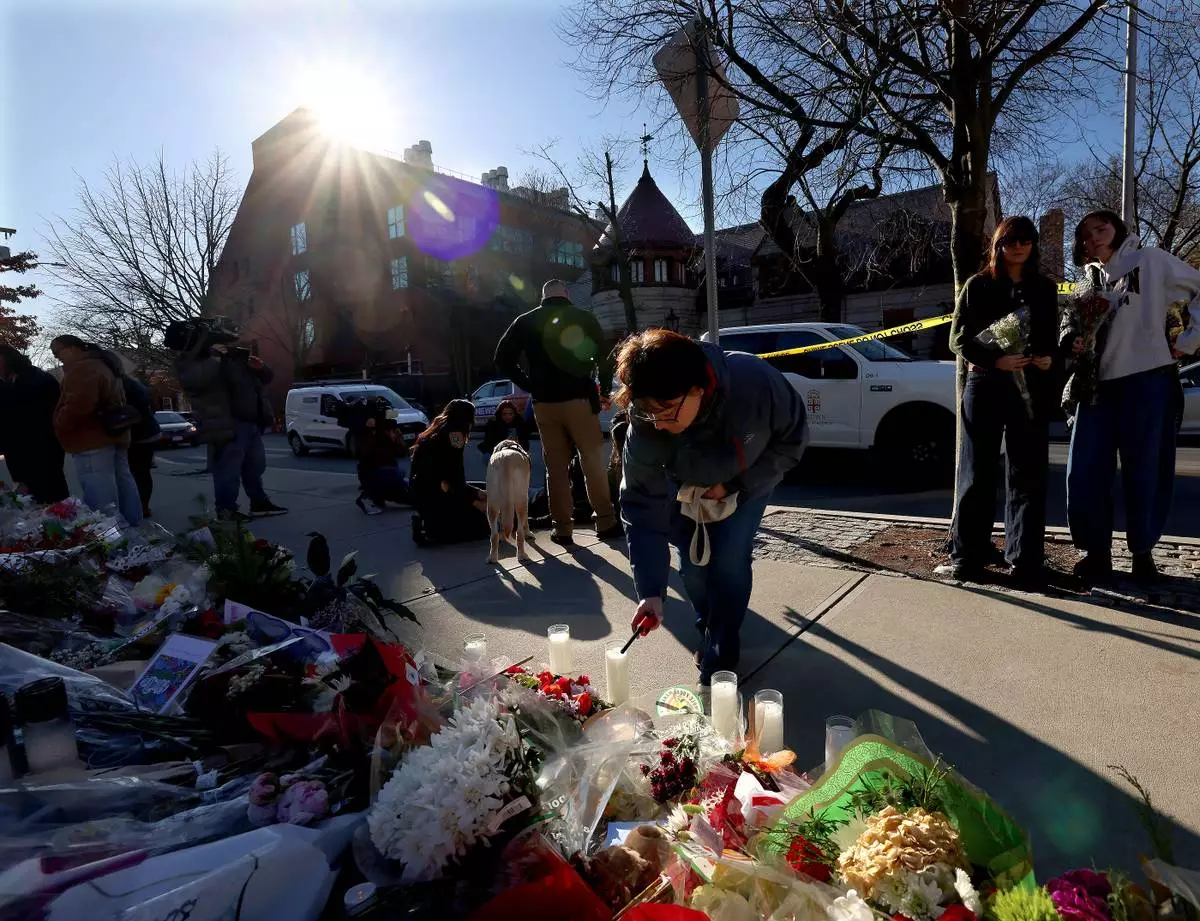
A woman lights a candle at a memorial set up in front of the Barus and Holley engineering building at Brown University in Providence, RI, Thursday, Dec. 18, 2025. (AP Photo/ Mark Stockwell)
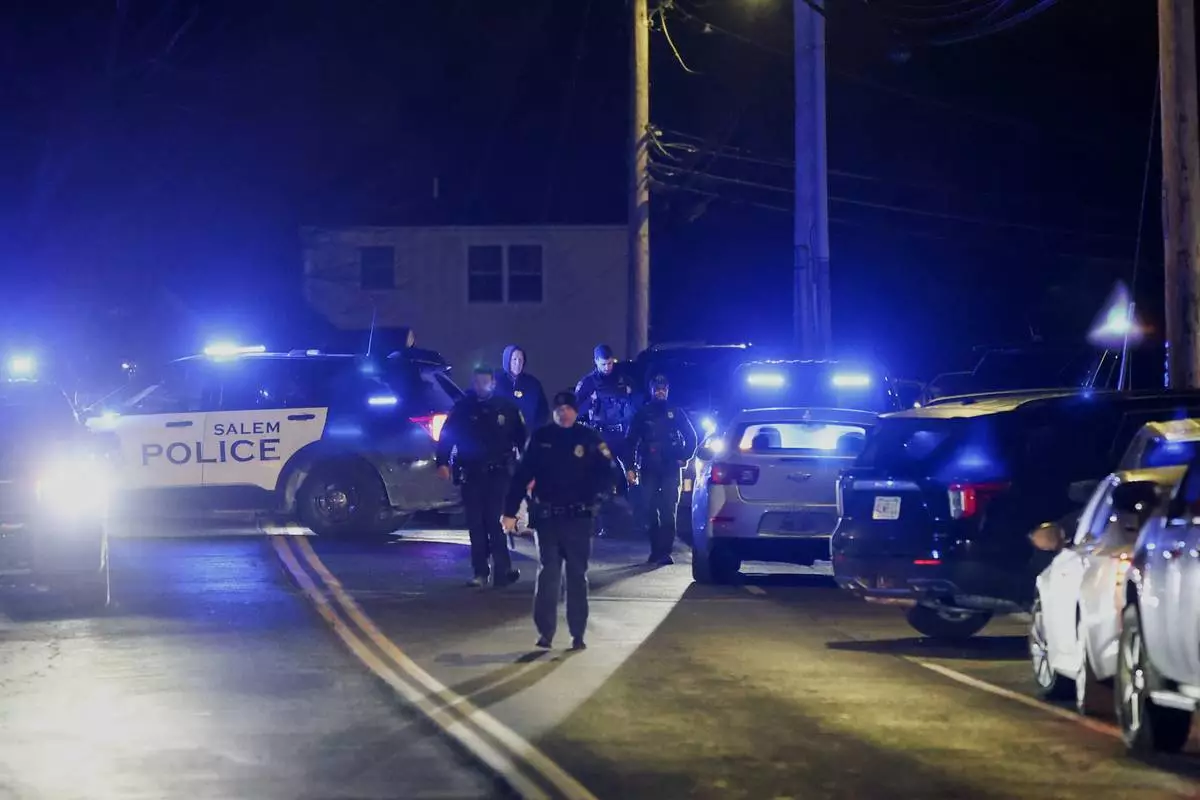
Law enforcement officers search the area for the Brown University shooting suspect, Thursday, Dec. 18, 2025, in Salem, N.H. (AP Photo/Reba Saldanha)

FILE - People hold candles during a vigil in Providence, R.I., for those injured or killed in the previous day's shooting on the campus of Brown University, Sunday, Dec. 14, 2025. (AP Photo/Steven Senne, File)
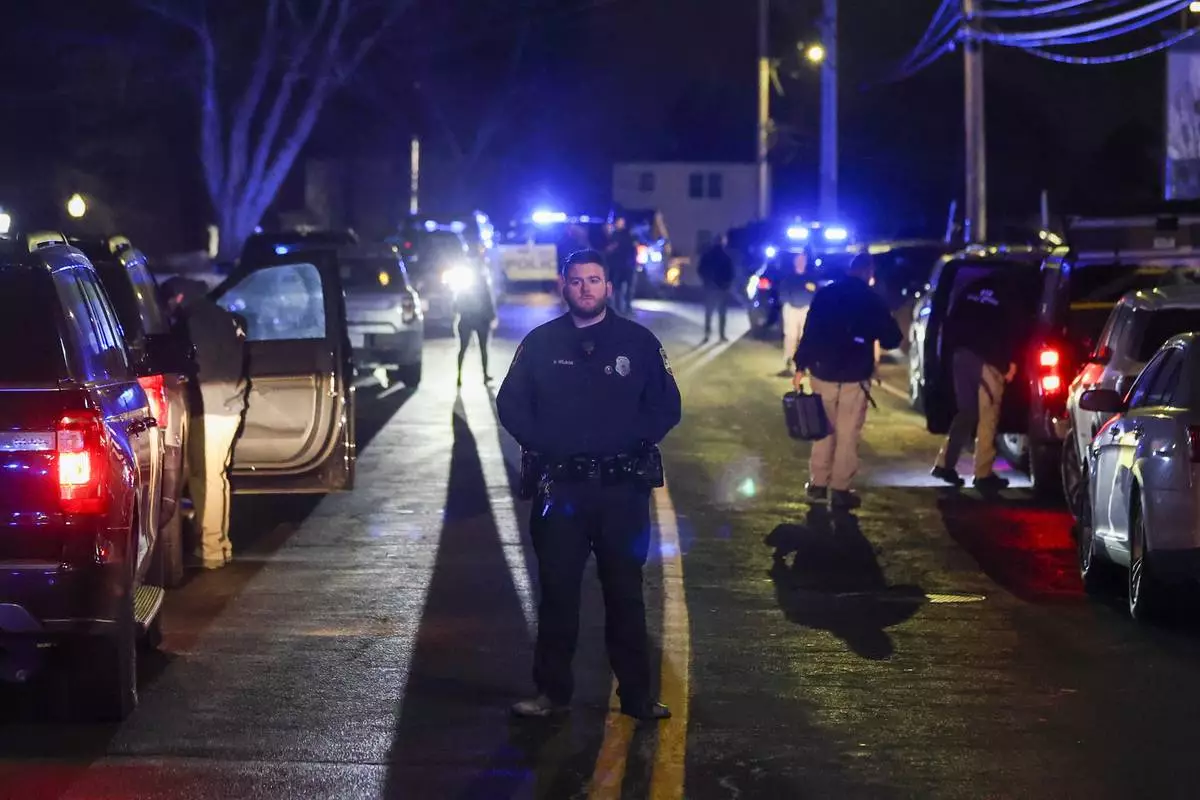
Law enforcement officers are seen outside a storage facility where a suspect in the shooting at Brown University was found dead, Thursday, Dec. 18, 2025, in Salem, N.H. (AP Photo/Reba Saldanha)