U.S. President Donald Trump announced Friday that nine drugmakers have agreed to lower the cost of their prescription drugs in the U.S.
Pharmaceutical companies Amgen, Bristol Myers Squibb, Boehringer Ingelheim, Genentech, Gilead Sciences, GSK, Merck, Novartis and Sanofi will now rein in Medicaid drug prices to match what they charged in other developed countries.
As part of the deal, new drugs made by those companies will also be charged at the so-called “most-favored-nation” pricing across the country on any newly launched medications for all, including commercial and cash pay markets as well as Medicare and Medicaid.
Drug prices for patients in the U.S. can depend on a number of factors, including the competition a treatment faces and insurance coverage. Most people have coverage through work, the individual insurance market or government programs like Medicaid and Medicare, which shield them from much of the cost.
Patients in Medicaid, the state and federally funded program for people with low incomes, already pay a nominal co-payment of a few dollars to fill their prescriptions, but lower prices could help state budgets that fund the programs.
Lower drug prices also will help patients who have no insurance coverage and little leverage to negotiate better deals on what they pay. But even steep discounts of 50% found through the administration’s website could still leave patients paying hundreds of dollars a month for some prescriptions.
William Padula, a pharmaceutical and health economics professor at USC, said Medicaid already has the most favorable drug rates which in some cases will be close to what the “most-favored-nation” price is so it remains to be seen what other impacts it could have, such as more research and development.
“It can’t be bad. I don’t see much downside but it’s hard to judge what the upside is,” Padula said.
And while it is significant that Trump was able to get big drugmakers to the table to negotiate lower prices, it will take years to gage how effective this initiative is in terms of more people obtaining more of the medicines they need.
“It’s good for their stock and it’s good for their future” research and development, Padula said of the pharmaceutical companies. “It’s clearly influential but will all this add up to a major effect? Nothing really matters here unless our health gets better as a country.”
Trump administration officials said the drugmakers will also sell pharmacy-ready medicines on the TrumpRx platform, which is set to launch in January and will allow people to buy drugs directly from manufacturers.
Companies such as Merck, GSK and Bristol Myers Squibb also agreed to donate significant supplies of active pharmaceutical ingredients to a national reserve and to formulate and distribute them into medications such as antibiotics, rescue inhalers and blood thinners as needed in an emergency.
The New Jersey-based Bristol Myers Squibb further announced that it will be giving for free to the Medicaid program its signature blood thinner prescribed to reduce the risk of blood clots and stroke. Known as Eliquis, it is the company’s top prescribed drug as well as being one of Medicaid’s most widely-used medicines.
Padula said the donations — which encompass some of the world’s most critical medicines — are a significant step toward health equity and an acknowledgement that the drugmakers can afford to seek profits elsewhere in their operations. Eliquis already has been one of the most profitable drugs ever made.
“It’s a thoughtful health equity move that they can afford given that it’s been such a blockbuster,” Padula said of the Eliquis donation.
Other major drugmakers including Pfizer, AstraZeneca, EMD Serono, Novo Nordisk and Eli Lilly struck similar deals with the Trump administration earlier this year.
Though individual terms were not disclosed, the administration has now negotiated lower drug prices with 14 companies since Trump publicly sent letters to executives at 17 pharmaceutical companies about the issue, noting that U.S. prices for brand-name drugs can be up to three times higher than averages elsewhere.
Trump said he effectively threatened the pharmaceutical companies with 10% tariffs to get them to “do the right thing.”

President Donald Trump speaks during an event on prescription drug prices in the Roosevelt Room of the White House, Friday, Dec. 19, 2025, in Washington. (AP Photo/Evan Vucci)
PARIS (AP) — Millions of people across Europe were exposed to extreme and exceptionally high temperatures on Tuesday, with 40 fatalities from drowning recorded in France in the past week as residents seek relief from the searing heat.
Temperatures will remain high around the clock in France, the European nation most affected so far by the early summer heat wave. The national weather service, Meteo France, placed 54 departments, about half the country, under a red heat wave alert.
Italy, Spain, and Britain were also hit.
Human-caused climate change is tied to increasingly extreme weather, and U.N. climate agency projections say the next five years should shatter more heat records.
French Prime Minister Sébastien Lecornu said that the 40 people who died by drowning since last Thursday were mainly young people.
In a country without widespread air conditioning, schools, public transportation and sporting events have been impacted. In Paris, the Eiffel Tower adjusted its operations to the scorching weather, closing in the afternoon instead of late at night as it usually does. The Louvre museum said it would close two hours earlier than normal from Wednesday through Saturday.
“Although parts of its historic building are naturally resilient, the museum remains vulnerable and is not sufficiently adapted to climate change,” it said. “Heat buildup is greatest toward the end of the day and is further intensified by high visitor numbers.”
Extreme conditions are expected to last at least until the end of the week, with daytime highs above 40 degrees Celsius (104 degrees Fahrenheit) in many towns.
“Further record-breaking temperatures are expected, including some that could surpass all previous records, regardless of the time of year,” Meteo France said.
The heat wave is exceptionally intense, coming very early in the summer, “but with a still uncertain duration,” the weather service said. It has already been compared to the August 2003 heat wave, when the highest temperatures in over half a century caused an estimated 15,000 deaths, many of them among older people in apartments and retirement homes without air conditioning.
Europe is the world’s fastest-warming continent, with temperatures increasing twice as fast as the global average since the 1980s, according to the European Union’s Copernicus Climate Change Service. Over the last four years, more than 200,000 people across Europe died from heat-related causes, and most of those deaths were preventable, the World Health Organization’s Europe office said this month.
The above-average temperatures can cause heat exhaustion and life-threatening heat stroke.
Across the English Channel from France, hundreds of British schools say they are shuttering or closing early this week because of expected record heat, while many train services have been reduced to avoid heat-related problems on the rail lines.
The Met Office, the U.K. weather agency, issued a red extreme heat warning for Wednesday and Thursday, with forecasts suggesting June’s all-time daily temperature record could be broken.
Temperatures of around 37 degrees C (98.6 F) are expected in southern England, with up to 35 C (95 F) in southeast Wales. The peak of the heat wave is now forecast for Wednesday and Thursday, when highs could reach 39 C (102.2 F) in London or southern England. Conditions are expected to ease by Friday, the Met Office said.
On Tuesday, multiple train operators across the United Kingdom, including the express train serving London Gatwick Airport, said they were canceling or reducing services this week. Railway operators urged people to “only travel if absolutely necessary” on Wednesday and Thursday.
Further south on the continent, Spain is facing a heat wave across various parts of the Iberian Peninsula.
Spain’s national weather service, Aemet, issued red alerts Tuesday for temperatures of 44 C (111 F) in southern Andalusia as well as warnings of thermometers hitting 40 C (104 F) in the normally temperate Cantabria and the Basque Country regions along its northern Atlantic coast.
Aemet meteorologist Rubén del Campo said Spain, which has experienced increasingly torrid summers of late, is only going to get hotter because of climate change as heatwaves become more frequent, longer and appear outside the traditional window of July and August.
Of the dozen heatwaves Aemet has recorded in June since it started tracking them in 1975, half have occurred since 2015, del Campo said.
Human-driven climate change is heating up the atmosphere, both above Spain and in the surrounding sea waters, he said.
Copernicus, the EU monitoring agency, found that in Europe and globally, 2024 was the hottest year on record and the continent experienced its second-highest number of “heat stress” days.
Scientists warn that climate change is exacerbating the frequency and intensity of heat and dryness, especially in southeastern Europe, making the region more vulnerable to health impacts and wildfires.
The name of the body of water between France and the U.K. has been corrected to the “English Channel.”
Associated Press journalists Sylvia Hui in London and Joseph Wilson in Barcelona, Spain, contributed to this report.

People swim in an outdoor swimming pool in London, Tuesday, June 23, 2026 as a heat wave is predicted across Britain.(AP Photo/Alberto Pezzali)
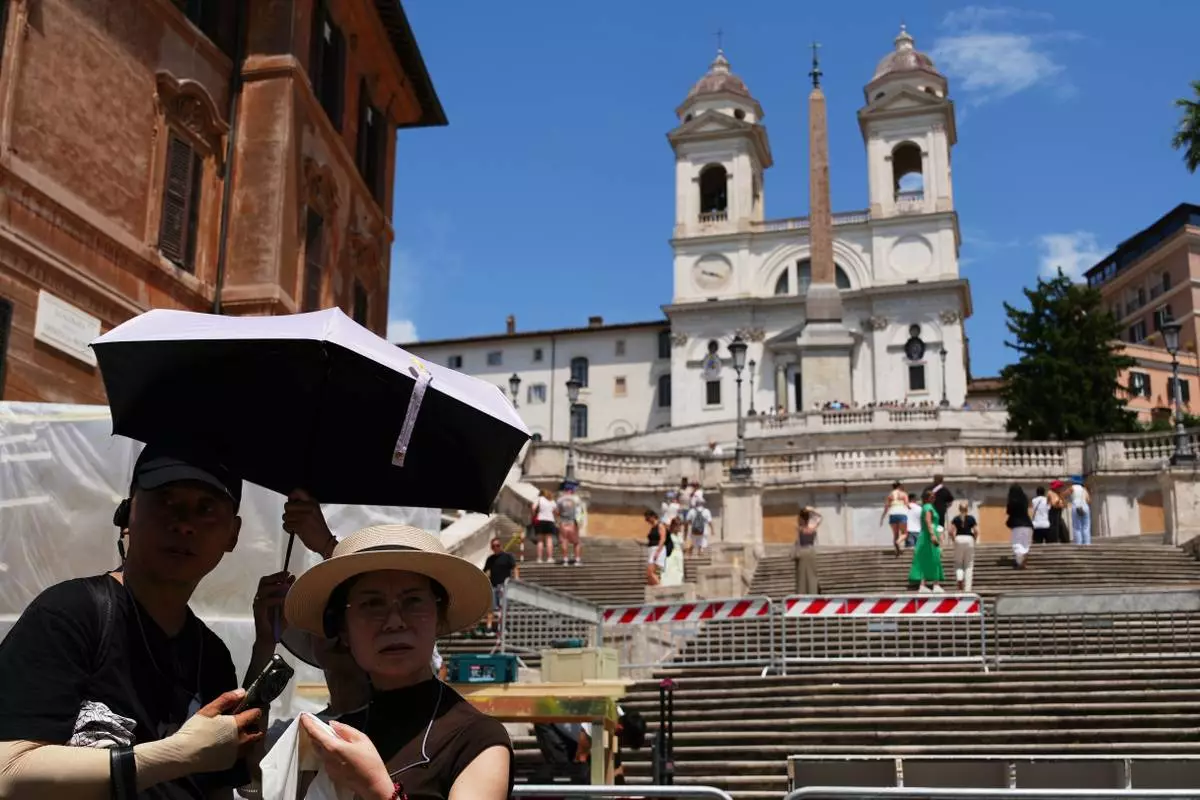
Tourists use umbrellas to shelter from the sun as they visit the historical Spanish steps in Rome, Tuesday, June 23, 2026. (AP Photo/Alessandra Tarantino)
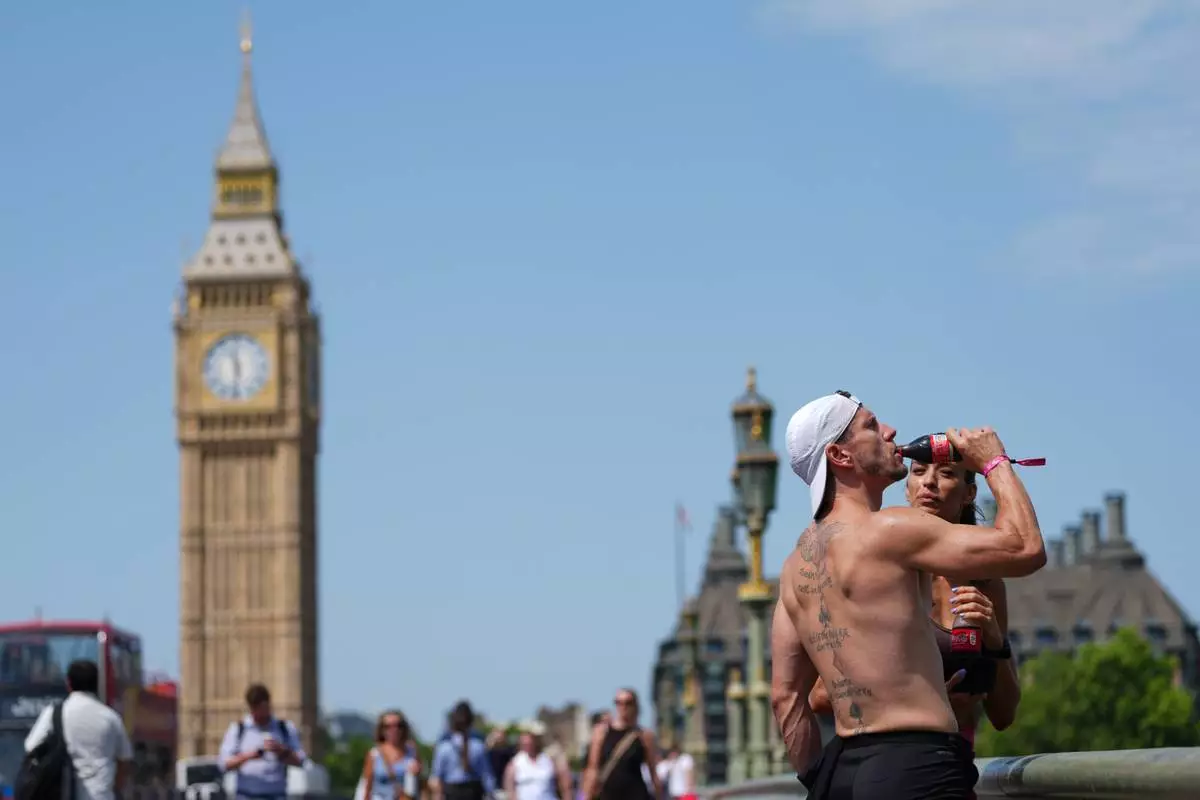
A man drinks on Westminster Bridge in London, as a heat wave is predicted Tuesday, June 23, 2026. (AP Photo/Kirsty Wigglesworth)
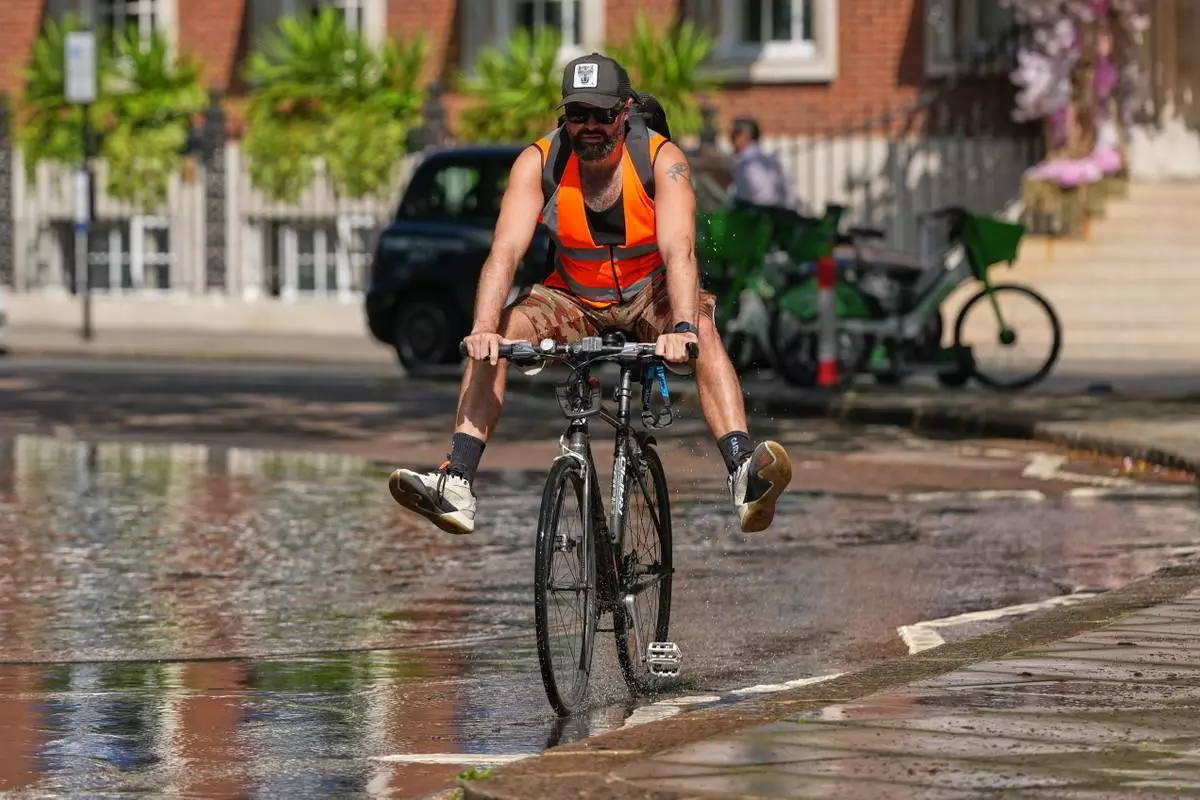
A man keeps his legs dry as he cycles through standing water in London, as a heat wave is predicted Tuesday, June 23, 2026. (AP Photo/Kirsty Wigglesworth)

An African penguin cools off in a basin in Kronber zoo, near Frankfurt, Germany, Tuesday, June 23, 2026. (AP Photo/Michael Probst)
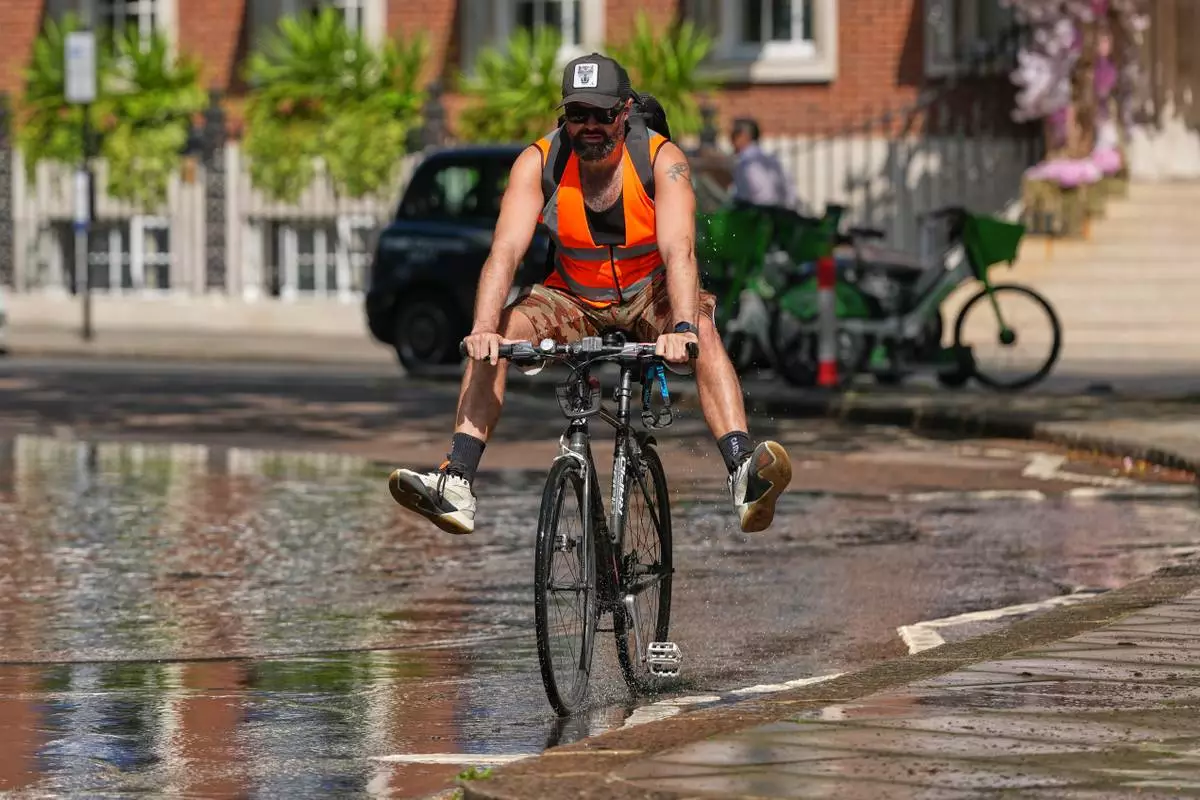
A man keeps his legs dry as he cycles through standing water in London, as a heat wave is predicted Tuesday, June 23, 2026. (AP Photo/Kirsty Wigglesworth)
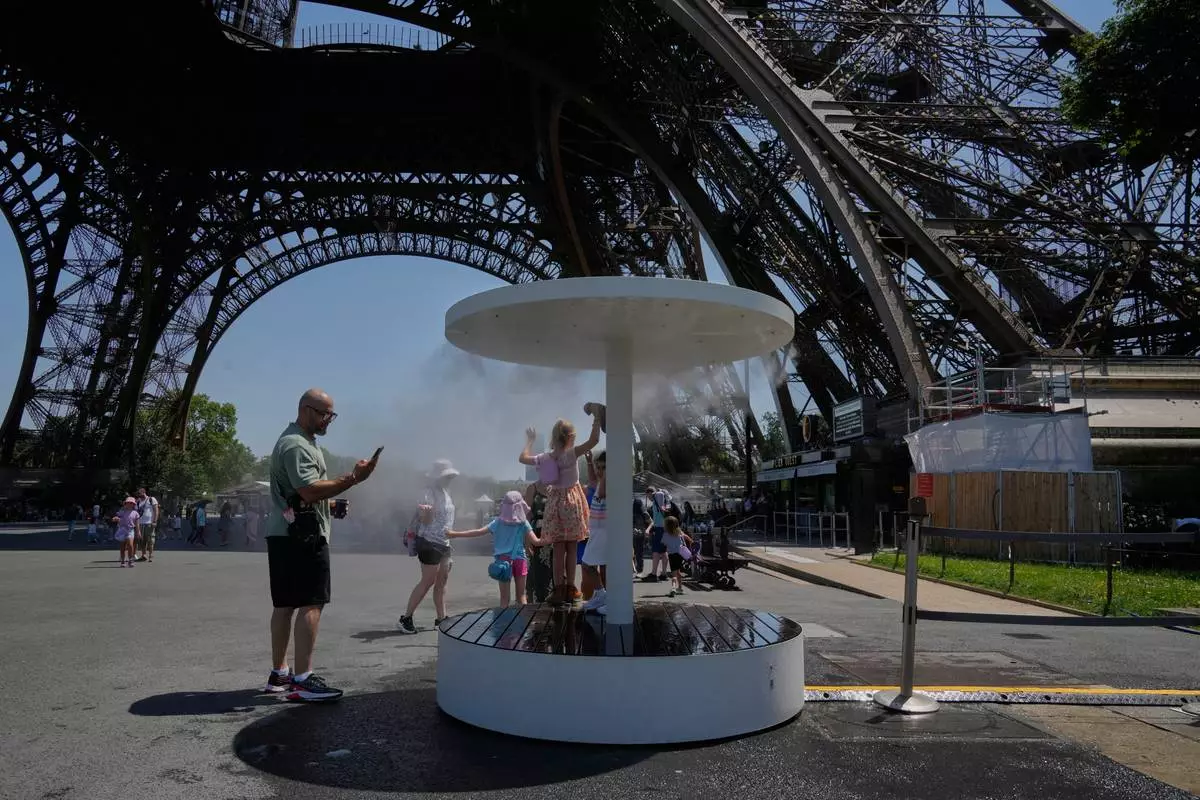
People cool off in a water spray at the Eiffel Tower in Paris, Sunday, June 21, 2026. (AP Photo/Michel Euler)
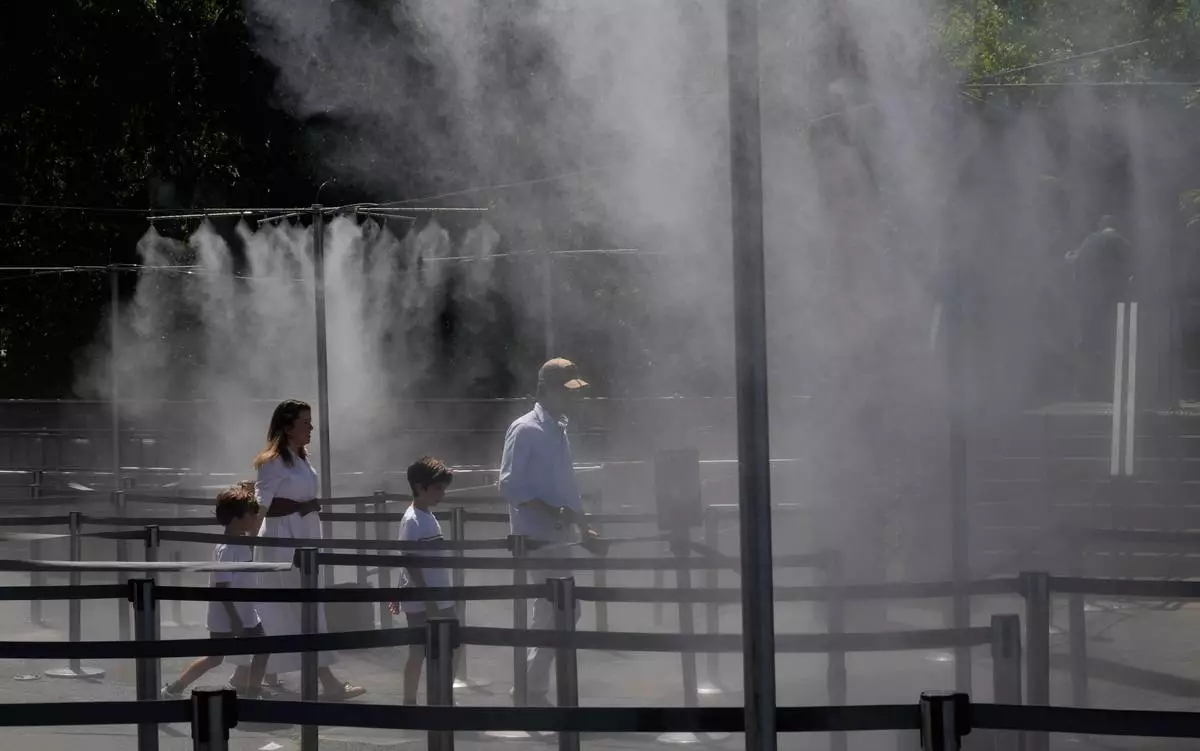
A family walks through a cooling water spray at the Eiffel Tower in Paris, Sunday, June 21, 2026. (AP Photo/Michel Euler)

A man shields himself from the sun with a scarf as he walks in the garden of the Palace of Versailles, outside Paris, during a heat wave with temperatures soaring above 40 degrees Celsius (104 Fahrenheit), Monday, June 22, 2026. (AP Photo/Thibault Camus)

Tourists with an umbrella take a photo in Paris, as France is enduring a grueling heat wave with temperatures soaring above 40 degrees Celsius (104 Fahrenheit), Monday, June 22, 2026. (AP Photo/Christophe Ena )
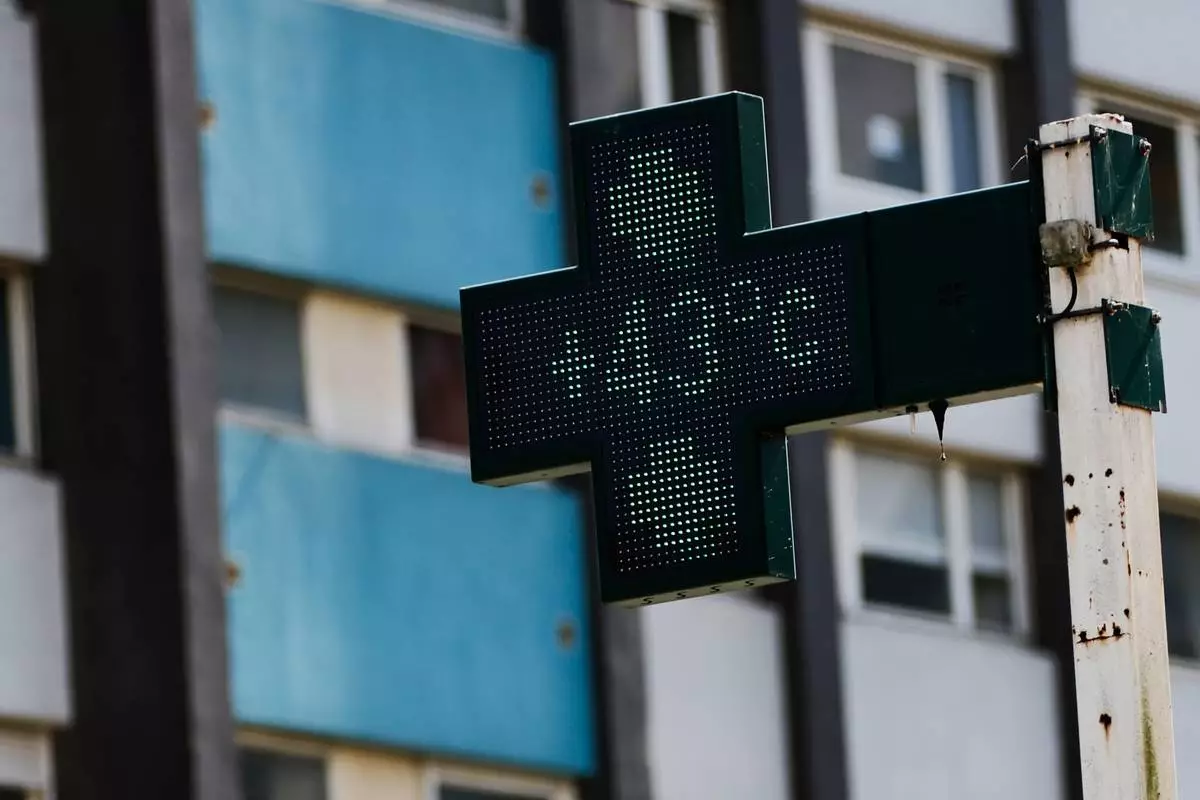
A drugstore sign shows the temperature 43 degrees Celsius (109,4 degrees Fahrenheit) in Rennes, western France, Monday, June 22, 2026. (AP Photo/Jeremias Gonzalez)