Christmas is a Christian holiday that observes the birth of Jesus. But did you know that the earliest followers of Jesus did not annually commemorate his birth? Or that Santa Claus is inspired by the acts of kindness of a fourth-century Christian saint? And have you heard about the modern-day Japanese tradition of eating Kentucky Fried Chicken on Christmas?
Since the early 20th century, Christmas has evolved from a religious holiday to a hugely popular cultural holiday observed by Christian and secular people across the globe who gather with families, exchange gifts and cards and decorate Christmas trees.
Click to Gallery

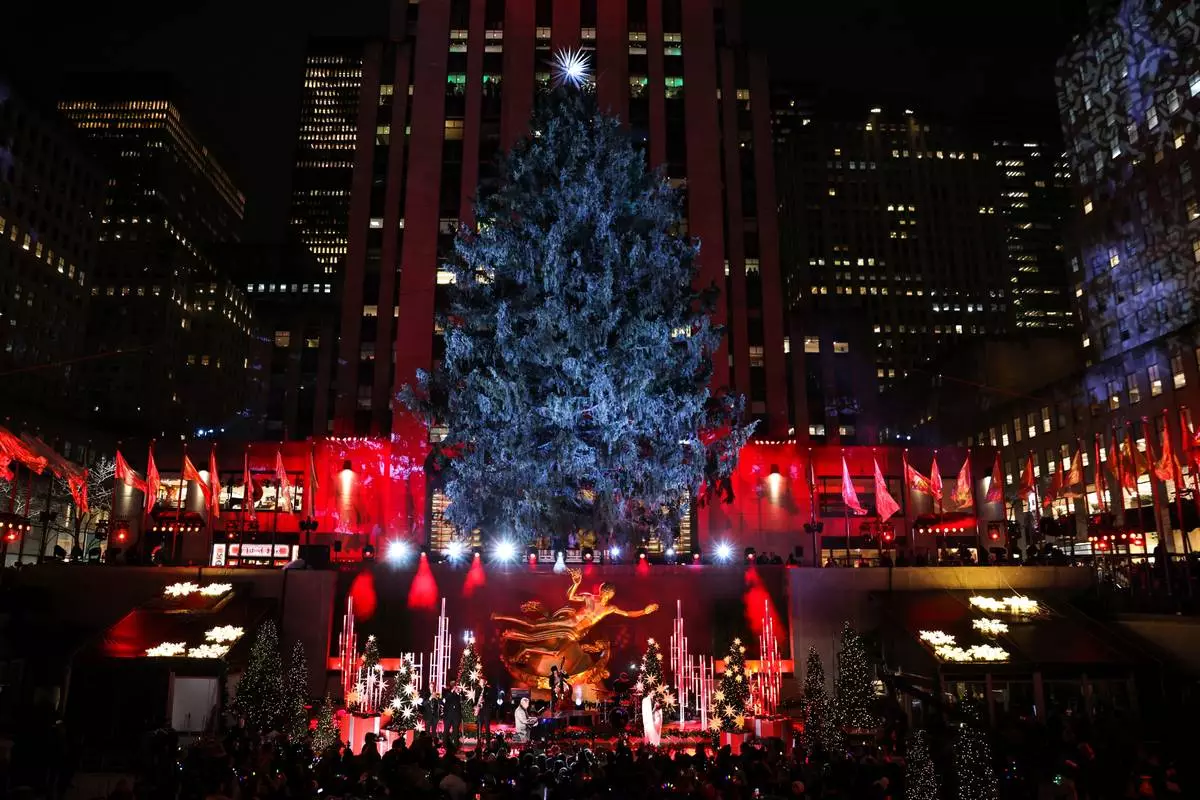
FILE - Katherine McPhee and David Foster perform during the 90th annual Rockefeller Center Christmas tree lighting ceremony, Wednesday, Nov. 30, 2022, in New York. (AP Photo/Julia Nikhinson, File)
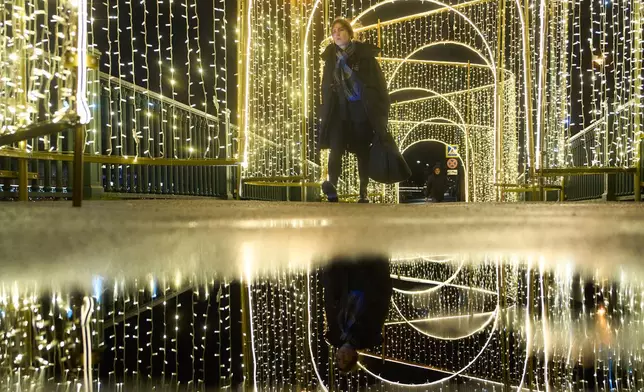
FILE - A woman walks across a bridge decorated prior to Christmas and New Year festivities in St. Petersburg, Russia, Thursday, Dec. 11, 2025. (AP Photo/Dmitri Lovetsky, File)
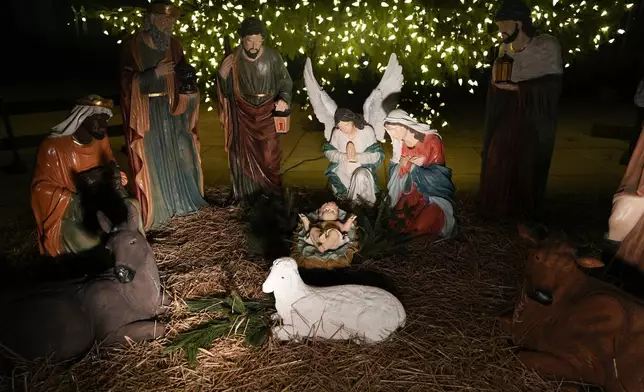
FILE - A Nativity scene is illuminated by a Christmas tree on Payrow Plaza in Bethlehem, Pa., known as "Christmas City, USA," on Sunday, Dec. 1, 2024. (AP Photo/Luis Andres Henao, File)

FILE - Decked in a Santa outfit and holiday lights, a child bolts from the starting line of the annual Christmas run in Vilnius, Lithuania, Saturday, Dec. 6, 2025. (AP Photo/Mindaugas Kulbis, File)
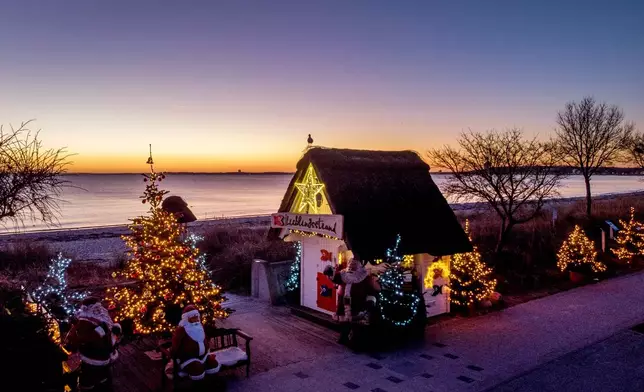
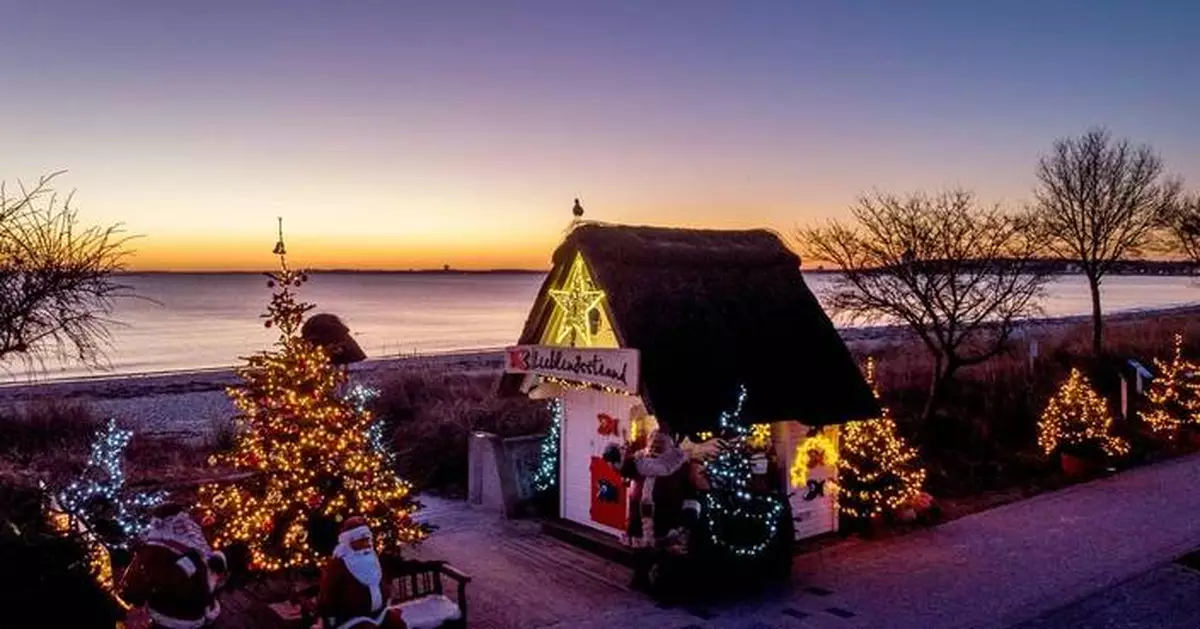
FILE - Christmas trees and Santa Clauses decorate the entrance to the beach in Haffkrug, northern Germany, Monday, Dec. 20, 2021. (Photo/Michael Probst, File)
Here’s a look at the history, beliefs and the evolution of Christmas:
Early followers of Jesus did not annually commemorate his birth but instead focused on commemorating their belief in his resurrection at Easter.
The story of the birth of Jesus appears only in two of the four Gospels of the New Testament: Matthew and Luke. They provide different details, though both say Jesus was born in Bethlehem.
The exact day, month and even year of Jesus’s birth are unknown, said Christine Shepardson, a professor at the University of Tennessee who studies early Christianity.
The tradition of celebrating Jesus’ birth on Dec. 25, she said, only emerged in the fourth century.
“It’s hard to overemphasize how important the fourth century is for constructing Christianity as we experience it in our world today,” Shepardson said. It was then, under Emperor Constantine, that Christians began the practice of gathering at churches instead of meeting at homes.
Some theories say the date coincides with existing pagan winter solstice festivals, including the Roman celebration of Sol Invictus, or the “Unconquered Sun,” on Dec 25.
While most Christians celebrate Christmas on Dec. 25, some Eastern Orthodox traditions celebrate the holy day on Jan. 7. That’s because they follow the ancient Julian calendar, which runs 13 days behind the Gregorian calendar, used by Catholic and Protestant churches as well as by much of the secular world.
For centuries, especially during the Middle Ages, Christmas was associated with rowdy street celebrations of feasting and drinking, and for many Christians, it “was not in good standing as a holiday,” said Thomas Ruys Smith, a professor of American literature and culture at the University of East Anglia in England.
“Puritans,” he said, “were not fond of Christmas.”
But in the 19th century, he said, Christmas became “respectable” with “the domestic celebration that we understand today — one centered around the home, the family, children, gift-giving.”
The roots of modern-day Christmas can be traced back to Germany. In the late 19th century, there are accounts of Christmas trees and gift-giving that, according to Smith, later spread to Britain and America, helping to revitalize Christmas on both sides of the Atlantic.
Christmas became further popularized with the publication of “A Christmas Carol” by Charles Dickens in 1843, and the writings of Washington Irving, who was a fan of St. Nicholas and helped popularize the celebration of Christmas in America.
The first Rockefeller Center Christmas tree was put up by workers in 1931 to raise spirits during the Great Depression. The tradition stuck as the first tree-lighting ceremony was held in 1933 and remains one of New York City’s most popular holiday attractions.
St. Nicholas was a fourth-century Christian bishop from the Mediterranean port city of Myra (in modern-day Turkey). His acts of generosity inspired the secular Santa Claus legend.
The legends surrounding jolly old St. Nicholas — celebrated annually on Dec. 6 — go way beyond delivering candy and toys to children. He is believed to have interceded on behalf of wrongly condemned prisoners and miraculously saved sailors from storms.
Devotion to St. Nicholas spread during the Middle Ages across Europe and he became a favorite subject for medieval artists and liturgical plays. He is the patron saint of sailors and children, as well as of Greece, Russia and New York.
Devotion to St. Nicholas seems to have faded after the 16th century Protestant Reformation, except in the Netherlands, where his legend remained as Sinterklaas. In the 17th century, Dutch Protestants who settled in New York brought the Sinterklaas tradition with them.
Eventually, St. Nicholas morphed into the secular Santa Claus.
In the U.K., it’s Father Christmas; in Greece and Cyprus, St. Basil (who arrives on New Year’s Eve). In some parts of Italy, it’s St. Lucy (earlier in December) and in other Italian regions, Befana, a witch-like figure, who brings presents on the Epiphany on Jan. 6.
Instead of a friendly Santa Claus, children in Iceland enjoy favors from 13 mischievous troll brothers, called the Yule Lads. They come down from their mountain cave 13 days before Christmas, according to folklore.
One of the oldest traditions around Christmas is bringing greenery — holly, ivy or evergreen trees — into homes. But determining whether it’s a Christian tradition is harder. “For many people, the evergreen can symbolize Christ’s promise of eternal life and his return from death,” Smith said. “So, you can interpret that evergreen tradition within the Christian concept.”
The decorating of evergreen trees is a German custom that began in the 16th century, said Maria Kennedy, a professor at Rutgers University—New Brunswick’s Department of American Studies. It was later popularized in England and America.
“Mistletoe, an evergreen shrub, was used in celebrations dating back to the ancient Druids — Celtic religious leaders — some 2,000 years ago,” Kennedy writes in The Surprising History of Christmas Traditions.
“Mistletoe represented immortality because it continued to grow in the darkest time of the year and bore white berries when everything else had died.”
Other traditions include Christmas services and Nativity scenes at homes and churches. More recently, Nativity scenes — when erected on public property in the U.S. — have triggered legal battles over the question of the separation of church and state.
Christmas caroling, Kennedy writes, can also be traced back to European traditions, where people would go from home to home during the darkest time of the year to renew relationships within their communities and give wishes for good luck, health and wealth for the forthcoming year.
“They would recite poetry, sing and sometimes perform a skit. The idea was that these acts would bring about good fortune to influence a future harvest,” Kennedy writes.
Among the many Christmas traditions that have been adopted and localized globally, there’s one that involves KFC.
In 1974, KFC launched a Christmas campaign where they began to sell fried chicken with a bottle of wine so it could be used for a Christmas party.
KFC says the idea for the campaign came from an employee who overheard a foreign customer at one of its Tokyo restaurants saying that since he couldn’t get turkey in Japan, he’d have to celebrate Christmas with Kentucky Fried Chicken.
“That really stuck,” Smith said. “And still today, you have to order your KFC months in advance to make sure that you’re going to get it at Christmas Day.”
Associated Press religion coverage receives support through the AP’s collaboration with The Conversation US, with funding from Lilly Endowment Inc. The AP is solely responsible for this content.
FILE - Katherine McPhee and David Foster perform during the 90th annual Rockefeller Center Christmas tree lighting ceremony, Wednesday, Nov. 30, 2022, in New York. (AP Photo/Julia Nikhinson, File)
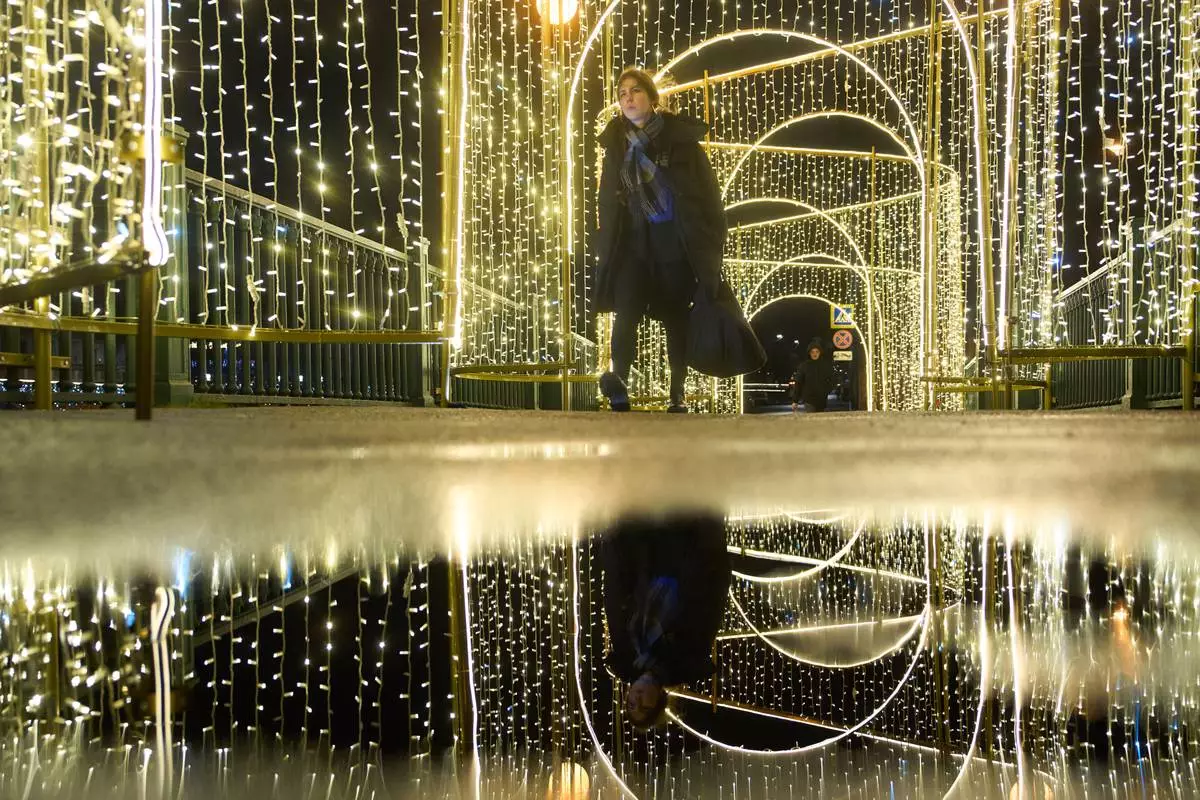
FILE - A woman walks across a bridge decorated prior to Christmas and New Year festivities in St. Petersburg, Russia, Thursday, Dec. 11, 2025. (AP Photo/Dmitri Lovetsky, File)
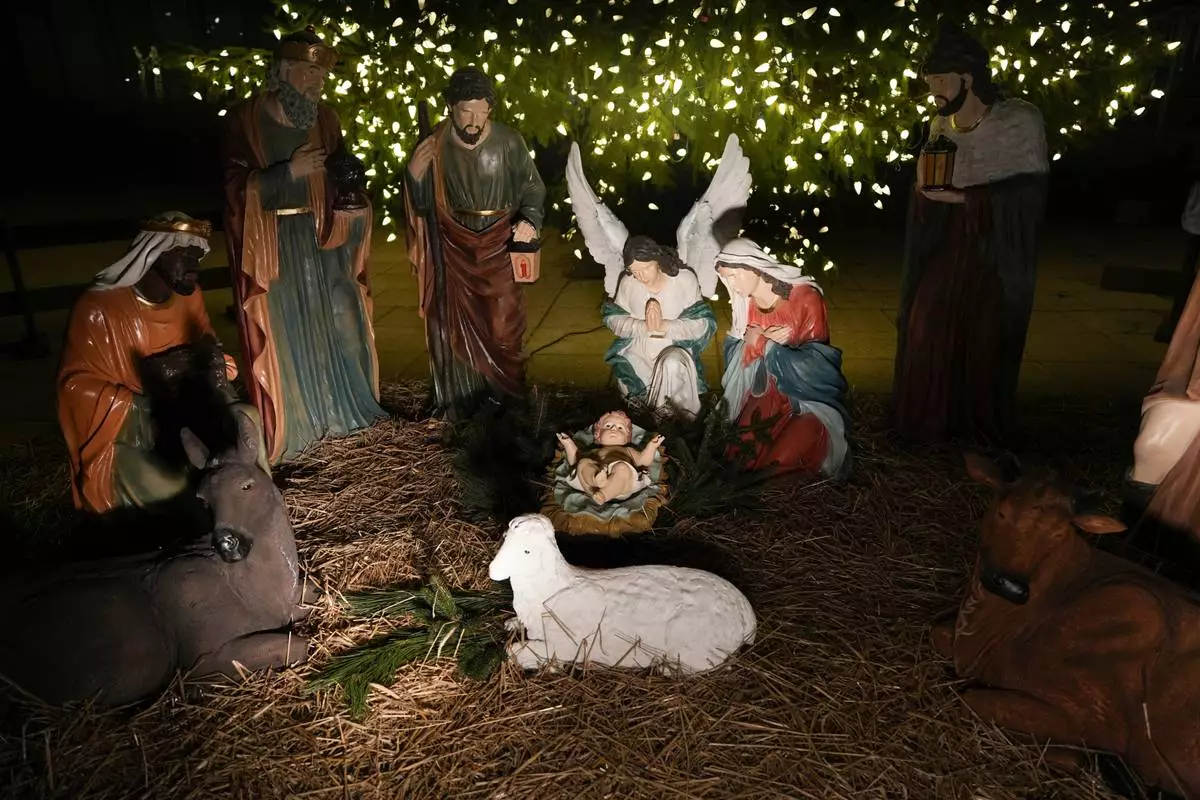
FILE - A Nativity scene is illuminated by a Christmas tree on Payrow Plaza in Bethlehem, Pa., known as "Christmas City, USA," on Sunday, Dec. 1, 2024. (AP Photo/Luis Andres Henao, File)

FILE - Decked in a Santa outfit and holiday lights, a child bolts from the starting line of the annual Christmas run in Vilnius, Lithuania, Saturday, Dec. 6, 2025. (AP Photo/Mindaugas Kulbis, File)
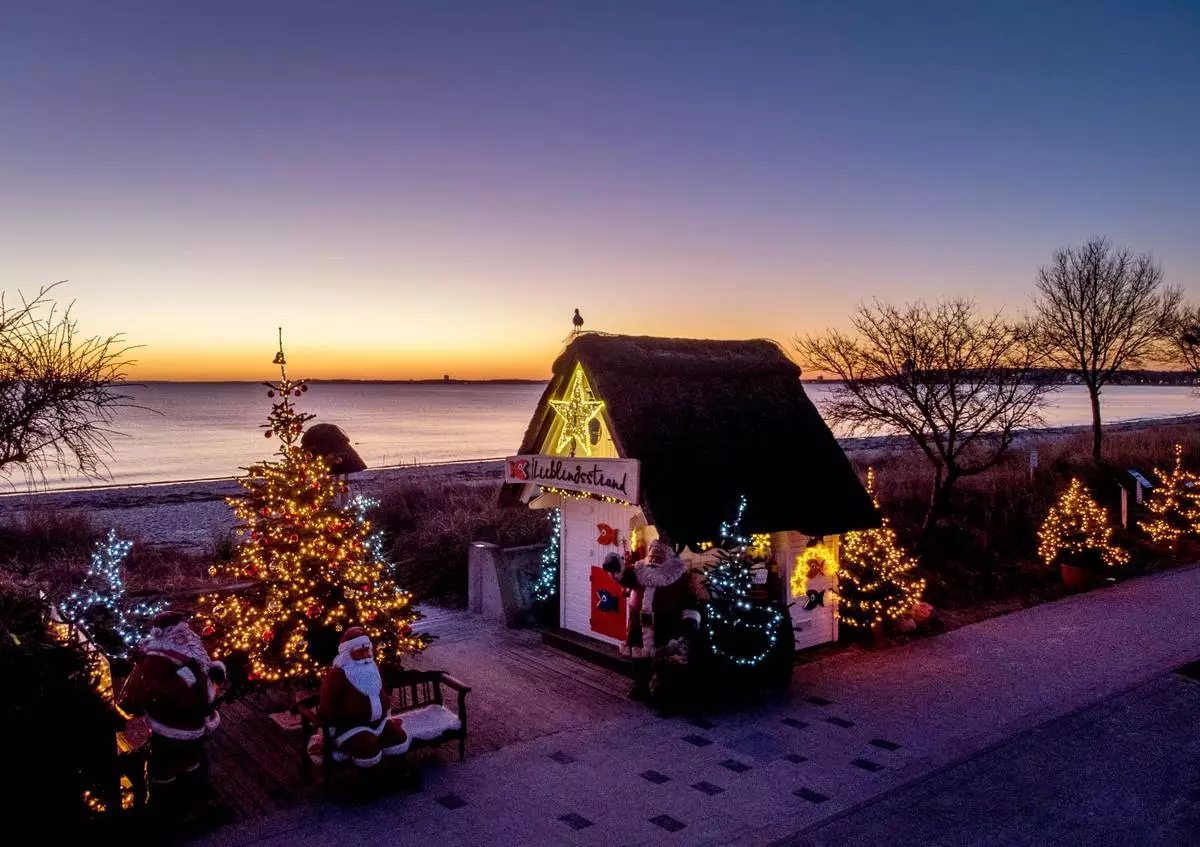
FILE - Christmas trees and Santa Clauses decorate the entrance to the beach in Haffkrug, northern Germany, Monday, Dec. 20, 2021. (Photo/Michael Probst, File)