Heather Sterling stepped into the ring at the Texas Game Warden Training Center, ready to face an ambush by instructors acting as violent assailants.
The four-on-one drill is a rite of passage for those training to be game wardens, sworn officers who enforce state conservation laws. Nationwide, thousands of local and state police recruits are allowed into the profession only after passing similar drills – simulated fights for their lives.
Click to Gallery

In this photo provided by the Texas Parks and Wildlife Department a person holds up a game warden badge during the 67th Texas Game Warden and State Park Police Officer Commissioning Ceremony on May 30, 2025, in Austin, Texas. (Sonja Sommerfeld/Texas Parks and Wildlife Department via AP)
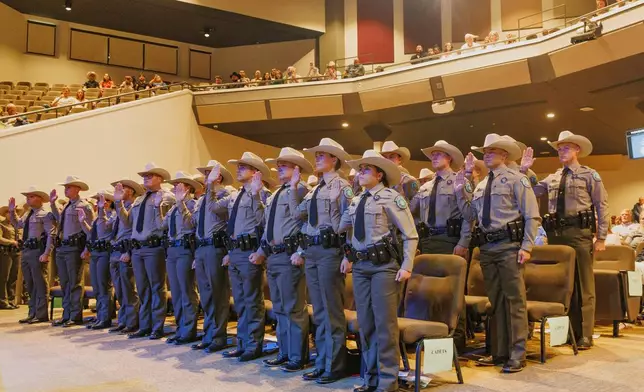
This photo provided by the Texas Parks and Wildlife Department shows new graduates during the 67th Texas Game Warden and State Park Police Officer Commissioning Ceremony on May 30, 2025, in Austin, Texas. (Sonja Sommerfeld/Texas Parks and Wildlife Department via AP)
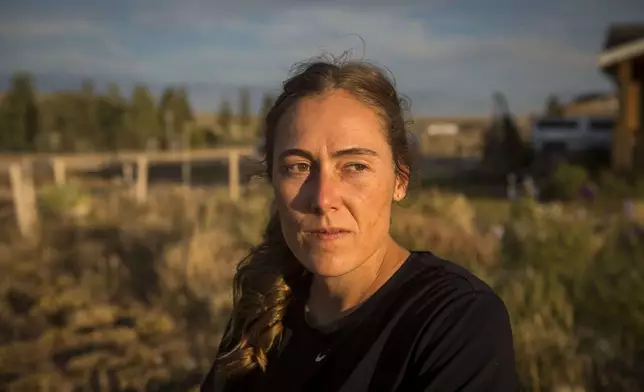
Heather Sterling watches her dog roam the yard at her home, Aug. 11, 2025, near Daniel, Wyo. (AP Photo/Amber Baesler)
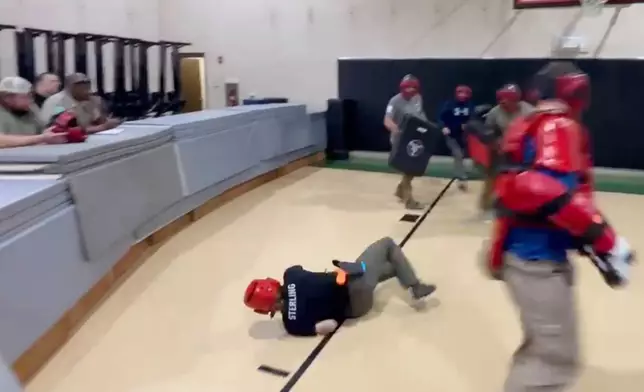
In this still image from video obtained by The Associated Press, Heather Sterling is knocked to the ground by one of her instructors, who is acting as a violent assailant, during a four-on-one training drill, Dec. 13, 2024, at the Texas Game Warden Training Center in Hamilton, Texas. (AP Photo)
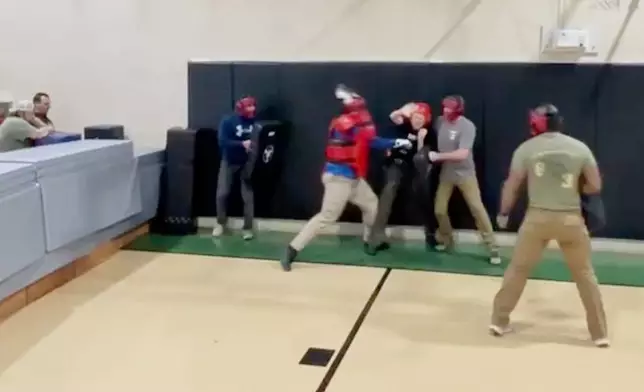
In this still image from video obtained by The Associated Press, Heather Sterling is hit by one of her instructors, who is acting as a violent assailant, during a four-on-one training drill, Dec. 13, 2024, at the Texas Game Warden Training Center in Hamilton, Texas.
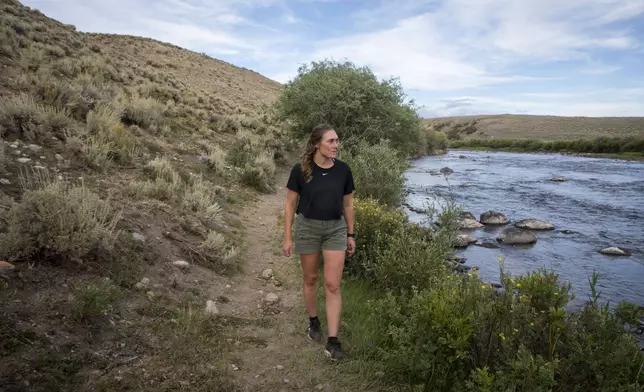
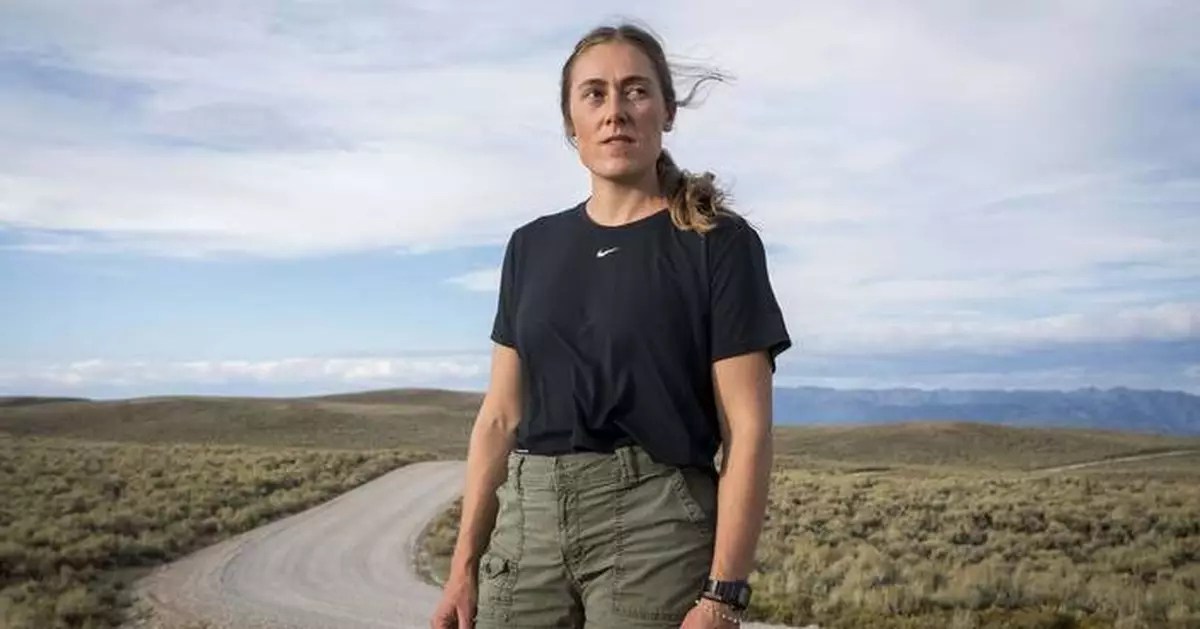
Heather Sterling hikes along the Green River, Aug. 11, 2025, near Daniel, Wyo. (AP Photo/Amber Baesler)
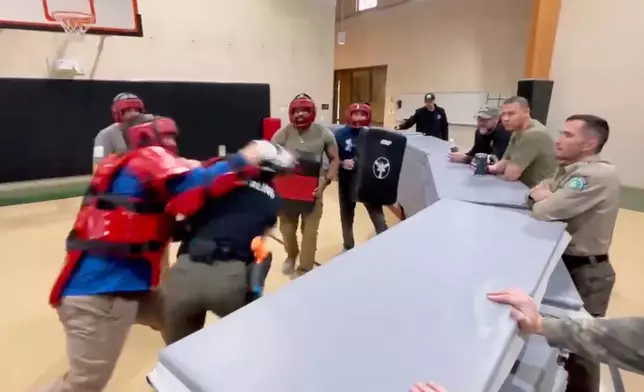
In this still image from video obtained by The Associated Press, Heather Sterling is hit in the head by one of her instructors, who is acting as a violent assailant, during a four-on-one training drill, Dec. 13, 2024, at the Texas Game Warden Training Center in Hamilton, Texas.

Heather Sterling poses for a portrait during a hike, Aug. 11, 2025, near Daniel, Wyo. (AP Photo/Amber Baesler)
The barrage of force against Sterling came rapidly, video obtained by The Associated Press shows. A surprise push from behind threw her to the floor. A right-handed punch to the back of the head knocked her down. Within two minutes, she was struck at least seven times in the head, the last blow knocking off her wrestling helmet.
“Protect yourself!” an instructor yelled.
Sterling completed the drill but suffered a concussion. A dozen of her classmates — a third in all — were injured that day as they were repeatedly punched, tackled on a gym floor and thrown against padded walls, records show.
While the drill was physically punishing, their experience was not unique. Since 2005, similar drills at law enforcement academies nationwide have been linked to at least a dozen deaths and hundreds of injuries, some resulting in disability, an AP investigation has found.
Editor’s note: This is the third installment of AP’s Dying to Serve series. Find the previous stories here and here.
The drills — frequently referred to as RedMan training for the brand and color of protective gear worn by participants – are intended to teach law enforcement recruits how to defend themselves against combative suspects. They’re among the most challenging tests at police academies. Law enforcement experts say that when properly designed and supervised, they teach new officers critical skills for handling high-stress situations.
But critics say they can put recruits at risk of physical and mental abuse that runs some promising officers out of the profession. Academies have wide latitude in running such exercises, given a lack of national standards governing police training.
Sterling quit the academy after her drill. She's now speaking out, hoping to spark change in training practices nationwide.
“I’m worried that someone is going to get killed,” said Sterling, who'd previously worked as a senior game warden and defensive tactics instructor in Wyoming. “This is a poorly disguised assault.”
An investigation by the agency that regulates law enforcement training found no wrongdoing in how the drill was conducted. An academy official told investigators the goal was to “overwhelm the cadet physically and mentally to force them to think while physically exhausted.”
An expert who reviewed the case told AP injuries happen during volatile training environments nationwide, but the Texas drill stood out for its design — recruits could not use force to defend themselves against the onslaught of assailants. He said the number of injuries was concerning.
“To teach cadets how and when to defend themselves, only to put them in a doomsday scenario with the instruction that they’re not allowed to fight back, does not match any training curriculum I’ve seen,” said David Jude, a retired Kentucky State Police academy commander.
In October 2024, Sterling started the Texas Parks and Wildlife Department’s eight-month academy in rural central Texas, which boasts of producing “the best-trained conservation officers in the country.”
Game wardens — called conservation officers or wildlife troopers in some states — enforce hunting and fishing laws. They carry firearms, have arrest powers, are often among the first to respond to emergencies and rescue missions.
Sterling said she loved serving as a game warden for nearly five years in Wyoming, where she sometimes shooed moose and mountain lions away from towns. Patrolling without backup, she said, she had some “very tense conversations” with suspects and had to restrain some in handcuffs.
She said almost everyone she encountered during hunting season was armed and potentially dangerous, but she prided herself on responding alertly and calmly. She never had to fight a suspect, and none of the 40 wardens she taught self-defense had been in a significant use-of-force incident.
Sterling applied in Texas to live closer to family, hoping for a similar law-enforcement role in her home state. She grew up as the daughter of a Dallas police officer and ran track and cross-country at Texas A&M.
The academy scheduled the four-on-one drill for Dec. 13, 2024, after five weeks of arrest and control training.
Instructors told cadets they couldn't defend themselves and were only to punch and kick a shield held by instructors, Sterling recalled. They discussed how some cadets had been seriously injured and terminated from previous academies for performing poorly.
Sterling told AP she was confused by the drill’s purpose. She'd never been ambushed by one person, let alone four. If that happened, she’d be able to use a firearm or other force to defend herself. As an instructor, she said, she would have never approved such a scenario or allowed punches to the head and neck.
A female classmate who had previously worked as a police officer resigned rather than participate. She later told investigators she saw the drill as inappropriate and part of an academy culture of unprofessional training and hazing.
But Sterling felt she had no choice if she wanted to stay in her profession. She completed a cardio exercise, and the drill began.
Academies have discretion to design training within state guidelines, and AP found the drills take many forms at local police, county sheriff and state departments. They’re sometimes called “combat training,” “Fight Day” or “stress reaction training.”
Recruits like Sterling must ward off several assailants at once. Others fight a series of instructors, one after another. Some academies intentionally use larger, more skilled instructors. In Kentucky, one scenario requires fighting a combative suspect in a pool.
The stated goals are generally the same: to use skills learned in the academy to fend off or subdue assailants and to never give up.
Recruits and instructors wear protective gear to cushion their heads from blows. But there are no uniform safety guidelines, including whether academies must have medical personnel on site.
Lawyers for some Black and female former trainees have alleged that instructors targeted their clients with excessive force to try to run them out of the profession. Several of the deaths have been of Black men hoping to join disproportionately white police forces.
Amid the deaths and criticism, experts are encouraging academy directors to retire or modify any problematic drills.
The drills “can quickly devolve into abusive rites of passage” without appropriate focus and oversight, said Brian Baxter, who oversaw training at the Texas Department of Public Safety and now leads a group that studies the use of force. Some instructors want to win rather than allow recruits to practice their skills, he added.
“The idea that we’re just punching each other to see who’s toughest ... that’s when it becomes inappropriate,” said Baxter, whose former agency overhauled its practices after a trooper died in 2005 from getting hit several times in the head. “There needs to be a problem that’s being solved by this training. And that problem needs to be directly related to public service.”
For Sterling, the drill came to an end when she simulated holding her assailants at gunpoint and put them in handcuffs.
Later that day, she had a pounding headache. Her knee swelled, and she’d skinned her elbow on the floor.
At least 13 of 37 cadets reported injuries: concussion symptoms; a fractured wrist; a torn MCL; sprained wrists and knees; a bruised nose, records show.
Two recruits needed surgery. Some were told the injuries were due to their lack of preparation and poor technique, and had to redo the drill.
Sterling said she wasn't offered medical care. She recalled vomiting while driving herself for emergency treatment. A doctor found she suffered a concussion that resulted from an assault, a medical record provided by Sterling shows.
Sterling had passed the drill, but turned in her resignation.
“I have a very high sense of what is right and what is wrong," she told AP. "I did not want to be part of what was happening at the academy anymore.”
Nationwide, deaths and injuries have been blamed on a mix of trauma from punches and other force, overexertion, heat stroke, dehydration, and organ failure.
In August, 30-year-old Jon-Marques Psalms died two days after a training exercise at the San Francisco Police Academy. He suffered a head injury while fighting an instructor in a padded suit.
An autopsy found his death was an accident caused by complications of muscle and organ damage “in the setting of a high-intensity training exercise.” His family has filed a legal claim against the city and hired experts for a second autopsy.
In November 2024, a 24-year-old Kentucky game warden recruit died after fighting an instructor in a pool to the point of collapse, video obtained by AP shows. William Bailey’s death was ruled an accidental drowning due to a “sudden cardiac dysrhythmia during physical exertion.”
A year earlier, a Denver police recruit had both legs amputated after a training fight that his attorney called a “barbaric hazing ritual.” An Indiana recruit died of exertion after he was pummeled by a larger instructor, and a classmate was disabled after fighting the same man.
Investigations of Austin’s police academy in Texas found that physical and psychological abuse from such exercises resulted in “a significant number” of cadets injured, ranging from dehydration to broken bones, and led to reforms. Black and female cadets represented a disproportionate number of those who were injured and quit.
Macho Products Inc., which sells RedMan Training Gear nationwide, cautions in its warranty that such training “always presents risks of accidental injury, disability, and death that must be assumed by all participants." The document says risks can be minimized through “carefully planned scenarios conducted at appropriate levels of force.” A company spokesperson didn’t respond to AP's request for comment on recent deaths and injuries.
Alarmed by the injuries to Sterling and others, a state lawmaker's office contacted the Texas Commission on Law Enforcement to seek an investigation.
After reviewing videos, investigating the injuries, and interviewing instructors and some recruits, the investigation found the drill was conducted in a “control and organized manner, with safety measures in place and training objectives clearly communicated.” The videos did not show instructors acting overly aggressive to Sterling, or any other “actions that were inappropriate or inconsistent with the established training guidelines,” it found.
“While multiple cadets sustained minor to moderate injuries during the drill, the majority recovered without extended medical consequences or changes to their training status," the report said.
The Texas Parks and Wildlife Department declined to comment and refused to release records, citing the potential for litigation.
Sterling, who has returned to Wyoming and still works in law enforcement, was outraged by the state's defense of the drill, which she compared to a gang initiation ritual.
“New members are physically beaten down by the gang membership,” she said, “which now considers you as its property.”

In this photo provided by the Texas Parks and Wildlife Department a person holds up a game warden badge during the 67th Texas Game Warden and State Park Police Officer Commissioning Ceremony on May 30, 2025, in Austin, Texas. (Sonja Sommerfeld/Texas Parks and Wildlife Department via AP)
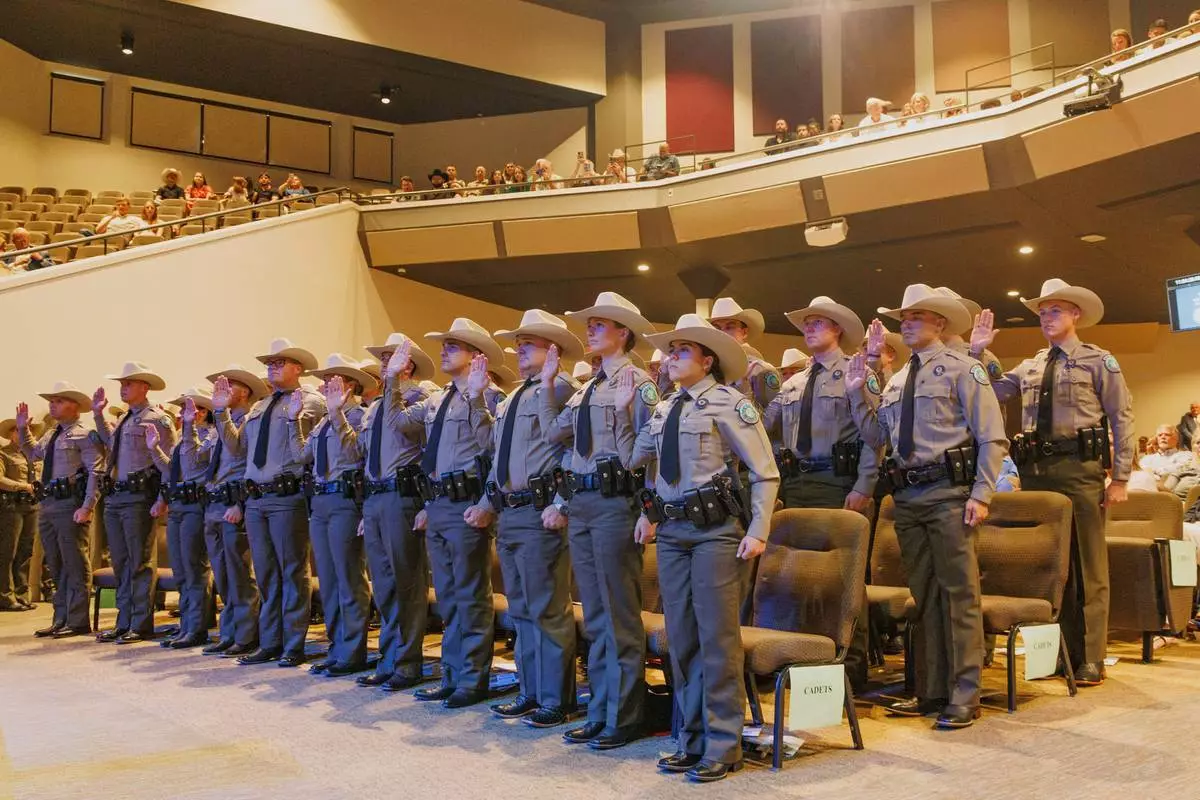
This photo provided by the Texas Parks and Wildlife Department shows new graduates during the 67th Texas Game Warden and State Park Police Officer Commissioning Ceremony on May 30, 2025, in Austin, Texas. (Sonja Sommerfeld/Texas Parks and Wildlife Department via AP)

Heather Sterling watches her dog roam the yard at her home, Aug. 11, 2025, near Daniel, Wyo. (AP Photo/Amber Baesler)
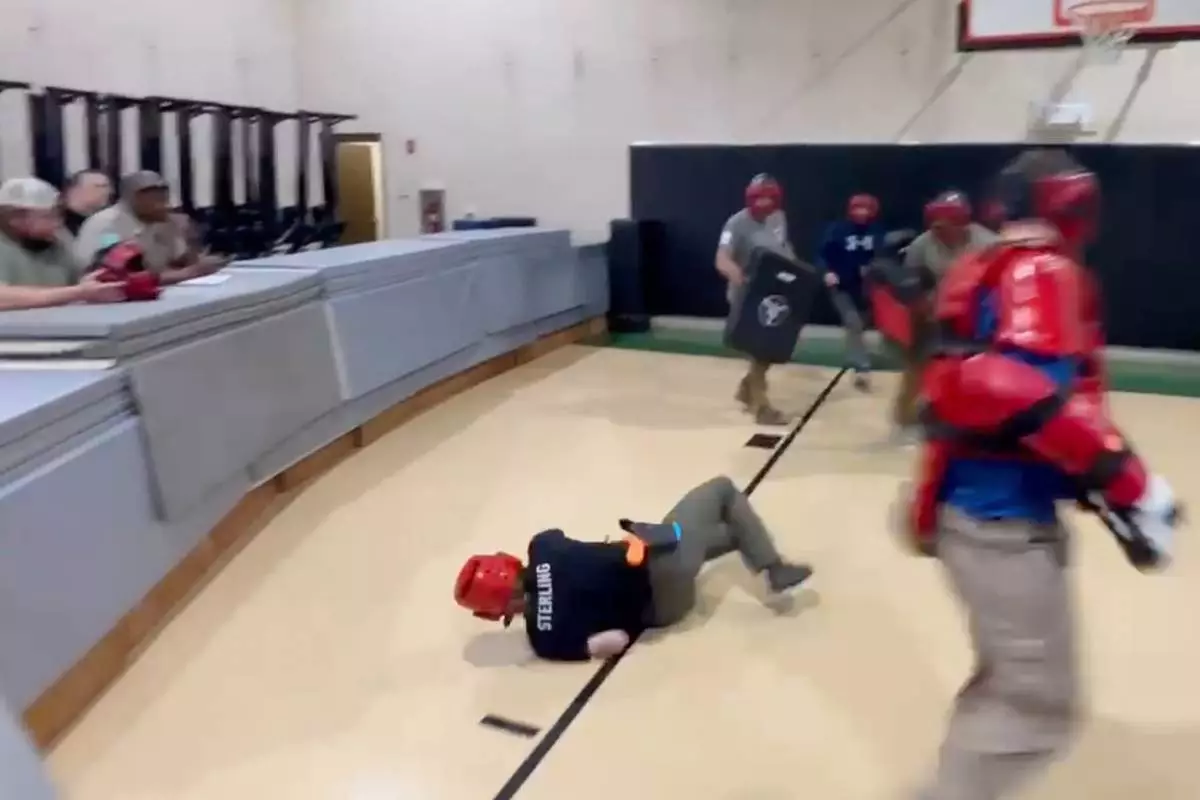
In this still image from video obtained by The Associated Press, Heather Sterling is knocked to the ground by one of her instructors, who is acting as a violent assailant, during a four-on-one training drill, Dec. 13, 2024, at the Texas Game Warden Training Center in Hamilton, Texas. (AP Photo)
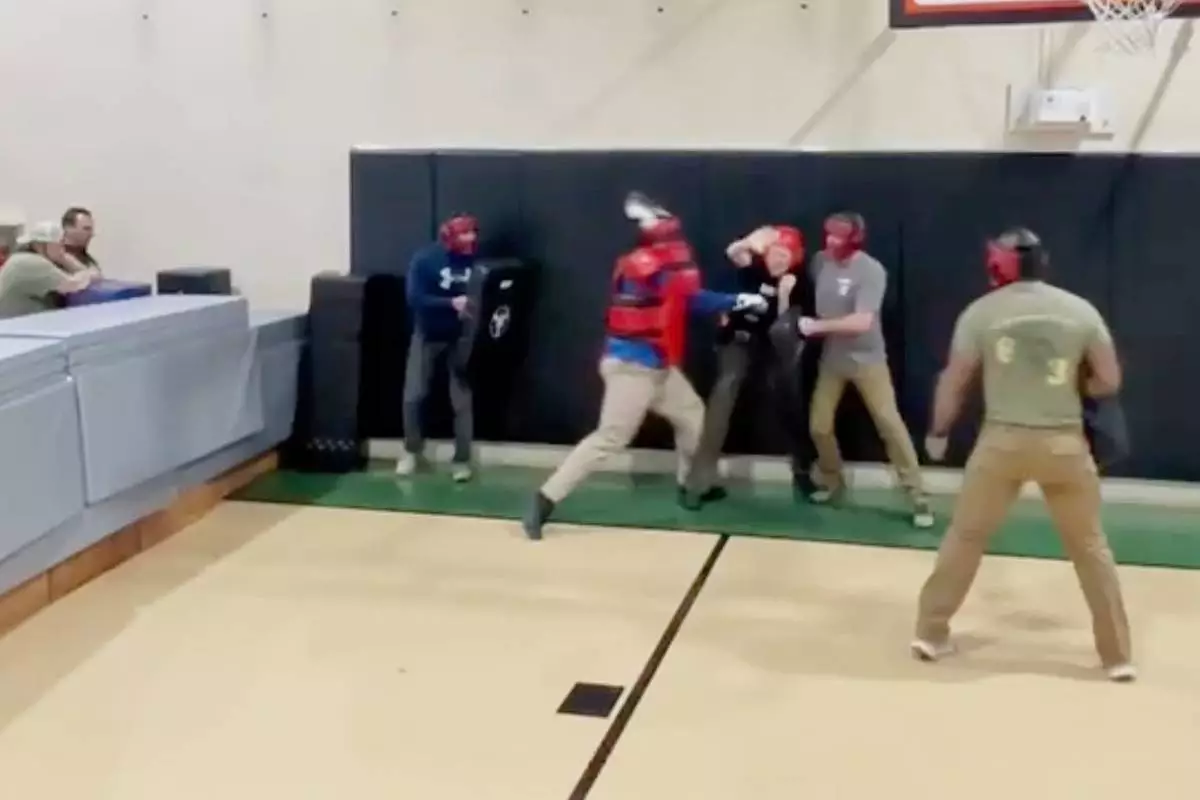
In this still image from video obtained by The Associated Press, Heather Sterling is hit by one of her instructors, who is acting as a violent assailant, during a four-on-one training drill, Dec. 13, 2024, at the Texas Game Warden Training Center in Hamilton, Texas.
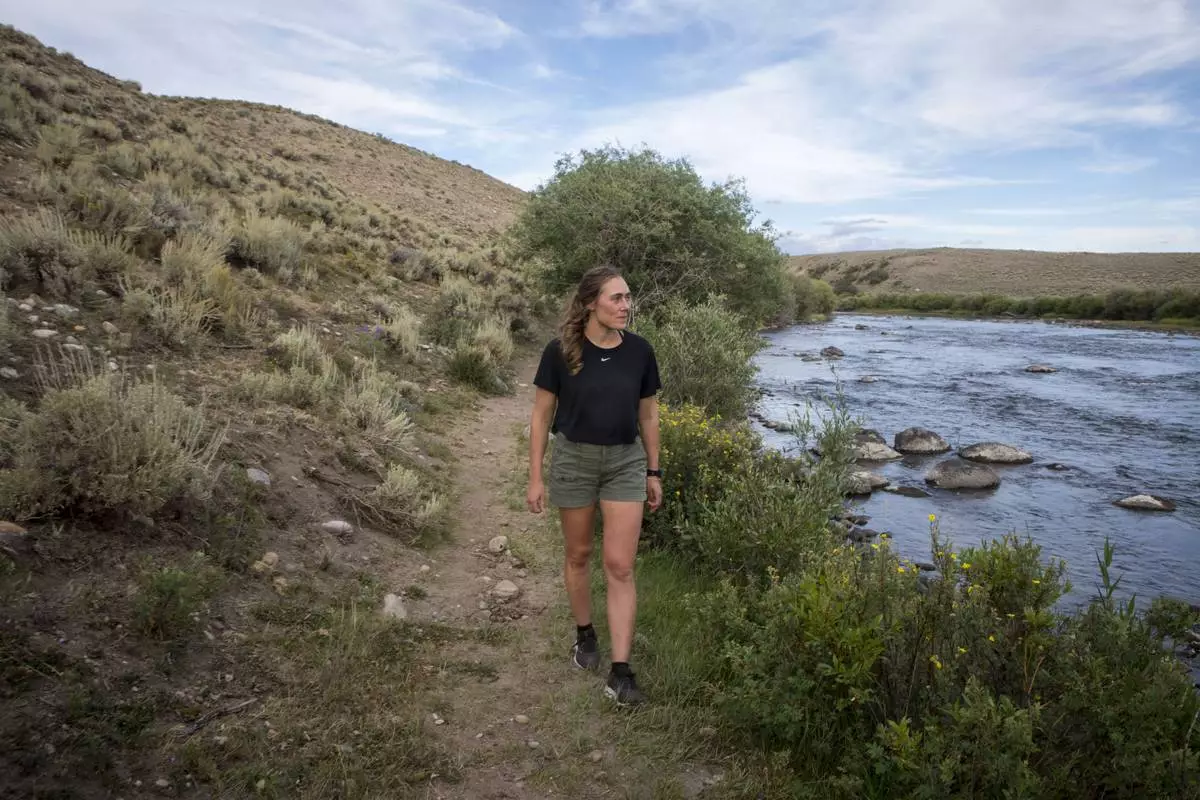
Heather Sterling hikes along the Green River, Aug. 11, 2025, near Daniel, Wyo. (AP Photo/Amber Baesler)
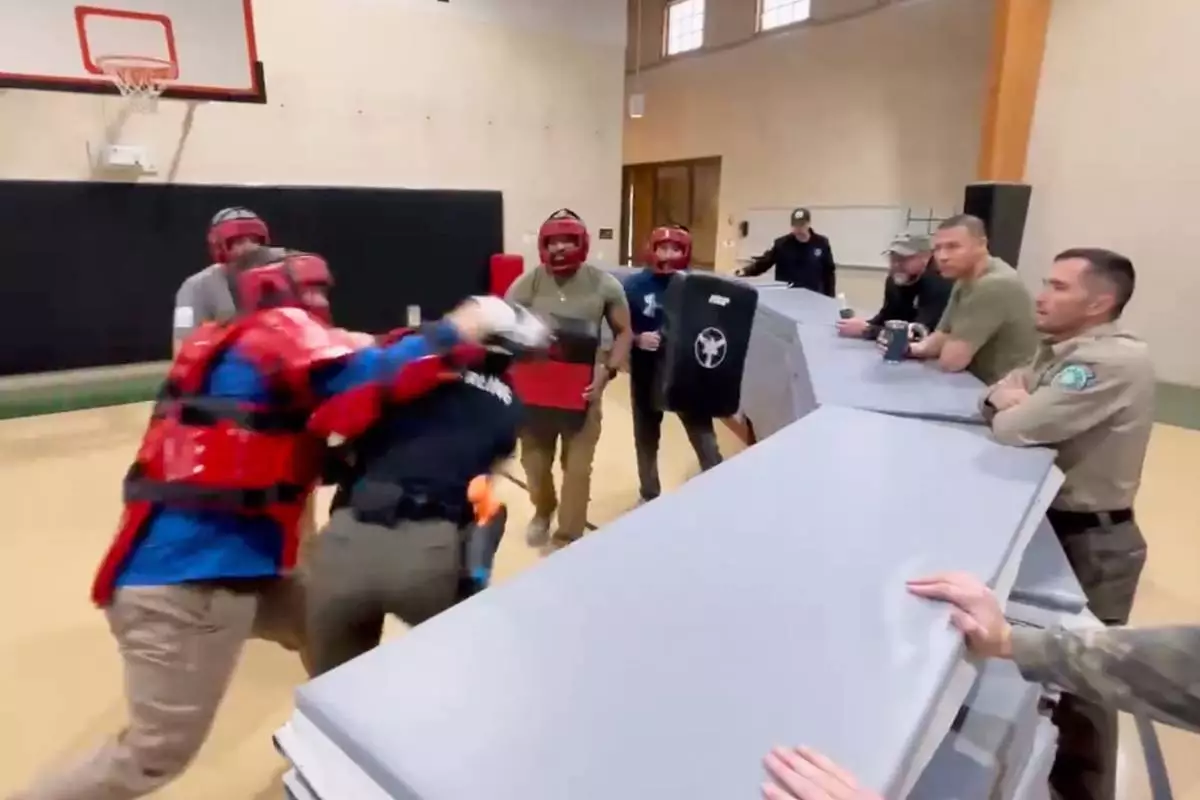
In this still image from video obtained by The Associated Press, Heather Sterling is hit in the head by one of her instructors, who is acting as a violent assailant, during a four-on-one training drill, Dec. 13, 2024, at the Texas Game Warden Training Center in Hamilton, Texas.
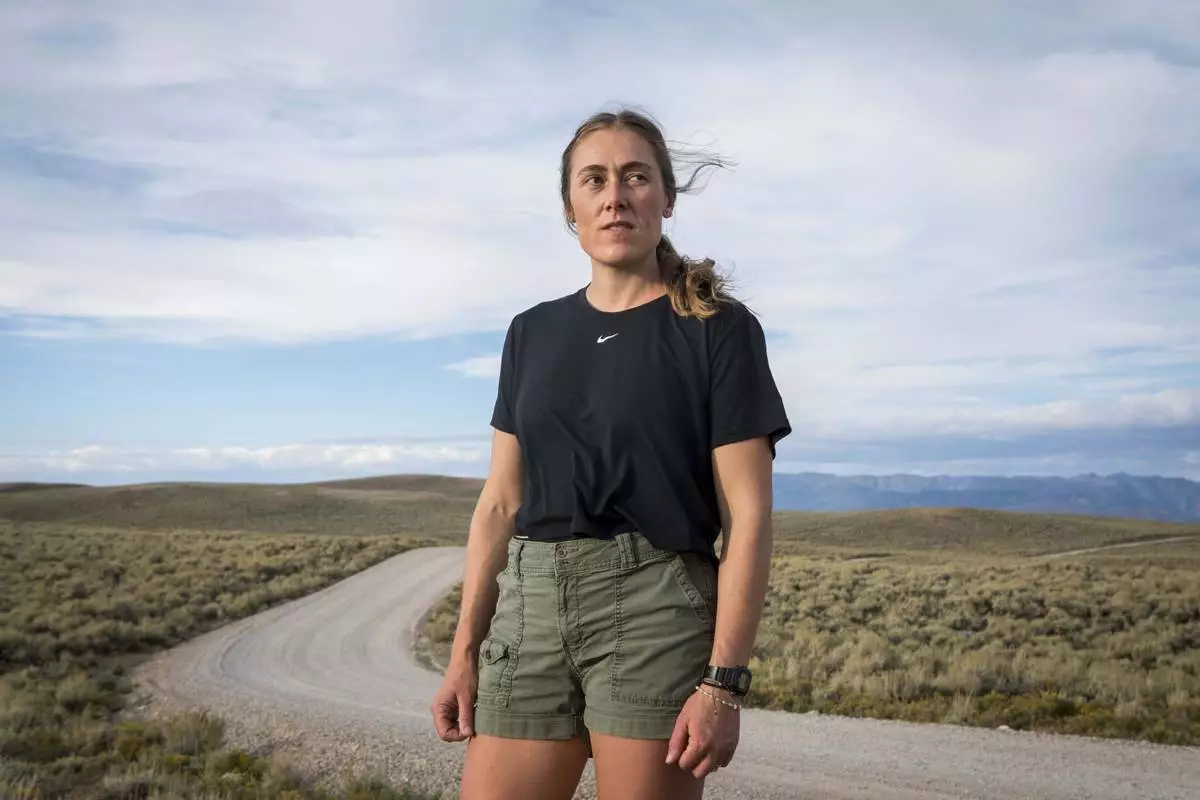
Heather Sterling poses for a portrait during a hike, Aug. 11, 2025, near Daniel, Wyo. (AP Photo/Amber Baesler)