Skip to Content Facebook Feature Image

Smart training aids rehabilitation

HK

HK

HK

Smart training aids rehabilitation

2025-12-21 10:37 Last Updated At:10:37

Seventy-year-old Mr Lau has been experiencing difficulty walking ever since he suffered a stroke last year. After having another stroke earlier this year, he is currently participating in the Pok Oi Hospital “Jockey Club Smart Geriatric Day Hospital Project”, which enables patients to undergo physiotherapy and occupational therapy at home or in their residential care homes for the elderly as part of their rehabilitation.
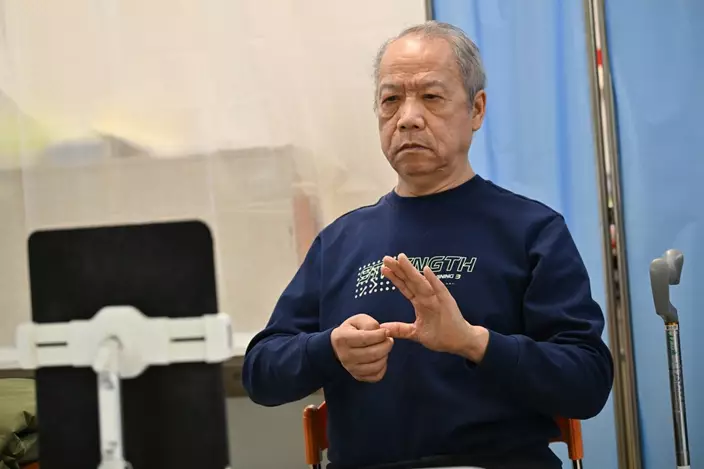
Making progress: Mr Lau does therapeutic exercises twice a day at the care home to accelerate his recovery after suffering from strokes last year and this year. Image source: www.news.gov.hk
Making progress: Mr Lau does therapeutic exercises twice a day at the care home to accelerate his recovery after suffering from strokes last year and this year. Image source: www.news.gov.hk

“I do exercises in the morning and afternoon,” he said. “I am quite hardworking because I want to recover soon. I have made progress with some of the activities, such as the dressing exercise, which trains my hand to lift higher. I used to feel pain when moving my right hand, but now I do not.”

More Images
Making progress: Mr Lau does therapeutic exercises twice a day at the care home to accelerate his recovery after suffering from strokes last year and this year. Image source: www.news.gov.hk

Making progress: Mr Lau does therapeutic exercises twice a day at the care home to accelerate his recovery after suffering from strokes last year and this year. Image source: www.news.gov.hk

More convenient: Lydia Au, a manager at the care home where Mr Lau resides, explains that tele‑rehabilitation reduces the need for care home residents to undertake lengthy and tiring trips to hospital. Image source: www.news.gov.hk
More convenient: Lydia Au, a manager at the care home where Mr Lau resides, explains that tele‑rehabilitation reduces the need for care home residents to undertake lengthy and tiring trips to hospital. Image source: www.news.gov.hk

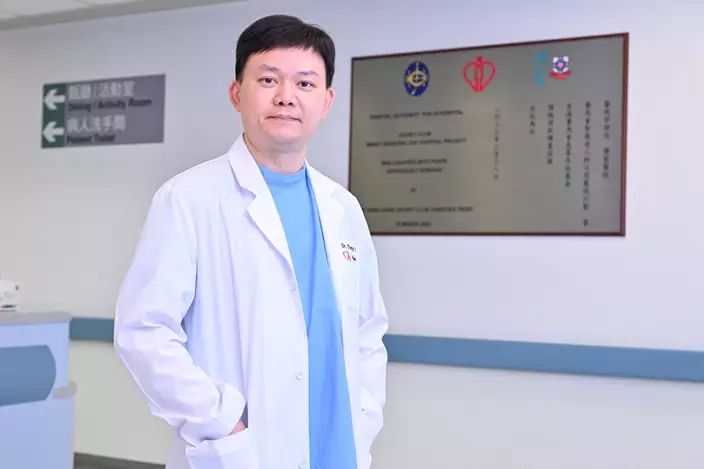
Accelerated recovery: Pok Oi Hospital Chief of Service of Department of Medicine & Geriatrics Dr Tony Chan believes the programme can improve various functions in elderly patients and restore their ability to carry out daily activities. Image source: www.news.gov.hk

Accelerated recovery: Pok Oi Hospital Chief of Service of Department of Medicine & Geriatrics Dr Tony Chan believes the programme can improve various functions in elderly patients and restore their ability to carry out daily activities. Image source: www.news.gov.hk

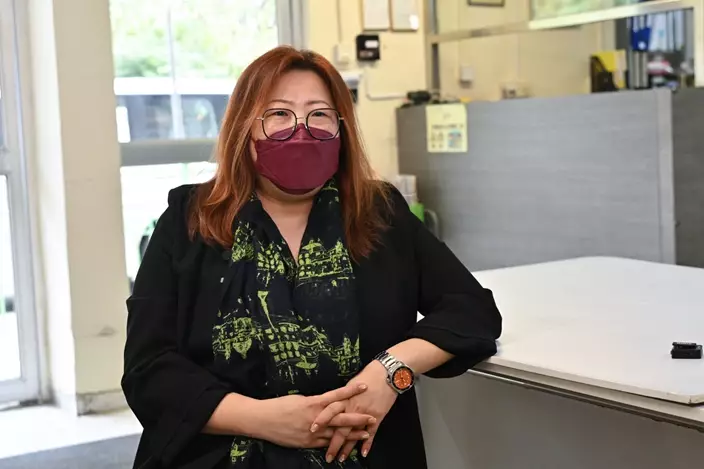
Performance analysis: Lingnan University School of Graduates Studies Senior Lecturer Chloe Siu says the smart training model achieves better results than traditional rehabilitation methods in several aspects. Image source: www.news.gov.hk
Performance analysis: Lingnan University School of Graduates Studies Senior Lecturer Chloe Siu says the smart training model achieves better results than traditional rehabilitation methods in several aspects. Image source: www.news.gov.hk

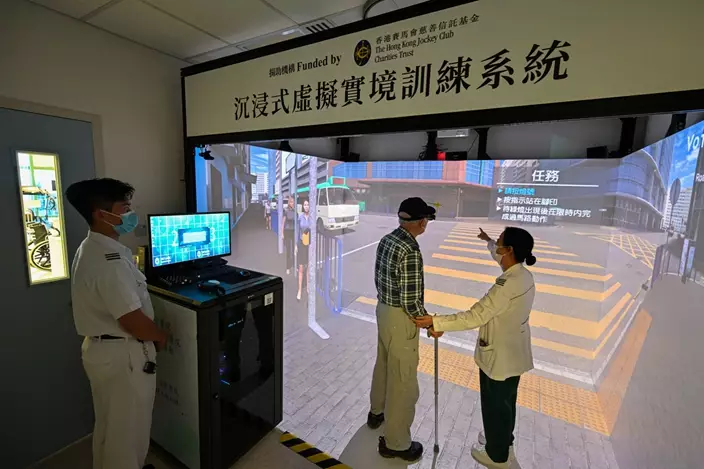
Interactive technology: The virtual reality system simulates everyday situations, allowing patients to refamiliarise themselves with daily activities in a safe and controlled environment. Image source: www.news.gov.hk

Interactive technology: The virtual reality system simulates everyday situations, allowing patients to refamiliarise themselves with daily activities in a safe and controlled environment. Image source: www.news.gov.hk
He was also enthusiastic about a hiking routine that has enhanced his mobility. “At first, I needed to rest partway through, but now I can complete the entire route at once.”

Greater convenience

The programme allows elderly residents to undergo rehabilitation in familiar surroundings without the need for lengthy and tiring hospital trips. Lydia Au, a manager at the care home where Mr Lau resides, said the initiative helps residents to stay active and engaged during recovery.

“With the tablet provided by the hospital, they can now do the exercises any time they want and complete them on their own, which builds their confidence and sense of achievement. The programme was launched after an assessment confirmed our care home environment was suitable.”

More convenient: Lydia Au, a manager at the care home where Mr Lau resides, explains that tele‑rehabilitation reduces the need for care home residents to undertake lengthy and tiring trips to hospital. Image source: www.news.gov.hk

More convenient: Lydia Au, a manager at the care home where Mr Lau resides, explains that tele‑rehabilitation reduces the need for care home residents to undertake lengthy and tiring trips to hospital. Image source: www.news.gov.hk

Smart technologies

Pok Oi Hospital launched the “Jockey Club Smart Geriatric Day Hospital Project” with $14 million in funding from the Hong Kong Jockey Club Charities Trust, after being included on the Chief Executive’s Community Project List.

The funding supports the adoption of a smart training model that incorporates virtual reality, augmented reality and tele-rehabilitation technologies at the facility’s geriatric day hospital. The approach allows patients to train remotely without the need for frequent hospital visits.

Patients’ performance data are uploaded to a digital platform, enabling healthcare professionals to monitor progress and design personalised rehabilitation plans. Since the project was launched last year, approximately 350 patients have benefited, with the number of patients treated increasing by more than 20% year on year.

Accelerated recovery: Pok Oi Hospital Chief of Service of Department of Medicine & Geriatrics Dr Tony Chan believes the programme can improve various functions in elderly patients and restore their ability to carry out daily activities. Image source: www.news.gov.hk

Accelerated recovery: Pok Oi Hospital Chief of Service of Department of Medicine & Geriatrics Dr Tony Chan believes the programme can improve various functions in elderly patients and restore their ability to carry out daily activities. Image source: www.news.gov.hk

Fewer visits

Pok Oi Hospital Chief of Service of Department of Medicine & Geriatrics Dr Tony Chan said the programme mainly benefits elderly patients who experience mobility issues after hospitalisation.

“Our target patients include those recovering from stroke, hip fracture or dementia because they all require very intensive training.”

Previously, patients would undergo on-site training twice weekly for eight weeks, for a total of 16 hospital sessions. Under the new arrangement, they now only need to visit the hospital once a week from the fifth week onwards.

“Through these exercises, we hope to help them improve their mobility and cardiopulmonary function, as well as restore their ability to carry out daily activities independently.”

To make rehabilitation more enjoyable, cultural elements have been integrated into the exercises. “For example, some games feature mahjong or cartoon backgrounds of the Big Buddha on Lantau Island and the Tsing Ma Bridge to make the training sessions more interesting and engaging for elderly participants.”

Performance analysis: Lingnan University School of Graduates Studies Senior Lecturer Chloe Siu says the smart training model achieves better results than traditional rehabilitation methods in several aspects. Image source: www.news.gov.hk

Performance analysis: Lingnan University School of Graduates Studies Senior Lecturer Chloe Siu says the smart training model achieves better results than traditional rehabilitation methods in several aspects. Image source: www.news.gov.hk

Positive results

To evaluate the programme’s effectiveness, Pok Oi Hospital has collaborated with Lingnan University on a comprehensive study. Explaining its findings, Lingnan University School of Graduates Studies Senior Lecturer Chloe Siu said innovative tele-rehabilitation training achieves better results than traditional methods in several aspects.

“Older adults who joined the six-metre walking test walked significantly faster than those undergoing conventional therapy,” she said. In occupational therapy, meanwhile, patients showed clear improvements in hand fine motor functions and cognitive functions, as well as Instrumental Activities of Daily Living.

Interactive technology: The virtual reality system simulates everyday situations, allowing patients to refamiliarise themselves with daily activities in a safe and controlled environment. Image source: www.news.gov.hk
Interactive technology: The virtual reality system simulates everyday situations, allowing patients to refamiliarise themselves with daily activities in a safe and controlled environment. Image source: www.news.gov.hk
With the ending of the 12th National Games for Persons with Disabilities and 9th National Special Olympic Games (NGD & NSOG) on 15 December, all events of the National Games have now concluded. The Hong Kong Jockey Club (the Club) would like to offer its warmest congratulations to the Hong Kong Special Administrative Region (HKSAR) team for their outstanding achievements, which showcased the resilient Hong Kong spirit and brought positive energy to everyone in our community. Under the Jockey Club Athlete Incentive Awards Scheme, the Club was pleased to award a total of HK$11,475,000 and HK$6,843,750 to Hong Kong medallists at the 15th National Games and NGD respectively.

Hong Kong Jockey Club Chairman The Hon Martin Liao (front row, left) presents gold medals to the Hong Kong team, winers of The Hong Kong Jockey Club Trophy Rugby Sevens Competition at the 15th National Games.

Hong Kong Jockey Club Chairman The Hon Martin Liao (front row, left) presents gold medals to the Hong Kong team, winers of The Hong Kong Jockey Club Trophy Rugby Sevens Competition at the 15th National Games.

Hong Kong Jockey Club Chairman The Hon Martin Liao presents gold medals to the Hong Kong team, winers of The Hong Kong Jockey Club Trophy Rugby Sevens Competition at the 15th National Games.

Hong Kong Jockey Club Chairman The Hon Martin Liao presents gold medals to the Hong Kong team, winers of The Hong Kong Jockey Club Trophy Rugby Sevens Competition at the 15th National Games.

Hong Kong Jockey Club Chairman The Hon Martin Liao (front row, left ) presents medals to winning teams taking part in The Hong Kong Jockey Club Trophy Basketball (Men’s U22) Competition at the 15th National Games.

Hong Kong Jockey Club Chairman The Hon Martin Liao (front row, left ) presents medals to winning teams taking part in The Hong Kong Jockey Club Trophy Basketball (Men’s U22) Competition at the 15th National Games.

Hong Kong Jockey Club Chairman The Hon Martin Liao presents medals to winning teams taking part in The Hong Kong Jockey Club Trophy Basketball (Men’s U22) Competition at the 15th National Games.

Hong Kong Jockey Club Chairman The Hon Martin Liao presents medals to winning teams taking part in The Hong Kong Jockey Club Trophy Basketball (Men’s U22) Competition at the 15th National Games.

In recognition of the Club’s support, the Executive Committee of the National Games in the Guangdong Competition Region honoured the Club as an “Outstanding Contributor to Social Betterment”. The Club also received the title “Outstanding Contributor, the 15th National Games Equestrian Events” from the Competition Committee of Shenzhen Guangming District for its significant support in ensuring the success of the equestrian events.

Hong Kong Jockey Club Vice-chairman Lester Huang (1st left) presents medals to winners of Women's Individual Foil Category B in The Hong Kong Jockey Club Trophy Wheelchair Fencing Competition of the 12th National Games for Persons with Disabilities and the 9th National Special Olympic Games. Hong Kong wheelchair fencer Tong Nga-ting (2nd right) won a bronze medal in the competition.

Hong Kong Jockey Club Vice-chairman Lester Huang (1st left) presents medals to winners of Women's Individual Foil Category B in The Hong Kong Jockey Club Trophy Wheelchair Fencing Competition of the 12th National Games for Persons with Disabilities and the 9th National Special Olympic Games. Hong Kong wheelchair fencer Tong Nga-ting (2nd right) won a bronze medal in the competition.

Hong Kong Jockey Club Steward Anita Fung (1st left) presents medals to winners of Women's Individual Épée Category A at The Hong Kong Jockey Club Trophy Wheelchair Fencing Competition of the 12th National Games for Persons with Disabilities and the 9th National Special Olympic Games. Hong Kong wheelchair fencer Yu Chui-yee (2nd right) won a silver medal in the competition.

Hong Kong Jockey Club Steward Anita Fung (1st left) presents medals to winners of Women's Individual Épée Category A at The Hong Kong Jockey Club Trophy Wheelchair Fencing Competition of the 12th National Games for Persons with Disabilities and the 9th National Special Olympic Games. Hong Kong wheelchair fencer Yu Chui-yee (2nd right) won a silver medal in the competition.

Hong Kong Jockey Club Executive Director, C

Hong Kong Jockey Club Executive Director, C

This was the first time that Guangdong, Hong Kong and Macao have co-hosted the three games. In support the Club committed over HK$500 million to the Hong Kong and Guangdong competition regions. The Club was also the sole Partner Sponsor of the Hong Kong Competition Region, where it supported volunteer service programmes, territory-wide community and school promotional activities, as well as initiatives to help underprivileged groups and young people attend the events.

Hong Kong Jockey Club Chairman The Hon Martin Liao (front row, left) and Chief Executive Officer Winfried Engelbrecht-Bresges (front row, right) present medals and souvenirs to winners of the individual dressage competition at the equestrian events of the 15th National Games.

Hong Kong Jockey Club Chairman The Hon Martin Liao (front row, left) and Chief Executive Officer Winfried Engelbrecht-Bresges (front row, right) present medals and souvenirs to winners of the individual dressage competition at the equestrian events of the 15th National Games.

Hong Kong Jockey Club Vice-chairman Lester Huang (middle ) attends the show jumping group competition, one of the equestrian events at the 15th National Games, and cheers on Hong Kong athletes.

Hong Kong Jockey Club Vice-chairman Lester Huang (middle ) attends the show jumping group competition, one of the equestrian events at the 15th National Games, and cheers on Hong Kong athletes.

Hong Kong Jockey Club Vice-chairman Lester Huang attends the show jumping group competition, one of the equestrian events at the 15th National Games, and cheers on Hong Kong athletes.

Hong Kong Jockey Club Vice-chairman Lester Huang attends the show jumping group competition, one of the equestrian events at the 15th National Games, and cheers on Hong Kong athletes.

The Club was especially honoured to have four events in the Hong Kong Competition Region named after it: The Hong Kong Jockey Club Trophy Rugby Sevens Competition and The Hong Kong Jockey Club Trophy Basketball (Men’s U22) Competition at the 15th National Games, and The Hong Kong Jockey Club Trophy Wheelchair Fencing Comp.

Hong Kong Jockey Club Chairman The Hon Martin Liao (2nd left ) thanks Club staff for volunteering at the National Games and visits the Club’s interactive booth at the Competition Village.

Hong Kong Jockey Club Chairman The Hon Martin Liao (2nd left ) thanks Club staff for volunteering at the National Games and visits the Club’s interactive booth at the Competition Village.

Hong Kong Jockey Club Chairman The Hon Martin Liao thanks Club staff for volunteering at the National Games and visits the Club’s interactive booth at the Competition Village.

Hong Kong Jockey Club Chairman The Hon Martin Liao thanks Club staff for volunteering at the National Games and visits the Club’s interactive booth at the Competition Village.

Recommended Articles