Skip to Content Facebook Feature Image

Iraq's political future in limbo as factions vie for power

News

Iraq's political future in limbo as factions vie for power
News

News

Iraq's political future in limbo as factions vie for power

2025-12-21 16:31 Last Updated At:16:40

BAGHDAD (AP) — Political factions in Iraq have been maneuvering since the parliamentary election more than a month ago to form alliances that will shape the next government.

The November election didn't produce a bloc with a decisive majority, opening the door to a prolonged period of negotiations.

The government that eventually emerges will be inheriting a security situation that has stabilized in recent years, but it will also face a fragmented parliament, growing political influence by armed factions, a fragile economy, and often conflicting international and regional pressures, including the future of Iran-backed armed groups.

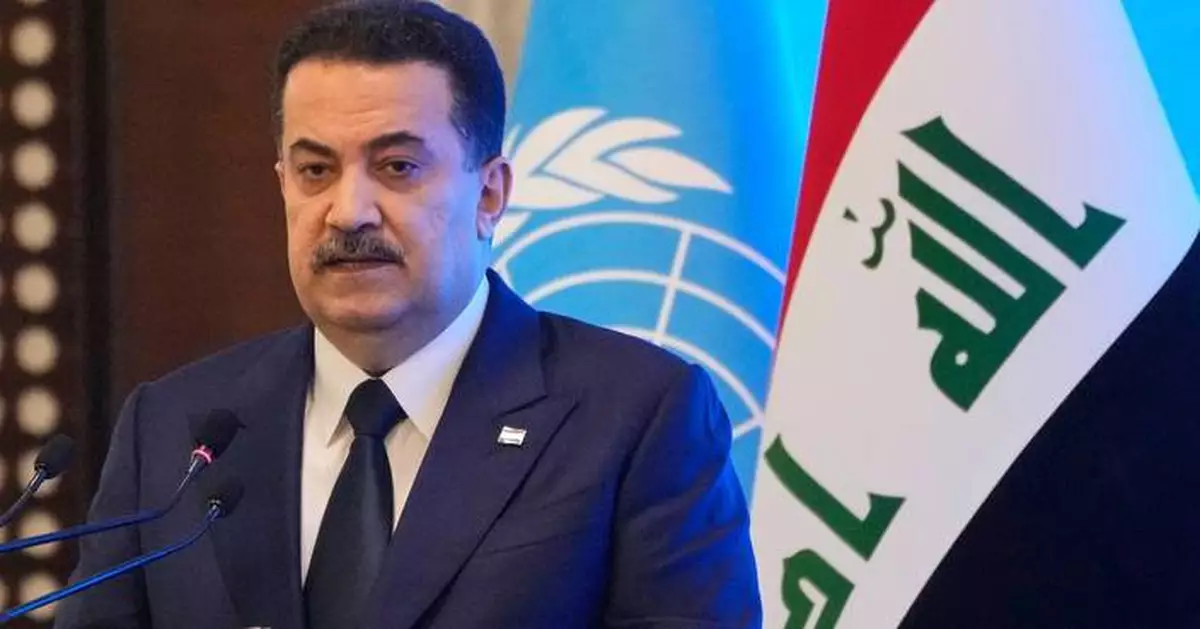
Prime Minister Mohammed Shia al-Sudani's party took the largest number of seats in the election. Al-Sudani positioned himself in his first term as a pragmatist focused on improving public services and managed to keep Iraq on the sidelines of regional conflicts.

While his party is nominally part of the Coordination Framework, a coalition of Iran-backed Shiite parties that became the largest parliamentary bloc, observers say it’s unlikely that the Coordination Framework will support al-Sudani’s reelection bid.

“The choice for prime minister has to be someone the Framework believes they can control and doesn't have his own political ambitions,” said Sajad Jiyad, an Iraqi political analyst and fellow at The Century Foundation think tank.

Al-Sudani came to power in 2022 with the backing of the Framework, but Jiyad said that he believes now the coalition “will not give al-Sudani a second term as he has become a powerful competitor.”

The only Iraqi prime minister to serve a second term since 2003 was Nouri al-Maliki, first elected in 2006. His bid for a third term failed after being criticized for monopolizing power and alienating Sunnis and Kurds.

Jiyad said that the Coordination Framework drew a lesson from Maliki “that an ambitious prime minister will seek to consolidate power at the expense of others.”

He said that the figure selected as Iraq's prime minister must generally be seen as acceptable to Iran and the United States — two countries with huge influence over Iraq — and to Iraq’s top Shiite cleric, Grand Ayatollah Ali al-Sistani.

In the election, Shiite alliances and lists — dominated by the Coordination Framework parties — secured 187 seats, Sunni groups 77 seats, Kurdish groups 56 seats, in addition to nine seats reserved for members of minority groups.

The Reconstruction and Development Coalition, led by al-Sudani, dominated in Baghdad and in several other provinces, winning 46 seats.

Al-Sudani's results, while strong, don't allow him to form a government without the support of a coalition, forcing him to align the Coordination Framework to preserve his political prospects.

Some saw this dynamic at play earlier this month when al-Sudani's government retracted a terror designation that Iraq had imposed on the Lebanese Hezbollah militant group and Yemen’s Houthi rebels — Iran-aligned groups that are allied with Iraqi armed factions — just weeks after imposing the measure, saying it was a mistake.

The Coalition Framework saw its hand strengthened by the absence from the election of the powerful Sadrist movement led by Shiite cleric Muqtada Sadr, which has been boycotting the political system since being unable to form a government after winning the most seats in the 2021 election.

Hamed Al-Sayed, a political activist and official with the National Line Movement, an independent party that boycotted the election, said that Sadr’s absence had a “central impact.”

“It reduced participation in areas that were traditionally within his sphere of influence, such as Baghdad and the southern governorates, leaving an electoral vacuum that was exploited by rival militia groups,” he said, referring to several parties within the Coordination Framework that also have armed wings.

Groups with affiliated armed wings won more than 100 parliamentary seats, the largest showing since 2003.

Sunni forces, meanwhile, sought to reorganize under a new coalition called the National Political Council, aiming to regain influence lost since the 2018 and 2021 elections.

The Kurdish political scene remained dominated by the traditional split between the Kurdistan Democratic Party and Patriotic Union of Kurdistan parties, with ongoing negotiations between the two over the presidency.

By convention, Iraq’s president is always a Kurd, while the more powerful prime minister is Shiite and the parliamentary speaker Sunni.

Parliament is required to elect a speaker within 15 days of the Federal Supreme Court’s ratification of the election result, which occurred on Dec. 14.

The parliament should elect a president within 30 days of its first session, and the prime minister should be appointed within 15 days of the president’s election, with 30 days allotted to form the new government.

The incoming government will face major economic and political challenges.

They include a high level of public debt — more than 90 trillion Iraqi dinars ($69 billion) — and a state budget that remains reliant on oil for about 90% of revenues, despite attempts to diversify, as well as entrenched corruption.

But perhaps the most delicate question will be the future of the Popular Mobilization Forces, a coalition of militias that formed to fight the Islamic State group as it rampaged across Iraq more than a decade ago.

It was formally placed under the control of the Iraqi military in 2016, but in practice still operates with significant autonomy. After the Hamas-led attack in southern Israel on Oct. 7, 2023 sparked the devastating war in Gaza, some armed groups within the PMF launched attacks on U.S. bases in the region in retaliation for Washington’s backing of Israel.

The U.S. has been pushing for Iraq to disarm Iran-backed groups — a difficult proposition, given the political power that many of them hold and Iran’s likely opposition to such a step.

Two senior Iraqi political officials, who spoke on condition of anonymity because they weren't authorized to comment publicly, said that the United States had warned against selecting any candidate for prime minister who controls an armed faction and also cautioned against letting figures associated with militias control key ministries or hold significant security posts.

“The biggest issue will be how to deal with the pro-Iran parties with armed wings, particularly those... which have been designated by the United States as terrorist entities,” Jiyad said.

Kataib Hezbollah, one of the most powerful militias in Iraq, designated by the U.S. as a terrorist organization, issued a statement Saturday rejecting the possibility of giving up its weapons.

The statement said the group's “weapons will remain in the hands of its fighters, and no discussions with the government can take place before the departure of all occupation forces, NATO troops, and Turkish forces, and before ensuring the protection of the people and the sacred sites from extremist groups.”

FILE - Election workers gather parliamentary election ballots after the polls closed in Baghdad, Iraq, Nov. 11, 2025. (AP Photo/Hadi Mizban, File)
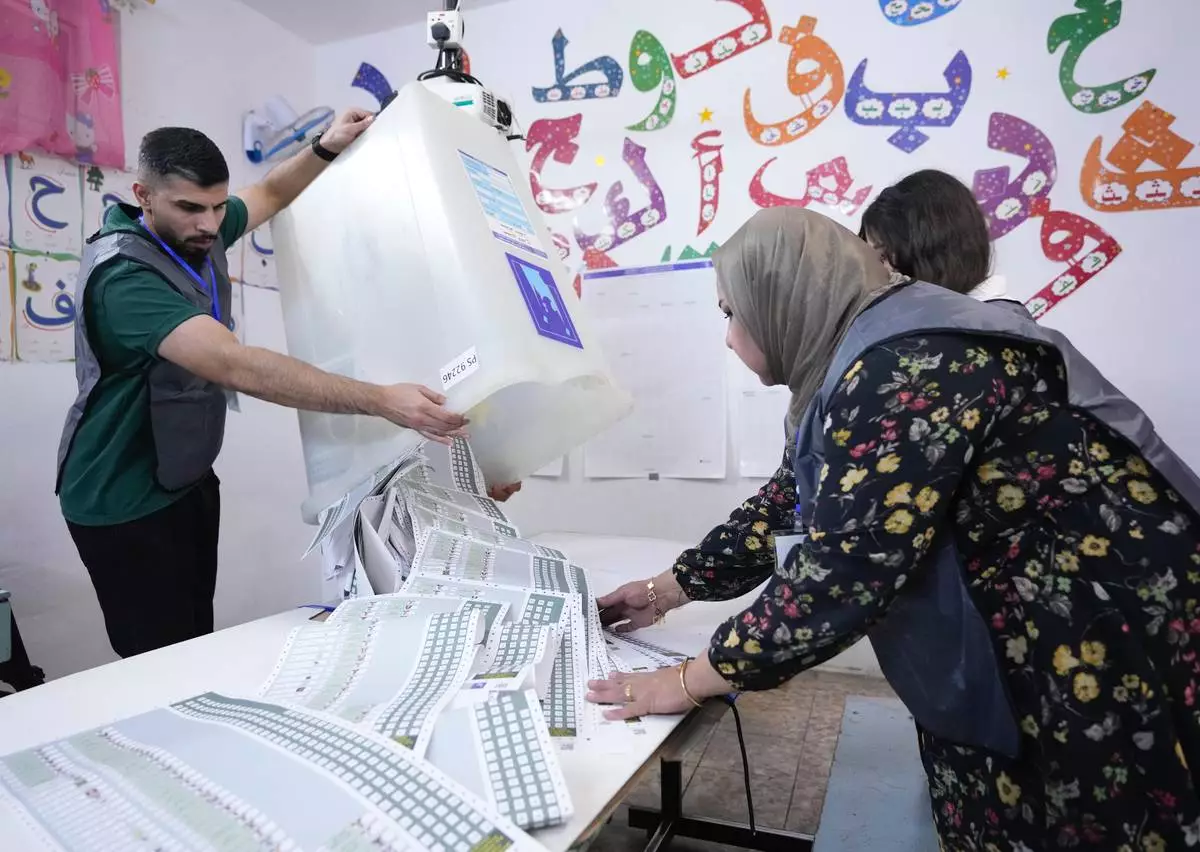
FILE - Election workers gather parliamentary election ballots after the polls closed in Baghdad, Iraq, Nov. 11, 2025. (AP Photo/Hadi Mizban, File)

FILE - Election workers count ballots as they close a polling station, during the parliamentary elections in Baghdad, Iraq, Nov. 11, 2025. (AP Photo/Hadi Mizban, File)
FILE - Election workers count ballots as they close a polling station, during the parliamentary elections in Baghdad, Iraq, Nov. 11, 2025. (AP Photo/Hadi Mizban, File)

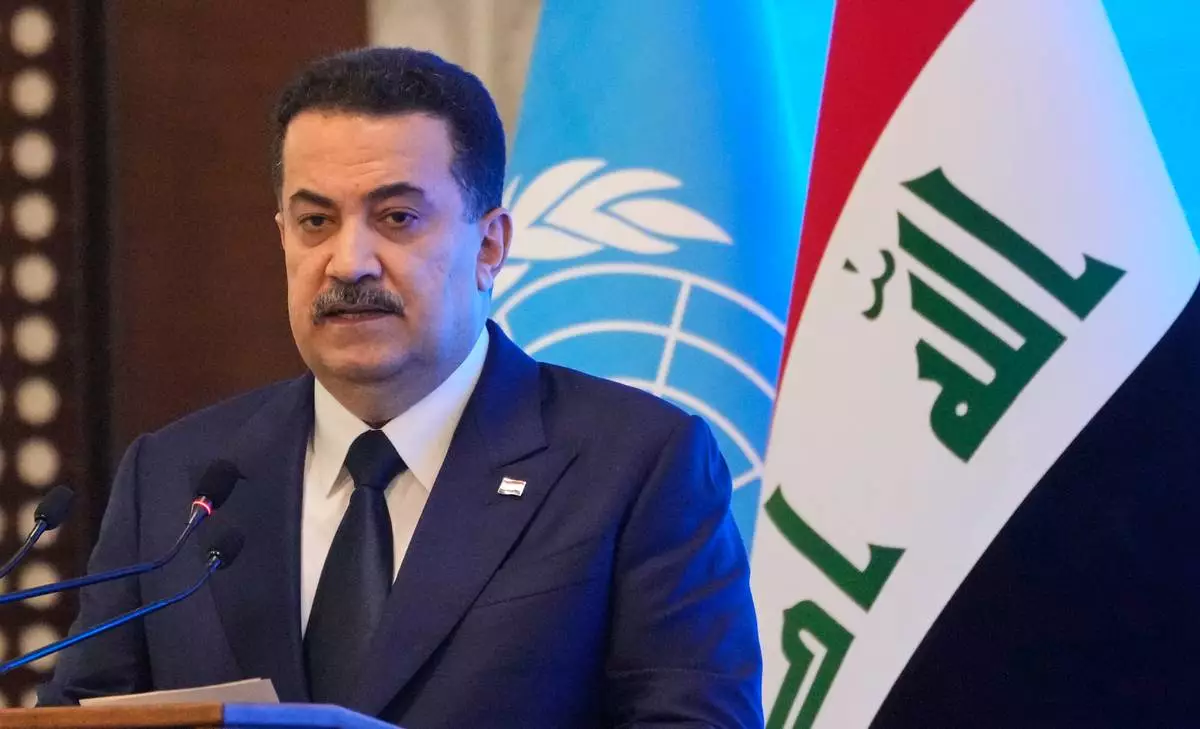
Iraqi prime minister Mohammed Shia al-Sudani speaks during an event to mark the end of the U.N. political mission in Baghdad, Iraq, Saturday, Dec. 13, 2025. (AP Photo/Hadi Mizban)
Iraqi prime minister Mohammed Shia al-Sudani speaks during an event to mark the end of the U.N. political mission in Baghdad, Iraq, Saturday, Dec. 13, 2025. (AP Photo/Hadi Mizban)
Apparently, the worst Australian cricket team in 15 years just won the Ashes with two matches to spare against the best England squad assembled since 2011.

Long-time protagonist Stuart Broad lit the fuse ahead of a volatile contest for the longest-running rivalry in test cricket when he described the host squad as the worst to contest the Ashes in Australia since England won the 2010-11 series Down Under.

The 167-test veteran played two matches for England in that winning series.

Since then, a drought has extended to 16 losses, two draws and no wins for England on Australian soil.

Marnus Labuschagne, who produced a spectacular catch to help hasten the end of England's dogged last-day comeback in the third test on Sunday, reflected on the pre-series pronouncements by Broad and others.

“Have to say, being called the worst Australian team in 15 years… like it's nice to be sitting where we are, 3-0 up,” he told the Australian Broadcasting Corp. “The job's not done yet. We want to make sure it's 5-0 and really take that urn.”

It took all of 11 days — two in Perth, four in Brisbane and almost a full five in Adelaide — not quite a record for clinching an Ashes series but not too far off.

Chasing what needed to be a world record for victory, England was all out for 352 in pursuit of 435, giving Australia an 82-run win. By going the distance, the third test drew a total crowd of 223,638.

The Barmy Army of traveling England supporters was in full voice as England took the record-chasing fourth innings into the penultimate session at the Adelaide Oval, but ultimately it was the Aussies crowing about yet another dramatic win.

It's true, Australia had a patched-up squad, with skipper Pat Cummins missing the first two tests while he continued recovery from a back injury. Josh Hazlewood was ruled out for the series. That left Mitchell Starc as the only member of the regular pace triumvirate available for the first two tests. When offspinner Nathan Lyon was dropped for the second test, Starc was the only member of Australia's longtime bowling quartet in the lineup.

He led from the front, with two man-of-the-match performances. With three of the last four wickets in Adelaide, he has 22 for the series and 51 for the calendar year.

“We just found a way, which I think is a feature of this group over a number of years now,” Starc said. “Even at times where it’s not going our way, we can find a way to get ourselves over the line.”

In the batting lineup, there were questions over who would open and who would bat at No. 3. Steve Smith led the team in the absence of Cummins in Perth and Brisbane but was ruled out of the third test because of vertigo. Usman Khawaja was rushed back into the lineup to replace him and helped hold things together in the first innings.

Cummins said the Australian players took the attitude of just playing what's in front of them.

“You just kind of crack on,” he said. “Even though I missed the first couple of games, Steve stepped right in. It was smooth, seamless.

“And there’s always things that crop up … but the boys go, ‘OK, that’s happened, let’s crack on, what’s next?’ That’s one of the big reasons why we’ve had success over the last couple of years.”

That attitude will really be tested again in Melbourne starting Boxing Day, with Cummins and Lyon unlikely to play the fourth test.

Khawaja's back injury in the first test forced Travis Head up from No. 5 to open the innings, and he responded with a match-winning century in that game. He made the opening slot his own, posting 170 on his home ground in Adelaide in the second innings.

In a post-match TV interview Head was asked what it's like to be part of the Australian team. His answer was simple: “Yeah, it’s bloody amazing.”

AP cricket: https://apnews.com/hub/cricket

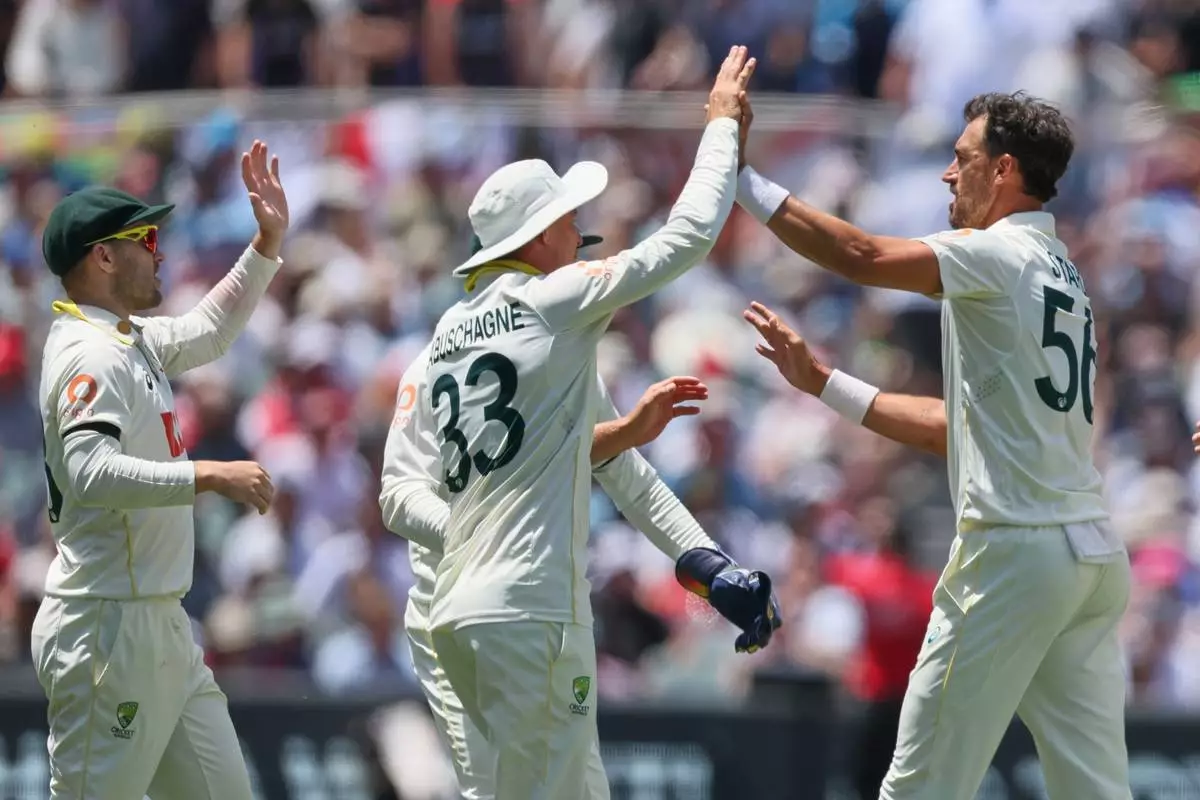
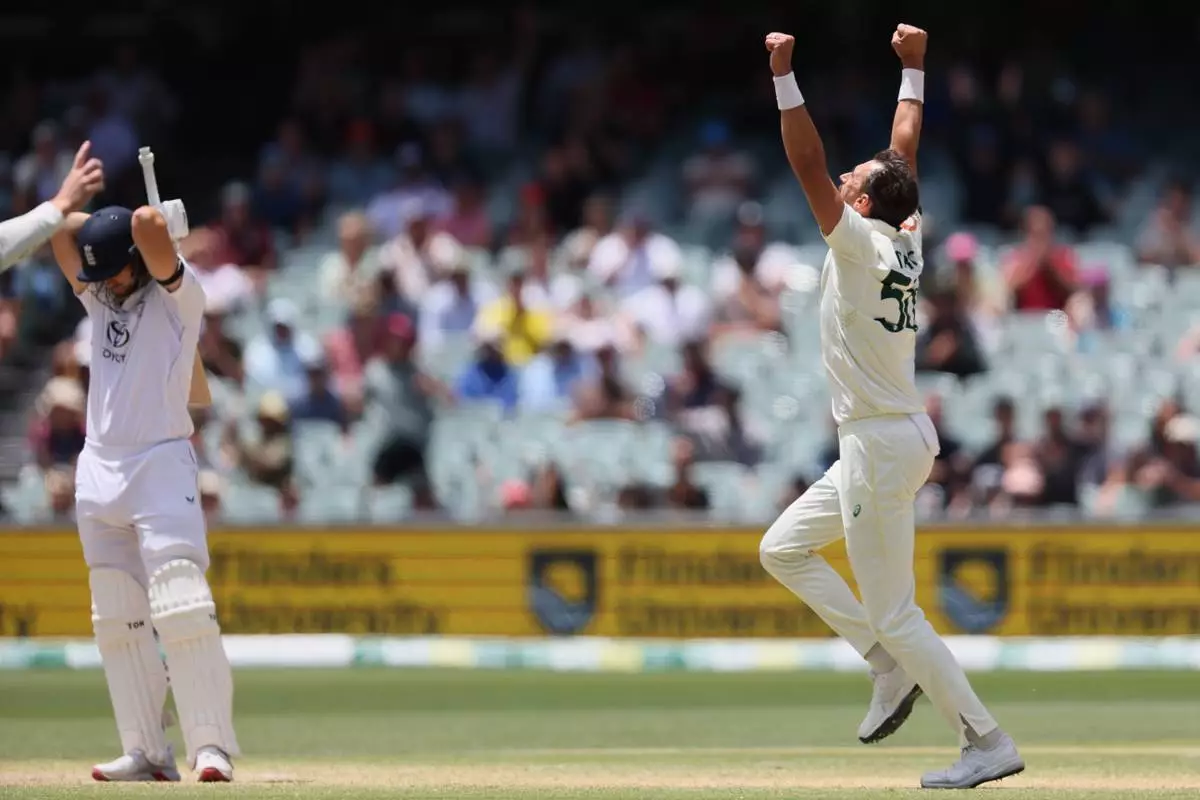
Australia's Mitchell Starc, right, celebrates the wicket of England's Will Jacks, left, during play on the final day of the third Ashes cricket test between England and Australia in Adelaide, Australia, Sunday, Dec. 21, 2025. (AP Photo/James Elsby)

Australia's Mitchell Starc, right, celebrates the wicket of England's Will Jacks, left, during play on the final day of the third Ashes cricket test between England and Australia in Adelaide, Australia, Sunday, Dec. 21, 2025. (AP Photo/James Elsby)

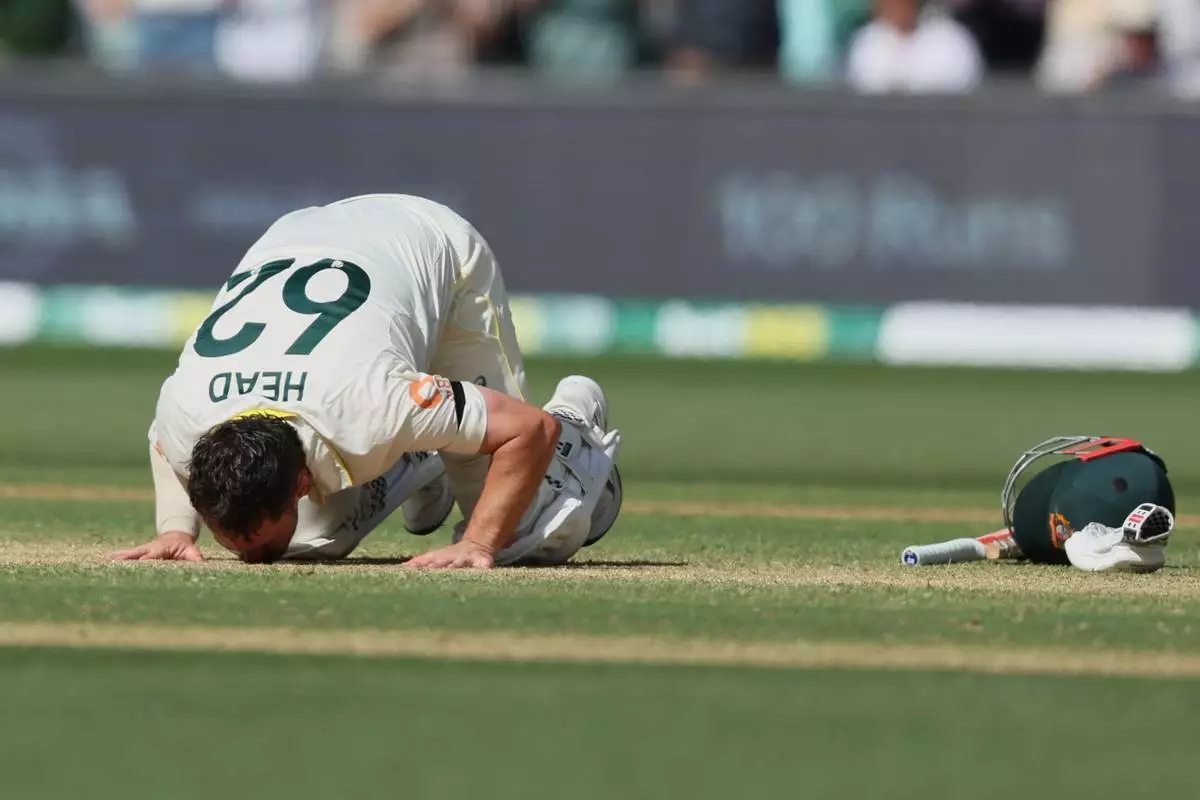
Australia's Travis Head kisses the pitch after scoring a century during play on day three of the third Ashes cricket test between England and Australia in Adelaide, Australia, Friday, Dec. 19, 2025. (AP Photo/James Elsby)

Australia's Travis Head kisses the pitch after scoring a century during play on day three of the third Ashes cricket test between England and Australia in Adelaide, Australia, Friday, Dec. 19, 2025. (AP Photo/James Elsby)

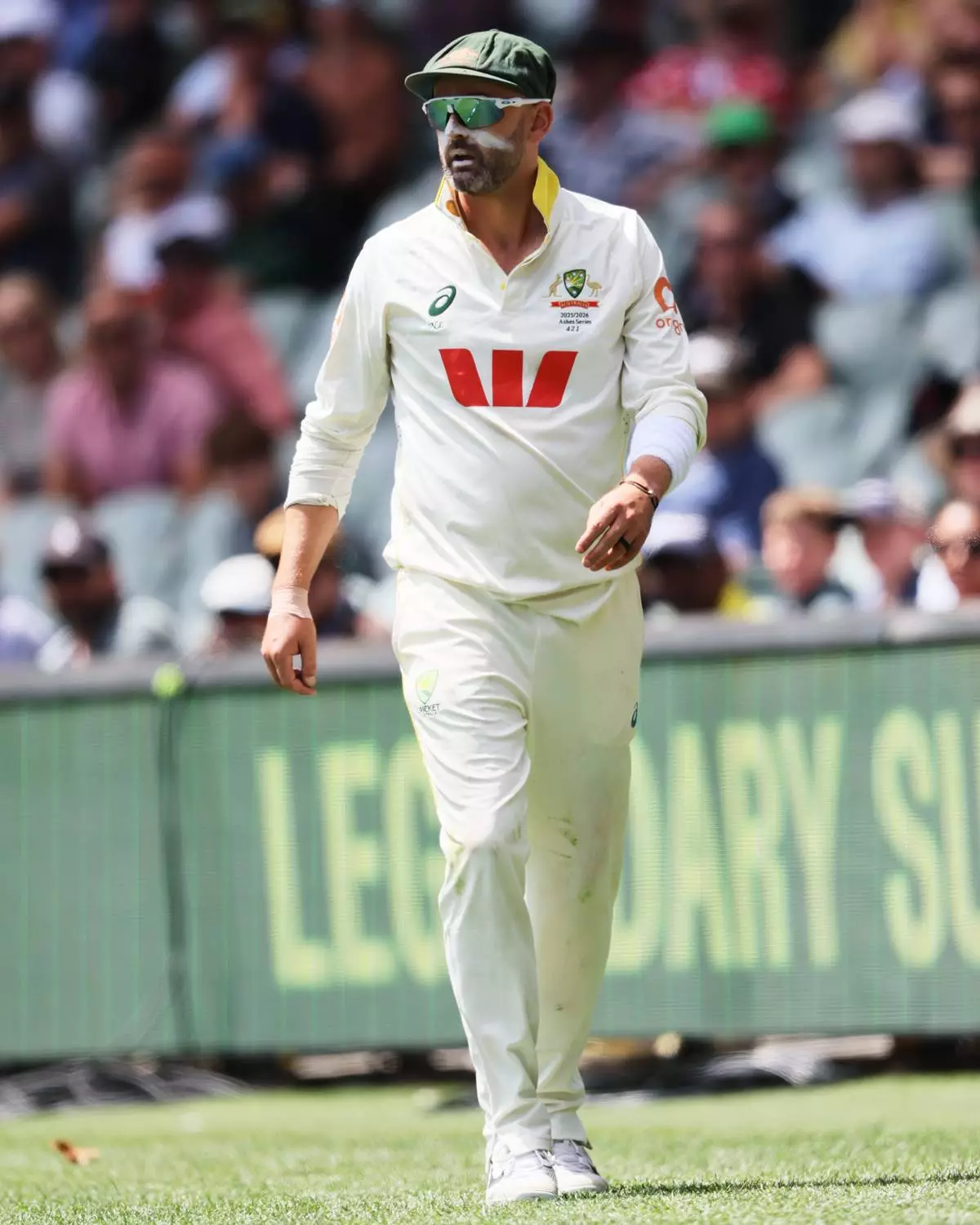
Australia's Nathan Lyon walks from the field during play on the final day of the third Ashes cricket test between England and Australia in Adelaide, Australia, Sunday, Dec. 21, 2025. (AP Photo/James Elsby)

Australia's Nathan Lyon walks from the field during play on the final day of the third Ashes cricket test between England and Australia in Adelaide, Australia, Sunday, Dec. 21, 2025. (AP Photo/James Elsby)

Australia's Mitchell Starc, right, celebrates the wicket of England's Jofra Archer with his teammates during play on the final day of the third Ashes cricket test between England and Australia in Adelaide, Australia, Sunday, Dec. 21, 2025. (AP Photo/James Elsby)

Australia's Mitchell Starc, right, celebrates the wicket of England's Jofra Archer with his teammates during play on the final day of the third Ashes cricket test between England and Australia in Adelaide, Australia, Sunday, Dec. 21, 2025. (AP Photo/James Elsby)

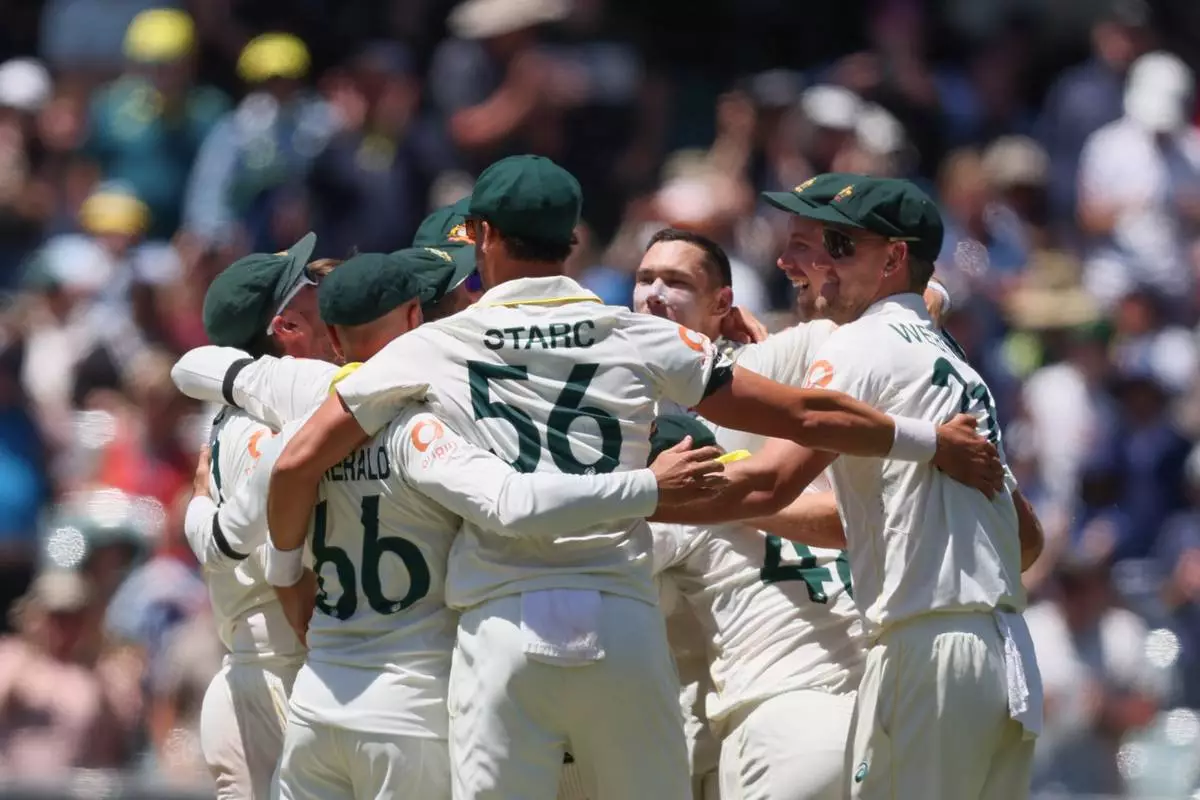
Australia's players celebrate after winning the third Ashes Test against England in Adelaide, Australia, Sunday, Dec. 21, 2025. (AP Photo/James Elsby)

Australia's players celebrate after winning the third Ashes Test against England in Adelaide, Australia, Sunday, Dec. 21, 2025. (AP Photo/James Elsby)

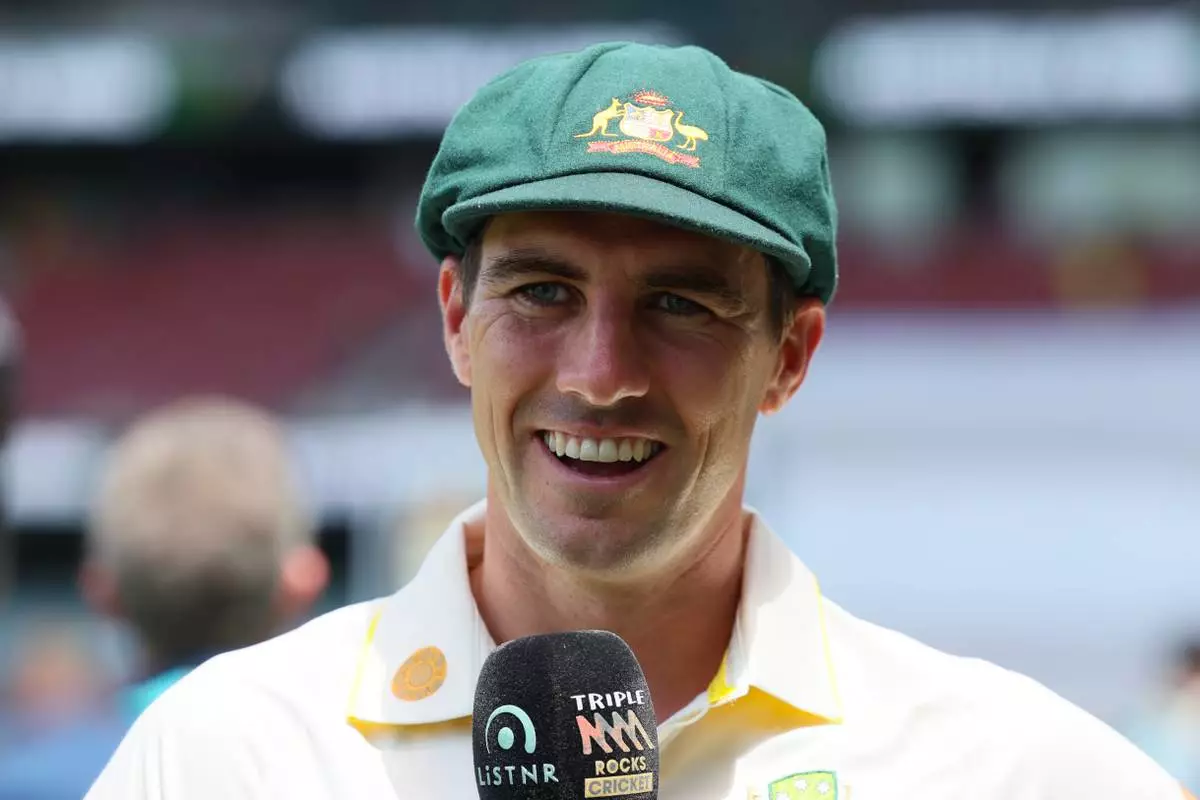
Australia's captain Pat Cummins speaks with media after Australia won the third Ashes cricket test against England in Adelaide, Australia, Sunday, Dec. 21, 2025. (AP Photo/James Elsby)

Australia's captain Pat Cummins speaks with media after Australia won the third Ashes cricket test against England in Adelaide, Australia, Sunday, Dec. 21, 2025. (AP Photo/James Elsby)

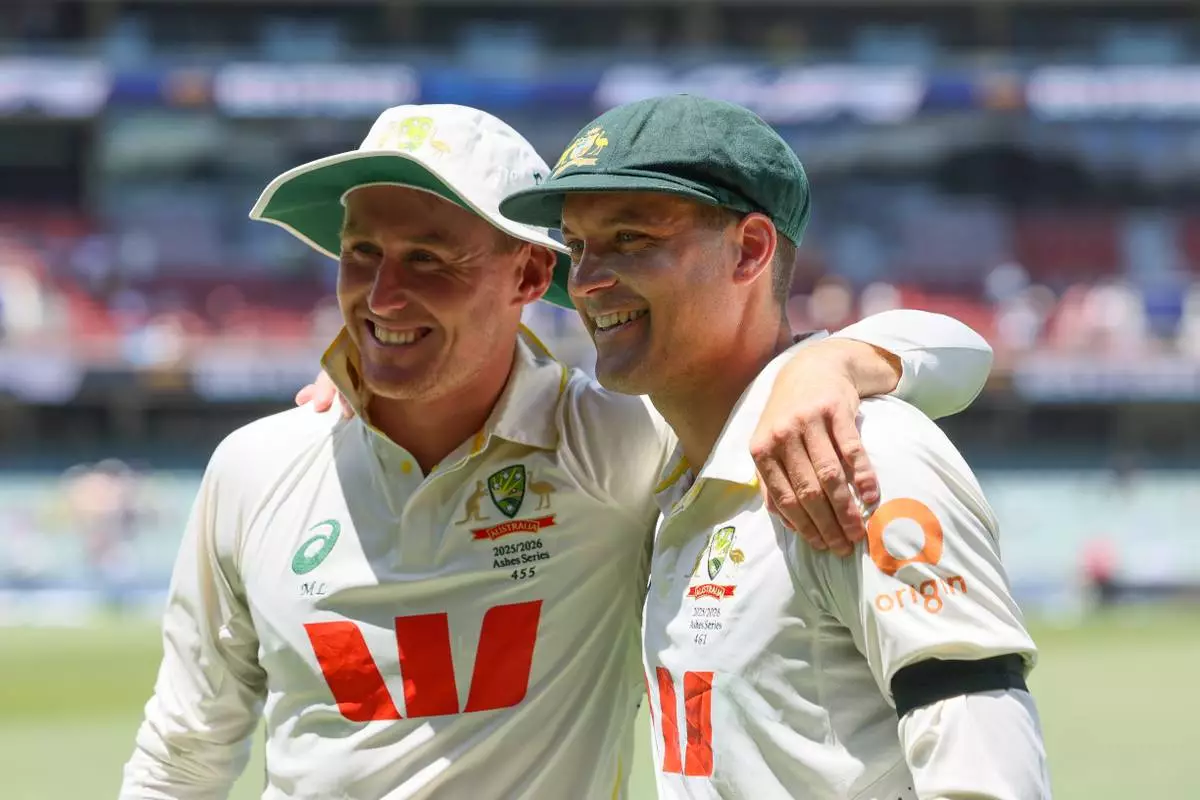
Australia's Alex Carey, right, and Australia's Marnus Labuschagne pose for a photo after Australia won the third Ashes Test against England in Adelaide, Australia, Sunday, Dec. 21, 2025. (AP Photo/James Elsby)

Australia's Alex Carey, right, and Australia's Marnus Labuschagne pose for a photo after Australia won the third Ashes Test against England in Adelaide, Australia, Sunday, Dec. 21, 2025. (AP Photo/James Elsby)

Recommended Articles