OXFORD, Miss (AP) — The Mississippi Rebels head into a second successive rematch in the College Football Playoff — this time facing the only team to beat them this season.
Ole Miss (12-1) defeated Tulane 41-10 Saturday in the opening round, nearly matching a 45-10 regular season home triumph over the Green Wave in the fourth week of the regular season.
Next up for the sixth-seeded Rebels is a clash with third-seeded Georgia (12-1), the Southeastern Conference champs, in the quarterfinal round at the Sugar Bowl in New Orleans on Jan. 1.
The Bulldogs defeated visiting Ole Miss in a 43-35 shootout on Oct. 18, rallying from a nine-point deficit in the fourth quarter.
“We’re looking forward to playing them again,” said wide receiver De’Zhaun Stribling, who had his team-high sixth touchdown catch of the season against Tulane. “Georgia is impressive. But there were things in that game that we could have done better.”
Unlike the first meeting, the Rebels have been through extensive changes, topped by Pete Golding replacing Lane Kiffin as coach two days after the final game of the regular season.
Kiffin departed for LSU on Nov. 30, opening the door for Golding, who had served three years as the Rebels' defensive coordinator.
Ole Miss made a seamless transition in Golding’s head coaching debut in the lopsided home win over Tulane. The Rebels will be hoping for a carryover effect in the Sugar Bowl, a neutral site with historical ties for both programs.
“I know how much it means to be playing in New Orleans,” said Golding, who grew up not far from the Big Easy in Hammond, Louisiana. “We will enjoy this one tonight and tomorrow we start preparing for Georgia.”
While the Bulldogs began the season as a favorite for a CFP berth, Ole Miss' emergence was less predictable.
Early uncertainty regarding the Rebels' prospects stemmed from the fact they had to replace 20 starters — and then move former Division II quarterback Trinidad Chambliss to the starting role after an early season injury to opening week starter Austin Simmons.
“We never doubted that we were a playoff team when the summer practice started,” Chambliss said. “There were doubters that thought we would be a mid-tier SEC team, maybe. We knew we were a playoff team.”
Georgia and Ole Miss now join Alabama and LSU as the only teams to appear in the Sugar Bowl at least 10 times. But this Sugar Bowl will be the first in 60 years featuring two SEC squads.
That 1964 game also featured Ole Miss. Their opponent was Alabama, with a 12-7 win in the old Tulane Stadium during snowy weather — which doesn't happen in New Orleans that often.
Postseason history aside, the Ole Miss players and coaches were quick to dismiss words and phrases such as revenge or payback in the postgame news conference. Instead, the theme focused on opportunity and respect.
In the regular season contest, both offenses combined for 10 touchdowns and more than 850 yards of total offense. The Rebels scored touchdowns on five consecutive possessions while Georgia never faced a punting situation — a fact not lost on Ole Miss defenders such as defensive tackle Will Echoles.
“We’ve talked about that, and we talked about it again tonight after the game. I mean, we’ve got to do everything better,” Echoles said. “That was a bad game for our defense — a really bad game. Period. We know we will have to play our best game.”
TJ Dottery, the leading tackler for the Rebels, added: “Physicality. That’s what Georgia brings. But that’s what I look forward to, is the physicality of the game.”
Get poll alerts and updates on the AP Top 25 throughout the season. Sign up here. AP college football: https://apnews.com/hub/ap-top-25-college-football-poll and https://apnews.com/hub/college-football

Mississippi quarterback Trinidad Chambliss (6) dives into the end zone for a eight-yard rushing touchdown against Tulane during the second half in the first round of the NCAA College Football Playoff, Saturday, Dec. 20, 2025, in Oxford, Miss. (AP Photo/Rogelio V. Solis)
WASHINGTON (AP) — Congressional Democrats called for investigations Wednesday into renovations at the Lincoln Memorial Reflecting Pool, as the ongoing drama over the president’s problem-plagued, $16 million rehabilitation project continued to roil the capital.
Lawmakers in the House and Senate demanded answers about the saga that's been highlighted in the news cycle for weeks, even as the White House has repeatedly blamed — without evidence — unidentified vandals for peeling paint and other problems. Six people have been arrested, President Donald Trump said, without providing details, and a local wildlife nonprofit conducted necropsies on dead ducks found near the Reflecting Pool. The president has said the pool may need to be drained once again for additional repairs.
Connecticut Sen. Richard Blumenthal, the top Democrat on the Senate Permanent Subcommittee on Investigations, challenged the Trump administration over no-bid contracts for work on the Reflecting Pool, saying they were awarded to vendors with previous relationships to Trump.
National Park Service projects undertaken at Trump’s behest in the Washington area “have been marked by blatant corruption, a shocking lack of transparency, disregard for legal requirements and apparent incompetence,” Blumenthal wrote Wednesday in a letter to Interior Secretary Doug Burgum and Jessica Bowron, the acting Park Service director.
“Rushed no-bid contracts given to unqualified vendors with previous relationships to the president resulted in a reflecting pool more covered with algae than before, with freshly painted chunks of paint peeling from the bottom to float on the pool’s surface,” Blumenthal said.
The nation's capital “will now celebrate America's 250th birthday with an empty reflecting pool, a testament to incompetence and corruption,” he added.
Ohio-based Green Water Solutions was given a $1.7 million contract to install a water-purification system in the Reflecting Pool, while Virginia-based Atlantic Industrial Coatings was awarded $14.7 million to repaint and waterproof the pool’s concrete floor.
Both contractors have ties to Trump entities, said California Rep. Robert Garcia, the top Democrat on the Committee on Oversight and Government Reform.
“Donald Trump’s disastrous renovation of our national reflecting pool is his latest failed vanity project,” Garcia said, calling the projects a waste of taxpayer money.
Trump pledged to beautify the century-old Reflecting Pool ahead of the nation's 250th birthday celebrations, draining its water and directing the bottom to be painted a color he dubbed “American flag blue.” But since the site was restored, its water has been plagued by an algae bloom and pieces of the new coating have appeared to be peeling off the bottom.
Without evidence, Trump has repeatedly blamed the peeling paint on vandalism, including a “350-foot gash” in the liner, as the administration faces a self-imposed deadline to complete the renovation before July 4th. Trump also has said the federal government would release images to substantiate his claim.
Trump said Wednesday that “sick people” had used razors and box cutters to slice portions of the lining. He wasn’t sure if the pool draining would come before or after the July 4 holiday, during which tens of thousands of people will be at the National Mall.
The U.S. Park Police posted surveillance footage Wednesday evening and asked for help “identifying the individual depicted here in connection with a Destruction of Government Property investigation.” The grainy, 30-second video appears to show a person kneeling down, reaching into the reflecting pool and removing something from the water. Police said it was taken Friday afternoon.
A White House spokeswoman it’s “a shame that Democrats do not think the capital of the greatest nation in the history of the world deserves to be safe and beautiful.”
Trump “generously spearheaded the restoration of the Lincoln Memorial Reflecting Pool, which has long been plagued with algae and leaked 16 million gallons of water per year. The president’s efforts to beautify our nation’s capital are supported by Americans across the country and should be praised by both Republicans and Democrats,″ spokeswoman Taylor Rogers said.
A spokeswoman for Green Water Solutions, also known as Greenwater Services, said Wednesday the company uses devices called nanobubblers to infuse ozone into the water to kill algae and bacteria. The process is “functioning perfectly” and the water looked clear and blue Wednesday, after rain muddled it Tuesday, spokeswoman Erin Kramer said.
“The water is clear. What is visible is the sediment on the pool floor, a natural part of the remediation process when the algae dies,” she said. In a lake or river, that sediment is absorbed, but in a pool it needs to be vacuumed, she said.
The company is owned by John Cafaro, a Trump donor who lives near Mar-a-Lago, the president’s private club in Florida.
Atlantic Industrial Coatings, which spread blue sealant across the pool’s concrete floor, is owned by Curtis “Eddie” Wood. The company said this week it has identified some areas in the Reflecting Pool that require repairs, adding that the work will done once the pool is drained. It was unclear when that will happen.
Amid the calls for investigations, Democratic Sen. John Hickenlooper of Colorado called for Trump to personally reimburse American taxpayers for the pool renovations, which he called “a national embarrassment.”
Americans expect their tax dollars “to fix roads, support schools and protect our public lands,” Hickenlooper wrote in a letter to Trump. “They do not expect to bankroll failed presidential vanity projects. The bill for this fiasco should only belong to you, Mr. President.”
Associated Press writer Meg Kinnard contributed to this story.
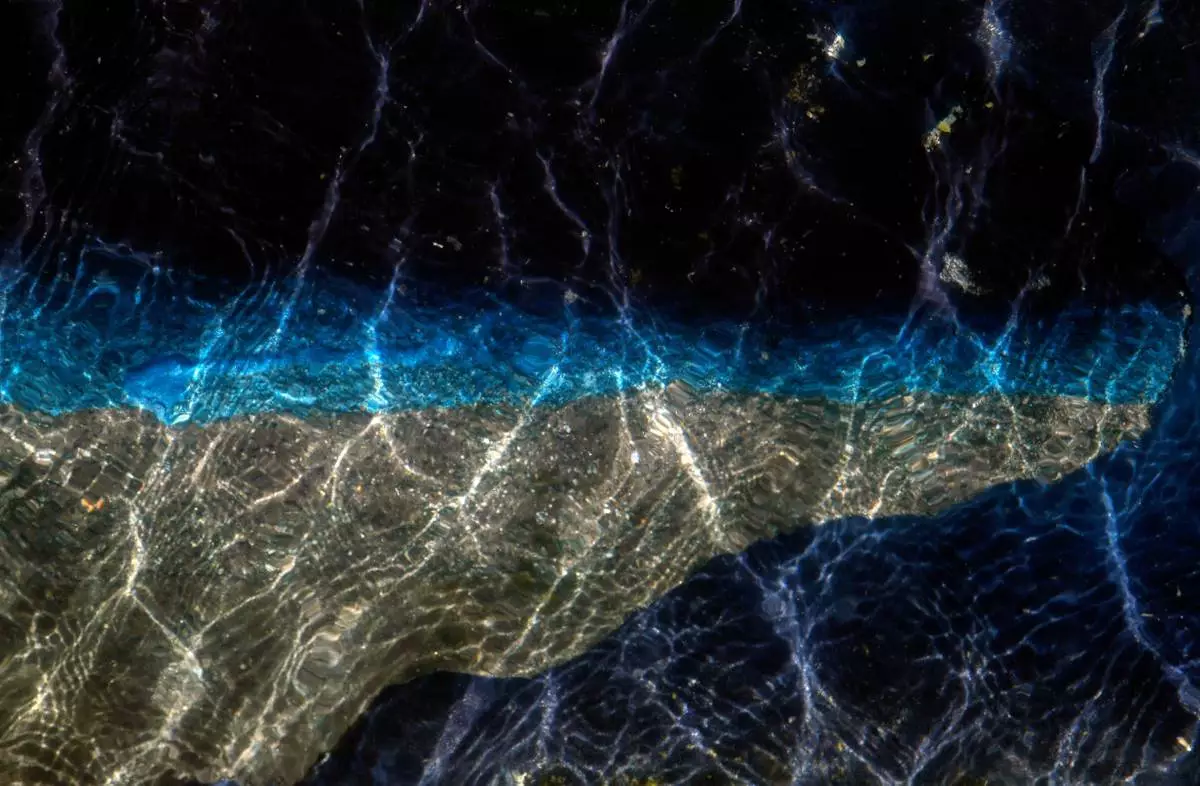
Different shades of colors are seen on the bottom of the Lincoln Memorial Reflecting Pool, Wednesday, June 24, 2026, in Washington. (AP Photo/Rahmat Gul)
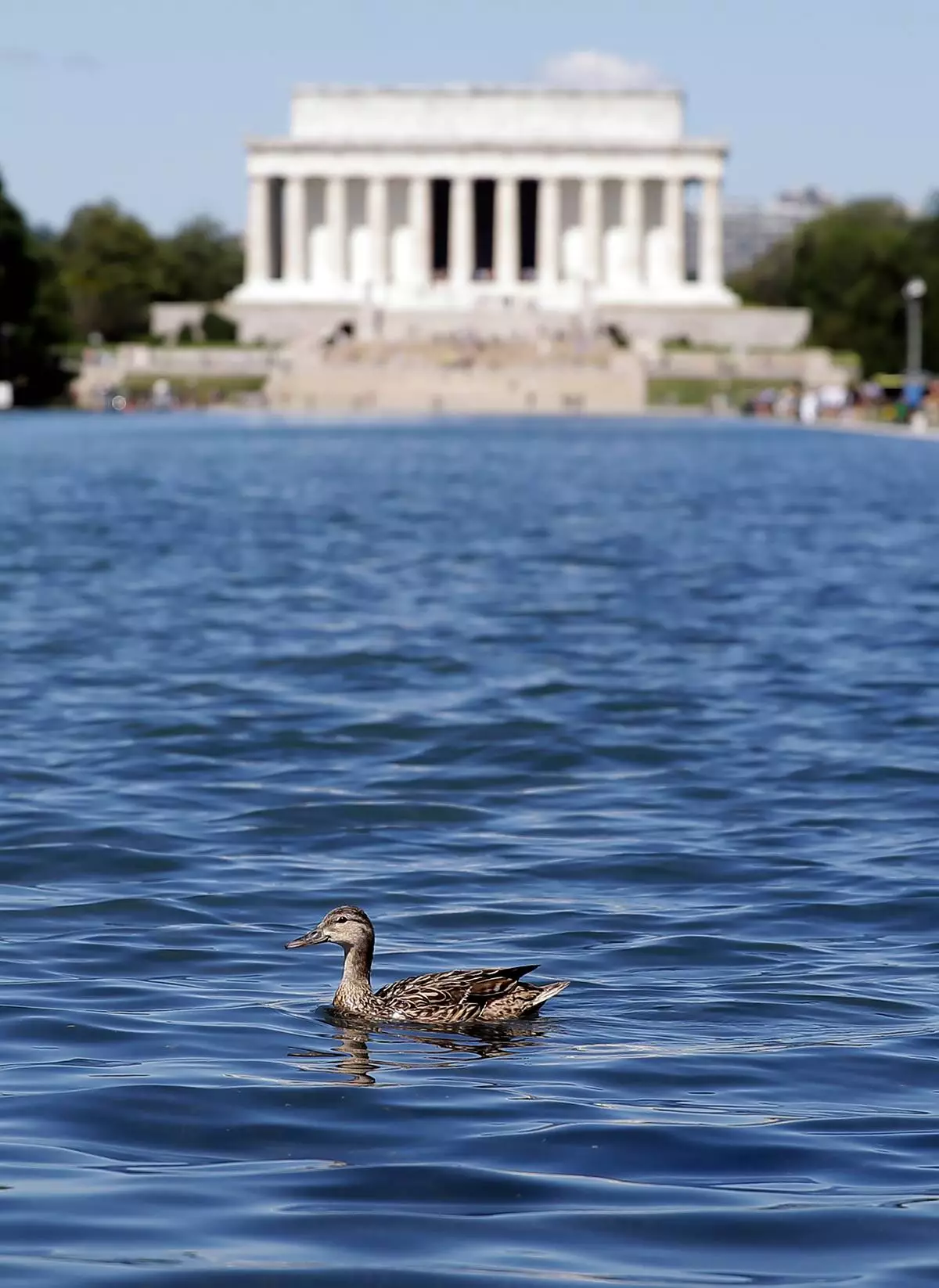
A duck swims across the Lincoln Memorial Reflecting Pool, Wednesday, June 24, 2026, in Washington. (AP Photo/Rahmat Gul)
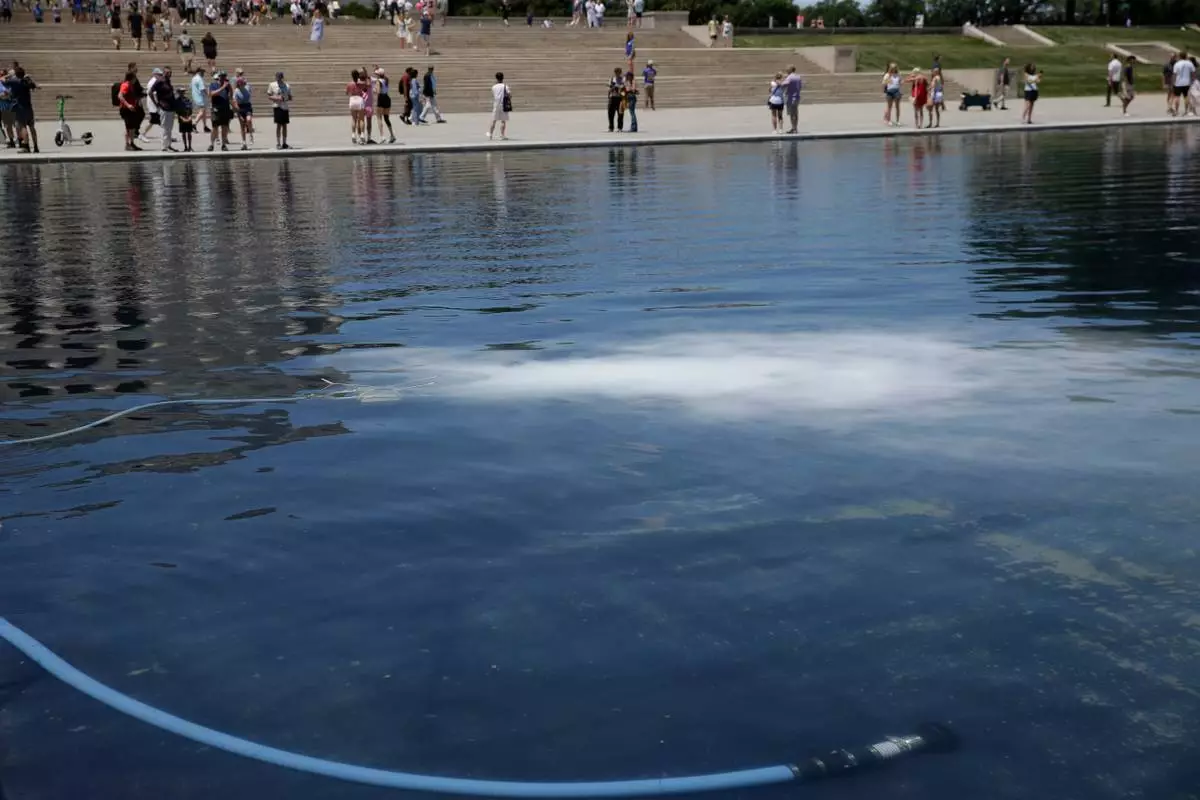
A white substance is pumped into the Lincoln Memorial Reflecting Pool, Wednesday, June 24, 2026, in Washington. (AP Photo/Rahmat Gul)
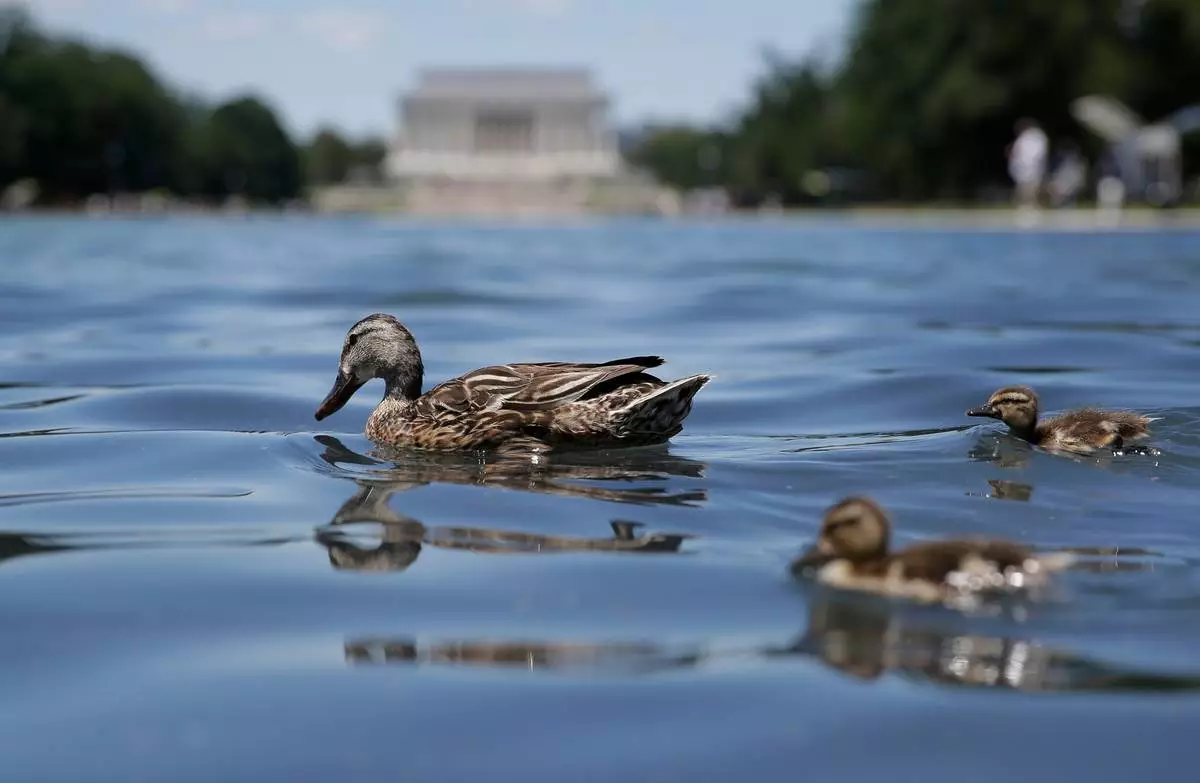
A duck and ducklings swim in the Lincoln Memorial Reflecting Pool, Wednesday, June 24, 2026, in Washington. (AP Photo/Rahmat Gul)
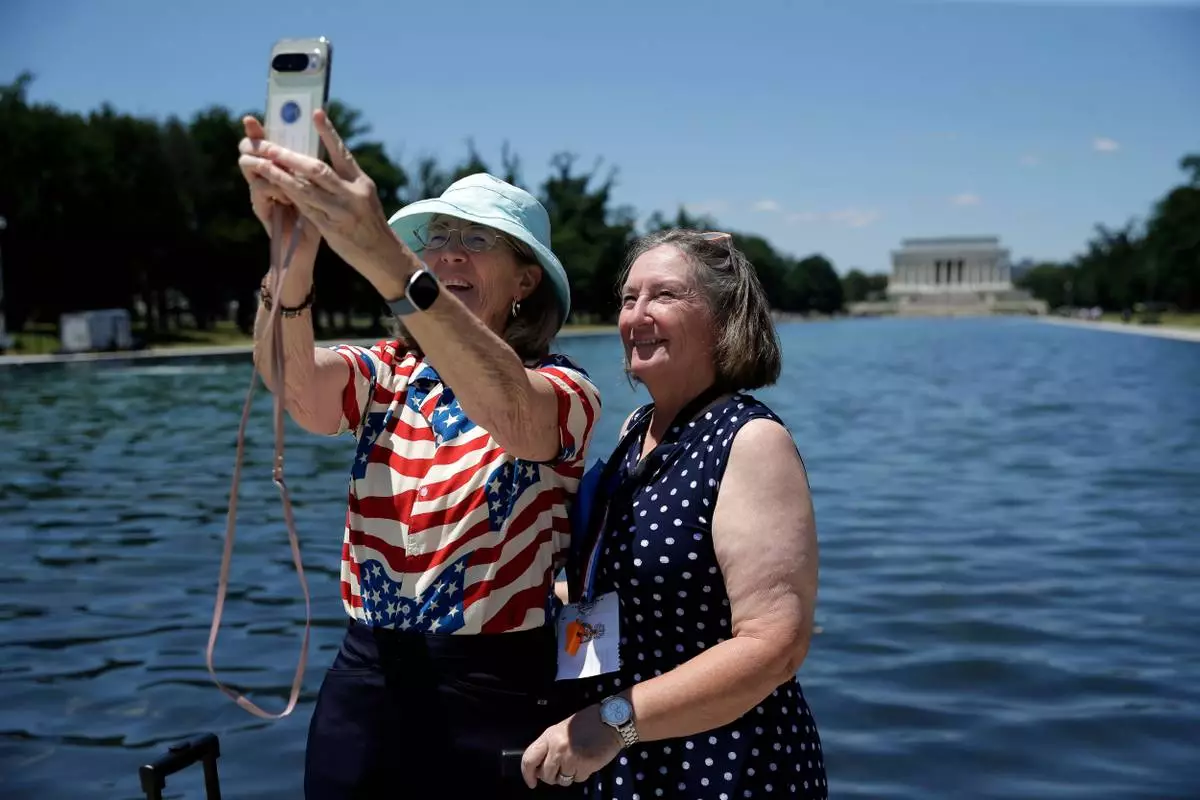
Visitors take a selfie at the Lincoln Memorial Reflecting Pool, Wednesday, June 24, 2026, in Washington. (AP Photo/Rahmat Gul)
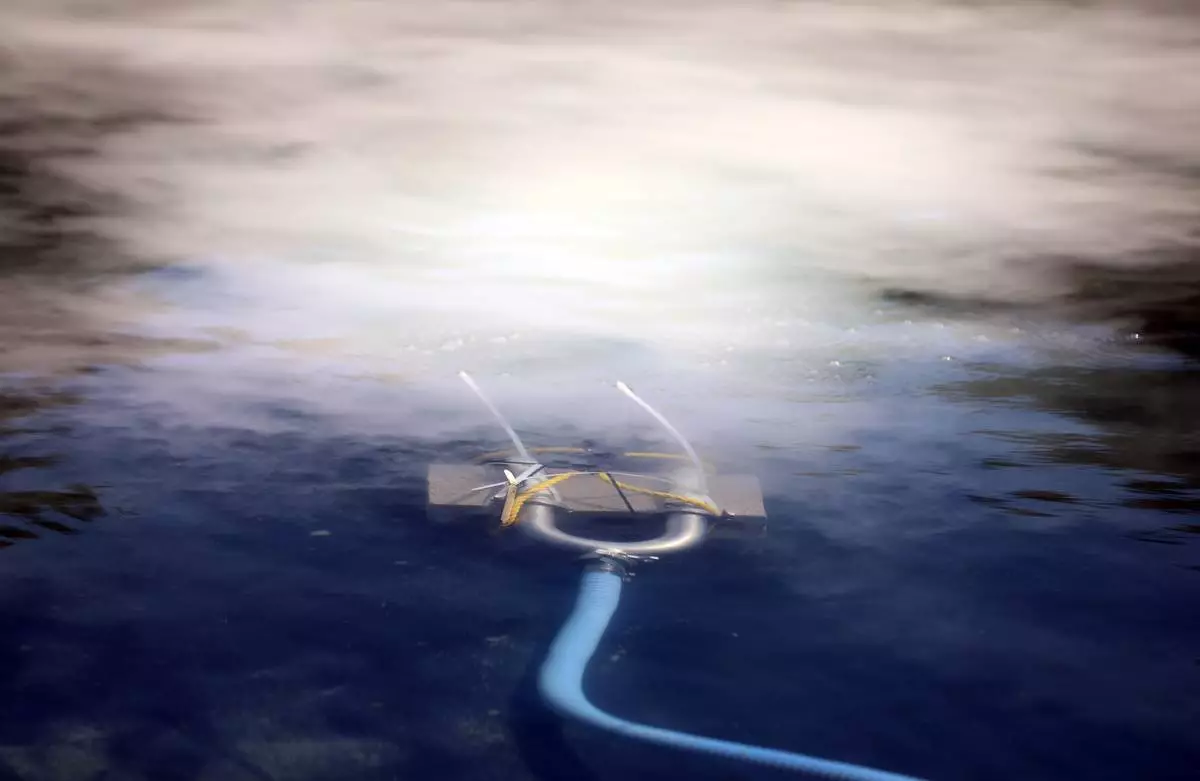
A white substance is pumped into the Lincoln Memorial Reflecting Pool, Wednesday, June 24, 2026, in Washington. (AP Photo/Rahmat Gul)