|
ABU DHABI, UAE, Dec. 22, 2025 /PRNewswire/ -- Bybit, the world's second-largest cryptocurrency exchange by trading volume, participated in the HSC Asset Management high-level conference in Abu Dhabi, where Yoyee Wang, Head of Business-to-Business (BBU), highlighted the role of custody design, capital efficiency and regulatory clarity in institutional engagement with digital assets. The two-day event brought together policymakers, asset managers and technology leaders to discuss global investment trends, digital assets, artificial intelligence and the future architecture of financial markets.
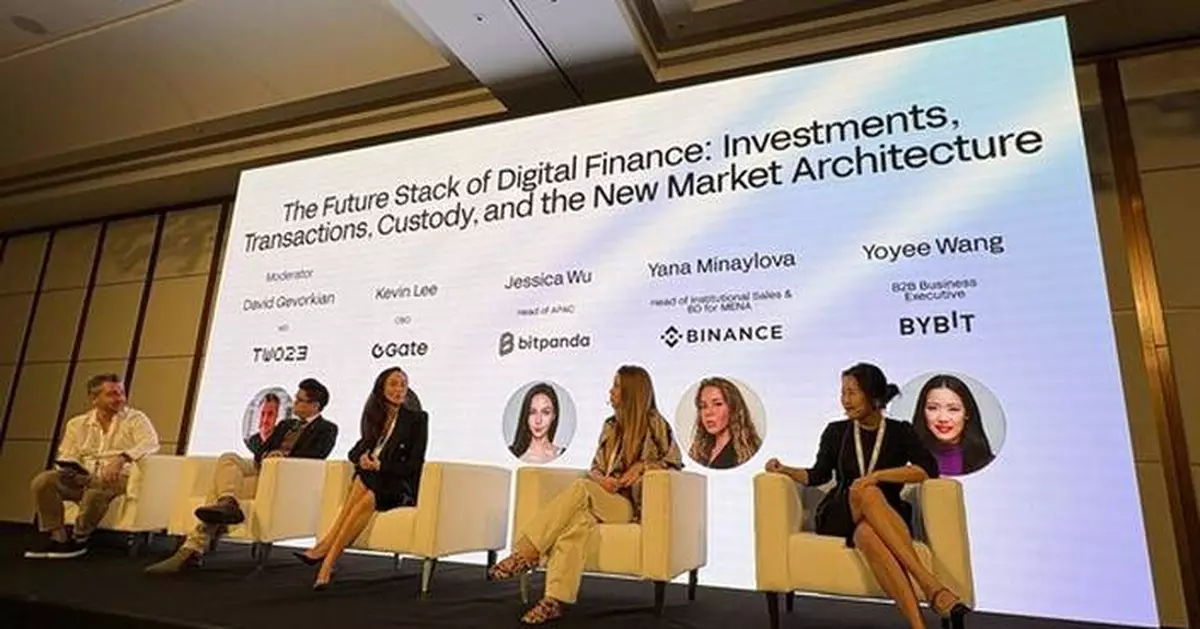
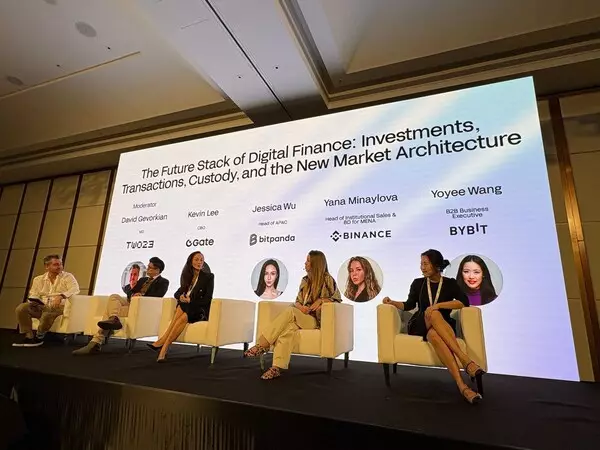
Wang spoke as a panelist during the Grand Forum Day session titled "The Future Stack of Digital Finance: Investments, Transactions, Custody, and the New Market Architecture," which examined how institutional-grade infrastructure is influencing the evolution of digital finance.
Moderated by David Gevorkian, managing director of TWO23 Group, the panel featured senior executives from major digital asset platforms, including Kevin Lee, chief business officer at Gate; Yana Minaylova, head of institutional sales and business development for MENA at Binance; and Jessica Wu, head of APAC at Bitpanda Technology Solutions.
Custody, Risk and Capital Efficiency
During the discussion, Wang emphasized that institutional conversations around custody are fundamentally driven by risk management and operational considerations.
"When institutions talk about custody, the discussion usually starts with security – transparency, control of assets and risk reduction," Wang said."But custody is not the objective in itself. The underlying question is how clients can trade more efficiently while managing risk."
She noted that as custodian and off-exchange settlement models become more common, market participants are increasingly focused on capital usage.
"As custody structures are introduced, whether through multi-party arrangements or off-exchange solutions, the immediate challenge for the industry is capital efficiency," Wang said. "The priority is to improve capital efficiency, on top of enhanced security and reduced counterparty risk to exchanges."
Regulatory Clarity in the UAE
Wang also highlighted the role of regulatory clarity in enabling institutional participation, pointing to the United Arab Emirates as a key example.
"Bybit established its headquarters in the UAE some time ago, and we've seen regulations in the region become progressively clearer," she said. "That clarity and certainty are critical for technology innovation and for building confidence among global institutions."
She added that clearer frameworks have helped foster constructive dialogue between regulators, market participants and technology providers, supporting long-term market development.
Tokenized Real-World Assets
Addressing the growing interest in tokenized real-world assets (RWAs), Wang noted that Bybit has supported access to regulated RWA products through collaborations with established financial institutions.
"We've launched tokenized products in collaboration with Qatar National Bank and UBS that provide exposure to underlying money-market instruments," Wang said. "These structures allow clients to access traditional returns within a digital asset framework, while benefiting from liquidity and trading functionality."
She cautioned, however, that the broader RWA landscape remains uneven.
"The market today includes a wide range of structures and standards," Wang said. "Our focus is on products that are well-structured, subject to appropriate oversight and designed to be tradable, so they can support liquidity in secondary markets."
Institutional Engagement Beyond Asset Exposure
Wang concluded by encouraging institutions to take a broader view of how they engage with digital assets.
"We'd like institutions to look beyond digital assets solely as an asset class and consider them as part of a broader blockchain infrastructure," she said. "Participation can take many forms — from liquidity provision to agency trading or technology collaboration — depending on an institution's business model and risk framework."
#Bybit / #TheCryptoArk / #IMakeIt
About Bybit
Bybit is the world's second-largest cryptocurrency exchange by trading volume, serving a global community of over 80 million users. Founded in 2018, Bybit is redefining openness in the decentralized world by creating a simpler, open and equal ecosystem for everyone. With a strong focus on Web3, Bybit partners strategically with leading blockchain protocols to provide robust infrastructure and drive on-chain innovation. Renowned for its secure custody, diverse marketplaces, intuitive user experience, and advanced blockchain tools, Bybit bridges the gap between TradFi and DeFi, empowering builders, creators, and enthusiasts to unlock the full potential of Web3. Discover the future of decentralized finance at Bybit.com.
For more details about Bybit, please visit Bybit Press
For media inquiries, please contact: media@bybit.com
For updates, please follow: Bybit's Communities and Social Media
Discord | Facebook | Instagram | LinkedIn | Reddit | Telegram | TikTok | X | Youtube
ABU DHABI, UAE, Dec. 22, 2025 /PRNewswire/ -- Bybit, the world's second-largest cryptocurrency exchange by trading volume, participated in the HSC Asset Management high-level conference in Abu Dhabi, where Yoyee Wang, Head of Business-to-Business (BBU), highlighted the role of custody design, capital efficiency and regulatory clarity in institutional engagement with digital assets. The two-day event brought together policymakers, asset managers and technology leaders to discuss global investment trends, digital assets, artificial intelligence and the future architecture of financial markets.
Wang spoke as a panelist during the Grand Forum Day session titled "The Future Stack of Digital Finance: Investments, Transactions, Custody, and the New Market Architecture," which examined how institutional-grade infrastructure is influencing the evolution of digital finance.
Moderated by David Gevorkian, managing director of TWO23 Group, the panel featured senior executives from major digital asset platforms, including Kevin Lee, chief business officer at Gate; Yana Minaylova, head of institutional sales and business development for MENA at Binance; and Jessica Wu, head of APAC at Bitpanda Technology Solutions.
Custody, Risk and Capital Efficiency
During the discussion, Wang emphasized that institutional conversations around custody are fundamentally driven by risk management and operational considerations.
"When institutions talk about custody, the discussion usually starts with security – transparency, control of assets and risk reduction," Wang said."But custody is not the objective in itself. The underlying question is how clients can trade more efficiently while managing risk."
She noted that as custodian and off-exchange settlement models become more common, market participants are increasingly focused on capital usage.
"As custody structures are introduced, whether through multi-party arrangements or off-exchange solutions, the immediate challenge for the industry is capital efficiency," Wang said. "The priority is to improve capital efficiency, on top of enhanced security and reduced counterparty risk to exchanges."
Regulatory Clarity in the UAE
Wang also highlighted the role of regulatory clarity in enabling institutional participation, pointing to the United Arab Emirates as a key example.
"Bybit established its headquarters in the UAE some time ago, and we've seen regulations in the region become progressively clearer," she said. "That clarity and certainty are critical for technology innovation and for building confidence among global institutions."
She added that clearer frameworks have helped foster constructive dialogue between regulators, market participants and technology providers, supporting long-term market development.
Tokenized Real-World Assets
Addressing the growing interest in tokenized real-world assets (RWAs), Wang noted that Bybit has supported access to regulated RWA products through collaborations with established financial institutions.
"We've launched tokenized products in collaboration with Qatar National Bank and UBS that provide exposure to underlying money-market instruments," Wang said. "These structures allow clients to access traditional returns within a digital asset framework, while benefiting from liquidity and trading functionality."
She cautioned, however, that the broader RWA landscape remains uneven.
"The market today includes a wide range of structures and standards," Wang said. "Our focus is on products that are well-structured, subject to appropriate oversight and designed to be tradable, so they can support liquidity in secondary markets."
Institutional Engagement Beyond Asset Exposure
Wang concluded by encouraging institutions to take a broader view of how they engage with digital assets.
"We'd like institutions to look beyond digital assets solely as an asset class and consider them as part of a broader blockchain infrastructure," she said. "Participation can take many forms — from liquidity provision to agency trading or technology collaboration — depending on an institution's business model and risk framework."
#Bybit / #TheCryptoArk / #IMakeIt
About Bybit
Bybit is the world's second-largest cryptocurrency exchange by trading volume, serving a global community of over 80 million users. Founded in 2018, Bybit is redefining openness in the decentralized world by creating a simpler, open and equal ecosystem for everyone. With a strong focus on Web3, Bybit partners strategically with leading blockchain protocols to provide robust infrastructure and drive on-chain innovation. Renowned for its secure custody, diverse marketplaces, intuitive user experience, and advanced blockchain tools, Bybit bridges the gap between TradFi and DeFi, empowering builders, creators, and enthusiasts to unlock the full potential of Web3. Discover the future of decentralized finance at Bybit.com.
For more details about Bybit, please visit Bybit Press
For media inquiries, please contact: media@bybit.com
For updates, please follow: Bybit's Communities and Social Media
Discord | Facebook | Instagram | LinkedIn | Reddit | Telegram | TikTok | X | Youtube
** The press release content is from PR Newswire. Bastille Post is not involved in its creation. **
Bybit's Yoyee Wang Says Capital-Efficient Custody and Regulatory Clarity Are Key to Institutional Crypto Adoption
BEIJING, Dec. 22, 2025 /PRNewswire/ -- China's tea industry is shifting from a pillar industry for poverty alleviation to a key driver of rural revitalization, said Li Chunsheng, president of the China Association of Supply and Marketing Cooperative Economics, at the 2025 Global Green Tea Congress held in Wuyuan County, east China's Jiangxi Province.
China's tea output now exceeds 37 million tonnes, with the total value surpassing 330 billion yuan, supporting regional economic development and increasing farmers' incomes.
Li pointed out that tea has become one of the world's three major beverages, with over 2 billion people worldwide having the habit of drinking tea. China's initiative to designate May 21 as the International Tea Day in 2019 highlights the global leadership of its tea industry.
In analyzing the development of green tea in Wuyuan County, east China's Jiangxi Province, Li elaborated on the transformation and upgrading of the tea industry in the county through integrated tourism, industrial development and cultural innovation.
Wuyuan now has nearly 210,000 mu (about 14,000 hectares) of tea plantations with the industry output value exceeding 6 billion yuan, making tea a key industry for increasing local incomes. Li believes the sector will be vital to boosting local prosperity and economic growth.
Jointly hosted by China Economic Information Service, China Tea Science Society, and the Ecological Civilization Research and Promotion Association of Jiangxi Province, the congress brought together tea experts and enterprises from around the world.
Original link: https://en.imsilkroad.com/p/348904.html
** The press release content is from PR Newswire. Bastille Post is not involved in its creation. **

Xinhua Silk Road: Chinese tea embraces new opportunities shared by the world