The Guangdong-Hong Kong-Macao Greater Bay Area (GBA) is speeding up its push to become a world-class center for science and technology, driven by innovation factors across the region and deepened cooperation.
In a congratulatory letter to the Greater Bay Science Forum 2021, Chinese President Xi Jinping, also general secretary of the Communist Party of China (CPC) Central Committee and chairman of the Central Military Commission, urged the GBA to focus on its strategic positioning of building an international sci-tech innovation hub, strive to make itself a global highland for sci-tech innovation, and foster the development of emerging industries.
Now the Greater Bay Area has turned that vision into reality with faster collaboration and achieved remarkable outcomes. On average, every two hours, a high-value patent in the GBA could reach a commercialization intent and is quickly matched with upstream and downstream partners in the industrial chain.
Connectivity between major science zones in the area is also accelerating. It now takes about 30 minutes for researchers in Hong Kong to commute directly to the Shenzhen Park of Hetao Shenzhen-Hong Kong Science and Technology Innovation Cooperation Zone in Guangdong. Relying on the Guangzhou-Shenzhen-Hong Kong-Macao science and technology innovation corridor, joint research and development projects in the area have increased by 40 percent.
Now an average of more than 400 invention patents are authorized every day in the GBA. This year, the Shenzhen-Hong Kong-Guangzhou innovation cluster has topped the world's 100 leading innovation clusters in the 2025 Global Innovation Index for the first time.
In December 2012, Xi visited Guangdong in his first inspection trip outside Beijing after the 18th CPC National Congress. He expressed the hope for Guangdong to partner with Hong Kong and Macao to create a more competitive world-class city cluster, setting the strategic cornerstone for the development of the GBA.
Since then, whenever Xi pays an inspection tour to either Guangdong, Hong Kong or Macao, he will visit the frontlines of innovation.
In the Hong Kong Special Administrative Region (SAR), he urged the city to join hands with mainland cities of the GBA, move toward each other, and strengthen collaboration among industries, universities, and research institutes.
In Macao, he called on the SAR to proactively participate in GBA development, integrate high-quality resources and deepen coordinated development.
On his latest inspection tour to Guangdong in November, Xi stressed again the need to enhance cooperation in sci-tech innovation and the interconnection of infrastructure in the GBA, with an aim to achieve the goal of building a dynamic and internationally competitive world-leading bay area and a world-class city cluster.
"The requirements General Secretary Xi Jinping has set for coordinated innovation in the Guangdong-Hong Kong-Macao Greater Bay Area have been consistent. Unlike Beijing and Shanghai, the Guangdong-Hong Kong-Macao Greater Bay Area Science and Technology Innovation Center has been a three-place joint effort from the very beginning. It leverages the unique advantages of One Country, Two Systems, while aligning closely with global trends in sci-tech reform and industrial transformation. Under the dual drivers of institutional and technological innovation, the GBA has opened up a distinctive path of cross-border collaborative innovation," said Liu Quanhong, director of the Institute of Industrial and Technological Economics at the National Development and Reform Commission.
In 2019, the Outline Development Plan for the Guangdong-Hong Kong-Macao Greater Bay Area formally set the goal of building an international sci-tech innovation center.
Anchored to that strategic goal, Guangdong, Hong Kong and Macao have been breaking down barriers and innovating mechanisms to turn scattered strengths into a unified force.
Hard connectivity is rapidly advancing. By this year, the GBA's railway lines in operation and under construction will reach 4,700 kilometers, fully covering core and node cities and key metropolitan areas, such as Guangzhou and Shenzhen.
Soft connectivity is also being upgraded. Guangdong became the first province to allow provincial fiscal sci-tech funds to be allocated to Hong Kong and Macao, with a cumulative total exceeding 600 million yuan (about 82.3 million U.S. dollars). So far, Guangdong and the two SARs have jointly issued 262 Bay Area Standards, and 187 high-frequency government services can now be handled across the border.
With the support of these policies, the cross-border flow of people, capital, goods and information within the GBA is accelerating to provide stronger momentum for innovation. The GBA has so far built two national laboratories, 45 state key laboratories and 33 joint laboratories involving Guangdong, Hong Kong and Macao, forming a multi-tier and high-level research infrastructure system.
In Shenzhen's Bao'an District, authorities have just released more than 500 application scenarios. These include over 280 kilometers of open roads for L4 autonomous driving tests, with airport environments to trial the latest automation technologies and mountainous areas where low-altitude drones can test more complex routes. The new scenarios have drawn a number of innovative GBA companies to conduct on-site testing.
"Our cutting-edge technologies can quickly align with real market demands, saving about 40 percent in management costs. By refining our products in these scenarios, we are also driving improvements and breakthroughs in multiple key technologies," said Luo Lili, head of ecosystem cooperation at Hai Robotics, a technology company based in Shenzhen.
The just-concluded Central Economic Work Conference once again emphasized building the GBA into an international sci-tech innovation center, injecting fresh policy momentum into the GAB's innovation drive.
Focusing on emerging tracks, such as the low-altitude economy and biomanufacturing, the GBA plans to cultivate five more emerging industrial clusters each worth over 100 billion yuan (about 14.2 billion U.S. dollars), while accelerating the high-end and smart transformation of its strengths in electronic information and advanced equipment manufacturing.
"General Secretary Xi Jinping's earnest expectations are the greatest driving force to our advancement. Next, we will continue to remove bottlenecks in the flow of innovation factors, strengthen rule alignment and institutional innovation, and promote complementation of advantages among Guangdong, Hong Kong and Macao to build the Greater Bay Area into a source of major original innovation, a preferred destination for commercializing sci-tech achievements, and a new high land for modern industrial development to contribute the GBA's strength to building an innovative country through concrete progress," said Wu Shiwen, deputy director of the Department of Science and Technology of Guangdong Province.
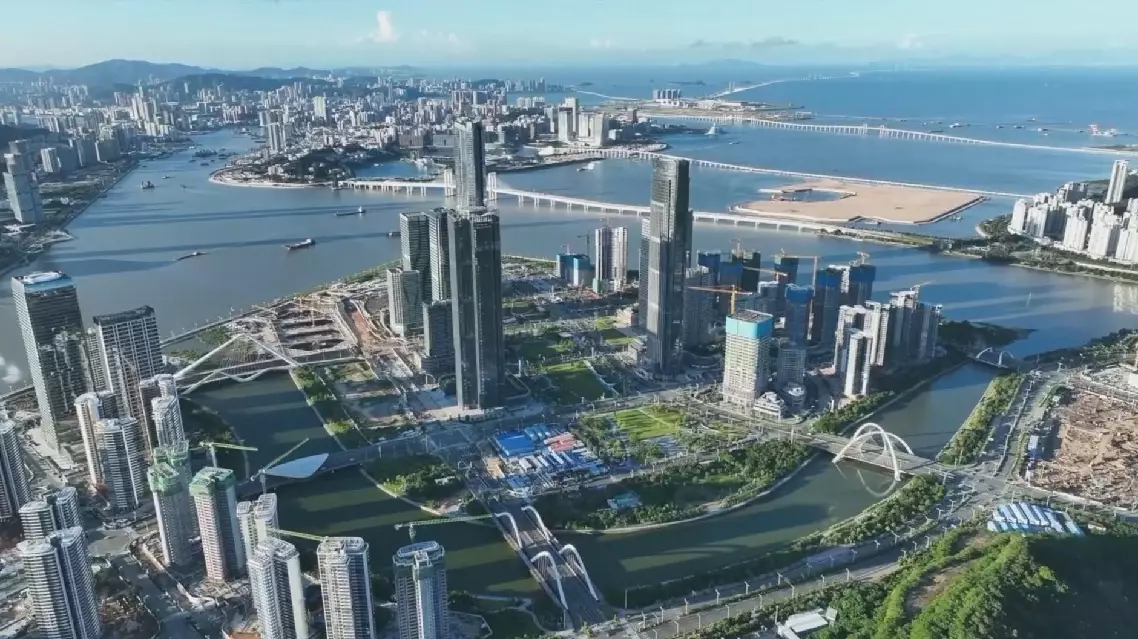
Greater Bay Area eyes global sci-tech innovation hub