Skip to Content Facebook Feature Image

RI Research Instruments Announces Major Orders for Enabling Technology for the Gamma-Ray Source of the Extreme Light Infrastructure (ELI)

News

RI Research Instruments Announces Major Orders for Enabling Technology for the Gamma-Ray Source of the Extreme Light Infrastructure (ELI)
News

News

RI Research Instruments Announces Major Orders for Enabling Technology for the Gamma-Ray Source of the Extreme Light Infrastructure (ELI)

2025-12-22 23:04 Last Updated At:23:10

BERGISCH GLADBACH, Germany--(BUSINESS WIRE)--Dec 22, 2025--

RI Research Instruments, a company that is majority-owned by Bruker Corporation (Nasdaq: BRKR), today announced orders for key components and enabling subsystems for the research gamma ray source of the Extreme Light Infrastructure – Nuclear Physics (ELI-NP) at the Horia Hulubei National Institute of Physics and Nuclear Engineering (IFIN-HH) in Romania. The total value of these ELI contracts is approximately €35 million (more than USD $40 million), with major deliveries expected in late 2026.

This press release features multimedia. View the full release here: https://www.businesswire.com/news/home/20251222557179/en/

This unique gamma-ray source will generate a beam of gamma rays like those that existed in the first minutes of our universe after the Big Bang. The high-flux, monochromatic and energy-tunable gamma rays will be produced by scattering ultra-intense laser beams off relativistic electrons via inverse Compton scattering. The gamma ray beam will enable unprecedented insights into nuclear and fundamental processes such as the formation of atomic nuclei in the early universe. In the first phase, RI will expand an existing particle accelerator and supply the components to guide and focus both the electron and laser beams into the collision point, where they can produce gamma rays. For the second phase, RI will upgrade the existing Linac (Linear accelerator), increasing the pulses rate by a factor of 200x. The contracts include an optical resonator amplifying the laser beam by more than a factor of 900x. For this key enabling component, RI teamed up with LICOS ( https://licos-munich.de/ ), a spin-out of the Technical University Munich (TUM).

“This inverse Compton scattering system completes the advanced instrumentation portfolio at ELI-NP,” said Dr. Călin A. Ur, Project Director. “Delivering intense, monochromatic gamma beams from 1 to 20 MeV puts us in a uniquely strong global position. It closes a key capability gap and strengthens our ability to attract top talent. Researchers are already lining up to conduct their most demanding experiments here in Romania.”

“We are excited to complete our gamma beam system by adding the inverse Compton scattering instruments to the existing Linac,” said Dr. Catalin Matei, Head of the Gamma System Department at ELI-NP. “Monochromatic gamma-ray beams are a unique tool for probing nuclear processes. They let us investigate conditions like they existed minutes after the Big Bang, how nuclei formed, and why today’s isotopes exist. These questions are central to understanding our universe, and ELI-NP will soon have the capabilities to study them.”

“This gamma-ray source exemplifies RI’s unique capabilities to solve complex physics and advanced engineering projects and deliver complex, high-performance solutions that meet our customers’ needs,” said Dr. Christian Piel, Managing Director at RI Research Instruments. “We are pleased to have been awarded these contracts and are working with our team of experts, and key technology partners to deliver all gamma-ray source components on time and to specifications.”

About RI Research Instruments – High-performance solutions for science and industry (Nasdaq: BRKR)

RI enables groundbreaking research and cutting-edge industrial applications by providing custom-designed instruments and solutions for advanced physics and medical research and integrated production systems. With our team of 400 employees, we combine physics-based design capabilities with project management and high-tech manufacturing to deliver unique components and instruments. As a trusted development and technology partner, we collaborate closely with customers worldwide. With a worldwide network of technology partners, we can accept uniquely complex and multi-disciplinary projects. Drawing on our experience supplying world-leading research institutions such as CERN, ITER, DESY or SLAC, we understand what it takes to meet the highest expectations of top-tier scientists.

With our new production site, the Manufaktur, RI now has the high-quality team, space and unique infrastructure for over 200 colleagues in precision fabrication to produce, assemble, test and clean key physics components.

For more information, please visit www.research-instruments.de.
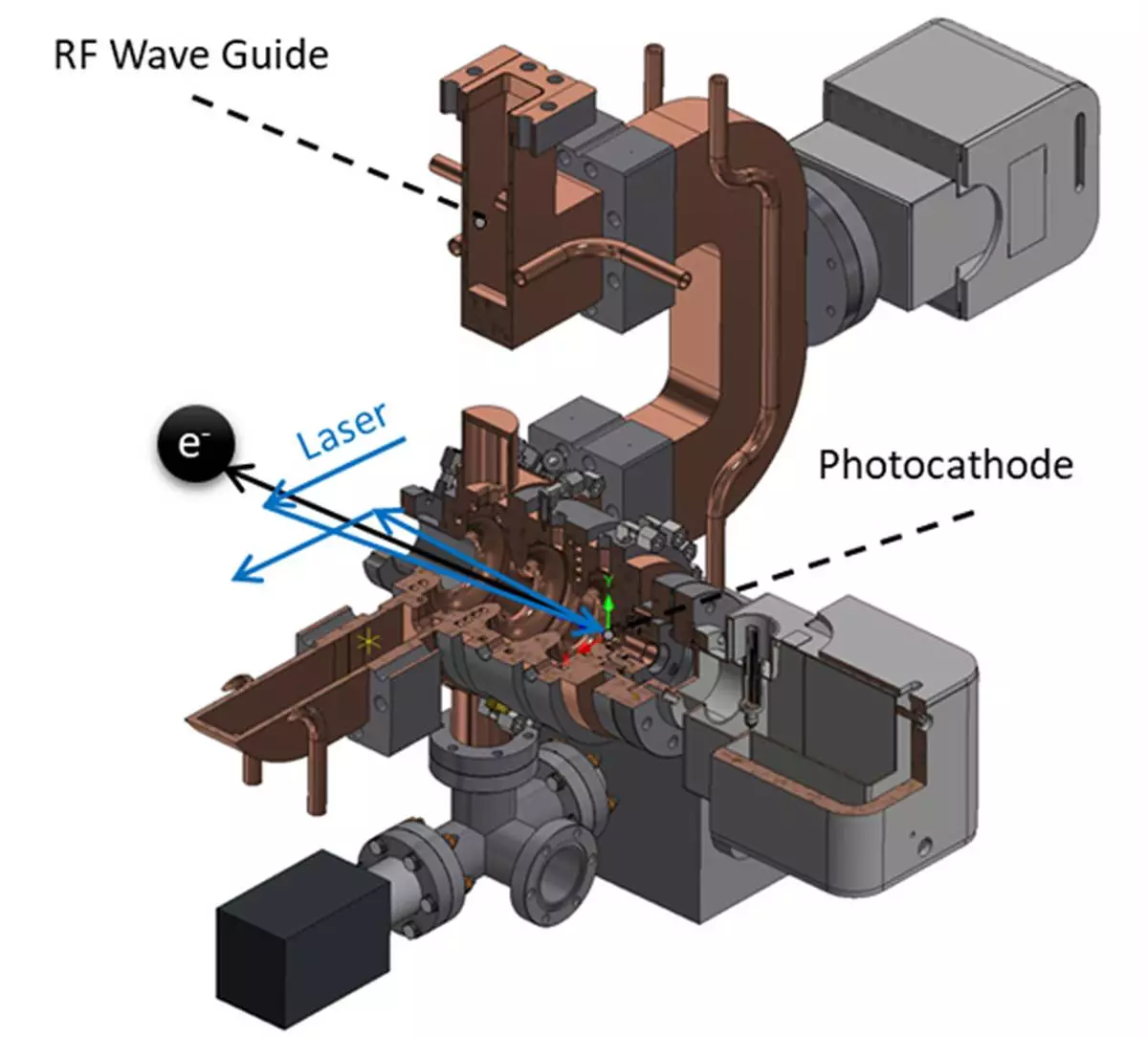
Electron gun designed for the ELI-GBS project. Here a pulsed laser beam liberates electrons from the photocathode in a very strong electrical field (80.000.000 Volt/m) and reach more than 99% of the velocity of light after only about 20 cm of acceleration distance.

Electron gun designed for the ELI-GBS project. Here a pulsed laser beam liberates electrons from the photocathode in a very strong electrical field (80.000.000 Volt/m) and reach more than 99% of the velocity of light after only about 20 cm of acceleration distance.

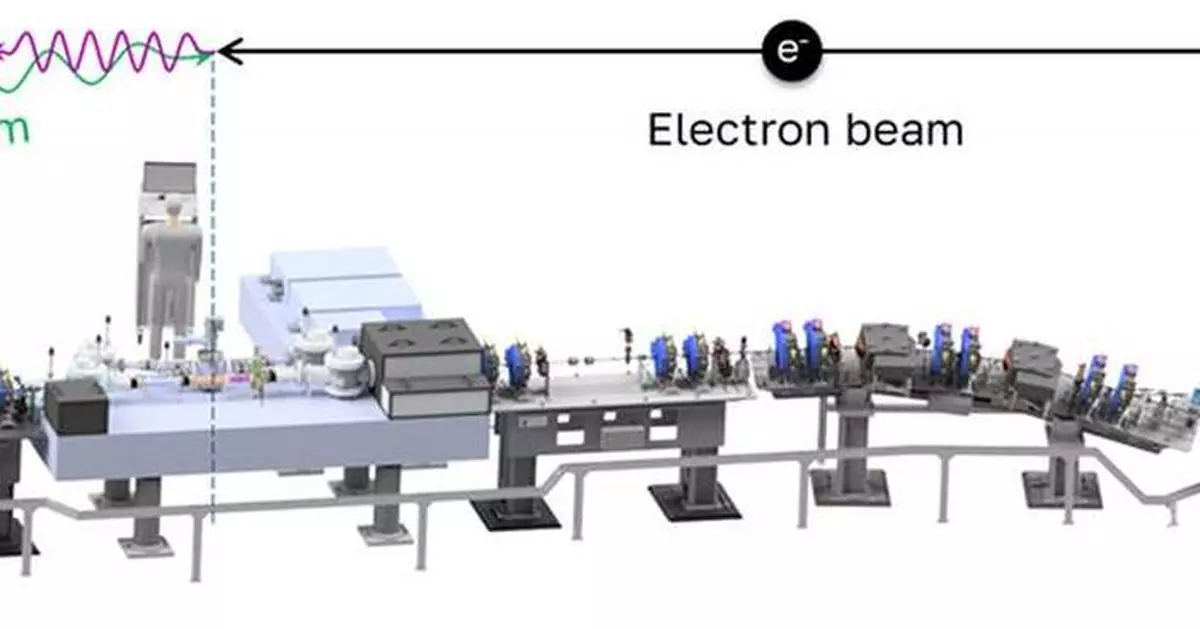
Electron Transfer Line directing relativistic electrons from the Linac electron accelerator (right) to the Interaction Point (IP). This beamline must elevate, laterally shift, and then focus the electron beam into a hair thin spot, all without losing electrons or compromising beam quality.
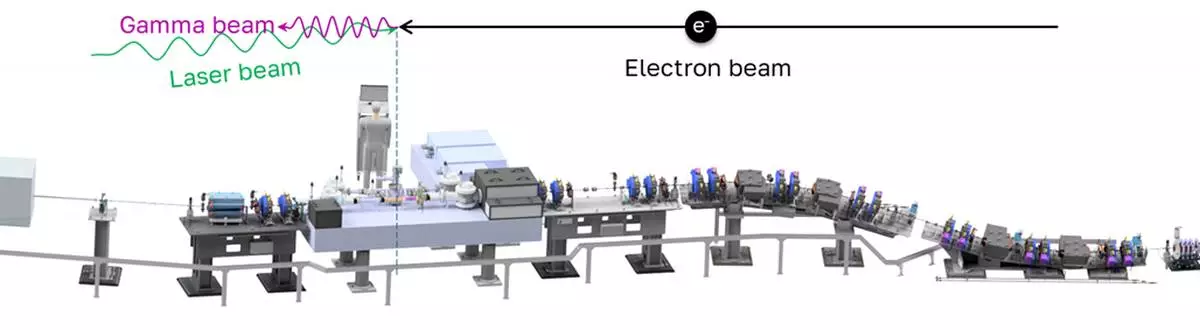
Electron Transfer Line directing relativistic electrons from the Linac electron accelerator (right) to the Interaction Point (IP). This beamline must elevate, laterally shift, and then focus the electron beam into a hair thin spot, all without losing electrons or compromising beam quality.

Inverse Compton scattering system, showing electrons entering from the right (linac electron accelerator) and interacting with laser light at the Interaction Point (center), where a high-energy gamma-ray beam is generated.
Inverse Compton scattering system, showing electrons entering from the right (linac electron accelerator) and interacting with laser light at the Interaction Point (center), where a high-energy gamma-ray beam is generated.
ROME (AP) — Pope Leo XIV urged Vatican cardinals on Monday to put their ambitions of power and personal interests aside, as he followed in Pope Francis’ footsteps and used a Christmas greeting to gently criticize his closest collaborators.

“Is it possible to be friends in the Roman Curia?” Leo asked the cardinals and bishops who make up the Curia, as the Holy See bureaucracy is known. “To have relationships of genuine fraternal friendship?”

The fact that Leo asked the question suggests that the American pope knows well that the Curia remains a difficult and sometimes toxic workplace, one that Francis would often eviscerate in his annual Christmas addresses.

Leo didn’t repeat Francis’ more biting critique — that Vatican clergy sometimes suffer from “spiritual Alzheimers,” the “cancer” of cliques, the “corruption” of ambition and “self-absorbed” idle gossip — and his tone was far more gentle and constructive.

But the underlying message remained. Leo, who was very close to Francis and worked in the Vatican for two years before his election, didn’t shy away from Francis’ tradition of using the Christmas occasion to urge Vatican bureaucrats to examine their consciences and change their ways for the good of the church.

“At times this bitterness finds its way among us as well, when, after many years of service in the Curia, we observe with disappointment that certain dynamics — linked to the exercise of power, the desire to prevail, or the pursuit of personal interests — are slow to change,” Leo said.

“Amid daily toil, it is a grace to find trustworthy friends, where masks fall away, no one is used or sidelined, genuine support is offered, and each person’s worth and competence are respected, preventing resentment and dissatisfaction.”

After Francis’ sometimes tumultuous 12-year pontificate, in which the Argentine Jesuit at times alienated conservatives and some in the Vatican bureaucracy, Leo has generally sought to be more of a peacemaker prizing unity.

He called Monday for Vatican bureaucrats to work to forge communion within the church and beyond.

“In a world wounded by discord, violence and conflict, where we also witness a growth in aggression and anger, often exploited by both the digital sphere and politics, Christmas invites everyone to work for peace and universal fraternity," he said.

In a separate initiative Monday, Leo sought to encourage the world’s Catholic priests amid the “crisis” of their dwindling numbers, which the pope blamed on a variety of challenges including suspicion as a result of clergy abuse scandals, loneliness and economic troubles.

Leo offered some proposals to help each individual become “a joyful man and a joyful priest,” in a document marking the 60th anniversary of two Vatican decrees about the training of future priests.

The number of priests worldwide has been falling steadily for several years, with the latest statistics from 2023 showing the global total at 406,996, down another 734 from the previous year. Only Africa and Asia showed growth in vocations.

A decade prior, in 2013, the total number of priests in the world stood at 415,348 and had risen that year by 1,035 men, according to the FIDES missionary news agency which reports Vatican statistics. But the downward trend started two years later and has been continuing more or less steadily ever since.

Leo called for better training in seminaries to help priests persevere, noting the “painful reality” of priests who leave only a few years after ordination. He called for “economic equalization” between priests working in poor and wealthy parishes, and for bishops to consider more options for priests to live in community to work against isolation and loneliness.

Leo, a priest of the Augustinian religious order which prioritizes community life, said everyone should look to the church’s practices to understand the reasons for the priest shortage and how to address them.

“It is true that the reasons for this crisis can often be varied and manifold, and depend specifically on the socio-cultural context,” he wrote. “At the same time, we must have the courage to make strong and liberating proposals to young people” to encourage them to consider a vocation to the priesthood.

Associated Press religion coverage receives support through the AP’s collaboration with The Conversation US, with funding from Lilly Endowment Inc. The AP is solely responsible for this content.

Pope Leo XIV delivers the Angelus noon prayer in St. Peter's Square, at the Vatican, Sunday, Dec. 21, 2025. (AP Photo/Gregorio Borgia)

Pope Leo XIV delivers the Angelus noon prayer in St. Peter's Square, at the Vatican, Sunday, Dec. 21, 2025. (AP Photo/Gregorio Borgia)

Pope Leo XIV delivers the Angelus noon prayer in St. Peter's Square, at the Vatican, Sunday, Dec. 21, 2025. (AP Photo/Gregorio Borgia)

Pope Leo XIV delivers the Angelus noon prayer in St. Peter's Square, at the Vatican, Sunday, Dec. 21, 2025. (AP Photo/Gregorio Borgia)

Recommended Articles