BOGOTA, Colombia (AP) — Colombia will use drones to resume spraying of coca crops with a weed killer, the government announced on Monday as authorities grapple with record levels of cocaine production that have fueled tensions with the Trump administration.
The South American country banned aerial fumigation of coca crops in 2015, after the World Health Organization put glyphosate — the weed killer used by spray planes — on a list of carcinogens.
Justice Minister Andrés Idárraga told a news conference that the new action involving high-tech drones was approved by the government and would begin on Thursday.
He said the drones would be sent to areas where gangs and rebel groups are forcing peasants to grow coca, the primary source of cocaine. “Our security forces will be safer” that way, Idárraga added.
Environmental activists had long warned that small airplanes spraying coca fields — often flown by U.S. contractors — were also dumping their chemicals on legal crops and into streams, polluting vulnerable ecosystems and exposing villagers to contaminated water.
After suspending aerial fumigation, Colombia stepped up manual eradication campaigns, carried out by soldiers.
But the cultivation of coca expanded without aerial spraying as it became harder for the military to eradicate coca crops in remote areas, where plantations are defended by drug gangs and rebel groups, and are sometimes surrounded by land mines.
The United Nations Office on Drugs and Crime estimates that in 2024, as much as 261,000 hectares (about 645,000 acres) in Colombia were planted with coca, almost double what was planted in 2016.
According to Idárraga, the drones will fly no further than 1.5 meters (5 feet) from their targets to ensure that water sources and legal crops are not sprayed. A single drone will be able to eradicate about a hectare of coca crops every 30 minutes.
“This is a controlled and efficient” way, Idárraga said, adding that "it mitigates environmental risks.”
The idea of using drones to eradicate coca fields was first floated in 2018 by right-wing President Ivan Duque's administration. But plans were delayed due to the lack of a consensus in government agencies and in Colombia's parliament
Colombia’s current government, led by left-wing President Gustavo Petro, initially dismissed aerial fumigation and other forced eradication campaigns, saying it didn't want to target impoverished peasants growing coca for drug dealers because they lacked legal alternatives.
Petro's administration became more aggressive on the issue of coca crops this year as it tries to defeat rebel groups funded by the illegal drug trade that have refused to sign peace agreements with the government and that have recently stepped up attacks in Colombian cities.
The United States has long criticized Colombia’s decision to halt the aerial fumigations. The Trump administration, which has accused Petro’s government of not doing enough to halt cocaine production, added Colombia in September to a list of nations failing to cooperate in the drug war for the first time in almost 30 years, jeopardizing millions of dollars in military and economic cooperation.
In October, the U.S. also imposed sanctions on Petro, accusing him of allowing “drug cartels to flourish” in the country. More recently, Washington threatened to authorize land strikes against drug traffickers in Colombia.
Petro has vehemently denied the U.S. accusations of not doing enough to target drug traffickers and says Colombian security forces are intercepting record numbers of cocaine shipments, even if the nation is also producing record amounts of the drug.
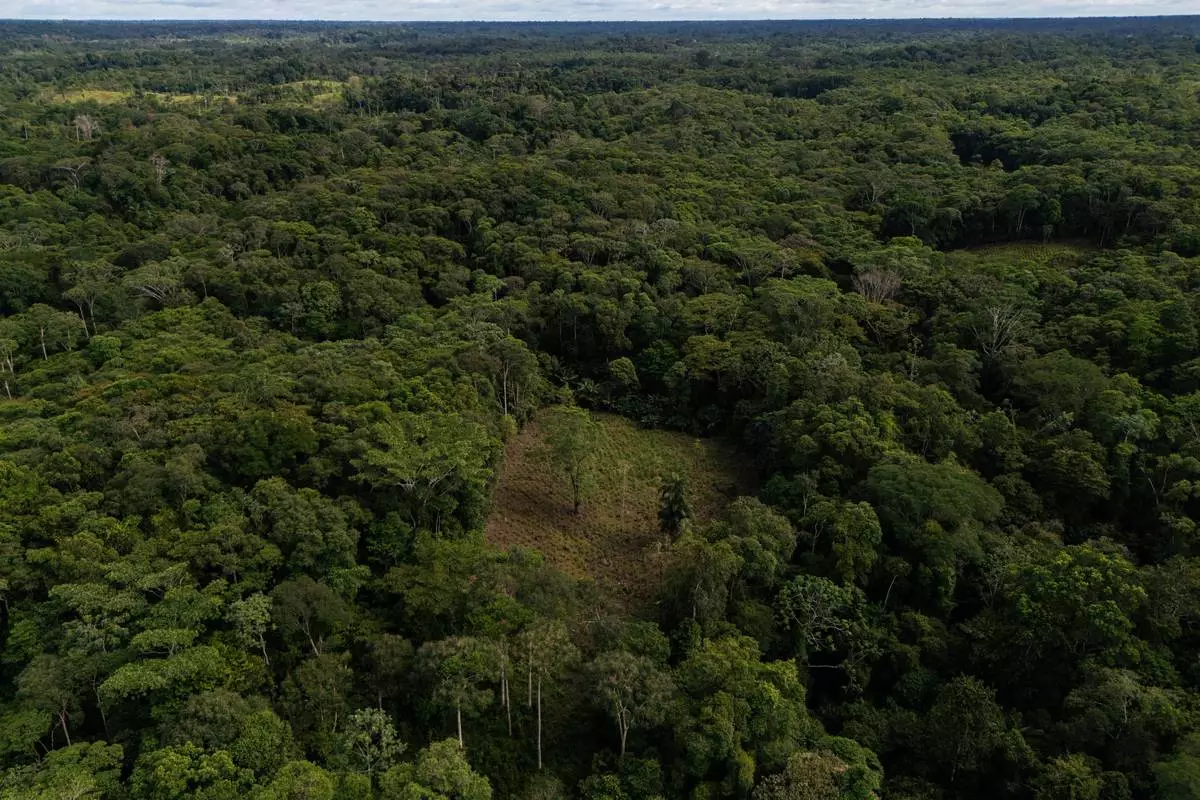
FILE - A coca crop is visible on the outskirts of Puerto Asis, Colombia, Nov. 26, 2025. (AP Photo/Ivan Valencia, File)