WASHINGTON (AP) — EDITOR’S NOTE — This is an exclusive excerpt adapted from “Storm at the Capitol: An Oral History of January 6th” by Associated Press reporter Mary Clare Jalonick. The book, which will be published on Jan. 6, 2026, draws on personal interviews by the author, testimony, court documents and other public sources to compile a definitive account of the hours leading up to, during, and just after rioters stormed the U.S. Capitol.
Jalonick documents the chain of events on Jan. 6, 2021, as told by the rioters who were loyal to President Donald Trump, the police who fought them, the lawmakers who fled the violence, and the staff, workers and journalists who were there that day, including Jalonick herself. The rioters were echoing Trump’s false claims of a stolen election, even as all 50 states had certified the vote and courts had ruled against Trump or dismissed dozens of lawsuits brought by his campaign.
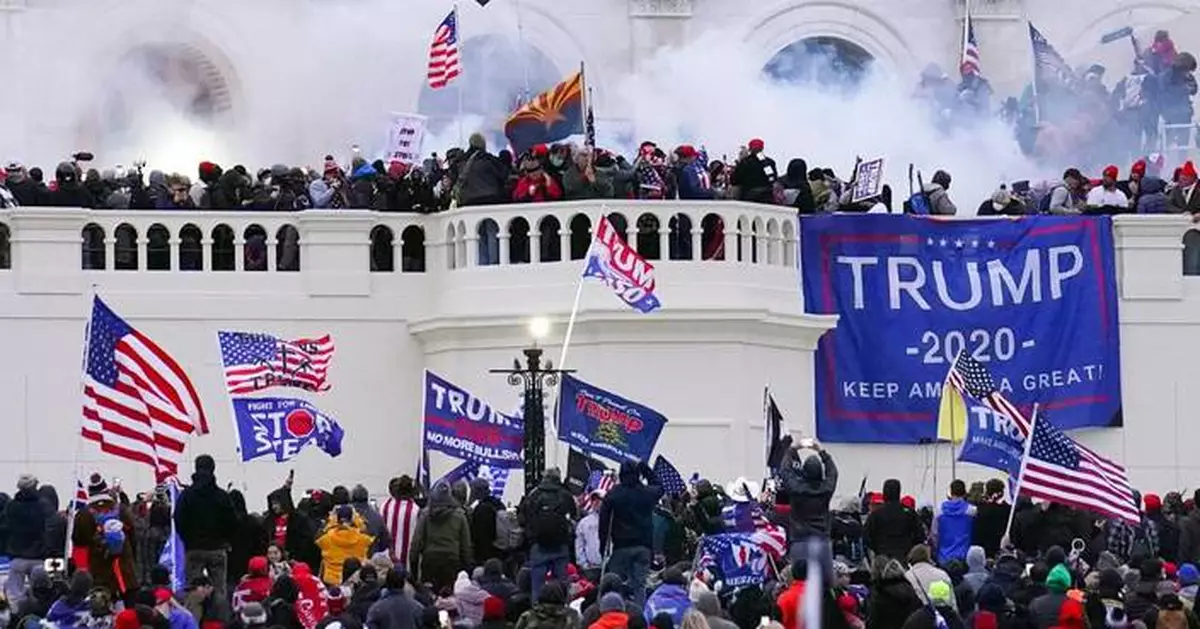
This excerpt begins in the 4 p.m. hour on Jan. 6, at the height of the fighting that day outside the building. Hundreds of rioters had already breached several entrances and forced lawmakers to flee both the House and Senate, stopping the certification of Democrat Joe Biden’s victory. But an even larger group of people had broken through a long police line and were now aiming at the central golden doors that sit at the center of the Capitol’s West Front, set back in a narrow tunnel that the president walks through on Inauguration Day.
Separately, not far from the tunnel, Capitol Police officer Brian Sicknick had been sprayed directly in the face by a rioter. He had predicted the night before in a text to his brother Ken that “hell may break loose tomorrow.”
Note: The text messages in this excerpt have been edited for language.
Ken Sicknick hadn’t yet replied to his brother Brian’s text from the night before that had predicted violence. So he typed a message to Brian that afternoon as he watched live reports of the clashes at the Capitol. “Good luck, man,” Ken wrote. “Capitol protests are on the news.”
An hour and a half later, at 4:15 p.m., Brian replied: “Tell me about it. We’re f——-. Talk later. I was pepper sprayed at least twice.”
Ken Sicknick, brother of Capitol Police Officer Brian Sicknick: I knew it was a protest. I didn’t realize how bad it was.
As afternoon approached evening, police were starting to secure some of the entrances that had been breached. But hundreds of rioters were still fighting to get into the Lower West Terrace Tunnel, the main entrance to the inaugural stage from the basement level of the Capitol. Police officers had used the space just inside as a triage area all afternoon.
Earlier, after several police lines had broken outside, the rioters had streamed into the tunnel so quickly that it created a bottleneck. The National Guard had still not arrived, and for the officers who had already been fighting for hours, it had become a ferocious last stand.
Sergeant Aquilino Gonell, U.S. Capitol Police: The rioters were vicious and relentless. We found ourselves in a violent battle in a desperate attempt to prevent a breach of the Capitol by the entrance near the inauguration stage.
Officer Michael Fanone, Metropolitan Police Department: The fighting in the Lower West Terrace Tunnel was nothing short of brutal. Here I observed approximately 30 police officers standing shoulder to shoulder, maybe four or five abreast, using the weight of their own bodies to hold back the onslaught of violent attackers. Many of these officers were injured, bleeding and fatigued. But they continued to hold the line.
Officer Abdulkadir Abdi, Metropolitan Police Department: A few people rushed the front of the line, and then that kind of instigated the rest of them to follow suit. At that point, it was just complete hand-to-hand combat, but very little space to maneuver.
Detective Phuson Nguyen, Metropolitan Police Department: The hallway is approximately 10 feet wide. Officers shoulder to shoulder lined up by rows, and the demonstrators were trying to push in, and we were trying to push back. Initially, we’re just pushing and they were yelling, “One, two, three, push.” And we were doing the same thing. We were pushing back. But then it escalated into full fighting.
Officer Daniel Hodges, Metropolitan Police Department: There’s a couple dozen of us in there against, you know, the thousands and thousands outside, and we just held it as long as we could. It was a brutal fight.
Officer Abdulkadir Abdi, Metropolitan Police Department: They were extremely physical. I don’t think anybody was talking at that point. It was just physical, people hitting each other, punching, people with poles, metal poles.
Officer Michael Fanone, Metropolitan Police Department: The tunnel is a narrow and long hallway. It is not the sort of space where anyone would want to be pulled into hand-to-hand combat with an angry mob.
Officer Abdulkadir Abdi, Metropolitan Police Department: Every about five to 10 minutes, they would switch and then we would end up fighting a new batch of fresh bodies. That just continued on.
Officer Jesse Leasure, Metropolitan Police Department: It was guys in their 50s, guys in their 30s, guys in their 20s. Not that many really young people, but mostly just like real adults.
Officer Daniel Hodges, Metropolitan Police Department: It was a battle of inches, with one side pushing the other a few and then the other side regaining their ground.
Sergeant Aquilino Gonell, U.S. Capitol Police: What we were subjected to that day was like something from a medieval battlefield.
Officer Jesse Leasure, Metropolitan Police Department: Someone handed me a pitchfork at one point. It made its way all the way up the stairs. I don’t remember if it was a civilian or an officer, but they said, “I don’t want this being used against you guys.”
Officer Daniel Hodges, Metropolitan Police Department: Even during this intense contest of wills, they continued to try to convert us to their cult. One man shouted: “We just want to make our voices heard! And I think you feel the same! I really think you feel the same!” All while another man attempts to batter us with a stolen shield.
Officer Jesse Leasure, Metropolitan Police Department: I just heard the dumbest things ever, like “We’re not here to hurt you; just let us through.” While they’re doing all that craziness.
Sergeant Aquilino Gonell, U.S. Capitol Police: Many of the officers fighting alongside me were calling for shields, because their shields had been stripped from them by the rioters. I was one of the few officers left with a shield, so I spent the majority of the time at the front of the line.
Detective Phuson Nguyen, Metropolitan Police Department: At some point, one of the demonstrators was trying to pull me outside. And luckily I held on to the metal rail.
A rioter grabbed Detective Nguyen’s gas mask and pulled it out, while a second rioter directly sprayed his exposed face. The first rioter then let go of the mask, snapping it back in place and trapping the gas inside.
Detective Phuson Nguyen, Metropolitan Police Department: I was choking under the mask, and I also got knocked down at the same time. And so at that point, I was choking, and I was trying to get up. I (was) panicking.
Officer Michael Fanone, Metropolitan Police Department: At some point during the fighting, I was dragged from the line of officers into the crowd. I heard someone scream, “I got one!” as I was swarmed by a violent mob.
Sergeant Aquilino Gonell, U.S. Capitol Police: In my attempt to assist two MPD officers, I grabbed one officer by the back of the collar and pulled him back to our police line. When I tried to help the second officer, I fell on top of some police shields on the ground that were slippery because of the pepper and bear spray. Rioters started to pull me by my leg, by my shield, and by my gear straps on my left shoulder. My survival instincts kicked in and I started kicking and punching as I tried in vain to get the MPD officers’ attention behind and above me. But they could not help me because they were also being attacked.
Officer Daniel Hodges, Metropolitan Police Department: The two sides were at a stalemate at a metal door frame that sat in the middle of the hallway. At the front line, I inserted myself so that the frame was at my back in an effort to give myself something to brace against and provide additional strength when pushing forward. Unfortunately, soon after I secured this position, the momentum shifted and we lost the ground that got me there. On my left was a man with a clear riot shield stolen during the assault. He slammed it against me and, with the weight of all the bodies pushing behind him, trapped me. My arms were pinned and effectively useless, trapped against either the shield on my left or the door frame on my right. With my posture granting me no functional strength or freedom of movement, I was effectively defenseless and gradually sustaining injury from the increasing pressure of the mob.
Officer Michael Fanone, Metropolitan Police Department: They ripped off my badge. They grabbed my radio. They seized the ammunition that was secured to my body. They began to beat me with their fists and with what felt like hard metal objects. At one point I came face-to-face with an attacker who repeatedly lunged for me and attempted to remove my firearm. I heard chanting from some in the crowd, “Get his gun” and “Kill him with his own gun.” I was aware enough to recognize I was at risk of being stripped of, and killed with, my own firearm. I was electrocuted again and again and again with a Taser. I’m sure I was screaming, but I don’t think I could even hear my own voice.
Officer Daniel Hodges, Metropolitan Police Department: Directly in front of me, a man seized the opportunity of my vulnerability. He grabbed the front of my gas mask and used it to beat my head against the door. He switched to pulling it off my head, the straps stretching against my skull and straining my neck. He never uttered any words I recognized but opted instead for guttural screams. I swear I remember him foaming at the mouth. He also put his cellphone in his mouth so that he had both hands free to assault me. Eventually he succeeded in stripping away my gas mask, and a new rush of exposure to CS gas and OC spray hit me.
Officer Michael Fanone, Metropolitan Police Department: My body camera captured the violence of the crowd directed toward me during those very frightening moments. The portions of the video I’ve seen remain extremely painful for me to watch. During those moments, I remember thinking that there was a very good chance that I would be torn apart or be shot to death with my own weapon. I thought of my four daughters, who might lose their dad.
Officer Daniel Hodges, Metropolitan Police Department: The mob of terrorists were coordinating their efforts now, shouting “Heave! Ho!” as they synchronized pushing their weight forward, crushing me further against the metal door frame. The man in front of me grabbed my baton that I still held in my hands, and in my current state I was unable to retain my weapon. He bashed me in the head and face with it, rupturing my lip and adding additional injury to my skull.
Officer Jesse Leasure, Metropolitan Police Department: It’s just the weight of our crowd pushing against the weight of their crowd. Smoke grenades are going off — like, maybe someone lit a smoke bomb and threw it at us; I don’t know what the hell happened. But I’m looking around, and I see one of my sergeants, and he’s got his mask on, but I can see his eyes, and he looks like he’s about ready to pass out. And I hear someone yell, “Does anybody need a break?” And I’m like, “Get him out of here!”
Sergeant Aquilino Gonell, U.S. Capitol Police: It was a prolonged and desperate struggle. I vividly heard officers screaming in agony and pain just an arm’s length from me.
Officer Daniel Hodges, Metropolitan Police Department: It hurt a great deal. Combined with everything else that was going on, it made it difficult to breathe.
Officer Jesse Leasure, Metropolitan Police Department: A bunch of bodies were pushed up right against me, and it sealed my gas mask against my cheek. And I was having a hard time breathing. So I started peeling it off, and then I was exposed, and no sooner had I done that than I was hit with a big old stream of pepper spray from one of our own super-soakers that they stole from us. I see this arc of fluid, and it hits me right in the face. I’ve seen my body camera from that day, and you just hear a guttural scream.
Officer Daniel Hodges, Metropolitan Police Department: At this point, I knew that I couldn’t sustain much more damage and remain upright. At best I would collapse and be a liability to my colleagues, at worst be dragged out into the crowd and lynched. Unable to move or otherwise signal the officers behind me that I needed to fall back, I did the only thing I could still do and screamed for help.
Sergeant Aquilino Gonell, U.S. Capitol Police: I too was being crushed by the rioters. I could feel myself losing oxygen and recall thinking to myself, this is how I’m going to die, trampled defending this entrance.
Detective Phuson Nguyen, Metropolitan Police Department: I thought, that’s where I’m going to die. And in my head I was thinking about my family at that point before anything else.
Officer Michael Fanone, Metropolitan Police Department: During the assault, I thought about using my firearm on my attackers. But I knew that if I did that, I would quickly be overwhelmed. And that, in their minds, it would provide them with the justification for killing me. So instead, I decided to appeal to any humanity they might have. I said as loud as I could manage, “I’ve got kids.” Thankfully, some in the crowd stepped in and assisted me. Those few individuals protected me from the crowd and inched me toward the Capitol until my fellow officers could rescue me.
Officer Jesse Leasure, Metropolitan Police Department: When you get amped up like that, sometimes it takes a slap in the face to wake you up to where the hell you are and what you’ve just done. And I think Fanone yelling that he had kids kind of shook some of the people out of it.
Officer Daniel Hodges, Metropolitan Police Department: Thankfully, my voice was heard over the cacophony of yells and the blaring alarm. The officer closest to me was able to extricate me from my position, and another helped me fall back to the building again.
Detective Phuson Nguyen, Metropolitan Police Department: I was telling myself, if you want to see your family again, you need to gather yourself. And luckily, you know, I gathered myself and (broke) that seal. And with the help of my colleagues behind me, they pulled me up.
Officer Jesse Leasure, Metropolitan Police Department: I’m yelling, “Hey, I’m out of service, I can’t do this anymore!” Like, literally, I’m disabled. So one of my partners grabs me and just escorts me back through the crowd, and we find one of those decon stations.
Sergeant Aquilino Gonell, U.S. Capitol Police: I finally was able to hit a rioter who was grabbing me with my baton and able to stand. I then continued to fend off new attackers as they kept rotating after attacking us.
Officer Brian Sicknick found medical help and seemed to recover after the rioter had sprayed him with chemicals on the West Front. At 8:21 p.m., he sent his brother Ken another text: “F—-. I smell like BO, weed, OC spray and CS gas.”
Shortly after sending the text, as he returned to a division office in the basement of the Capitol, Sicknick started slurring his words while talking to fellow officers and collapsed. He was rushed to the hospital, where he was put on life support.
Inspector Thomas Loyd, U.S. Capitol Police: Officer Brian Sicknick faithfully served the United States Capitol Police for 13 years. He fought valiantly for several hours on January 6. He died suddenly at 8:30 p.m., while returning to the office in the United States Capitol Building. His body survived an additional day because his fellow officers worked so hard to keep him alive so his family could say goodbye in person on January 7.
Excerpted from STORM AT THE CAPITOL: An Oral History of January 6th by Mary Clare Jalonick, copyright (copyright)2026 by Mary Clare Jalonick. Used with permission of PublicAffairs, a division of Hachette Book Group, Inc.
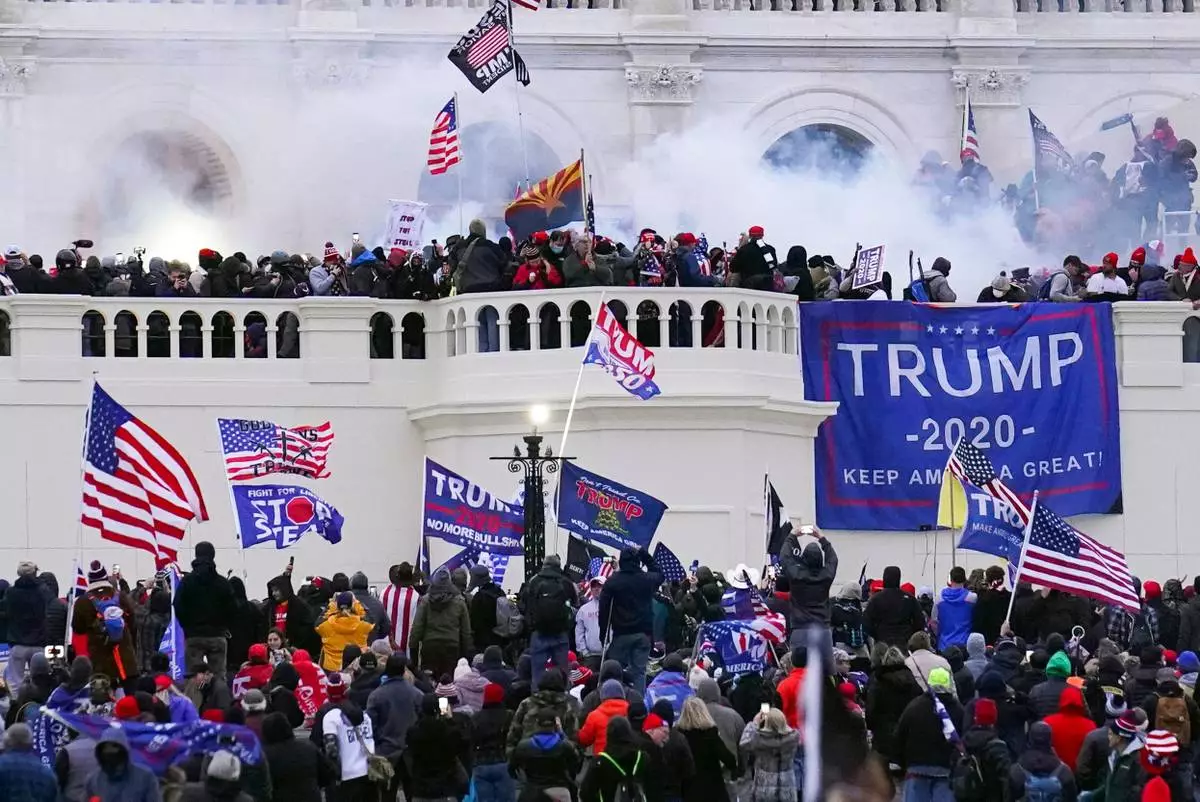
FILE - Rioters storm the West Front of the U.S. Capitol, Jan. 6, 2021, in Washington. (AP Photo/John Minchillo, File)