Skip to Content Facebook Feature Image

Ohio State and Miami set for a nostalgic CFP clash, with the focus on now, not a flag from long ago

Sport

Ohio State and Miami set for a nostalgic CFP clash, with the focus on now, not a flag from long ago
Sport

Sport

Ohio State and Miami set for a nostalgic CFP clash, with the focus on now, not a flag from long ago

2025-12-24 03:38 Last Updated At:03:40

CORAL GABLES, Fla. (AP) — The last time Ohio State and Miami met in a postseason football game, the Hurricanes spent a couple of seconds celebrating a victory that gave them back-to-back national championships.

And then The Flag came out.

The Hurricanes stopped celebrating. They haven't celebrated a title since.

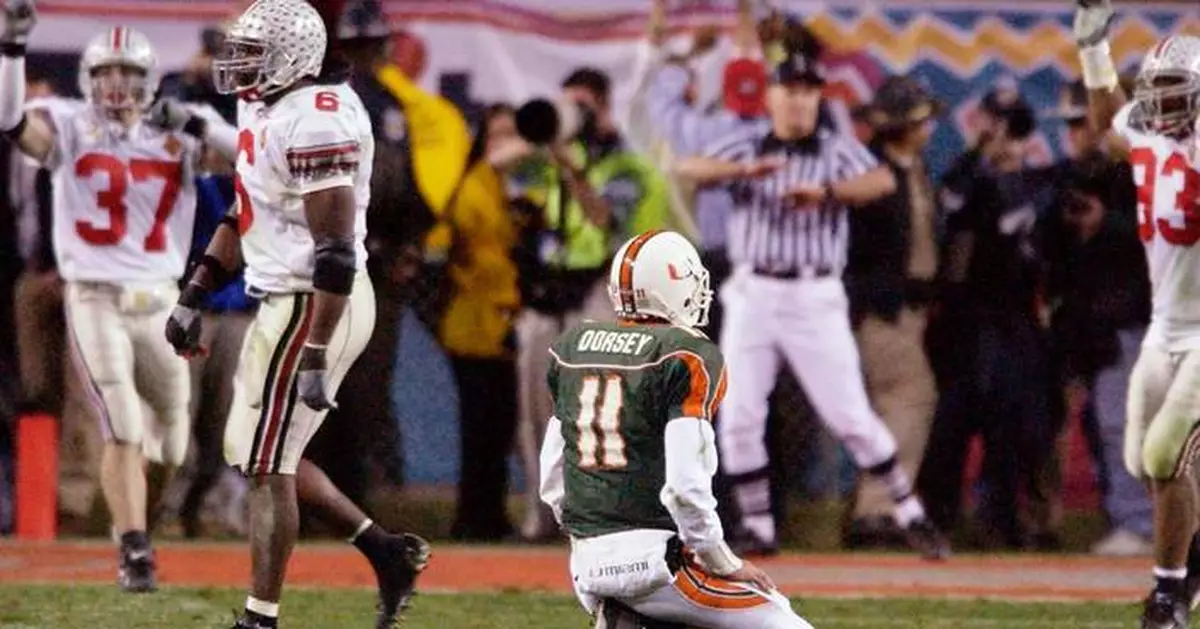
It was Ohio State vs. Miami in the Fiesta Bowl, the national championship for the 2002 season. Miami leads 24-17 in overtime, Ohio State throws into the end zone on fourth down, the ball hits the ground, one official signals it was an incomplete pass, and the game ends. Miami wins. Except it wasn't over. Miami doesn't win. Another official called pass interference to extend the drive, the Buckeyes scored to tie the game, then scored again in the second overtime and won the national title 31-24.

Next week, they meet again in a postseason game — the Cotton Bowl, with Ohio State being the team seeking back-to-back national titles. The Buckeyes (12-1) and Hurricanes (11-2) will face off in a College Football Playoff quarterfinal on New Year's Eve.

“It’s going to be a challenge for us offensively, but it’s a challenge that we’re looking forward to,” Miami quarterback Carson Beck said. “But we do recognize how talented they are, and we’re going to have to come and execute.”

And in fairness, the Hurricanes of 2002 did not execute as well as they needed against Ohio State. They turned the ball over five times and gave up four sacks. But all anyone remembers is the fourth-down play where Craig Krenzel threw to the right corner of the end zone, intended for Chris Gamble. Miami cornerback Glenn Sharpe defended, Gamble didn't make the catch, line judge Derick Bowers motioned the pass was incomplete and the Hurricanes started to jump for joy. Sean Taylor threw his helmet so high in the air in celebration that parts of it broke upon landing.

Then Terry Porter, the back judge, made the call. It did not go over well with everyone; even ABC analyst Dan Fouts twice said “bad call” while watching replays.

Porter has said over the years that he simply took an extra moment to make sure he got the call right.

“If you make a call and it’s right, the call goes away. If you make a call and the call is wrong, it never goes away. Ever,” Porter told the Stillwater News Press for a story published in August about his entry into that state's officiating Hall of Fame. “So just take your time and try to get it right. That’s what we all want to do. When you walk out at night, out of the place — football, basketball, I don’t care — you just want to have gotten it right.”

Beck wasn't even 2 months old when the Miami-Ohio State title game was played. What happened on Jan. 3, 2003, in theory, won't matter much to either side. After all, most of the players in this game weren't even born when that happened.

“We’re focused on the present," Miami coach Mario Cristobal said. “We’re focused on the present.”

But matchups are often about history, about nostalgia. The teams have played twice since that Fiesta Bowl — Ohio State won in 2010, Miami won in 2011 — but those games are registering nary a blip of attention right now.

“I think games like this, with two storied programs, I think people are always going to want to pull out history and draw comparisons and all that other stuff,” Cristobal said. “And moments like that, they’re valid. They’re real. It’s what makes college football awesome, the pageantry. But this game is the 2025 Hurricanes and Buckeyes going after it, to be determined by the 22 guys on the field one snap at a time. That’s going to be the focus. That’s where all our attention will be.”

Get poll alerts and updates on the AP Top 25 throughout the season. Sign up here. AP college football: https://apnews.com/hub/ap-top-25-college-football-poll and https://apnews.com/hub/college-football
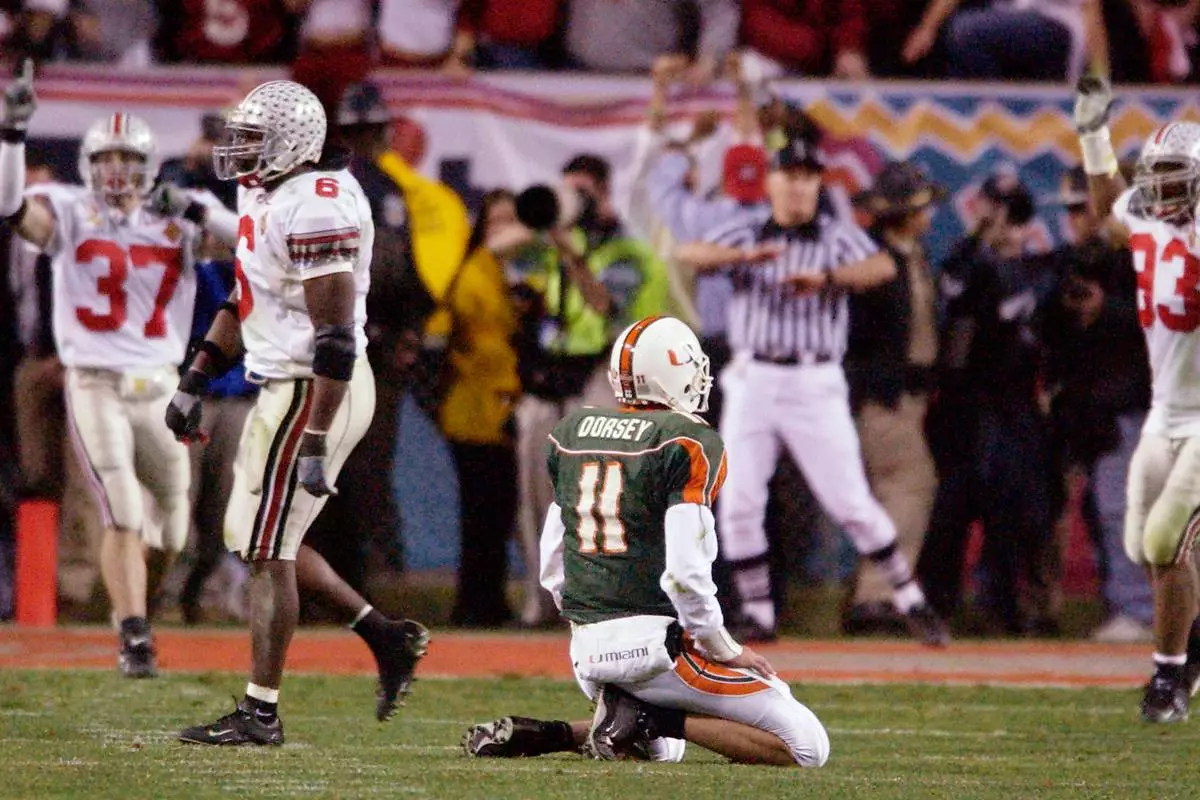
FILE - Miami quarterback Ken Dorsey, center, sits on the turf as Ohio State players celebrate their team's victory in the Fiesta Bowl in Tempe, Ariz., Jan. 3, 2003. (AP Photo/Mark J. Terrill, File)
FILE - Miami quarterback Ken Dorsey, center, sits on the turf as Ohio State players celebrate their team's victory in the Fiesta Bowl in Tempe, Ariz., Jan. 3, 2003. (AP Photo/Mark J. Terrill, File)
PROVIDENCE, R.I. (AP) — A federal judge has blocked the Trump administration's attempt to reallocate federal Homeland Security funding away from states that refuse to cooperate with certain federal immigration enforcement.

U.S. District Judge Mary McElroy's ruling on Monday solidified a win for the coalition of 12 attorneys general that sued the administration earlier this year after being alerted that their states would receive drastically reduced federal grants due to their “sanctuary” jurisdictions.

In total, the U.S. Department of Homeland Security and the Federal Emergency Management Agency reduced more than $233 million from Connecticut, Delaware, the District of Columbia, Massachusetts, Minnesota, New York, Rhode Island, Vermont, and Washington. The money is part of a $1 billion program where allocations are supposed to be based on assessed risks, with states then largely passing most of the money on to police and fire departments.

The cuts were unveiled shortly after a separate federal judge in a different legal challenge ruled it was unconstitutional for the federal government to require states to cooperate on immigration enforcement actions to get FEMA disaster funding.

In her 48-page ruling, McElroy found that the federal government was weighing states' police on federal immigration enforcement on whether to reduce federal funding for the Homeland Security Grant Program and others.

“What else could defendants’ decisions to cut funding to specific counterterrorism programming by conspicuous round numbered amounts — including by slashing off the millions-place digits of awarded sums — be if not arbitrary and capricious? Neither a law degree nor a degree in mathematics is required to deduce that no plausible, rational formula could produce this result,” McElroy wrote.

The Trump-appointed judge then ordered the Department of Homeland Security to restore the previously announced funding allocations to the plaintiff states.

“Defendants’ wanton abuse of their role in federal grant administration is particularly troublesome given the fact that they have been entrusted with a most solemn duty: safeguarding our nation and its citizens," McElroy wrote. "While the intricacies of administrative law and the terms and conditions on federal grants may seem abstract to some, the funding at issue here supports vital counterterrorism and law enforcement programs.”

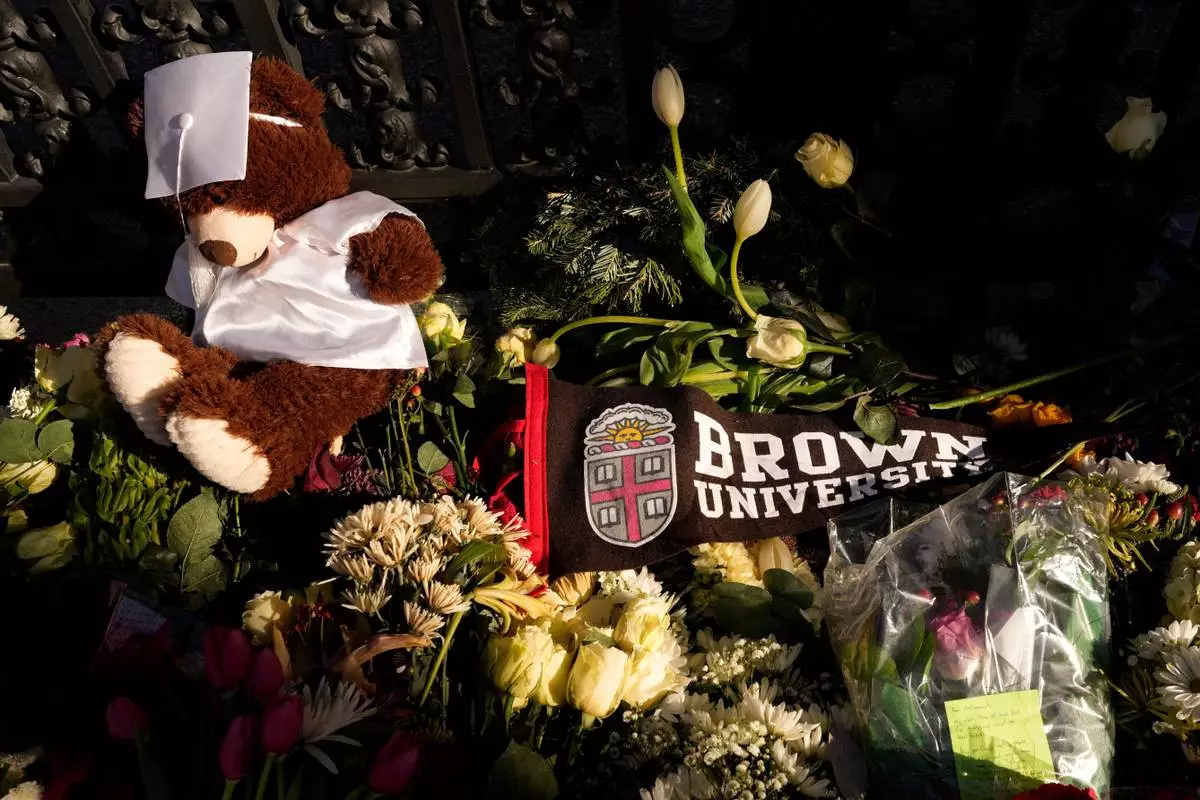
McElroy notably cited the recent Brown University attack, where a gunman killed two students and injured nine others, as an event where the $1 billion federal program would be vital in responding to such a tragedy.

“To hold hostage funding for programs like these based solely on what appear to be defendants’ political whims is unconscionable and, at least here, unlawful,” the Rhode Island-based judge wrote in her ruling, issued little more than a week after the Brown shooting.

Emails seeking comment were sent to the DHS and FEMA.

“This victory ensures that the Trump Administration cannot punish states that refuse to help carry out its cruel immigration agenda, particularly by denying them lifesaving funding that helps prepare for and respond to disasters and emergencies,” said Massachusetts Attorney General Andrea Joy Campbell in a statement.

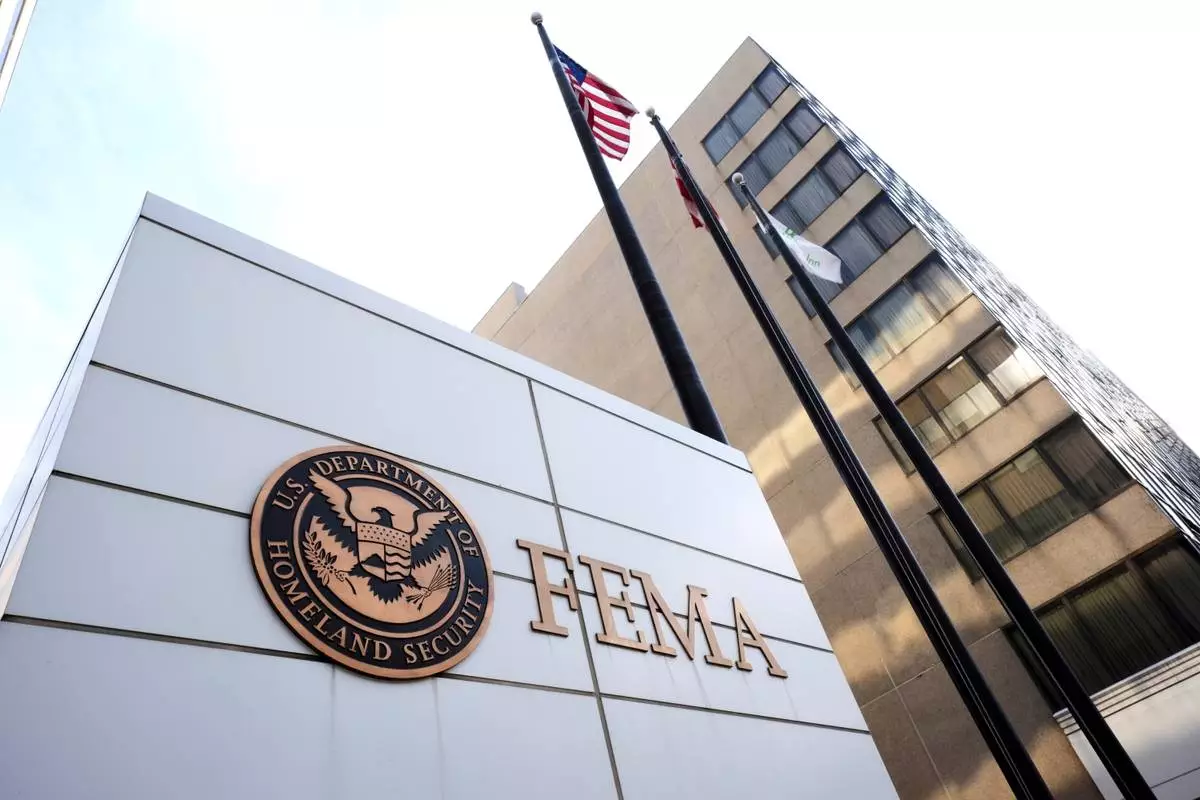
FILE - The Federal Emergency Management Agency headquarters is photographed in Washington, May 5, 2025. (AP Photo/Gene J. Puskar, File)

FILE - The Federal Emergency Management Agency headquarters is photographed in Washington, May 5, 2025. (AP Photo/Gene J. Puskar, File)

A makeshift memorial is seen on the campus of Brown University, close to from the scene of the shooting, Monday, Dec. 15, 2025, in Providence, R.I. (AP Photo/Robert F. Bukaty)

A makeshift memorial is seen on the campus of Brown University, close to from the scene of the shooting, Monday, Dec. 15, 2025, in Providence, R.I. (AP Photo/Robert F. Bukaty)

Recommended Articles