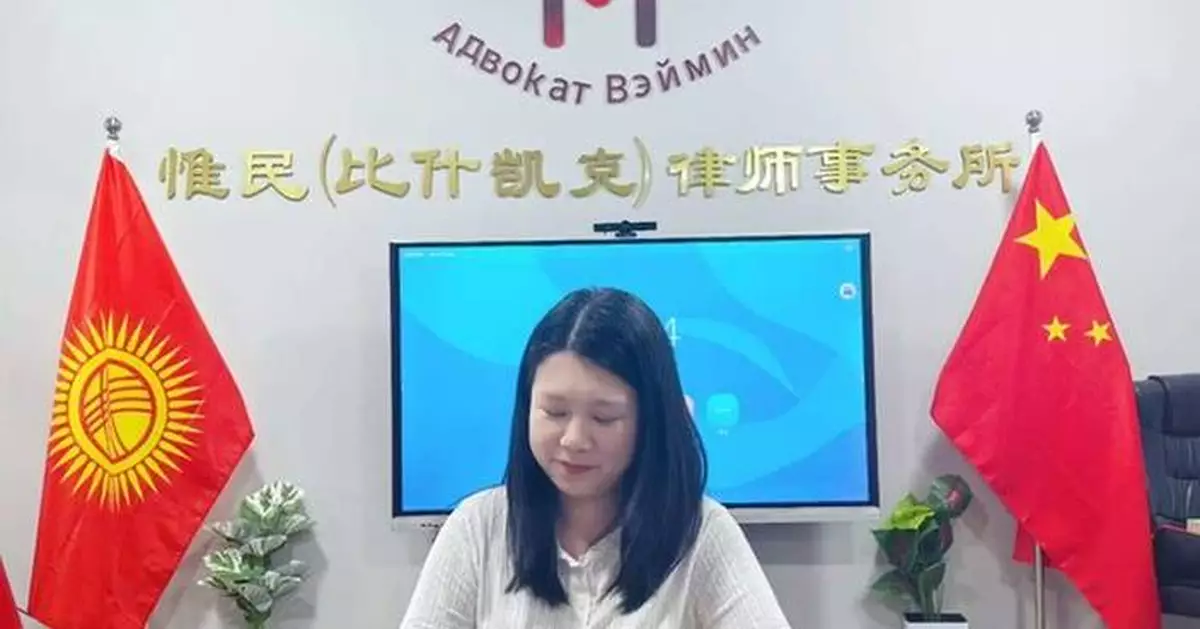
BISHKEK, Kyrgyzstan, Dec. 24, 2025 /PRNewswire/ -- A report from New Legal Report:
Yang Ying, a post-95 girl from Jiujiang, Jiangxi Province, has now anchored her life more than 5,000 kilometers away from home, in Kyrgyzstan.
"Go and see a broader world." With this in mind, Yang Ying, a master of ecology, resolutely stepped down from the lectern. She spent six intense months tackling China's National Judicial Examination and made a career switch to become a lawyer. Earlier this year, she was recruited by Weimin Law Firm—the first law firm from Jiangxi to expand overseas—and left the Jiangnan area of China for the borderlands beyond the Tianshan Mountains.
Over the past year, she and her colleagues have traveled between the service windows of the Ministry of Justice of Kyrgyzstan and the rural areas of the Chuy Valley. Working in an environment with different languages and legal systems, she has provided legal services for economic and trade exchanges between enterprises and individuals from China and Kyrgyzstan. Having gained experience through practice, she has become the youngest and yet the most experienced foreign-related lawyer at the firm.
A Post-95 Foreign-Related Lawyer
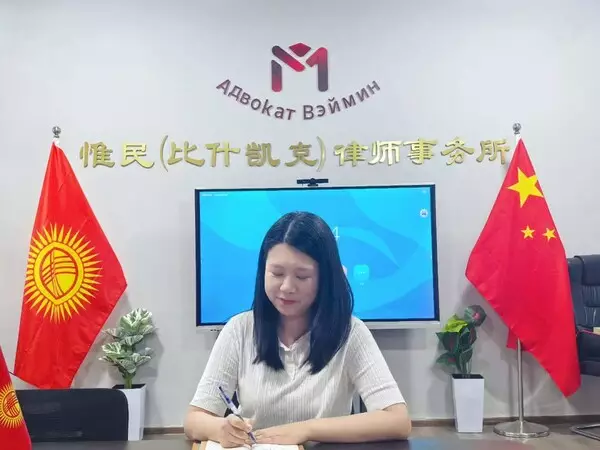
This year is Yang Ying's first year of being stationed in Central Asia as a post-95 lawyer at Weimin (Bishkek) Law Firm.
On December 11, after preparing the relevant documents for the Hague Apostille at her office, Yang Ying carefully placed them into a folder and, accompanied by an interpreter, went to the Ministry of Justice of Kyrgyzstan, which is three kilometers away.
After entering the building, she queued up, filled out application forms, and sat down at the service window. The official checked the documents, cross-referencing the signatures and seals with the samples. She could only half understand the Russian the official spoke.
The interpreter leaned over to pass on the message, and only then did she learn that the official had questions about the company's articles of association and other content.
Yang Ying turned around and explained to the official in a soft voice. Back and forth, the legal systems of the two countries linked up just like this through the glass window. Then, with a sharp snap, the official pressed a blue square "APOSTILLE" seal onto the document.
The car speeding back to the law firm raced west along Chuy Avenue. The snow line of the Tianshan Mountains was pressed even lower by the cloud layers in the distance. Streets laid out neatly like a chessboard, parks dotted with numerous statues, and tall street trees were already cloaked in silver. In her first year in Central Asia, Yang Ying had grown accustomed to the distinct seasonal cycles here.
This main road running across the city stretches further west, connecting to Deng Xiaoping Street—a road built to draw on the experience of China's reform and opening-up. To the locals, it is a bond linking to the East, carrying forward the friendship of the ancient Silk Road and bearing the weight of increasingly frequent economic and trade exchanges.
In May 2023, the heads of China and Kyrgyzstan met in Xi'an, upgrading their bilateral relations to a comprehensive strategic partnership for a new era. The joint construction of the Belt and Road Initiative has inspired people from all walks of life to flock to this essential hub on the ancient Silk Road. Weimin (Bishkek) Law Firm, officially established in April 2024, is one of them—and it is also the first Chinese-funded law firm to set up operations in Kyrgyzstan.
Weimin (Bishkek) Law Firm is located at the bustling intersection of Chuy Avenue and Manas Avenue.Even when the temperature drops to minus 10 degrees Celsius on winter nights, the newly built shopping complexes here still brim with the vitality of modern commerce. After more than a year of development, Weimin (Bishkek) Law Firm has become the largest law firm in the local region.
"Go and See a Broader World"
While many of her peers were steadily settling into their predetermined life tracks, Yang Ying, standing at a crossroads in life, once grappled alone with confusion and anxiety.
As a master's student in ecology, Yang Ying once carried soil sampling equipment and traveled through the mountains and rivers of Jiangxi with her supervisor on fieldwork. After graduation, she became a teacher, only to soon realize that the role was a poor fit for her. Then the thought of "going to see a broader world" resurfaced—and she resolutely switched majors to prepare for the exam, and passed the National Judicial Examination in just half a year.
When she first worked as a trainee lawyer, she carried a notebook every day and shuttled between the visitor seats of various courtrooms in Jiujiang. The domestic legal industry was highly competitive, and she hadn't fully adapted to the pace yet. One day, she swiped across her phone and saw a recruitment notice for lawyers to be stationed in Kyrgyzstan.
This information came from Weimin Law Firm, the first law firm from Jiangxi to expand its business overseas. Faced with the huge differences in legal jurisdictions in Central Asia, Chinese-funded enterprises and a growing number of investors are in urgent need of legal support from Chinese lawyers working abroad. However, hampered by language barriers, cultural gaps and differences in living abroad, the first two resident lawyers dispatched by Weimin Law Firm both chose to return to China for development at the end of the year. Selecting foreign-related talents willing to root themselves in the front line has become a challenge for the firm.
At the interview held at Weimin Law Firm's Jiujiang headquarters, the interviewers sized up the young lady before them—who still retained her bookishness, and couldn't help but feel anxious: Could she really adapt to the life in the borderlands beyond the Tianshan Mountains?
Yang Ying's decision was not a spur-of-the-moment act. Before the interview, she had studied a great deal of relevant materials about Kyrgyzstan and believed firmly that the country held broader opportunities.
"Take responsibility for your life, and don't look back." With her parents' words in mind, Yang Ying left home after the 2025 Spring Festival, traveling from Nanchang to Wuhan by high-speed rail, then flying to Urumqi before catching an early flight to Bishkek, Kyrgyzstan, where she joined Weimin (Bishkek) Law Firm as a resident lawyer.
Everything had to be learned from scratch. Every day, Yang Ying visited and received clients. When dealing with documents sent from China, she first had to figure out the internal processes of different companies and documents, so as to explain them to the officials of the Ministry of Justice of Kyrgyzstan later. When clients missed supplementary certificates, she also had to find ways to handle it. Once, while chatting with a client in the office, Yang Ying replied to messages from seven or eight people on her phone simultaneously. The client was stunned and couldn't help asking, "How did you do that?"
At the time, the law firm had only six or seven people. Apart from interpreters and administrative staff, Yang Ying was the only Chinese lawyer there.
Her first case, which was handling legal work for a state-owned enterprise, took Yang Ying two weeks of persistent effort to get done. To devote more energy to her work, she often cooked several days' worth of meals in advance and stored them in the fridge, then just mixed them with chili sauce for a quick lunch.
Chinese enterprises operating in Central Asia—ranging from large corporations to individual traders—each face their own difficulties. Large enterprises demand that matters be resolved quickly and naturally place strict requirements on processes. Some owners of small and micro businesses thought it would be simple to submit documents to the Ministry of Justice of Kyrgyzstan by themselves, only to have their documents rejected with numerous issues pointed out, which was why they rushed to the law firm in a hurry. In Yang's view, there are differences between the two countries in legal systems and ways of thinking,and the important responsibility of Jiangxi lawyers working overseas is to resolve the practical difficulties caused by these differences for enterprises and investors.
From Newcomer to Veteran
By July, the real estate market in Bishkek had started to boom. However, in Yang Ying's view, huge legal risks lurked behind this upsurge. Small and micro enterprises coming to invest often suffer losses because they are unfamiliar with local laws. For example, an investor takes a fancy to a plot of land and intends to build a homestay hotel, after paying the full amount only to find that the land is only allowed to be used for building model house-style structures, or its development is restricted. If they also encounter unclear ownership or pledge disputes, investors will be even more hard-pressed. Changing the land use purpose in Kyrgyzstan is an extremely time-consuming and energy-draining task.
The demand for land background investigations extended Yang Ying's office workplace from the firm to the vast rural areas. She and her colleagues often drove back and forth across the Chuy Valley.
As the law firm developed, more and more new faces arrived in Bishkek one after another. Yang Ying transitioned from a newcomer to a veteran foreign-related lawyer and took on the responsibility of mentoring new recruits. She took the new lawyers to the nearby bazaars, carried dozens of jin (1 jin=0.5 kg) of food back to the apartments, briefed the new recruits on the firm's situation, and clearly explained the clients they served and the corresponding projects. She also assisted the new recruits in gradually getting the hang of the cases assigned by the partners. Meanwhile, she kept learning new practice areas as local legal provisions are updated from time to time.
Today, Weimin (Bishkek) Law Firm has grown to a team of 20 people, and about 90% of its clients are Chinese-funded enterprises and Chinese citizens investing and developing in Kyrgyzstan. The team acts as perennial legal counsel or financial and taxation consultant for more than 20 Chinese-funded enterprises in Kyrgyzstan, and also undertakes a number of complex legal service tasks including BOT investment and financing, equity cooperation, and EPC general contracting for the China–Kyrgyzstan–Uzbekistan Railway project, with the total investment of the projects it serves reaching 10 billion US dollars.
"Don't be confined to the gains and losses of a single place or city; instead, see a broader world and have a more open mind." Yang Ying recalls the words her mentor once said to her occasionally.
Today, in downtown Bishkek, the number of Chinese-funded law firms serving economic and trade exchanges has grown from one to seven.
Yang Ying says she has witnessed vigorous growth of Chinese-funded law firms along the New Silk Road from a "single seedling" to "a constellation of stars"—and in resonating in sync with the times, she has met a version of herself that is more open-minded and resilient than ever before.
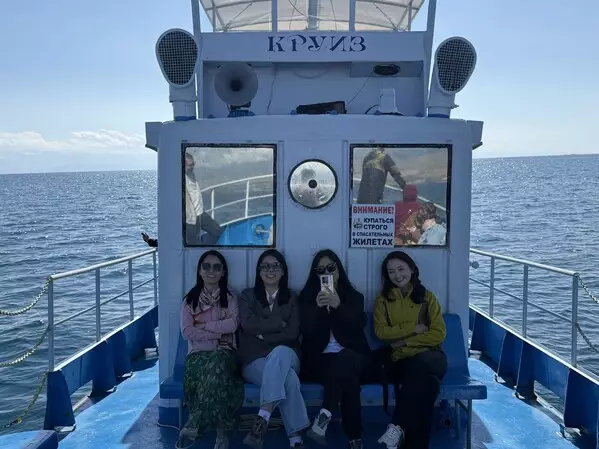
In the gaps between her busy work, Yang Ying would break away from her desk with colleagues and drive 200 kilometers east to Lake Issyk-Kul. For Yang Ying, this place brings a long-missed sense of vastness. Snow-capped mountains stretch endlessly in the distance, while the lake water remains calm in the bitter winter—like a huge, unfreezable sapphire inlaid at the foot of the Tianshan Mountains.
On the China–Kyrgyzstan–Uzbekistan Highway in the distance, busy freight trucks rumble along the winding roads, carrying massive quantities of goods back and forth between China and Kyrgyzstan.
** The press release content is from PR Newswire. Bastille Post is not involved in its creation. **
My Journey as a Lawyer in Central Asia--The Dream-Chasing Story of Yang Ying, a Post-95 Girl from Jiangxi, in Kyrgyzstan
My Journey as a Lawyer in Central Asia--The Dream-Chasing Story of Yang Ying, a Post-95 Girl from Jiangxi, in Kyrgyzstan