China's overall food safety situation remains stable, with key staple foods such as rice, flour, and dairy products showing strong quality compliance for the fifth straight year, market regulators reported Tuesday.
By the end of November, national food safety inspectors had made spot checks on 6.18 million batches of products, said an official with the State Administration for Market Regulation at a press conference in Beijing.
Among these, approximately 172,300 batches did not meet the required standards, representing a non-compliance rate of 2.79 percent. Of the 39 major food categories sample checked, 24 categories maintained non-compliance rates under 1 percent. Essential consumer goods, including rice at 0.17 percent, flour at 0.01 percent, cooking oil at 0.66 percent, meat at 0.52 percent, and dairy products at 0.08 percent, continued to show consistently low non-compliance rates this year.
Notably, domestic infant formula has maintained a quality compliance rate above 99.95 percent for four consecutive years, reflecting sustained high standards in the sector.
Alongside these findings, authorities are strengthening oversight in two high-visibility areas: school dining and food sales via live streaming platforms.
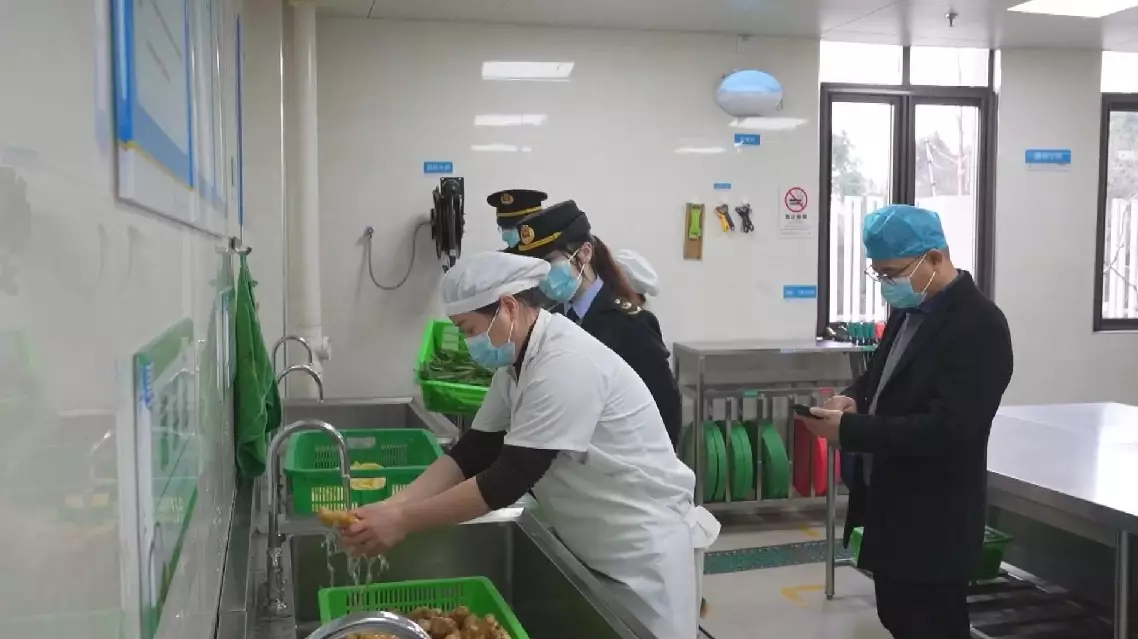
For school canteens, new rules set higher standards than those for other collective catering facilities such as staff canteens and community canteens.
"Especially for contracted school canteens, both the school and the contracted operating enterprise are required to establish a system of dual food safety directors and dual food safety officers. This is to prevent individual school canteens from transferring management responsibilities through outsourcing services," said Liu Jun, deputy director of the State Administration for Market Regulation.
Additionally, five government departments including the Ministry of Education now mandate combined inspections at least once per semester, covering areas like budget management and food supply operations, to promptly identify and address risks.
For food sold through live steaming e-commerce, new regulations are expected to be issued soon to clarify safety responsibilities across the sector. The new rules will define obligations for platforms, hosts, and operators, introduce stricter supervision, and specify penalties to reduce food safety risks linked to online sales.
Platforms will need to include hosts' qualifications and product legality in their risk control protocols and set up systems for real-time monitoring and rapid response.
"All live streamers must carry out compliance checks before going live and implement sampling inspections. They are required to share complete and truthful information about the food they sell and must not offer products that fail to meet legal or safety standards," said Si Guang, head of the Food Coordination Department at the market regulator.
China's staple foods comply with safety rules at high standards