As the Agreement on Marine Biological Diversity of Areas Beyond National Jurisdiction is set to take effect in January 2026, Chinese experts and officials have said that the treaty reflects a hard-won balance between competing principles in global ocean governance, particularly regarding the regulation of marine genetic resources and the sharing of benefits between developed and developing countries.
China deposited with UN Secretary-General Antonio Guterres on Dec. 15 an instrument of ratification of the Agreement under the United Nations Convention on the Law of the Sea on the Conservation and Sustainable Use of Marine Biological Diversity of Areas beyond National Jurisdiction
The agreement is an important international treaty under the UN framework. Based on the United Nations Convention on the Law of the Sea, it aims to conserve and sustainably use marine biological diversity, focusing on deep-sea genetic resources, marine protected areas, environmental impact assessments and capacity building. It has further established legal norms for deep-sea and open-sea activities of all countries, profoundly influencing the international maritime order.
Chinese experts and officials stressed that the Agreement upholds the principle that it applies exclusively to areas beyond national jurisdiction, while establishing both monetary and non-monetary benefit-sharing mechanisms and safeguarding countries' legitimate rights and interests.
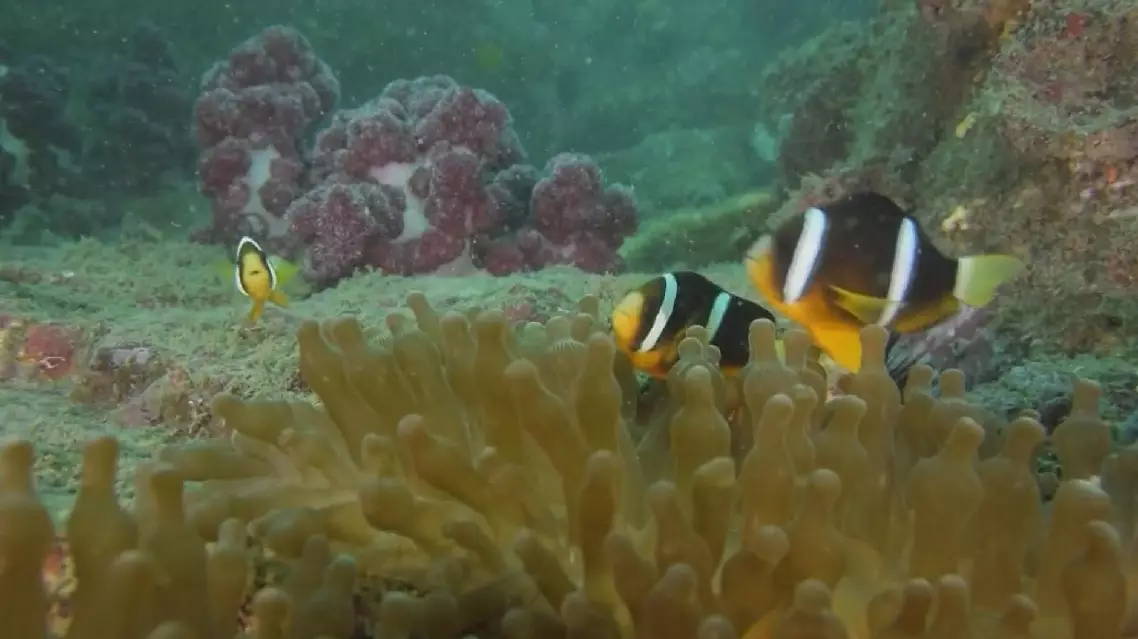
The high seas and the international seabed areas are regarded as a shared blue home for all humanity. How to better protect and ensure the sustainable use of these "global commons" has long posed a pressing challenge for the international community.
The Agreement focuses on four key areas -- marine genetic resources, marine protected areas, environmental impact assessments, and capacity building -- providing legal support for improving global governance of ocean resources.
Negotiations on the Agreement began in 2004 and, after 19 years of consultations and deliberations, were successfully concluded in 2023.
"I can give you a prominent example concerning marine genetic resources. It's the prevailing aspiration among the developing countries that the Agreement can stipulate that marine genetic resources are the shared heritage of mankind, which would necessitate enhanced regulation and monetary benefit-sharing. However, countries such as the United States and Japan, which make extensive use of marine resources, think that marine genetic resources should apply to the freedom of high seas, opposing extensive regulation and monetary benefit-sharing," said Gou Haibo, vice president of the China Institute of International Studies.
"What has been agreed upon now is the benefit-sharing principle in both monetary and non-monetary forms. That means countries capable of developing and utilizing such resources are obligated to share the benefits to those lacking the capacity to do so," said Zhang Haiwen, a researcher at the Institute for Marine Development Strategy under the Chinese Ministry of Natural Resources.
China participated in the entire negotiation process of the agreement and signed it on the first day it was opened for signature. On Oct. 28 this year, the 18th session of the Standing Committee of the 14th National People's Congress adopted a decision to ratify the agreement. China will become a contracting party from the date the agreement enters into force.
"The Agreement should apply exclusively to areas beyond national jurisdiction, including the high seas and the international seabed area. For areas within the jurisdiction of a nation, such as a country's internal waters, territorial seas, exclusive economic zones, and continental shelves, the Agreement is non-applicable. This constitutes a fundamental principle," said Liu Yang, deputy director-general of the Department of Treaty and Law under the Chinese Ministry of Foreign Affairs.
UN agreement on marine biological diversity ensures equitable benefit-sharing of resources: experts