NEWCASTLE, Australia (AP) — Australian Prime Minister Anthony Albanese announced plans Thursday for a national bravery award to recognize civilians and first responders who confronted “the worst of evil” during an antisemitic terror attack that left 15 dead and has cast a heavy shadow over the nation’s holiday season.
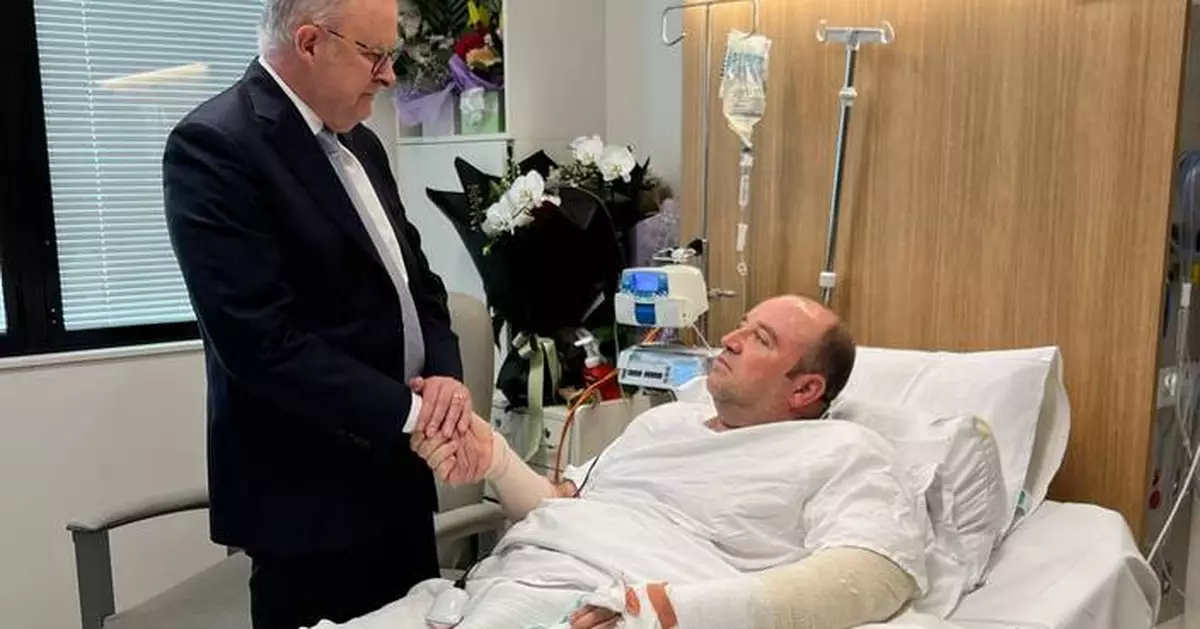
Albanese said he plans to establish a special honors system for those who placed themselves in harms way to help during the attack on a beachside Hanukkah celebration, like Ahmed al Ahmed, a Syrian-Australian Muslim who disarmed one of the assailants before being wounded himself.
Sajid Akram, who was killed by police during the Dec. 14 attack, and his 24-year-old son Naveed Akram are accused of perpetrating Australia’s worst massacre since 1996.
Speaking at a press conference after a Christmas Day lunch at a charitable foundation in Sydney, Albanese described a Christmas defined by a sharp contrast between extremist violence and the “best of humanity.”
“This Christmas is a different one because of the anti-terror and the terrorist attack motivated by ISIS and antisemitism,” Albanese said. “But at the same time as we have seen the worst of humanity, we have seen the bravery and kindness and compassion ... from those who rushed to danger.”
The proposed honors would recognize those who are nominated and recommended for bravery or meritorious awards under the existing Australian Honors and Awards system for their actions during and after the attack.
Just a day after pushing through the country's toughest firearm laws, New South Wales state leader Chris Minns issued a plea for national solidarity, urging Australians to support their Jewish neighbors during what he described as a fortnight of “heartbreak and pain.”
“Everybody in Australia needs to wrap their arms around them and lift them up,” Minns said at the same press conference Thursday. “I want them to know that Australians have got their back. We’re in their corner and we’re going to help them get through this.”
The gun reforms which passed through the New South Wales state legislature on Christmas Eve include capping individual gun ownership at four and reclassifying high-risk weapons like pump-action firearms.
The legislation also tightens licensing by reducing permit terms to two years, restricting ownership to Australian citizens, and removing the review pathway for license denials.
“Gun reform alone will not solve hatred or extremism, but we can’t fail to act on restricting access to weapons which could lead to further violence against our citizens, Minns said earlier in the week when introducing the proposed laws.
Other new laws will ban the public display of terrorist symbols and grant police expanded powers to restrict public gatherings in specific areas following terrorist incidents.
Albanese has also announced plans to tighten Australia’s already strict gun laws.

In this photo released by the Prime Minister office, Australian Prime Minister Anthony Albanese meets Ahmed al Ahmed at St George Hospital in Sydney, Tuesday, Dec. 16, 2025. (Australian Prime Minister Office via AP)
NEW YORK (AP) — Stocks recovered most of their earlier losses as volatility returned to Wall Street after two days of solid gains.
The S&P 500 fell 0.1% after slumping as much as 1.5% in early trading Thursday. The Dow Jones Industrial Average shed 142 points, or 0.3% as of 2:06 p.m. Eastern. The Nasdaq composite fell 0.2%. Stocks in Europe and Asia finished lower.
Oil prices remained elevated although down from earlier highs. The price for a barrel of U.S. crude rose close to $114 a barrel at one point.
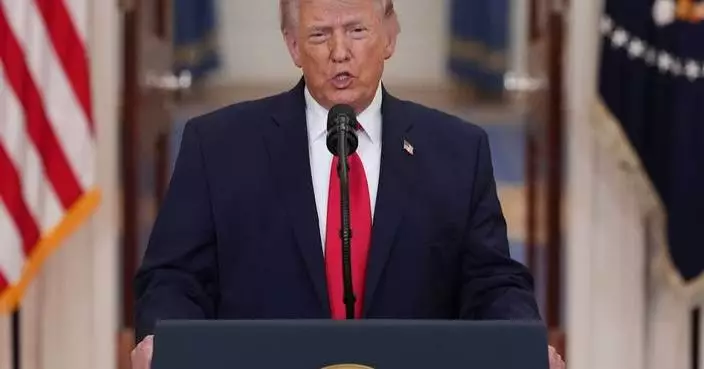
The unsettled trading follows a national address late Wednesday from President Donald Trump, where he vowed the U.S. will continue to attack Iran and failed to offer a clear timetable for ending the conflict in the Middle East. Those comments appeared to dim the hopes for a near-term conclusion to the war that had pushed stocks higher through most of the week.
Major indexes are still on track to close out the week with gains and it will mark the S&P 500's first winning week since the war with Iran began. Thursday is the last day of trading on Wall Street this week with with the stock market closed on Good Friday.
Crude oil prices have been the main force behind the sharp swings for stocks globally. Shipping traffic has been severely curtailed in the Strait of Hormuz, where a fifth of the world’s traded oil passes through during peacetime.
The price of Brent crude, the international standard, jumped 7.6% to $108.84 per barrel. Benchmark U.S. crude rose 11.6% to $111.77 per barrel. Prices had been sliding back toward $100 per barrel prior to Trump’s address on Wednesday. The U.S. only relies on the Persian Gulf for a fraction of the oil it imports, but oil is a commodity and prices are set in a global market. A disruption anywhere affects prices everywhere.
Stocks have been broadly sliding since the war began, with indexes often rising and falling sharply along with statements from Trump about the direction of the war. Just on Monday, the S&P 500 briefly neared a 10% drop from its record, a steep-enough fall that professional investors have a name for it: a “correction. The index gained ground Tuesday and Wednesday on hope that the war could end soon.
“For markets, a prolonged conflict increases the risk of sustained pressures on inflation, global growth, interest rates, and equity valuations,” wrote Adam Turnquist, chief technical strategist for LPL Financial, in a note to investors.
Airlines and other travel-related companies were among the biggest losers on Thursday. United Airlines fell 3.3% and Carnival shed 4.3%.
Tesla fell 5.5% after a report showing that sales over the past three months fell short of analysts' expectations.
Several big technology stocks gained ground to help offset losses elsewhere in the market. Intel jumped 3.8% and Advanced Micro Devices rose 2.4%.
Treasury yields remained relatively steady in the bond market. The yield on the 10-year Treasury fell to to 4.31% from 4.32%.
Wall Street is worried that higher energy prices are adding to already stubbornly high inflation. Rising fuel prices take a bigger chunk out of consumers' wallets in several ways. Directly, gasoline prices in the U.S. have surged 36 percent from a month ago to average $4.08 per gallon, according to the auto club AAA.
Indirectly, rising fuel prices tend to make a wide range of services and goods more expensive. Flights become more expensive as airlines raise ticket prices to offset rising fuel costs. Consumer goods become more expensive as shipping and transportation costs rise.
Inflation has been stubbornly above the Federal Reserve's 2% target. The war and its corresponding surge in energy prices effectively pushes inflation higher and that has dashed hopes for the Fed to cut interest rates. Wall Street had hoped for the central bank to cut rates in order to help offset a weakening job market. Lower interest rates could help stimulate the economy by lowering borrowing costs, but they also risk worsening inflation.
Traders came into 2026 forecasting several cuts to the Fed's benchmark interest rate, which influences rates for mortgages and other loans. They are now expecting the benchmark rate to remain steady this year.
The war with Iran has overshadowed many of the other moving pieces within the economy that the Fed and Wall Street have been monitoring. It remains a mixed picture. Reports this week revealed that consumers remain confident and are still spending, though inflation remains a big concern. A report Thursday showed that mortgage rates continue climbing, posing an obstacle for prospective home buyers. Another update Friday will give a more detailed view of the job market.
Associated Press journalists Chan Ho-Him and Matt Ott contributed to this report.
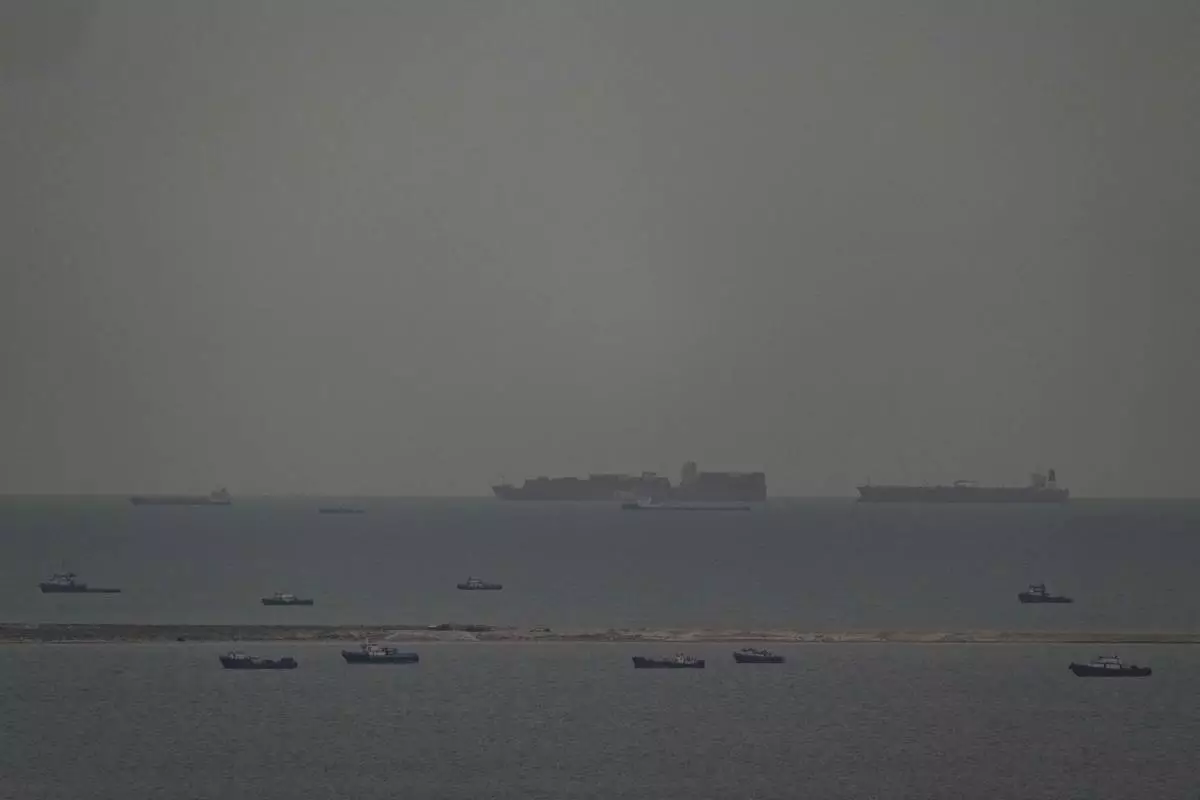
Fishing boats dot the sea as cargo ships, in the background, sail through the Arabian Gulf toward the Strait of Hormuz off the United Arab Emirates, Friday, March 27, 2026. (AP Photo)
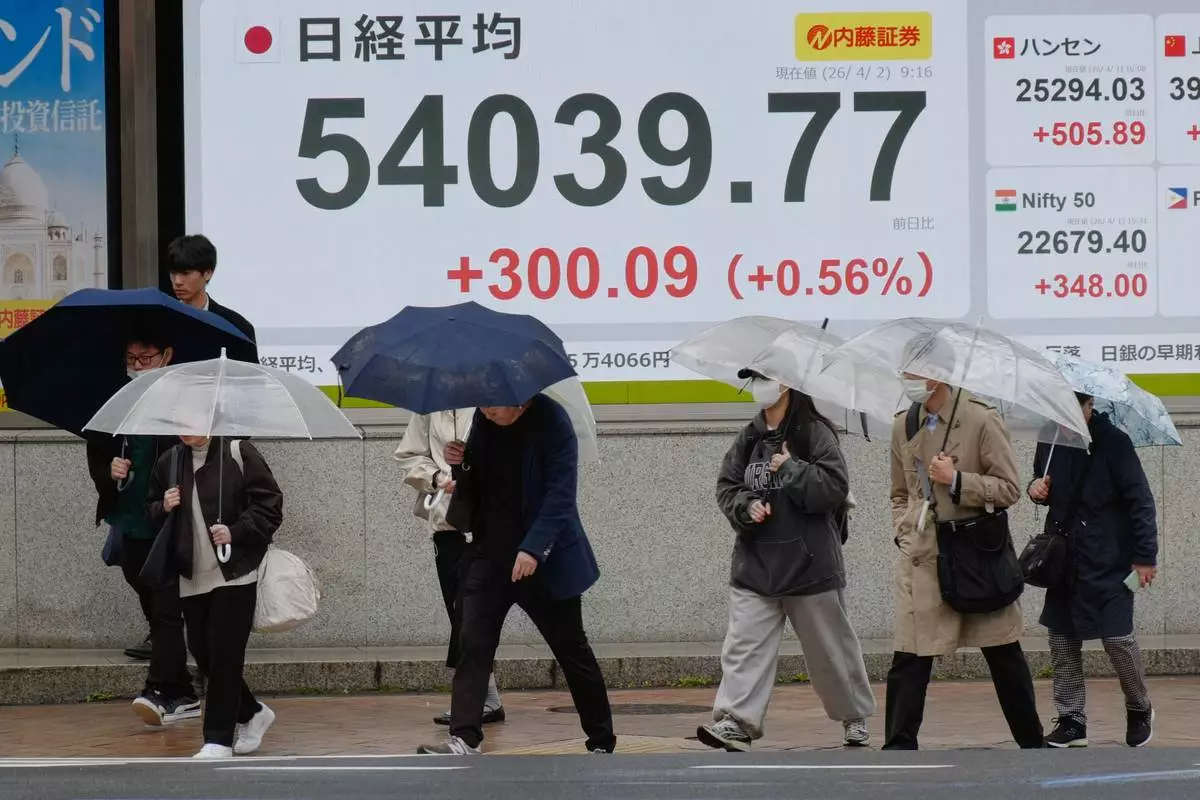
Perople walk in front of an electronic stock board showing Japan's Nikkei index at a securities firm Thursday, April 2, 2026, in Tokyo. (AP Photo/Eugene Hoshiko)
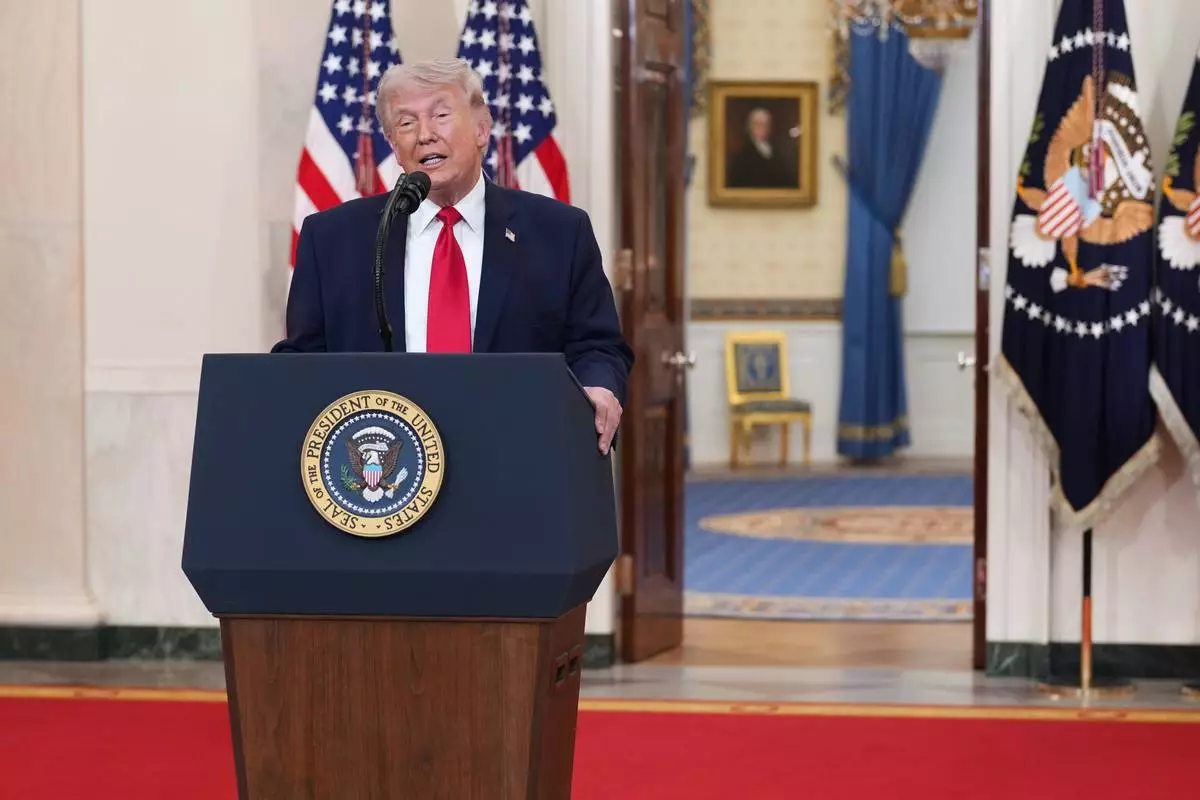
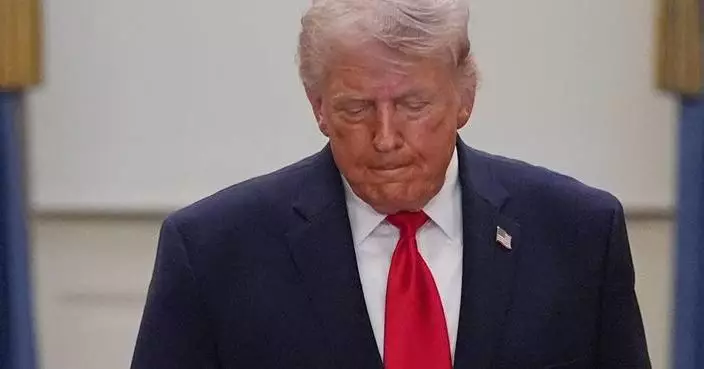
President Donald Trump speaks about the Iran war from the Cross Hall of the White House on Wednesday, April 1, 2026, in Washington. (Doug Mills/The New York Times via AP Pool)
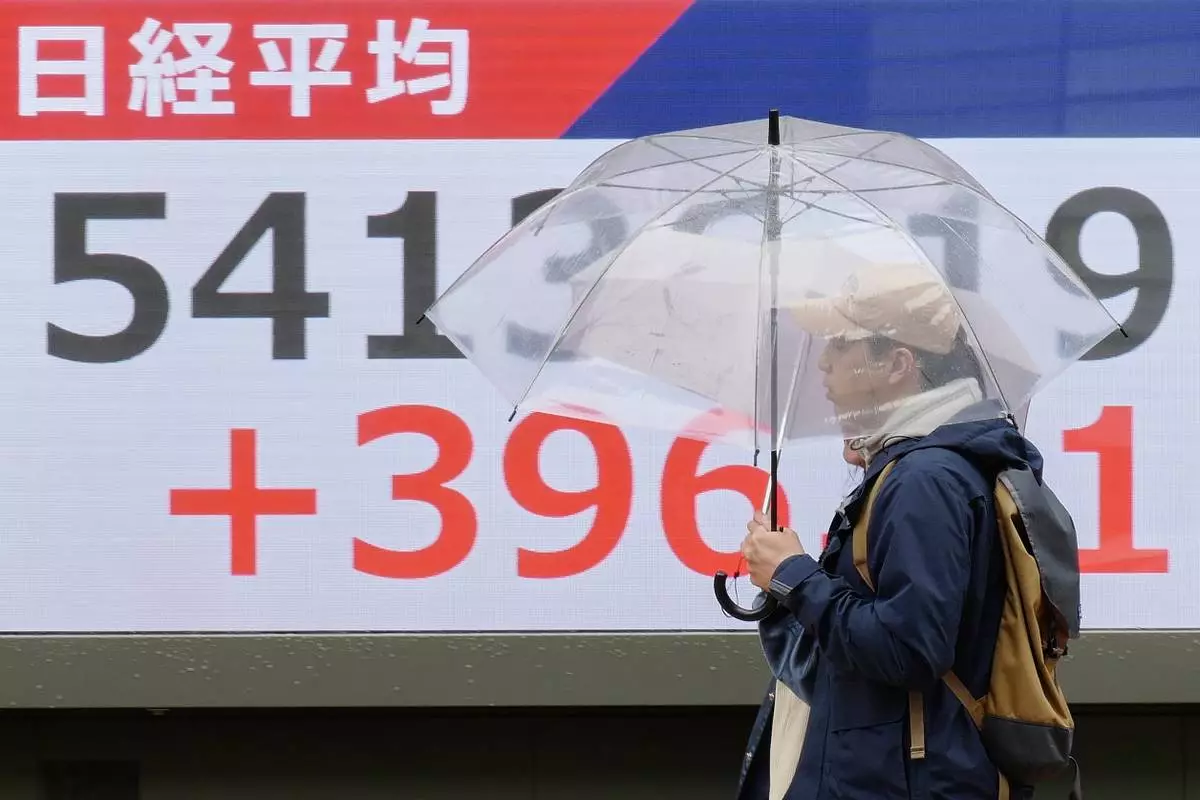
Persons walk in front of an electronic stock board showing Japan's Nikkei index at a securities firm Thursday, April 2, 2026, in Tokyo. (AP Photo/Eugene Hoshiko)