Kwanzaa has become a nationally recognized celebration of African culture and community in the United States since its founding in 1966 and also is celebrated in countries with large African descendant populations.
The holiday, which serves as a nationwide communal event reinforcing self-determination and unity in the face of oppression, spans seven days from the day after Christmas through New Year’s Day. It is observed in large, city-sponsored events as well as in smaller communities and homes across the nation.
Kwanzaa has grown in popularity in the decades since its founding and is celebrated by 3% of the country, according to a 2019 AP-NORC survey. Former Presidents Bill Clinton, George W. Bush and Barack Obama all released statements commemorating the holiday, and in 1997, the U.S. Postal Service began issuing Kwanzaa stamps. It is not recognized as a federal holiday.
Kwanzaa emerged during the Black Freedom Movement of the 1960s as a way to reconnect Black communities in the U.S. with important African cultural traditions that were severed by the trans-Atlantic slave trade. It also promotes unity and liberation.
“It was also shaped by that defining decade of fierce strivings and struggles for freedom, justice and associated goods waged by Africans and other peoples of color all over the world in the 1960s,” Maulana Karenga, the holiday’s founder, wrote in his annual Kwanzaa address in 2023. “Kwanzaa thus came into being, grounded itself and grew as an act of freedom, an instrument of freedom, a celebration of freedom and a practice of freedom.”
Karenga, an African American author, activist and professor, founded Kwanzaa following the Watts Riots, also known as the Watts Rebellion, in Los Angeles in 1965.
Karenga described Kwanzaa as a “political-motivator holiday” in an interview with Henry Lewis Gates Jr. for PBS.
“The idea is for African and African descended people to come together around family, community and culture so we can be in spaces where, in Dr. Karenga’s words, we feel fully African and fully human at the same time,” said Janine Bell, president and artistic director at the Elegba Folklore Society in Richmond, Virginia.
Many people who observe Kwanzaa, which is a secular holiday, celebrate it alongside religious festivals such as Christmas. People of any faith, race or ethnic background can participate.
The name Kwanzaa derives from “mutanda ya kwanza” a Swahili phrase meaning “first fruits” or “first harvest.” The final “a” was added to the name to accommodate the seven children present at the first Kwanzaa, each of whom was given a letter to represent.
The holiday is governed by seven principles, known collectively as the Nguzo Saba, and a different principle is celebrated each day: Umoja (Unity), Kujichagulia (Self-Determination), Ujima (Collective Work and Responsibility), Ujamaa (Cooperative Economics), Nia (Purpose), Kuumba (Creativity) and Imani (Faith).
The Nguzo Saba is represented by a candleholder with seven candles called a kinara. Each night, one of those candles is lit. The candles are the same colors as the Kwanzaa flag: Black representing the people, red their struggle and green their hope.
Large Kwanzaa celebrations happen across the country every year in cities including Los Angeles, Atlanta and Detroit. These events often feature storytellers, music and dance.
The holiday is also observed in individual homes, often focusing on children because they are key to the survival of culture and the development of community. This concept of children and the future they embody is often represented symbolically by corn.
“The intention is that it’s 365 (days a year),” Bell said. “The need for the principles and the strengthening value of the principles don’t go away on January 2nd.”
Family celebrations also involve giving gifts and sharing African American and Pan African foods, culminating in the Karamu, a feast featuring dishes from across the African diaspora. Typical meals include staples of Southern cuisine like sweet potato pie or popular dishes from Africa like jollof rice.
This story was first published on Dec. 19, 2024.
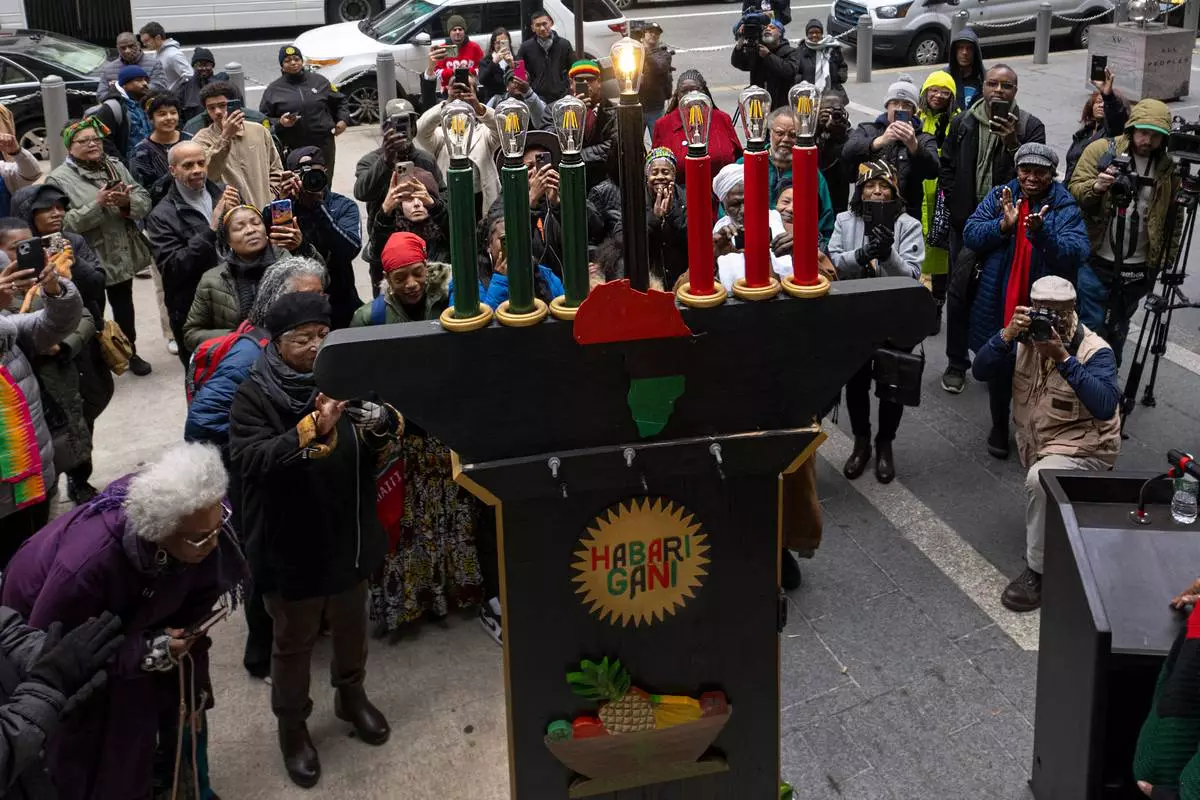
FILE - Philadelphians and visitors gather during the the lighting of the city's first kinara on the first day of Kwanzaa celebrations at the Philadelphia City Hall grounds, Dec. 26, 2023. (Jose F. Moreno/The Philadelphia Inquirer via AP, File)
JABO, Nigeria (AP) — Sanusi Madabo, a 40-year-old farmer in the Nigerian village of Jabo, was preparing for bed Thursday night when he heard a loud noise that sounded like a plane crashing. He rushed outside his mud house with his wife to see the sky glowing a bright red.
The light burned bright for hours, Madabo said: “It was almost like daytime."
He did not learn until later that he had witnessed a U.S attack on an alleged Islamic State camp.
U.S. President Donald Trump announced late Thursday that the U.S had launched a “powerful and deadly strike” against forces of the Islamic State group in Nigeria. The Nigerian government has since confirmed that it cooperated with the U.S government in its strike.
Residents of Jabo, a village in the northwestern Nigerian state of Sokoto, told The Associated Press in interviews Friday that they were seized with panic and confusion at the airstrikes.
They also said the village had never been attacked by armed gangs as part of the violence the U.S. says is widespread, though such attacks regularly occur in neighboring villages.
“As it approached our area, the heat became intense," recalled Abubakar Sani, who lives just a few houses from the scene of the explosion.
"Our rooms began to shake, and then fire broke out,” he told AP. “The Nigerian government should take appropriate measures to protect us as citizens. We have never experienced anything like this before.”
The Nigerian military did not respond to an AP request asking how many locations were targeted.
The strikes are the outcome of a monthslong tense diplomatic clash between the West African nation and the U.S.
The Trump administration has said Nigeria is experiencing a Christian genocide, a claim the Nigerian government has rejected.
But now Nigeria’s Ministry of Foreign Affairs said the strikes resulted from intelligence sharing and strategic coordination between the two governments.
Yusuf Tuggar, Nigeria's foreign minister, called the airstrikes a “new phase of an old conflict" and said he expected more strikes to follow.
“For us, it is something that has been ongoing," Tuggar added, referring to attacks that have targeted Christians and Muslims in Nigeria for years.
Bulama Burkati, a security analyst on sub-Saharan Africa at the Tony Blair Institute, said the fear of residents is compounded by a lack of information.
Residents say there were no casualties, and security operatives have cordoned off the area.
But the Nigerian government has not released information about the militants who were targeted or any post-strike assessment of casualties.
“What can help in dousing the tension is for the American and Nigerian governments to declare who was targeted, what was attacked, and what has happened so far,” Burkati said. Such information is "still missing, and the more opaque the governments are, the more panic there would be on the ground, and that is what will escalate tension.”
Analysts say the strikes might have been intended for the Lakurawa group, a relatively new entrant to Nigeria's complex security crisis.
The group's first attack was recorded around 2018 in the northwestern region before the Nigerian government officially announced its presence last year. The composition of the group has been documented by security researchers as primarily consisting of foreigners from the Sahel region of Africa.
However, experts say ties between the Lakurawa group and the Islamic State are unproven. The Islamic State West African Province, a branch of ISIS in Nigeria, has its strongholds in the northeastern part of the country, where it is currently involved in a power struggle with its parent organisation, Boko Haram.
“What might have happened is that, working with the American government, Nigeria identified Lakurawa as a threat and identified camps that belong to the group,” Burkati said.
Meanwhile, some local people feel vulnerable.
Aliyu Garba, a village leader in Jabo, told AP that debris left by the strikes was scattered, and residents rushed to the scene. Some picked up pieces of the debris, hoping for valuable metal to trade, and Garba said he fears they could get hurt.
For 17-year-old Balira Sa’idu, the strike rattled her as she prepared to get married.
“I am supposed to be thinking about my wedding, but right now I am panicking," she said. “The strike has changed everything. My family is afraid, and I don’t even know if it is safe to continue with the wedding plan in Jabo.”
Adetayo reported from Lagos, Nigeria.
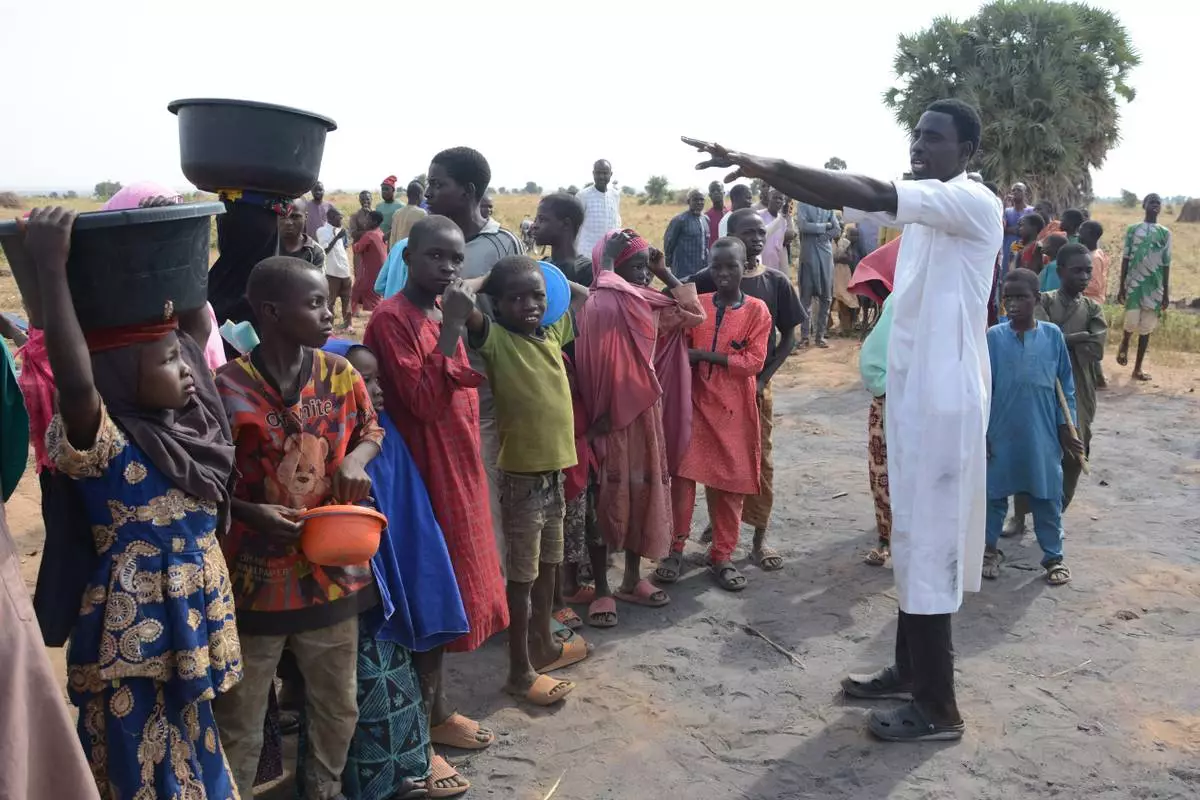
People visit the site of a U.S. airstrike in Northwest, Jabo, Nigeria, Friday, Dec. 26, 2025. (AP Photo/ Tunde Omolehin)
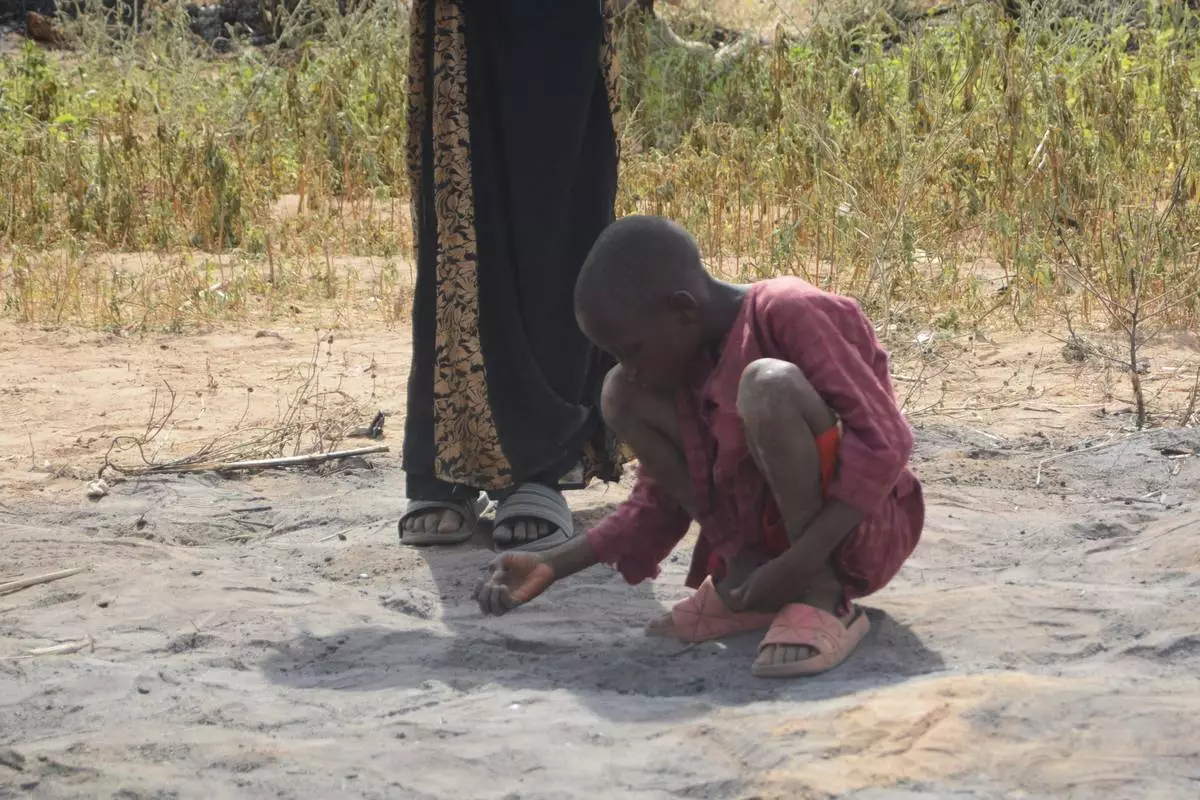
A boy picks debris at the site of a U.S. airstrike in Northwest, Jabo, Nigeria, Friday, Dec. 26, 2025. (AP Photo/ Tunde Omolehin)
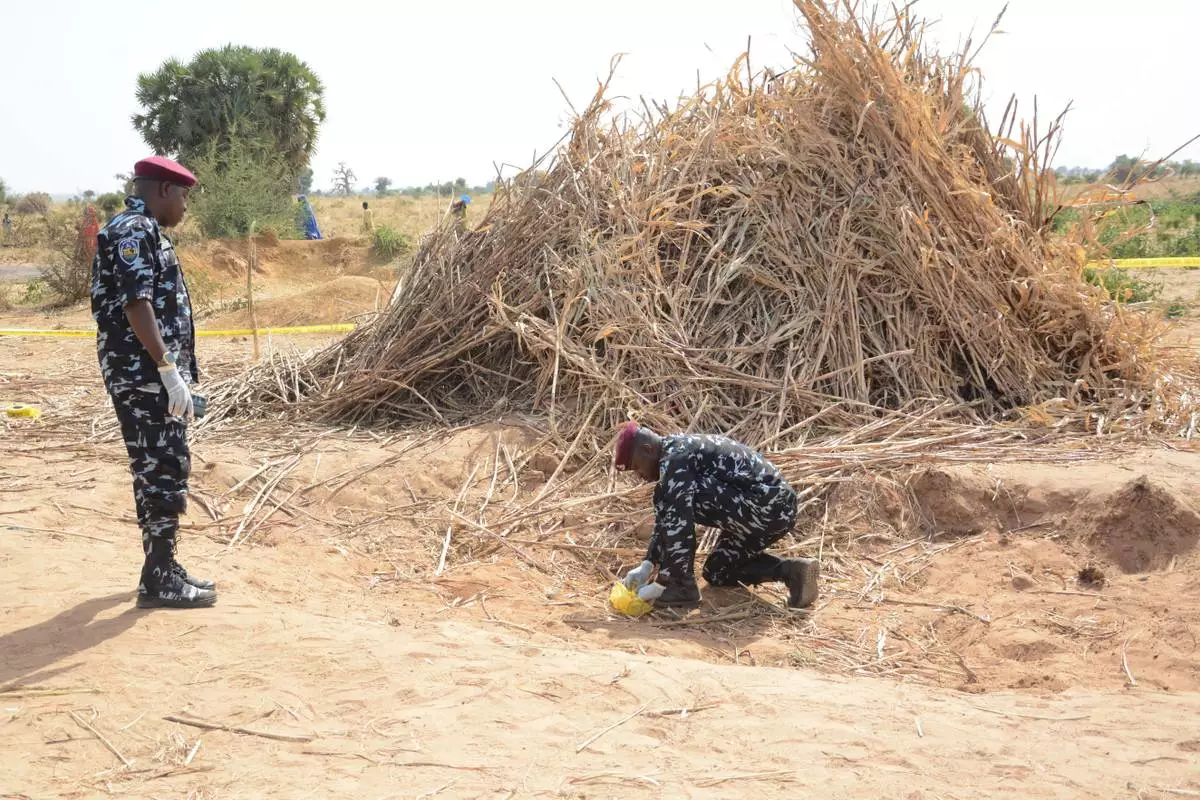
Police Anti-Bomb squad inspect the site of a U.S. airstrike in Northwest, Jabo, Nigeria, Friday, Dec. 26, 2025. (AP Photo/ Tunde Omolehin)
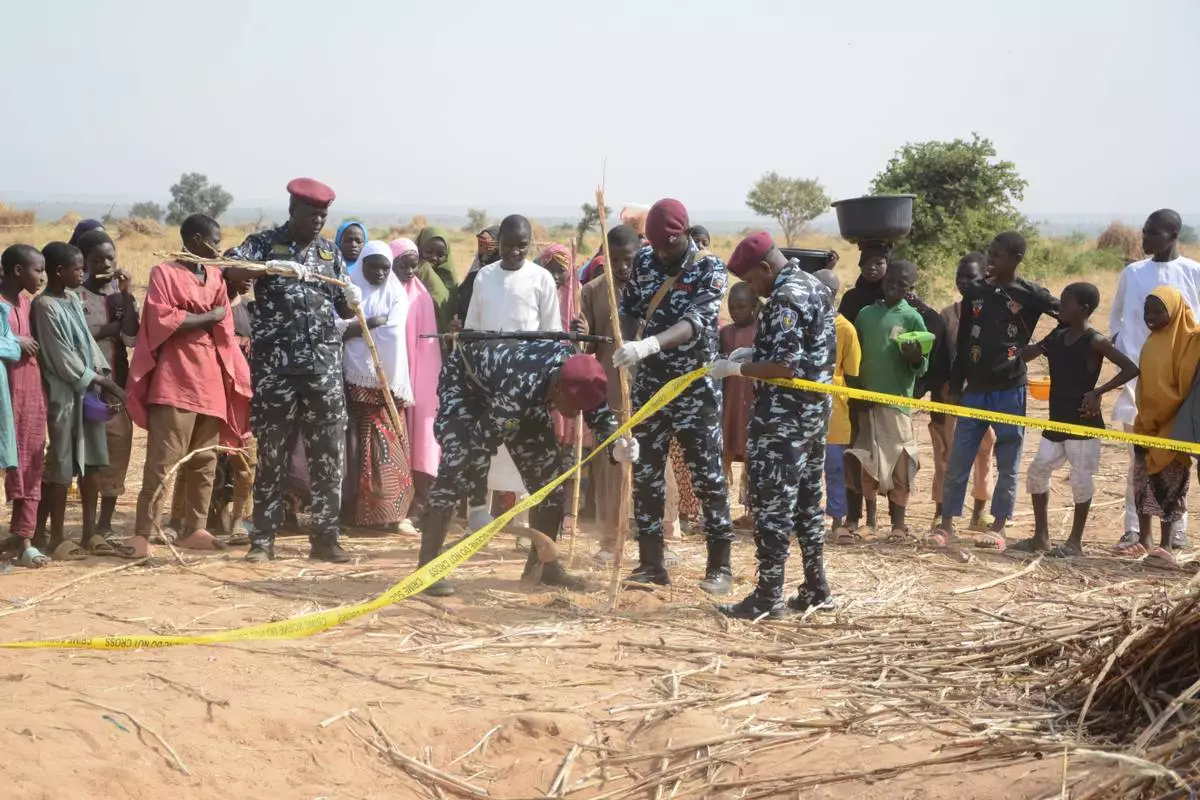
Nigeria police, Anti-Bomb squad, secure the scene of a U.S. airstrike in Northwest, Jabo, Nigeria, Friday, Dec. 26, 2025. (AP Photo/ Tunde Omolehin)
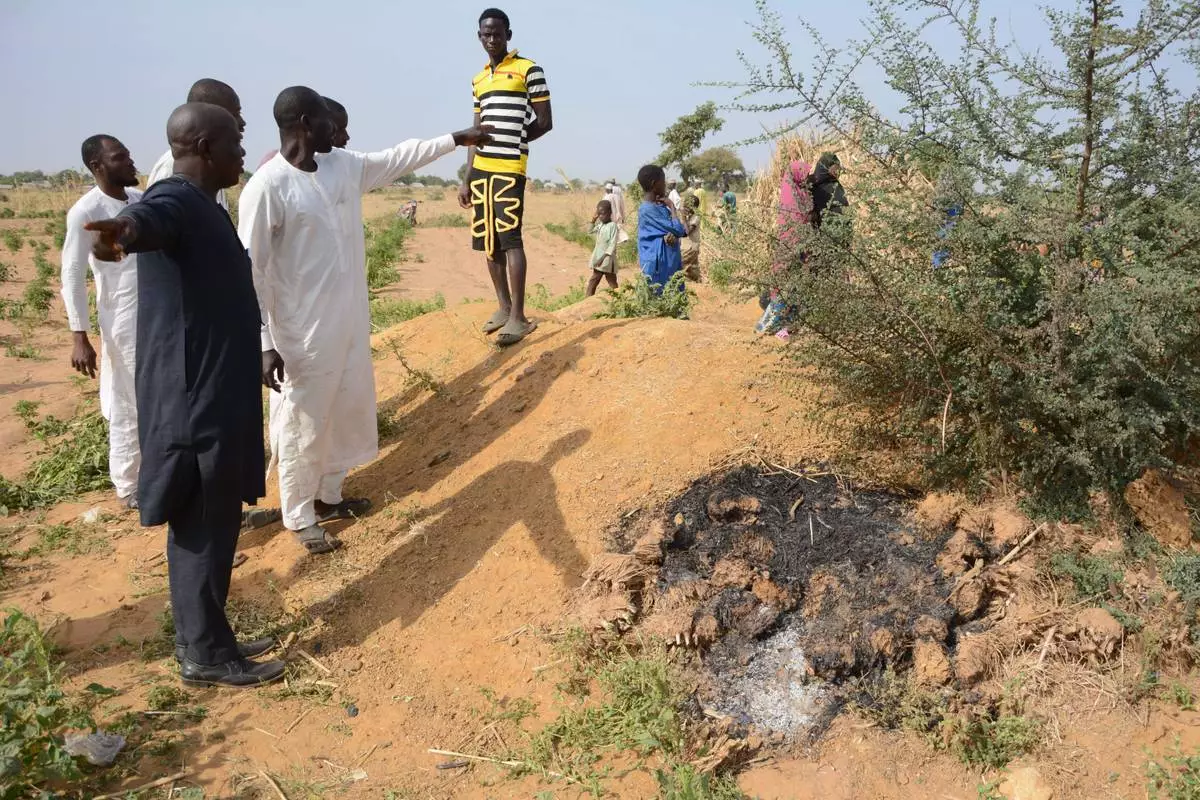
People visit the site of a U.S. airstrike in Northwest, Jabo, Nigeria, Friday, Dec. 26, 2025. (AP Photo/ Tunde Omolehin)