ADEN, Yemen (AP) — Separatists in southern Yemen accused Saudi Arabia on Friday of targeting their forces with airstrikes, something not formally acknowledged by the kingdom after it warned the forces to withdraw from governorates they recently took over.
The Southern Transitional Council, backed by the United Arab Emirates, said the strikes happened in Yemen’s Hadramout governorate. It wasn’t immediately clear if there were any casualties from the strikes that further raise tensions in the war-torn nation and put at risk a fragile Saudi-led coalition that has been battling the Iran-backed Houthi rebels in the country’s north for a decade.
Click to Gallery
A street vender rides his cart at along a street in Aden, Yemen, Friday, Dec. 26, 2025. (AP Photo)
Supporters of the Southern Transitional Council (STC), a coalition of separatist groups seeking to restore the state of South Yemen, hold South Yemen flags and a poster of their leader, Aidarous al-Zubaidi during a rally, in Aden, Yemen, Dec. 25, 2025. (AP Photo)
Supporters of the Southern Transitional Council (STC), a coalition of separatist groups seeking to restore the state of South Yemen, hold a South Yemen flag during a rally, in Aden, Yemen, Dec. 25, 2025. (AP Photo)
People eat at a restaurant in Aden, Yemen, Friday, Dec. 26, 2025. (AP Photo)
Amr Al Bidh, a foreign affairs special representative for the Council, said in a statement to The Associated Press that its fighters had been operating in eastern Hadramout on Friday after facing “multiple ambushes” from gunmen. Those attacks killed two fighters with the Council and wounded 12 others, Al Bidh said.
The Saudi airstrikes happened after that, he added.
The Council later described their operations in the area as seeking a wanted man and trying to cut off smuggling through the area.
Faez bin Omar, a leading member in a coalition of tribes in Hadramout, told the AP that he believed the strikes served as a warning to the Council to withdraw its fighters from the area. An eyewitness to the strikes, Ahmed al-Khed, said he saw destroyed military vehicles afterward, believed to belong to forces allied to the Council.
The Council’s satellite channel AIC aired what appeared to be mobile phone footage it described as showing the strikes. In one video, a man speaking could be heard blaming the strike on Saudi aircraft.
Officials in Saudi Arabia did not respond to a request for comment from the AP. However, the Saudi-owned, London-based newspaper Asharq Al-Awsat, quoting “informed sources,” reported late Friday that the kingdom carried out the strikes “to send a message" to the Council.
“Any further escalation would be met with stricter measures,” the paper said.
On Thursday, the kingdom called on the Emirati-backed separatists in southern Yemen to withdraw.
The Council moved earlier this month into Yemen’s governorates of Hadramout and Mahra. That had pushed out forces affiliated with the Saudi-backed National Shield Forces, another group in the coalition fighting the Houthis.
Those aligned with the Council have increasingly flown the flag of South Yemen, which was a separate country from 1967-1990. Demonstrators rallied on Thursday in the southern port city of Aden to support political forces calling for South Yemen to secede again from Yemen.
Following the capture of Yemen’s capital, Sanaa, and much of the country’s north by the Houthis in 2014, Aden has been the seat of power for the internationally recognized government and forces aligned against the rebels.
The actions by the separatists have put pressure on the relationship between Saudi Arabia and the UAE, which maintain close relations and are members of the OPEC oil cartel, but also have competed for influence and international business in recent years.
The UAE said in a statement Friday that it “welcomed the efforts undertaken by the Kingdom of Saudi Arabia to support security and stability" in Yemen.
“The UAE reaffirmed its steadfast commitment to supporting all endeavors aimed at strengthening stability and development in Yemen, contributing positively to regional security and prosperity,” it added.
There has also been an escalation of violence in Sudan, another nation on the Red Sea, where the kingdom and the Emirates support opposing forces in that country’s ongoing war.
The Iranian-backed Houthis seized Sanaa in September 2014 and forced the internationally recognized government into exile. Iran denies arming the rebels, although Iranian-manufactured weaponry has been found on the battlefield and in sea shipments heading to Yemen despite a U.N. arms embargo.
A Saudi-led coalition armed with U.S. weaponry and intelligence entered the war on the side of Yemen’s exiled government in March 2015. Years of inconclusive fighting have pushed the Arab world’s poorest nation to the brink of famine.
The war has killed more than 150,000 people, including fighters and civilians, and created one of the globe’s worst humanitarian disasters, killing tens of thousands more.
The Houthis, meanwhile, have launched attacks on hundreds of ships in the Red Sea corridor over the Israel-Hamas war, greatly disrupting regional shipping.
Further chaos in Yemen could again draw in the United States.
Washington launched an intense bombing campaign targeting the rebels earlier this year that U.S. President Donald Trump halted just before his trip to the Middle East in October. The Biden administration also conducted strikes against the Houthis, including using B-2 bombers to target what it described as underground bunkers used by the Houthis.
In a statement early Saturday, the U.S. State Department said it was “grateful for the diplomatic leadership of our partners, the Kingdom of Saudi Arabia and the United Arab Emirates,” in the crisis in Yemen.
“The United States is concerned by recent events in southeastern Yemen,” it said. “We urge restraint and continued diplomacy, with a view to reaching a lasting solution.”
Gambrell reported from Dubai, United Arab Emirates. Associated Press writer Fatma Khaled in Cairo contributed to this report.

A street vender rides his cart at along a street in Aden, Yemen, Friday, Dec. 26, 2025. (AP Photo)

Supporters of the Southern Transitional Council (STC), a coalition of separatist groups seeking to restore the state of South Yemen, hold South Yemen flags and a poster of their leader, Aidarous al-Zubaidi during a rally, in Aden, Yemen, Dec. 25, 2025. (AP Photo)

Supporters of the Southern Transitional Council (STC), a coalition of separatist groups seeking to restore the state of South Yemen, hold a South Yemen flag during a rally, in Aden, Yemen, Dec. 25, 2025. (AP Photo)

People eat at a restaurant in Aden, Yemen, Friday, Dec. 26, 2025. (AP Photo)
WASHINGTON (AP) — President Donald Trump said Thursday that Pam Bondi is out as his attorney general, ending the contentious tenure of a loyalist who upended the Justice Department’s culture of independence from the White House, oversaw large-scale firings of career employees and moved aggressively to investigate the Republican president’s perceived enemies.
The announcement follows months of scrutiny over the Justice Department’s handling of files related to Jeffrey Epstein’s sex trafficking investigation that made Bondi the target of angry conservatives even with her close relationship with Trump. She also struggled to satisfy Trump’s demands to prosecute his political rivals, with multiple investigations rejected by judges or grand juries or yet to produce charges.
Trump named Deputy Attorney General Todd Blanche as the acting attorney general, though three people familiar with the matter have said he has privately discussed Lee Zeldin, the head of the Environmental Protection Agency, as a permanent pick.
Bondi, a former Florida attorney general, came into office last year pledging that she would not play politics with the Justice Department, but she quickly started investigations of Trump foes, sparking an outcry that the law enforcement agency was being wielded as a tool of revenge to advance the president’s political and personal agenda.
She ushered in a period of intense turmoil at the department that included the firings of career prosecutors deemed insufficiently loyal to Trump and the resignations of hundreds of other employees. Her departure continues a trend of Justice Department upheaval that has defined Trump’s presidency as multiple attorneys general across his two terms have either been pushed out or resigned after proving unwilling or unable to meet his demands for the position.
Bondi rejected accusations that she politicized the Justice Department and said her mission was to restore the institution’s credibility after overreach by President Joe Biden’s Democratic administration with two federal criminal cases against Trump. Bondi’s defenders have said she worked to refocus the department to better tackle illegal immigration and violent crime and brought much-needed change to an agency they believe unfairly targeted conservatives.
Bondi’s public embrace of the president, however, marked a sharp departure from her predecessors, who generally took pains to maintain an arm’s-length distance from the White House to protect the impartiality of investigations and prosecutions. Bondi postured herself as Trump’s chief supporter and protector, praising and defending him in congressional hearings and placing a banner with his face on the exterior of Justice Department headquarters.
She called for an end to the “weaponization” of law enforcement she said occurred under the Biden administration, even though Biden’s attorney general, Merrick Garland, and Jack Smith, the special counsel who produced two cases against Trump, have said they followed the facts, the evidence and the law in their decision-making. Bondi’s critics, meanwhile, said she was the one who had politicized the agency to do the president’s bidding.
“You’ve turned the People’s Department of Justice into Trump’s instrument of revenge,” Rep. Jamie Raskin of Maryland, the top Democrat on the House Judiciary committee, said at a February hearing.
Bondi delivered a combative performance but few substantive answers at that hearing as she angrily insulted her Democratic questioners with name-calling, praised Trump over the performance of the stock market — “The Dow is up over 50,000 right now” —- and openly aligned herself as in sync with a president whom she painted as a victim of past impeachments and investigations.
Even Republicans began to challenge her, with the Republican-led House Oversight Committee last month issuing a subpoena to her to appear for a closed-door interview about the Epstein files.
Under Bondi’s leadership, the department opened investigations into a string of Trump foes, including Federal Reserve Chair Jerome Powell, New York Attorney General Letitia James, former FBI Director James Comey and former CIA Director John Brennan. The high-profile prosecutions of Comey and James were short-lived as they were quickly thrown out by a judge who ruled that the prosecutor who brought the cases was illegally appointed.
Trump repeatedly publicly praised and defended Bondi but also showed flashes of impatience with his attorney general’s efforts to meet his demands to prosecute his rivals. In one extraordinary social media post last year, Trump called on Bondi to move quickly to prosecute his foes, including James and Comey, telling her: “We can’t delay any longer, it’s killing our reputation and credibility.”
Bondi oversaw the exodus of thousands of career employees — both through firings and voluntary departures — including lawyers who prosecuted violent attacks on police at the U.S. Capitol on Jan. 6, 2021; environmental, civil rights and ethics enforcers; counterterrorism prosecutors; and others.
She struggled to overcome early stumbles over the Epstein files that angered conservatives eager for government bombshells about the case, which has long fascinated conspiracy theorists. She herself had fed the conspiracy theory machine with a suggestion in a 2025 Fox News Channel interview that Epstein’s “client list” was sitting on her desk for review. The department later acknowledged that no such document exists.
Bondi was ridiculed over a move to hand out binders of Epstein files to conservative influencers at the White House only for it to be later revealed that the documents included no new revelations. And despite promises that more files were going to become public, the Justice Department in July said no more would be released, prompting Congress to pass a bill to force the agency to do so.
The Epstein files fumbles led to a stunning public criticism from White House chief of staff Susie Wiles, a close friend of Bondi’s, who told Vanity Fair that the attorney general “completely whiffed.” The Justice Department’s release of millions of pages of Epstein files did little to tamp down criticism, prompting a House committee with the support of five Republicans to subpoena Bondi to answer questions under oath.
Bondi, who defended Trump during his first impeachment trial, was his second choice to lead the Justice Department, picked for the role after former Rep. Matt Gaetz of Florida withdrew his name from consideration amid scrutiny over sex trafficking allegations.
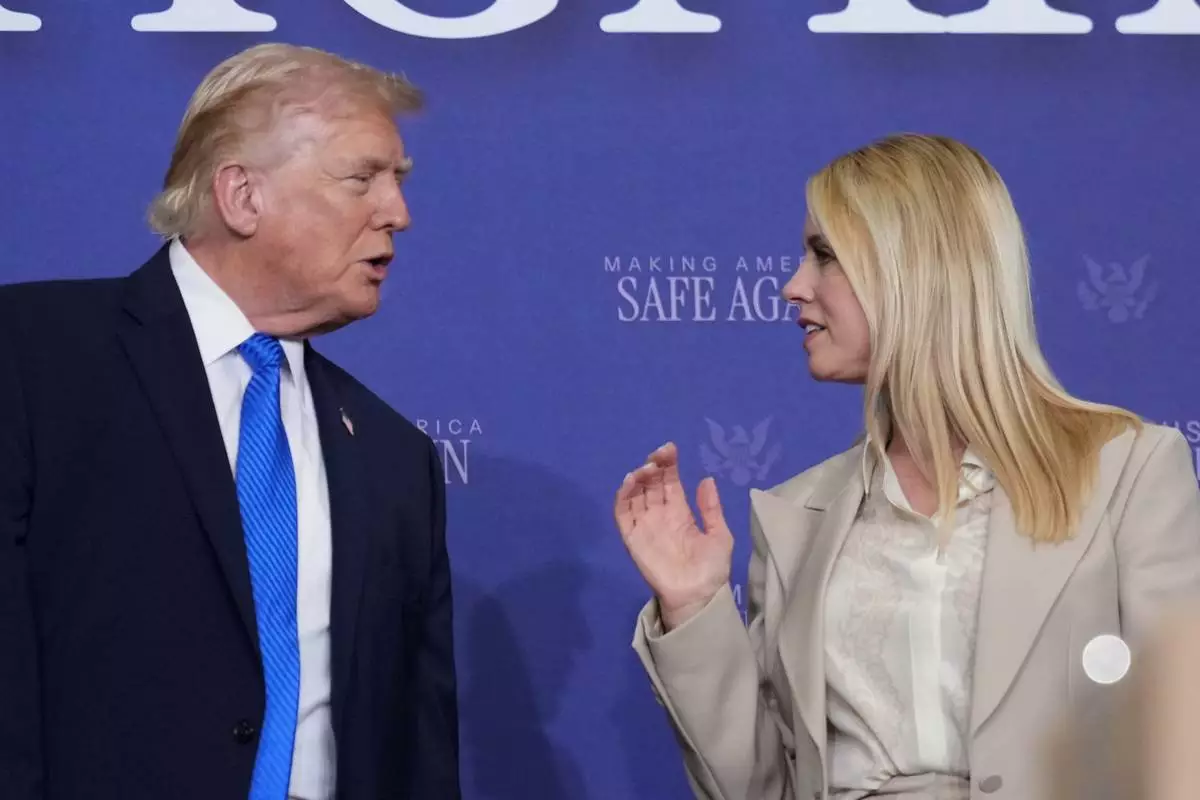
President Donald Trump speaks with Attorney General Pam Bondi during a roundtable discussion on public safety at a Tennessee Air National Guard Base, Monday, March 23, 2026, in Memphis, Tenn. (AP Photo/Mark Schiefelbein)
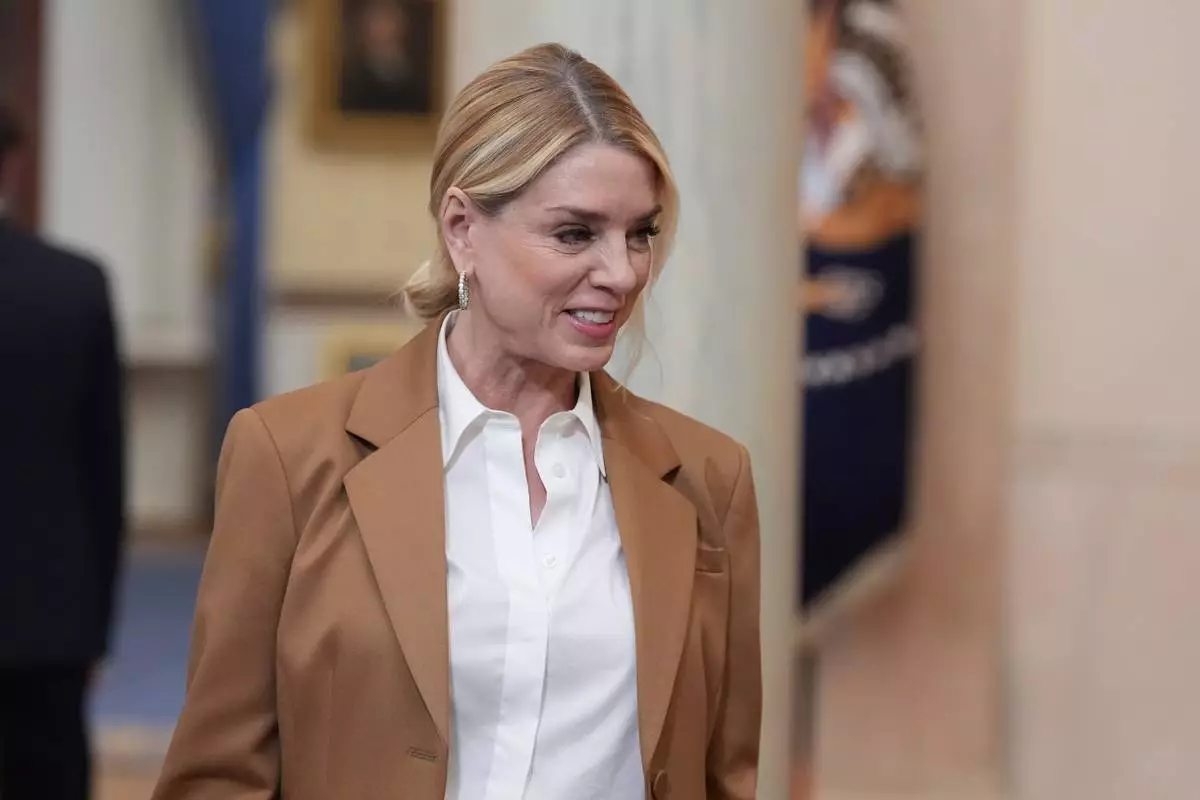
Attorney General Pam Bondi arrives before President Donald Trump speaks about the Iran war from the Cross Hall of the White House on Wednesday, April 1, 2026, in Washington. (AP Photo/Alex Brandon, Pool)
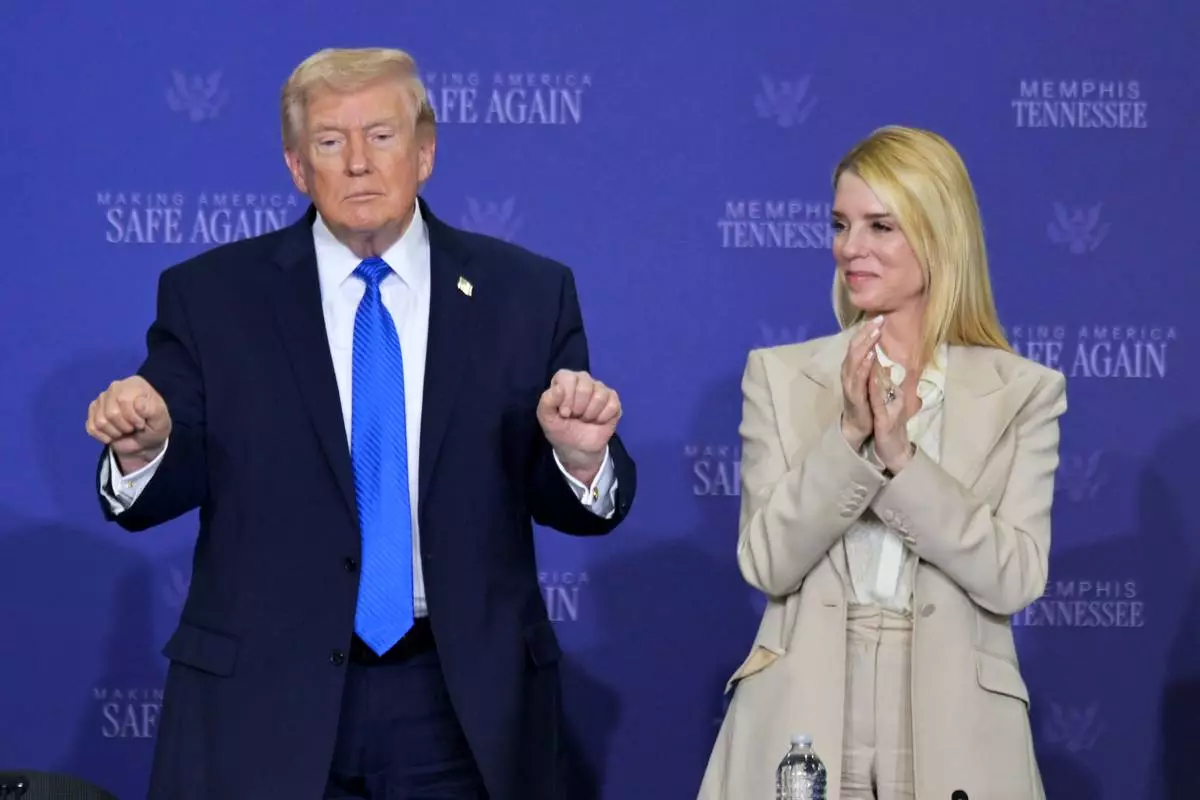
President Donald Trump participates in a roundtable discussion on public safety at a Tennessee Air National Guard Base, Monday, March 23, 2026, in Memphis, Tenn., with Attorney General Pam Bondi, right. (AP Photo/Bruce Newman)
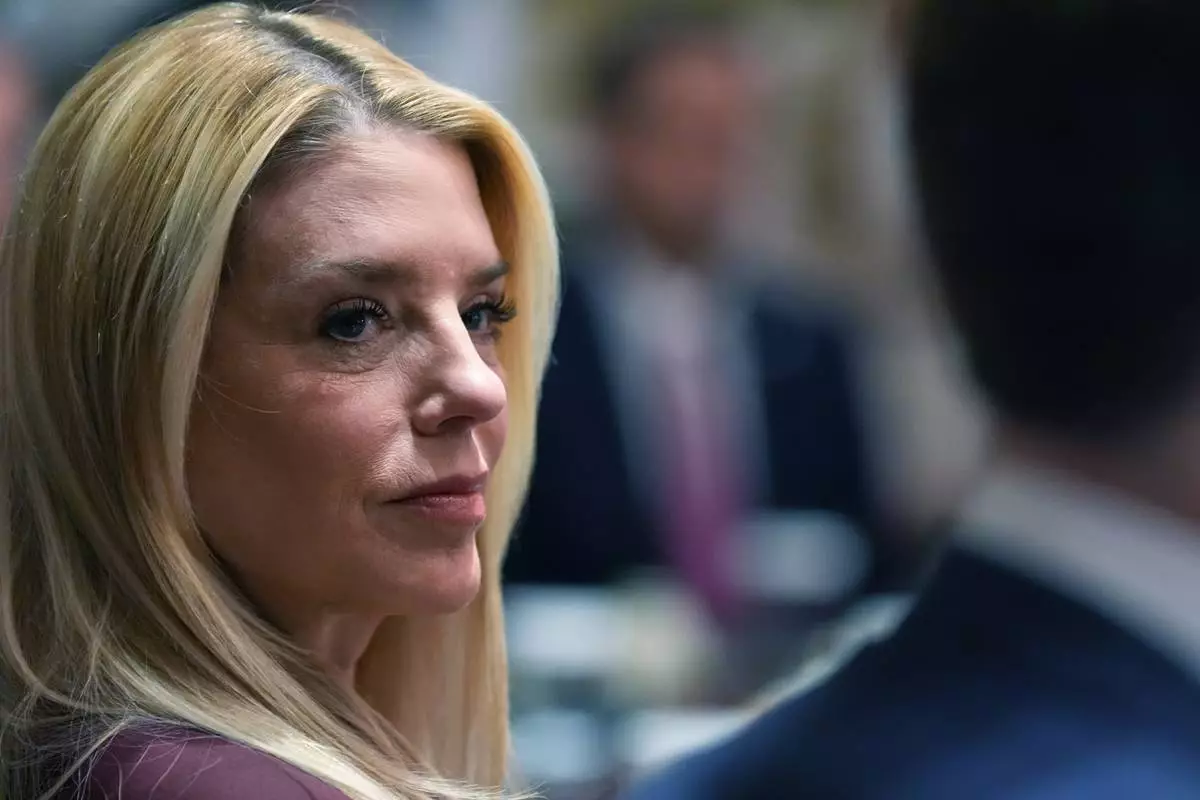
Attorney General Pam Bondi listens during a Cabinet meeting at the White House, Thursday, March 26, 2026, in Washington. (AP Photo/Alex Brandon)
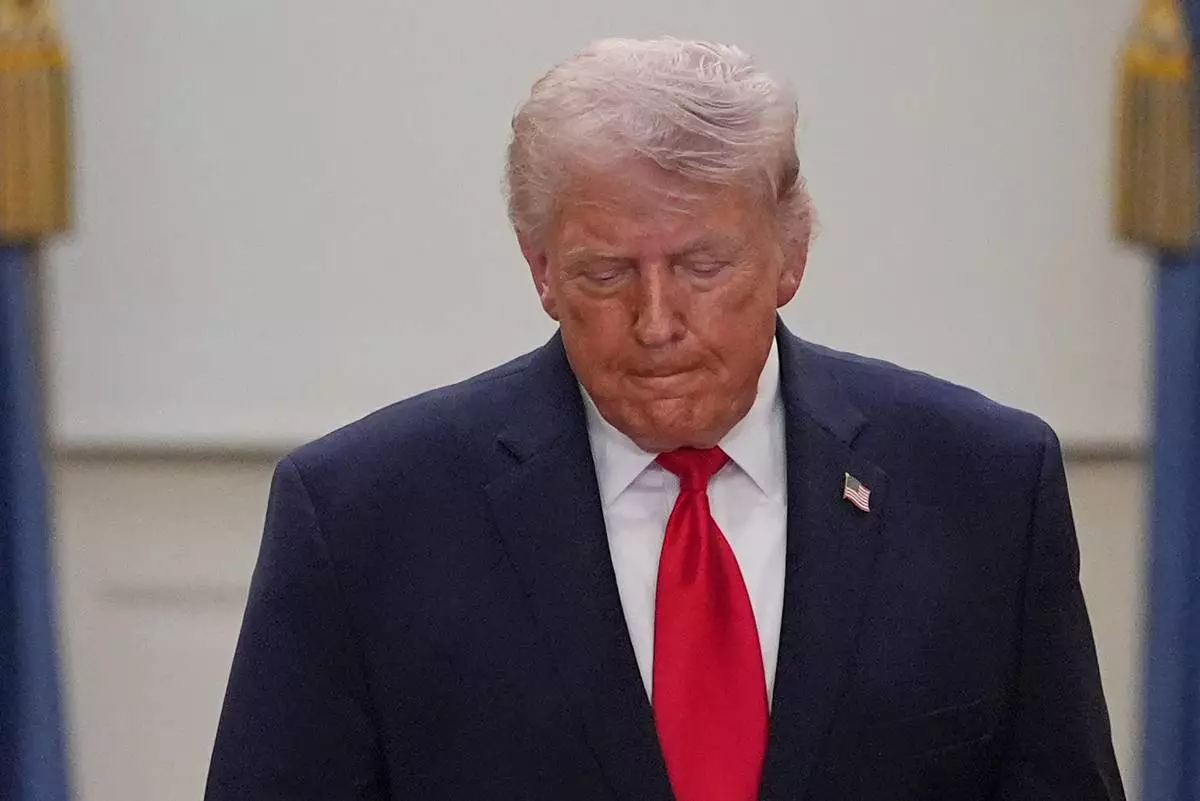
President Donald Trump walks from the Blue Room to speak about the Iran war from the Cross Hall of the White House on Wednesday, April 1, 2026, in Washington. (AP Photo/Alex Brandon, Pool)