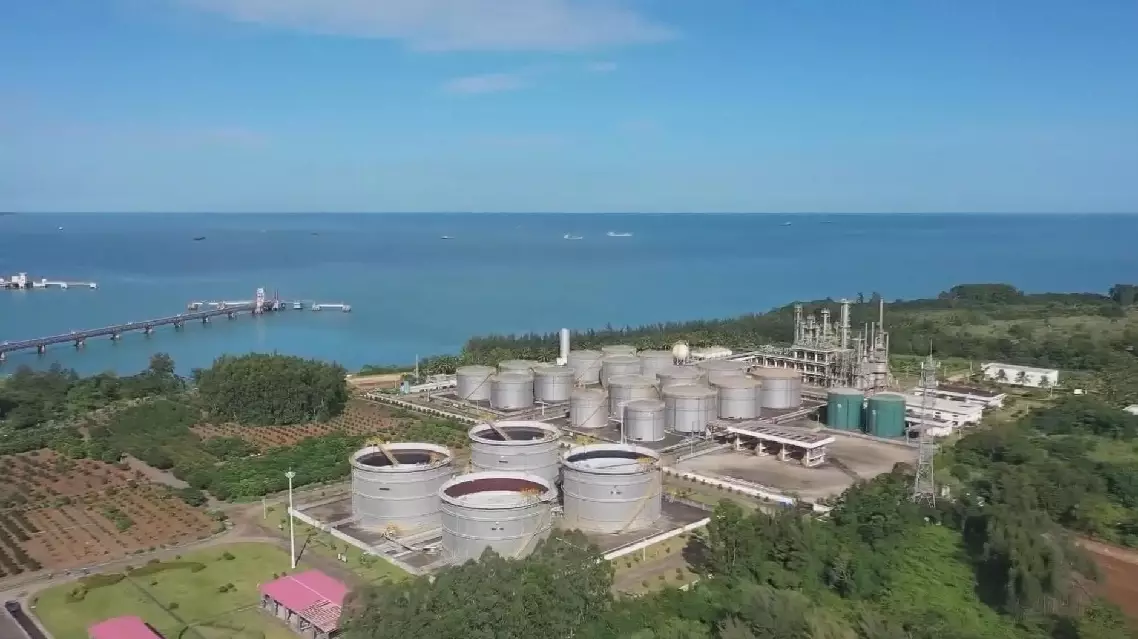
A carbon dioxide (CO2) capture and liquefaction facility now runs smoothly in south China's Hainan Free Trade Port (FTP), signaling a major technological advance in the region's push toward green and low-carbon development.
The facility, located in Hainan's Chengmai County, was developed by Southern Petroleum Exploration and Development Corporation -- a Hainan-based subsidiary of China National Petroleum Corporation (CNPC) -- which focuses on oil and gas exploration and new energy development.
It captures, purifies and liquefies CO2 extracted from associated oilfield gas, with daily output of liquid CO2 now surpassing 100 metric tonnes.
"To date, our pilot project has cumulatively stored 360,000 tonnes of CO2 while boosting oil and gas output by 150,000 tonnes. This is equivalent to offsetting the annual carbon emissions of about 150,000 cars," said Wang Haisheng, executive director of Southern Petroleum Exploration and Development Corporation.
Building on its successful industrialization of carbon capture, utilization and storage (CCUS), the corporation is now pioneering advanced carbon storage technologies.
By refining capture technology and implementing a multi-dimensional monitoring network, the project has achieved long-term and stable CO2 storage, solidifying the foundation for a safe and low-carbon energy system in Hainan.
CO2 capture, storage facility makes tech advance
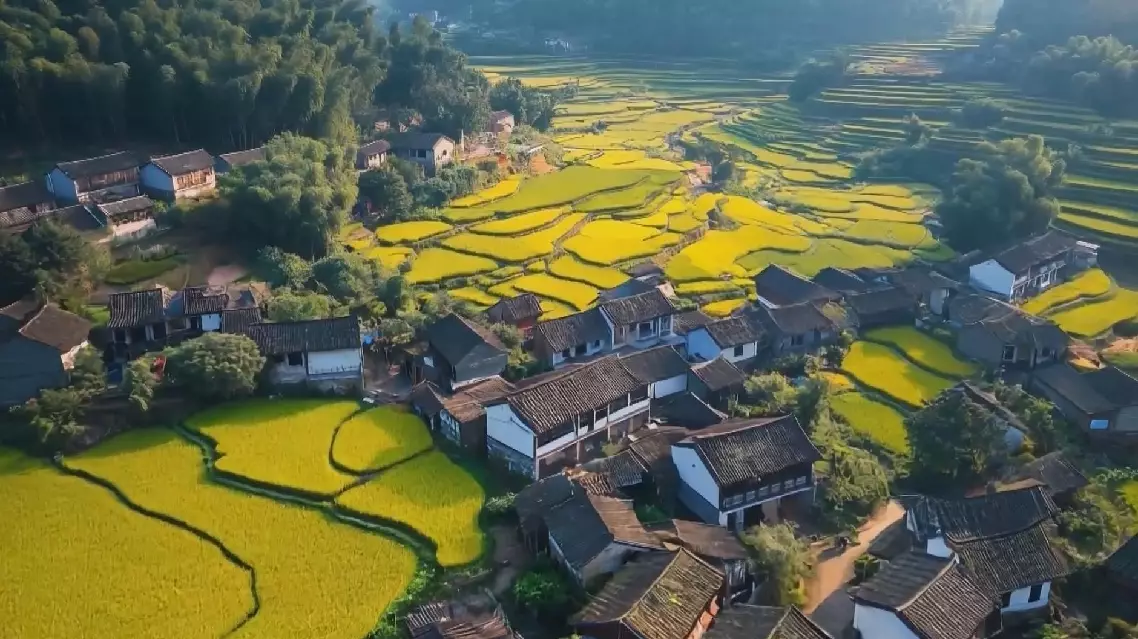
China has made substantial progress in consolidating its poverty elimination achievements and advancing comprehensive rural revitalization, according to a State Council report submitted to the country's top legislative body.
The report was presented for review at the 24th session of the Standing Committee of the 14th National People's Congress, which is ongoing in Beijing from August 25 to 28.
The report highlights significant improvements in rural infrastructure and public services over five consecutive years of sustained assistance. The development gap between former poverty-stricken areas and other regions continues to narrow, authorities said.
According to the report, per capita disposable income for rural residents in the counties that have been lifted out of poverty increased from 12,588 yuan (about 1872.5 U.S. dollars) in 2020 to 18,627 yuan in 2025, achieving an average annual growth rate of 8.2 percent. This figure outpaced the national rural average by 0.8 percentage points during the same period.
"During the 14th Five-Year Plan period (2021-2025), central fiscal funding for rural revitalization increased by 320 billion yuan compared to the 13th Five-Year Plan period. For households facing sudden risks of returning to poverty or falling into poverty due to disasters and other causes, assistance measures are implemented first, with supplementary procedures and paperwork completed afterward," said Maierdan Mugaiti, Vice Minister of Agriculture and Rural Affairs.
In the healthcare sector, a national dynamic monitoring system have been established to prevent impoverishment caused by medical expenses. The basic medical insurance participation rate among the formerly impoverished population and monitored households at risk of returning to poverty has remained stable at over 99 percent annually. Policies such as "treatment first, payment later" and "one-stop" settlement have been implemented to effectively guard against the risk of medical impoverishment.
Regarding social security, the government has improved subsistence allowances and special hardship support systems. All eligible rural residents facing difficulties will receive necessary social insurance and emergency assistance without exception.
China consolidates poverty alleviation gains as rural incomes climb steadily