PRISTINA, Kosovo (AP) — Voters in Kosovo cast ballots on Sunday in an early parliamentary election in hopes of breaking a political deadlock that has gripped the small Balkan nation for much of this year.
The snap vote was scheduled after Prime Minister Albin Kurti's governing Vetevendosje, or Self-Determination, party failed to form a government despite winning the most votes in a Feb. 9 election.
Click to Gallery
Supporters of Belgrade-backed Srpska Lista prepare to go at a polling station and cast their ballots in an early parliamentary election in the northern Serb-dominated part of ethnically divided town of Mitrovica, Kosovo, Sunday, Dec. 28, 2025. (AP Photo/Bojan Slavkovic)
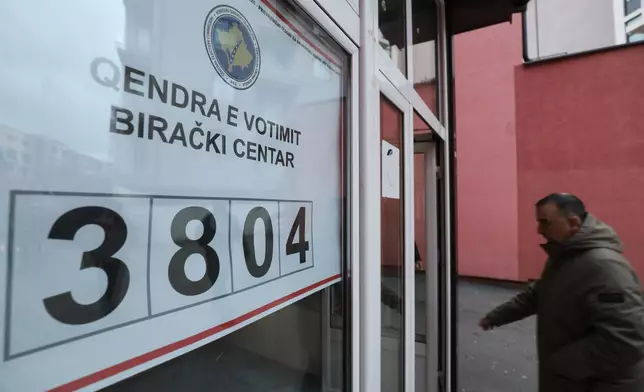
A voter arrives at a polling station in an early parliamentary election in the northern Serb-dominated part of ethnically divided town of Mitrovica, Kosovo, Sunday, Dec. 28, 2025. (AP Photo/Bojan Slavkovic)
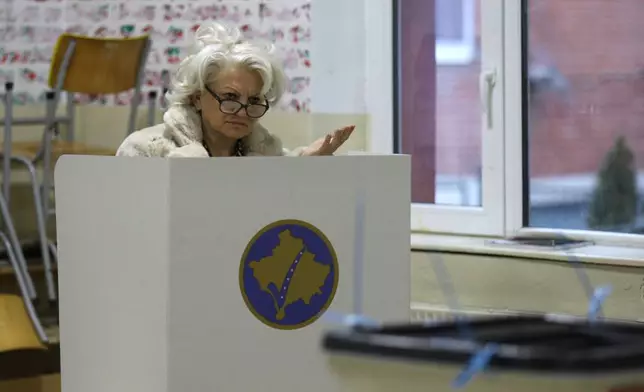
A voter prepares her ballot at a polling station in an early parliamentary election in the northern Serb-dominated part of ethnically divided town of Mitrovica, Kosovo, Sunday, Dec. 28, 2025. (AP Photo/Bojan Slavkovic)
People walk past a giant banner of the leader of VV (Selfdetermination) political party Albin Kurti, in the capital Pristina on Wednesday, Dec. 24, 2025. (AP Photo/Visar Kryeziu)
People waiting in the iluminated bus station with banners of LDK (Democratic League of Kosovo) leader Lumir Abdixhiku in capital Pristina on Thursday, Dec. 25, 2025. (AP Photo/Visar Kryeziu)
The deadlock marked the first time Kosovo could not form a government since it declared independence from Serbia in 2008 following a 1998-99 war that ended in a NATO intervention.
The prime minister's party is again the favorite in the race, but it is unclear whether it will manage to muster a majority this time in the 120-member parliament, after other mainstream parties refused an alliance.
After voting Sunday, Kurti urged Kosovo's 1.9 million voters to turn out in large numbers to grant “more legitimacy for our institutions.”
“Once the election result is known, we will do our best to constitute a new parliament as soon as possible and to proceed with the election of the new government,” he said.
According to Kosovo’s election laws, 20 parliamentary seats are automatically assigned to ethnic Serb representatives and other minority parties.
Another inconclusive vote would further deepen the crisis. Kosovo has not approved a budget for next year, sparking concern over the already poor economy in the country of 2 million people.
Lawmakers also are set to elect a new president in March as current President Vjosa Osmani’s mandate expires in early April. If this fails too, another snap election must be held.
The main opposition parties are the Democratic League of Kosovo and the Democratic Party of Kosovo. They have accused Kurti of authoritarianism and of alienating Kosovo’s U.S. and European Union allies since he came to power in 2021.
Lumir Abdixhiku from the Democratic League of Kosovo urged voters to "move away from the gloom, the deadlock and the division that has accompanied us for these years.”
A former political prisoner during Serbia’s rule in Kosovo, the 50-year-old Kurti has taken a tough stand in talks mediated by the European Union on normalizing relations with Belgrade. In response, the EU and the United States imposed punitive measures.
Kurti has promised to buy military equipment to boost security.
No reliable preelection polls have been published. Kurti's party at the previous election won around 42% of the votes while the two main rival parties had together around 40%. Analysts say that even the slightest changes in numbers on Sunday could prove decisive for the future distribution of power.
Ilmi Deliu, a 71-year-old pensioner from the capital, Pristina, said he hoped the election will bring a change or “we will end up in an abyss.”
"Young people no longer want to live here,” he said.
Tensions with restive ethnic Serbs in the north exploded in clashes in 2023 when scores of NATO-led peacekeepers were injured. In a positive step, ethnic Serb mayors this month took power peacefully there after a municipal vote.
Kurti has also agreed to accept third-country migrants deported from the United States as part of tough anti-immigration measures by the administration of President Donald Trump. One migrant has arrived so far, authorities have told The Associated Press.
Kosovo has one of the poorest economies in Europe. It is one of the six Western Balkan countries striving to eventually join the EU, but both Kosovo and Serbia have been told they must first normalize relations.

Supporters of Belgrade-backed Srpska Lista prepare to go at a polling station and cast their ballots in an early parliamentary election in the northern Serb-dominated part of ethnically divided town of Mitrovica, Kosovo, Sunday, Dec. 28, 2025. (AP Photo/Bojan Slavkovic)
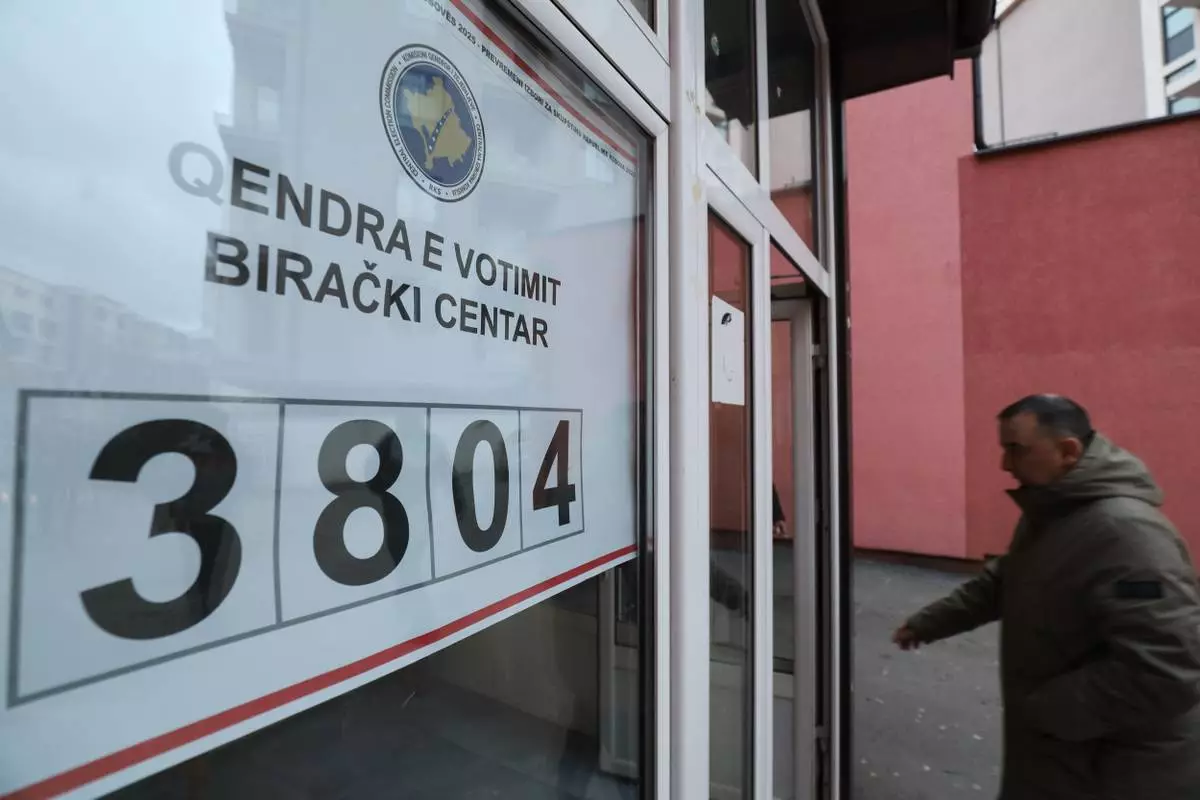
A voter arrives at a polling station in an early parliamentary election in the northern Serb-dominated part of ethnically divided town of Mitrovica, Kosovo, Sunday, Dec. 28, 2025. (AP Photo/Bojan Slavkovic)
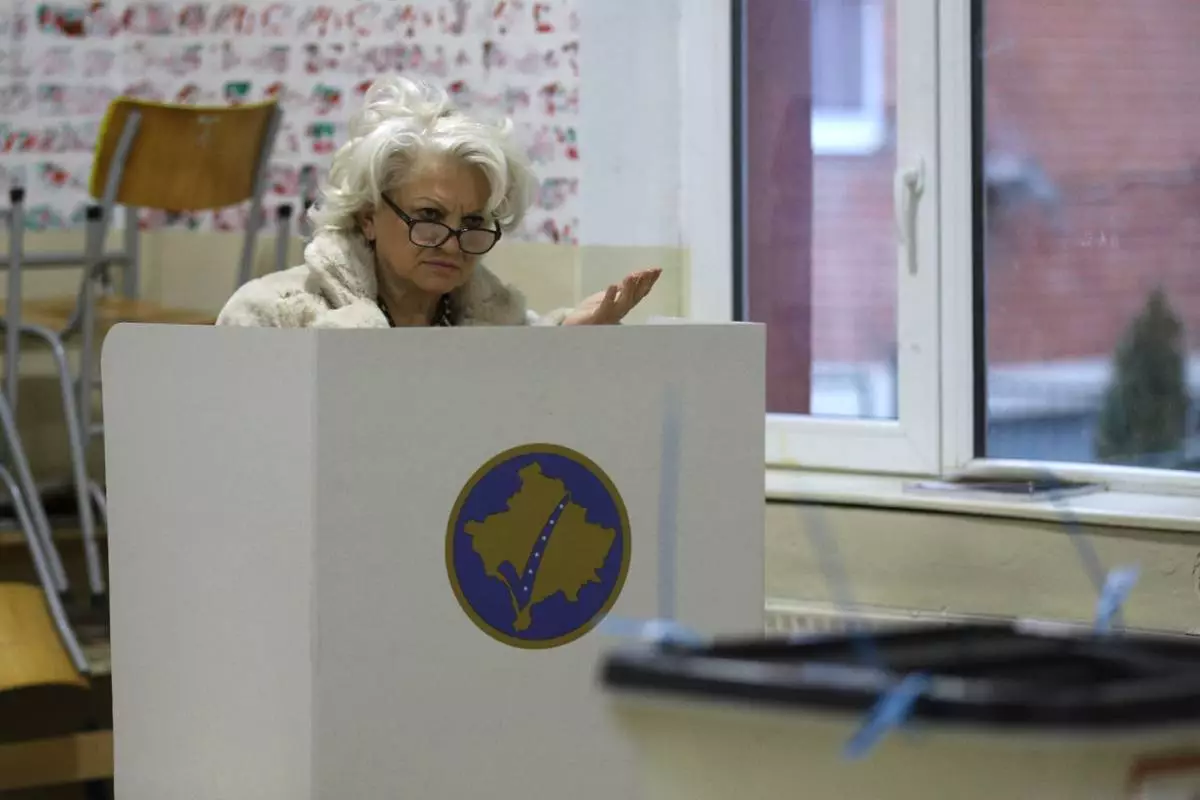
A voter prepares her ballot at a polling station in an early parliamentary election in the northern Serb-dominated part of ethnically divided town of Mitrovica, Kosovo, Sunday, Dec. 28, 2025. (AP Photo/Bojan Slavkovic)

People walk past a giant banner of the leader of VV (Selfdetermination) political party Albin Kurti, in the capital Pristina on Wednesday, Dec. 24, 2025. (AP Photo/Visar Kryeziu)

People waiting in the iluminated bus station with banners of LDK (Democratic League of Kosovo) leader Lumir Abdixhiku in capital Pristina on Thursday, Dec. 25, 2025. (AP Photo/Visar Kryeziu)
PARIS (AP) — Brigitte Bardot, the French 1960s sex symbol who became one of the greatest screen sirens of the 20th century and later a militant animal rights activist, has died. She was 91.
Bruno Jacquelin, of the Brigitte Bardot Foundation for the protection of animals, told The Associated Press that she died at her home in southern France, and would not provide a cause of death. He said no arrangements have yet been made for funeral or memorial services. She had been hospitalized last month.
Bardot became an international celebrity as a sexualized teen bride in the 1956 movie “And God Created Woman.” Directed by her then-husband, Roger Vadim, it triggered a scandal with scenes of the long-legged beauty dancing on tables naked.
At the height of a cinema career that spanned some 28 films and three marriages, Bardot came to symbolize a nation bursting out of bourgeois respectability. Her tousled, blond hair, voluptuous figure and pouty irreverence made her one of France’s best-known stars.
Such was her widespread appeal that in 1969 her features were chosen to be the model for “Marianne,” the national emblem of France and the official Gallic seal. Bardot’s face appeared on statues, postage stamps and even on coins.
Bardot’s second career as an animal rights activist was equally sensational. She traveled to the Arctic to blow the whistle on the slaughter of baby seals; she condemned the use of animals in laboratory experiments; and she opposed sending monkeys into space.
“Man is an insatiable predator,” Bardot told The Associated Press on her 73rd birthday, in 2007. “I don’t care about my past glory. That means nothing in the face of an animal that suffers, since it has no power, no words to defend itself.”
Her activism earned her compatriots’ respect and, in 1985, she was awarded the Legion of Honor, the nation’s highest honor.
Later, however, she fell from public grace as her animal protection diatribes took on a decidedly extremist tone and her far-right political views sounded racist as she frequently decried the influx of immigrants into France, especially Muslims.
She was convicted five times in French courts of inciting racial hatred. Notably, she criticized the Muslim practice of slaughtering sheep during annual religious holidays like Eid al-Adha.
Bardot’s 1992 marriage to fourth husband Bernard d’Ormale, a onetime adviser to former National Front leader Jean-Marie Le Pen, contributed to her political shift. She described the outspoken nationalist as a “lovely, intelligent man.”
In 2012, she caused controversy again when she wrote a letter in support of Marine Le Pen, the current leader of the party — now renamed National Rally — in her failed bid for the French presidency.
In 2018, at the height of the #MeToo movement, Bardot said in an interview that most actors protesting sexual harassment in the film industry were “hypocritical” and “ridiculous” because many played “the teases” with producers to land parts.
She said she had never had been a victim of sexual harassment and found it “charming to be told that I was beautiful or that I had a nice little ass.”
Brigitte Anne-Marie Bardot was born Sept. 28, 1934, to a wealthy industrialist. A shy, secretive child, she studied classical ballet and was discovered by a family friend who put her on the cover of Elle magazine at age 14.
Bardot once described her childhood as “difficult” and said her father was a strict disciplinarian who would sometimes punish her with a horse whip.
But it was French movie producer Vadim, whom she married in 1952, who saw her potential and wrote “And God Created Woman” to showcase her provocative sensuality, an explosive cocktail of childlike innocence and raw sexuality.
The film, which portrayed Bardot as a bored newlywed who beds her brother-in-law, had a decisive influence on New Wave directors Jean-Luc Godard and Francois Truffaut, and came to embody the hedonism and sexual freedom of the 1960s.
The film was a box-office hit, and it made Bardot a superstar. Her girlish pout, tiny waist and generous bust were often more appreciated than her talent.
“It’s an embarrassment to have acted so badly,” Bardot said of her early films. “I suffered a lot in the beginning. I was really treated like someone less than nothing.”
Bardot’s unabashed, off-screen love affair with co-star Jean-Louis Trintignant further shocked the nation. It eradicated the boundaries between her public and private life and turned her into a hot prize for paparazzi.
Bardot never adjusted to the limelight. She blamed the constant press attention for the suicide attempt that followed 10 months after the birth of her only child, Nicolas. Photographers had broke into her house only two weeks before she gave birth to snap a picture of her pregnant.
Nicolas’ father was Jacques Charrier, a handsome French actor whom she married in 1959 but who never felt comfortable in his role as Monsieur Bardot. Bardot soon gave up her son to his father, and later said she had been chronically depressed and unready for the duties of being a mother.
“I was looking for roots then,” she said in an interview. “I had none to offer.”
In her 1996 autobiography “Initiales B.B.,” she likened her pregnancy to “a tumor growing inside me,” and described Charrier as “temperamental and abusive.”
Bardot married her third husband, West German millionaire playboy Gunther Sachs, in 1966, but the relationship again ended in divorce three years later.
Among her films were “A Parisian” (1957); “In Case of Misfortune,” in which she starred in 1958 with screen legend Jean Gabin; “The Truth” (1960); “Private Life” (1962); “A Ravishing Idiot” (1964); “Shalako” (1968); “Women” (1969); “The Bear And The Doll” (1970); “Rum Boulevard” (1971); and “Don Juan” (1973).
With the exception of 1963’s critically acclaimed “Contempt,” directed by Godard, Bardot’s films were rarely complicated by plots. Often they were vehicles to display Bardot’s curves and legs in scanty dresses or frolicking nude in the sun.
“It was never a great passion of mine,” she said of filmmaking. “And it can be deadly sometimes. Marilyn (Monroe) perished because of it.”
Bardot retired to her Riviera villa in St. Tropez at the age of 39 in 1973 after “The Woman Grabber.”
She emerged a decade later with a new persona: An animal rights lobbyist, her face was wrinkled and her voice was deep following years of heavy smoking. She abandoned her jet-set life and sold off movie memorabilia and jewelry to create a foundation devoted exclusively to the prevention of animal cruelty.
Her activism knew no borders. She urged South Korea to ban the sale of dog meat and once wrote to U.S. President Bill Clinton asking why the U.S. Navy recaptured two dolphins it had released into the wild.
She attacked centuries-old French and Italian sporting traditions including the Palio, a free-for-all horse race, and campaigned on behalf of wolves, rabbits, kittens and turtle doves.
By the late 1990s, Bardot was making headlines that would lose her many fans. She was convicted and fined five times between 1997 and 2008 for inciting racial hatred in incidents inspired by her anger at Muslim animal slaughtering rituals.
“It’s true that sometimes I get carried away, but when I see how slowly things move forward ... and despite all the promises that have been made to me by all different governments put together — my distress takes over,” Bardot told the AP.
In 1997, several towns removed Bardot-inspired statues of Marianne — the bare-breasted statue representing the French Republic — after the actress voiced anti-immigrant sentiment. Also that year, she received death threats after calling for a ban on the sale of horse meat.
Bardot once said that she identified with the animals that she was trying to save.
“I can understand hunted animals because of the way I was treated,” Bardot said. “What happened to me was inhuman. I was constantly surrounded by the world press.”
Thomas Adamson in Paris contributed to this report. Retired Associated Press correspondent Elaine Ganley also contributed biographical material.
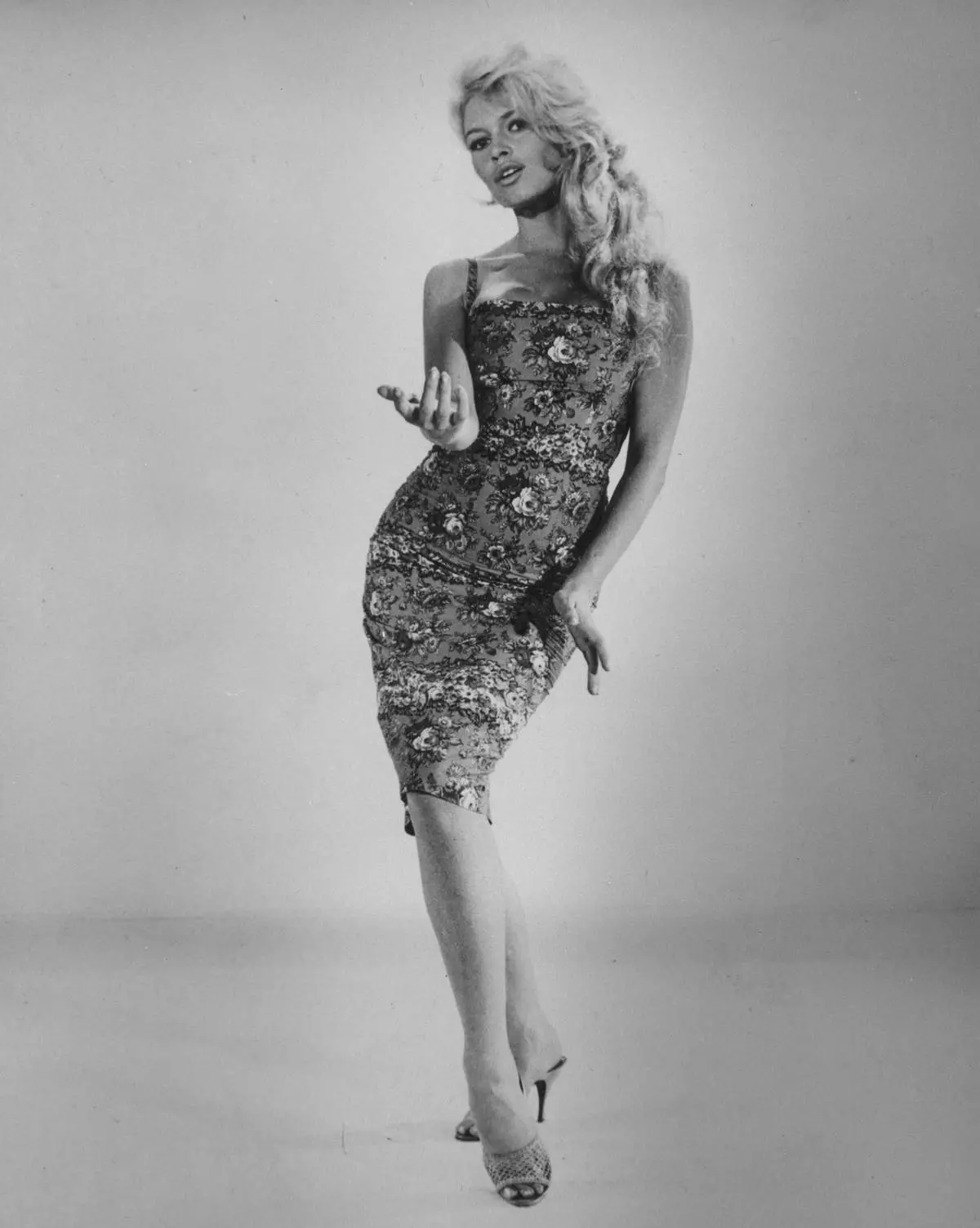
FILE - French actress Brigitte Bardot poses in character from the motion picture "Voulez-Vous Danser Avec Moi" (Do you Want to Dance With Me), on Sept. 10, 1959. (AP Photo/File)
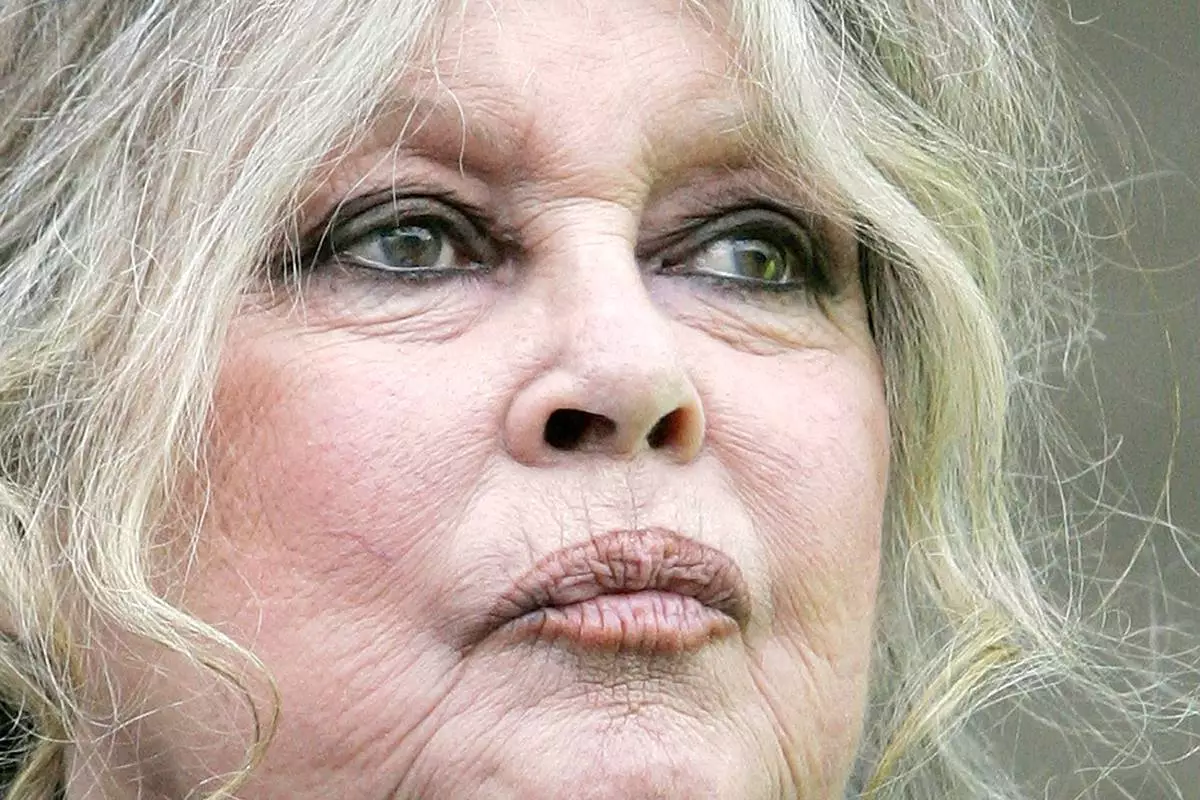
FILE - French film legend and animal rights activist Brigitte Bardot looks on prior to a march of various animal rights associations on March 24, 2007 in Paris. (AP Photo/Jacques Brinon, file)
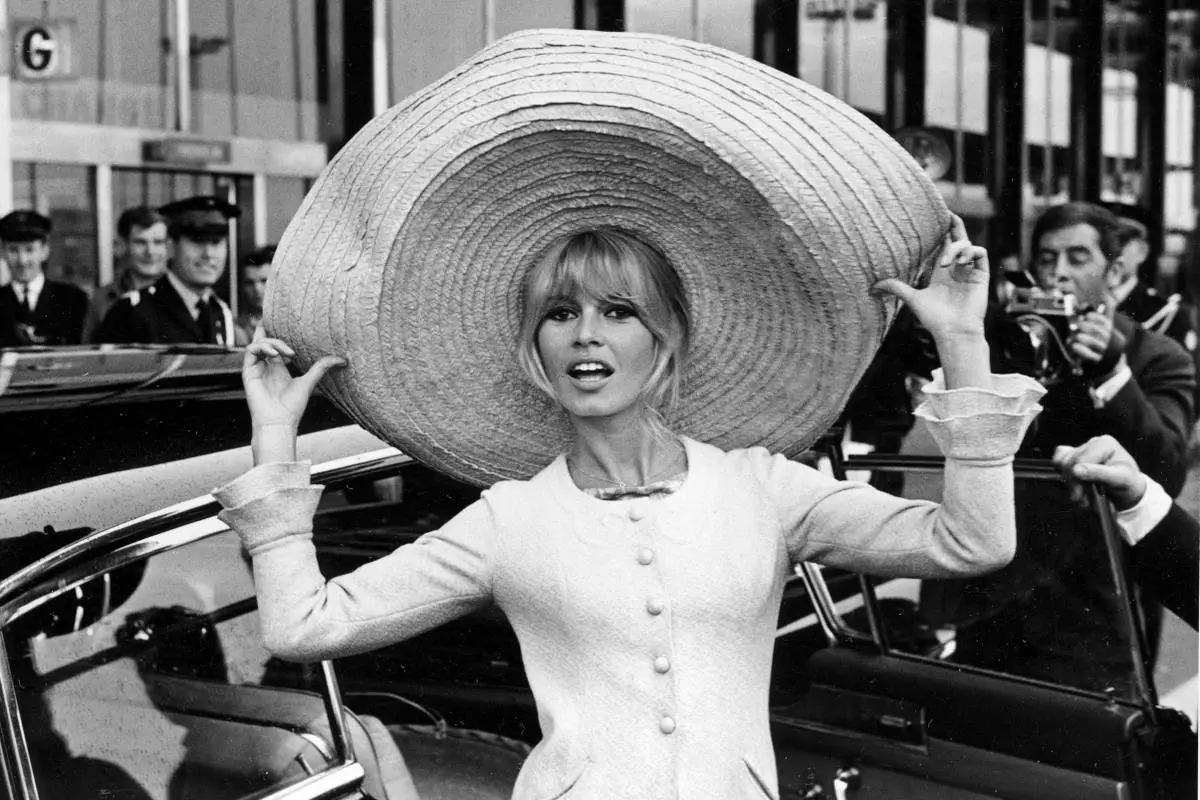
FILE - French actress Brigitte Bardot poses with a huge sombrero she brought back from Mexico, as she arrives at Orly Airport in Paris, France, on May 27, 1965. (AP Photo/File)