The Mianyang base of the China Conservation and Research Center for the Giant Panda will be put into trial operation starting Monday.
The Mianyang giant panda base is located at an ecological park in Mianyang City.
Spanning around 120 hectares, the facility can accommodate up to 22,000 visitors daily.
Designed with 54 specialized enclosures, the base integrates panda breeding, medical care, rescue operations, and public education into a single conservation hub.
In early November, 20 giant pandas, comprising eight females and 12 males, were relocated to the new site.
After more than a month of careful acclimatization and scientific care, all pandas have successfully adapted to their new environment and are reported to be in good conditions.

China's new giant panda base to be put on trial operation starting Monday
Chinese Foreign Minister Wang Yi said on Thursday that the issue of navigation through the Strait of Hormuz is a spillover effect of the current conflicts, noting the Strait of Hormuz remains unstable if the war doesn't end.
Wang, also a member of the Political Bureau of the Communist Party of China Central Committee, made the remarks in a phone conversation with Saudi Arabian Foreign Minister Faisal bin Farhan Al Saud.
The Saudi Arabian foreign minister briefed Wang on the latest developments of the Middle East situation, saying the war in Iran has caused severe impacts on countries in the region and the world at large.
Saudi Arabia attaches importance to China's important role in international affairs, and values high-level strategic cooperation with China, he said, adding that the kingdom is ready to further enhance consultation and coordination with China on platforms including the United Nations, to jointly push for the de-escalation of the situation and an end to the conflict.
Wang noted that the prolonged war in Iran, which has lasted for over a month, has caused enormous casualties and losses, and undermined the security and stability of Saudi Arabia and other Gulf countries, over which China expressed concerns.
Wang said China and Pakistan recently jointly issued a five-point initiative for restoring peace and stability in the Gulf and Middle East region, which includes safeguarding the sovereignty and security of the Gulf states, stopping attacks on civilians and non-military targets, and ensuring the security of shipping lanes.
Wang said the top priority is to focus on cessation of hostilities. Actions by the UN Security Council should avoid escalating confrontations and should not legitimize unauthorized military operations; otherwise, it will lead to endless trouble, with small and medium-sized countries being the first to bear the brunt, he added.
Wang noted that China appreciates Saudi Arabia's commitment to promoting peace and ceasefire, and stands ready to work with Saudi Arabia to make efforts for the early restoration of regional peace.
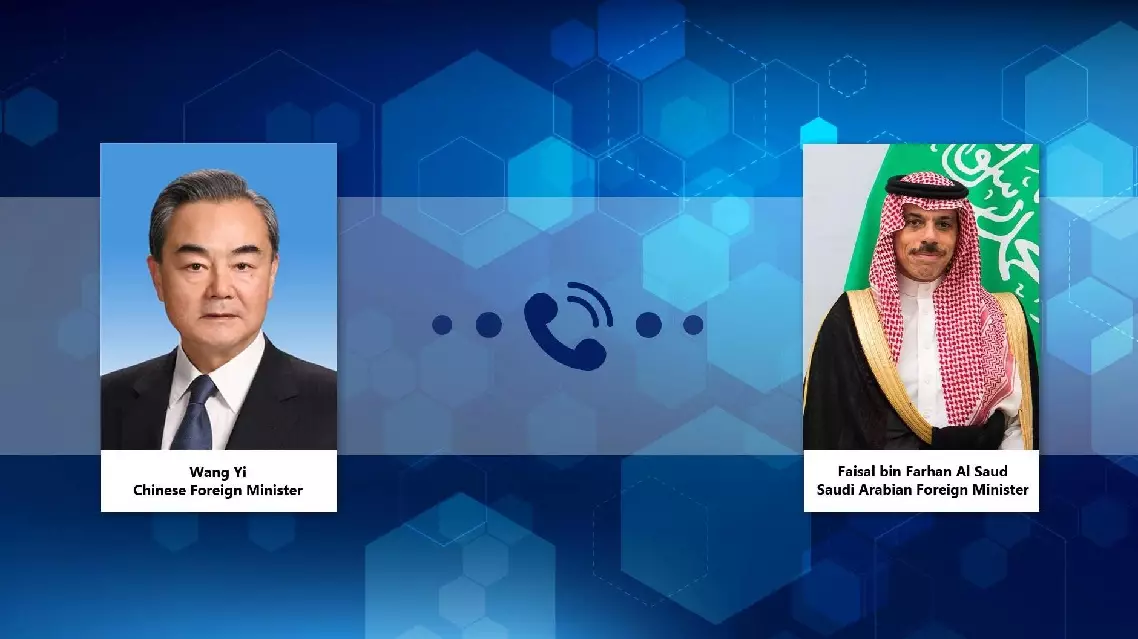
Chinese FM says Strait of Hormuz remains unstable if war doesn't end