Skip to Content Facebook Feature Image

The moon and sun figure big in the new year's lineup of cosmic wonders

News

The moon and sun figure big in the new year's lineup of cosmic wonders
News

News

The moon and sun figure big in the new year's lineup of cosmic wonders

2025-12-28 22:10 Last Updated At:22:20

CAPE CANAVERAL, Fla. (AP) — The moon and sun share top billing in 2026.

Kicking off the year’s cosmic wonders is the moon, drawing the first astronauts to visit in more than 50 years as well as a caravan of robotic lunar landers including Jeff Bezos’ new supersized Blue Moon. A supermoon looms on Jan. 3 and an astronomical blue moon is on the books for May.

The sun will also generate buzz with a ring-of-fire eclipse at the bottom of the world in February and a total solar eclipse at the top of the world in August. Expect more auroras in unexpected places, though perhaps not as frequently as the past couple years.

And that comet that strayed into our turf from another star? While still visible with powerful backyard telescopes, the recently discovered comet known as 3I/Atlas is fading by the day after swinging past Earth in December. Jupiter is next on its dance card in March. Once the icy outsider departs our solar system a decade from now, it will be back where it belongs in interstellar space.

It’s our third known interstellar visitor. Scientists anticipate more.

“I can’t believe it’s taken this long to find three,” said NASA’s Paul Chodas, who’s been on the lookout since the 1980s. And with ever better technology, “the chance of catching another interstellar visitor will increase.”

Here’s a rundown on what the universe has in store for us in 2026:

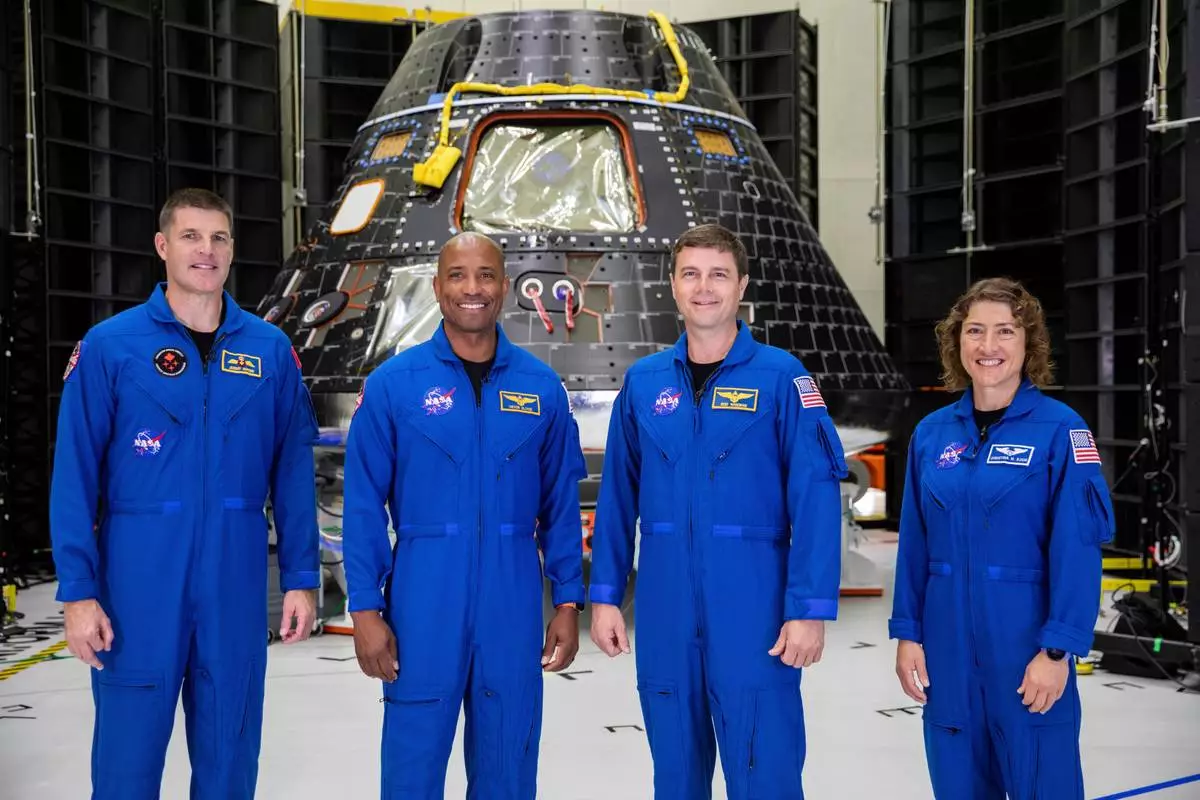
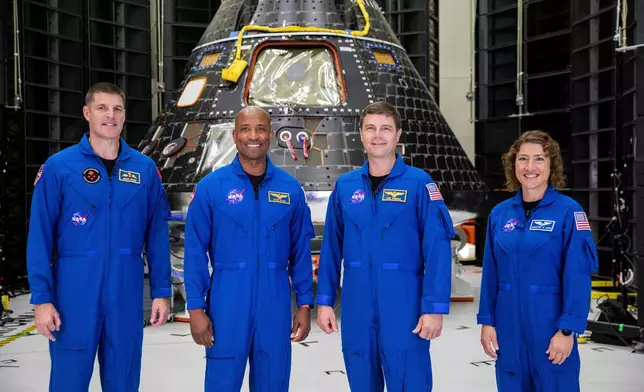
NASA’s upcoming moonshot commander Reid Wiseman said there’s a good chance he and his crew will be the first to lay eyeballs on large swaths of the lunar far side that were missed by the Apollo astronauts a half-century ago. Their observations could be a boon for geologists, he noted, and other experts picking future landing sites.

Launching early in the year, the three Americans and one Canadian will zip past the moon, do a U-turn behind it, then hustle straight back to Earth to close out their 10-day mission. No stopping for a moonwalk — the boot prints will be left by the next crew in NASA’s Artemis lunar exploration program.

More robotic moon landings are on the books by China as well as U.S. companies. Early in the year, Amazon founder Bezos is looking for his Blue Origin rocket company to launch a prototype of the lunar lander it’s designing for NASA’s astronauts. This Blue Moon demo will stand 26 feet (8 meters), taller than what delivered Apollo’s 12 moonwalkers to the lunar surface. The Blue Moon version for crew will be almost double that height.

Back for another stab at the moon, Astrobotic Technology and Intuitive Machines are also targeting 2026 landings with scientific gear. The only private entity to nail a lunar landing, Firefly Aerospace, will aim for the moon’s far side in 2026.

China is targeting the south polar region in the new year, sending a rover as well as a so-called hopper to jump into permanently shadowed craters in search of ice.

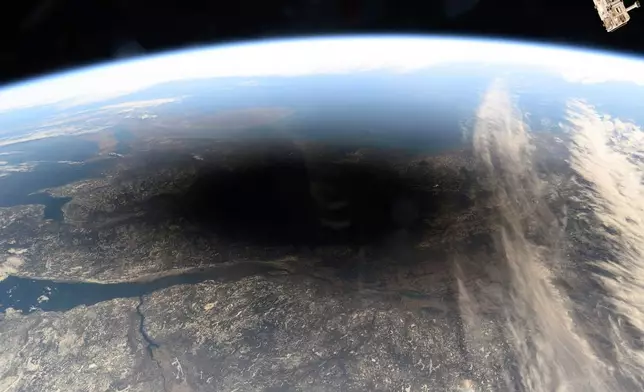
The cosmos pulls out all the stops with a total solar eclipse on Aug. 12 that will begin in the Arctic and cross over Greenland, Iceland and Spain. Totality will last two minutes and 18 seconds as the moon moves directly between Earth and the sun to blot out the latter. By contrast, the total solar eclipse in 2027 will offer a whopping 6 1/2 minutes of totality and pass over more countries.

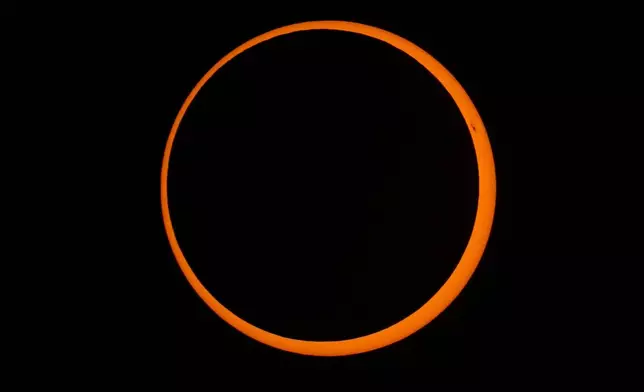
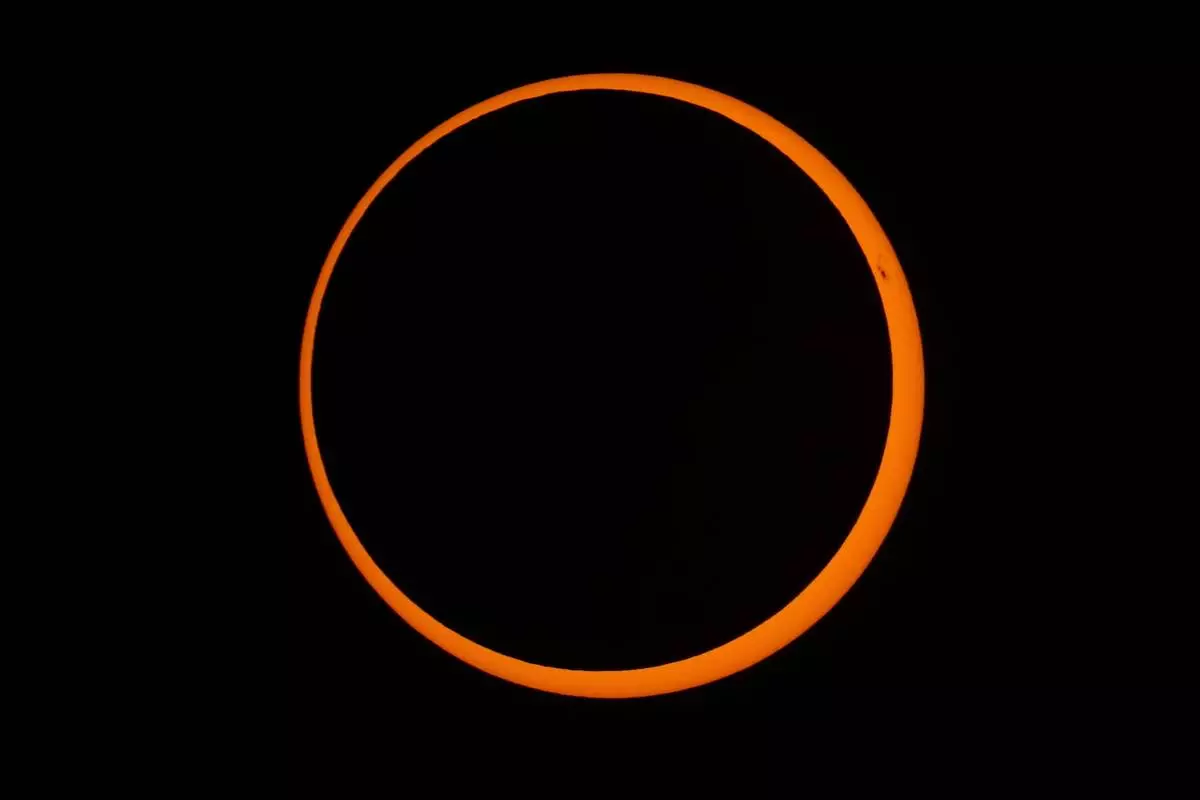
For 2026, the warm-up act will be a ring-of-fire eclipse in the Antarctic on Feb. 17, with only a few research stations in prime viewing position. South Africa and southernmost Chile and Argentina will have partial viewing. A total lunar eclipse will follow two weeks after February’s ring of fire, with a partial lunar eclipse closing out the action at the end of August.

Six of the solar system’s eight planets will prance across the sky in a must-see lineup around Feb. 28. A nearly full moon is even getting into the act, appearing alongside Jupiter. Uranus and Neptune will require binoculars or telescopes. But Mercury, Venus, Jupiter and Saturn should be visible with the naked eye shortly after sunset, weather permitting, though Mercury and Venus will be low on the horizon.

Mars will be the lone no-show. The good news is that the red planet will join a six-planet parade in August, with Venus the holdout.

Three supermoons will lighten up the night skies in 2026, the stunning result when a full moon inches closer to Earth than usual as it orbits in a not-quite-perfect circle. Appearing bigger and brighter, supermoons are a perennial crowd pleaser requiring no equipment, only your eyes.

The year's first supermoon in January coincides with a meteor shower, but the moonlight likely will obscure the dimmer fireballs. The second supermoon of 2026 won’t occur until Nov. 24, with the third — the year’s final and closest supermoon — occurring the night of Dec. 23 into Dec. 24. This Christmas Eve supermoon will pass within 221,668 miles (356,740 kilometers) of Earth.

The sun is expected to churn out more eruptions in 2026 that could lead to geomagnetic storms here on Earth, giving rise to stunning aurora. Solar action should start to ease, however, with the 11-year solar cycle finally on the downslide.

Space weather forecasters like Rob Steenburgh at the National Oceanic and Atmospheric Administration can’t wait to tap into all the solar wind measurements coming soon from an observatory launched in the fall.

“2026 will be an exciting year for space weather enthusiasts,” he said in an email, with this new spacecraft and others helping scientists “better understand our nearest star and forecast its impacts.”

The Associated Press Health and Science Department receives support from the Howard Hughes Medical Institute’s Department of Science Education and the Robert Wood Johnson Foundation. The AP is solely responsible for all content.

FILE - The moon moves across the sun during a "ring of fire" annular solar eclipse seen from Tahai, Rapa Nui (Easter Island), Chile, on Wednesday, Oct. 2, 2024. (AP Photo/Esteban Felix, File)
FILE - The moon moves across the sun during a "ring of fire" annular solar eclipse seen from Tahai, Rapa Nui (Easter Island), Chile, on Wednesday, Oct. 2, 2024. (AP Photo/Esteban Felix, File)

FILE - In this photo provided by NASA, Artemis II crew members, from left, Jeremy Hansen, Victor Glover, Reid Wiseman and Christina Koch, stand together at NASA's Kennedy Space Center in Florida, in front of an Orion crew module on Tuesday, Aug. 8, 2023. (Kim Shiflett/NASA via AP, File)
FILE - In this photo provided by NASA, Artemis II crew members, from left, Jeremy Hansen, Victor Glover, Reid Wiseman and Christina Koch, stand together at NASA's Kennedy Space Center in Florida, in front of an Orion crew module on Tuesday, Aug. 8, 2023. (Kim Shiflett/NASA via AP, File)
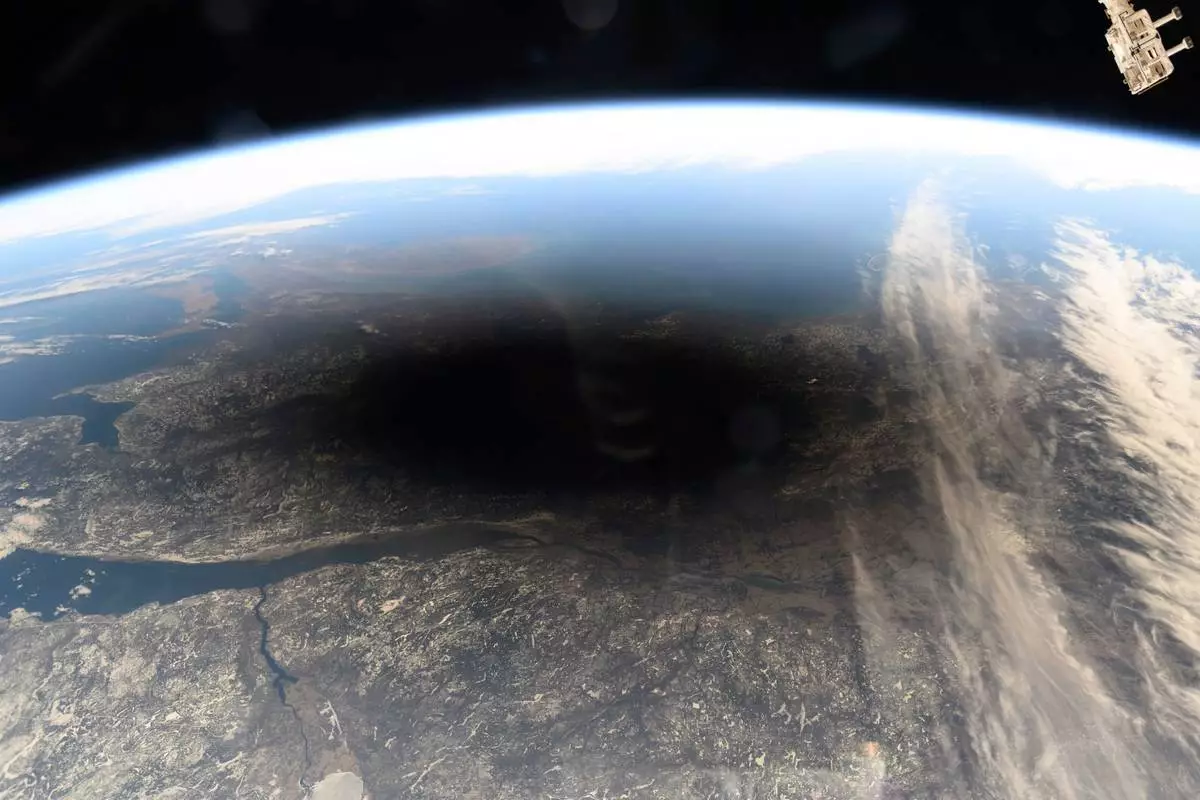
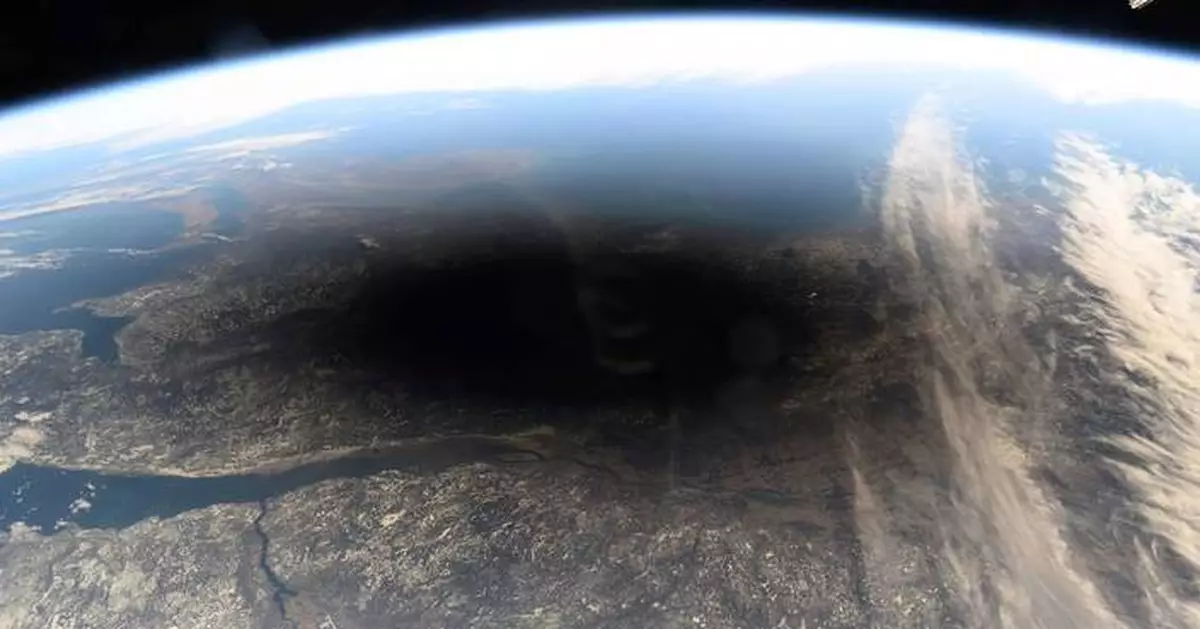
FILE - This photo provided by NASA shows the Moon's shadow covering portions of Canada and the U.S. during a total solar eclipse as seen from the International Space Station on Monday, Aug. 8, 2024. (NASA via AP, File)


FILE - This photo provided by NASA shows the Moon's shadow covering portions of Canada and the U.S. during a total solar eclipse as seen from the International Space Station on Monday, Aug. 8, 2024. (NASA via AP, File)

WEST PALM BEACH, Fla. (AP) — President Donald Trump will host his Ukrainian counterpart, Volodymyr Zelenskyy, on Sunday to try to close out a peace agreement that would end nearly four years of war sparked by Moscow’s invasion of Ukraine. Russia intensified its attacks on Ukraine's capital and elsewhere in the days before the meeting.

The two will meet at Mar-a-Lago, Trump’s private club in Palm Beach, Florida, where the U.S. president is spending the holidays. Zelenskyy said the two planned to discuss security and economic agreements and he will raise “territorial issues” as Moscow and Kyiv remain fiercely at odds over the fate of the Donbas region in eastern Ukraine.

In overnight developments, three guided aerial bombs launched by Russia struck private homes in the eastern city of Sloviansk, according to the head of the local military administration, Vadym Lakh. Three people were injured and one man died, Lakh said in a post on the Telegram messenger app.

The strike came the day after Russia attacked Ukraine’s capital with ballistic missiles and drones on Saturday, killing at least one person and wounding 27, a day before planned talks between the leaders of Ukraine and the United States, Ukrainian authorities said. Explosions boomed across Kyiv as the attack began in the early morning and continued for hours.

Elsewhere, power line repairs aimed to lessen the risk of a nuclear accident have started near Ukraine’s Zaporizhzhia nuclear power plant, after the International Atomic Energy Agency brokered a local ceasefire, the agency said, citing its director general, Rafael Grossi.

In a post on X, the agency said “crucial” works are expected to last a few days. Russian forces have occupied the Zaporizhzhia plant since the early days of the full-scale war. Zelenskyy has said the fate of the plant is one of the key issues to be resolved during the U.S.-led peace negotiations with Russia.

“Ukraine is willing to do whatever it takes to stop this war,” Zelenskyy posted Saturday on X. “We need to be strong at the negotiating table.”

In response to the attacks, he wrote: “We want peace, and Russia demonstrates a desire to continue the war. If the whole world — Europe and America — is on our side, together we will stop" Russian President Vladimir Putin.

In a meeting with Canadian Prime Minister Mark Carney in Halifax, Nova Scotia, on Saturday, Zelenskyy said the key to peace is “pressure on Russia and sufficient, strong support for Ukraine.” To that end, Carney announced $2.5 billion Canadian (US$1.8 billion) more in economic assistance from his government to help Ukraine rebuild.

Denouncing the “barbarism” of Russia’s latest attacks on Kyiv, Carney credited both Zelenskyy and Trump with creating the conditions for a “just and lasting peace” at a crucial moment.

Trump and Zelenskyy sitting down face-to-face also underscored the apparent progress made by Trump’s top negotiators in recent weeks as the sides traded draft peace plans and continued to shape a proposal to end the fighting. Zelenskyy told reporters Friday that the 20-point draft proposal negotiators have discussed is “about 90% ready” — echoing a figure, and the optimism, that U.S. officials conveyed when Trump’s chief negotiators met with Zelenskyy in Berlin earlier this month.

During the recent talks, the U.S. agreed to offer certain security guarantees to Ukraine similar to those offered to other members of NATO. The proposal came as Zelenskyy said he was prepared to drop his country’s bid to join the security alliance if Ukraine received NATO-like protection that would be designed to safeguard it against future Russian attacks.

Zelenskyy also spoke on Christmas Day with U.S. special envoy Steve Witkoff and Jared Kushner, Trump’s son-in-law. The Ukrainian leader said in a post on X that they discussed “certain substantive details of the ongoing work” and cautioned in a subsequent post that “there is still work to be done on sensitive issues” and “the weeks ahead may also be intensive.”

The U.S. president has been working to end the war in Ukraine for much of his first year back in office, showing irritation with both Zelenskyy and Putin while publicly acknowledging the difficulty of ending the conflict. Long gone are the days when, as a candidate in 2024, he boasted that he could resolve the fighting in a day.

After hosting Zelenskyy at the White House in October, Trump demanded that both Russia and Ukraine halt fighting and “stop at the battle line,” implying that Moscow should be able to keep the territory it has seized from Ukraine.

Zelenskyy said last week that he would be willing to withdraw troops from Ukraine’s eastern industrial heartland as part of a plan to end the war, if Russia also pulls back and the area becomes a demilitarized zone monitored by international forces.

Kremlin spokesman Dmitry Peskov told reporters Friday that the Kremlin had already been in contact with U.S.

“It was agreed upon to continue the dialogue,” he said.

Putin has publicly said he wants all the areas in four key regions that have been captured by his forces, as well as the Crimean Peninsula, illegally annexed in 2014, to be recognized as Russian territory. He also has insisted that Ukraine withdraw from some areas in eastern Ukraine that Moscow’s forces haven’t captured. Kyiv has publicly rejected all those demands.

The Kremlin also wants Ukraine to abandon its bid to join NATO. It warned that it wouldn’t accept the deployment of any troops from members of the military alliance and would view them as a “legitimate target.”

Putin also has said Ukraine must limit the size of its army and give official status to the Russian language, demands he has made from the outset of the conflict.

Putin’s foreign affairs adviser, Yuri Ushakov, told the business daily Kommersant this month that Russian police and national guard would stay in parts of Donetsk -– one of the two major areas, along with Luhansk, that make up the Donbas region — even if they become a demilitarized zone under a prospective peace plan.

Ushakov cautioned that trying to reach a compromise could take a long time. He said U.S. proposals that took into account Russian demands had been “worsened” by alterations proposed by Ukraine and its European allies.

Trump has been somewhat receptive to Putin’s demands, making the case that the Russian president can be persuaded to end the war if Kyiv agrees to cede Ukrainian land in the Donbas region and if Western powers offer economic incentives to bring Russia back into the global economy.

Kim reported from Washington and Morton from London. Associated Press writers Illia Novikov in Kyiv and Rob Gillies in Toronto contributed to this report.

A psychologist of a rescue team helps en elderly woman at the hospice which was damaged after a Russian strike on Kyiv, Ukraine, on Saturday, Dec. 27, 2025. (AP Photo/Evgeniy Maloletka)

A psychologist of a rescue team helps en elderly woman at the hospice which was damaged after a Russian strike on Kyiv, Ukraine, on Saturday, Dec. 27, 2025. (AP Photo/Evgeniy Maloletka)

Rescuers put fragments of a body of the victim into a plastic bag after Russian drone hit a multi-storey apartment building during massive missile and drone attack in Kyiv, Ukraine, Saturday, Dec. 27, 2025. (AP Photo/Efrem Lukatsky)

Rescuers put fragments of a body of the victim into a plastic bag after Russian drone hit a multi-storey apartment building during massive missile and drone attack in Kyiv, Ukraine, Saturday, Dec. 27, 2025. (AP Photo/Efrem Lukatsky)

President Donald Trump pumps his fist at Christmas Eve dinner at his Mar-a-Lago club, Wednesday, Dec. 24, 2025, in Palm Beach, Fla. (AP Photo/Alex Brandon)

President Donald Trump pumps his fist at Christmas Eve dinner at his Mar-a-Lago club, Wednesday, Dec. 24, 2025, in Palm Beach, Fla. (AP Photo/Alex Brandon)

Prime Minister Mark Carney, left, and Ukrainian President Volodymyr Zelenskyy hold a news conference in Halifax, N.S. on Saturday, Dec. 27, 2025.(Riley Smith /The Canadian Press via AP)

Prime Minister Mark Carney, left, and Ukrainian President Volodymyr Zelenskyy hold a news conference in Halifax, N.S. on Saturday, Dec. 27, 2025.(Riley Smith /The Canadian Press via AP)

Ukraine's President Volodymyr Zelenskyy speaks during a media conference at the EU Summit in Brussels, Thursday, Dec. 18, 2025. (AP Photo/Geert Vanden Wijngaert)

Ukraine's President Volodymyr Zelenskyy speaks during a media conference at the EU Summit in Brussels, Thursday, Dec. 18, 2025. (AP Photo/Geert Vanden Wijngaert)

Recommended Articles