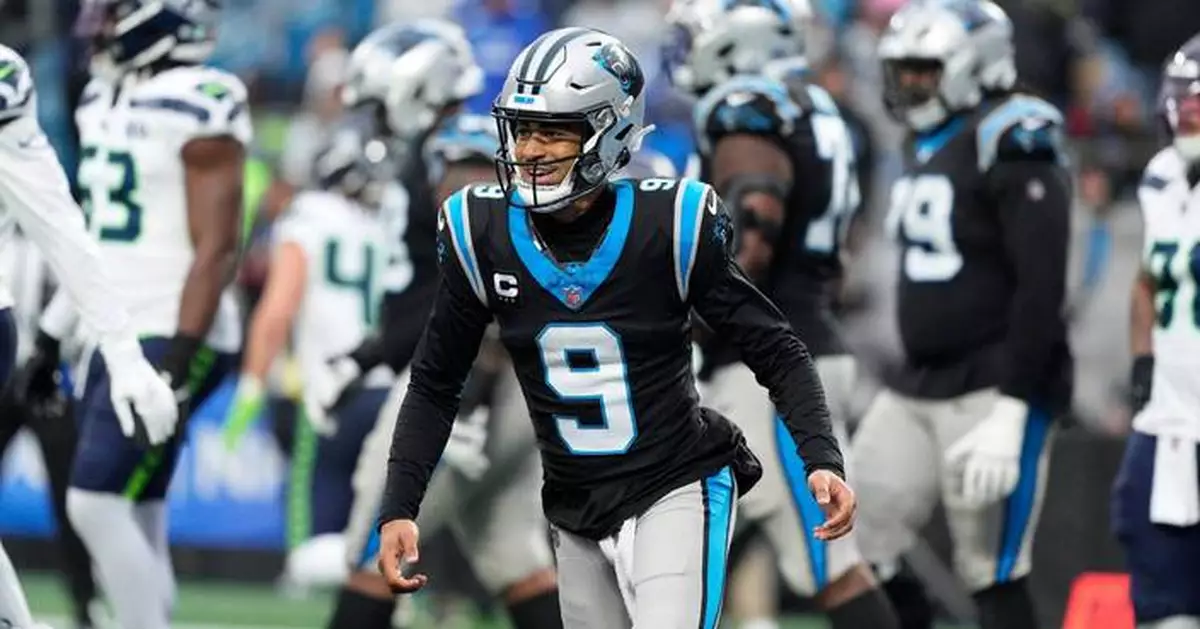
CHARLOTTE, N.C. (AP) — Bryce Young could see more man-to-man coverage looks from the Tampa Bay Buccaneers on Saturday in a game that could determine the NFC South champion.
On Sunday, the Seattle Seahawks surprised the Panthers (8-8) by employing mostly man coverage against Carolina's wide receivers and it worked to near perfection.
Click to Gallery
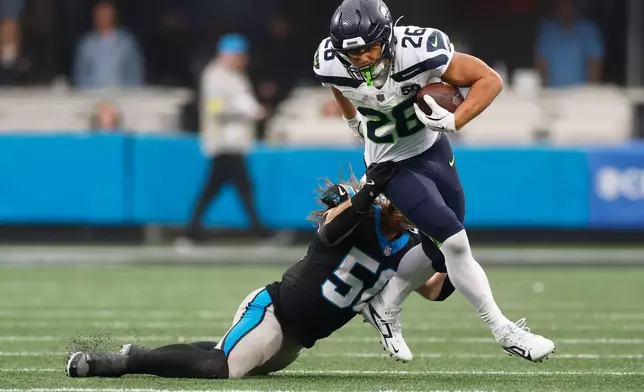
Seattle Seahawks running back Zach Charbonnet. is tackled by Carolina Panthers linebacker Christian Rozeboom during the second half of an NFL football game, Sunday, Dec. 28, 2025, in Charlotte, N.C. (AP Photo/Rusty Jones)
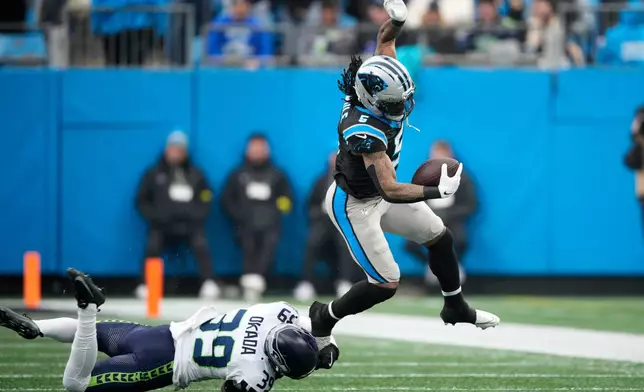
Carolina Panthers running back Rico Dowdle is tackled by Seattle Seahawks safety Ty Okada during the first half of an NFL football game, Sunday, Dec. 28, 2025, in Charlotte, N.C. (AP Photo/Jacob Kupferman)
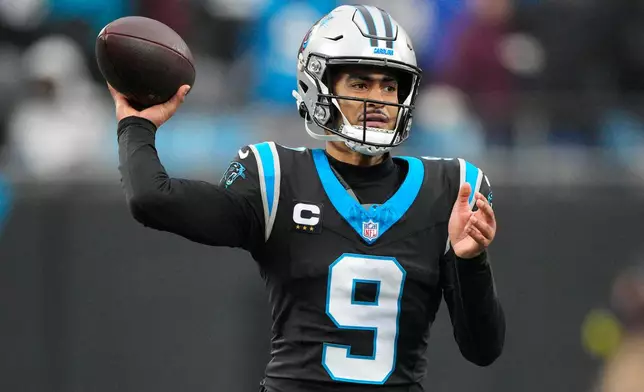
Carolina Panthers quarterback Bryce Young passes against the Seattle Seahawks during the second half of an NFL football game, Sunday, Dec. 28, 2025, in Charlotte, N.C. (AP Photo/Jacob Kupferman)
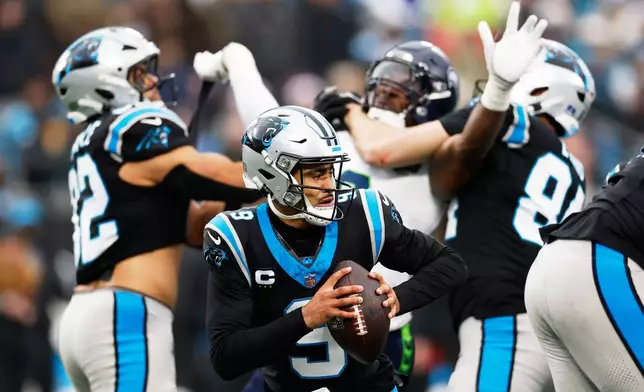
Carolina Panthers quarterback Bryce Young passes against the Seattle Seahawks during the second half of an NFL football game, Sunday, Dec. 28, 2025, in Charlotte, N.C. (AP Photo/Rusty Jones)
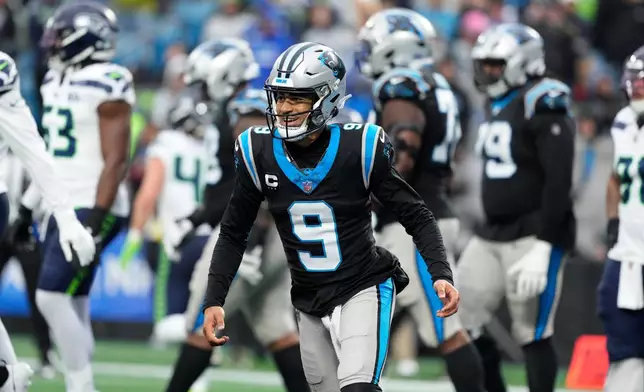
Carolina Panthers quarterback Bryce Young celebrates after scoring against the Seattle Seahawks during the second half of an NFL football game, Sunday, Dec. 28, 2025, in Charlotte, N.C. (AP Photo/Jacob Kupferman)
Young was limited to 54 yards passing, completed 14 of 24 passes and was intercepted once as the Panthers lost 27-10 and squandered an opportunity to wrap up their first division title in 10 years.
Carolina's top three receivers — Tetairoa McMillan, Xavier Legette and Jalen Coker — struggled to get open and combined for just four catches and 24 yards.
In this copycat league, it's conceivable the Buccaneers might employ a similar strategy Saturday — provided they feel they have the personnel to do it.
Young had one of his better games against the Buccaneers on Dec. 21, completing 21 of 32 passes for 191 yards and two touchdowns in a 23-20 win. He led a winning field goal drive in the fourth quarter that gave the Panthers the upper hand in the race for the NFC South title.
“They played a little bit more man than they had shown on film," Panthers coach Dave Canales said of the Seahawks. “So where we’re trying to attack some of the fire zones and different things like that, we shifted to some more run-away type of concepts in case they threw the man out there.”
Carolina couldn't get anything going downfield and the team's longest pass completion was 8 yards.
“They did a great job having discipline, staying deep on a lot of our concepts,” Canales said. “What you saw is a lot of balls go to the checkdowns in different ways. They rallied up and tackled us really well. We didn’t end up getting a lot of yards out of some of those checkdowns. ... We called some passes to try to go down the field, and they did a great job of making the ball get to the checkdown and rallied up and made some tackles.”
Young credited the Seahawks with employing a successful defensive strategy and took ownership of the team's struggles moving the ball through the air.
“Credit to them,” Young said. “They made adjustments. They came out with a game plan. They did a better job of executing it than we did. That’s the league. You’re going to go up against different schemes. People are going to make adjustments and we didn’t do a good enough job of being able to react to that and counter it. We’ll watch the film. We’ll learn and grow from it. That’s the NFL.”
Carolina can snap a seven-year playoff drought with a win Saturday.
The Panthers can still capture the division title with a loss, but would need Atlanta to beat the Los Angeles Rams on Monday night and New Orleans next Sunday to give them the three-way head-to-head tiebreaker with Tampa Bay and Atlanta.
The Panthers are a combined 3-0 against the Bucs and Falcons.
Despite allowing 27 points, the Panthers defense didn't have a bad game.
Carolina held Sam Darnold and the high-powered Seahawks to just 3 points in the first half, but allowed three touchdowns in the second half working with short fields due to turnovers. Seattle's three touchdown drives in the game were 21, 29 and 25 yards.
The Panthers forced two turnovers, including an interception of Darnold in the end zone.
Carolina made a push into the playoff race due to a dominant running game led by Rico Dowdle and Chuba Hubbard. But the run game has lacked punch in recent weeks.
Dowdle was still productive Sunday, rushing for 59 yards on 12 carries, a 4.9-yard average. But he isn't getting the quantity of carries he had earlier in the season and has struggled to get into a rhythm. Hubbard had 12 yards on four carries and his costly fumble in the third quarter led to a Seattle touchdown and put his team in a huge hole.
It'll be interesting to see if Hubbard's turnover will prompt Canales to play Dowdle more moving forward.
With two-time Pro Bowler Jaycee Horn on the other side of the defense, cornerback Mike Jackson is seeing plenty of balls thrown his way — and he's responding well.
Jackson continued his breakout season with another strong game against his former team Sunday, recording a team-high 11 tackles with one interception in the corner of the end zone and two pass breakups. Jackson leads the league with 19 passes defensed.
Carolina's run defense struggled against the Seahawks, allowing Zach Charbonnet to rush for 110 yards and two touchdowns on 18 carries. As a team, the Seahawks racked up 163 yards on the ground and averaged 4.5 yards per carry.
The Panthers lost starting tight end Ja'Tavion Sanders to a broken ankle. That means Tommy Tremble and Mitchell Evans will see more playing time. However, the tight end position has not been a huge part of the team's passing game this season. The news came after linebacker Trevin Wallace was placed on injured reserve before the Seattle game.
1 — The Panthers were just 1 of 11 on third-down conversions vs. Seattle. They were 2 of 5 on fourth downs.
The Panthers take on the Buccaneers. They lost four straight games to their former QB Baker Mayfield since he signed with rival Tampa Bay in 2023 before finally beating him two weeks ago in Charlotte.
AP NFL: https://apnews.com/hub/NFL
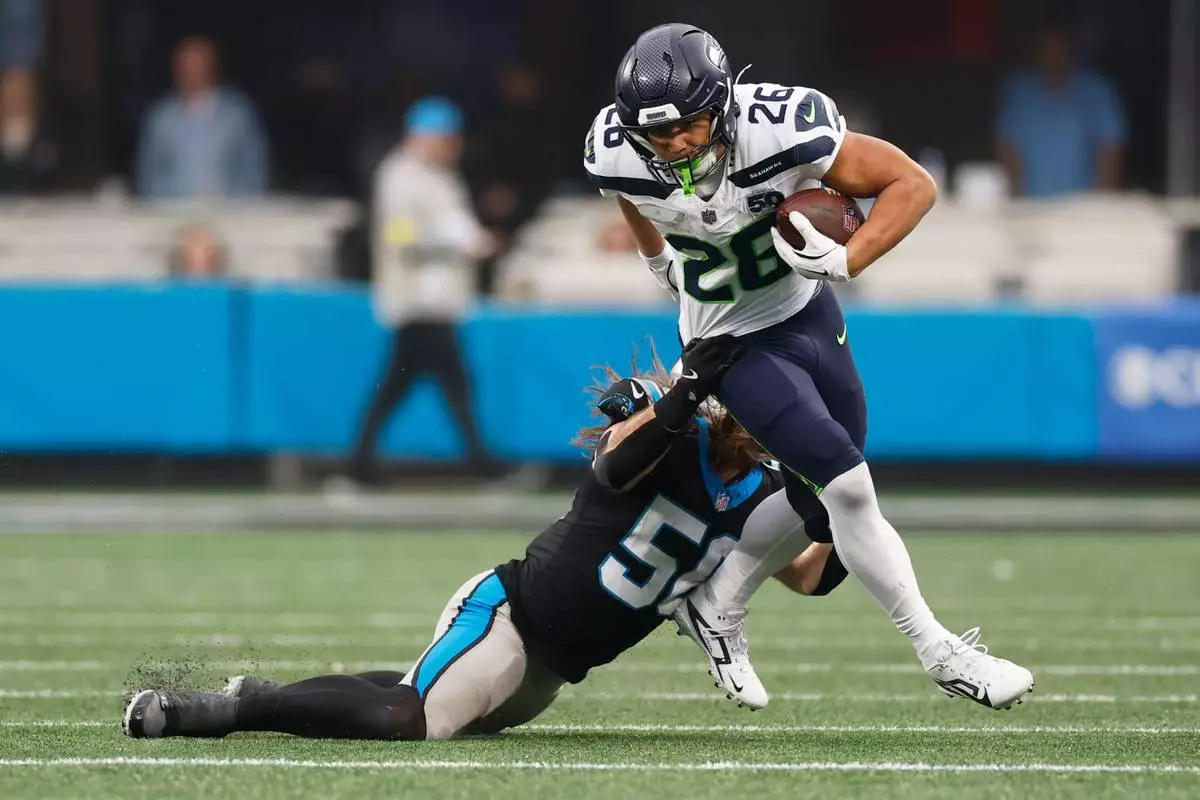
Seattle Seahawks running back Zach Charbonnet. is tackled by Carolina Panthers linebacker Christian Rozeboom during the second half of an NFL football game, Sunday, Dec. 28, 2025, in Charlotte, N.C. (AP Photo/Rusty Jones)
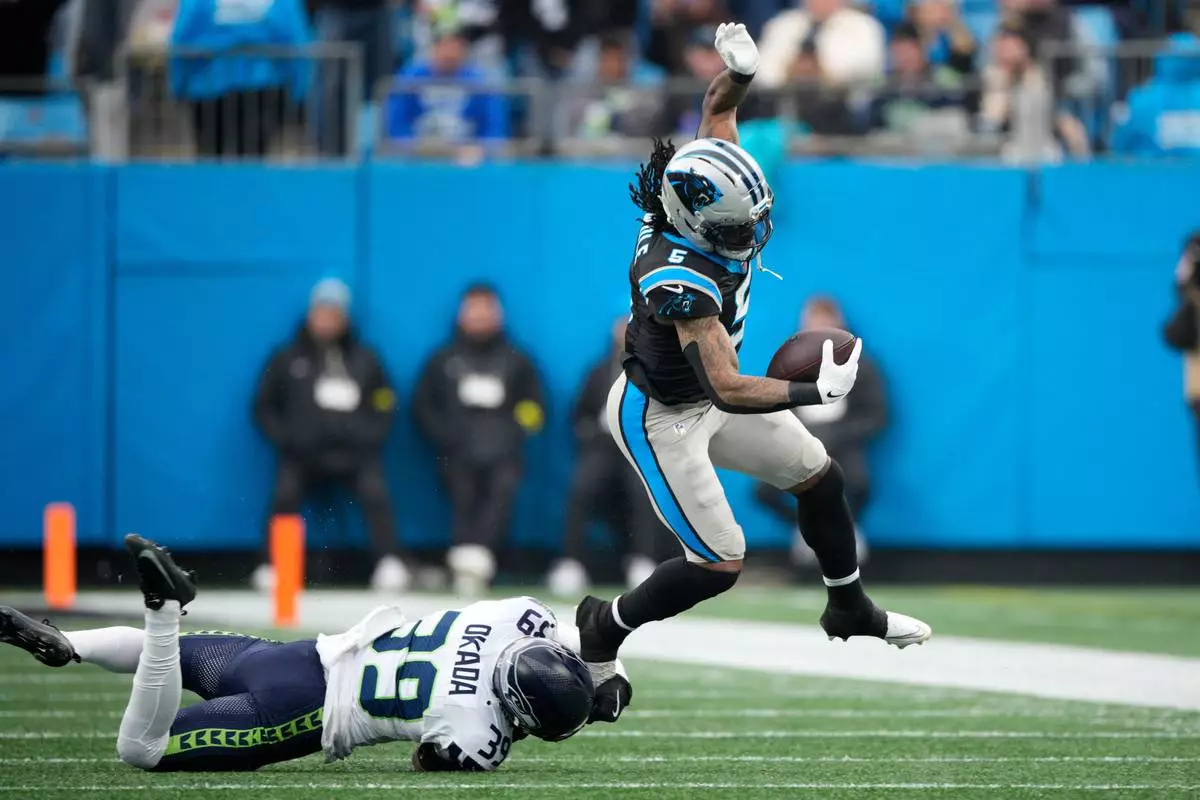
Carolina Panthers running back Rico Dowdle is tackled by Seattle Seahawks safety Ty Okada during the first half of an NFL football game, Sunday, Dec. 28, 2025, in Charlotte, N.C. (AP Photo/Jacob Kupferman)
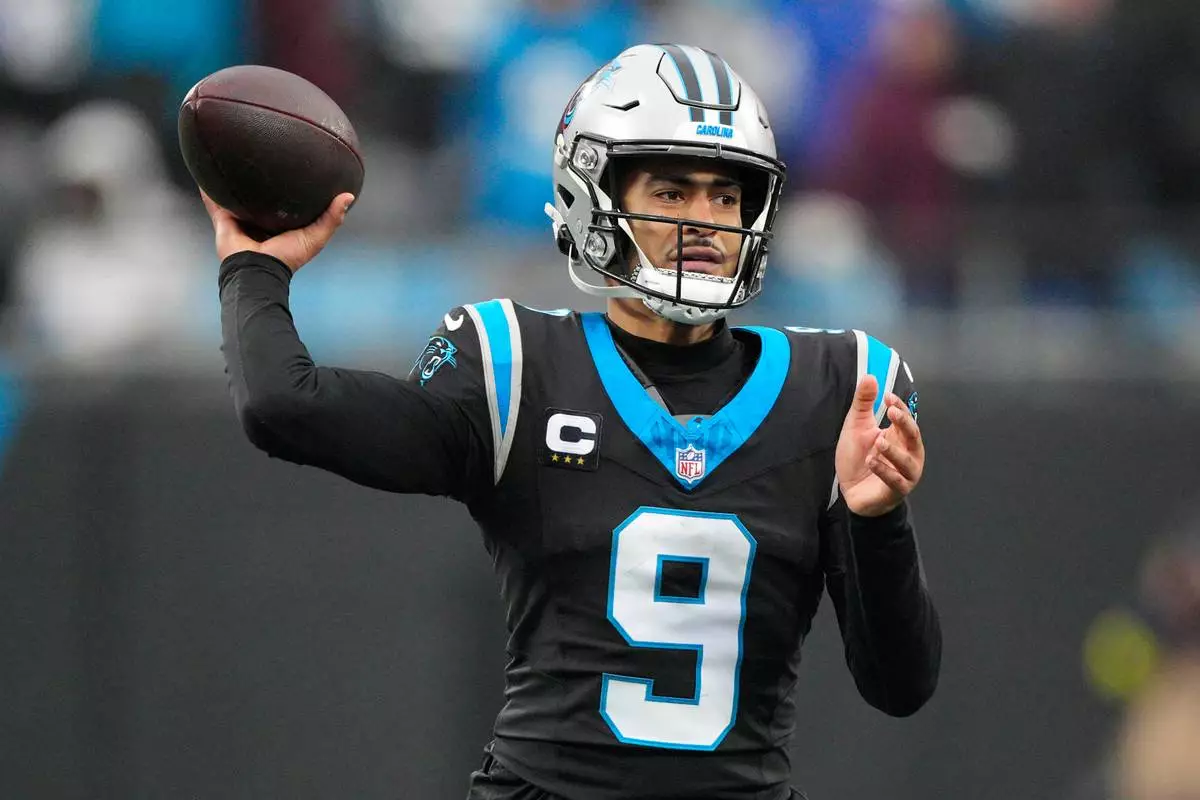
Carolina Panthers quarterback Bryce Young passes against the Seattle Seahawks during the second half of an NFL football game, Sunday, Dec. 28, 2025, in Charlotte, N.C. (AP Photo/Jacob Kupferman)
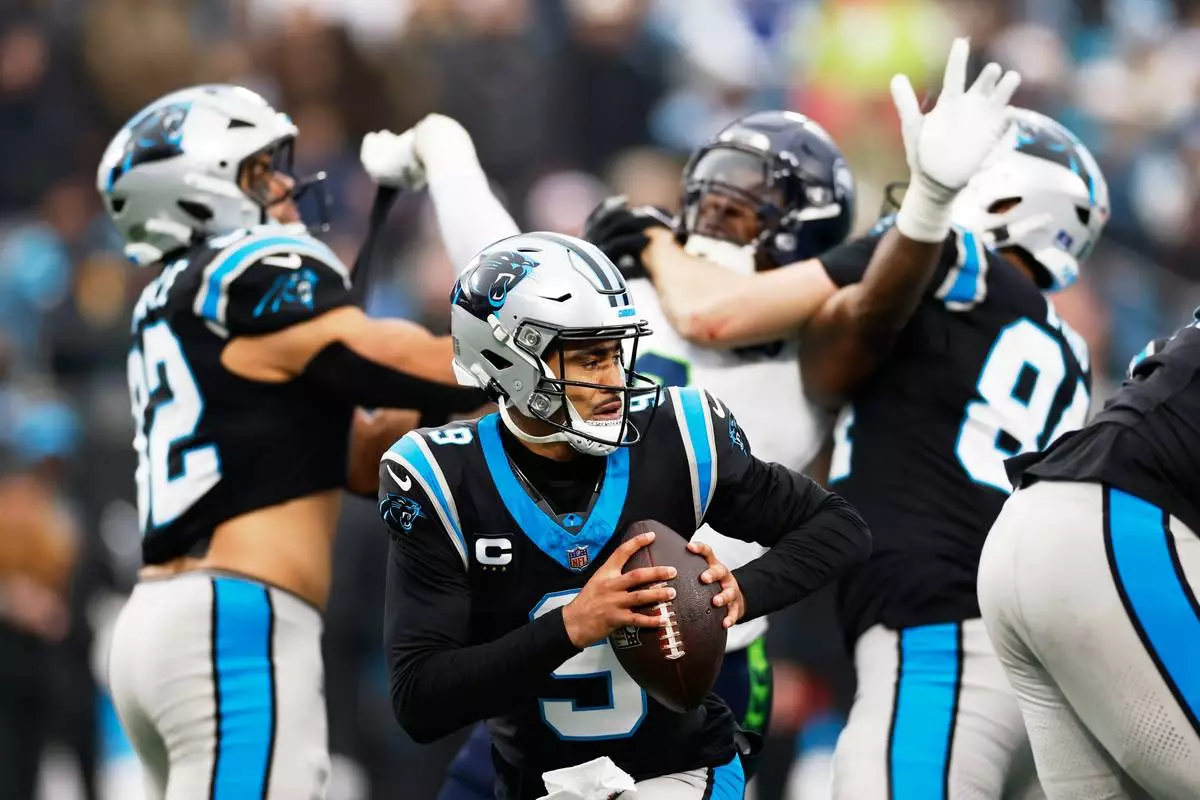
Carolina Panthers quarterback Bryce Young passes against the Seattle Seahawks during the second half of an NFL football game, Sunday, Dec. 28, 2025, in Charlotte, N.C. (AP Photo/Rusty Jones)
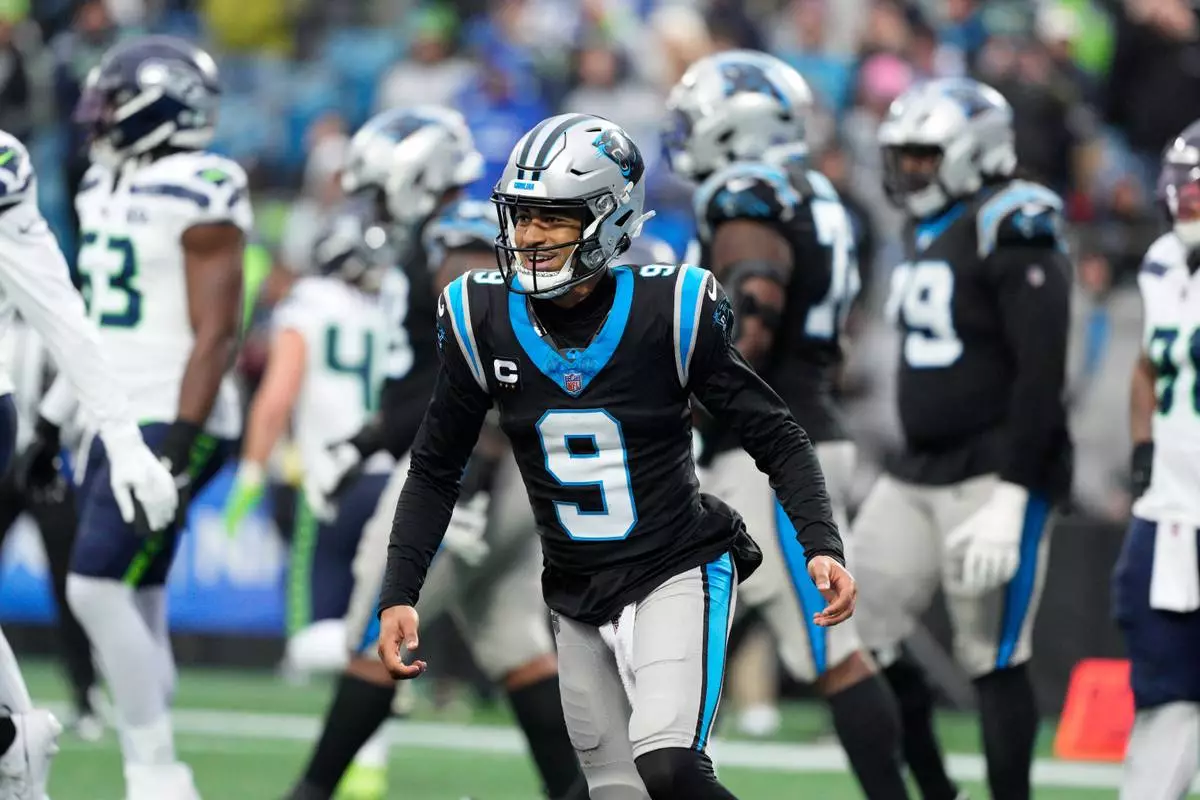
Carolina Panthers quarterback Bryce Young celebrates after scoring against the Seattle Seahawks during the second half of an NFL football game, Sunday, Dec. 28, 2025, in Charlotte, N.C. (AP Photo/Jacob Kupferman)