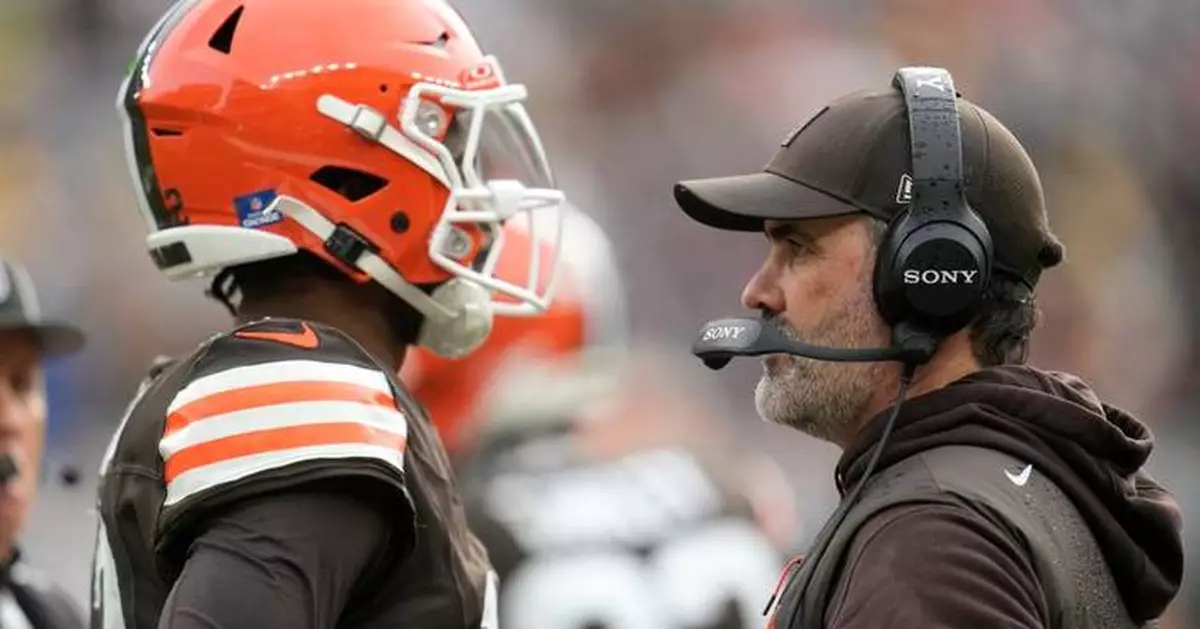
Kevin Stefanski's thoughts are on to Cincinnati and not on what might happen after the Cleveland Browns season finale.
Stefanski's future continues to be one of the central topics in the midst of another disappointing season. However, the Browns haven't looked like a team that is playing out the rest of the season over the past couple of weeks.
Cleveland prevented Pittsburgh from wrapping up the AFC North with a 13-6 victory on Sunday. That came one week after a 23-20 loss to the Buffalo Bills.
Sunday's win was Cleveland's fourth of the season, and the team surpassed its victory total from 2024. If the Browns can post consecutive wins for the first time since 2023, that would bolster Stefanski's chances for a seventh season in Cleveland.
If owner Jimmy Haslam decides to move on from Stefanski though, he would be a top candidate elsewhere. Stefanski would not answer if he has had discussions about his future.
“I understand the question. I never get into those types of discussions. All I care about is finding a way to go 1-0 versus the Bengals," he said, “As you can imagine, my sole focus is on this game versus Cincinnati, but I also would tell you I’m privileged to have this job.”
Shedeur Sanders improved to 2-4 as a starting quarterback despite struggling in the second half. Sanders has shown improved footwork and decision-making while playing behind a makeshift offensive line. Sanders went into the game without his leading running back after Quinshon Judkins suffered a broken leg against the Bills. His leading receiver, tight end Harold Fannin Jr., played only two series after aggravating a groin injury.
While some Browns fans might have lamented the win because it dropped Cleveland a couple of spots down in the draft order, Myles Garrett made it abundantly clear that no one in the locker room signed up to lose.
“I don’t care what the situation is with the record. Not a single one of us want to line up and lay down to a team or a man that’s in front of us," he said. "No, we got put here in this place or selected, whatever it was — drafted to come here and win. Has it always been that way? No, but I’ll be damned if I’m just going to go out there and lay down to another team just because we want some more draft picks. That’s not me.”
The defense didn't allow a touchdown for the second game this season and the fifth time since Jim Schwartz became defensive coordinator in 2023. It is the fifth time since the Browns returned in 1999 that they haven't given up a touchdown in at least two games in a season.
Getting the offense out of its second-half rut. The Browns are averaging 120.7 yards after halftime in Shedeur Sanders' six starts, the fifth-lowest average in the league and nearly 40 yards lower than the 159.8-yard average in the first half. Opponents are also outscoring the Browns 60-38 in the third and fourth quarters the past six weeks.
CB Tyson Campbell was targeted seven times and allowed three receptions for only 17 yards. Campbell forced a tight passing window on four of the targets and had two passes defensed.
S Rayshawn Jenkins was called for taunting after the Browns got a third down stop on the Steelers second series. The drive continued because of the penalty and Chris Boswell's first field goal got the Steelers within 10-3.
Guards Wyatt Teller (calf) and Tevin Jenkins (concussion) also left Sunday's game.
22: Sacks this season for Garrett
1: Sacks needed by Garrett to pass Michael Strahan and T.J. Watt for the single-season record. Cincinnati's Joe Burrow is Garrett's most-sacked quarterback.
6: Touchdown catches by Fannin, the most by a Browns rookie since Andre Davis also had six in 2002.
12: Consecutive field goals by Andre Szmyt.
The Browns wrap up the regular season at Cincinnati against a Bengals squad that has outscored their opponents 82-35 the past two games. Cincinnati won the Week 1 matchup 17-16 and has a four-game winning streak in the "Battle of Ohio."
AP NFL: https://apnews.com/hub/NFL
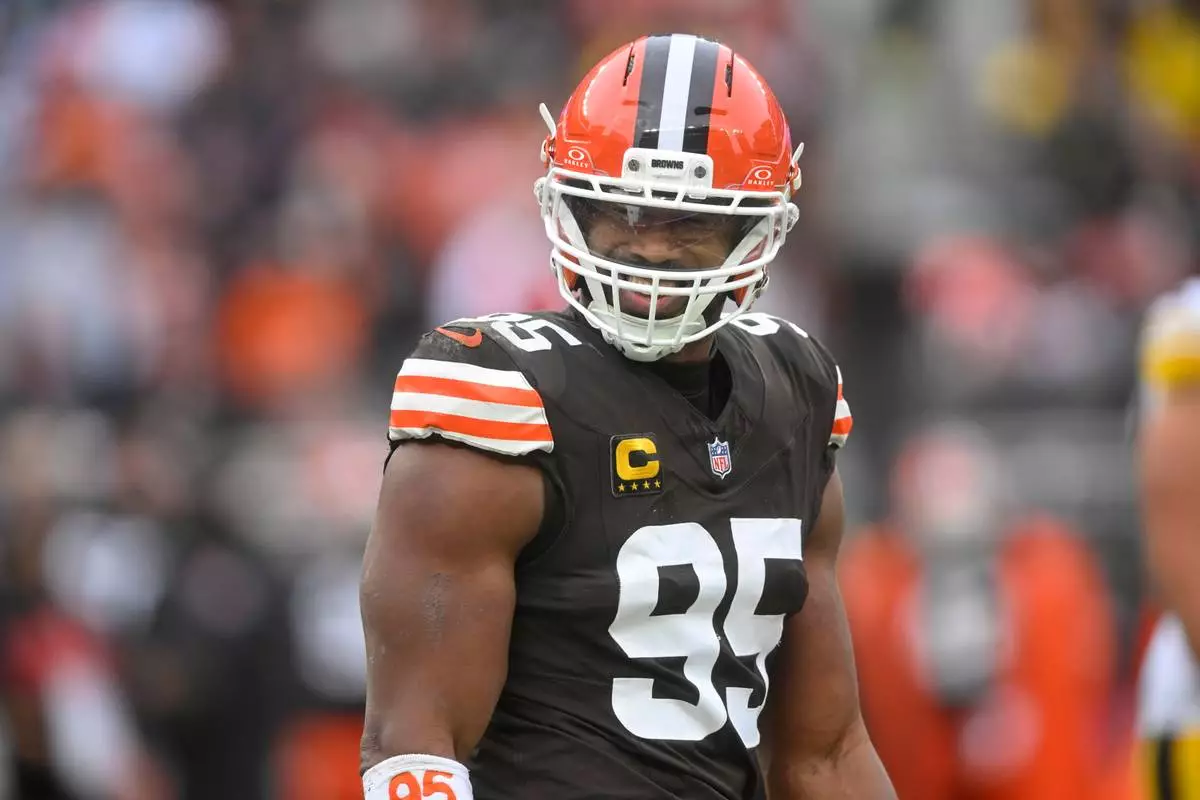
Cleveland Browns defensive end Myles Garrett reacts after a play during the second half of an NFL football game against the Pittsburgh Steelers, Sunday, Dec. 28, 2025, in Cleveland. (AP Photo/David Richard)
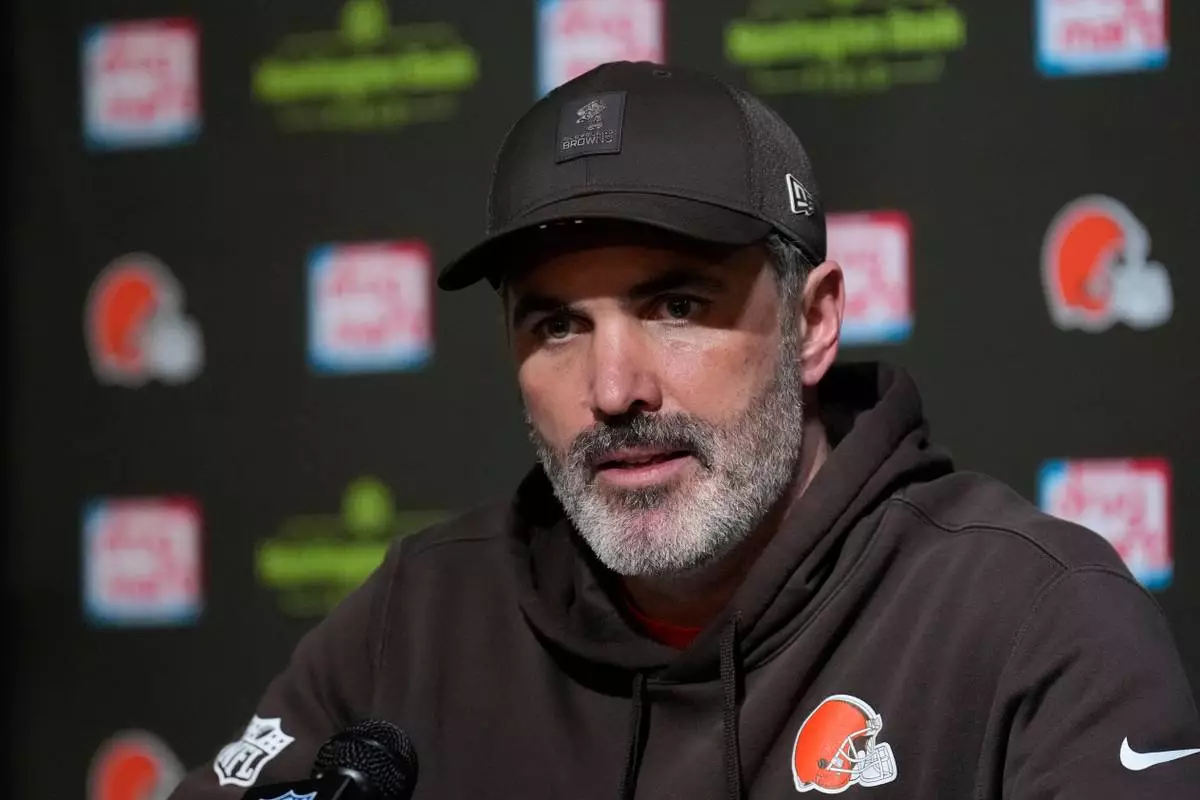
Cleveland Browns head coach Kevin Stefanski speaks during a news conference after an NFL football game against the Pittsburgh Steelers, Sunday, Dec. 28, 2025, in Cleveland. (AP Photo/Sue Ogrocki)
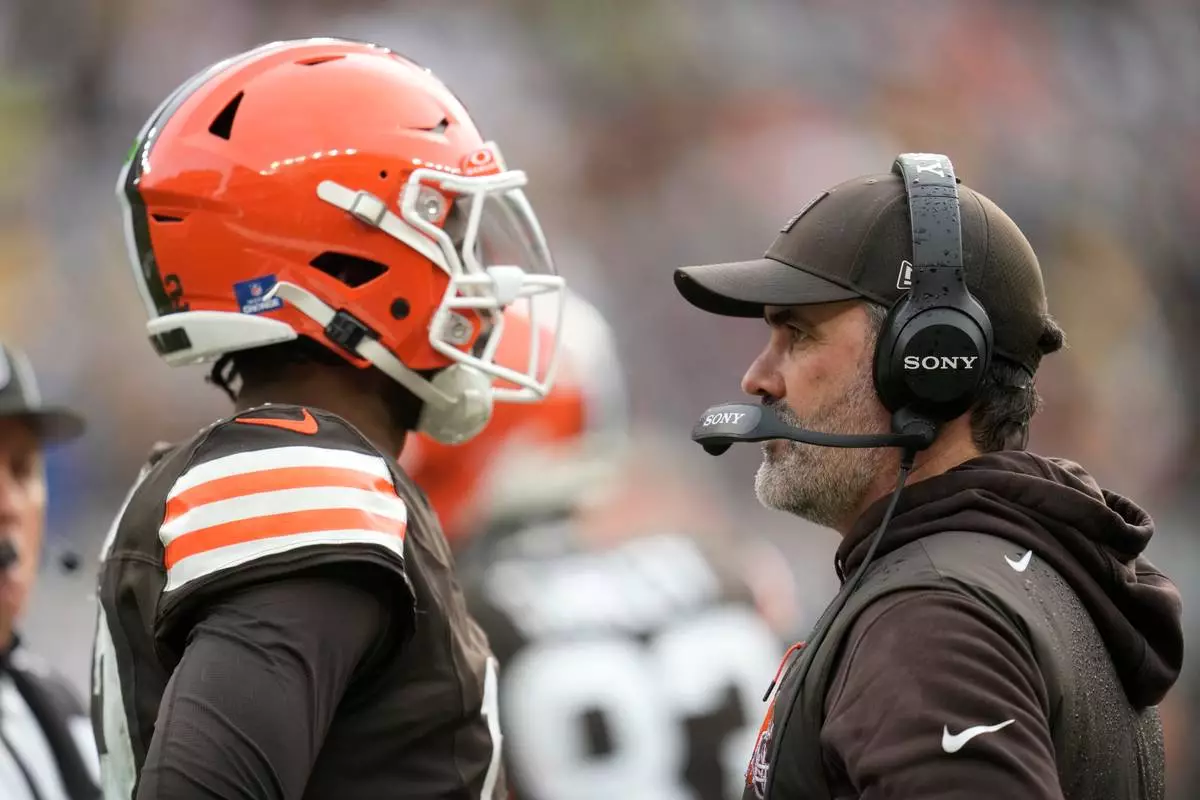
Cleveland Browns head coach Kevin Stefanski talks with quarterback Shedeur Sanders, left, during the first half of an NFL football game against the Pittsburgh Steelers, Sunday, Dec. 28, 2025, in Cleveland. (AP Photo/Sue Ogrocki)
NEW YORK (AP) — Stocks recovered most of their earlier losses as volatility returned to Wall Street after two days of solid gains.
The S&P 500 fell 0.1% after slumping as much as 1.5% in early trading Thursday. The Dow Jones Industrial Average shed 142 points, or 0.3% as of 2:06 p.m. Eastern. The Nasdaq composite fell 0.2%. Stocks in Europe and Asia finished lower.
Oil prices remained elevated although down from earlier highs. The price for a barrel of U.S. crude rose close to $114 a barrel at one point.
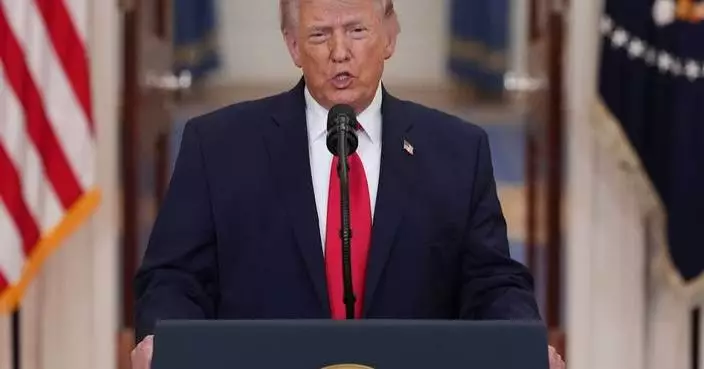
The unsettled trading follows a national address late Wednesday from President Donald Trump, where he vowed the U.S. will continue to attack Iran and failed to offer a clear timetable for ending the conflict in the Middle East. Those comments appeared to dim the hopes for a near-term conclusion to the war that had pushed stocks higher through most of the week.
Major indexes are still on track to close out the week with gains and it will mark the S&P 500's first winning week since the war with Iran began. Thursday is the last day of trading on Wall Street this week with with the stock market closed on Good Friday.
Crude oil prices have been the main force behind the sharp swings for stocks globally. Shipping traffic has been severely curtailed in the Strait of Hormuz, where a fifth of the world’s traded oil passes through during peacetime.
The price of Brent crude, the international standard, jumped 7.6% to $108.84 per barrel. Benchmark U.S. crude rose 11.6% to $111.77 per barrel. Prices had been sliding back toward $100 per barrel prior to Trump’s address on Wednesday. The U.S. only relies on the Persian Gulf for a fraction of the oil it imports, but oil is a commodity and prices are set in a global market. A disruption anywhere affects prices everywhere.
Stocks have been broadly sliding since the war began, with indexes often rising and falling sharply along with statements from Trump about the direction of the war. Just on Monday, the S&P 500 briefly neared a 10% drop from its record, a steep-enough fall that professional investors have a name for it: a “correction. The index gained ground Tuesday and Wednesday on hope that the war could end soon.
“For markets, a prolonged conflict increases the risk of sustained pressures on inflation, global growth, interest rates, and equity valuations,” wrote Adam Turnquist, chief technical strategist for LPL Financial, in a note to investors.
Airlines and other travel-related companies were among the biggest losers on Thursday. United Airlines fell 3.3% and Carnival shed 4.3%.
Tesla fell 5.5% after a report showing that sales over the past three months fell short of analysts' expectations.
Several big technology stocks gained ground to help offset losses elsewhere in the market. Intel jumped 3.8% and Advanced Micro Devices rose 2.4%.
Treasury yields remained relatively steady in the bond market. The yield on the 10-year Treasury fell to to 4.31% from 4.32%.
Wall Street is worried that higher energy prices are adding to already stubbornly high inflation. Rising fuel prices take a bigger chunk out of consumers' wallets in several ways. Directly, gasoline prices in the U.S. have surged 36 percent from a month ago to average $4.08 per gallon, according to the auto club AAA.
Indirectly, rising fuel prices tend to make a wide range of services and goods more expensive. Flights become more expensive as airlines raise ticket prices to offset rising fuel costs. Consumer goods become more expensive as shipping and transportation costs rise.
Inflation has been stubbornly above the Federal Reserve's 2% target. The war and its corresponding surge in energy prices effectively pushes inflation higher and that has dashed hopes for the Fed to cut interest rates. Wall Street had hoped for the central bank to cut rates in order to help offset a weakening job market. Lower interest rates could help stimulate the economy by lowering borrowing costs, but they also risk worsening inflation.
Traders came into 2026 forecasting several cuts to the Fed's benchmark interest rate, which influences rates for mortgages and other loans. They are now expecting the benchmark rate to remain steady this year.
The war with Iran has overshadowed many of the other moving pieces within the economy that the Fed and Wall Street have been monitoring. It remains a mixed picture. Reports this week revealed that consumers remain confident and are still spending, though inflation remains a big concern. A report Thursday showed that mortgage rates continue climbing, posing an obstacle for prospective home buyers. Another update Friday will give a more detailed view of the job market.
Associated Press journalists Chan Ho-Him and Matt Ott contributed to this report.

Fishing boats dot the sea as cargo ships, in the background, sail through the Arabian Gulf toward the Strait of Hormuz off the United Arab Emirates, Friday, March 27, 2026. (AP Photo)
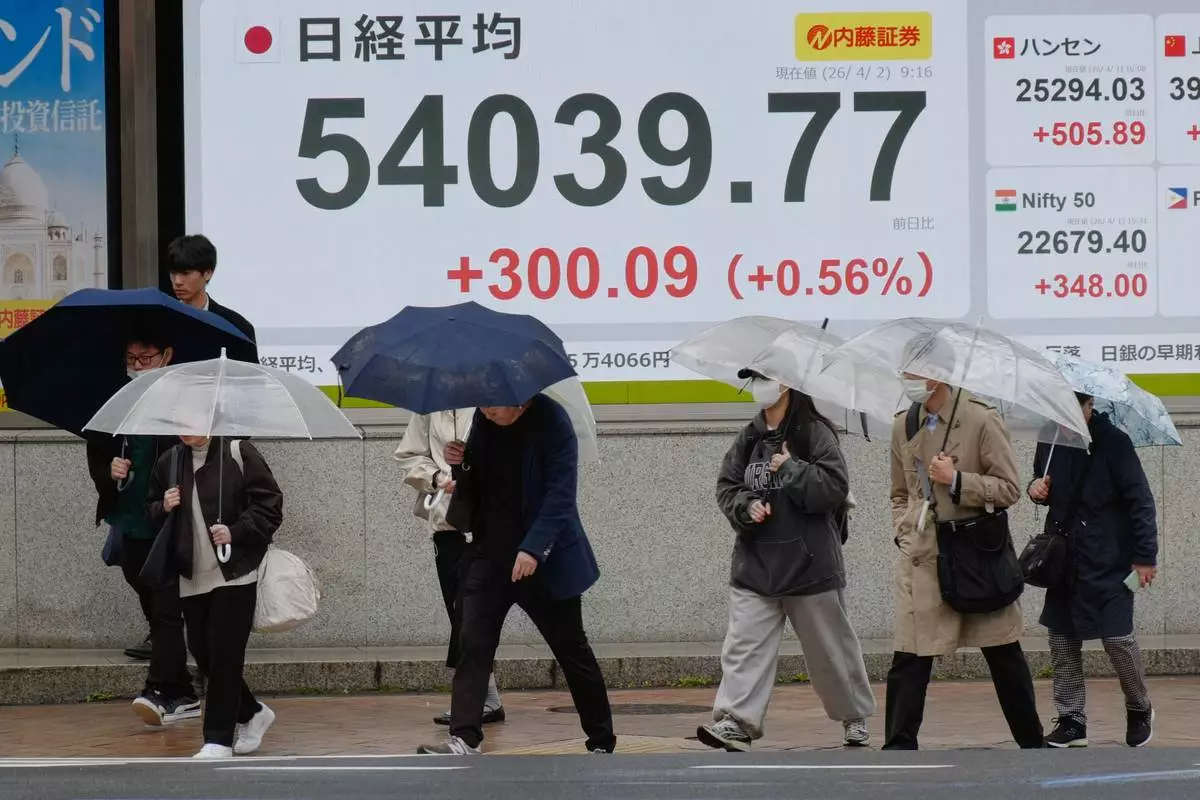
Perople walk in front of an electronic stock board showing Japan's Nikkei index at a securities firm Thursday, April 2, 2026, in Tokyo. (AP Photo/Eugene Hoshiko)
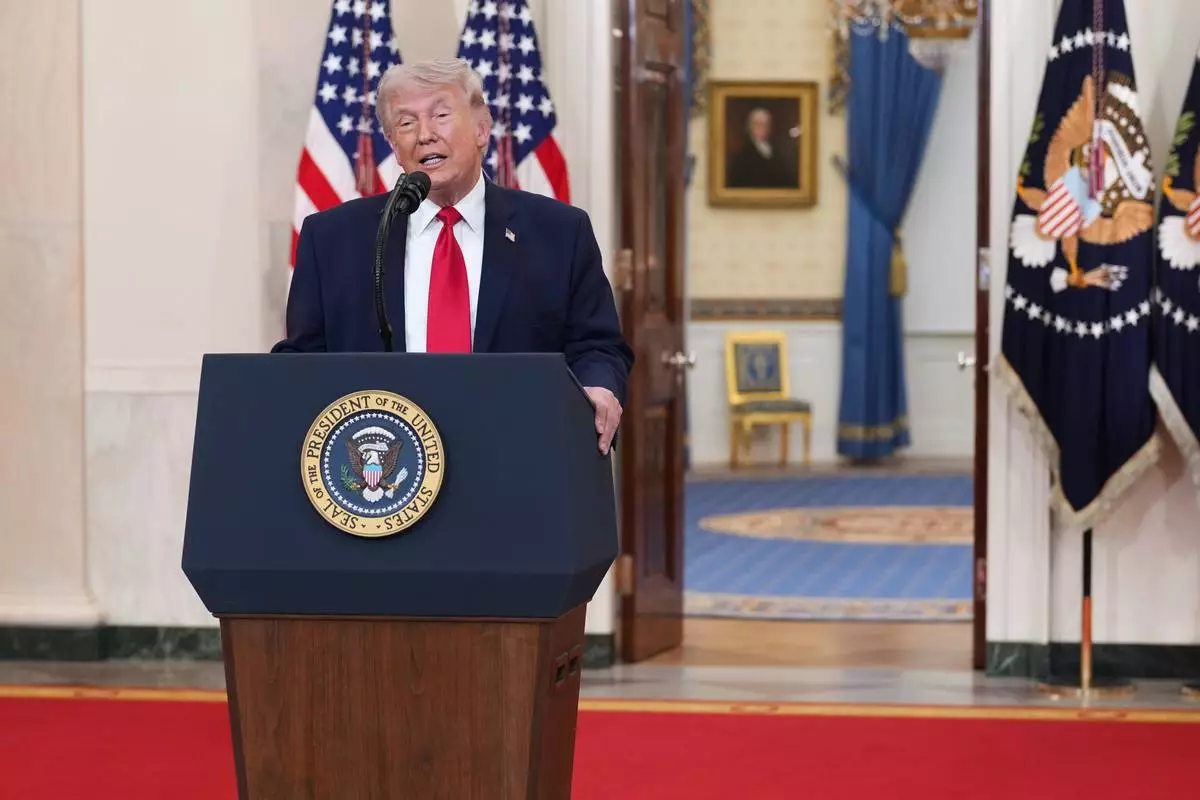
President Donald Trump speaks about the Iran war from the Cross Hall of the White House on Wednesday, April 1, 2026, in Washington. (Doug Mills/The New York Times via AP Pool)
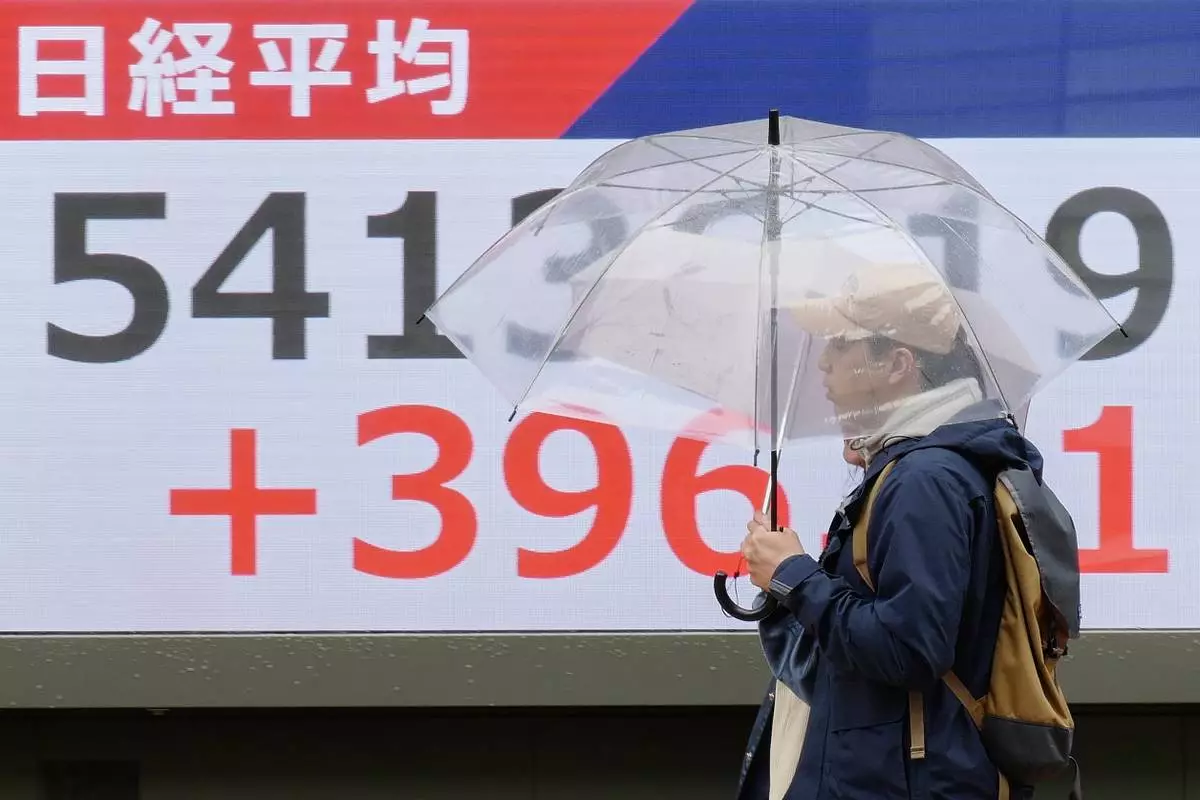
Persons walk in front of an electronic stock board showing Japan's Nikkei index at a securities firm Thursday, April 2, 2026, in Tokyo. (AP Photo/Eugene Hoshiko)