Interdepartmental working group on festival arrangements releases latest information and appeals to public and visitors to plan cross-boundary trips early during New Year holidays
The interdepartmental working group on festival arrangements, led by the Chief Secretary for Administration, released the following information today (December 30) on the traffic and public transport arrangements during the New Year holidays.
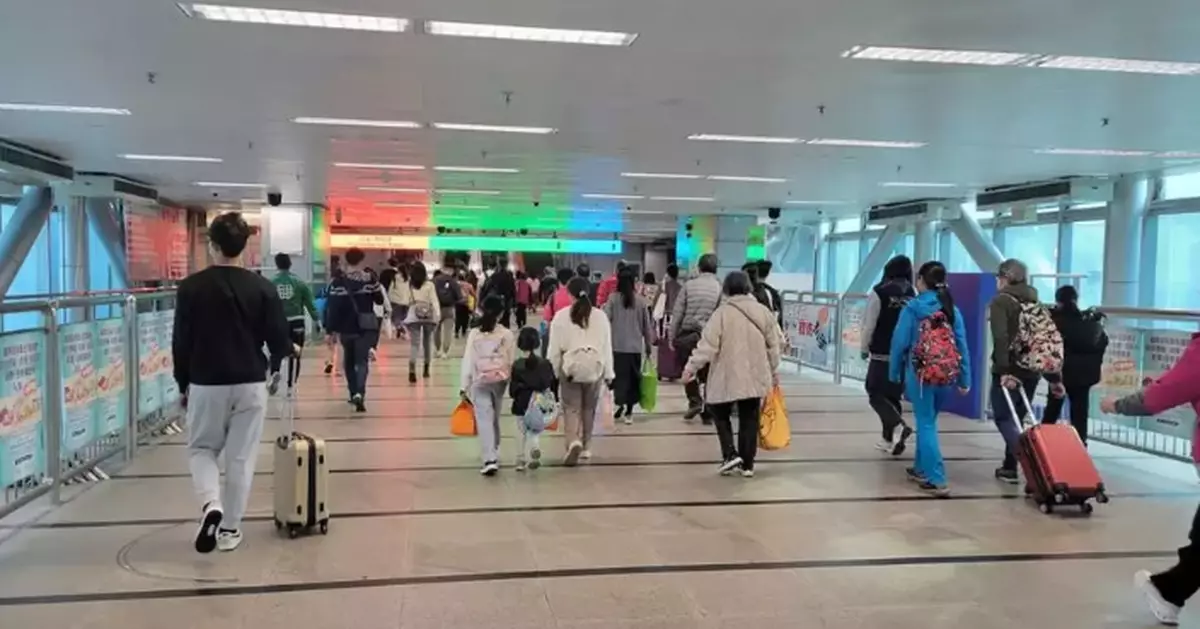
From January 1 to 4, in anticipation of a large number of members of the public, visitors and cross-boundary vehicles visiting various land-based boundary control points (BCPs), the Transport Department (TD) urged cross-boundary travellers to use public transport services between Hong Kong and the Mainland or Macao, plan their trips early and allow sufficient travelling time. The TD has been steering local and cross-boundary public transport operators (PTOs) to strengthen their services during the New Year holidays to meet passenger demand, including:
Early morning of New Year's Day
(1) Lo Wu Control Point (passenger clearance services to be extended to 2am on New Year's Day)
- The operating hours of the MTR East Rail Line will be extended correspondingly, with the last departure from Admiralty to Lo Wu extended to 0.56am;
(2) Lok Ma Chau/Huanggang Port (LMC/HG Port) (24-hour operations as usual)
- Travellers may take the MTR East Rail Line or other public transport services to Sheung Shui, interchange with franchised bus route No. N73 to Lok Ma Chau (San Tin) Public Transport Interchange, and then transfer to the Lok Ma Chau-Huanggang cross-boundary shuttle bus (Yellow Bus) to the Mainland;
- PTOs will also strengthen the LMC/HG Port short-haul cross-boundary coach and the Yellow Bus services to cater for the peak passenger demand;
(3) Shenzhen Bay Port (SBP) (passenger and passenger vehicle clearance services to provide 24-hour operations)
- Franchised bus operators will operate two special overnight bus routes, Nos. NB2 and NB3, to provide services to and from Yuen Long/Tin Shui Wai and Tuen Mun respectively during the overnight period. Travellers may also take the MTR Tuen Ma Line to Yuen Long/Tin Shui Wai and Tuen Mun Stations, and interchange with route Nos. NB2 and NB3 to SBP respectively;
- The governments of Guangdong and Hong Kong have also allocated special cross-boundary coach quotas for the operation of overnight services; and
(4) Hong Kong Port of Hong Kong-Zhuhai-Macao Bridge (HZMB) (24-hour operations as usual)
- The frequency of the HZMB shuttle bus (Gold Bus) will be increased, if needed.
New Year's Day daytime and long weekend of Mainland (January 1 to 4)
- BCP shuttle bus services will be strengthened, including increasing the frequencies of the Gold Bus and the Yellow Bus to cater for passenger demand;
- Cross-boundary coach services will be strengthened, including allocating additional cross-boundary coach quotas and enhancing the LMC/HG Port short-haul cross-boundary coach services;
- The frequency of local franchised bus B routes connecting various land-based BCPs will also be increased to a level higher than that of normal weekends, and the operators will reserve sufficient vehicles and manpower to meet passenger demand; and
- The train services of the MTR East Rail Line between Admiralty and Lo Wu/Lok Ma Chau will be enhanced at different times during the above period to provide convenience for the travelling public and visitors.
Travel outside peak periods
The TD anticipates that the waiting time for public transport services, including the Gold Bus and the local franchised bus B routes, may be longer during peak periods of cross-boundary travel. Passengers should avoid travelling during peak hours, observe order while queuing and heed advice from on-site police and PTO staff. Passengers planning to take cross-boundary coaches are also advised to reserve their coach tickets in advance.
The Transport Department (TD), Photo by Bastille Post
Of note, motorists of cross-boundary private cars crossing the border are advised that, subject to actual traffic conditions, special traffic arrangements may be implemented at the Lok Ma Chau and the Shenzhen Bay Port during New Year holidays to secure smooth access for public transport vehicles to the above BCPs. Cross-boundary private cars may experience longer waiting times when crossing the BCPs during the peak periods. Motorists should pay extra attention to variable message signs and traffic signs along the roads. In case of traffic congestion, they should remain patient and follow the instructions of on-site police.
Information dissemination
For the HZMB, to plan their journeys ahead, members of the public can make use of the TD's HKeMobility mobile app or website (hkemobility.gov.hk/en/traffic-information/live/cctv) to access snapshots of traffic conditions at inbound and outbound vehicle plazas of the HZMB Hong Kong Port. They can also check real-time situations of the vehicle clearance plaza of the Zhuhai Port through the WeChat official accounts "hzmbzhport" or "zhuhaifabu" (traffic-info.gzazhka.com:5015/#/) (Chinese only). Moreover, motorists are reminded to always comply with the traffic control measures implemented by the Zhuhai authority when driving on the HZMB Main Bridge. Vehicles must not occupy the emergency lane unless instructed by the Zhuhai authority.
Residents and visitors may visit "Easy Boundary" (www.sb.gov.hk/eng/bwt/status.html?type=outbound), a one-stop information platform on immigration clearance launched by the Security Bureau, or the HKeMobility to obtain useful information, including the respective average waiting time for passengers and private cars at land-based BCPs, as well as for the Gold Bus and Yellow Bus to plan their trips and save waiting time. Members of the public are advised to check the latest traffic news through radio and television broadcasts, the TD's website (www.td.gov.hk) and the HKeMobility.
The TD's Emergency Transport Co-ordination Centre operates round the clock to closely monitor the traffic conditions and public transport services of various districts, the BCPs and major stations, and to implement contingency measures when necessary to meet service demands.
The interdepartmental working group on festival arrangements is tasked with holistically co-ordinating and steering the preparatory work of various government departments for welcoming visitors to Hong Kong during the New Year's Eve and New Year holidays, as well as strengthening information dissemination to enable the public and visitors to plan their itineraries according to the latest situation.
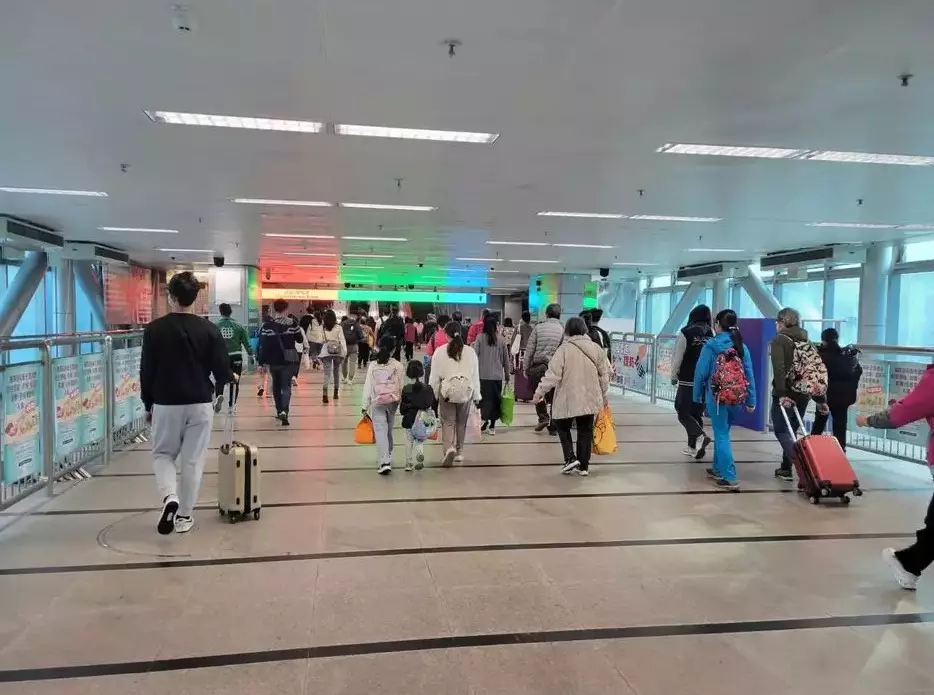
Photo by Bastille Post
FEHD releases fourth batch of gravidtrap indexes for Aedes albopictus in May
The Food and Environmental Hygiene Department (FEHD) today (May 21) released the fourth batch of gravidtrap indexes and density indexes for Aedes albopictus in May, covering 12 survey areas, as follows:
District |
Survey Area |
May 2026 |
First Phase Gravidtrap Index |
First Phase Density Index |
Eastern |
Shau Kei Wan and Sai Wan Ho |
9.1% |
1.4 |
Islands |
Tung Chung |
2.0% |
1.0 |
Kowloon City |
Hung Hom and To Kwa Wan |
6.7% |
1.5 |
Tai Po |
Tai Po East |
2.2% |
2.0 |
Tai Po West |
15.5% |
1.0 |
Tuen Mun |
Tuen Mun South |
9.1% |
1.4 |
District |
Survey Area |
May 2026 |
Area Gravidtrap Index |
Area Density Index |
Central and Western |
Kennedy Town and Shek Tong Tsui |
16.8% |
1.3 |
Eastern |
Chai Wan |
15.4% |
1.0 |
North Point and Quarry Bay |
18.9% |
1.4 |
Southern |
Aberdeen and Ap Lei Chau |
20.8% |
1.7 |
Sha Tin |
Sha Tin Town Centre and Fo Tan |
18.3% |
1.4 |
Tsuen Wan |
Tsuen Wan Town |
6.9% |
2.3 |
The fourth batch of gravidtrap indexes for Aedes albopictus in May includes First Phase Gravidtrap Indexes covering six survey areas and Area Gravidtrap Indexes covering six survey areas. Among which, six survey areas recorded gravidtrap indexes above 10 per cent, while Aberdeen and Ap Lei Chau in Southern District recorded a gravidtrap index above 20 per cent. Meanwhile, the gravidtrap indexes of six survey areas, namely Kennedy Town and Shek Tong Tsui in Central and Western District; North Point and Quarry Bay in Eastern District; Shau Kei Wan and Sai Wan Ho in Eastern District; Aberdeen and Ap Lei Chau in Southern District; Tai Po East in Tai Po District; and Tuen Mun South in Tuen Mun District, have recorded a decrease as compared to the indexes recorded in the last survey period, reflecting the progress of relevant mosquito control work.
With reference to the data from the past few years, the gravidtrap indexes start to rise from April or May every year. The actual timing and extent of the rise are affected by factors like weather conditions and rainfall. The average temperature and rainfall recorded in April this year were higher than those in the same period last year, creating favourable conditions for mosquito growth and breeding. As a result, the rise in gravidtrap indexes occurred earlier this year. With the increase in rainfall in May, the gravidtrap indexes are expected to rise further.
For survey areas which recorded indexes exceeding 10 per cent, in accordance with the mechanism implemented by the FEHD in response to the chikungunya fever (CF) situation (i.e. strengthening mosquito control work in areas with a gravidtrap index between 10 per cent and 20 per cent, instead of 20 per cent or above under the original mechanism), the FEHD is collaborating with relevant departments and stakeholders to identify locations with high mosquito infestations and carry out intensive and targeted mosquito control measures. The FEHD has initiated two prosecutions against the relevant construction site contractors following the discovery of mosquito breeding at construction sites in Tai Po District and Southern District. Moreover, following the discovery of stagnant water or stagnant water containers in a park, a construction site, a private housing estate, a clinic and a private premises in Tai Po District, Central and Western District, as well as Southern District, the FEHD has issued five statutory notices to the responsible persons-in-charge, requiring the clearance of such items within a specified timeframe. The FEHD, the relevant departments and stakeholders are following up on the mosquito control work, and will also organise exhibitions, distribute leaflets and posters, and notify residential estates that have subscribed to the gravidtrap Rapid Alert System, advising property management agents and residents to stay vigilant and work together in taking mosquito prevention and elimination measures. In addition, the FEHD will strengthen the monitoring of the gravidtrap index in the areas to review the effectiveness of the mosquito control work.
Public participation is crucial to the effective control of mosquito problems. The FEHD appeals to members of the public to continue to work together in strengthening personal mosquito control measures, including:
tidy up their premises and check for any accumulation of water inside the premises;
remove all unnecessary water collections and eliminate the sources;
check household items (those placed in outdoor and open areas in particular), such as refuse containers, vases, air conditioner drip trays, and laundry racks to prevent stagnant water;
change water in flower vases and scrub their inner surfaces thoroughly, and remove water in saucers under potted plants at least once a week;
properly cover all containers that hold water to prevent mosquitoes from accessing the water;
properly dispose of articles that can contain water, such as disposable meal boxes and empty cans; and
scrub drains and surface sewers with alkaline detergent at least once a week to remove any mosquito eggs.
Starting in August 2025, following the completion of the surveillance of individual survey areas, and once the latest gravidtrap index and the density index are available, the FEHD has been disseminating relevant information through press releases, its website and social media. It aims to allow members of the public to quickly grasp the mosquito infestation situation and strengthen mosquito control efforts, thereby reducing the risk of CF transmission.
Following recommendations from the World Health Organization and taking into account the local situation in Hong Kong, the FEHD sets up gravidtraps in districts where mosquito-borne diseases have been recorded in the past, as well as in densely populated places such as housing estates, hospitals and schools to monitor the breeding and distribution of Aedes albopictus mosquitoes, which can transmit CF and dengue fever. At present, the FEHD has set up gravidtraps in 62 survey areas of the community, with a surveillance period of two weeks. During the surveillance period, the FEHD will collect the gravidtraps once a week. After the first week of surveillance, the FEHD will immediately examine the glue boards inside the retrieved gravidtraps for the presence of adult Aedine mosquitoes to compile the Gravidtrap Index (First Phase) and Density Index (First Phase). At the end of the second week of surveillance, the FEHD will instantly check the glue boards for the presence of adult Aedine mosquitoes. Data from the two weeks of surveillance will be combined to obtain the Area Gravidtrap Index and the Area Density Index. The gravidtrap and density indexes for Aedes albopictus in different survey areas, as well as information on mosquito prevention and control measures, are available on the department's webpage (www.fehd.gov.hk/english/pestcontrol/dengue_fever/Dengue_Fever_Gravidtrap_Index_Update.html#).
FEHD releases fourth batch of gravidtrap indexes for Aedes albopictus in May Source: HKSAR Government Press Releases