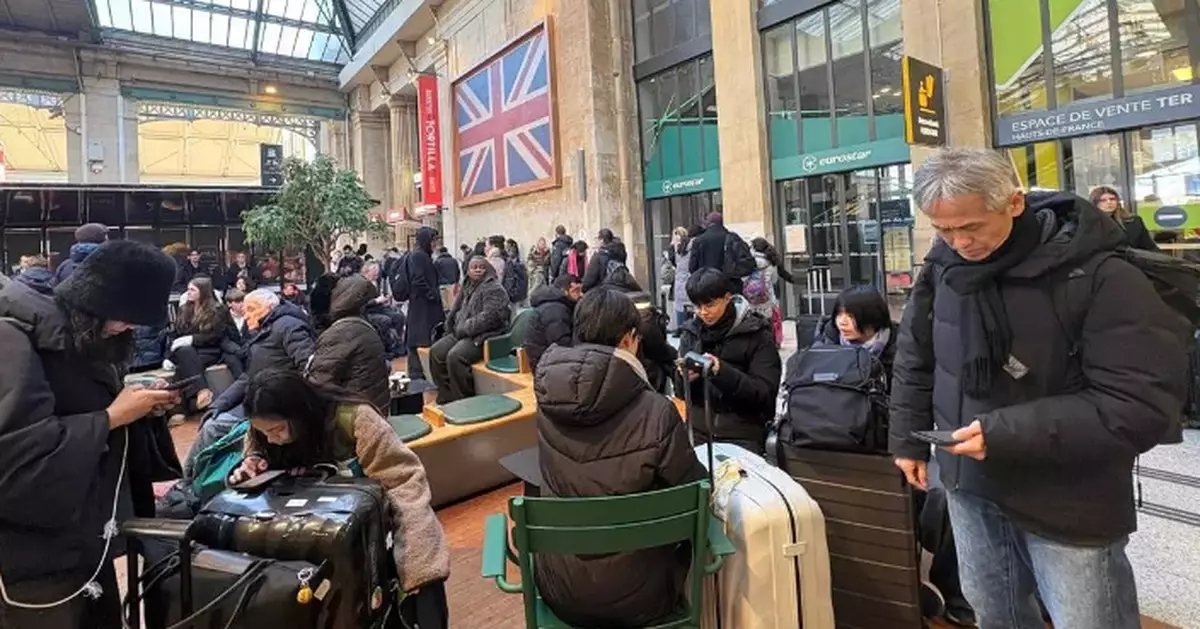
PARIS (AP) — Power problems and a stuck train interrupted rail services through the undersea Channel Tunnel connecting the U.K. and continental Europe on Tuesday, stranding passengers and ruining vacation plans during the busy end-of-year holiday period.
At Paris' Gare du Nord station, Jamie and Issy Gill scrambled to find a flight back to the U.K. after their Eurostar train to London was canceled, desperate to be reunited with their baby boy after enjoying a getaway together in the French capital.
Click to Gallery
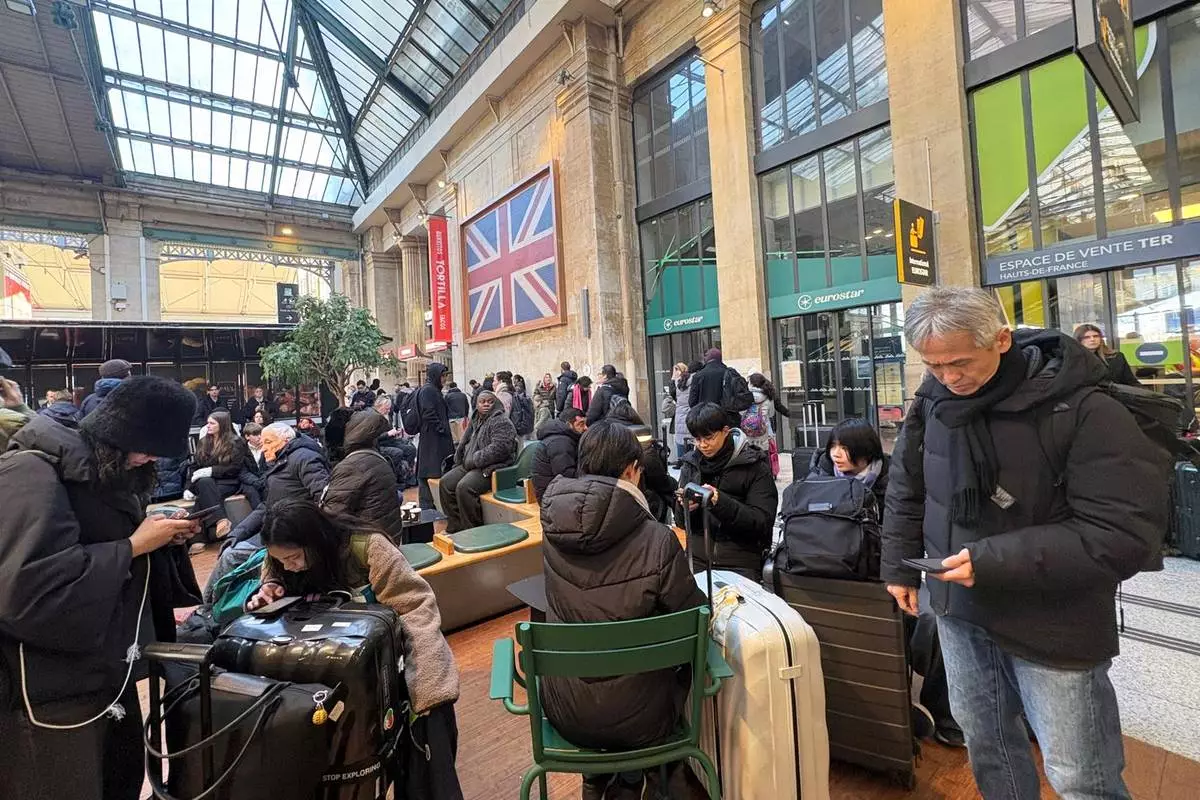
Travelers wait at the Gare du Nord station after an incident related to the power supply to trains occurred last night in part of the Channel Tunnel, affecting train and shuttle traffic. Tuesday, Dec. 30, 2025 in Paris. (AP Photo/Christophe Ena)
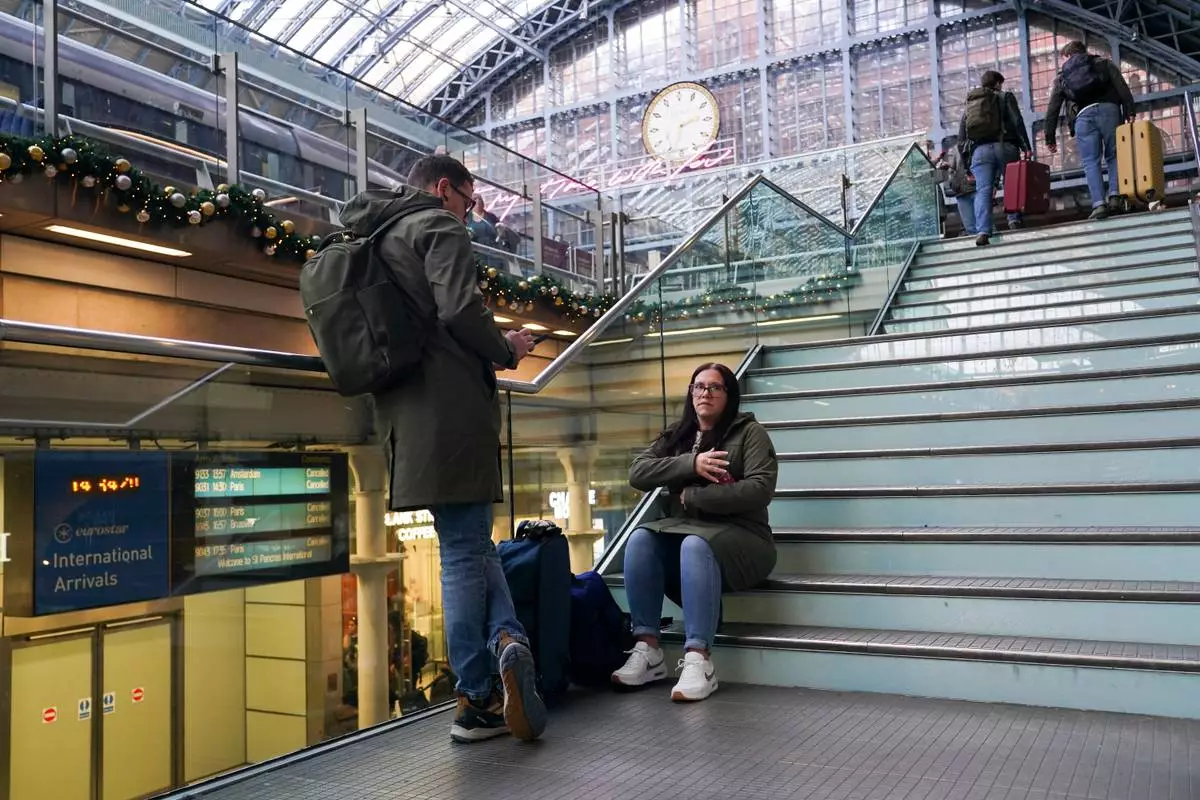
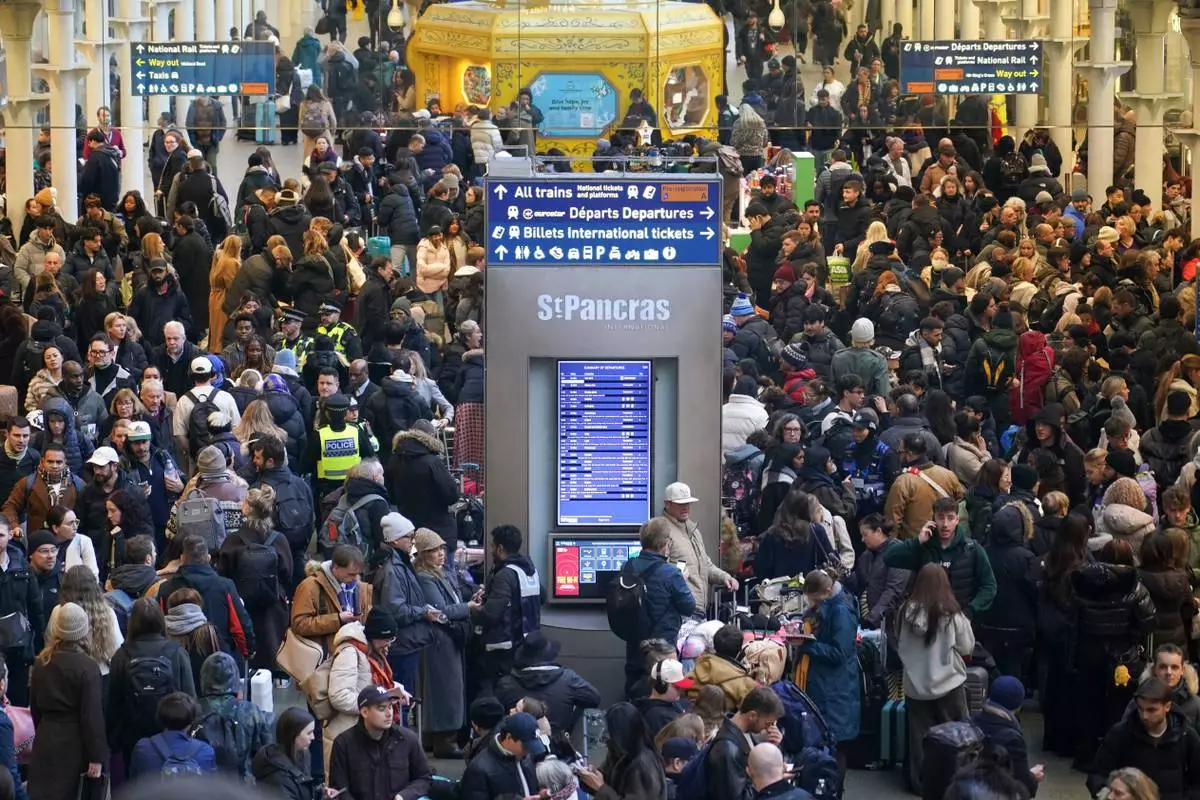
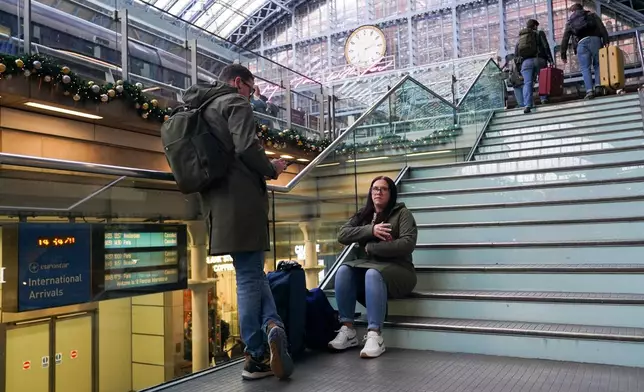
Travellers queue for Eurostar services at St Pancras International station in London, Tuesday, Dec. 30, 2025 after Eurostar asked train customers not to travel because of disruption in the Channel Tunnel. (AP Photo/Alberto Pezzali)
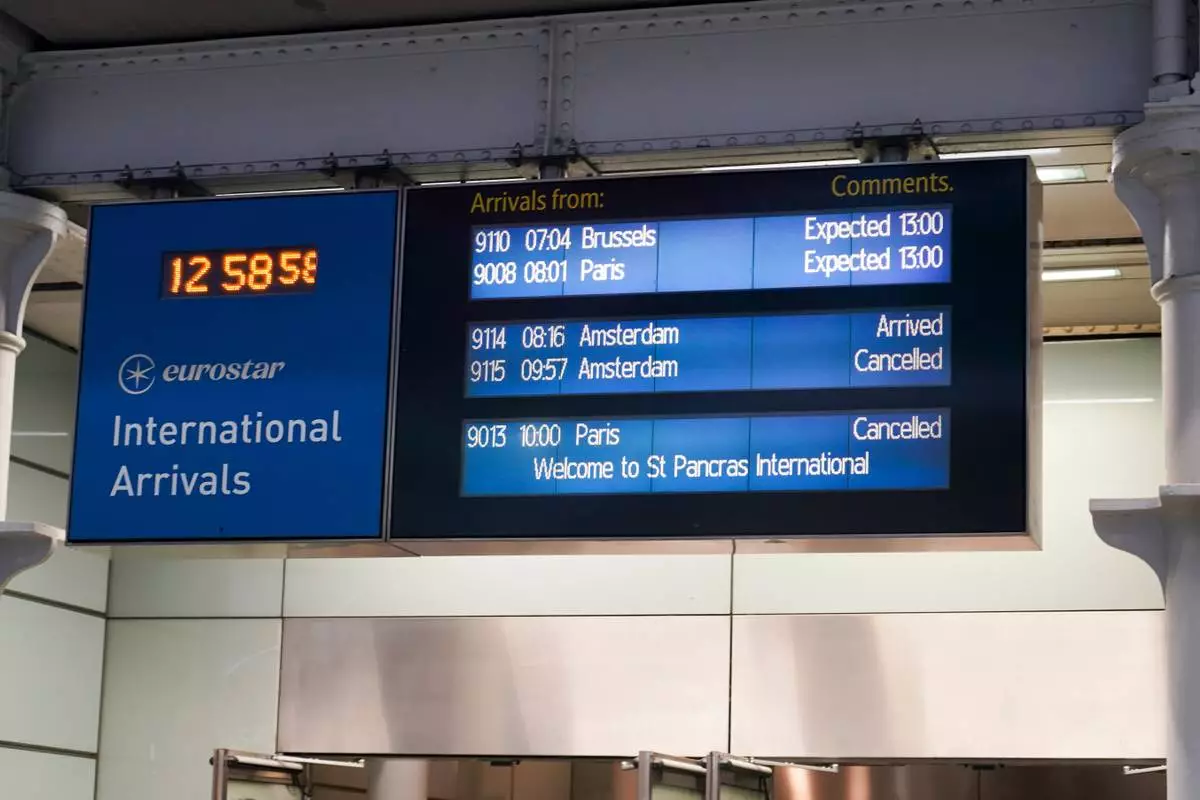
The screen board displays the trains' arrival status at St Pancras International train station in London, Tuesday, Dec. 30, 2025 after Eurostar asked train customers not to travel because of disruption in the Channel Tunnel. (AP Photo/Alberto Pezzali)
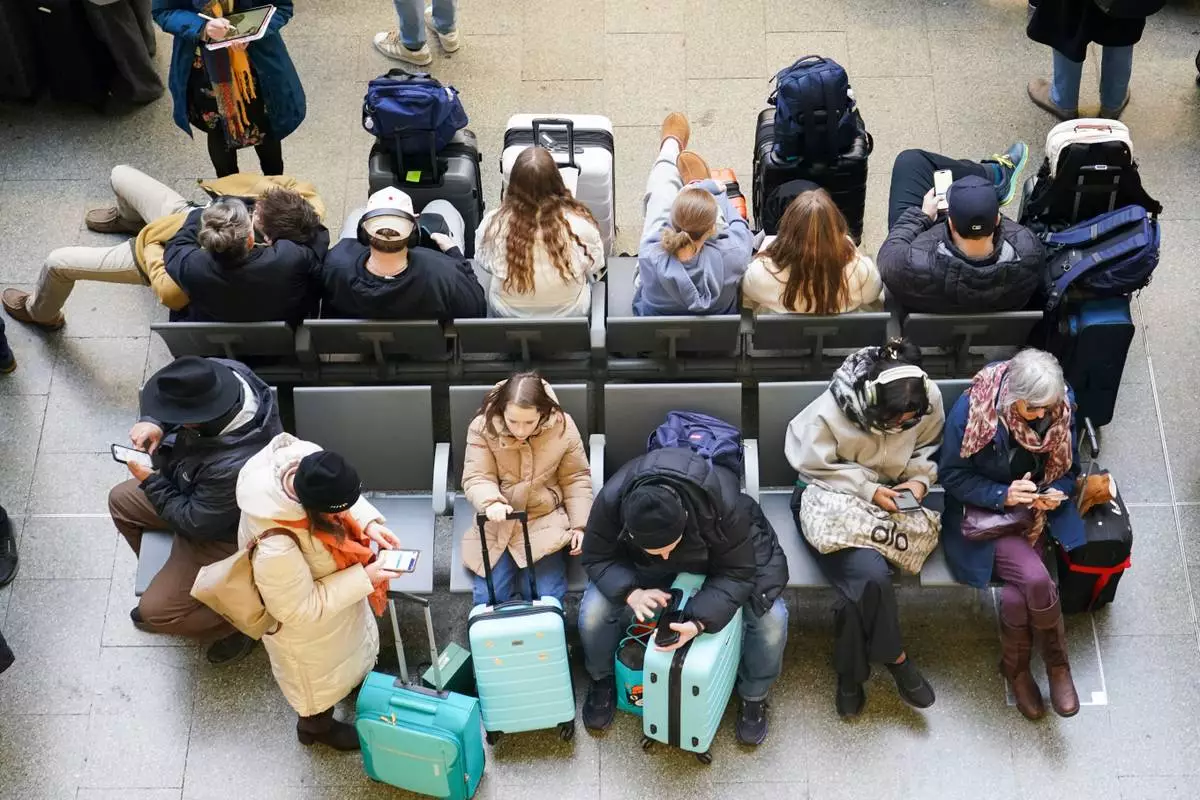
Travelers queue for Eurostar services at St Pancras International station in London, Tuesday, Dec. 30, 2025. (AP Photo/Alberto Pezzali)
Passengers queue to enter the Eurotunnel site in Folkestone in Kent, England, Tuesday, Dec. 30, 2025. (Gareth Fuller/PA via AP)
FILE - A train coming from London leaves the Northbound Channel tunnel in Calais, northern France, on Jan. 31, 2020. (AP Photo/Thibault Camus, File)
“We came for my 30th birthday and we were supposed to go back on the Eurostar, but everything is canceled,” she said. "We have a 1-year-old at home, with my mum and dad. I'm going to get upset,” she said, wiping away tears.
“It’s a stressful situation,” Jamie Gill said. He said that they'd now have to take a roundabout route back, with a flight via Birmingham on Wednesday.
“It's just, like, the first time we came away without him,” she said.
Eurostar — which runs passenger trains between London and Paris and other European destinations — blamed “overhead power supply issues in the Channel Tunnel” and what it said was a failed train operated by LeShuttle, which transports vehicles and their passengers by rail through the tunnel between the ports of Calais, France, and Folkestone, England.
Eurostar said in a statement that its services “are suspended until further notice," and advised its passengers to rebook their journeys for other days.
In London, disappointed would-be traveler John Paul had been expecting to enjoy a romantic river cruise in Paris and a trip to the Eiffel Tower with his partner Lucy, but their early morning Eurostar got turned back before reaching the continent.
“We got probably about an hour down the track, maybe 40 minutes, and then they basically said the train’s got to stop, because the train ahead got a braking issue,” the 46-year-old Paul said.
“They kept telling us that the driver was trying to fix the brakes on this other train and that the other trains were then backed up," he said. "There’s no clear information and, obviously, we’ve lost a lot of money, haven’t we?”
“We’ll have to put romance on hold for a while," he said.
The Channel Tunnel's operator, Eurotunnel, said in a separate statement that the power supply problem started overnight Monday in part of the tunnel, impacting both passenger and vehicle travel by rail in both directions through the tunnel.
It said that traffic is expected to resume gradually on Tuesday afternoon.
“A technical intervention is required, which is currently underway,” it said. “Our teams are working to restore the situation as quickly as possible.”
John Leicester and Sylvie Corbet in Paris, and Danica Kirka in London, contributed to this report.
Travelers wait at the Gare du Nord station after an incident related to the power supply to trains occurred last night in part of the Channel Tunnel, affecting train and shuttle traffic. Tuesday, Dec. 30, 2025 in Paris. (AP Photo/Christophe Ena)
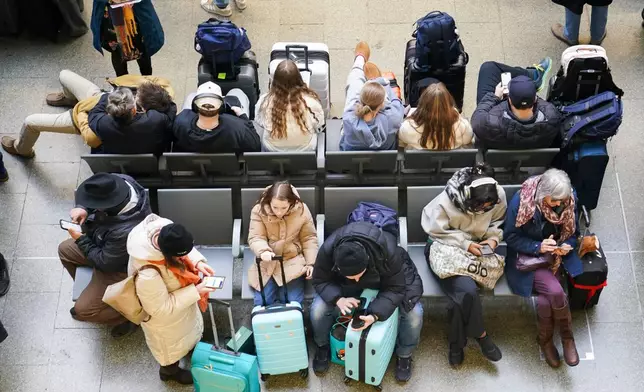
Travellers queue for Eurostar services at St Pancras International station in London, Tuesday, Dec. 30, 2025 after Eurostar asked train customers not to travel because of disruption in the Channel Tunnel. (AP Photo/Alberto Pezzali)
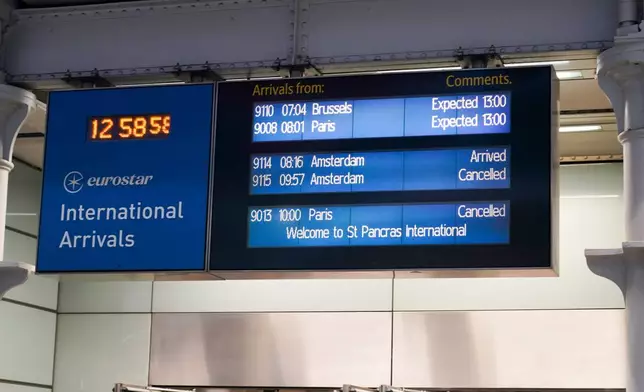
The screen board displays the trains' arrival status at St Pancras International train station in London, Tuesday, Dec. 30, 2025 after Eurostar asked train customers not to travel because of disruption in the Channel Tunnel. (AP Photo/Alberto Pezzali)
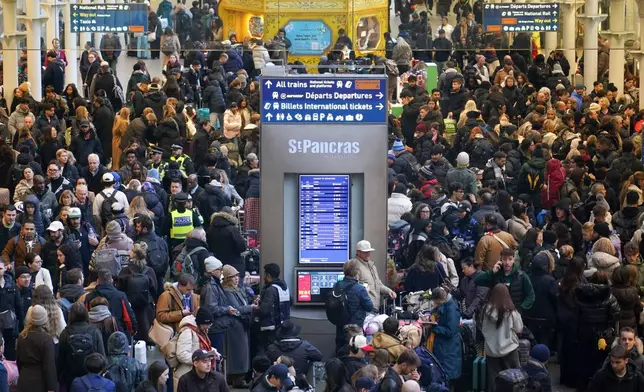
Travelers queue for Eurostar services at St Pancras International station in London, Tuesday, Dec. 30, 2025. (AP Photo/Alberto Pezzali)
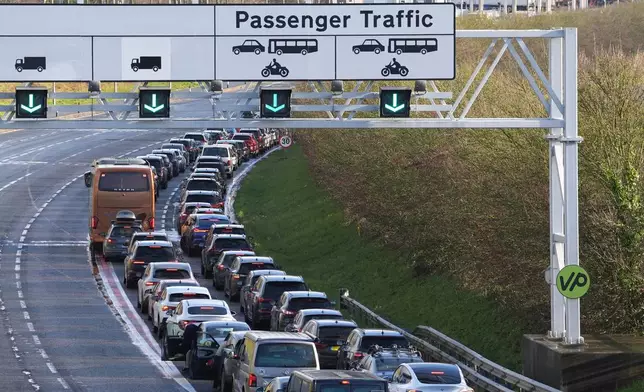
Passengers queue to enter the Eurotunnel site in Folkestone in Kent, England, Tuesday, Dec. 30, 2025. (Gareth Fuller/PA via AP)
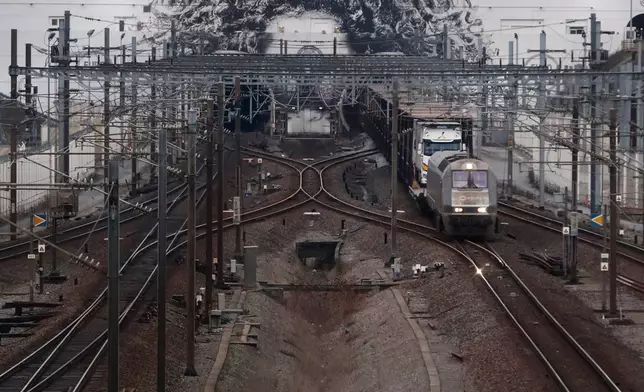
FILE - A train coming from London leaves the Northbound Channel tunnel in Calais, northern France, on Jan. 31, 2020. (AP Photo/Thibault Camus, File)
DUBAI, United Arab Emirates (AP) — Saudi Arabia bombed Yemen's port city of Mukalla on Tuesday after a weapons shipment from the United Arab Emirates arrived for separatist forces in the war-torn country, and warned that it viewed Emirati actions as “extremely dangerous.”
The bombing followed tensions over the advance of Emirates-backed separatist forces known as the Southern Transitional Council. The council and its allies issued a statement supporting the UAE's presence, even as others allied with Saudi Arabia demanded that Emirati forces withdraw from Yemen in 24 hours' time.
The UAE called for “restraint and wisdom” and disputed Riyadh’s allegations. But shortly after that, it said it would withdraw its remaining troops in Yemen. It remained unclear whether the separatists it backs will give up the territory they recently took.
The confrontation threatened to open a new front in Yemen's decade-long war, with forces allied against the Iranian-backed Houthi rebels possibly turning their sights on each other in the Arab world's poorest nation.
It also further strained ties between Saudi Arabia and the UAE, neighbors on the Arabian Peninsula that increasingly have competed over economic issues and regional politics, particularly in the Red Sea area. Tuesday’s airstrikes and ultimatum appeared to be their most serious confrontation in decades.
“I expect a calibrated escalation from both sides. The UAE-backed Southern Transitional Council is likely to respond by consolidating control,” said Mohammed al-Basha, a Yemen expert and founder of the Basha Report, a risk advisory firm.
“At the same time, the flow of weapons from the UAE to the STC is set to be curtailed following the port attack, particularly as Saudi Arabia controls the airspace.”
A military statement carried by the state-run Saudi Press Agency announced the strikes on Mukalla, which it said came after ships arrived there from Fujairah in the UAE.
“The ships’ crew had disabled tracking devices aboard the vessels, and unloaded a large amount of weapons and combat vehicles in support of the Southern Transitional Council’s forces,” the statement said.
“Considering that the aforementioned weapons constitute an imminent threat, and an escalation that threatens peace and stability, the Coalition Air Force has conducted this morning a limited airstrike that targeted weapons and military vehicles offloaded from the two vessels in Mukalla,” it added.
It wasn't clear if there were any casualties.
The Emirati Foreign Ministry hours later denied it shipped weapons but acknowledged it sent the vehicles “for use by the UAE forces operating in Yemen.” It also claimed Saudi Arabia knew about the shipment ahead of time.
The ministry called for “the highest levels of coordination, restraint and wisdom, taking into account the existing security challenges and threats.”
The Emirati Defense Ministry later said it would withdraw its remaining troops from Yemen over “recent developments and their potential repercussions on the safety and effectiveness of counter-terrorism operations.” It gave no timeline for the withdrawal. The UAE broadly withdrew its forces from Yemen years earlier.
Yemen’s anti-Houthi forces not aligned with the separatists declared a state of emergency Tuesday and ended their cooperation with the UAE. They issued a 72-hour ban on border crossings in territory they hold, as well as entries to airports and seaports, except those allowed by Saudi Arabia. It remained unclear whether that coalition, governed under the umbrella of Yemen's Presidential Leadership Council, would remain intact.
The Southern Transitional Council’s AIC satellite news channel aired footage of the strike's aftermath but avoided showing damage to the armored vehicles.
“This unjustified escalation against ports and civilian infrastructure will only strengthen popular demands for decisive action and the declaration of a South Arabian state,” the channel said.
The attack likely targeted a ship identified as the Greenland, a vessel flagged out of St. Kitts. Tracking data analyzed by the AP showed the vessel had been in Fujairah on Dec. 22 and arrived in Mukalla on Sunday. The second vessel could not be immediately identified.
Jens Laerke, a spokesperson for the U.N. humanitarian office, urged combatants to protect civilians and civilian infrastructure, like the port, saying any disruption to its operations “risks affecting the already dire humanitarian situation and humanitarian supply chains.”
Mukalla is in Yemen's Hadramout governorate, which the council seized in recent days. The port city is some 480 kilometers (300 miles) northeast of Aden, which has been the seat of power for anti-Houthi forces after the rebels seized the capital, Sanaa, in 2014.
Yemen, on the southern edge of the Arabian Peninsula off East Africa, borders the Red Sea and the Gulf of Aden. The war there has killed more than 150,000 people, including fighters and civilians, and created one of the world's worst humanitarian disasters.
The Houthis, meanwhile, have launched attacks on hundreds of ships in the Red Sea corridor over the Israel-Hamas war in the Gaza Strip, disrupting regional shipping. The U.S., which earlier praised Saudi-Emirati efforts to end the crisis over the separatists, has launched airstrikes against the rebels under both Presidents Joe Biden and Donald Trump.
Tuesday's strike in Mukalla comes after Saudi Arabia targeted the council in airstrikes Friday that analysts described as a warning for the separatists to halt their advance and leave the governorates of Hadramout and Mahra.
The council had pushed out forces there affiliated with the Saudi-backed National Shield Forces, another group in the anti-Houthi coalition.
Those aligned with the council have increasingly flown the flag of South Yemen, which was a separate country from 1967-1990. Demonstrators have been rallying to support political forces calling for South Yemen to secede again.
A statement Tuesday from Saudi Arabia's Foreign Ministry directly linked the council's advance to the Emiratis for the first time.
“The kingdom notes that the steps taken by the sisterly United Arab Emirates are extremely dangerous,” it said.
Allies of the council later issued a statement in which they showed no sign of backing down.
Associated Press writer Jamey Keaten in Geneva contributed to this report.
This frame grab from video broadcast by Saudi state television on Tuesday, Dec. 30, 2025, shows what the kingdom describes as a shipment of weapons and armored vehicles coming from the United Arab Emirates, at Mukalla, Yemen. (Saudi state television via AP)