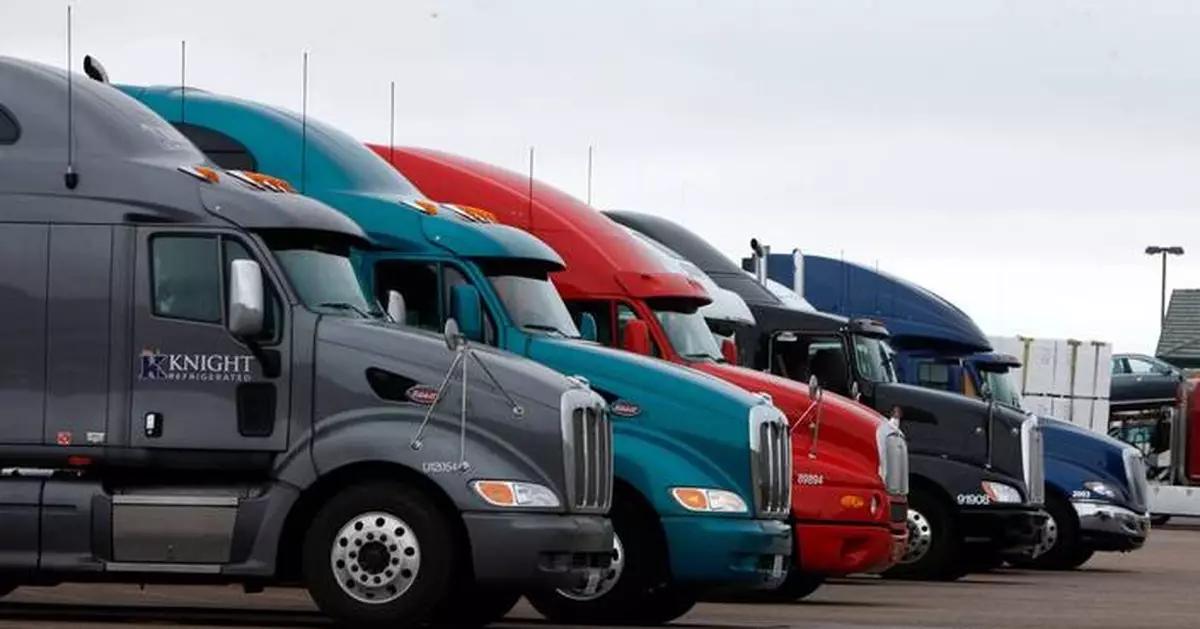
A week after immigrant groups filed a lawsuit, California said Tuesday it will delay the revocations of 17,000 commercial driver's licenses until March to allow more time to ensure that truckers and bus drivers who legally qualify for the licenses can keep them.
But U.S. Transportation Secretary Sean Duffy said the state may lose $160 million if it doesn't meet a Jan. 5 deadline to revoke the licenses. He already withheld $40 million in federal funding because he said California isn't enforcing English proficiency requirements for truckers.
California only sent out notices to invalidate the licenses after Duffy pressured the state to make sure immigrants who are in the country illegally aren't granted the licenses. An audit found problems like licenses that remained valid long after an immigrant's authorization to be in the country expired or licenses where the state couldn't prove it checked a driver's immigration status.
“California does NOT have an ‘extension’ to keep breaking the law and putting Americans at risk on the roads,” Duffy posted on the social platform X.
The Transportation Department has been prioritizing the issue ever since a truck driver who was not authorized to be in the U.S. made an illegal U-turn and caused a crash in Florida that killed three people in August.
California officials said they are working to make sure the federal Transportation Department is satisfied with the reforms they have put in place. The state had planned to resume issuing commercial driver's licenses in mid-December, but the Federal Motor Carrier Safety Administration blocked that.
“Commercial drivers are an important part of our economy — our supply chains don’t move, and our communities don’t stay connected without them,” said DMV Director Steve Gordon.
The Sikh Coalition, a national group defending the civil rights of Sikhs, and the San Francisco-based Asian Law Caucus filed a class-action lawsuit on behalf of the California drivers. They said immigrant truck drivers were being unfairly targeted. The driver in the Florida crash and the driver in another fatal crash in California in October are both Sikhs.
Immigrants account for about 20% of all truck drivers, but these non-domiciled licenses immigrants can receive only represent about 5% of all commercial driver’s licenses or about 200,000 drivers. The Transportation Department also proposed new restrictions that would severely limit which noncitizens could get a license, but a court put the new rules on hold.
Mumeeth Kaur, the legal director of the Sikh Coalition, said this delay “is an important step towards alleviating the immediate threat that these drivers are facing to their lives and livelihoods.”
Duffy previously threatened to withhold millions of dollars in federal funding from California, Pennsylvania and Minnesota after audits found significant problems under the existing rules like commercial licenses being valid long after an immigrant truck driver’s work permit expired. He dropped the threat to withhold $160 million from California after the state said it would revoke the licenses because the state was complying.
Trucking trade groups have praised the effort to get unqualified drivers who shouldn't have licenses or can’t speak English off the road. They also applauded the Transportation Department's moves to go after questionable commercial driver’s license schools.

FILE - A truck departs from a Port of Oakland shipping terminal on Nov. 10, 2021, in Oakland, Calif. (AP Photo/Noah Berger, File)
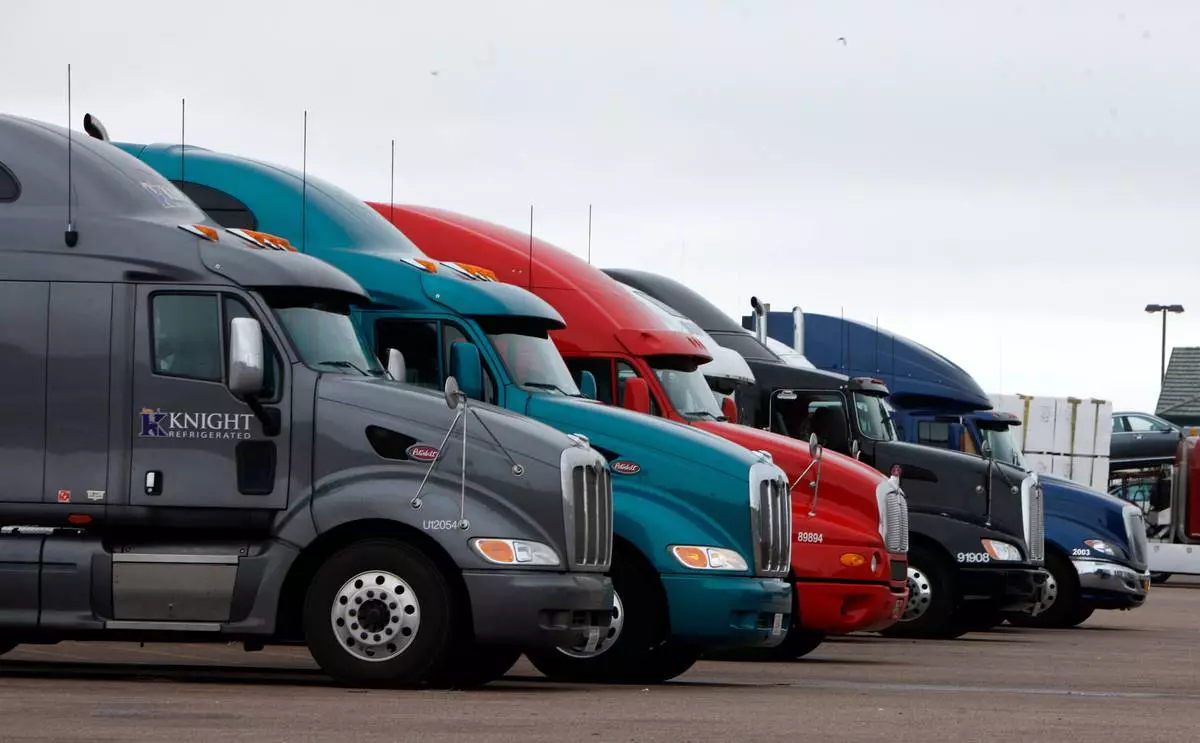
FILE - Big rigs stack up at the Flying J Truck Stop along Interstate 70 near the small Colorado plains community of Limon, May 21, 2009. (AP Photo/David Zalubowski, File)
NEW YORK (AP) — Stocks recovered most of their earlier losses as volatility returned to Wall Street after two days of solid gains.
The S&P 500 fell 0.1% after slumping as much as 1.5% in early trading Thursday. The Dow Jones Industrial Average shed 142 points, or 0.3% as of 2:06 p.m. Eastern. The Nasdaq composite fell 0.2%. Stocks in Europe and Asia finished lower.
Oil prices remained elevated although down from earlier highs. The price for a barrel of U.S. crude rose close to $114 a barrel at one point.
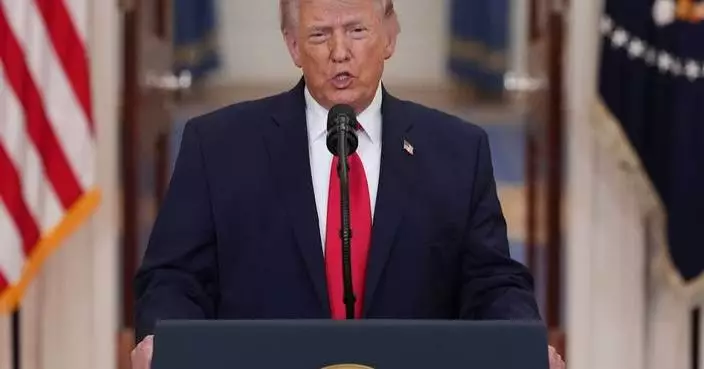
The unsettled trading follows a national address late Wednesday from President Donald Trump, where he vowed the U.S. will continue to attack Iran and failed to offer a clear timetable for ending the conflict in the Middle East. Those comments appeared to dim the hopes for a near-term conclusion to the war that had pushed stocks higher through most of the week.
Major indexes are still on track to close out the week with gains and it will mark the S&P 500's first winning week since the war with Iran began. Thursday is the last day of trading on Wall Street this week with with the stock market closed on Good Friday.
Crude oil prices have been the main force behind the sharp swings for stocks globally. Shipping traffic has been severely curtailed in the Strait of Hormuz, where a fifth of the world’s traded oil passes through during peacetime.
The price of Brent crude, the international standard, jumped 7.6% to $108.84 per barrel. Benchmark U.S. crude rose 11.6% to $111.77 per barrel. Prices had been sliding back toward $100 per barrel prior to Trump’s address on Wednesday. The U.S. only relies on the Persian Gulf for a fraction of the oil it imports, but oil is a commodity and prices are set in a global market. A disruption anywhere affects prices everywhere.
Stocks have been broadly sliding since the war began, with indexes often rising and falling sharply along with statements from Trump about the direction of the war. Just on Monday, the S&P 500 briefly neared a 10% drop from its record, a steep-enough fall that professional investors have a name for it: a “correction. The index gained ground Tuesday and Wednesday on hope that the war could end soon.
“For markets, a prolonged conflict increases the risk of sustained pressures on inflation, global growth, interest rates, and equity valuations,” wrote Adam Turnquist, chief technical strategist for LPL Financial, in a note to investors.
Airlines and other travel-related companies were among the biggest losers on Thursday. United Airlines fell 3.3% and Carnival shed 4.3%.
Tesla fell 5.5% after a report showing that sales over the past three months fell short of analysts' expectations.
Several big technology stocks gained ground to help offset losses elsewhere in the market. Intel jumped 3.8% and Advanced Micro Devices rose 2.4%.
Treasury yields remained relatively steady in the bond market. The yield on the 10-year Treasury fell to to 4.31% from 4.32%.
Wall Street is worried that higher energy prices are adding to already stubbornly high inflation. Rising fuel prices take a bigger chunk out of consumers' wallets in several ways. Directly, gasoline prices in the U.S. have surged 36 percent from a month ago to average $4.08 per gallon, according to the auto club AAA.
Indirectly, rising fuel prices tend to make a wide range of services and goods more expensive. Flights become more expensive as airlines raise ticket prices to offset rising fuel costs. Consumer goods become more expensive as shipping and transportation costs rise.
Inflation has been stubbornly above the Federal Reserve's 2% target. The war and its corresponding surge in energy prices effectively pushes inflation higher and that has dashed hopes for the Fed to cut interest rates. Wall Street had hoped for the central bank to cut rates in order to help offset a weakening job market. Lower interest rates could help stimulate the economy by lowering borrowing costs, but they also risk worsening inflation.
Traders came into 2026 forecasting several cuts to the Fed's benchmark interest rate, which influences rates for mortgages and other loans. They are now expecting the benchmark rate to remain steady this year.
The war with Iran has overshadowed many of the other moving pieces within the economy that the Fed and Wall Street have been monitoring. It remains a mixed picture. Reports this week revealed that consumers remain confident and are still spending, though inflation remains a big concern. A report Thursday showed that mortgage rates continue climbing, posing an obstacle for prospective home buyers. Another update Friday will give a more detailed view of the job market.
Associated Press journalists Chan Ho-Him and Matt Ott contributed to this report.
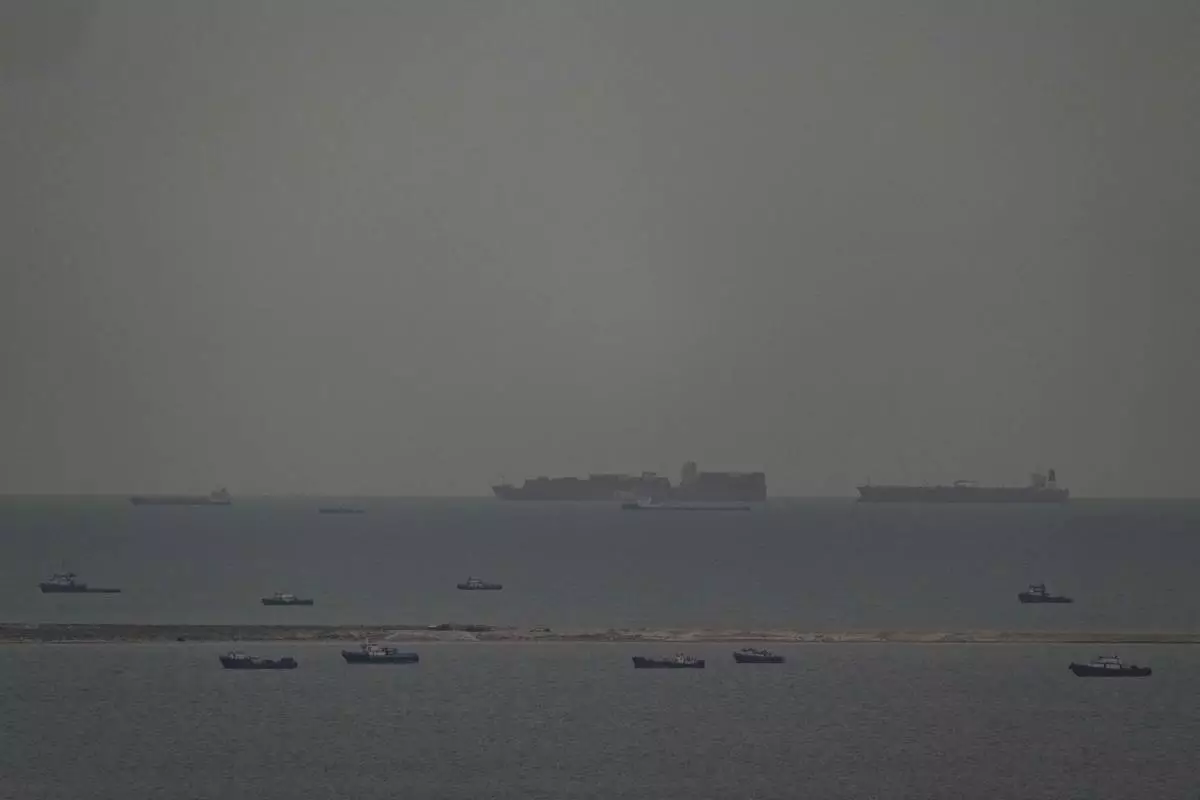
Fishing boats dot the sea as cargo ships, in the background, sail through the Arabian Gulf toward the Strait of Hormuz off the United Arab Emirates, Friday, March 27, 2026. (AP Photo)
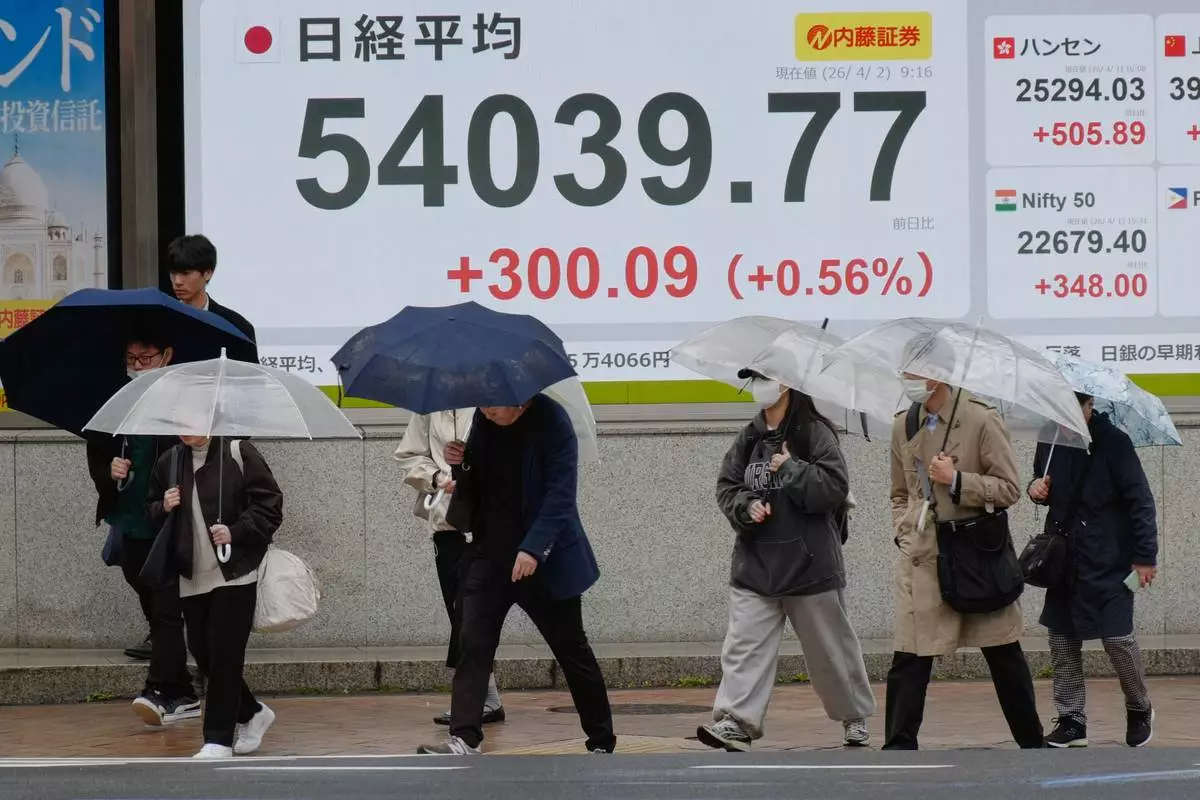
Perople walk in front of an electronic stock board showing Japan's Nikkei index at a securities firm Thursday, April 2, 2026, in Tokyo. (AP Photo/Eugene Hoshiko)
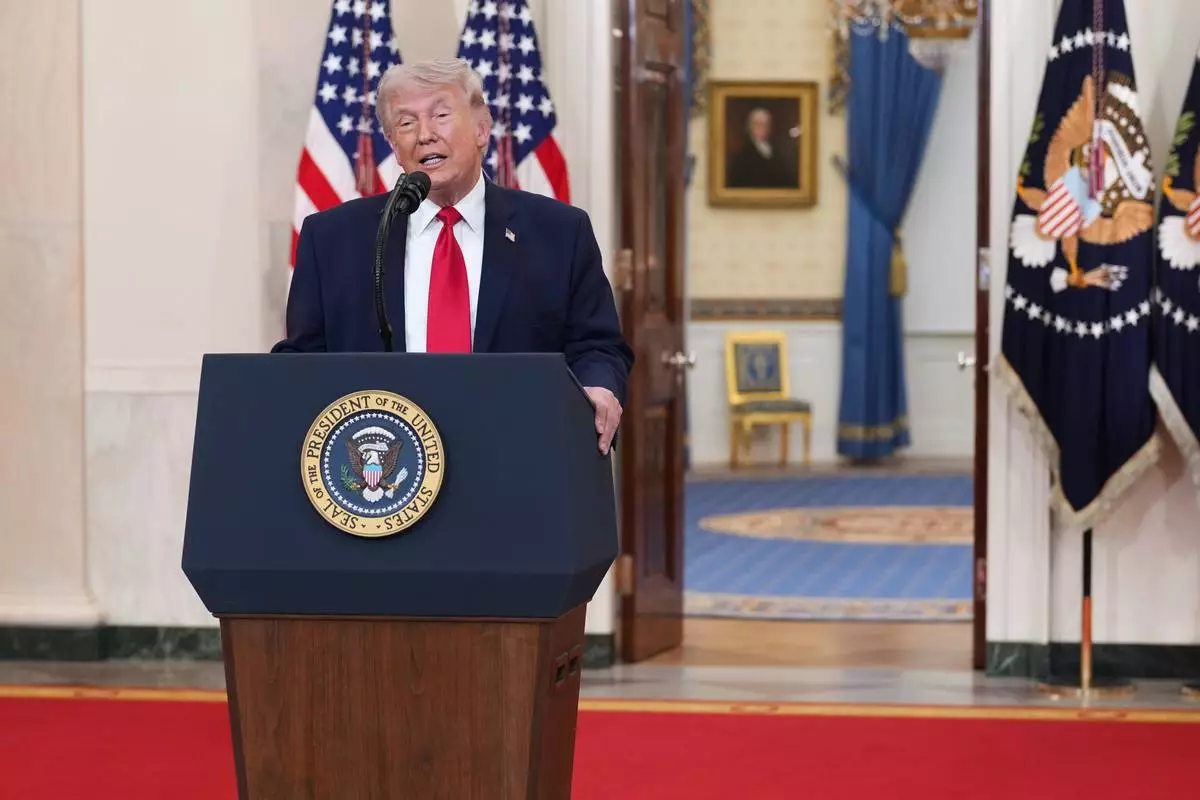
President Donald Trump speaks about the Iran war from the Cross Hall of the White House on Wednesday, April 1, 2026, in Washington. (Doug Mills/The New York Times via AP Pool)
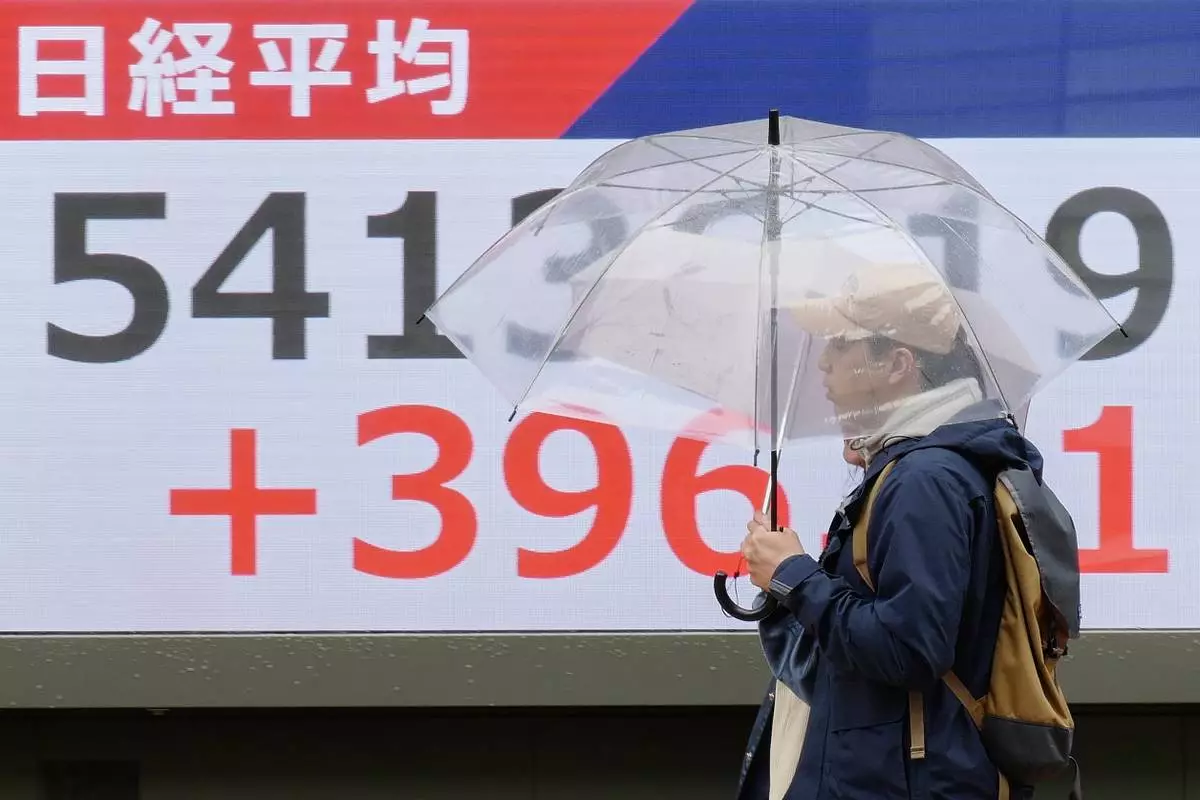
Persons walk in front of an electronic stock board showing Japan's Nikkei index at a securities firm Thursday, April 2, 2026, in Tokyo. (AP Photo/Eugene Hoshiko)