LAS VEGAS (AP) — The setting of the Athletics' news conference Tuesday was at least as notable as the reason why the parties were there.
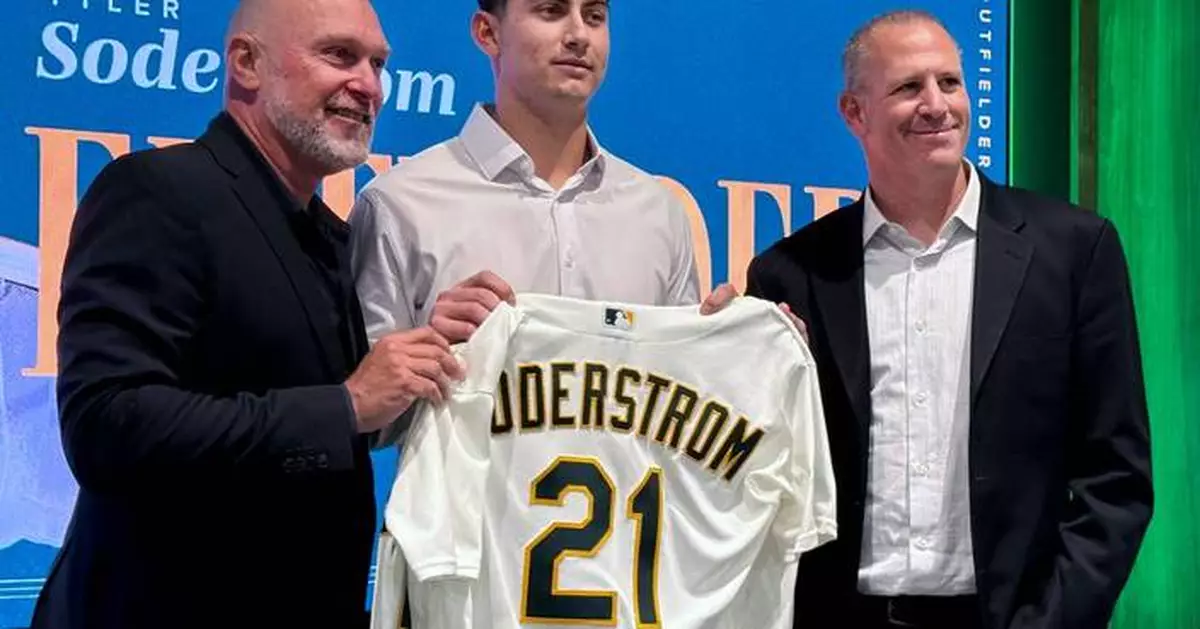
Tyler Soderstrom's signing ceremony was the first such event at the A's future Las Vegas home, the latest step in the club's scheduled move in a little more than two years.
His $86 million, seven-year contract is the richest extension in team history. The deal includes a club option for an eighth season and bonus provisions that could increase the contract's value to $131 million.
“This is exciting for us,” general manager David Forst said. “This keeps him here with the A's well into our time here in Las Vegas starting in 2028. A huge part of what we're doing right now is putting that roster together.”
After leaving Oakland, the A's recently completed their first season in West Sacramento, California, where they plan to remain until the move to Las Vegas.
A tight-spending organization in the past, the A's have signed some head-turning deals going back to last offseason. Those include a $60 million, five-year contract with designated hitter/outfielder Brent Rooker and a $65.5 million, seven-year deal with outfielder Lawrence Butler. Manager Mark Kotsay signed an extension that takes him through 2028 with a club option for 2029.
Then this offseason, the A's not only extended Soderstrom, they traded with the New York Mets for veteran second baseman Jeff McNeil.
First baseman Nick Kurtz was named AL Rookie of the Year and shortstop Jacob Wilson finished second in the voting.
“We have a time frame that we see in front of us with this group that can be really special,” Kotsay said. "We went through a little bit of that phase — I did as a coach — in ‘16, ’17, ‘18 with a special group we weren't able to keep in place. Now we have that same type of group, and we're making every effort possible to keep these guys for an extended period of time, to bring them here in Vegas.
“It's my job to get us to win and win prior to us getting to this ballpark. I think you're seeing David put this group together on a daily basis to give us that chance, and it's going to be exciting.”
The A's have assembled a dynamic young roster that showed it also could overcome adversity last season. After going through a stretch of 20 losses in 21 games, they then went 53-46 the rest of the way.
Soderstrom said he thinks the team could make a playoff push next season.
“There's so much potential that we have,” he said. “Words can't explain how excited I am to be a part of that going forward.”
Soderstrom toured the construction site on Tuesday for the $2 billion, 33,000-capacity domed stadium, standing in left field and where home plate will sit. He later went to the A's Experience Center, which includes team memorabilia and a model of the ballpark, and took part in the news conference.
The A's took him with the 26th overall pick in the 2020 amateur draft. Soderstrom played his first full major league season this year and batted .276 with 25 home runs and 93 RBIs.
Kotsay said he was especially impressed with Soderstrom's willingness and ability to move to left field after playing first base and catcher.
When Kotsay asked Soderstrom what he thought about shifting to left, the player responded by saying, “I'm the best athlete on the team. I don't have a problem.”
Soderstrom played so well in the outfield he became a Gold Glove finalist.
A's management could have waited to pursue a long-term deal with Soderstrom, but opted instead to avoid salary arbitration, which he would have been eligible for after next season. Soderstrom would have been eligible for free agency following the 2029 season.
“The idea of taking this group of young players and locking them up into a new ballpark has been something we've talked about for a long time,” Forst said. “We were able to get Brent Rooker and Lawrence Butler signed last year, Tyler now, and there are ongoing conversations with others. So this is kind of the blueprint for how we want to do this and how we want to open the ballpark in '28.”
AP MLB: https://apnews.com/mlb
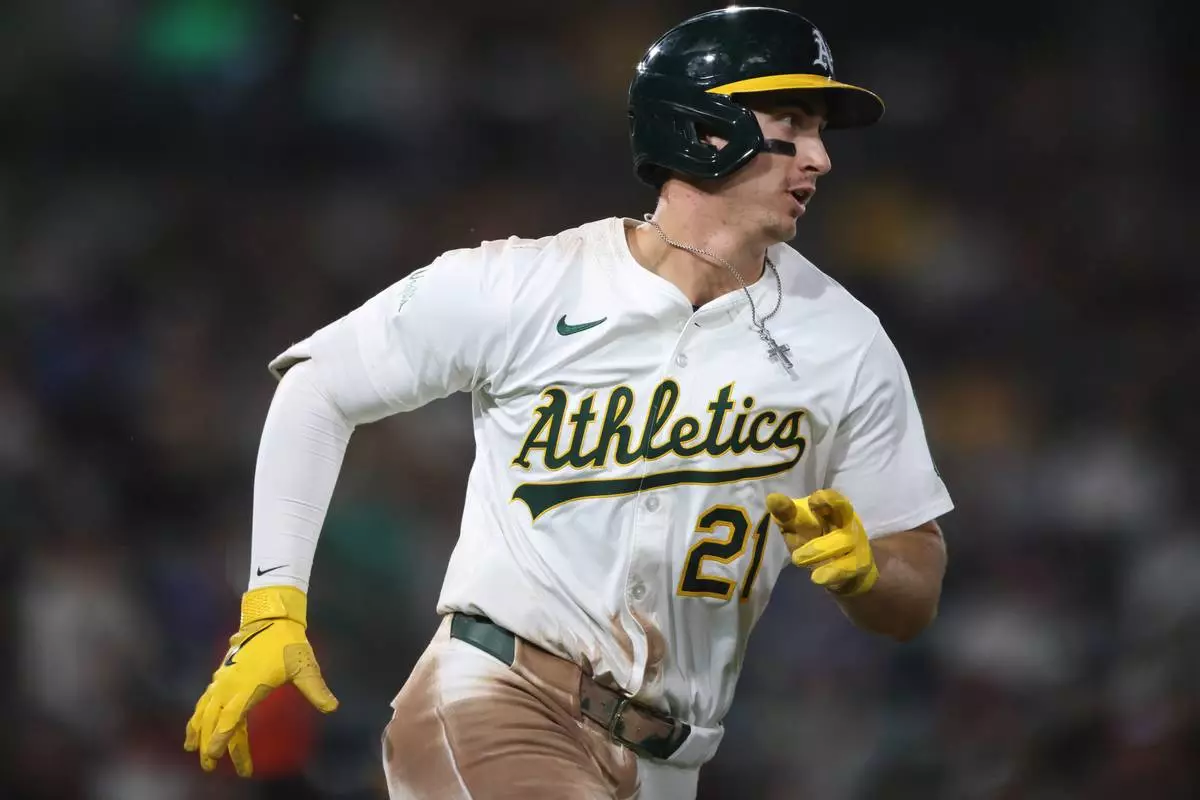
FILE - Athletics' Tyler Soderstrom sprints towards first after hitting an RBI double during the fifth inning of a baseball game against the Houston Astros, Sept. 23, 2025, in West Sacramento, Calif. (AP Photo/Scott Marshall, File)
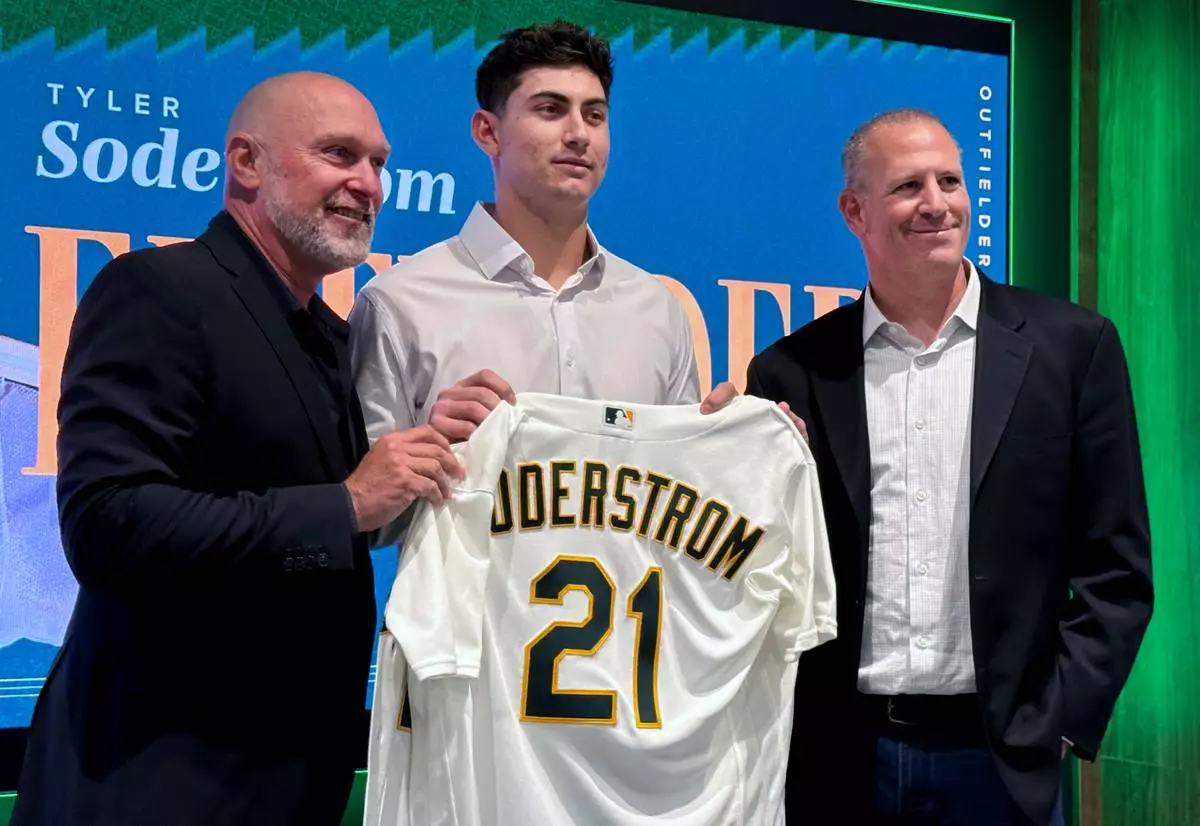
Tyler Soderstrom, center, holds up his jersey during a news conference joined by manager Mark Kotsay, left, and General Manager David Forst at the A's Ballpark Experience Center in Las Vegas, Nev. on Tuesday, Dec. 30, 2025. (AP Photo/Mark Anderson)
NAGASAKI, Japan (AP) — Hundreds of prisoners of war from Allied countries were held at brutal Japanese camps in Nagasaki when the United States dropped an atomic bomb 80 years ago.
Their presence during the Aug. 9, 1945, bombing is little known, and family and researchers have been collecting and publishing testimonies to tell the stories of these often unrecognized victims.
In September, dozens of relatives of Dutch POWs and descendants of Japanese bombing survivors came together to commemorate both those who were abused at the camps and the tens of thousands of Japanese who were killed that day. The dead included at least eight captives at one of the Nagasaki camps.
Andre Schram, who represented the Dutch families at the Nagasaki memorial, unveiled in 2015, is the son of a sailor who was among nearly 1,500 POWs held at the Fukuoka No. 2 Branch Camp for three years and forced to work at the Kawanami shipyard.
Many of the prisoners were Dutch service members captured by the Japanese in Indonesia, transported to Nagasaki on so-called “hell ships,” kept at two major camps -– No. 2 and No. 14 — and used as slave labor.
About 150,000 Allied prisoners were held in dozens of camps across Asia during the war, including 36,000 sent to Japan to make up for labor shortage as Japanese men were drafted and deployed to battlefields across Asia, according to the POW Research Network Japan.
There were also prisoners from the United States, Britain and Australia in Nagasaki. None died from the atomic blast at the No. 2 Camp, but more than 70 earlier died of malnutrition, overwork and illness.
Andre Schram's father, Johan Willem Schram, returned to the Netherlands four months after the war ended, but only near the end of his life did he tell his son about being treated like a slave. Japanese officials have apologized multiple times for wartime atrocities, “but Johan, like many other victims, had doubts about their sincerity,” his son said.
“He felt Japan and the Netherlands treated him and other prisoners of war with disrespect. He never wanted anything to do with Japan again,” Andre Schram wrote in “Johan’s Story,” a booklet about the Netherlands’ colonial rule of the Dutch East Indies, the war with Japan and the aftermath, based on his research after his father died in 1993.
Peter Klok said his father, Leendert Klok, also a Dutch POW at the camp, told him that Japanese civilians at the shipyard were friendly and helped him find parts to repair his watch. Military police later beat him for seeking help.
Klok called the atomic bombings of Hiroshima and Nagasaki awful, but said Japan must reflect on its atrocities.
When the U.S. B-29 dropped the “Fat Man” plutonium bomb on Nagasaki, prisoners at the No. 2 Camp, about 10 kilometers (6.2 miles) from ground zero, saw a huge orange fireball, purple smoke and a triple-layer mushroom cloud, British captive Tom Humphrey wrote in his diary, part of which is quoted on the Royal Air Force website.
Windows at the camp were shattered, doors were blasted off and the clinic ceiling collapsed, he wrote.
The other camp, Fukuoka No. 14, was much closer to the blast. The brick buildings were destroyed, killing eight and injuring dozens.
A former Dutch captive, Rene Schafer recalled that he and his fellow prisoners were digging a new shelter when Japanese soldiers warned of U.S. aircraft approaching. They jumped into a bunker, but his roommate suffered severe burns and died nine days later.
Australian survivor Peter McGrath-Kerr was reading when everyone bolted to shelters. A fellow Australian captive dug him out from the debris, but he was unconscious for five days with broken ribs, cuts and bruises and radiation burns on his hand.
In the days that followed the atomic bombing, prisoners from the Fukuoka No. 2 Camp provided rice and other assistance to their comrades from the No. 14 Camp.
Schram’s father and fellow POWs at the No. 2 Camp were officially notified of Japan’s surrender on Aug. 18, and a U.S. B-29 delivered its first food drop for the Allied POWs on Aug. 26.
On Sept. 13, the prison camp survivors left Nagasaki, heading for the Philippines on a U.S. carrier.
The ceremony in Nagasaki at a granite monument with three inscribed panels was the result of efforts by the families of Dutch POWs, who returned home with painful memories, and the descendants of atomic bombing survivors, said Kazuhiro Ihara, whose father lived through the bombing and was devoted to reconciliation with the POWs.
In Hiroshima, Japanese survivor Shigeaki Mori’s decadeslong independent research led to U.S. confirmation of the deaths of 12 captured American service members in the Aug. 6 atomic bombing.
Former President Barack Obama, who became the first U.S. leader to visit Hiroshima’s Peace Memorial Park in 2016, mentioned in his speech “a dozen Americans held prisoner” as part of the victims. He recognized Mori for seeking out the Americans' families, believing their loss was equal to his own, and later gave him a hug.
A 1957 Japanese law allowed medical support for certified atomic bombing survivors and has since gradually expanded its scope. The number of certificate holders is now 99,000, down from a peak of 372,000 in 1980.
The Health and Welfare ministry says about 4,000 certificate holders were living outside Japan, many of them South Koreans and Japanese in the United States, Brazil and other countries.
According to the POW Research Network, at least 11 former POWs who were in Nagasaki – seven Dutch, three Australian and one British – received survivors’ certificates.
“The issue has been swept under the rug,” POW Research Network co-founder Taeko Sasamoto said.
The research requires the time-consuming examination of historical documents that haven’t attracted much academic interest, Sasamoto said. “It’s an important issue that has long been neglected.”
Associated Press video journalist Mayuko Ono contributed to this report.
The Associated Press receives support for nuclear security coverage from the Carnegie Corporation of New York and Outrider Foundation. The AP is solely responsible for all content.
Additional AP coverage of the nuclear landscape: https://apnews.com/projects/the-new-nuclear-landscape/
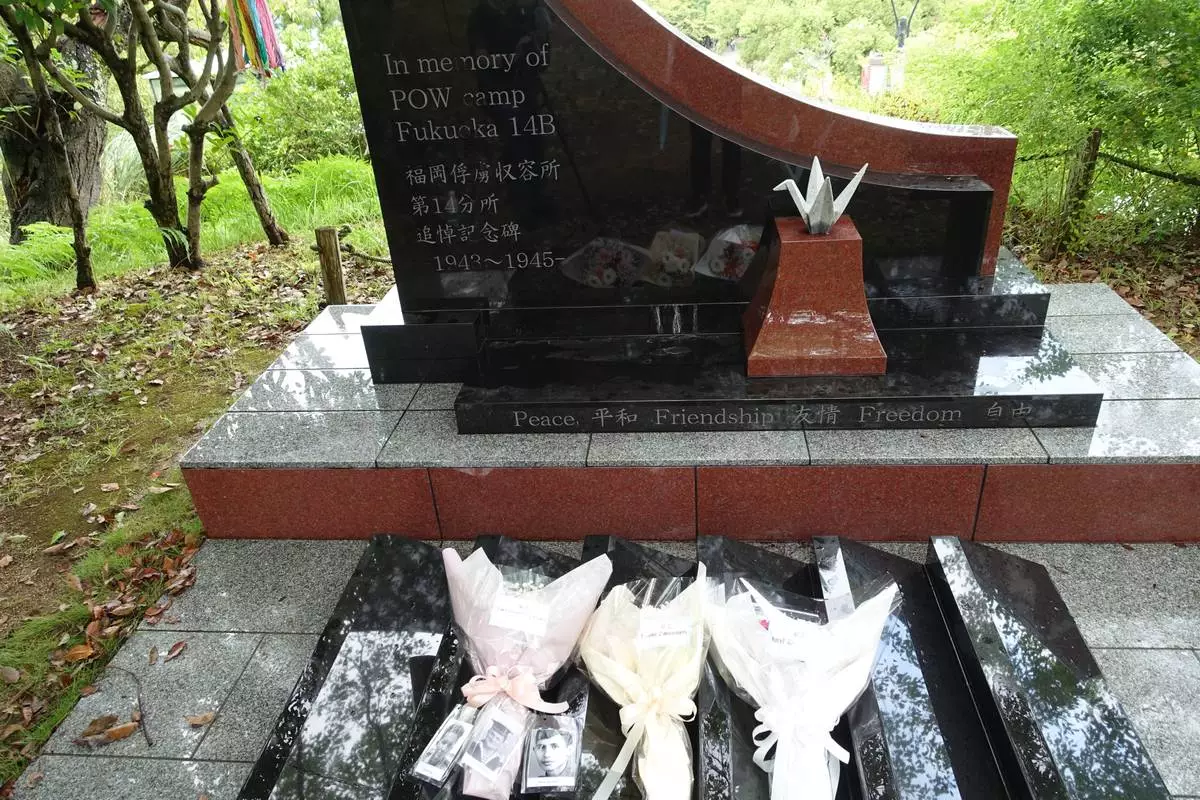
Flowers are placed by relatives of former Dutch POWs at a monument dedicated to those held captive at the Fukuoka No. 14 Camp during a memorial service in Nagasaki, western Japan, Friday, Sept. 12, 2025. (AP Photo/Mari Yamaguchi)
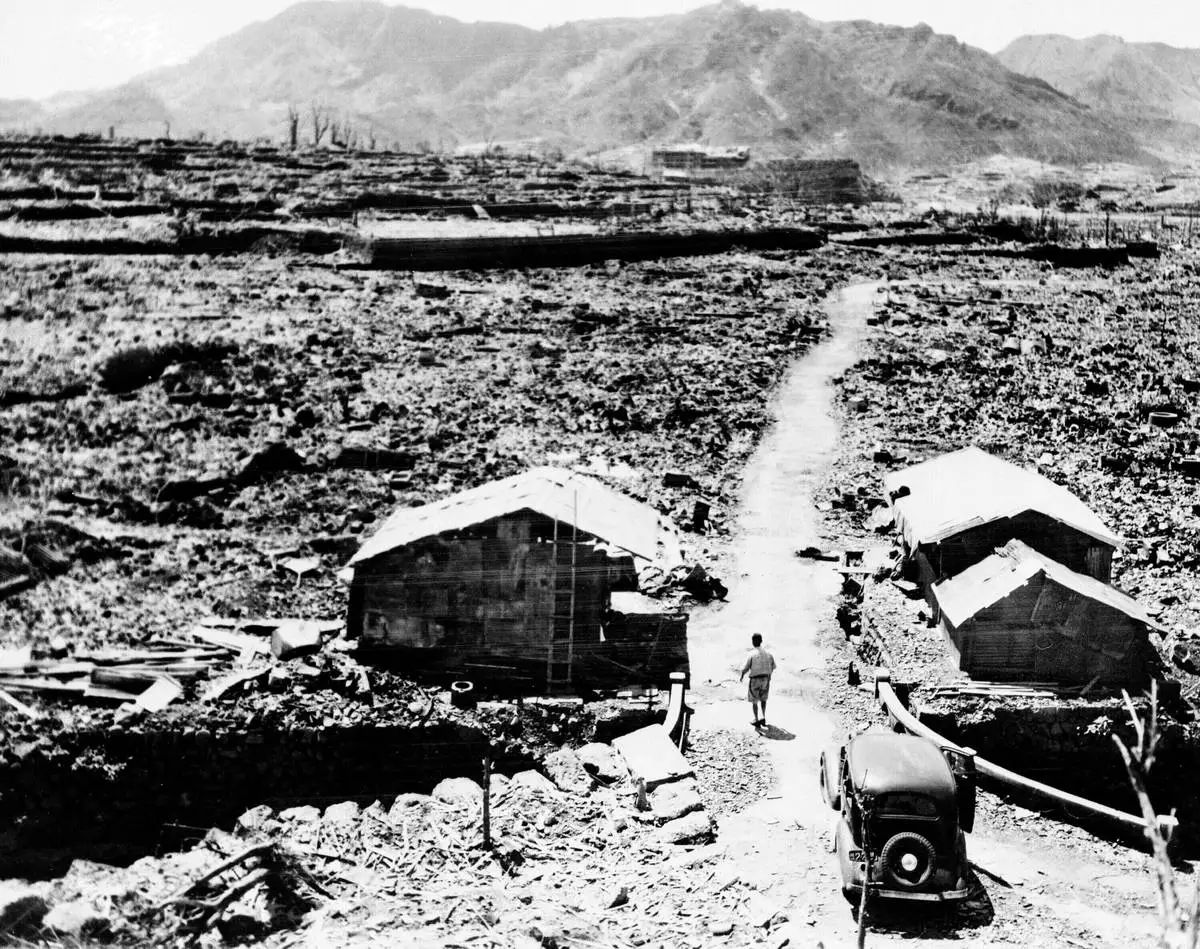
FILE - This Sept. 14, 1945, photo shows shacks made from scraps of debris from buildings that were leveled in the aftermath of the atomic bomb that was dropped over Nagasaki, western Japan. (AP Photo, File)
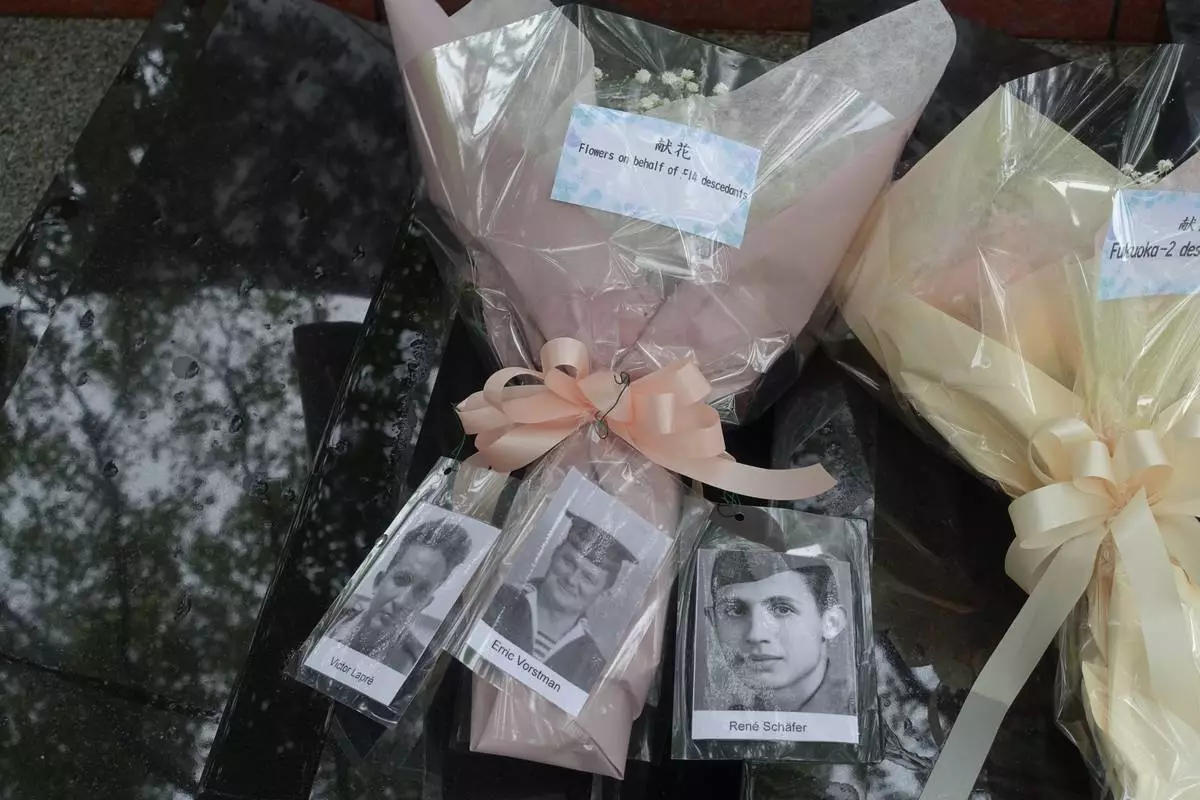
Portraits of Dutch servicemembers held as prisoners of war are placed on a bouquet of flowers laid at a memorial service for those held at the Fukuoka No. 14 Camp in the city of Nagasaki, western Japan, Saturday, Sept. 12, 2025. (AP Photo/Mari Yamaguchi)
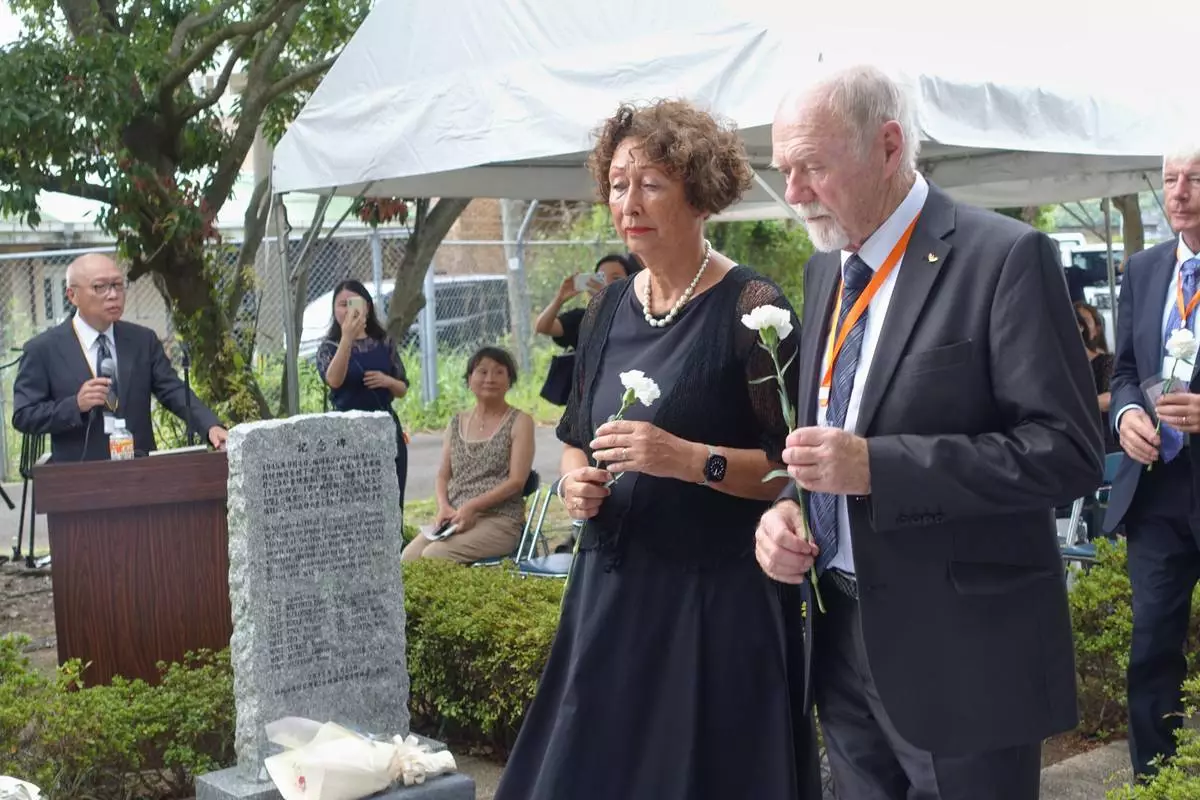
Andre Schram, right, the son of a former Dutch POW, lays a chrysanthemum flower to commemorate the victims at a memorial held at the former site of the Fukuoka No. 2 Camp in Koyagi, Nagasaki City, western Japan, Saturday, Sept. 13, 2025. (AP Photo/Mari Yamaguchi)
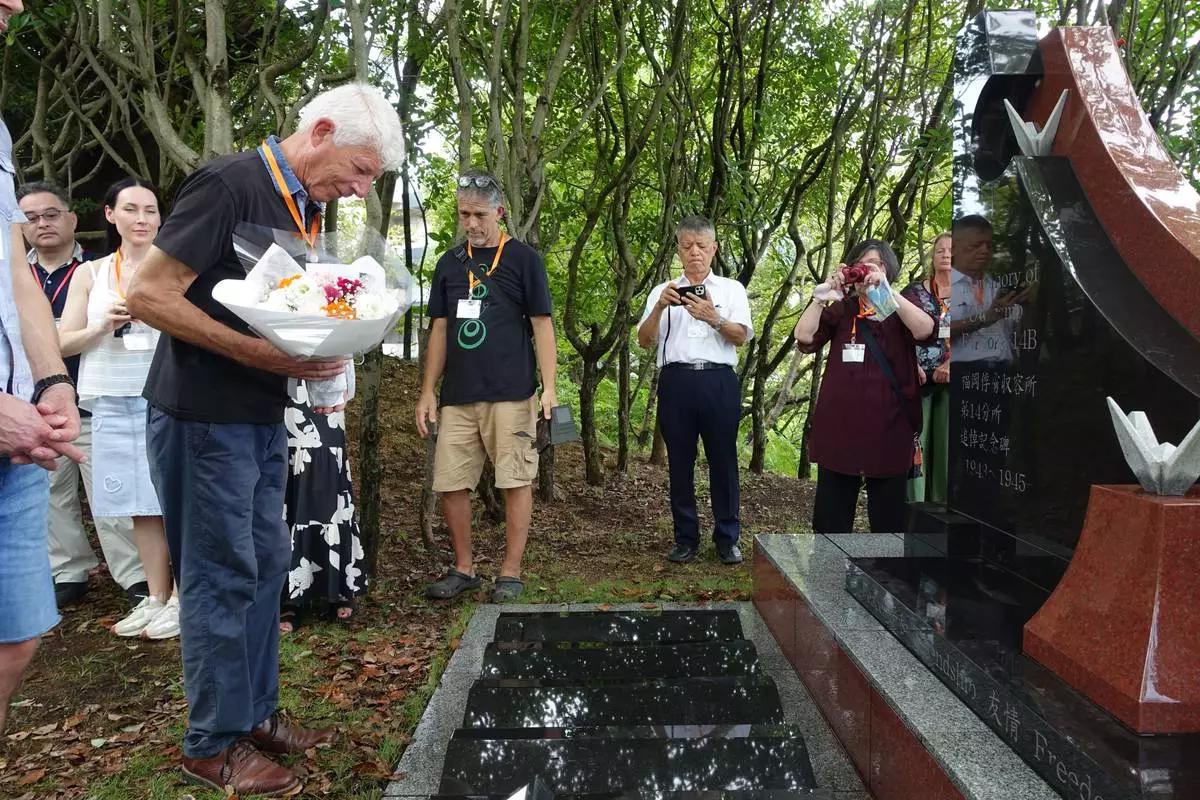
Relatives of former Dutch POWs pay tribute at a monument dedicated to the victims of prison abuse and the atomic bombing of Nagasaki 80 years ago as captives at the Fukuoka No. 14 Camp, at a ceremony, in Nagasaki, western Japan, Friday, Sept. 12, 2025. (AP Photo/Mari Yamaguchi)