CHP reminds public to take precautions against cold weather
The Centre for Health Protection (CHP) of the Department of Health (DH) today (January 1) reminded the public, particularly the elderly, people with chronic illnesses, outdoor workers, pregnant women, infants and children, to adopt appropriate measures to protect their health in view of the cold weather.
Elderly and people with chronic illnesses
---------------------------------------------
A spokesman for the CHP said that in general, elderly people have less insulating fat, and their body temperature control mechanisms would be weaker. Their body may not respond appropriately to the cold weather. In addition, some senior persons may have decreased mobility, which can impair their ability to generate and conserve body heat.
Chronic illnesses, such as hypertension, diabetes or hypothyroidism, would lower their metabolic rate, subsequently causing their body to generate less heat. Besides, persons with chronic illnesses, such as chronic respiratory illnesses or cardiovascular and cerebrovascular diseases, are vulnerable to disease aggravation due to cold weather.
The spokesman reminded the public, in particular the elderly and persons with chronic illnesses, to adopt the following preventive measures:
 Take note of the weather forecast. Wear warm clothing, including hats, scarves, gloves and socks, accordingly;
Consume sufficient food to ensure adequate calorie intake;
Perform regular exercise to facilitate blood circulation and heat production;
Stay in a warm environment. Avoid going out in the morning and at night when the temperature is lower, and avoid prolonged outdoor exposure;
Use heaters with care and maintain adequate indoor ventilation;
Avoid alcoholic beverages. Drinking alcohol cannot keep you warm. Alcohol accelerates the loss of body heat through dilated blood vessels, resulting in chilling instead; and
Seek medical advice if feeling unwell.
Take note of the weather forecast. Wear warm clothing, including hats, scarves, gloves and socks, accordingly;
Consume sufficient food to ensure adequate calorie intake;
Perform regular exercise to facilitate blood circulation and heat production;
Stay in a warm environment. Avoid going out in the morning and at night when the temperature is lower, and avoid prolonged outdoor exposure;
Use heaters with care and maintain adequate indoor ventilation;
Avoid alcoholic beverages. Drinking alcohol cannot keep you warm. Alcohol accelerates the loss of body heat through dilated blood vessels, resulting in chilling instead; and
Seek medical advice if feeling unwell.
Infants, children and pregnant women
-------------------------------------------
Infants and young children are more susceptible to heat loss during the cold weather. The spokesman reminded parents that they should ensure babies are sufficiently warm, but it is also important to keep babies relatively lightly clothed to avoid overheating them. When children engage in outdoor activities, their clothing should be adjusted accordingly, and changed quickly if soaked. Infants, young children and pregnant women should also try to avoid going out in the morning and at night when the temperature is lower.
Parents should observe the following safety measures when putting their children to bed:
Keep the room well ventilated and at a comfortable temperature;
Always place babies on their backs to sleep. Leave their heads, faces and arms uncovered during sleep;
Babies do not need pillows. Place babies on a firm and well-fitted mattress to sleep. Avoid soft objects, pillows and loose bedding;
Let babies sleep in a cot placed near their parents' bed; and
Maintain a smoke-free environment.
Outdoor workers
-------------------
Outdoor workers should take heed of the weather report and wear appropriate warm clothing for work. Clothing should be changed as soon as possible if soaked. When the Cold Weather Warning is in force, they should take appropriate precautions. They should take a break immediately and seek help and medical attention if feeling unwell.
General public
----------------
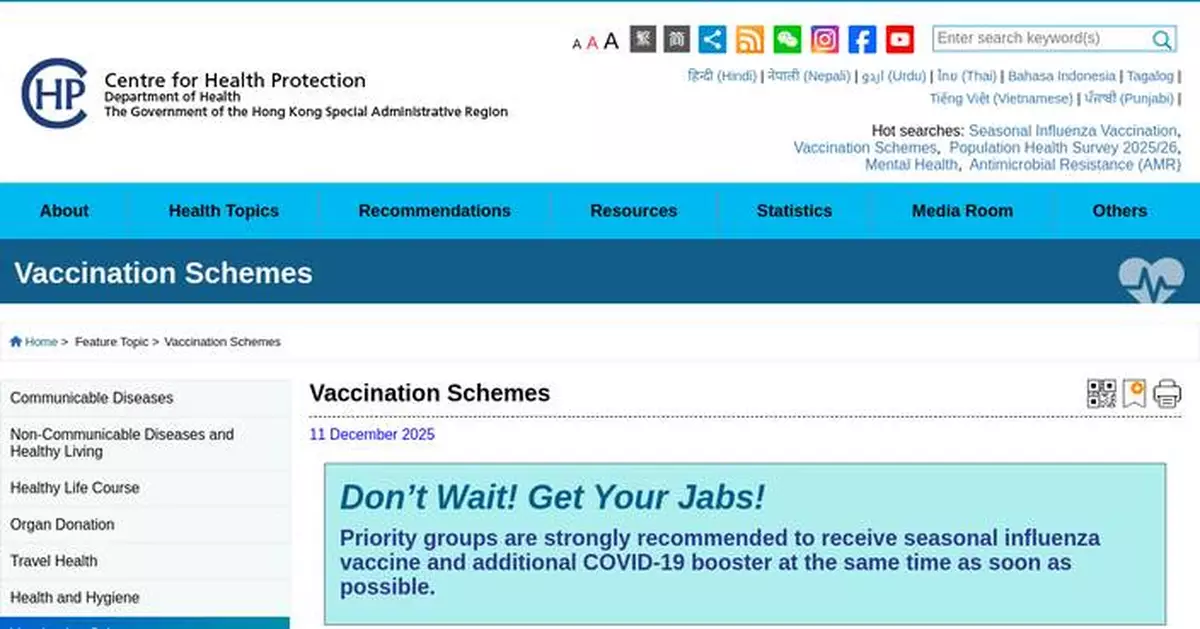
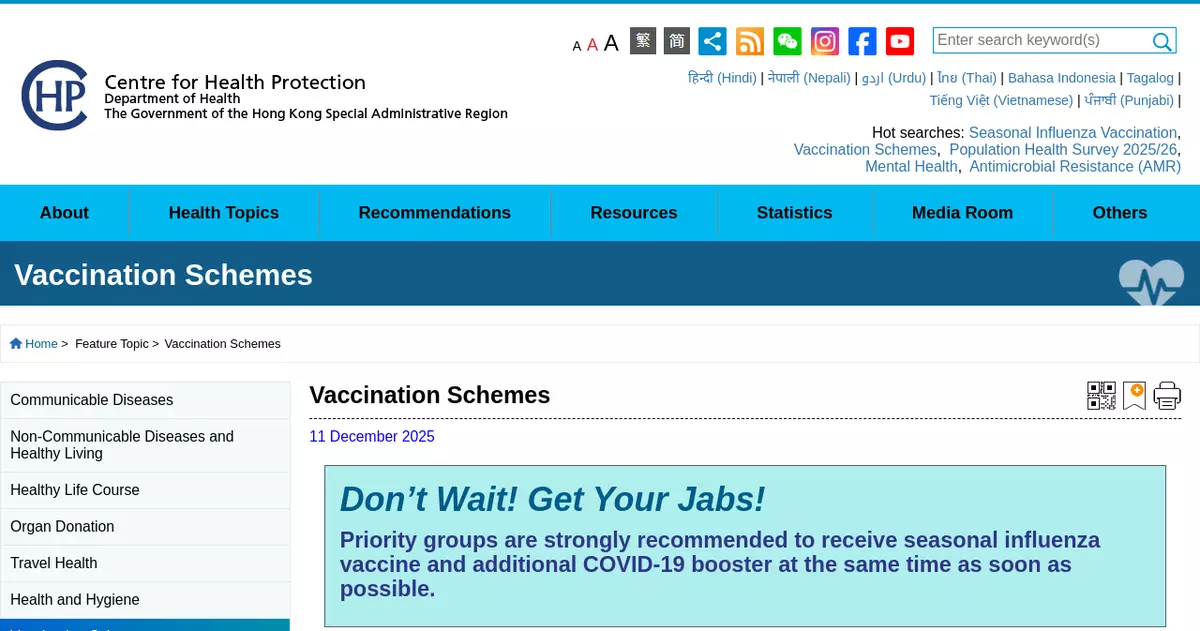
In addition, many respiratory pathogens, including influenza and SARS-CoV-2, may have increasing activity and community transmission during winter. Seasonal influenza vaccination is recommended for all persons aged 6 months or above, except those with known contraindications. Persons at higher risk of getting influenza and its complications, including the elderly and children, should receive seasonal influenza vaccinations early. Please see details of the vaccination schemes on theCHP'swebsite.
A person who gets influenza and COVID-19 at the same time may become more seriously ill and would have a higher risk of death. It is important for elderly persons, especially those residing in residential care homes, to receive both a seasonal influenza vaccination and a COVID-19 vaccination. They should also receive an additional booster against COVID-19 according to recommendations as soon as possible. The public should also maintain good personal and environmental hygiene against respiratory illnesses and note the following:
Surgical masks can prevent transmission of respiratory viruses from ill persons. It is essential for persons who are symptomatic (even if having mild symptoms) to wear a surgical mask;
Wear a surgical mask when taking public transport or staying in crowded places. It is important to wear a mask properly, including performing hand hygiene before wearing and after removing a mask;
Avoid touching one's eyes, mouth and nose;
Wash hands with liquid soap and water properly whenever possibly contaminated;
When hands are not visibly soiled, clean them with 70 to 80 per cent alcohol-based handrub;
Cover the mouth and nose with tissue paper when sneezing or coughing. Dispose of soiled tissue paper properly into a lidded rubbish bin and wash hands thoroughly afterwards;
Maintain good indoor ventilation;
When having respiratory symptoms, wear a surgical mask, refrain from work or attending classes at school, avoid going to crowded places and seek medical advice promptly; and
Maintain a balanced diet, exercise regularly, take adequate rest, do not smoke and avoid overstress.
Food-borne diseases, particularly those linked to hotpot cuisine, are also common in cold weather. The following preventive measures should be taken:
Wash hands before handling and consuming food;
Do not patronise unlicensed vendors or those with poor hygienic standards while selecting food;
Wash and cook all food thoroughly;
Vegetables should be washed thoroughly in clean running water before cooking and consumption. When appropriate, scrub vegetables with hard surfaces with a clean brush to remove dirt and substances, including pesticide residues and contaminants, from surfaces and crevices;
Shrimps should be fully cooked until the shells turn red and the flesh turns white and opaque;
For shellfish such as scallops and geoduck, scrub the shells thoroughly and remove internal organs;
Do not eat any undercooked freshwater aquatic products. To ensure that the food is thoroughly cooked, the centre of the food should reach a temperature of at least 75 degrees Celsius so as to destroy pathogens;
Most hotpot ingredients should be stored in a refrigerator at 4 degrees C or below, while frozen food should be stored in a freezer at -18 degrees C or below;
Never use raw eggs as a dipping sauce for hotpot; and
Use different sets of chopsticks to handle raw and cooked food to avoid cross-contamination.
In addition, when using fuel-burning appliances, especially in indoor areas, the public should ensure adequate ventilation to avoid harmful exposure to carbon monoxide (CO) and prevent CO poisoning.
Fo more health information, the public may call the DH's Health Education Infoline (2833 0111) or visit theCHP's websiteandFacebook Fanpageas well as press releases of the Labour Department on precautions against cold weather for outdoor workers and their employers when the Cold Weather Warning is in force.
The public may also call Dial-a-Weather (1878 200) or visit thewebsite of the Hong Kong Observatoryfor the latest weather information and forecasts, or itspage on Weather Information for Senior Citizens.
Source: AI-found images
Appointment of non-official members to ICAC-related committees announced
The Government announced today (January 1) that the Chief Executive has made appointments and reappointments to the four Independent Commission Against Corruption (ICAC) advisory committees, namely the Advisory Committee on Corruption (ACOC), the Operations Review Committee (ORC), the Corruption Prevention Advisory Committee (CPAC) and the Citizens Advisory Committee on Community Relations (CACCR), and to the ICAC Complaints Committee (ICC). All of the appointments and reappointments are for a term of two years with effect from January 1, 2026.
ACOC
The Chief Executive has reappointed Mr Bernard Charnwut Chan (in his capacity as the Chairman of the ORC), Professor Simon Ho Shun-man (in his capacity as the Chairman of the CACCR), Dr Kelvin Wong Tin-yau (in his capacity as the Chairman of the CPAC) and Mr Victor Lam Hoi-cheung as members of the ACOC. Ms Mary Huen Wai-yi and Mr David Liao Yi-chien have been newly appointed to the Committee as members.
Ms Huen is the Executive Director and Chief Executive Officer of a bank. She is the Chairperson of the Hong Kong Association of Banks. She is also a member of the Banking Advisory Committee of the Hong Kong Monetary Authority, the Hospital Authority and the Human Resources Planning Commission.
Mr Liao is the Co-Chief Executive of a bank. He is also a member of the Advisory Committee on Attracting Strategic Enterprises, the Advisory Committee on the Northern Metropolis and the Exchange Fund Advisory Committee.
The ACOC advises the Commissioner of the ICAC on any aspects of the problem of corruption in Hong Kong, and keeps the operational, staffing and administrative policies of the ICAC under review.
ORC
The Chief Executive has reappointed Mr Bernard Charnwut Chan as the Chairman of the ORC. Ms Clara Chan Yuen-shan, Mr Felix Li Kwok-hing and Ms Vivien Lau Man-yee have been reappointed to the Committee as members. Ms Kuok Hui-kwong has been newly appointed to the Committee as a member.
Ms Kuok is the Chairperson and Chief Executive Officer of a hotel group. She is also a member of the Appeal Board on Public Meetings and Processions and the Security and Guarding Services Industry Authority.
The ORC oversees all ICAC investigations and corruption complaints received to ensure that they are handled effectively and efficiently. It also examines circumstances where search warrants are authorised by the Commissioner, where persons have been put on bail for more than six months, and where investigations have been lasting for over a year or require substantial resources.
CPAC
The Chief Executive has reappointed Dr Kelvin Wong Tin-yau as the Chairman of the CPAC. Ms Carrie Lau Ka-wai and Mr Rex Mok Chung-fai have been reappointed to the Committee as members. Mr Donald Choi Wun-hing has been appointed as a new member of the Committee.
Mr Choi is the Managing Director of the Urban Renewal Authority. He is also a member of the Antiquities Advisory Board.
The CPAC receives and calls for reports from the ICAC about practices and procedures of government departments, public bodies and the private sector which may be conducive to corruption. It also advises the Commissioner on what areas should be examined and the degree of priority to be accorded to each.
CACCR
The Chief Executive has reappointed Professor Simon Ho Shun-man as the Chairman of the CACCR. Miss Pinky Lau Pik-yiu, Dr James Wong Kong-tin, Miss Jenny Yung Ching-yi and Ms Cally Kwong Mei-wan have been reappointed as members of the CACCR. Dr Kalwan Kwan Ming-tak has been appointed as a new member of the Committee.
Dr Kwan is the Honorary Lecturer of the Department of Sociology of the University of Hong Kong.
The CACCR advises the Commissioner on appropriate measures to foster public support in combating corruption and to educate the public against the evils of corruption. It also monitors community response to the ICAC's work and public attitudes towards corruption in general.
ICC
The Chief Executive has reappointed Executive Council Member Dr Lam Ching-choi as the Chairman of the ICC. Legislative Council (LegCo) Member Miss Grace Chan man-yee and Mr Lau Chun-hung have been reappointed as members of the ICC. LegCo Members Mr Chan Hok-fung and Ms Judy Chan Kapui, and Ms Irene Chow Man-ling have been appointed as new members of the ICC.
Mr Chan works in the banking industry. He is also a Non-executive Director of the Urban Renewal Authority.
Ms Chan is a full-time LegCo Member. She is also a member of the Fisheries Development Loan Fund Advisory Committee and the Hong Kong Housing Authority.
Ms Chow is the Executive Director of an investment company. She is also a member of the Airport Authority and the Standing Commission on Civil Service Salaries and Conditions of Service.
The ICC monitors the handling of non-criminal complaints against the ICAC, reviews the ICAC procedures and practices which may lead to complaints, and makes recommendations when necessary.
The Government extends its sincere appreciation to all outgoing members whose terms of office expired after December 31, 2025. Their valuable contributions to the work of the respective committees are greatly appreciated.
The updated non-official membership lists of the four ICAC advisory committees and the ICC are in the Annex.

Source: AI-found images