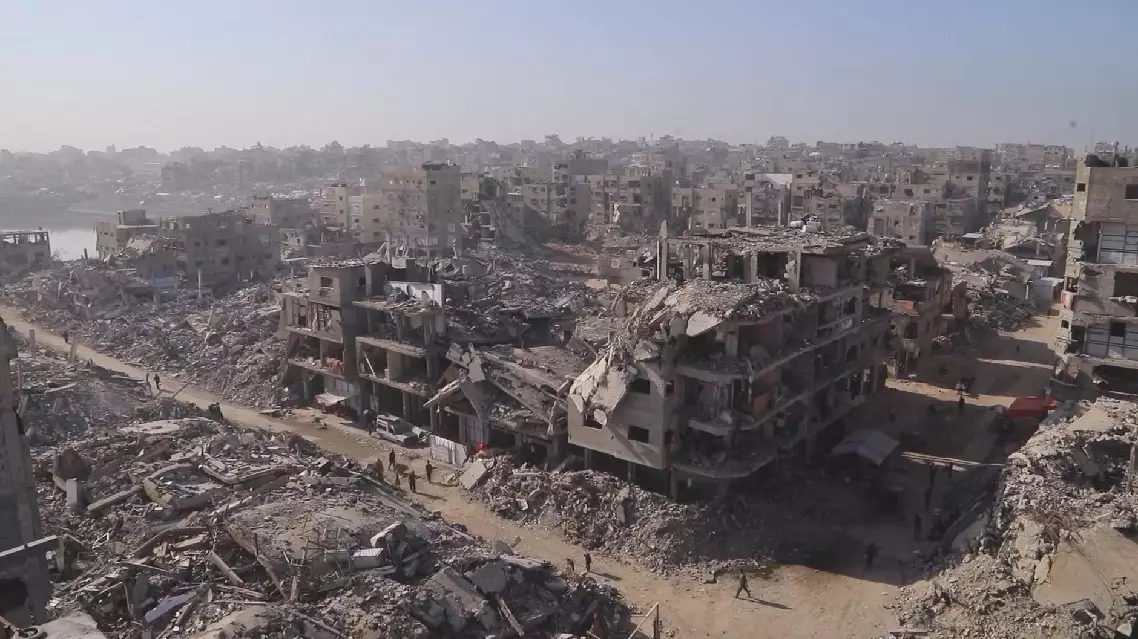
The Government Media Office in the Gaza Strip on Wednesday released a report on casualties, infrastructure damage, and economic losses in the Palestinian enclave at the end of 2025, revealing widespread destruction across multiple sectors, with the humanitarian situation continuing to deteriorate.
The report indicated that approximately 2.4 million Gaza residents were continuously affected by military operations over the past year, with nearly 90 percent of buildings damaged.
Click to Gallery
Report reveals widespread destruction, deteriorated humanitarian situation in Gaza in 2025
Report reveals widespread destruction, deteriorated humanitarian situation in Gaza in 2025
Report reveals widespread destruction, deteriorated humanitarian situation in Gaza in 2025
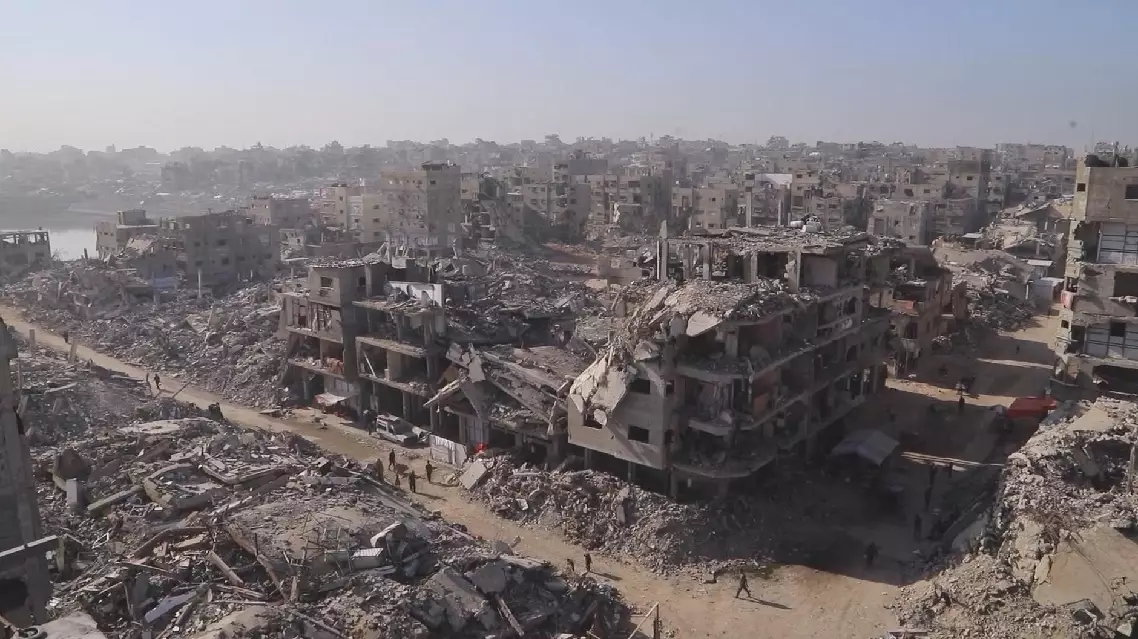
Report reveals widespread destruction, deteriorated humanitarian situation in Gaza in 2025
Israeli forces currently control about 55 percent of the Gaza Strip's territory, and dropped over 112,000 metric tons of explosives across the entire Gaza Strip in 2025, according to the statement.
The office said that at least 29,117 Palestinians were killed or went missing in 2025, with the death toll continuing to rise.
Meanwhile, Gaza's healthcare system was left under immense pressure, with 22 hospitals ceasing operations and 62,853 injured individuals admitted for treatment, said the report.
In the education sector, 30 educational institutions were completely destroyed, and 95 percent of schools sustained damage. Over 1,000 students were killed, and approximately 785,000 students were deprived of their right to regular education, said the office, adding that the conflict also resulted in casualties among teachers and academic staff.
Gaza's infrastructure suffered massive destruction to water supply, electricity, sewage treatment, and road systems, according to the report.
Approximately 106,000 housing units have been completely destroyed, forcing around 2 million people to flee their homes. Eighty-seven shelters were targeted by Israeli military attacks, the office said.
Other sectors, including agriculture, livestock, and fisheries, also sustained severe losses, with over 80 percent of farmland destroyed, 60 percent of greenhouses demolished, and the fishing industry nearly wiped out, according to the report.
Regarding humanitarian aid, border crossings into the Gaza Strip remained closed for over 220 days, preventing large quantities of relief supplies from entering and exacerbating food shortages and medical crises, the statement said.
It also reported that approximately 650,000 children faced hunger risks, 40,000 infants were in life-threatening conditions due to lack of food, and some critically ill patients were unable to access external medical treatment.
The report estimated that direct economic losses across 15 critical sectors in the Gaza Strip exceeded 33 billion U.S. dollars by 2025, posing long-term challenges to infrastructure repair, public service restoration, and economic reconstruction.
Since the first phase of the Gaza ceasefire agreement took effect in October 2025, the truce has generally held. The release of detained personnel has been completed, and ground conflicts have significantly decreased. However, as 2026 unfolds, the second phase of the ceasefire agreement remains stalled.
Meanwhile, pressure from the U.S. and Israel persists. Israel has revoked the permits for some humanitarian aid organizations operating in Gaza, starting January 1, 2026. Reports further indicate that the U.S. and Israel have agreed that Hamas must disarm within two months.
Regarding the demand for "disarming Hamas," the Qassam Brigades, the armed wing of Hamas, issued a statement affirming its commitment to self-defense.
Report reveals widespread destruction, deteriorated humanitarian situation in Gaza in 2025
Report reveals widespread destruction, deteriorated humanitarian situation in Gaza in 2025
Report reveals widespread destruction, deteriorated humanitarian situation in Gaza in 2025
Report reveals widespread destruction, deteriorated humanitarian situation in Gaza in 2025