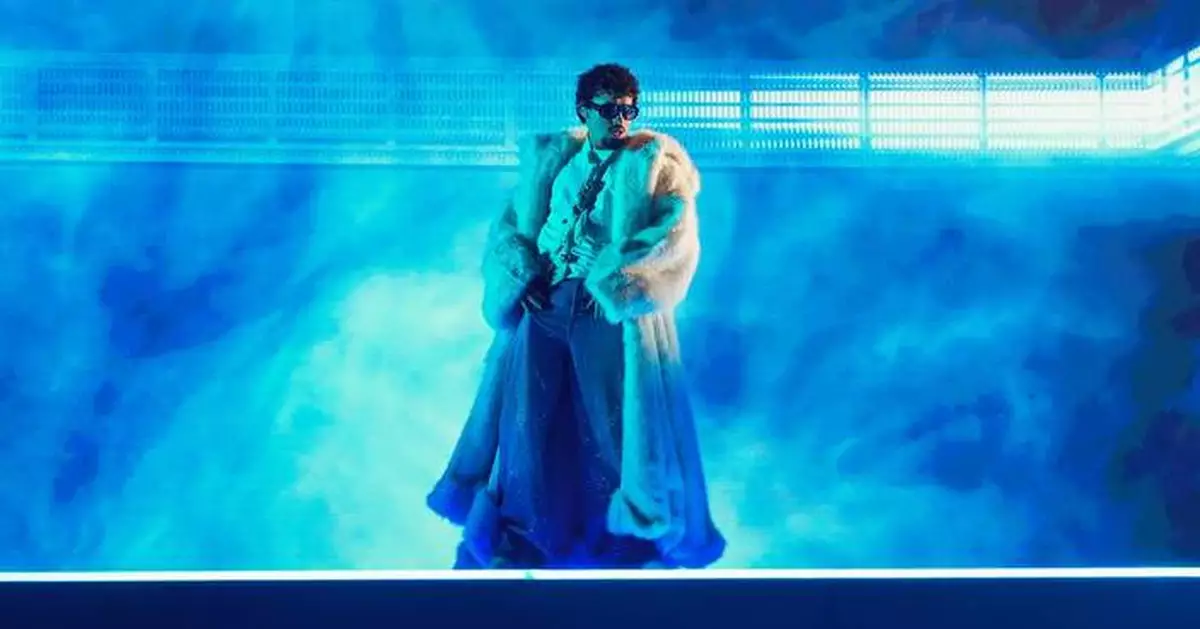
NEW YORK (AP) — The Puerto Rican superstar Bad Bunny has redefined what it means to be a global giant — and he may once again make history at the 2026 Grammy Awards.
The artist born Benito Antonio Martínez Ocasio is up for six awards at the Feb. 1 show, becoming the first Spanish-language artist to be nominated for album, song and record of the year simultaneously. His critically acclaimed album, “Debí Tirar Más Fotos,” is only the second Spanish-language record to be nominated for album of the year. The first? Well, that also belonged to Bad Bunny, 2022’s “Un Verano Sin Ti.”
Win or lose, experts say Bad Bunny's Grammy nominations mark a symbolic moment for Latinos. Just a week later, after all, he'll headline the Super Bowl halftime show.
Vanessa Díaz, associate professor of Chicano and Latino studies at Loyola Marymount University and co-author of “P FKN R: How Bad Bunny Became the Global Voice of Puerto Rican Resistance,” says Bad Bunny's nods extend beyond his own art and serve as a “very welcome recognition of Latin music that is growing.”
“Music from the Spanish-speaking Caribbean has been shaping global music tastes since the 19th century,” adds Albert Laguna, associate professor of ethnicity, race and migration and American studies at Yale. “Bad Bunny is another link in a much longer chain of the popularity of Caribbean music on a global stage.”
Much of this music — particularly Latin trap and reggaetón, the genres Bad Bunny got his start in and continues to use in his new work — has been historically criminalized in Puerto Rico, not unlike hip-hop in the United States. Reggaetón in particular, Díaz points out, “comes from the most marginalized communities in Puerto Rico. And so, the fact that Bad Bunny is receiving nominations in three main categories, and this is an artist who came up with trap … is the most groundbreaking thing about the entire situation.”
Petra Rivera-Rideau, associate professor of American studies at Wellesley College and co-author of “P FKN R,” says that element is particularly noteworthy because institutions often ignore marginalized genres — including at the Latin Grammys, a sister award show to the Grammys.
A victory in the major categories could have “profound, symbolic meaning,” she says. But with a caveat: “I’m interested to see if this is going to open doors for other people.” After all, Bad Bunny himself isn't immune to the Recording Academy’s institutional biases: He already has three career Grammys, but all have been in música urbana categories — despite the fact that he is the most streamed artist on the planet.
Across “Debí Tirar Más Fotos,” Bad Bunny and his producers weave traditional Puerto Rican folkloric styles into a hyper-contemporary context. Latin trap and reggaetón aren't abandoned but fused with música jíbara, salsa, bomba, plena and even aguinaldo, a kind of Christmas music, in “Pitorro de Coco.” While Bad Bunny’s previous albums also fused different genres — including bossa nova, mambo, rock, merengue and more — this album’s melange was more homegrown.
Laguna sees “Debí Tirar Más Fotos” as a direct challenge to the prevailing “formula for global pop stardom,” which he describes as an artist making it locally, gaining traction and then “watering down” their sound into something commercial and palatable for a global audience.
“Bad Bunny went in the opposite direction. It’s his most Puerto Rican album ever,” says Laguna. He hopes it will communicate to other artists that they, too, can look to their ancestry and history for artmaking.
“There’s so much amazing Latin music that has been overlooked and that’s part of what is so beautiful about this moment,” says Díaz. “And that's why it feels like a win for all Latinos.”
The timing of the album's release and recognition, too, feels consequential. “The U.S. has a history of othering Latinos, othering the Spanish language. … We’re in a moment where that feels extremely acute,” she continues. “For a community that is being targeted on such a deep level, it is a little bit of light, a little bit of faith that we can still carve out our place here.”
Latinos and the Spanish-speaking community in the U.S. have grown increasingly wary amid growing anti-immigrant sentiment and raids, as President Donald Trump’s immigration policies and executive actions have vastly expanded who is eligible for deportation and routine hearings have turned into deportation traps for migrants.
In an interview with i-D Magazine earlier this year, Bad Bunny mentioned that concerns around the mass deportations of Latinos factored into his decision not to tour in the continental U.S. ( Hundreds of people have been detained in Puerto Rico itself since large-scale arrests began in late January.)
“The content of the lyrics — which are so steeped in the history of Puerto Rico, political histories, tourism and gentrification — there’s so much rich political and historical content,” Díaz adds. “This album is historic even without a Grammy win.”
But if Bad Bunny does win, Díaz says, it will be “akin to Halle Berry being the first Black woman to win an Oscar. That was a watershed moment. Or Rita Moreno being the first Latina to win.”
Beyond that, Laguna says the politics of the album are not exclusive to Puerto Rican or even Latino identity — “the lyrics on this album align with global struggles,” he says. Take, for example, “Lo que le pasó a Hawaii” (“What happened to Hawaii”), a rallying cry for cultural autonomy in an era of neocolonialization.
Rivera-Rideau says one of the reasons “Debí Tirar Más Fotos” has resonated is not just the political implications of using folkloric music in addition to música urbana, but its sound. The traditional genres are “a lot more digestible” to listeners who embrace the antiquated taboos surrounding Latin trap and scoff at reggaetón's sexuality. As a result, the combination of sounds makes for an album that is “popular across generations,” she says.
But it only works because it is “musically really interesting. If it was just traditional music, and that's only what people cared about, it wouldn't have done as well as it did,” she explains. “Musically, it is super innovative and makes accessible a lot of these older genres that people in Puerto Rico listen to, but he’s been able to globalize these very local genres in a way that no one else has.”
That intergenerational appeal was a feature of Bad Bunny's landmark Puerto Rican residency, with the age and global diversity of its audience.
“A lot of people feel like this is a tense moment, it’s a difficult moment. And here’s someone giving us a sonic language in which to narrate this complex present,” Laguna says. “There's pleasure, in political critique, that the music makes possible in a beautiful way. And I think that's very much welcomed.”
The 68th Grammy Awards will be held Feb. 1, 2026, at Crypto.com Arena in Los Angeles. The show will air on CBS and stream on Paramount+. For more coverage, visit https://apnews.com/hub/grammy-awards.
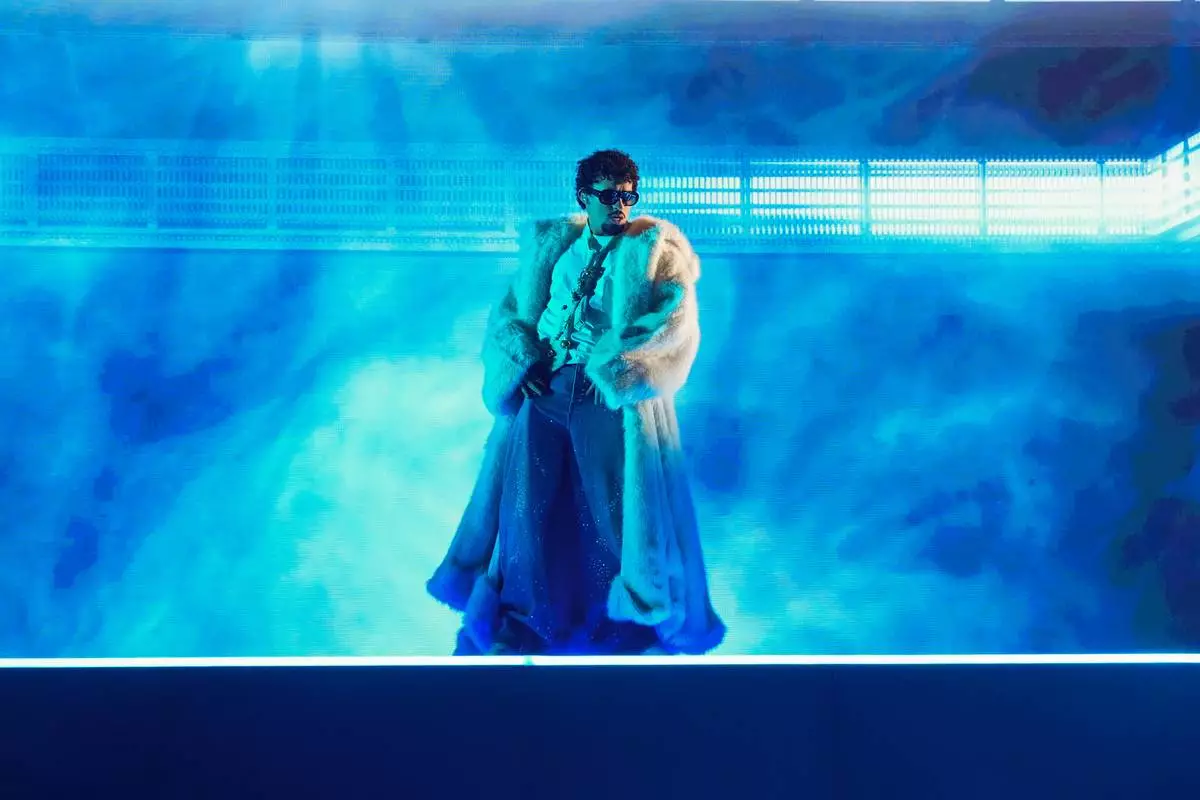
FILE - Bad Bunny performs during the iHeartRadio Music Awards, on Monday, March 17, 2025, at the Dolby Theatre in Los Angeles. (AP Photo/Chris Pizzello, File)
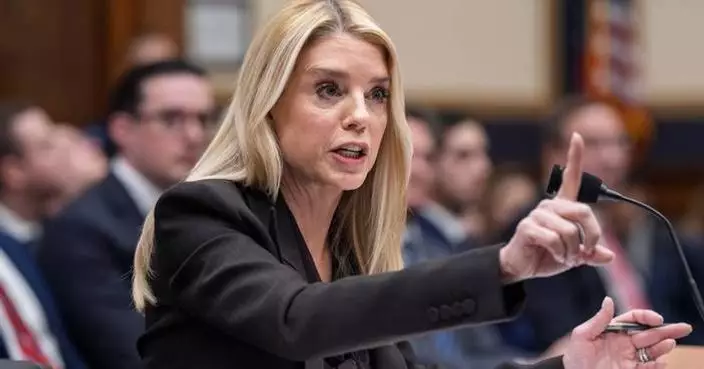
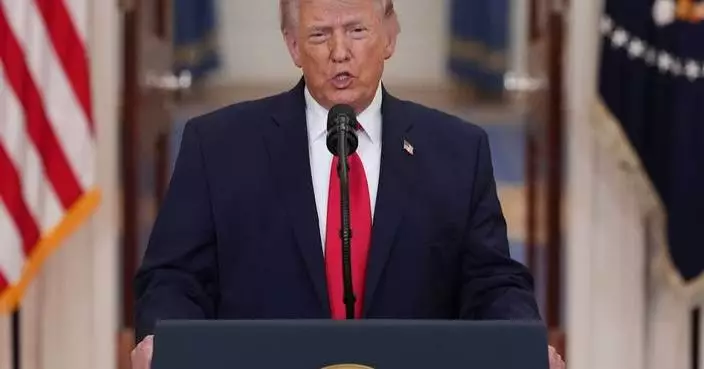
WASHINGTON (AP) — President Donald Trump said Thursday that Pam Bondi is out as his attorney general, ending the contentious tenure of a loyalist who upended the Justice Department’s culture of independence from the White House, oversaw large-scale firings of career employees and moved aggressively to investigate the Republican president’s perceived enemies.
The departure of the country's chief law enforcement officer followed months of scrutiny from angry conservatives over the Justice Department's handling of files related to the Jeffrey Epstein sex trafficking investigation and failed efforts to please Trump through unsuccessful efforts to build criminal cases against prominent foes, investigations that in some cases have been rejected by judges or grand juries.
Trump named Deputy Attorney General Todd Blanche as the acting attorney general, though three people familiar with the matter have said he has privately discussed Lee Zeldin, the head of the Environmental Protection Agency, as a permanent pick.
“Pam Bondi is a Great American Patriot and a loyal friend, who faithfully served as my Attorney General over the past year,” Trump said in a statement. He added: “We love Pam, and she will be transitioning to a much needed and important new job in the private sector, to be announced at a date in the near future.”
Bondi, a former Florida attorney general, came into office last year pledging that she would not play politics with the Justice Department, but she quickly started investigations of Trump foes, sparking an outcry that the law enforcement agency was being wielded as a tool of revenge to advance the president’s political and personal agenda.
She ushered in a period of intense turmoil at the department that included the firings of career prosecutors deemed insufficiently loyal to Trump and the resignations of hundreds of other employees. Her departure continues a trend of Justice Department upheaval that has defined Trump’s presidency as multiple attorneys general across his two terms have either been pushed out or resigned after proving unwilling or unable to meet his demands for the position.
Bondi rejected accusations that she politicized the Justice Department and said her mission was to restore the institution’s credibility after overreach by President Joe Biden’s Democratic administration with two federal criminal cases against Trump. Bondi’s defenders have said she worked to refocus the department to better tackle illegal immigration and violent crime and brought much-needed change to an agency they believe unfairly targeted conservatives.
Bondi’s public embrace of the president, however, marked a sharp departure from her predecessors, who generally took pains to maintain an arm’s-length distance from the White House to protect the impartiality of investigations and prosecutions. Bondi postured herself as Trump’s chief supporter and protector, praising and defending him in congressional hearings and placing a banner with his face on the exterior of Justice Department headquarters.
She called for an end to the “weaponization” of law enforcement she said occurred under the Biden administration, even though Biden’s attorney general, Merrick Garland, and Jack Smith, the special counsel who produced two cases against Trump, have said they followed the facts, the evidence and the law in their decision-making. Bondi’s critics, meanwhile, said she was the one who had politicized the agency to do the president’s bidding.
“You’ve turned the People’s Department of Justice into Trump’s instrument of revenge,” Rep. Jamie Raskin of Maryland, the top Democrat on the House Judiciary committee, said at a February hearing.
Bondi delivered a combative performance but few substantive answers at that hearing as she angrily insulted her Democratic questioners with name-calling, praised Trump over the performance of the stock market — “The Dow is up over 50,000 right now” —- and openly aligned herself as in sync with a president whom she painted as a victim of past impeachments and investigations.
Even Republicans began to challenge her, with the Republican-led House Oversight Committee last month issuing a subpoena to her to appear for a closed-door interview about the Epstein files.
Under Bondi’s leadership, the department opened investigations into a string of Trump foes, including Federal Reserve Chair Jerome Powell, New York Attorney General Letitia James, former FBI Director James Comey and former CIA Director John Brennan. The high-profile prosecutions of Comey and James were short-lived as they were quickly thrown out by a judge who ruled that the prosecutor who brought the cases was illegally appointed.
Trump repeatedly publicly praised and defended Bondi but also showed flashes of impatience with his attorney general’s efforts to meet his demands to prosecute his rivals. In one extraordinary social media post last year, Trump called on Bondi to move quickly to prosecute his foes, including James and Comey, telling her: “We can’t delay any longer, it’s killing our reputation and credibility.”
Bondi oversaw the exodus of thousands of career employees — both through firings and voluntary departures — including lawyers who prosecuted violent attacks on police at the U.S. Capitol on Jan. 6, 2021; environmental, civil rights and ethics enforcers; counterterrorism prosecutors; and others.
She struggled to overcome early stumbles over the Epstein files that angered conservatives eager for government bombshells about the case, which has long fascinated conspiracy theorists. She herself had fed the conspiracy theory machine with a suggestion in a 2025 Fox News Channel interview that Epstein’s “client list” was sitting on her desk for review. The department later acknowledged that no such document exists.
Bondi was ridiculed over a move to hand out binders of Epstein files to conservative influencers at the White House only for it to be later revealed that the documents included no new revelations. And despite promises that more files were going to become public, the Justice Department in July said no more would be released, prompting Congress to pass a bill to force the agency to do so.
The Epstein files fumbles led to a stunning public criticism from White House chief of staff Susie Wiles, a close friend of Bondi’s, who told Vanity Fair that the attorney general “completely whiffed.” The Justice Department’s release of millions of pages of Epstein files did little to tamp down criticism, prompting a House committee with the support of five Republicans to subpoena Bondi to answer questions under oath.
Bondi, who defended Trump during his first impeachment trial, was his second choice to lead the Justice Department, picked for the role after former Rep. Matt Gaetz of Florida withdrew his name from consideration amid scrutiny over sex trafficking allegations.
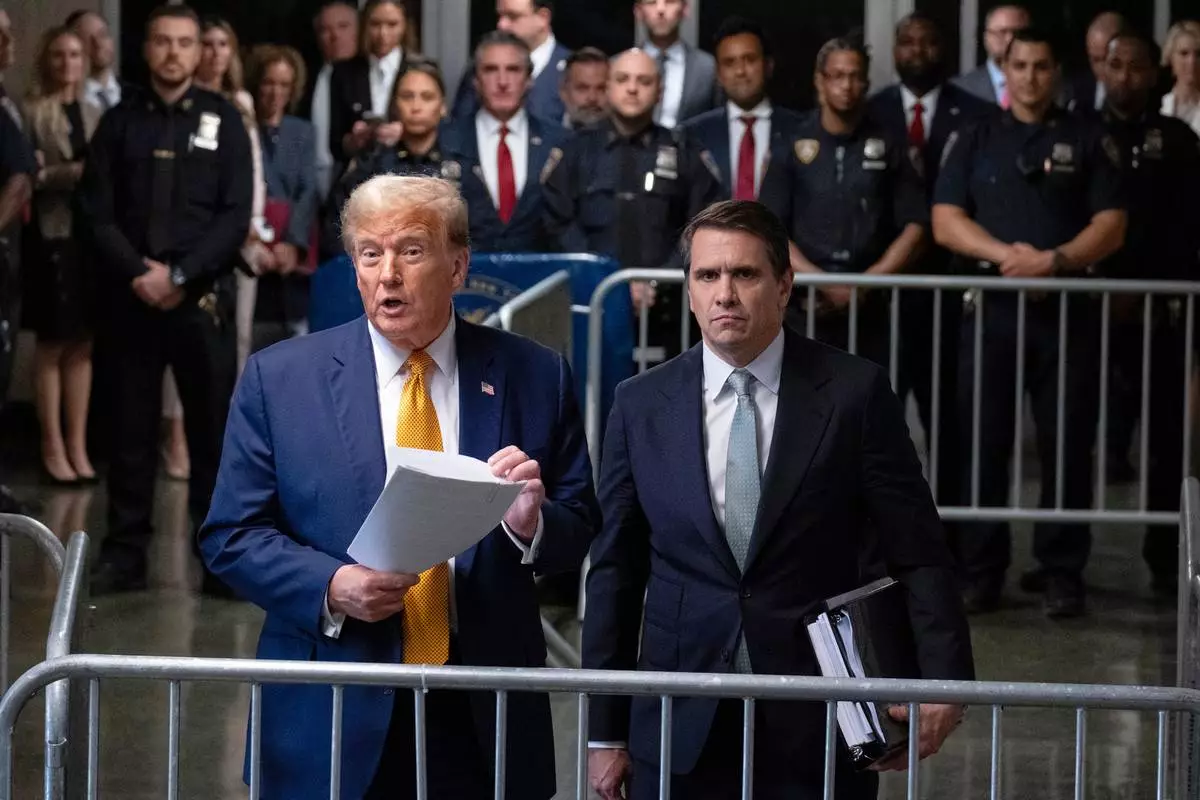
FILE - President Donald Trump, stands with then-defense attorney Todd Blanche, May 14, 2024, in New York. (AP Photo/Craig Ruttle, Pool, file)
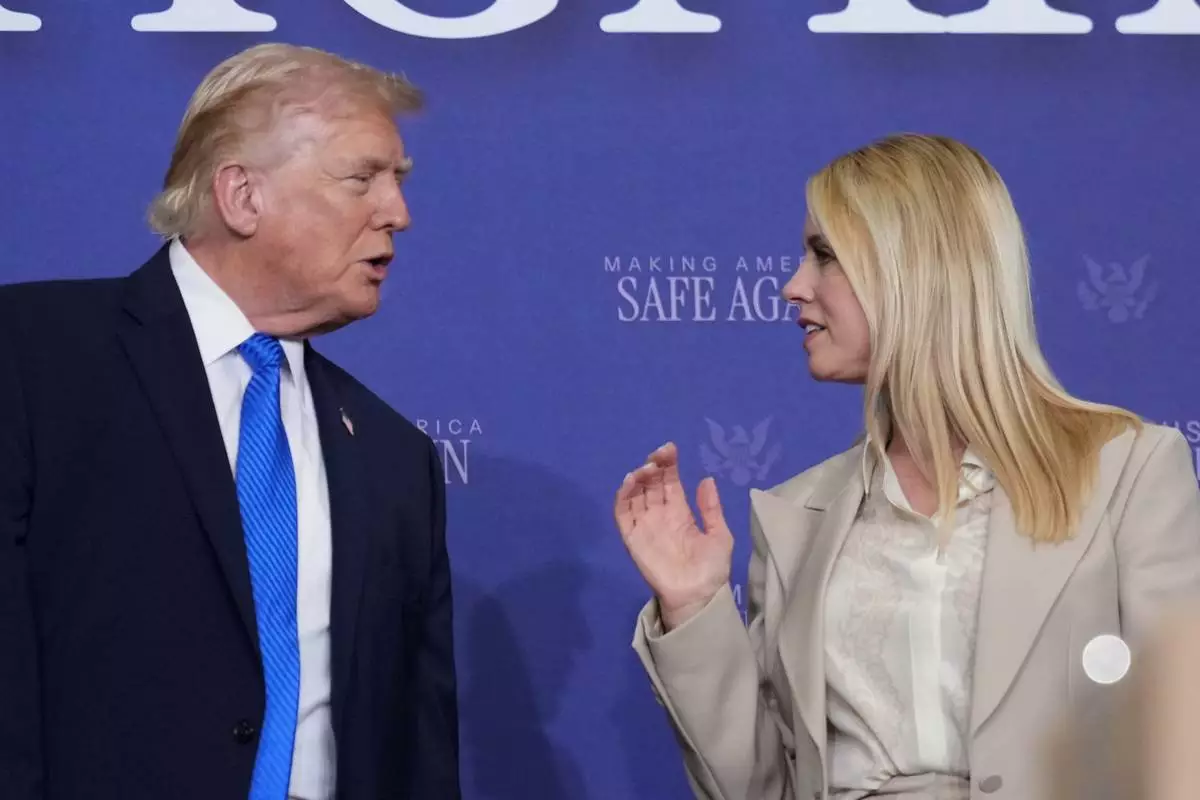
President Donald Trump speaks with Attorney General Pam Bondi during a roundtable discussion on public safety at a Tennessee Air National Guard Base, Monday, March 23, 2026, in Memphis, Tenn. (AP Photo/Mark Schiefelbein)
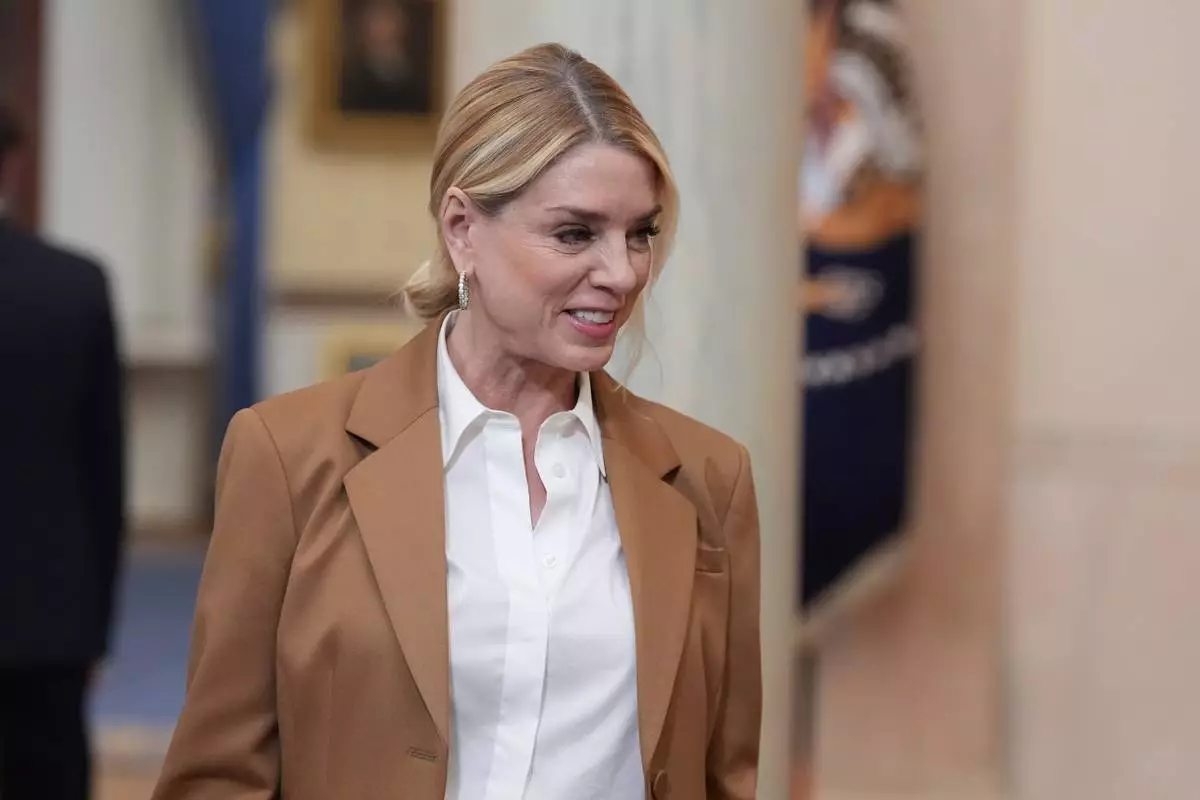
Attorney General Pam Bondi arrives before President Donald Trump speaks about the Iran war from the Cross Hall of the White House on Wednesday, April 1, 2026, in Washington. (AP Photo/Alex Brandon, Pool)
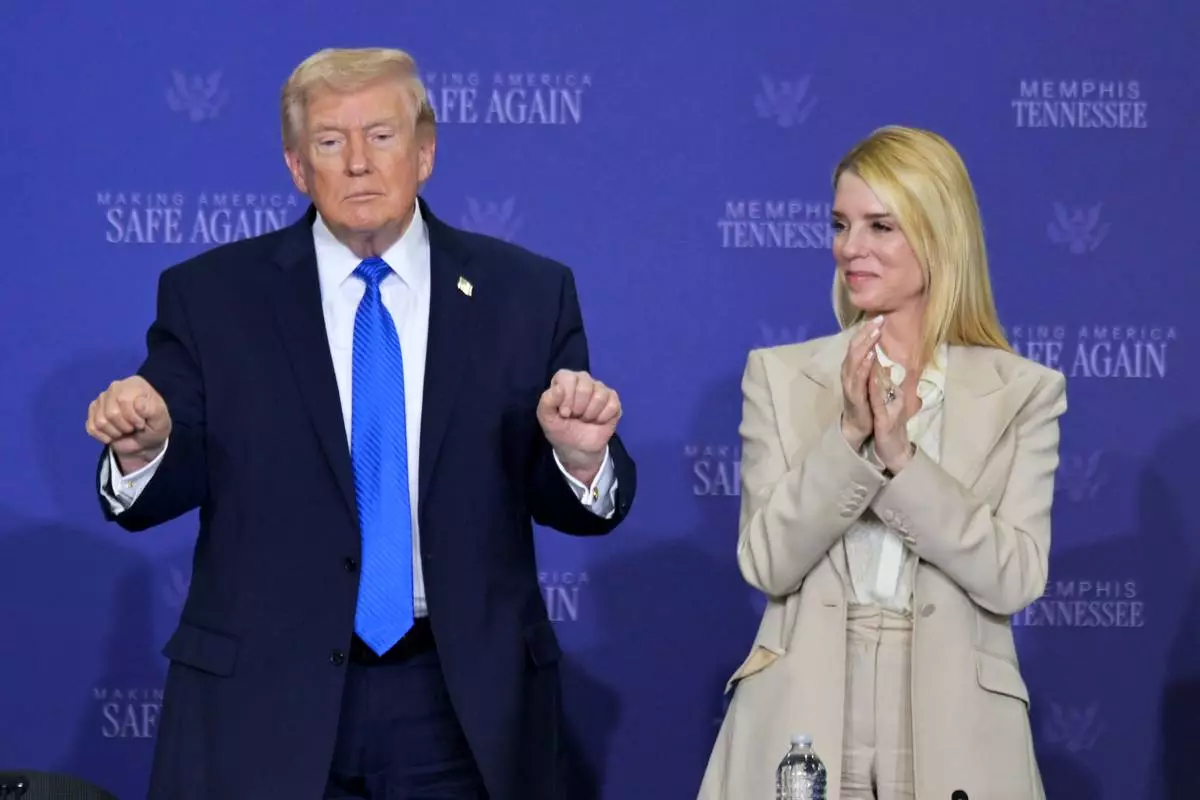
President Donald Trump participates in a roundtable discussion on public safety at a Tennessee Air National Guard Base, Monday, March 23, 2026, in Memphis, Tenn., with Attorney General Pam Bondi, right. (AP Photo/Bruce Newman)
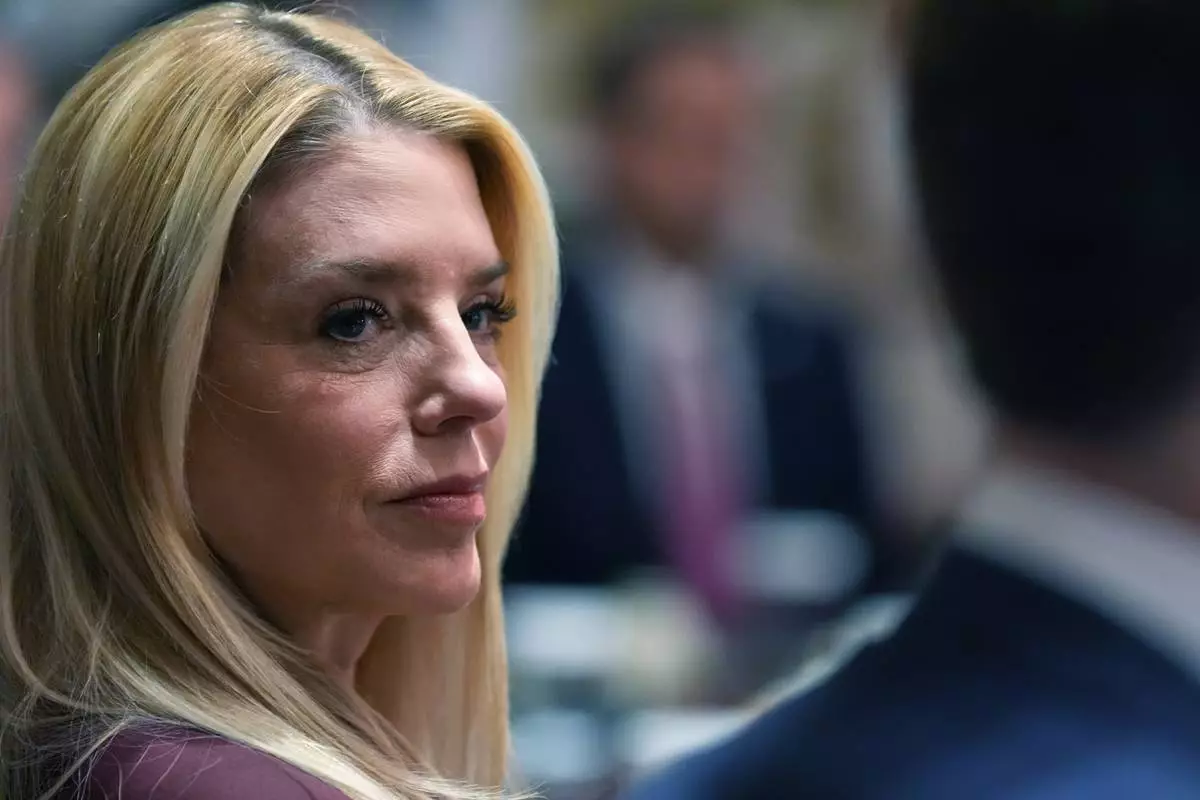
Attorney General Pam Bondi listens during a Cabinet meeting at the White House, Thursday, March 26, 2026, in Washington. (AP Photo/Alex Brandon)
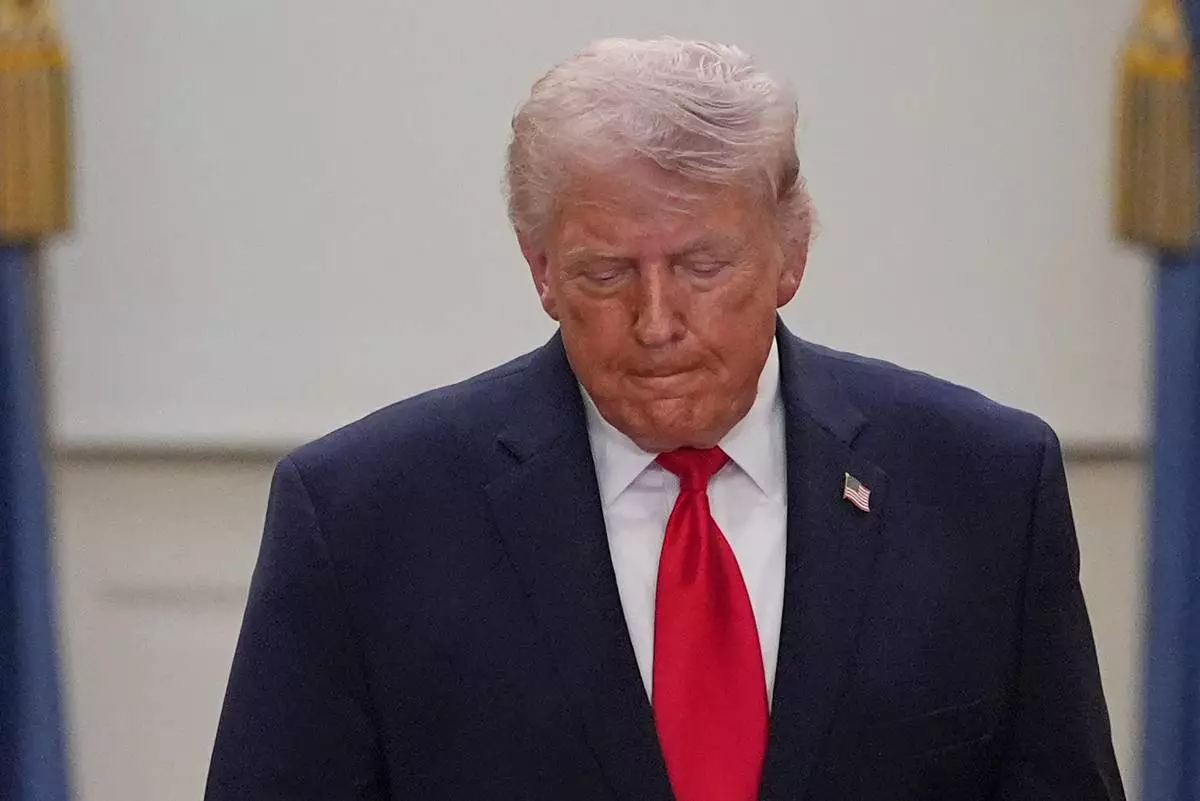
President Donald Trump walks from the Blue Room to speak about the Iran war from the Cross Hall of the White House on Wednesday, April 1, 2026, in Washington. (AP Photo/Alex Brandon, Pool)