Skip to Content Facebook Feature Image

China sees record oil output in 2025

China

China

China

China sees record oil output in 2025

2026-01-02 16:55 Last Updated At:20:27

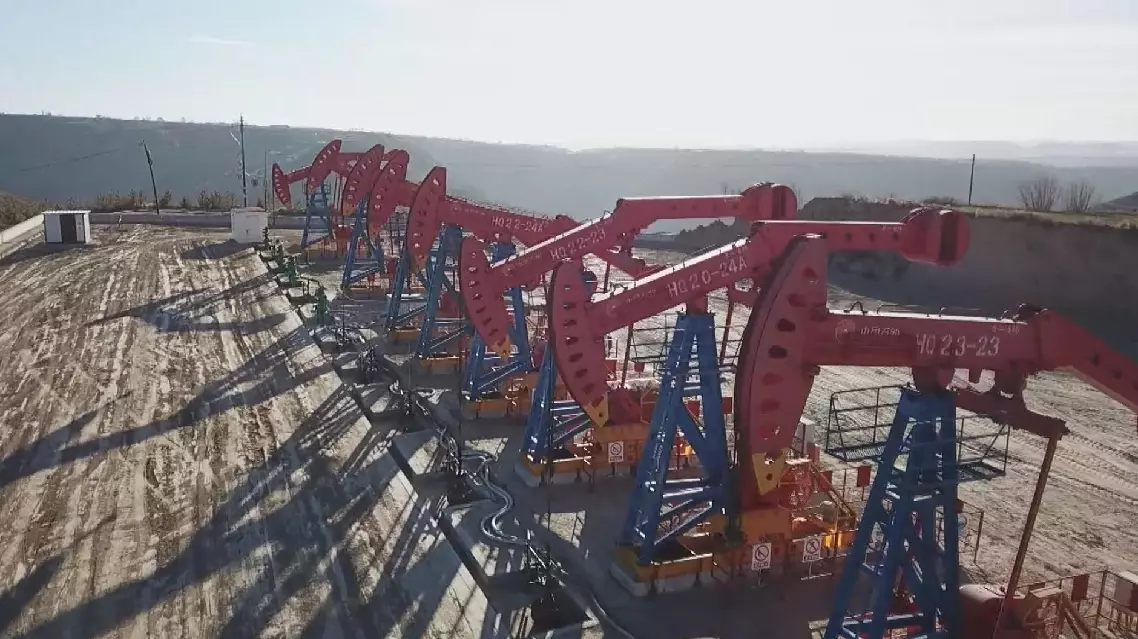
China's crude oil output reached a record high of 215 million tons in 2025, with significant production growth at the country's major oil and gas fields.

China's first oil base, the Yumen Oilfield, saw its oil and gas production equivalent returning to over 1 million tons in 2025, with the newly installed capacity of renewable energy exceeding 1 million kilowatts.

The annual oil and gas production equivalent of China's largest desert oilfield -- the Hade-Fuman Oilfield located in northwest China's Taklimakan Desert -- surpassed 5 million tons, setting a new historical record.

"We have developed over 10 oil and gas blocks in the Fuman Oilfield. Through exploration and development, we have confirmed continuous oil-bearing strata along fault zones below 7,500 meters in the Taklamakan Desert, solidifying the theoretical basis for ultra-deep oil and gas production," said Wang Xiaopeng, executive director of the Hade Oil and Gas Production Management Area of China National Petroleum Corporation (CNPC) Tarim Oilfield Branch.

The Daniudi and Dongsheng gas fields located in northwest China's Ordos Basin, operated by Sinopec, have cumulatively produced over 70 billion cubic meters of natural gas, marking a milestone in China's large-scale, efficient development of tight sandstone gas reservoirs.

In north China's Inner Mongolia Autonomous Region, CNPC's Bayan Oilfield saw its 2025 crude oil output top 5 million tons, representing a new breakthrough in developing China's deepest continental clastic rock oil reservoir.

At the Puguang Gas Field in southwest China's Sichuan Basin, which is the largest integrated high-sulfur gas field discovered in Paleozoic marine strata in the country, the cumulative natural gas production topped 140 billion cubic meters in the year.

The gas field is part of the Sinopec Zhongyuan Oilfiel. The latter's annual oil and gas production equivalent has exceeded 8 million tons, setting a new record since the start of China's 14th Five-Year Plan period (2021-2025).

"During the 14th Five-Year Plan period (2021-2025), we successfully secured five 10-million-ton-grade crude oil reserves and three 100-billion-cubic-meter-grade natural gas reserves. The proven reserves have therefore doubled, guaranteeing energy security for socioeconomic development in the Yellow River Basin and the Yangtze River Economic Belt," said Wang Yujun, manager of the Oil and Gas Exploration Management Department of Sinopec Zhongyuan Oilfield.

Latest statistics indicate that China's oil and gas production in 2025 showed a trend of stable oil output and increased gas production. While crude oil output hit 215 million tons, natural gas production expanded rapidly to 260 billion cubic meters, with offshore and ultra-deep oil and gas fields becoming the primary growth drivers.
China sees record oil output in 2025
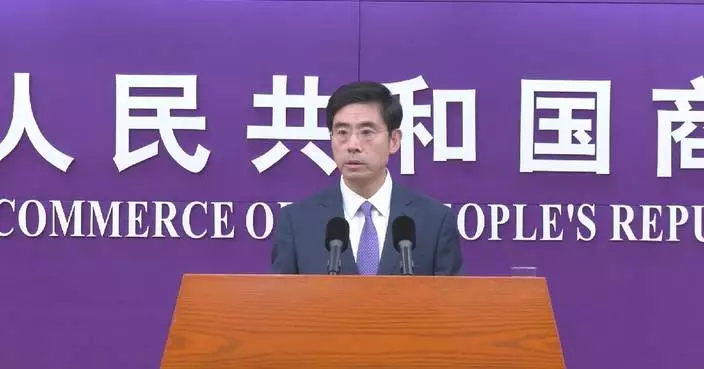
China sees record oil output in 2025
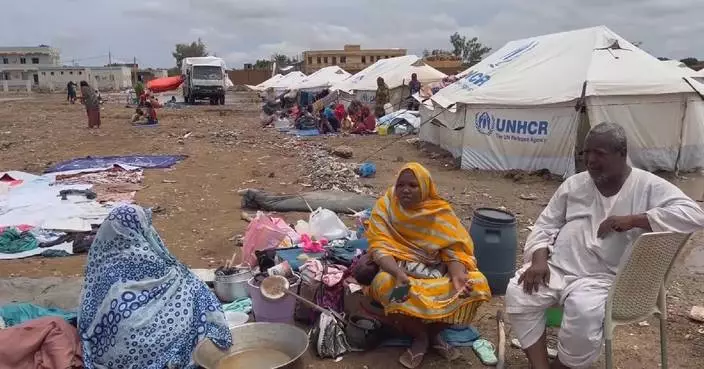
Yemen's transport ministry on Thursday rejected new Saudi-imposed flight restrictions, calling a requirement for planes to stop in Saudi Arabia for security inspections an "air blockade" that undermines national sovereignty.

Officials loyal to the secessionist Southern Transitional Council (STC) have refused to comply with the new protocols ordered by Yemen's Saudi-backed central government, and have partially halted operations in Aden International Airport, the country's primary gateway, a source within the Yemeni government told China's Xinhua News Agency.

The standoff is the latest sign of a deepening fracture within the coalition fighting the Houthi group. While the STC is technically part of Yemen's ruling Presidential Leadership Council (PLC), the group seeks independence for southern Yemen and is frequently at odds with the internationally recognized government.

Saudi Arabia recently ordered all international flights departing and entering Yemen to undergo security screenings at Jeddah Airport before continuing to their final destinations. While some of those restrictions were later eased, they remain in place for all flights traveling to and from the United Arab Emirates (UAE), which is allegedly the main backer of STC.

Government officials said the measures are intended to curb the movement of STC leaders between Yemen and the UAE, effectively cutting off external support for the secessionist movement.

Tensions between the factions escalated this week after the STC seized large swathes of the oil-rich Hadramout province and the eastern province of Al-Mahrah. Riyadh considers these areas a "red line" due to their proximity to the Saudi border and their concentration of Yemen's remaining energy reserves.

On Tuesday, a Saudi-led coalition airstrike targeted vehicles at the port of Mukalla in Hadramout. Saudi officials said the vehicles were intended for STC forces. Following the strike, PLC Chairman Rashad al-Alimi canceled a joint defense agreement with the UAE and ordered all Emirati forces to leave the country within 24 hours. The UAE confirmed Thursday it has begun withdrawing its remaining troops from Hadramout, citing safety concerns.

The STC commands significant control over Aden and other southern cities. Several cabinet members, including Transport Minister Abdulsalam Saleh Humaid, are loyal to the STC rather than the central leadership.

Aden's pro-separatist officials reject Saudi flight restrictions, partially halt airport operations

Aden's pro-separatist officials reject Saudi flight restrictions, partially halt airport operations

Aden's pro-separatist officials reject Saudi flight restrictions, partially halt airport operations

Aden's pro-separatist officials reject Saudi flight restrictions, partially halt airport operations

Recommended Articles