Retired professional baseball player Lenny Dykstra faces charges after Pennsylvania State Police said a trooper found drugs and paraphernalia in his possession during a traffic stop on New Year's Day.
Dykstra, 62, was a passenger when the vehicle was pulled over by a trooper with the Blooming Grove patrol unit in Pike County, about 25 miles (40 kilometers) east of Scranton, where Dykstra lives.
Police said in a statement that charges will be filed but did not specify what they may be or what drugs were allegedly involved.
Matthew Blit, Dykstra's lawyer, said in a statement that the vehicle did not belong to Dykstra and any charges brought against him “will be swiftly absolved.”
“Lenny was not accused of being under the influence of any substance at the scene, nor was he arrested or taken into custody at the scene,” Blit said.
Dykstra's gritty style of play over a long career with the New York Mets and Philadelphia Phillies earned him the nickname “Nails.” He spent years as a businessman before running into a series of legal woes.
Dykstra served time in a California prison for bankruptcy fraud, sentenced to more than six months for hiding baseball gloves and other items from his playing days. That ran concurrent with a three-year sentence for pleading no contest to grand theft auto and providing a false financial statement. He claimed he owed more than $31 million and had only $50,000 in assets.
In April 2012, Dykstra pleaded no contest to exposing himself to women he met through Craigslist.
In 2019, Dykstra pleaded guilty on behalf of his company, Titan Equity Group, to illegally renting out rooms in a New Jersey house that it owned. He agreed to pay about $3,000 in fines.
That same year a judge dropped drug and terroristic threat charges against Dykstra after an altercation with an Uber driver. Police said they found cocaine, MDMA and marijuana among his belongings. Dykstra's lawyer called that incident “overblown” and said he was innocent.
And in 2020 a New York Supreme Court judge dismissed a defamation lawsuit that Dykstra filed against former Mets teammate Ron Darling over his allegation that Dykstra made racist remarks toward an opponent during the 1986 World Series.
Justice Robert D. Kalish said Dykstra’s reputation “for unsportsmanlike conduct and bigotry” had already been so tarnished that it could not be damaged further.
“Based on the papers submitted on this motion, prior to the publication of the book, Dykstra was infamous for being, among other things, racist, misogynist, and anti-gay, as well as a sexual predator, a drug-abuser, a thief, and an embezzler,” Kalish wrote.
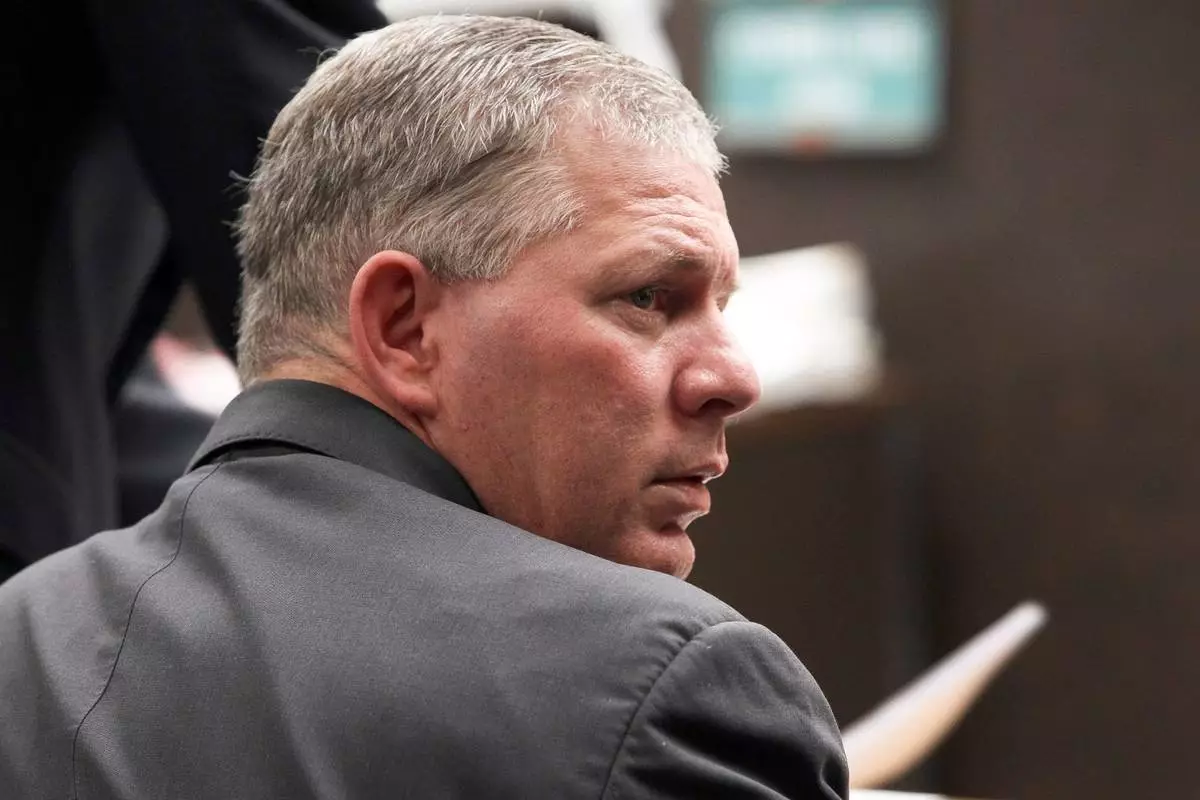
FILE - Former baseball player Lenny Dykstra sits during his sentencing for grand theft auto in Los Angeles, on Dec. 3, 2012. (AP Photo/Nick Ut, File)
WASHINGTON (AP) — Diane Crump, who in 1969 became the first woman to ride professionally in a horse race and a year later became the first female jockey in the Kentucky Derby, has died. She was 77.
Crump was diagnosed in October with an aggressive form of brain cancer and died Thursday night in hospice care in Winchester, Virginia, her daughter, Della Payne, told The Associated Press.
Crump went on to win 228 races before riding her last race in 1998, a month shy of her 50th birthday and nearly 30 years after her trailblazing ride at Hialeah Park in Florida on Feb. 7, 1969.
Crump was among several women to fight successfully at the time to be granted a jockey license, but they still needed a trainer willing to put them in a race and then for the race to run. Others were thwarted when male jockeys boycotted or threatened to boycott if a woman was riding.
Photographs of Crump's walk to the saddling area at Hialeah show her protected by security guards as a crowd pressed in on all sides. Six of the original 12 jockeys in the race had refused to ride, Mark Shrager wrote in his biography, “Diane Crump: A Horse Racing Pioneer’s Life in the Saddle.” Among them were future legends Angel Cordero Jr., Jorge Velasquez and Ron Turcotte, who four years later would ride Secretariat to win the Triple Crown.
But other jockeys stepped up, and as the 12 horses made their way onto the track, the bugler skipped the traditional call to the post and instead played “Smile for Me, My Diane.” Crump, on a 50-1 longshot called Bridle ’n Bit, finished 10th, but the barrier had been broken. A month later, Bridle ’n Bit gave Crump her first victory at Gulfstream Park.
She again made history in 1970 by becoming the first woman to ride in the Kentucky Derby. She won the first race that day at Churchill Downs, but again her mount for the history-making race was outclassed. She finished 15th out of 17 on Fathom.
It would be 14 more years before another female jockey would ride in the Derby, with only four more to follow in the decades since.
The president of Churchill Downs Racetrack, Mike Anderson, said in a statement on Friday that Crump “will be forever respected and fondly remembered in horse racing lore.”
He noted that Crump, who had been riding since age 5 and galloping young Thoroughbreds since she was a teenager, “was an iconic trailblazer who admirably fulfilled her childhood dreams.”
Chris Goodlett, of the Kentucky Derby Museum, said “Diane Crump's name stands for courage, grit, and progress.” He added: “Her determination in the face of overwhelming odds opened doors for generations of female jockeys and inspired countless others far beyond racing.”
After retiring from racing, Crump settled in Virginia and started a business helping people buy and sell horses.
In later years, she took her therapy dogs, all Dachshunds, to visit patients in hospitals and other medical clinics. Some with chronic illnesses she visited regularly for years.
Payne said when her mother went into assisted living a month ago, she was already “quasi-famous” in the medical center because of how much time she had spent there, and a “steady stream” of doctors and nurses came to see her. One of the last people to visit her was the man who mowed her lawn.
Her daughter said Crump would never take “no” for an answer, whether it was becoming a jockey or helping someone in need.
“I wouldn’t say she was as competitive as she was stubborn,” Payne said. “If someone was counting on her, she could never let someone down.”
Late in life, Crump's mottos were literally tattooed on her forearms: “Kindness” on the left, “Compassion” on the right.
Crump will be cremated and her ashes interred between her parents in Prospect Hill Cemetery in Front Royal, Virginia.
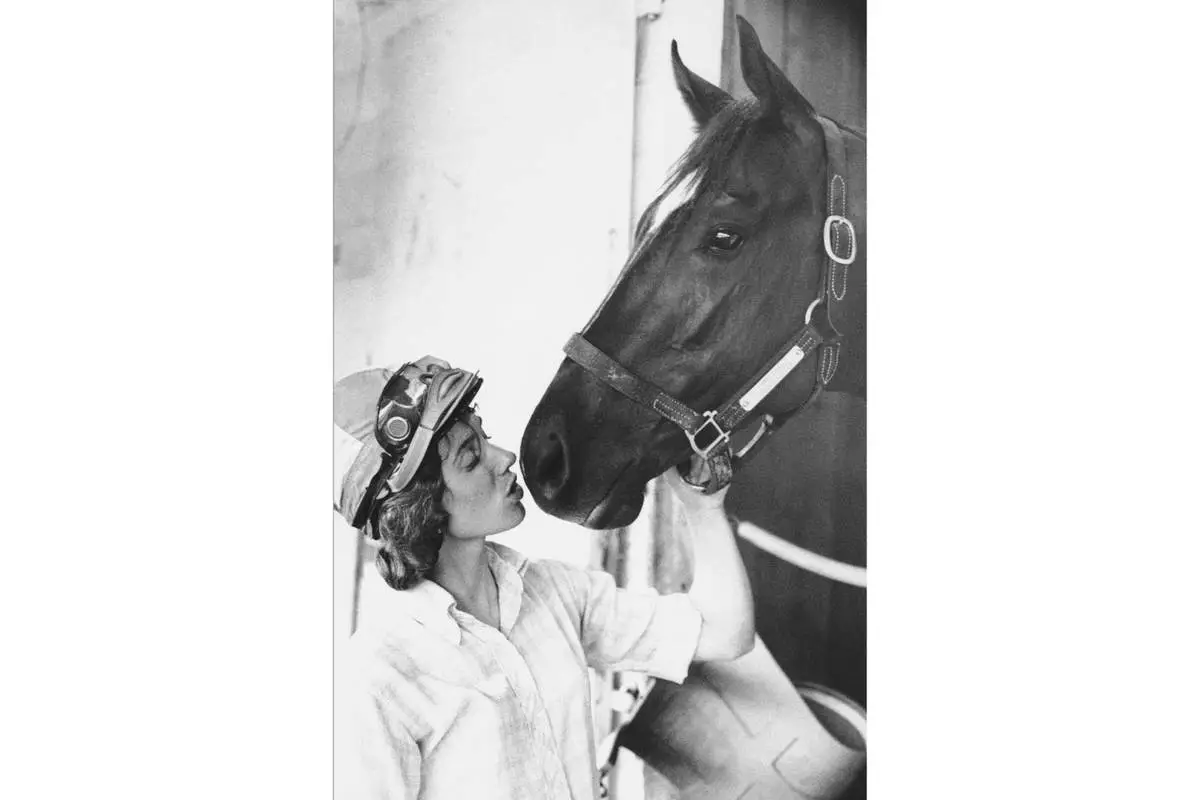
FILE - In this undated 1970 photo, jockey Diane Crump, 21, poses for a photo with Fathom in Louisville, Kentucky. Crump, who in 1969 became the first woman to ride professionally in a horse race and a year later became the first female jockey in the Kentucky Derby, died Thursday, Jan. 1, 2026. She was 77. (AP Photo, File)

FILE - Diane Crump, apprentice jockey, kisses her mount Tou Ritzi, after winning a Churchill Downs race in Louisville, Kentucky, April 29, 1969. Crump, who in 1969 became the first woman to ride professionally in a horse race and a year later became the first female jockey in the Kentucky Derby, died Thursday, Jan. 1, 2026. She was 77. (AP Photo/Gene Herrick, File)

FILE - Jockey Diane Crump sports a mud pack on her cap and face after winning a Kentucky Derby race riding Right Sean, in Louisville, Kentucky, May 2, 1970. Crump, who in 1969 became the first woman to ride professionally in a horse race and a year later became the first female jockey in the Kentucky Derby, died Thursday, Jan. 1, 2026. She was 77. (AP Photo, File)