Chongqing Municipality in southwest China recorded a strong start to 2026, dispatching nearly 500 TEUs of goods via the New International Land-Sea Trade Corridor in the first two days of the year, more than twice the volume handled during the same period in 2025, highlighting robust foreign trade momentum.
Shipments during the holiday period were dominated by locally produced mechanical and electrical products, including complete vehicles, auto and motorcycle components, and laptop parts, which are key pillars of Chongqing's export portfolio.
These products traveled south via rail-sea cargo services and the China-Laos-Thailand international rail corridor, reaching ASEAN markets.
Facilitated by the advanced logistics network and efforts of local customs, the products were delivered with high efficiency.
"We took the initiative to coordinate with railway departments and major exporters, deploying staff on holiday duty to guarantee on-time departures of freight services," said Li Kaiyin, an official from Yuzhou Customs under Chongqing Customs.
The New International Land-Sea Trade Corridor is a key logistics network that bridges the Silk Road Economic Belt in the north with the 21st Century Maritime Silk Road in the south. Since its pilot run in 2017, it has evolved into a strategic route linking China's western regions with global markets.
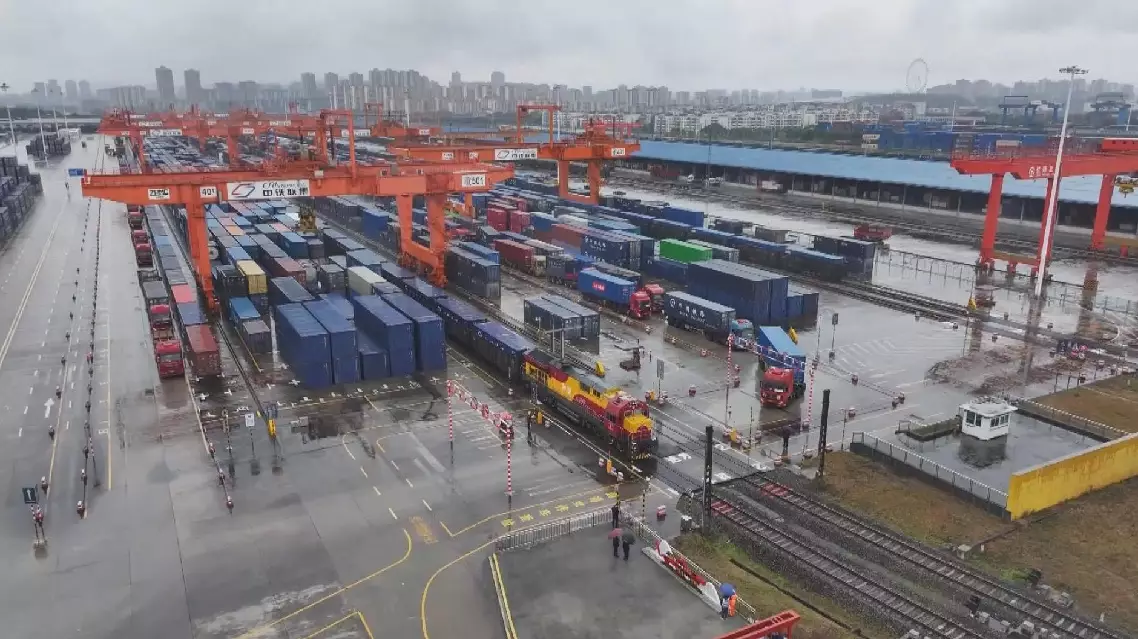
Chongqing sees surging freight volume via land-sea trade corridor at start of year