The streets of Venezuela's capital were nearly deserted on Saturday, with few pedestrians or vehicles visible following U.S. strikes, a China Media Group (CMG) reporter said from Caracas.
Earlier in the day, U.S. President Donald Trump said the United States had carried out the strikes and had captured Venezuelan President Nicolas Maduro and his wife, flying them out of the country.
Explosions were reported in the city, followed by air-raid sirens. Witnesses said multiple blasts occurred near military facilities in the southern part of the city, with power outages reported in some affected areas.
"I'm in Venezuela's capital, Caracas. At 1:57 Saturday, I was awakened from sleep by loud explosions and later heard at least five blasts in nearby areas. More than four hours after the explosion, the exits of the hotel where I am staying have been sealed off. The streets of the capital are now almost completely empty, with barely any pedestrians or vehicles in sight," said Liao Kaidi, the CMG reporter.
She added that, according to statements by Trump, the targets included areas near Venezuela's largest military complex and the presidential residence.
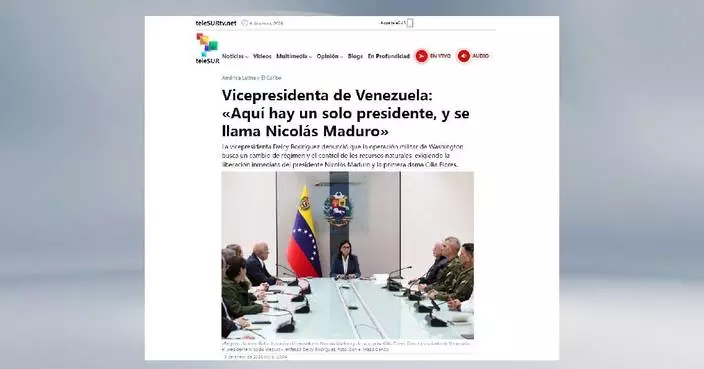
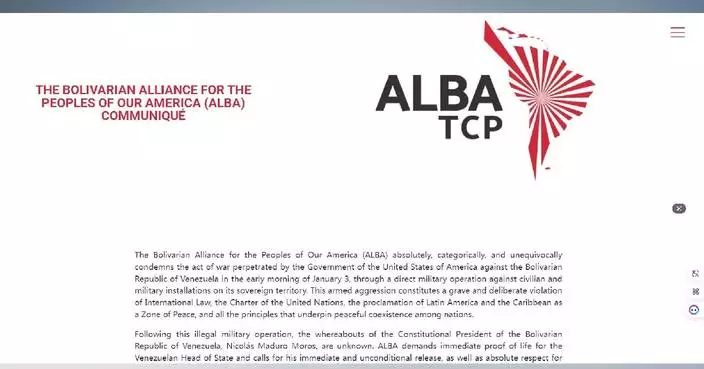
Following the attacks, the Venezuelan government issued an official statement strongly condemning what it described as serious military aggression by the current U.S. administration against Venezuela's territory and people.
In the statement, Venezuela's government said the strikes targeted both civilian and military sites in Caracas as well as three other states -- Miranda, La Guaira and Aragua.

Caracas streets nearly deserted after U.S. strikes: CMG reporter
China’s People’s Liberation Army (PLA) on Sunday launched new year military training across all units, with forces from the army, navy, air force, rocket force, and armed police conducting intensive combat-oriented exercises to boost battlefield readiness.
On the first training day, a brigade of the Army's 79th Group Army conducted integrated combat-oriented training at an outdoor training ground. The troops continuously executed over 10 individual and squad training subjects from the training outline, focusing on enhancing their battlefield adaptability and response capabilities.
Naval forces were also active. Along the coast of the Yellow Sea, the Navy's Type 055 guided-missile destroyer Nanchang, in coordination with destroyer Xining, missile frigate Weifang, and other destroyers and frigates, carried out subjects such as naval gunnery landborne and seaborne target practices, and live firing of anti-frogman lethal rounds. They also conducted fleet air defense exercises in coordination with naval aviation, testing the troops' ability to transition from training to combat.
"Now, there is more combat-oriented training that involves the full process and all elements, aligning with future naval warfare. Whether it's basic training or coordinated training, it is no longer single-subject, single-ship, or single-platform. Now it is system-wide linkage, integration of war and training, and multi-subject fusion, testing the combat effectiveness of the ships under complex conditions," said Fang Wanhao, an officer with a destroyer flotilla of the PLA Navy.
The Air Force, involving multiple branches such as aviation, surface-to-air missile, and radar troops, conducted joint training exercises with multiple aircraft types in realistic battlefield environments to hone their combat skills. The Joint Logistics Support Force's motor transport brigade focused on difficult and critical subjects related to transport and support under extreme cold conditions. By fully integrating real combat scenarios and setting up complex emergency situations, the training aimed to enhance the officers' and soldiers' emergency response capabilities in extreme environments.
On the first training day of the new year, officers and soldiers of the People's Armed Police Yunnan Corps conducted specialized, intensive training for subjects including emergency rescue and counter-terrorism capture and annihilation, adhering to a combat-oriented training philosophy.
The Rocket Force deployed its units across multiple routes and positions, setting up formations on various training grounds. They simultaneously conducted combat-oriented training on difficult and critical subjects such as cross-regional maneuver and rapid fire assault, promoting the efficient integration of personnel with weapons and equipment, and the information network system.
"For the new year's training, we will focus on hard and intensive training closely aligned with operational missions. We will strengthen adversarial testing at extreme boundaries and in complex environments, enhance the support of technological means, and forge the superior skills to be one second faster and one move better than the enemy. We will truly achieve readiness at all times and the ability to fight at any moment, ensuring new breakthroughs in improving the level of combat-oriented training readiness," said Li Zhiyong, a PLA Rocket Force officer.
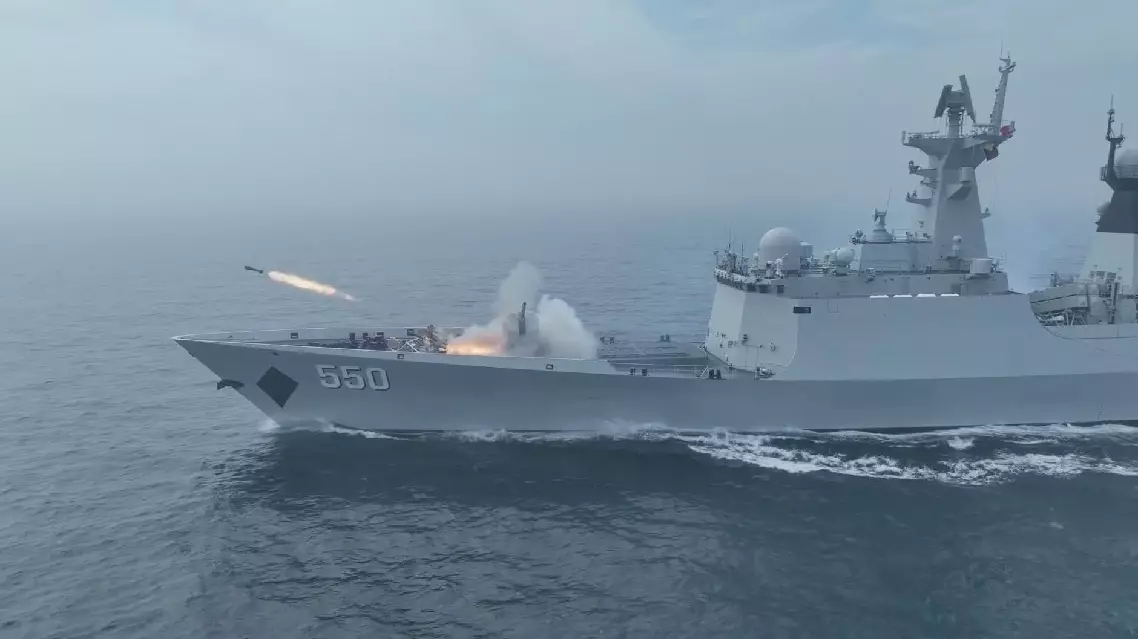
Chinese People's Liberation Army opens 2026 training season to boost combat readiness