CARACAS, Venezuela (AP) — Venezuelans on Saturday scrambled to understand who was in charge of their country after the U.S. military captured President Nicolás Maduro, ousting the strongman who had outlasted a botched coup attempt, several army mutinies, mass protests and economic sanctions in the vast nation of 29 million.
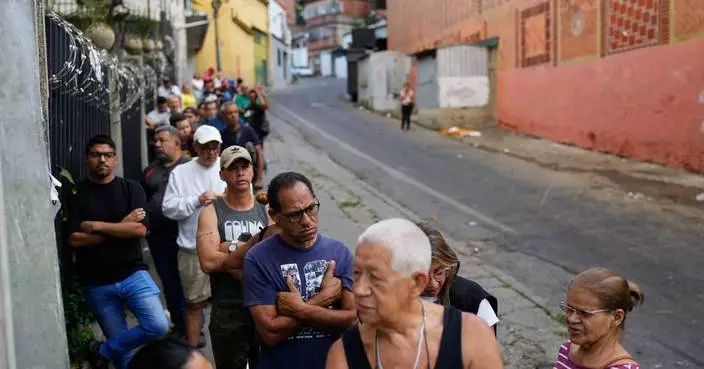
“What will happen tomorrow?” asked Juan Pablo Petrone, a resident of Venezuela's capital of Caracas. As fear gripped the city, streets quickly emptied save for long lines snaking from supermarkets and gas stations. “What will happen in the next hour?”
President Donald Trump offered a shocking answer: The United States would take control of Venezuela, perhaps in coordination with one of Maduro's most trusted aides.
Delcy Rodríguez, who is next in the presidential line of succession, served as Maduro's vice president since 2018, overseeing much of Venezuela's oil-dependent economy as well as its feared intelligence service. On Saturday, Venezuela’s high court ordered her to assume the role of interim president.
“She’s essentially willing to do what we think is necessary to make Venezuela great again,” Trump told reporters of Rodríguez, who faced U.S. sanctions during Trump’s first administration for her role in undermining Venezuelan democracy.
In a major snub, Trump said opposition leader Maria Corina Machado, who was awarded last year's Nobel Peace Prize, didn't have the support to run the country.
Trump said Rodríguez had a long conversation with U.S. Secretary of State Marco Rubio in which Trump claimed she said, “‘We’ll do whatever you need.’”
“I think she was quite gracious,” Trump added. “We can’t take a chance that somebody else takes over Venezuela that doesn’t have the good of the Venezuelan people in mind.”
Key Venezuelan officials appeared to have survived the military operation and held onto their jobs, at least for now. There was no immediate sign that the U.S. was running Venezuela.
Rodríguez tried to project strength and unity among the ruling party’s many factions, downplaying any hint of betrayal. In remarks on state television before the court decision, she demanded the immediate release of Maduro and his wife, Cilia Flores, and denounced the U.S. operation as a flagrant violation of the United Nations charter.
“There is only one president in this country, and his name is Nicolás Maduro,” Rodríguez said, surrounded by top civilian officials and military commanders.
Seeking to assuage the jittery public, Venezuelan military officials struck a defiant tone in video messages, lashing out at Trump and vowing to stand up to U.S. pressure.
“They have attacked us but will not break us,” said Defense Minister Gen. Vladimir Padrino López, dressed in fatigues.
Interior Minister Diosdado Cabello, among Maduro's top enforcers, urged Venezuelans to “get out on the streets” to defend the country’s sovereignty.
“These rats attacked and they will regret what they did,” he said of the U.S.
Some Venezuelans heeded his call, rallying in support of the government and burning American flags in scattered gatherings across Caracas on Saturday.
But most people stayed inside out of fear.
“What's happening is unprecedented,” said Yanire Lucas, another Caracas resident, picking up pieces of glass from an explosion at a nearby military base that blew out the windows of her house.
“We’re still on edge, and now we’re unsure what to do.”
Trump indicated that Rodríguez had been sworn in already as president of Venezuela, per the transfer of power outlined in the constitution.
But state TV did not broadcast any swearing-in ceremony.
During Rodríguez's televised speech, a ticker at the bottom of the screen identified her as the vice president. She gave no sign that she would be cooperating with the U.S., and did not immediately respond to a request for comment.
“What is being done to Venezuela is an atrocity that violates international law,” she said in her address. “History and justice will make the extremists who promoted this armed aggression pay.”
The Venezuelan constitution also says a new election must be called within a month in the event of the president’s absence. But experts have been debating whether the succession scenario would apply here, given the government’s lack of popular legitimacy and the extraordinary U.S. military intervention.
A lawyer educated in Britain and France, Rodríguez has a long history of representing the revolution started by the late Hugo Chávez on the world stage.
She and her brother, Jorge Rodríguez, head of the Maduro-controlled National Assembly, have sterling leftist credentials born from tragedy. Their father was a socialist leader who died in police custody in the 1970s, a crime that shook many activists of the era, including a young Maduro.
Unlike many in Maduro’s inner circle, the Rodríguez siblings have avoided criminal indictment in the U.S.
Delcy Rodríguez developed strong ties with Republicans in the oil industry and on Wall Street who balked at the notion of U.S.-led regime change.
Among her past interlocutors were Blackwater founder Erik Prince and, more recently, Richard Grenell, a Trump special envoy who tried to negotiate a deal with Maduro for greater U.S. influence in Venezuela.
Fluent in English, Rodríguez is sometimes portrayed as a well-educated, market-friendly moderate in contrast to the military hard-liners who took up arms with Chávez against Venezuela's democratically elected president in the 1990s.
Many of them, especially Cabello, are wanted in the U.S. on drug trafficking charges and stand accused of serious human rights abuses. But they continue to hold sway over the armed forces, the traditional arbiter of political disputes in Venezuela.
That presents major challenges to Rodríguez asserting authority. But some analysts said they expected Venezuela’s power brokers to close ranks, as they've done before.
“These leaders have all seen the value of staying united. Cabello has always taken a second seat or third seat, knowing that his fate is tied up with Maduro’s, and now he very well might do that again,” said David Smilde, a sociology professor at Tulane University who has studied Venezuela's political dynamics over the past three decades.
Much depends on the state of Venezuela's military after the U.S. bombing raid, Smilde added. “If it doesn’t have much firepower anymore, they’re more vulnerable and diminished.”
Shortly before Trump's press conference, Machado, the opposition leader, called on her ally Edmundo González — a retired diplomat widely considered to have won the country’s disputed 2024 presidential election — to “immediately assume his constitutional mandate and be recognized as commander-in-chief."
In a triumphant statement, Machado promised that her movement would “restore order, free political prisoners, build an exceptional country and bring our children back home.”
She added: “Today we are prepared to assert our mandate and take power."
Trump seemed to throw cold water on those plans.
Asked about Machado, Trump was blunt: “I think it would be very tough for (Machado) to be the leader," he said, shocking many Venezuelan viewers who expected Trump's talk of liberation to mean a swift democratic transition.
“She doesn’t have the support or respect within the country.”
Machado has not responded to Trump's remarks.
Associated Press reporter Joshua Goodman contributed to this report from Miami. DeBre reported from Buenos Aires, Argentina.

Government supporters rally in Caracas, Venezuela, Saturday, Jan. 3, 2026, after U.S. President Donald Trump announced that U.S. forces had captured President Nicolás Maduro and first lady Cilia Flores. (AP Photo/Matias Delacroix)
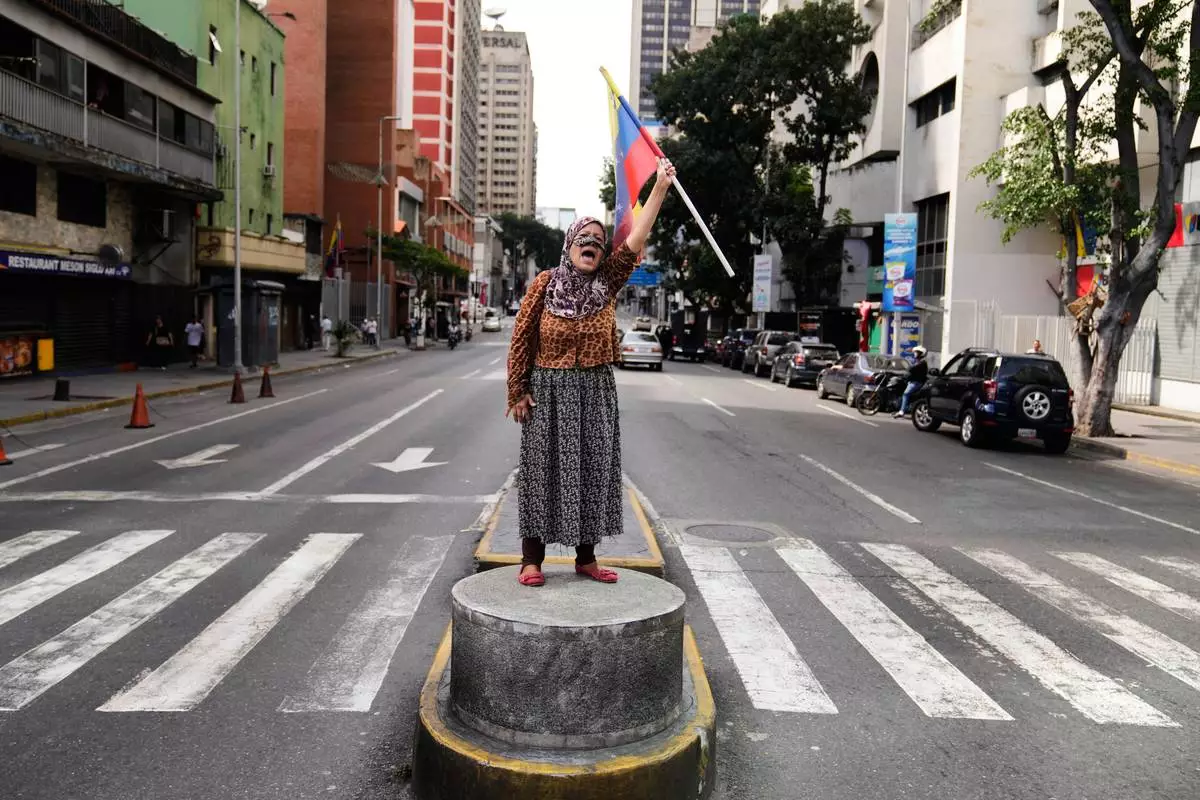
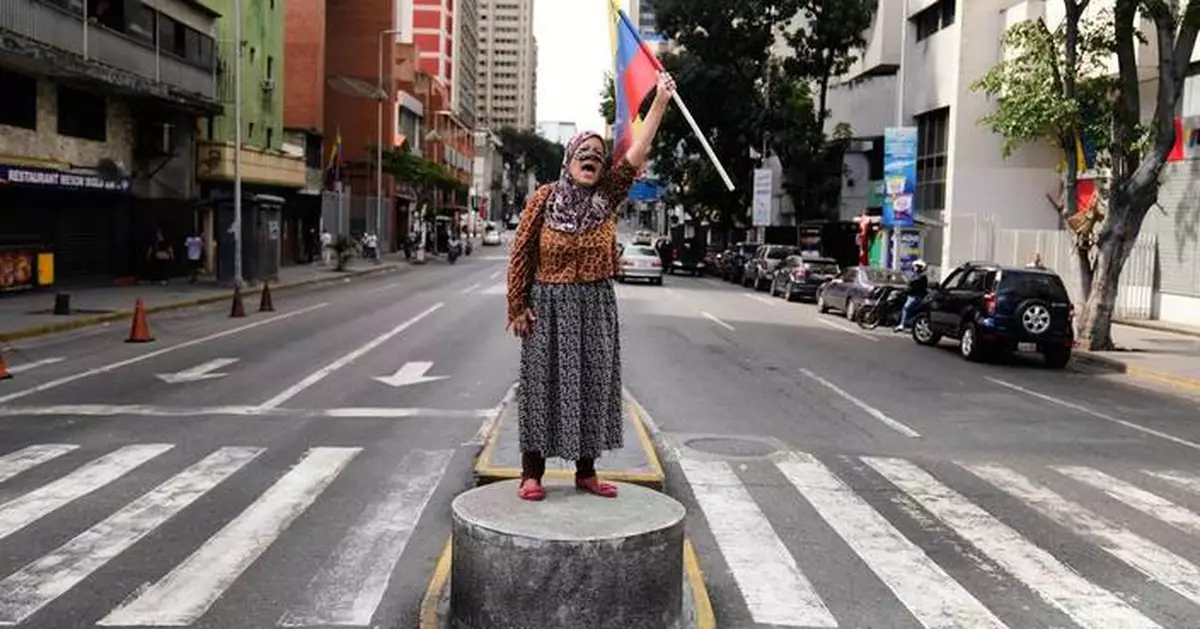
A supporter of Venezuelan President Nicolas Maduro stands on a median strip waving a national flag in Caracas, Venezuela, Saturday, Jan. 3, 2026, after U.S. President Donald Trump announced that Maduro had been captured and flown out of the country. (AP Photo/Ariana Cubillos)

Venezuelan Vice President and Oil Minister Delcy Rodriguez gives a press conference at the Miraflores presidential palace in Caracas, Venezuela, March 10, 2025. (AP Photo/Ariana Cubillos, File)
WASHINGTON (AP) — Secretary of State Marco Rubio suggested Sunday that the United States would not take a day-to-day role in governing Venezuela other than enforcing an existing “oil quarantine” on the country, a turnaround after President Donald Trump announced a day earlier that the U.S. would be running Venezuela following its ouster of leader Nicolás Maduro.
Rubio's statements on TV talk shows seemed designed to temper concerns about whether the assertive American action to achieve regime change might again produce a prolonged foreign intervention or failed attempt at nation-building. They stood in contrast to Trump’s broad but vague claims that the U.S. would at least temporarily “run” the oil-rich nation, comments that suggested some sort of governing structure under which Caracas would be controlled by Washington.
Rubio offered a more nuanced take, saying the U.S. would continue to enforce an oil quarantine that was already in place on sanctioned tankers before Maduro was removed from power early Saturday and use that leverage as a means to press policy changes in Venezuela.
“And so that’s the sort of control the president is pointing to when he says that," Rubio said on CBS’ “Face the Nation.” "We continue with that quarantine, and we expect to see that there will be changes, not just in the way the oil industry is run for the benefit of the people, but also so that they stop the drug trafficking.”
The blockade on sanctioned oil tankers — some of which have been seized by the U.S. — “remains in place, and that’s a tremendous amount of leverage that will continue to be in place until we see changes that not just further the national interest of the United States, which is number one, but also that lead to a better future for the people of Venezuela,” he added.
Even before the operation that nabbed Maduro, experts were already questioning the legality of aspects of the administration's pressure campaign on Venezuela, including the deadly bombing of boats accused of trafficking drugs that some scholars said stretched the boundaries of international law.
Trump's vow to “run” Venezuela, repeated more than half a dozen times at a news conference in Florida on Saturday, sparked concerns among some Democrats. It also drew unease from parts of his own Republican coalition, including an “America First” base that is opposed to foreign interventions, and also from observers who recalled past nation-building efforts in Iraq and Afghanistan.
Rubio dismissed such criticism, saying that Trump’s intent had been misunderstood by a “foreign policy establishment” that was fixated on the Middle East.
“The whole foreign policy apparatus thinks everything is Libya, everything is Iraq, everything is Afghanistan,” Rubio said. "This is not the Middle East. And our mission here is very different. This is the Western Hemisphere.”
Rubio also suggested that the U.S. would give Maduro’s subordinates who are now in charge time to govern, saying, “We’re going to judge everything by what they do, and we’re going to see what they do.” And though he did not rule out a U.S. military presence in Venezuela, Rubio said the current U.S. “force posture” was capable of stopping drug boats and sanctioned tankers.
A day earlier, Trump told reporters, “We’re going to run the country until such time as we can do a safe, proper and judicious transition.” He later pointed to his national security team with him, including Rubio and Defense Secretary Pete Hegseth, and said it would be done for a period of time by “the people that are standing right behind me. We’re gonna be running it we’re gonna be bringing it back."
The White House declined to comment beyond what Trump said Saturday.
Maduro landed late Saturday afternoon at a small airport in New York City's northern suburbs following the middle-of-the-night operation that extracted him and his wife, Cilia Flores, from their home in a military base in the capital city of Caracas — an act that Maduro’s government called “imperialist.” The couple faces U.S. charges of participating in a narco-terrorism conspiracy.
The dramatic seizure of the Maduros capped an intensive Trump administration pressure campaign on Venezuela’s autocratic leader and months of secret planning, resulting in the most assertive American action to achieve regime change since the 2003 invasion of Iraq. Legal experts raised questions about the lawfulness of the operation, which was done without congressional approval.
Venezuela’s vice president, Delcy Rodriguez, meanwhile, demanded that the U.S. free Maduro and called him the country’s rightful leader as her nation’s high court named her interim president.
After arriving at the airport, Maduro was flown by helicopter to Manhattan, where a convoy of law enforcement vehicles, including an armored car, was waiting to whisk him to a nearby U.S. Drug Enforcement Administration office. A video posted on social media by a White House account showed Maduro, smiling, as he was escorted through that office by two DEA agents grasping his arms.
He is due to make his first appearance Monday in Manhattan's federal court.
Maduro and other Venezuelan officials were indicted in 2020 on narco-terrorism conspiracy charges, and the Justice Department released a new indictment Saturday of Maduro and his wife that painted his administration as a “corrupt, illegitimate government” fueled by a drug-trafficking operation that flooded the U.S with cocaine. The U.S. government does not recognize Maduro as the country’s leader.
The Trump administration spent months building up American forces in the region and carrying out attacks on boats in the Caribbean Sea and eastern Pacific Ocean for allegedly ferrying drugs. Last week, the CIA was behind a drone strike at a docking area believed to have been used by Venezuelan drug cartels — the first known direct operation on Venezuelan soil since the U.S. campaign began in September.
Venezuela’s capital remained unusually quiet Sunday with few vehicles moving around and convenience stores, gas stations and other businesses closed. A road typically filled with runners, cyclists and other fitness enthusiasts on Sundays only had a handful of people working out the day after Maduro was deposed.
The presidential palace was guarded by armed civilians and members of the military. At a nearby plaza, only a street sweeper and a soldier stood, and across the street, a church remained close for a second day in a row.
Caracas resident David Leal arrived to the lot where he parks vehicles for a living only to quickly realize that he would likely not see any clients for a second day.
“People are still shaken,” said Leal, 77.
Garcia Cano reported from Caracas, Venezuela. Associated Press writers Jorge Rueda in Caracas, Venezuela; Lisa Mascaro, Michelle L. Price, Seung Min Kim and Alanna Durkin Richer in Washington; Farnoush Amiri in New York; Larry Neumeister in South Amboy, New Jersey, and Nicole Winfield in Rome contributed to this report.
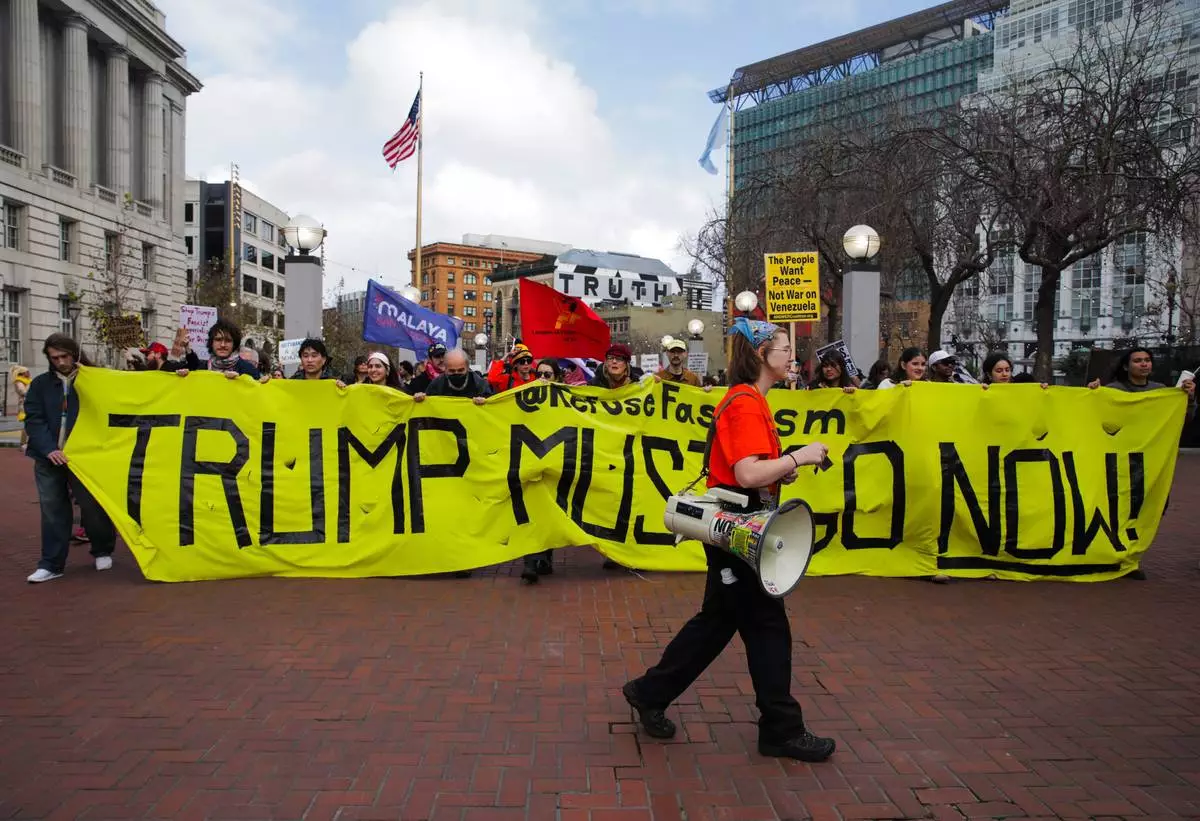
Protestors hold a banner stating "Trump Must Go Now" as they gather outside the UN Plaza during a demonstration against the U.S. bombing of Venezuela and seizure of Venezuelan President Nicolás Maduro, in San Francisco on Saturday, Jan. 3, 2026. (Yalonda M. James/San Francisco Chronicle via AP)
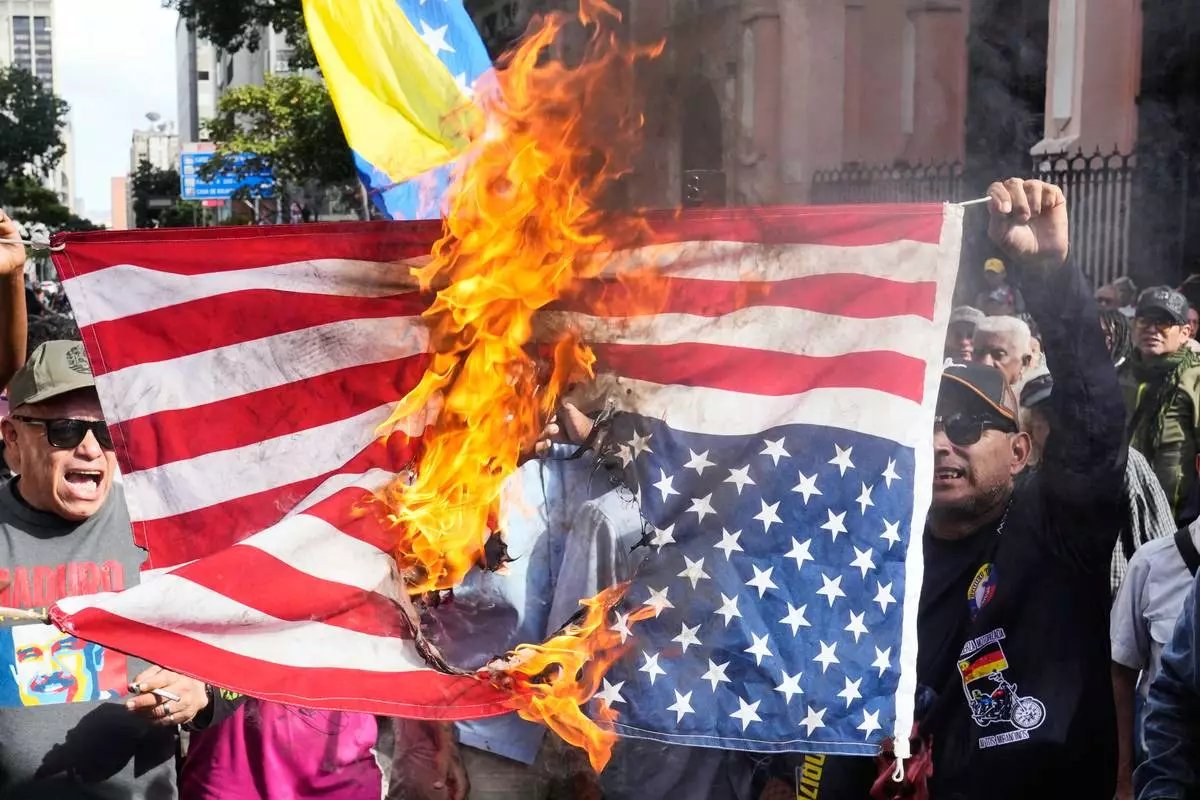
Government supporters burn a U.S. flag in Caracas, Venezuela, Saturday, Jan. 3, 2026, after U.S. President Donald Trump announced that U.S. forces had captured Venezuelan President Nicolás Maduro and his wife. (AP Photo/Ariana Cubillos)
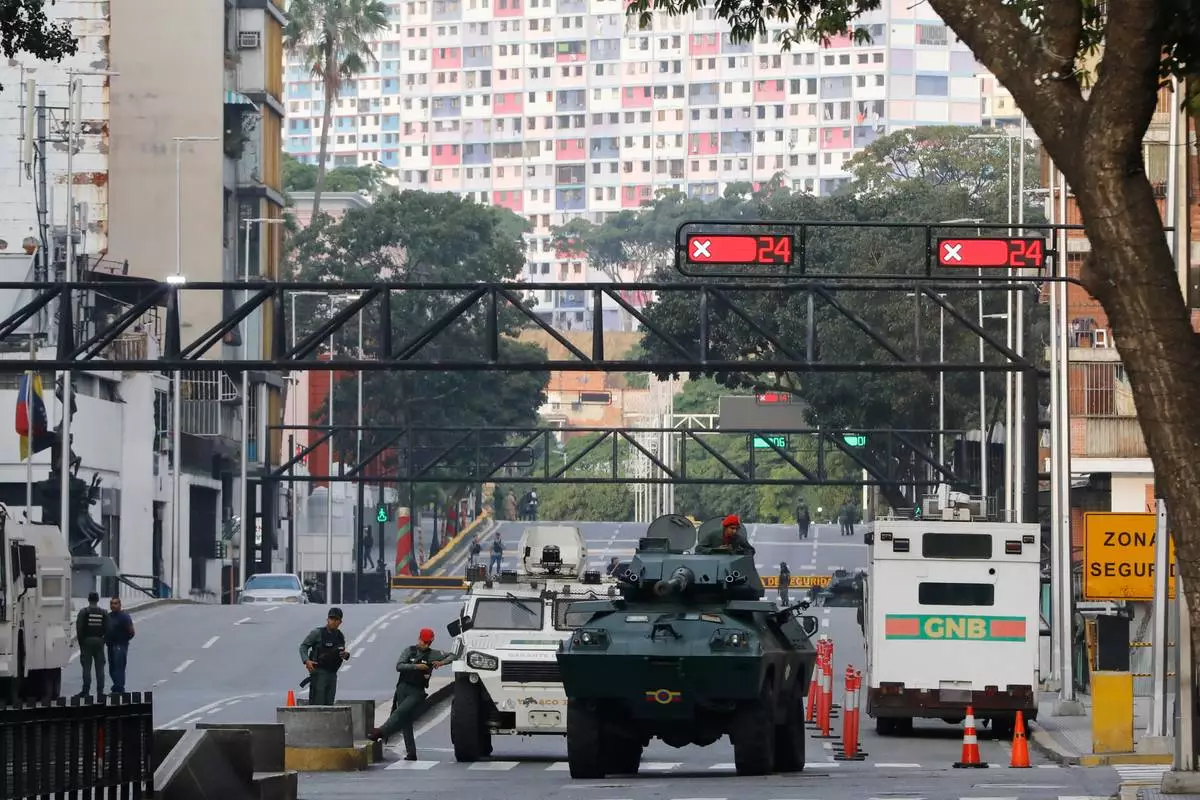
National Guard armored vehicles block an avenue leading to Miraflores presidential palace in Caracas, Venezuela, Saturday, Jan. 3, 2026. (AP Photo/Cristian Hernandez)
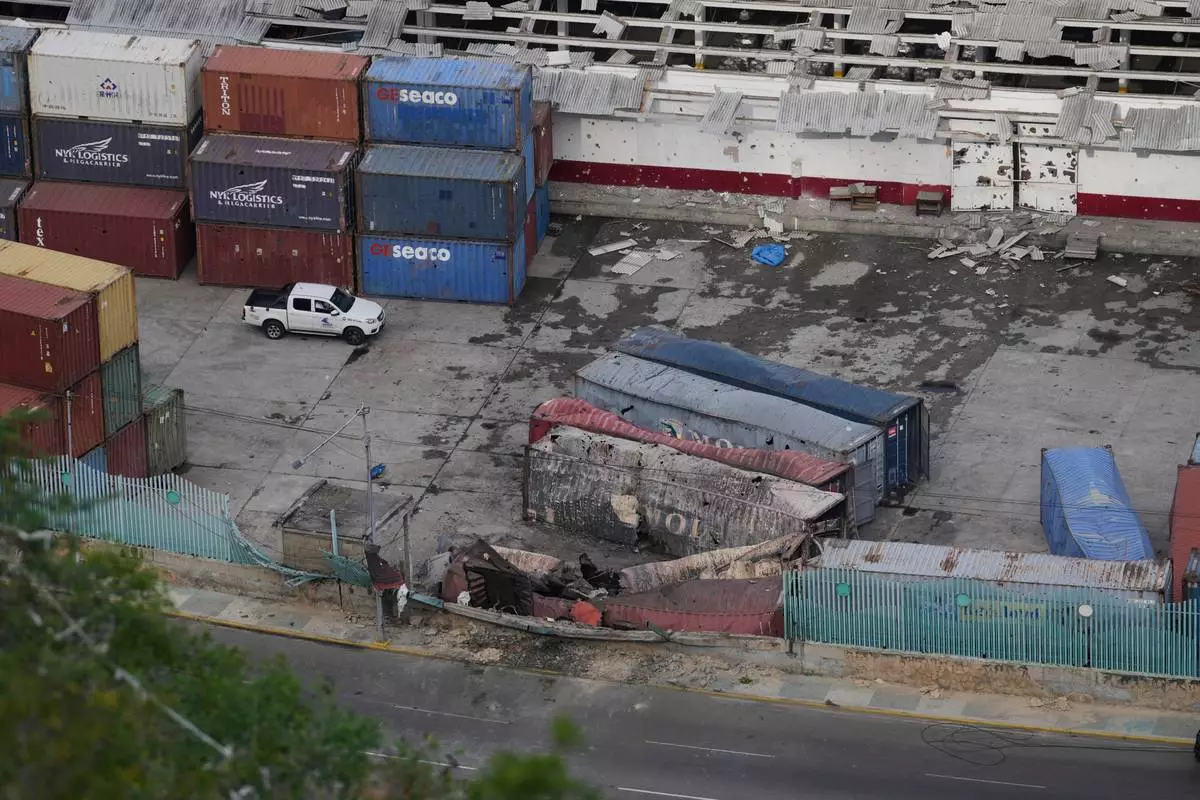
Destroyed containers lay at La Guaira port after explosions were heard in Venezuela, Saturday, Jan. 3, 2026. (AP Photo/Matias Delacroix)
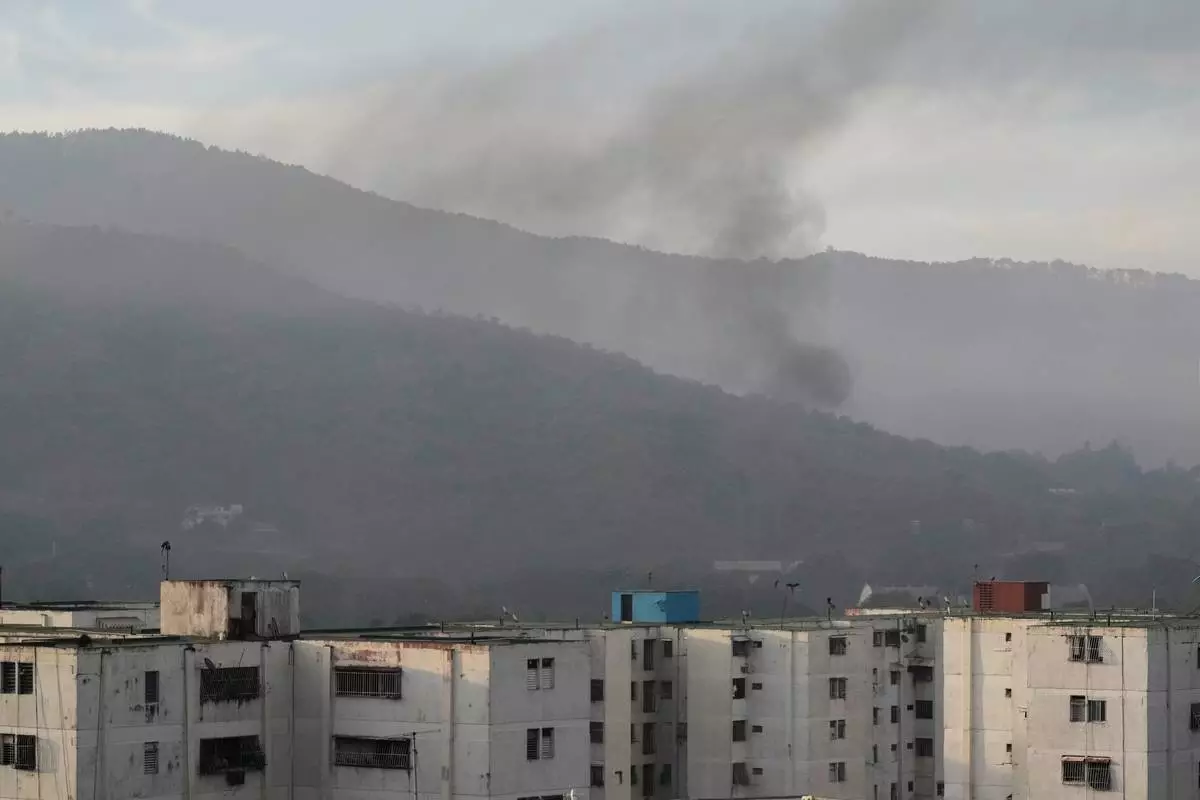
Smoke rises from Fort Tiuna, the main military garrison in Caracas, Venezuela, after multiple explosions were heard and aircraft swept through the area, Saturday, Jan. 3, 2026. (AP Photo/Matias Delacroix)
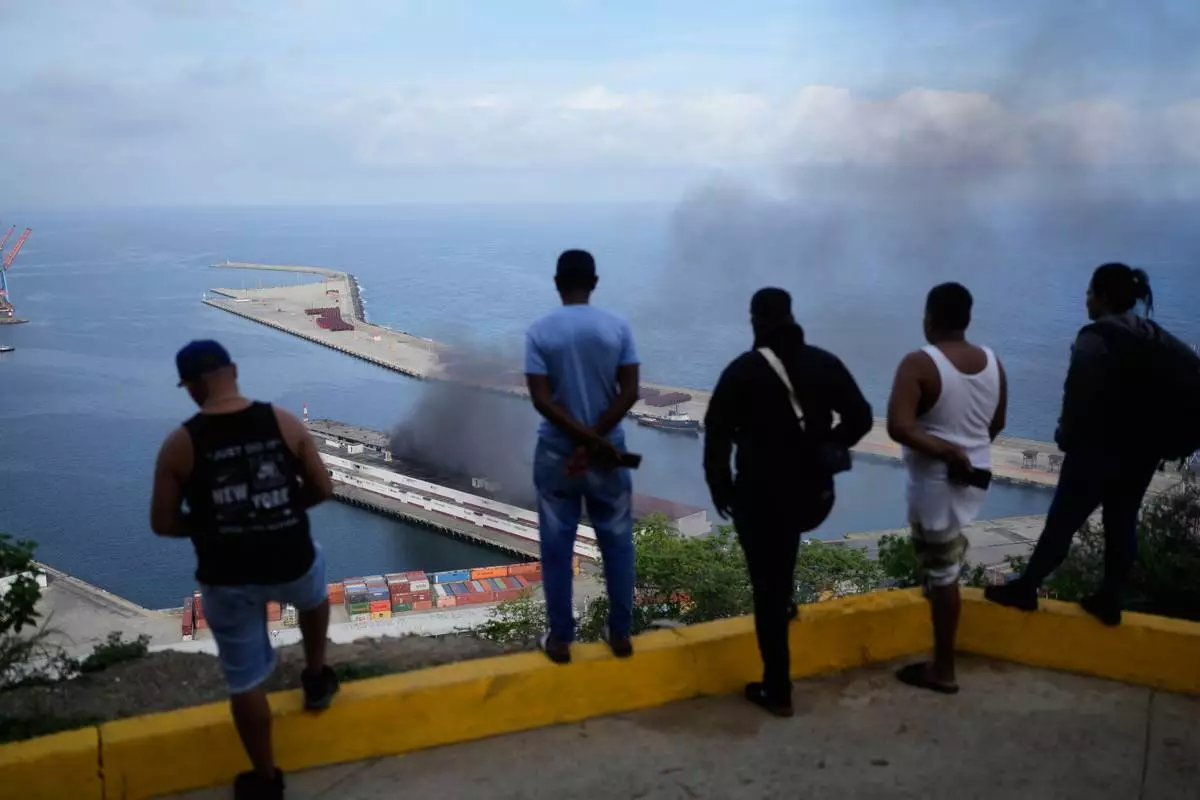
Men watch smoke rising from a dock after explosions were heard at La Guaira port, Venezuela, Saturday, Jan. 3, 2026. (AP Photo/Matias Delacroix)
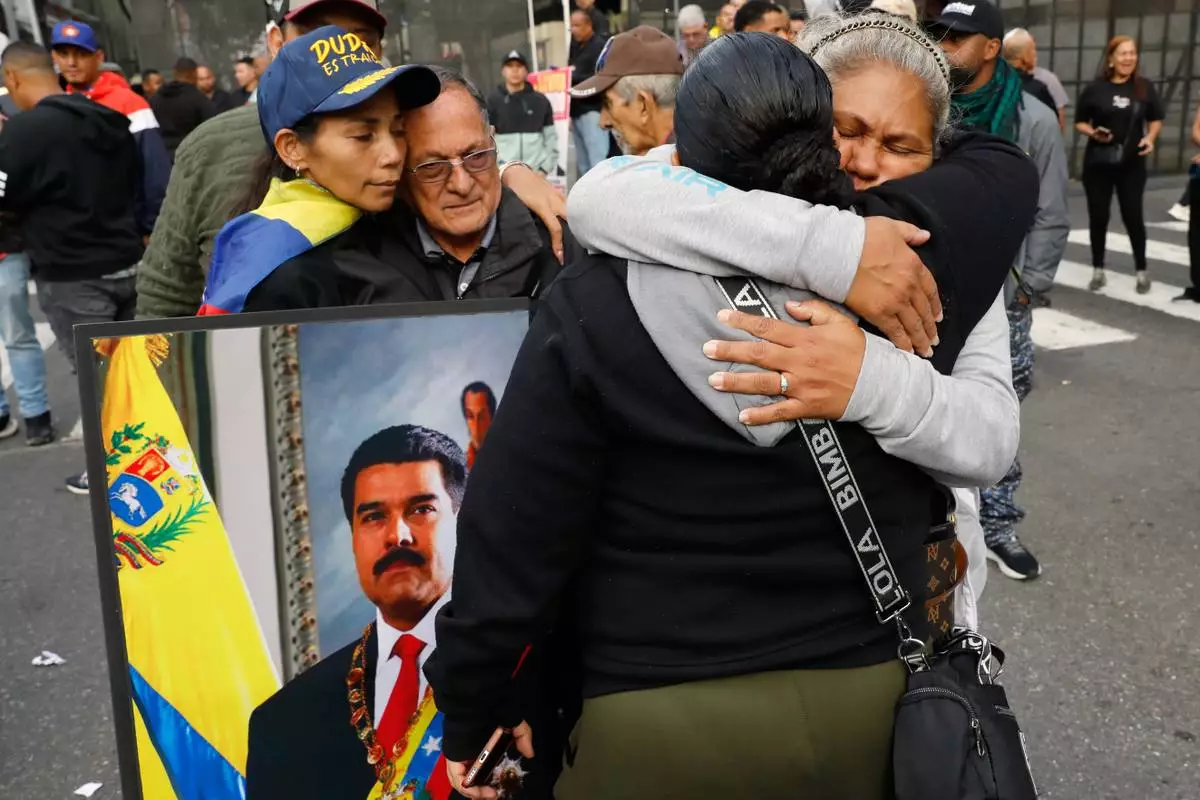
Supporters of Venezuelan President Nicolás Maduro embrace in downtown Caracas, Venezuela, Saturday, Jan. 3, 2026, after U.S. President Donald Trump announced that Maduro had been captured and flown out of the country. (AP Photo/Cristian Hernandez)