WASHINGTON (AP) — An injury to Tom Wilson would be a blow to Team Canada — and perhaps an even bigger problem for the Washington Capitals.
Caps coach Spencer Carbery sounded cautiously optimistic.
“We'll know more tomorrow, but I don't think it's too bad,” Carbery said after Saturday night's 3-2 shootout loss to Chicago. “But we'll find out more tomorrow.”
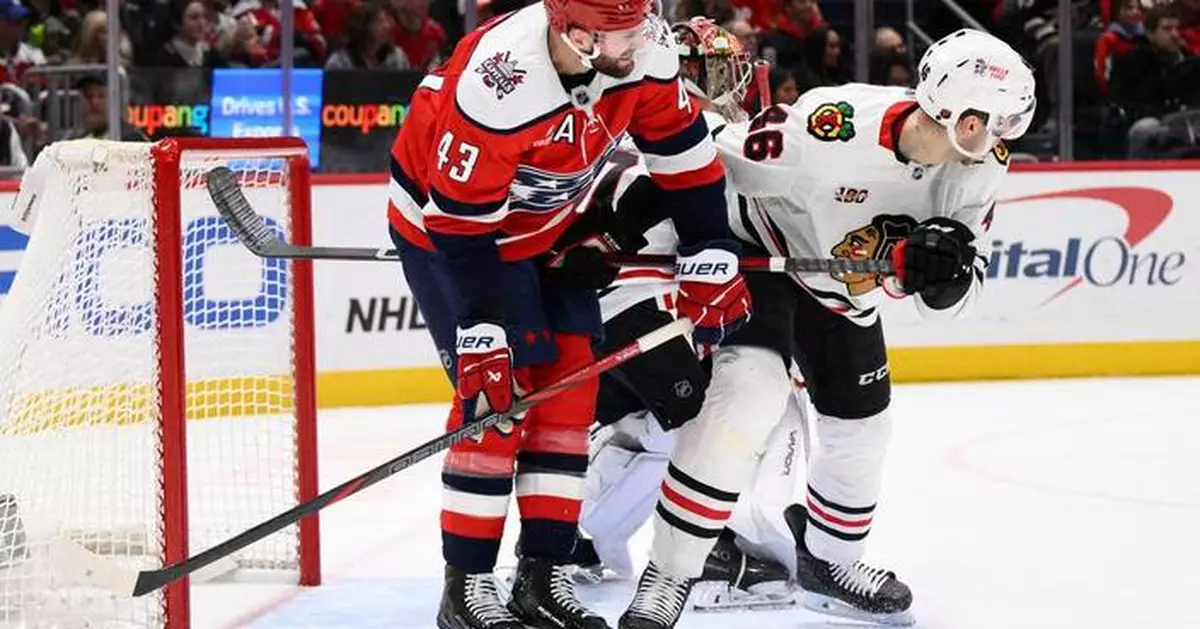
Wilson left Saturday's game with an apparent leg injury. He collided in the first period with Blackhawks defenseman Connor Murphy behind the net, then quickly grabbed at his right shin area. Wilson did not return at the start of the second.
The 31-year-old Wilson was selected earlier in the week for Canada's Olympic roster. If he's out for an extended period of time, Canada has a wealth of talented replacements to choose from. The Capitals don't have that luxury. Wilson leads Washington with 22 goals this season.
“That's significant. Huge. I mean, he's a big part of our team,” Carbery said. “Not only for the things that he does on the ice, but just for the leadership, bench presence.”
Aliaksei Protas is second on the Capitals with 16 goals, and he didn't play at all Saturday because of a lower-body injury. Meanwhile, forward Pierre-Luc Dubois hasn't played since Oct. 31.
Washington is currently the top wild card in the Eastern Conference. The Capitals put themselves in a good spot by going 10-1-3 from Nov. 15 through Dec. 11, but since then they are 3-6-2.
Washington is also 0-5 in shootouts this season. No other team is worse than 0-2. Saturday's went six rounds before Chicago's Nick Foligno ended it. Dylan Strome and Sonny Milano scored in the shootout for the Capitals, but it wasn't enough.
“It's tough to take moral victories in shootouts when you don't win it,” Carbery said. “But to get on the board is a positive, to finish on two of those.”
AP NHL: https://apnews.com/hub/NHL
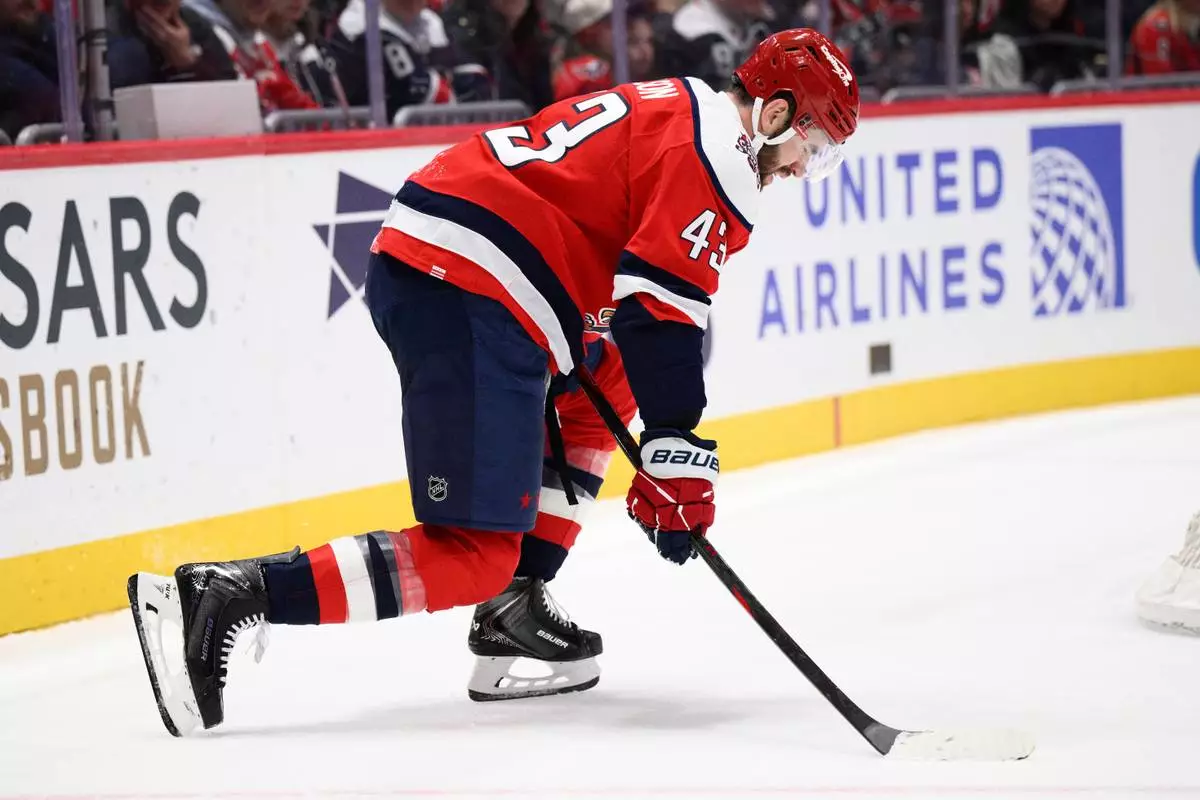
Washington Capitals right wing Tom Wilson (43) grimaces and is slow to get up after being injured during the first period of an NHL hockey game against the Chicago Blackhawks, Saturday, Jan. 3, 2026, in Washington. (AP Photo/Nick Wass)
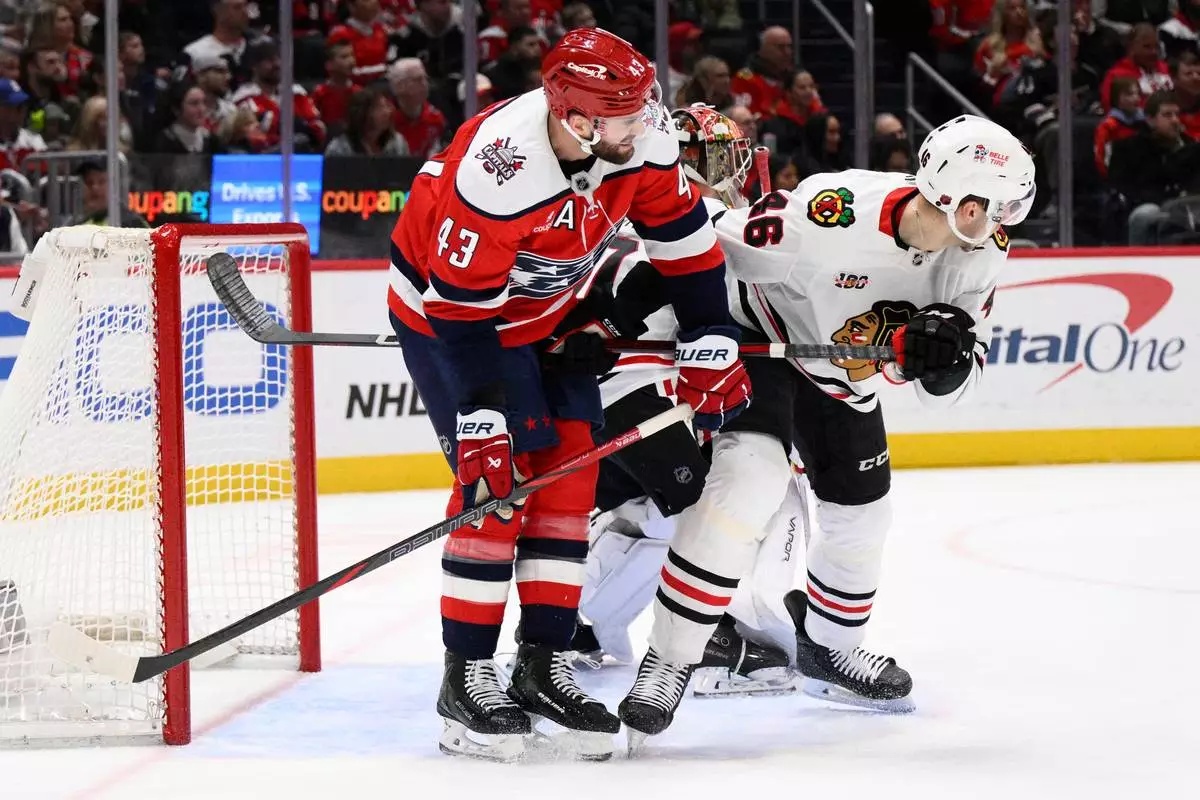
Chicago Blackhawks defenseman Louis Crevier (46) gets his stick between the legs of Washington Capitals right wing Tom Wilson (43) during the first period of an NHL hockey game, Saturday, Jan. 3, 2026, in Washington. (AP Photo/Nick Wass)
DUBAI, United Arab Emirates (AP) — Widening protests in Iran sparked by the Islamic Republic's ailing economy are putting new pressure on its theocracy.
Tehran is still reeling from a 12-day war launched by Israel in June that saw the United States bomb nuclear sites in Iran. Economic pressure, intensified in September by the return of United Nations sanctions on the country over its atomic program, has put Iran's rial currency into a free fall, now trading at some 1.4 million to $1.
Meanwhile, Iran's self-described “Axis of Resistance” — a coalition of countries and militant groups backed by Tehran — has been decimated in the years since the start of the Israel-Hamas war in 2023.
A new threat by U.S. President Donald Trump warning Iran that if Tehran “violently kills peaceful protesters,” the U.S. “will come to their rescue" has taken on new meaning after American troops captured Venezuelan President Nicolás Maduro, a longtime ally of Tehran.
Here's what to know about the protests and the challenges facing Iran's government.
Demonstrations have reached over 170 locations in 25 of Iran’s 31 provinces, the U.S.-based Human Rights Activists News Agency reported early Sunday. The death toll had reached at least 15 killed, it added, with more than 580 arrests. The group, which relies on an activist network inside of Iran for its reporting, has been accurate in past unrest.
Understanding the scale of the protests has been difficult. Iranian state media has provided little information about the demonstrations. Online videos offer only brief, shaky glimpses of people in the streets or the sound of gunfire. Journalists in general in Iran also face limits on reporting such as requiring permission to travel around the country, as well as the threat of harassment or arrest by authorities.
But the protests do not appear to be stopping, even after Supreme Leader Ayatollah Ali Khamenei on Saturday said “rioters must be put in their place.”
The collapse of the rial has led to a widening economic crisis in Iran. Prices are up on meat, rice and other staples of the Iranian dinner table. The nation has been struggling with an annual inflation rate of some 40%.
In December, Iran introduced a new pricing tier for its nationally subsidized gasoline, raising the price of some of the world’s cheapest gas and further pressuring the population. Tehran may seek steeper price increases in the future, as the government now will review prices every three months.
The protests began first with merchants in Tehran before spreading. While initially focused on economic issues, the demonstrations soon saw protesters chanting anti-government statements as well. Anger has been simmering over the years, particularly after the 2022 death of 22-year-old Mahsa Amini in police custody that triggered nationwide demonstrations.
Iran's “Axis of Resistance," which grew in prominence in the years after the 2003 U.S.-led invasion and subsequent occupation of Iraq, is reeling.
Israel has crushed Hamas in the devastating war in the Gaza Strip. Hezbollah, the Shiite militant group in Lebanon, has seen its top leadership killed by Israel and has been struggling since. A lightning offensive in December 2024 overthrew Iran’s longtime stalwart ally and client in Syria, President Bashar Assad, after years of war there. Yemen's Iranian-backed Houthi rebels also have been pounded by Israeli and U.S. airstrikes.
Now Venezuelan ally Maduro is in U.S. custody. Iran’s Foreign Ministry has condemned the “illegal U.S. attack against Venezuela." U.S. Defense Secretary Pete Hegseth likened the attack to the U.S. strikes in Iran last year, saying that “Maduro had his chance, just like Iran had their chance.” He added that adversaries of the U.S. should “remain on notice” that “America can project our will anywhere, anytime.”
China meanwhile has remained a major buyer of Iranian crude oil, but hasn't provided overt military support. Neither has Russia, which has relied on Iranian drones in its war on Ukraine.
Iran has insisted for decades that its nuclear program is peaceful. However, its officials have increasingly threatened to pursue a nuclear weapon. Iran had been enriching uranium to near weapons-grade levels prior to the U.S. attack in June, making it the only country in the world without a nuclear weapons program to do so.
Tehran also increasingly cut back its cooperation with the International Atomic Energy Agency, the U.N.'s nuclear watchdog, as tensions increased over its nuclear program in recent years. The IAEA's director-general has warned Iran could build as many as 10 nuclear bombs, should it decide to weaponize its program.
U.S. intelligence agencies have assessed that Iran has yet to begin a weapons program, but has “undertaken activities that better position it to produce a nuclear device, if it chooses to do so.”
Iran recently said it was no longer enriching uranium at any site in the country, trying to signal to the West that it remains open to potential negotiations over its atomic program to ease sanctions. But there's been no significant talks in the months since the June war.
Iran decades ago was one of the United States’ top allies in the Mideast under Shah Mohammad Reza Pahlavi, who purchased American military weapons and allowed CIA technicians to run secret listening posts monitoring the neighboring Soviet Union. The CIA fomented a 1953 coup that cemented the shah’s rule.
But in January 1979, the shah, fatally ill with cancer, fled Iran as mass demonstrations swelled against his rule. Then came the Islamic Revolution led by Ayatollah Ruhollah Khomeini, which created Iran’s theocratic government.
Later that year, university students overran the U.S. Embassy in Tehran, seeking the shah’s extradition and sparking the 444-day hostage crisis that saw diplomatic relations between Iran and the U.S. severed.
During the Iran-Iraq war of the 1980s, the U.S. backed Saddam Hussein. During that conflict, the U.S. launched a one-day assault that crippled Iran at sea as part of the so-called “Tanker War,” and later shot down an Iranian commercial airliner that the U.S. military said it mistook for a warplane.
Iran and the U.S. have seesawed between enmity and grudging diplomacy in the years since, and relations peaked with the 2015 nuclear deal, which saw Iran greatly limit its program in exchange for the lifting of sanctions. But Trump unilaterally withdrew America from the accord in 2018, sparking tensions in the Mideast that intensified after Hamas' Oct. 7, 2023, attack on Israel.
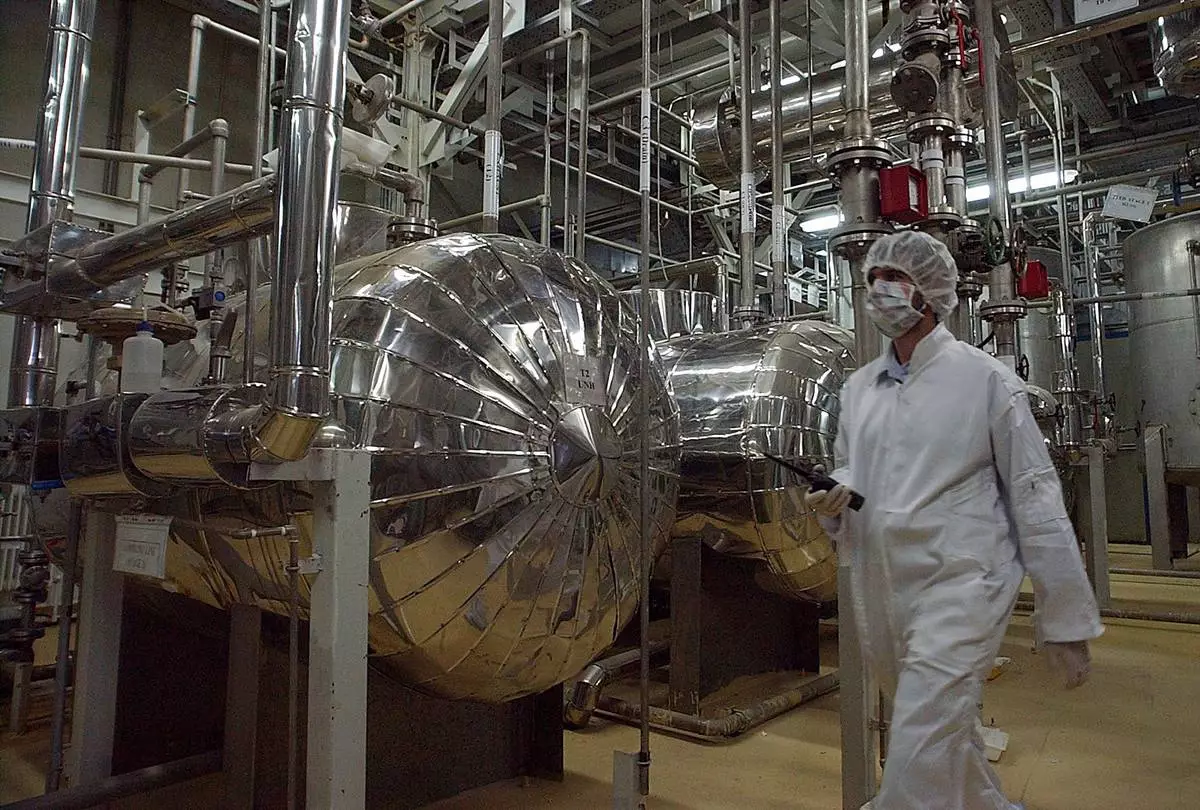
FILE - An Iranian security official in protective clothing walks through part of the Uranium Conversion Facility just outside the Iranian city of Isfahan, on March 30, 2005. (AP Photo/Vahid Salemi, File)
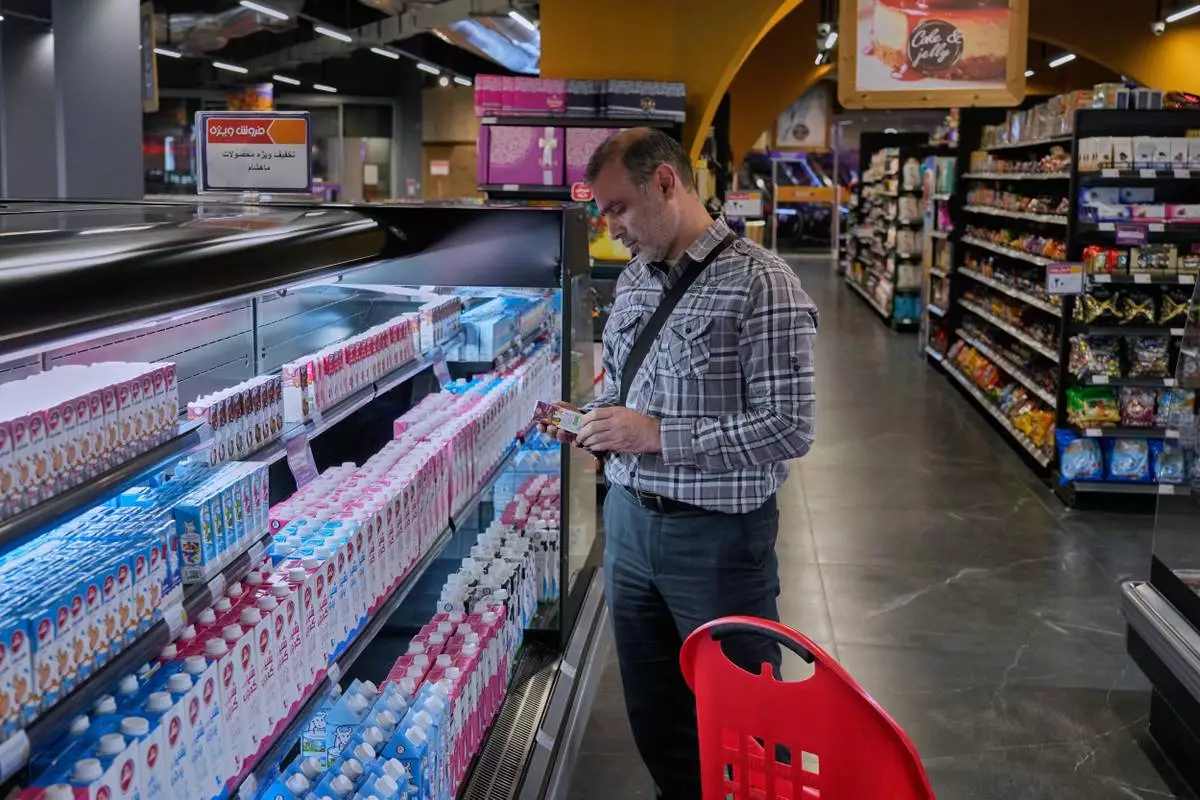
FILE - A customer shops at a supermarket at a shopping mall in northern Tehran, on Sept. 28, 2025. (AP Photo/Vahid Salemi, File)
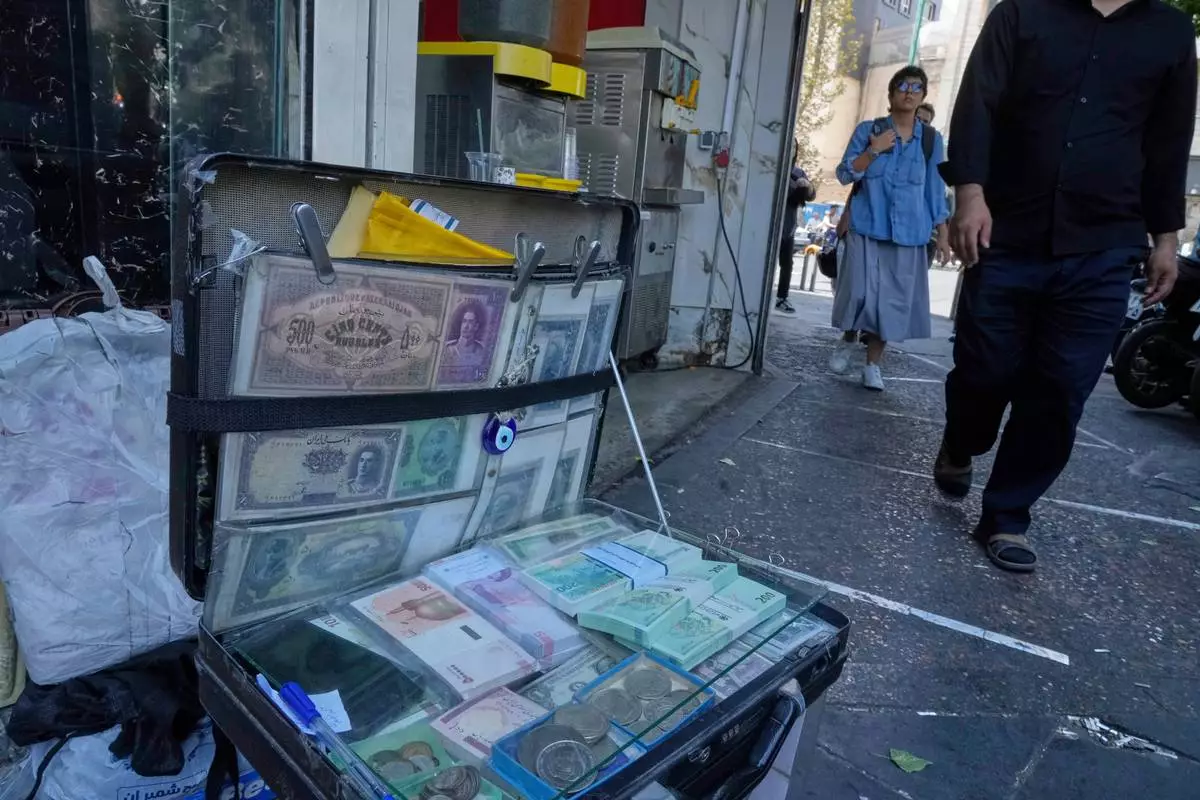
FILE - Current and pre-revolution Iranian banknotes are displayed by a street money exchanger at Ferdowsi square, Tehran's go-to venue for foreign currency exchange, in downtown Tehran, Iran, on Aug. 28, 2025. (AP Photo/Vahid Salemi, File)
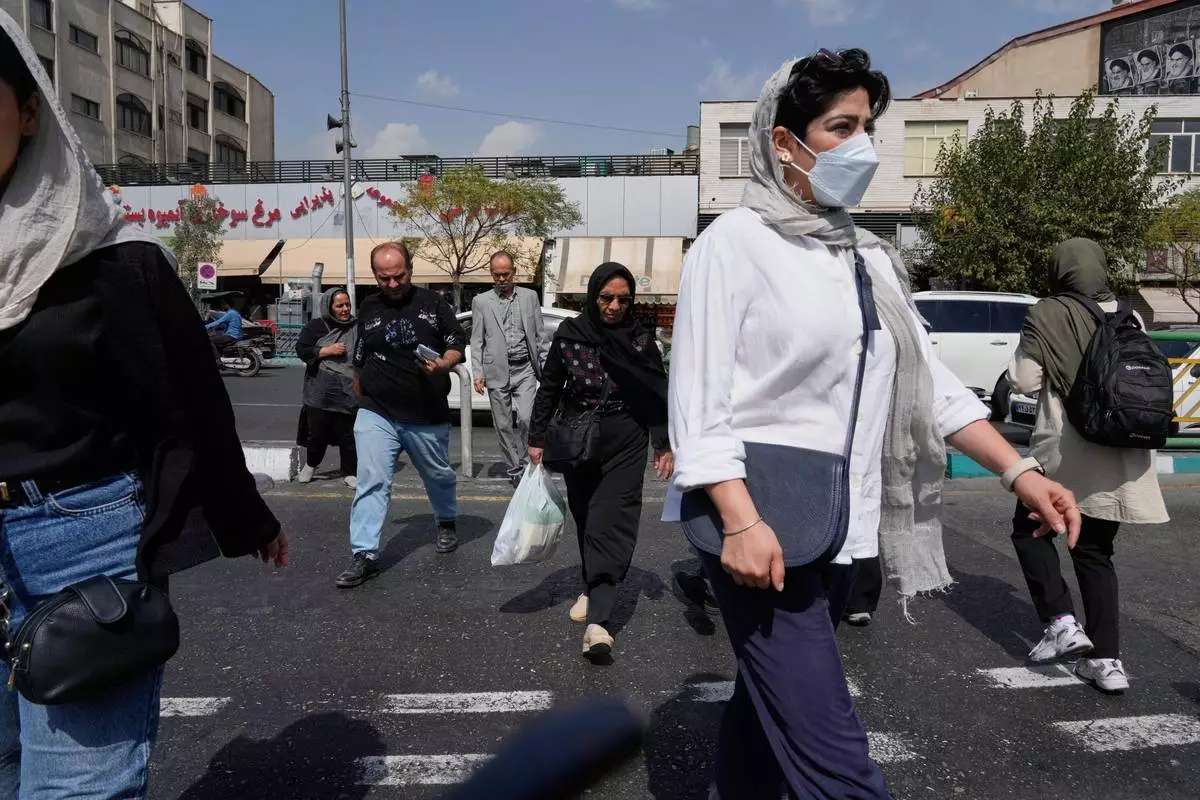
FILE - People cross the Enqelab-e-Eslami (Islamic Revolution) street in Tehran, Iran, on Sept. 27, 2025. (AP Photo/Vahid Salemi, File)
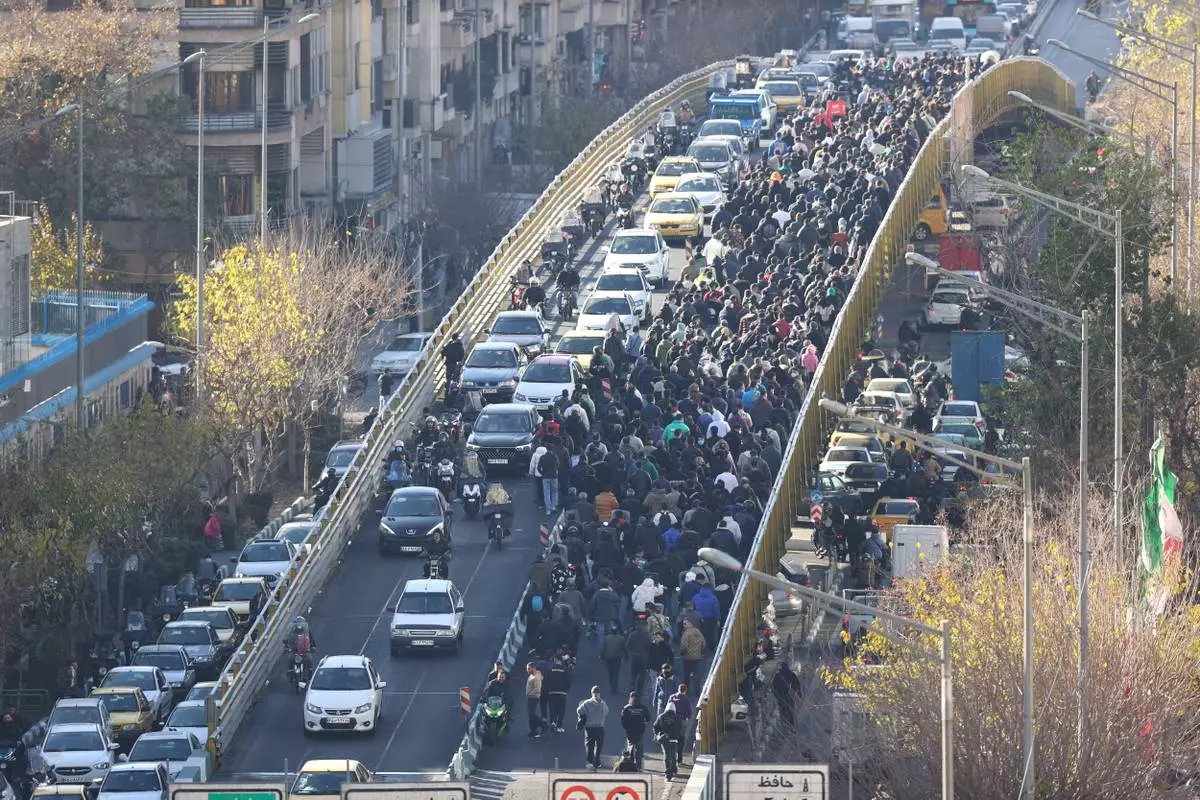
FILE - Protesters march on a bridge in Tehran, Iran, on Dec. 29, 2025. (Fars News Agency via AP, File)
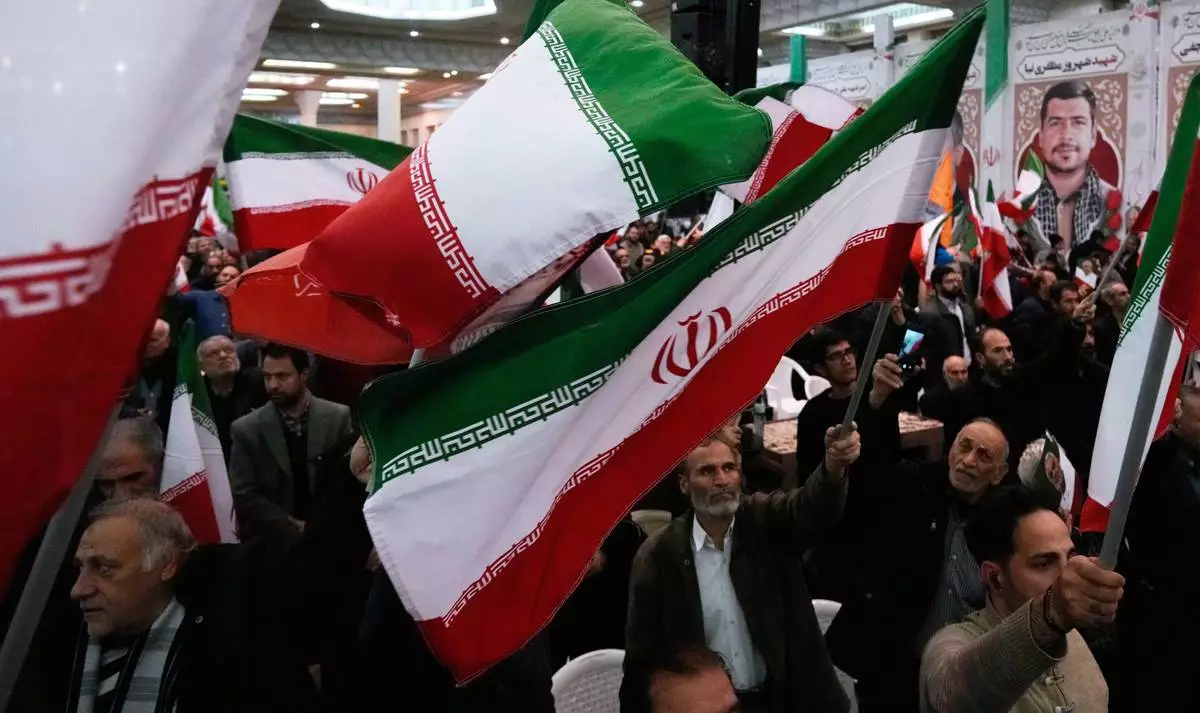
People wave national flags during a ceremony commemorating the death anniversary of the late commander of the Iran's Revolutionary Guard expeditionary Quds Force, Gen. Qassem Soleimani, who was killed in a U.S. drone attack in 2020 in Iraq, at the Imam Khomeini grand mosque in Tehran, Iran, Thursday, Jan. 1, 2026. (AP Photo/Vahid Salemi)