NEW YORK (AP) — A newly unsealed U.S. Justice Department indictment accuses captured Venezuelan President Nicolás Maduro of running a “corrupt, illegitimate government” fueled by an extensive drug-trafficking operation that flooded the U.S. with thousands of tons of cocaine.
The arrest of Maduro and his wife in a stunning military operation early Saturday in Venezuela sets the stage for a major test for U.S. prosecutors as they seek to secure a conviction in a Manhattan courtroom against the longtime leader of the oil-rich South American nation.
Attorney General Pam Bondi said in a post on X that Maduro and his wife “will soon face the full wrath of American justice on American soil in American courts.”
Here's a look at the accusations against Maduro and the charges he faces.
Maduro is charged alongside his wife, his son and three others. Maduro is indicted on four counts: narco-terrorism conspiracy, cocaine importation conspiracy, possession of machine guns and destructive devices and conspiracy to possess machine guns and destructive devices.
Maduro is facing the same charges as in an earlier indictment brought against him in Manhattan federal court in 2020, during the first Trump presidency. The new indictment unsealed on Saturday, which adds charges against Maduro's wife, was filed under seal in the Southern District of New York just before Christmas.
It was not immediately clear when Maduro and his wife, Cilia Flores, would make their first appearance at the courthouse in Manhattan. A video posted Saturday night on social media by a White House account showed Maduro, smiling, as he was escorted through a U.S. Drug Enforcement Administration office in New York by two federal agents grasping his arms. He was expected to be detained while awaiting trial at a federal jail in Brooklyn.
The indictment accuses Maduro of partnering with “some of the most violent and prolific drug traffickers and narco-terrorists in the world” to allow for the shipment of thousands of tons of cocaine into the U.S. Authorities allege powerful and violent drug-trafficking organizations, such as the Sinaloa Cartel and Tren de Aragua gang, worked directly with the Venezuelan government and then sent profits to high-ranking officials who helped and protected them in exchange.
Maduro allowed “cocaine-fueled corruption to flourish for his own benefit, for the benefit of members of his ruling regime, and for the benefit of his family members,” the indictment alleges.
U.S. authorities allege that Maduro and his family “provided law enforcement cover and logistical support” to cartels moving drugs throughout the region, resulting in as much as 250 tons of cocaine trafficked through Venezuela annually by 2020, according to the indictment. Drugs were moved on go-fast vessels, fishing boats and container ships or on planes from clandestine airstrips, the indictment says.
“This cycle of narcotics-based corruption lines the pockets of Venezuelan officials and their families while also benefiting violent narco-terrorists who operate with impunity on Venezuelan soil and who help produce, protect, and transport tons of cocaine to the United States,” the indictment says.
The U.S. accuses Maduro and his wife of ordering kidnappings, beatings and murders “against those who owed them drug money or otherwise undermined their drug trafficking operation.” That includes the killing of a local drug boss in Caracas, according to the indictment.
Maduro’s wife is also accused of accepting hundreds of thousands of dollars in bribes in 2007 to arrange a meeting between “a large-scale drug trafficker” and the director of Venezuela’s National Anti-Drug Office. In a corrupt deal, the drug trafficker then agreed to pay a monthly bribe to the director of the anti-drug office as well as about $100,000 for each cocaine-carrying flight “to ensure the flight’s safe passage.” Some of that money then went to Maduro’s wife, the indictment says.
Nephews of Maduro's wife were heard during recorded meetings with confidential U.S. government sources in 2015 agreeing to send “multi-hundred-kilogram cocaine shipments” from Maduro's “presidential hanger” at a Venezuelan airport. The nephews during the recorded meetings explained “that they were at ‘war’ with the United States,” the indictment alleges. They were both sentenced in 2017 to 18 years in prison for conspiring to send tons of cocaine into the U.S. before being released in 2022 as part of a prisoner swap in exchange for seven imprisoned Americans.
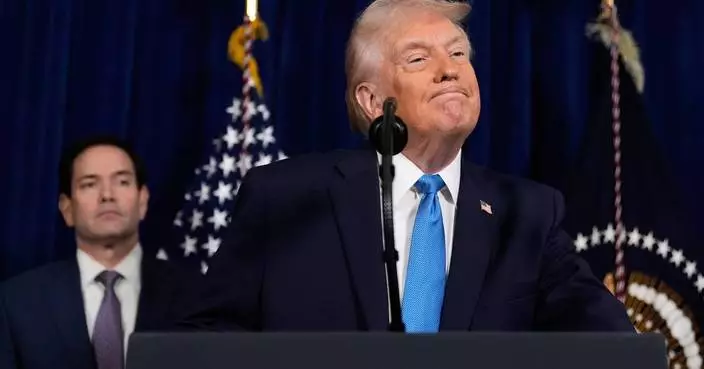
During a news conference, Secretary of State Marco Rubio and Dan Caine, the chairman of the Joint Chiefs of Staff, cast the military raid that captured Maduro and his wife as an action carried out on behalf of the Department of Justice. Caine said the operation was made “at the request of the Justice Department.”
Rubio, as he responded to a question about whether Congress had been notified, said the U.S. raid to get the couple was “basically a law enforcement function," adding that it was an instance in which the “Department of War supported the Department of Justice." He called Maduro “a fugitive of American justice with a $50 million reward” over his head.
Richer reported from Washington.
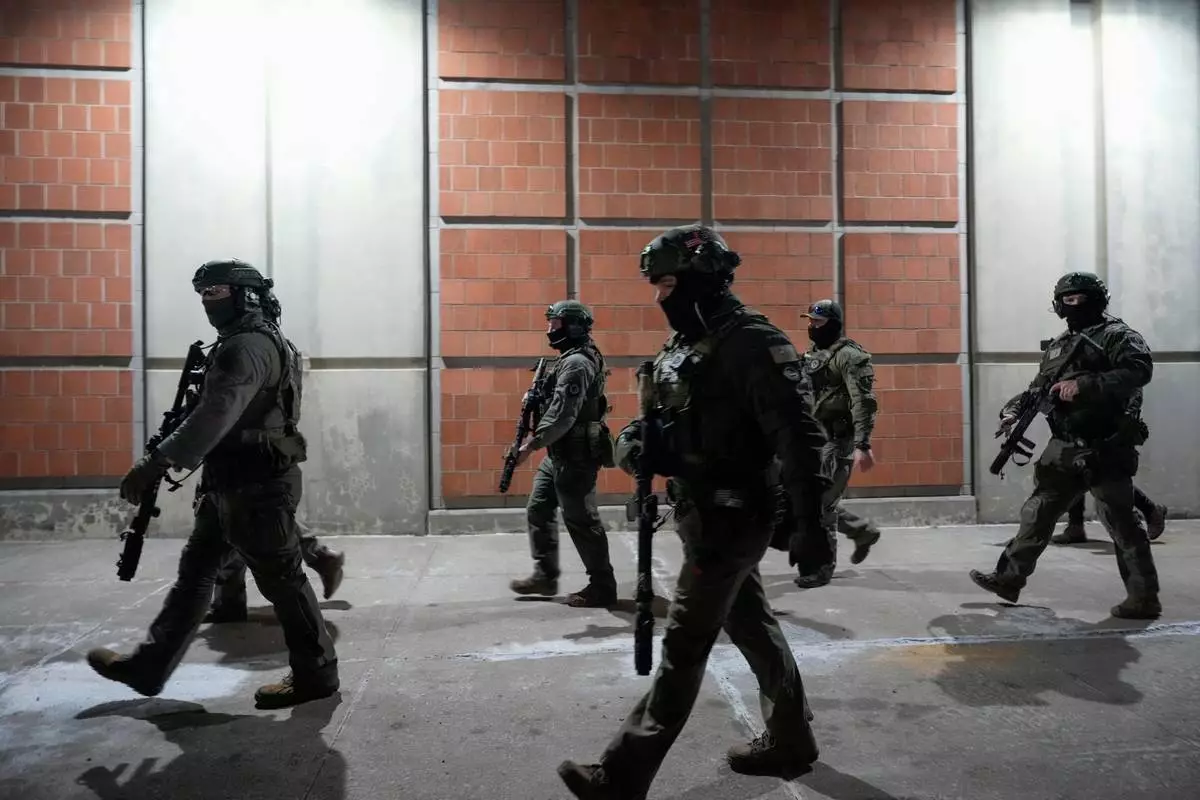
Federal law enforcement personnel patrol outside the Metropolitan Detention Center as they await the arrival of captured Venezuelan President Nicolas Maduro, Saturday, Jan. 3, 2026, in New York. (AP Photo/Yuki Iwamura)
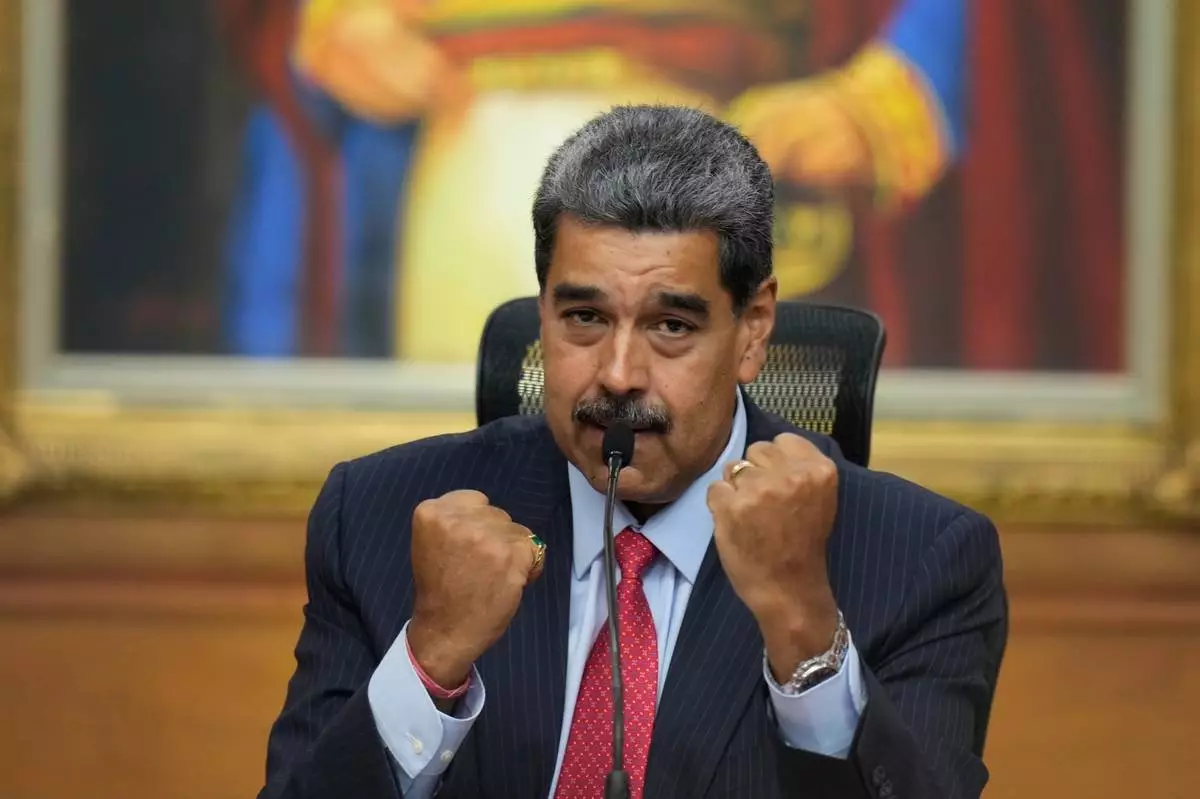
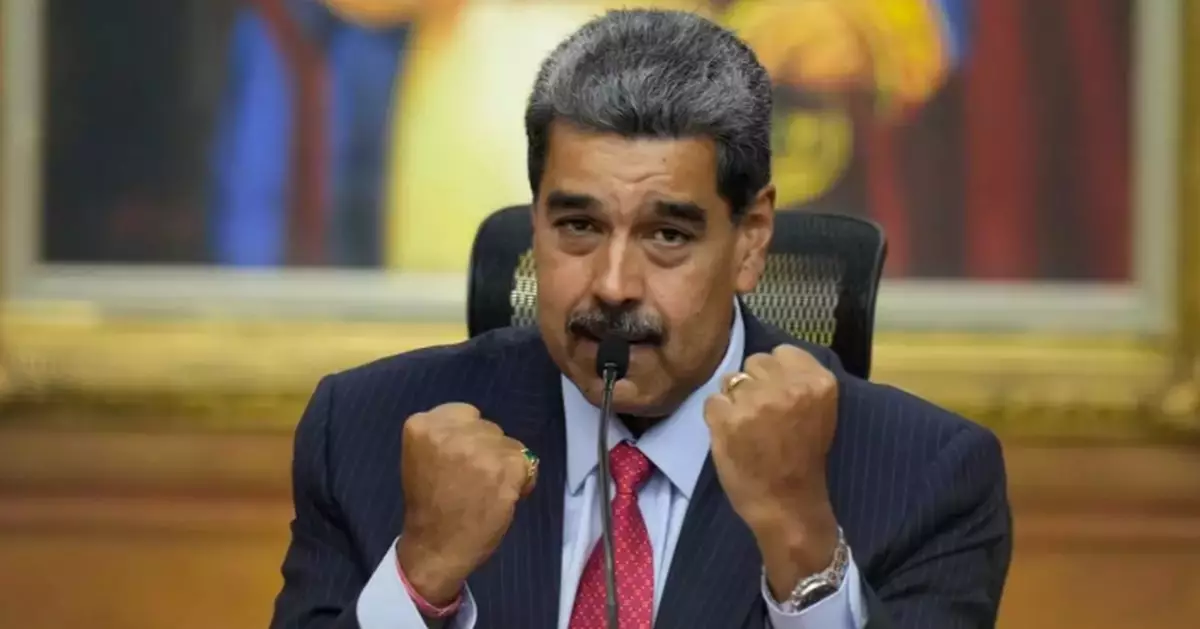
FILE - Venezuelan President Nicolas Maduro raises up his closed fists during a news conference at Miraflores presidential palace in Caracas, Venezuela, July 31, 2024, three days after his disputed reelection. (AP Photo/Matias Delacroix, File)

Members of the media gather outside the Metropolitan Detention Center where captured Venezuelan President Nicolas Maduro is being held, Saturday, Jan. 3, 2026, in New York. (AP Photo/Yuki Iwamura)
Secretary of State Marco Rubio suggested Sunday that the U.S. would not take a day-to-day role in governing Venezuela, a turnaround after President Donald Trump announced a day earlier that the U.S. would be running Venezuela following its ouster of leader Nicolás Maduro.
Rubio’s statements seemed designed to temper concerns about whether the assertive American action to achieve regime change might again produce a prolonged foreign intervention or failed attempt at nation-building. They stood in contrast to Trump’s broad but vague claims that the U.S. would at least temporarily “run” the oil-rich nation.
Meanwhile, a tense calm hangs over Venezuela after the U.S. military operation that deposed Maduro, who was brought to New York to face criminal charges.
Maduro and his wife landed late Saturday afternoon at a small airport in New York. The couple face U.S. charges of participating in a narco-terrorism conspiracy.
Here's the latest:
The governments of Spain, Brazil, Chile, Colombia, Mexico and Uruguay said in a statement that U.S. involvement in Venezuela is “an extremely dangerous precedent for peace and regional security and puts the civilian population at risk.”
In a statement released jointly by the governments, they expressed their “concern about any attempt at government control, administration, or external appropriation of natural or strategic resources.”
These actions are “incompatible with international law and threaten the political, economic, and social stability of the region,” they added.
Besides expressing their “deep concern and rejection” of the U.S. operation that ended with the capture of Venezuelan President Nicolás Maduro, they called for dialogue, negotiation, and respect for the will of the Venezuelan people to resolve the situation, “without external interference and in accordance with international law.”
Associated Press video on Sunday shows a banner now on display in Iran’s capital warning the United States and Israel that their soldiers could be killed if they take action in the country.
Trump’s recent comment that the U.S. “will come to their rescue” if Iran kills peaceful protesters has taken on a new meaning after the U.S. capture of Venezuelan President Nicolás Maduro, a longtime ally of Tehran.
Iran’s Foreign Ministry has condemned the “illegal U.S. attack against Venezuela.” U.S. Defense Secretary Pete Hegseth has said adversaries of the U.S. should note that “America can project our will anywhere, anytime.”
From California to Missouri and Texas, protestors are planning demonstrations Sunday and through the week against President Donald Trump’s military operation and capture of Maduro, which one protest description called “the illegal, unconstitutional invasion of Venezuela.”
Dozens appear to be organized by chapters of Indivisible, a left-leaning group, and many take umbrage with Trump’s plans to take control of Venezuela’s oil industry and ask American companies to revitalize it.
U.S. Sen. Chuck Grassley, a Republican from Iowa who serves as Senate president pro tempore, posted on X Saturday that Maduro is a narco-terrorist and his drug trafficking resulted in the deaths of too many Americans. He likened the Trump operation to then-President George Bush’s decision in 1989 to capture Panamanian dictator Manuel Noriega following his indictment for drug trafficking.
Illinois Gov. JB Pritzker, a Democrat and one of President Donald Trump’s most outspoken critics, posted that U.S. military action in Venezuela is unconstitutional and is putting troops in harm’s way with no long-term strategy. “The American people deserve a President focused on making their lives more affordable,” Pritzker wrote.
U.S. Sen. Tammy Baldwin, a Democrat from Wisconsin, posted a statement on X calling the strikes illegal and criticizing Trump for taking action without congressional approval. “The President does not have the unilateral authority to invade foreign countries, oust their governments, and seize their resources,” she wrote.
France’s foreign minister says the departure of President Nicolás Maduro “is good news for the Venezuelans” and called for a peaceful and democratic transition of power.
Jean-Noël Barrot said “Maduro was an unscrupulous dictator who confiscated Venezuelans’ freedom and stole their elections.”
“Then, yes, we pointed out that the method used infringes the principles of international law,” Barrot said about the U.S. military operation on France 2 national television.
Chuck Schumer, the Democratic Senate leader, called Maduro “a horrible, horrible person” but added, “You don’t treat lawlessness with other lawlessness. And that’s what’s happened.”
“We have learned through the years that, when America tries to regime change and nation-building in this way, the American people pay the price in both blood and results,” Schumer told ABC’s “This Week.”
Homeland Security Secretary Kristi Noem says President Donald Trump’s conversations with Venezuelan Vice President Delcy Rodriguez now are ”very matter-of-fact and very clear: You can lead or you can get out of the way, because we’re not going to allow you to continue to subvert American influence and our need to have a free country like Venezuela to work with rather than to have dictators in place who perpetuate crimes and drug trafficking.”
Noem tells “Fox News Sunday” that the United States wants a leader in Venezuela who will be “a partner that understands that we’re going to protect America” when it comes to stopping drug trafficking and “terrorists from coming into our country.”
She says that “we’re looking for a leader that will stand up beside us and embrace those freedoms and liberties for the Venezuelan people but also ensure that they’re not perpetuating crimes around the globe like they’ve had in the past.”
Secretary of State Marco Rubio appeared to back off Trump’s assertions that the U.S. was running Venezuela, insisting instead that Washington will use control of the South American country’s oil industry to force policy changes and, “We expect that it’s going to lead to results here.”
“We’re hopeful, hopeful, that it does positive results for the people for Venezuela,” Rubio told ABC’s “This Week.” “But, ultimately, most importantly, in the national interest of the United States.”
Asked about Trump suggesting that Rubio would be among the U.S. officials helping to run Venezuela, Rubio offered no details but said, “I’m obviously very intricately involved in the policy” going forward.
He said of Venezuela’s interim leader: “We don’t believe this regime in place is legitimate” because the country never held free and fair elections.
Venezuela’s capital Caracas was unusually quiet Sunday with few vehicles moving around. Convenience stores, gas stations and other businesses were mostly closed.
The presence of police and members of the military across the city was notable for its smaller size compared with an average day and even more so with the days when people protested against Maduro’s government in previous years.
Meanwhile, soldiers attempted to clear an area of an air base that had been on fire along with at least three passenger buses following Saturday’s U.S. attack.
The Brooklyn jail holding Nicolás Maduro is a facility so troubled that some judges have refused to send people there even as it has housed such famous inmates as music stars R. Kelly and Sean “Diddy” Combs.
Opened in the early 1990s, the Metropolitan Detention Center, or MDC Brooklyn, currently houses about 1,300 inmates.
It’s the routine landing spot for people awaiting trial in federal courts in Manhattan and Brooklyn, holding alleged gangsters and drug traffickers alongside some people accused of white collar crimes.
Maduro is not the first president of a country to be locked up there.
Juan Orlando Hernández, the former president of Honduras, was imprisoned at MDC Brooklyn while he was on trial for trafficking hundreds of tons of cocaine into the U.S. Hernández was pardoned and freed by President Donald Trump in December.
▶ Read more about MDC Brooklyn
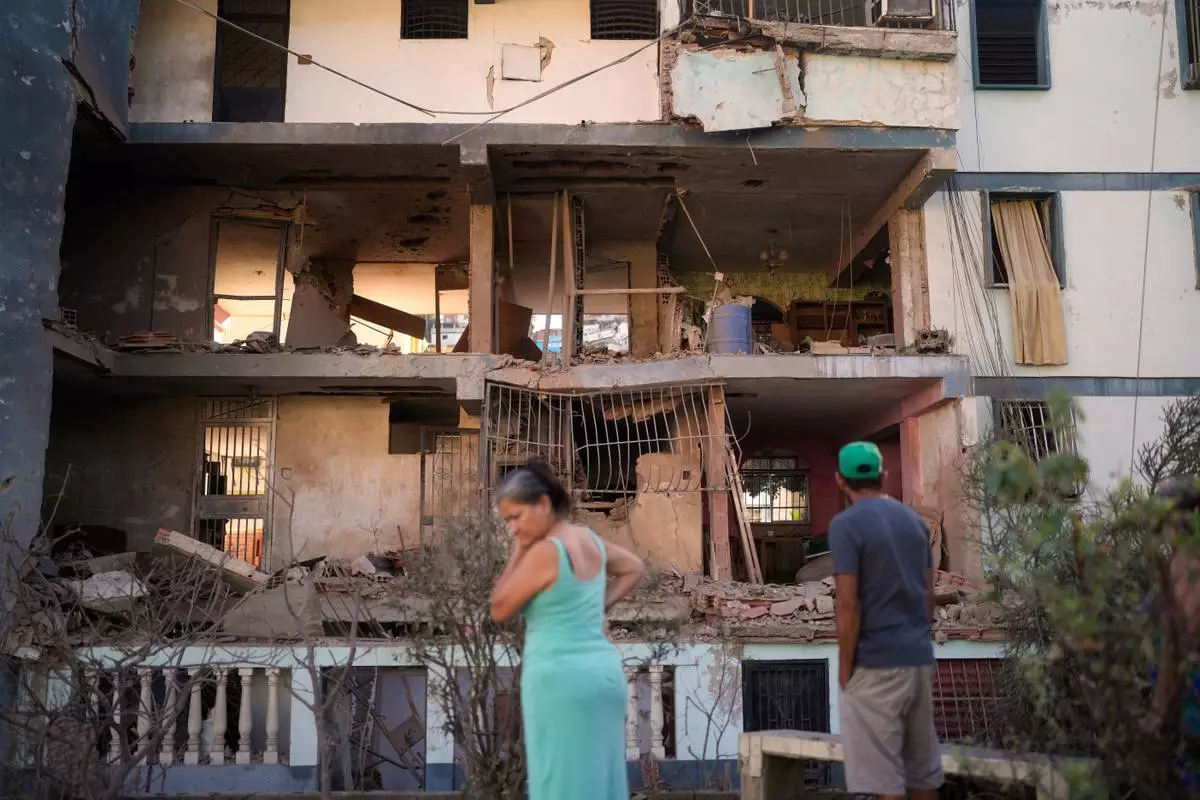
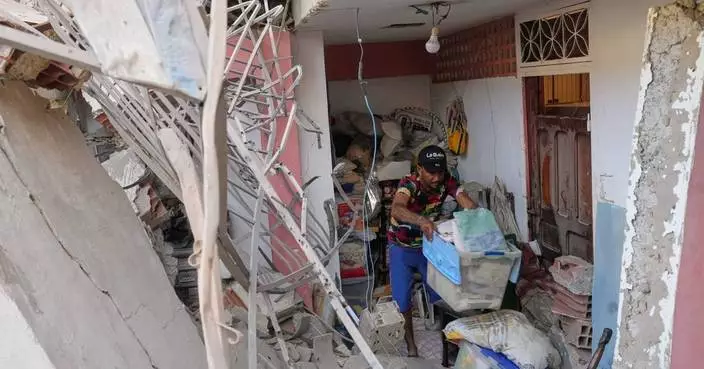
Residents look at a damaged apartment complex that neighbors say was hit during U.S. strikes to capture Venezuelan President Nicolás Maduro, in Catia La Mar, Venezuela, Sunday, Jan. 4, 2026. (AP Photo/Matias Delacroix)
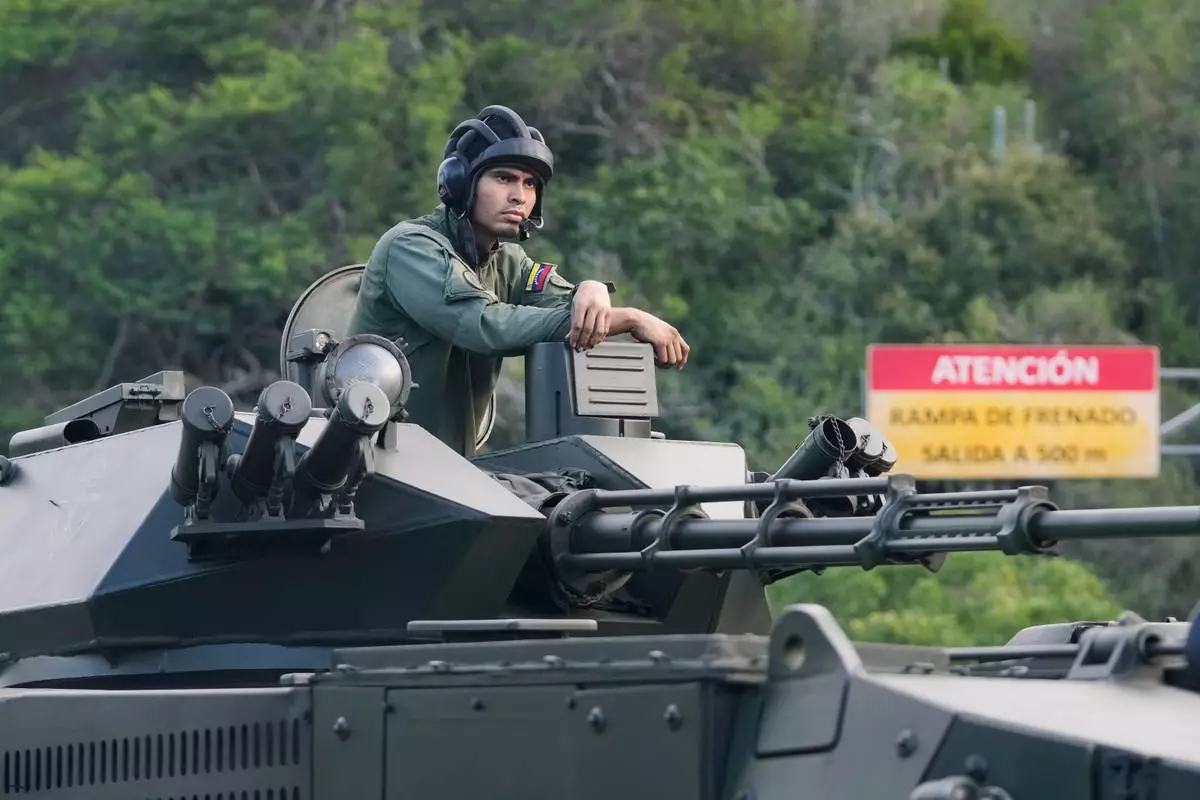
A soldier stands atop an armored vehicle driving toward Caracas, Venezuela, Sunday, Jan. 4, 2026. (AP Photo/Matias Delacroix)
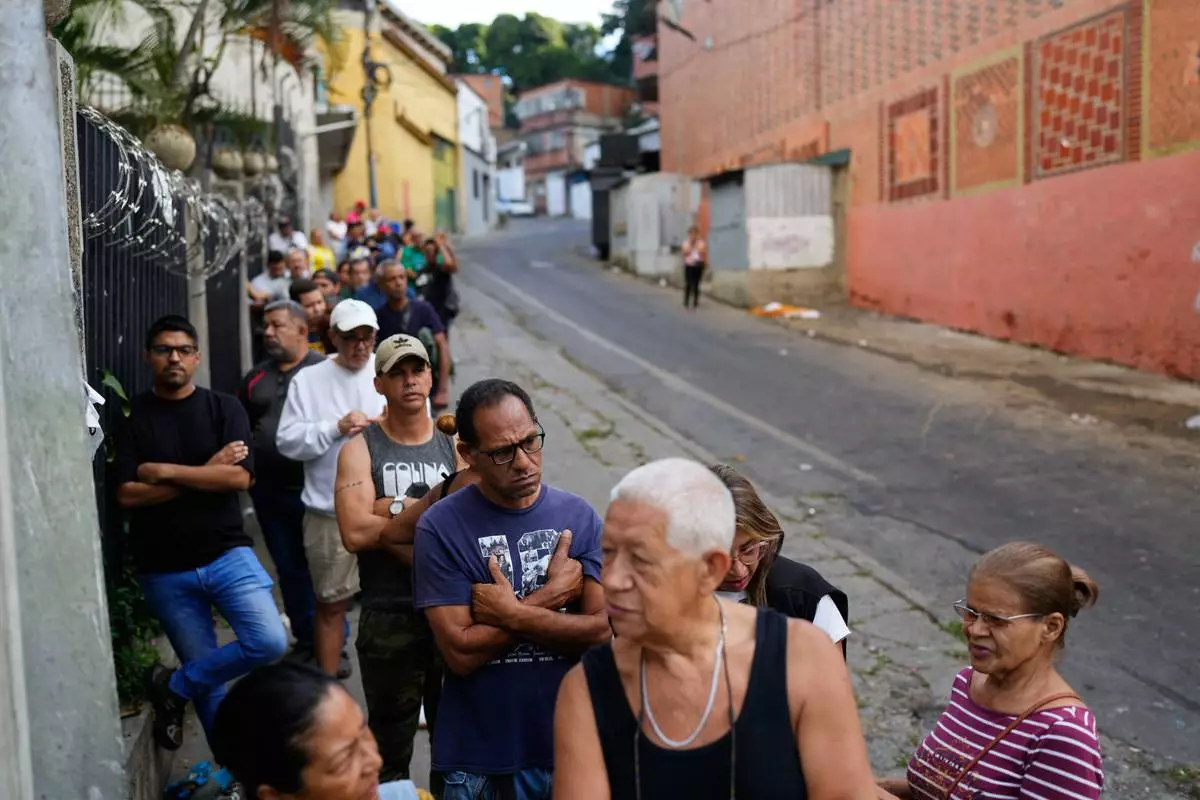
Shoppers line up at a supermarket in Caracas, Venezuela, Sunday, Jan. 4, 2026. (AP Photo/Ariana Cubillos)