Over the past 50 years, Iran has been shaken by a series of protests.
Beginning with the demonstrations that led to the founding of the Islamic Republic to now, here's a brief look at the protests and what fueled them.
Click to Gallery
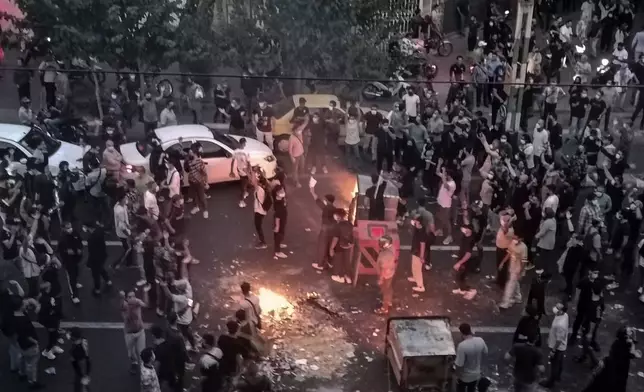
FILE - Iranians protest a 22-year-old woman Mahsa Amini's death after she was detained by the morality police, in Tehran, Sept. 20, 2022, in this photo taken by an individual not employed by the Associated Press and obtained by the AP outside Iran. (AP Photo/ File)
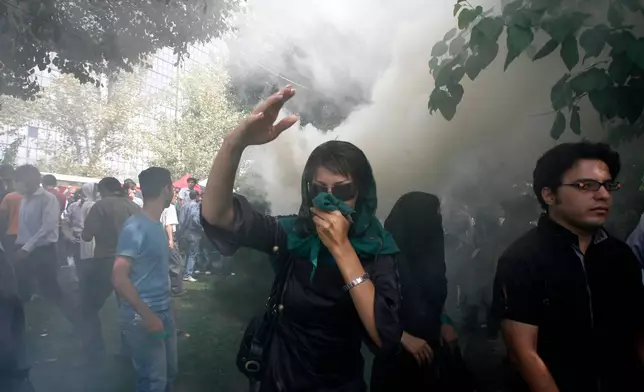
FILE - An Iranian female opposition supporter reacts as she attends a protest in Tehran, Iran, Friday, Sept. 18, 2009, in competition with government-sponsored mass rallies to mark an annual anti-Israel commemoration, the Quds Day that reflects the Persian nation's sympathy with the Palestinians. (AP Photo, File)

FILE - In this July 12, 1999 file photo, an unidentified student at a rally in Tehran, Iran, holds up the bloody T-shirt of a friend who was injured sometime in the last few days during clashes between police and student demonstrators. (AP Photo/Kamran Jebreili, File)

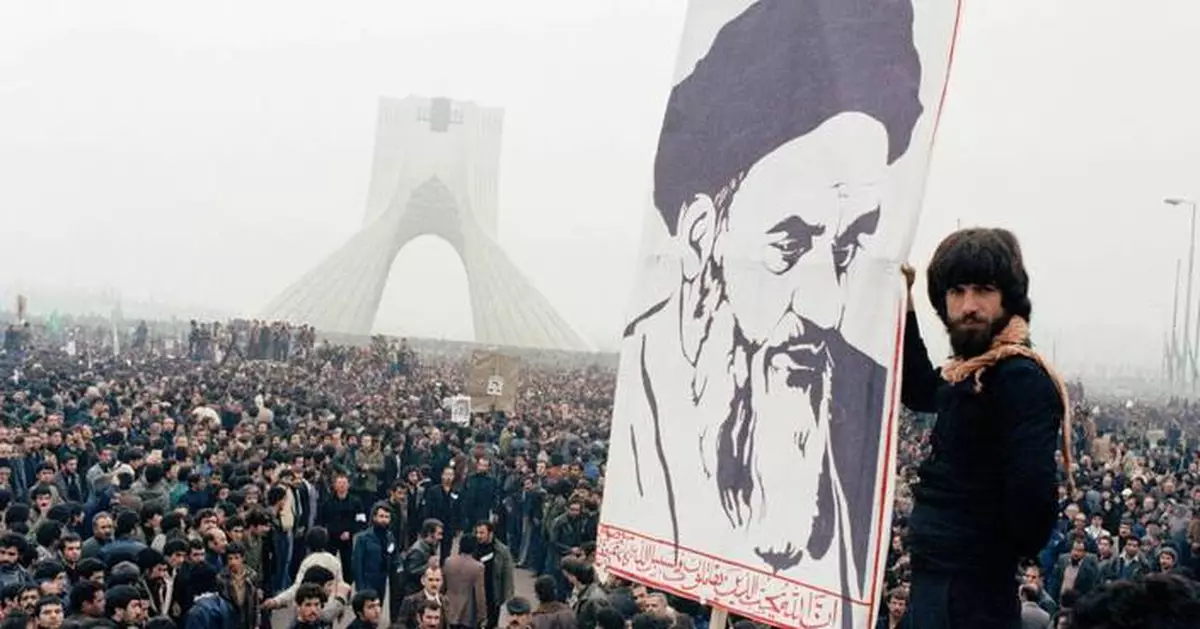
FILE - In this Oct. 9, 1978 file photo, Iranian protesters demonstrate against Shah Mohammad Reza Pahlavi in Tehran, Iran. (AP Photo, File)
In the lead-up to Iran's 1979 Islamic Revolution, students, oil workers and others protested, demanding political freedoms. Those demonstrations pressured the fatally ill ruler of the country, the autocratic Shah Mohammad Reza Pahlavi, who ultimately fled the country. The revolution took hold in February under Ayatollah Ruhollah Khomeini, who installed a hard-line Shiite theocracy under his ultimate control. The new government executed thousands. The bloodshed of the 1980s Iran-Iraq war and the crackdown halted mass demonstrations for years.
Angered by the killing of activists, intellectuals and others known as the “chain murders,” students at Tehran University began protesting. A security force crackdown at the campus sparked more demonstrations. At least three people were killed while 1,200 were detained in the protests.
In the summer of 2009, Iran's reformist opposition raised accusations that the reelection victory of the hard-line president, Mahmoud Ahmadinejad, was rigged. Millions nationwide protested over the next months, becoming known as the “Green Movement.” A brutal security force crackdown saw dozens killed and thousands arrested.
Anger over rising food prices, as well as government plans to cut cash handouts for poorer Iranians, sparked demonstrations that began in Mashhad and spiraled out of control. Over 20 people were killed and hundreds arrested.
Iran's government announced a spike in subsidized gasoline prices, sparking intense protests that saw gas stations, banks and stores burned to the ground. Over 300 people reportedly were killed and authorities shut off the country's access to the internet.
Protests began in September 2022 soon after the death of Amini, 22, following her arrest by the country’s morality police over allegedly not wearing her hijab, or headscarf, to the liking of the authorities. United Nations investigators ultimately found Iran responsible for the “physical violence” that led to her death. A monthslong security crackdown killed more than 500 people and saw over 22,000 detained. However, many women to this day still refuse to wear the hijab.
As sanctions tightened and Iran struggled after a 12-day war with Israel, its rial currency collapsed, reaching 1.4 million to $1. Protests began soon after.

FILE - Iranians protest a 22-year-old woman Mahsa Amini's death after she was detained by the morality police, in Tehran, Sept. 20, 2022, in this photo taken by an individual not employed by the Associated Press and obtained by the AP outside Iran. (AP Photo/ File)
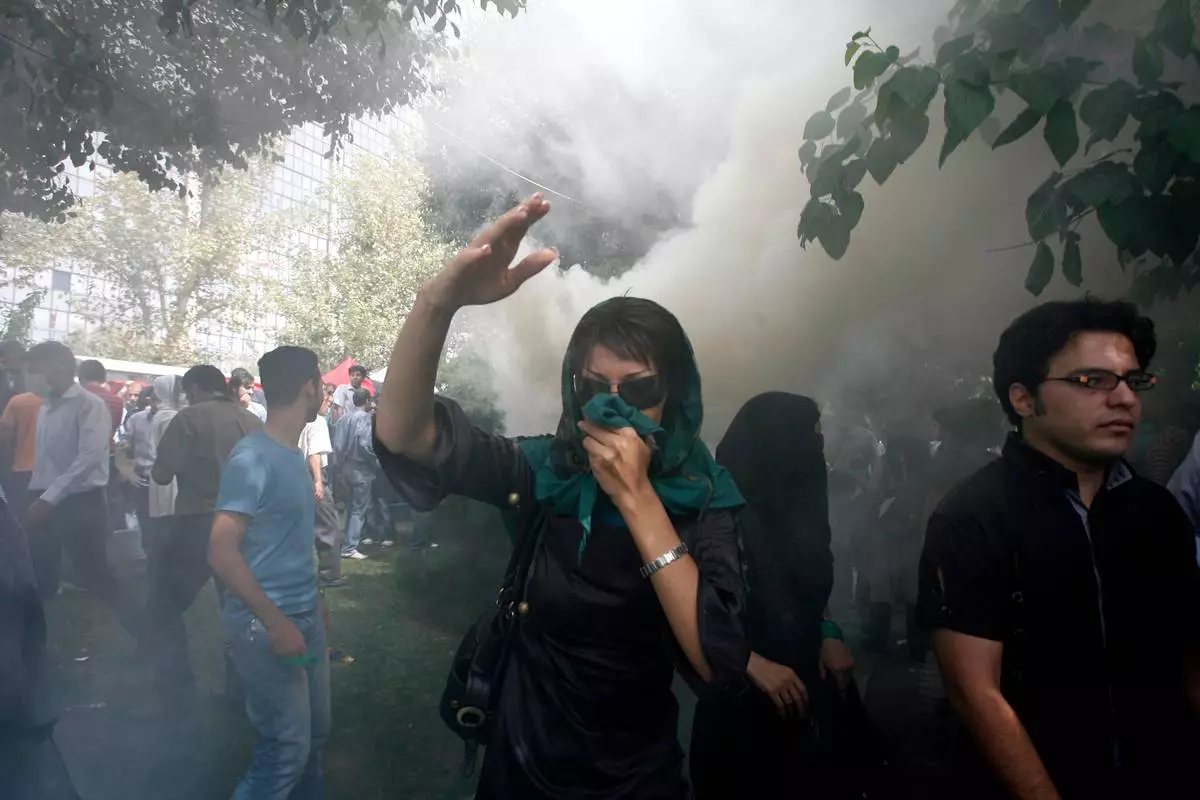
FILE - An Iranian female opposition supporter reacts as she attends a protest in Tehran, Iran, Friday, Sept. 18, 2009, in competition with government-sponsored mass rallies to mark an annual anti-Israel commemoration, the Quds Day that reflects the Persian nation's sympathy with the Palestinians. (AP Photo, File)
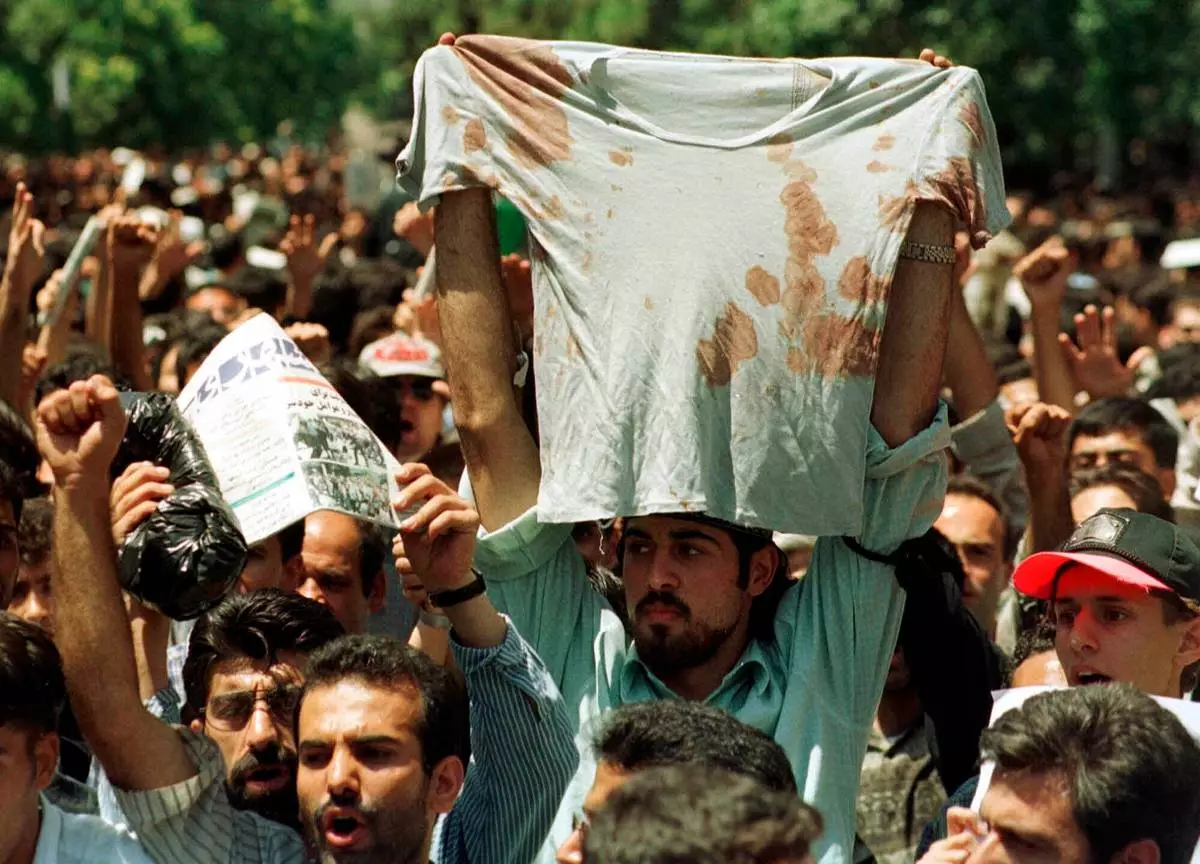
FILE - In this July 12, 1999 file photo, an unidentified student at a rally in Tehran, Iran, holds up the bloody T-shirt of a friend who was injured sometime in the last few days during clashes between police and student demonstrators. (AP Photo/Kamran Jebreili, File)
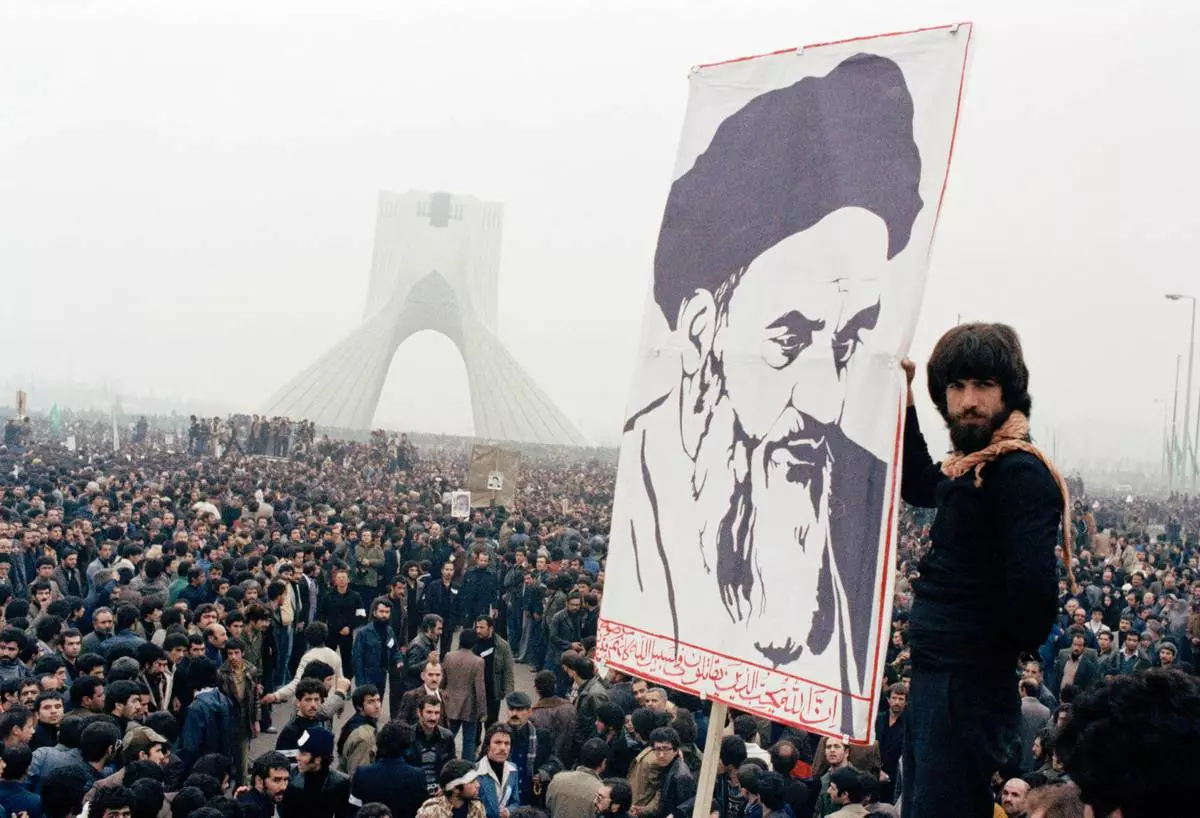
FILE - In this Oct. 9, 1978 file photo, Iranian protesters demonstrate against Shah Mohammad Reza Pahlavi in Tehran, Iran. (AP Photo, File)