|
SEOUL, South Korea, Jan. 6, 2026 /PRNewswire/ -- CyberLogitec has signed an agreement with BNCT, operator of Busan New Port Terminal 5, to implement an AI-based port safety monitoring and control system aimed at reducing collision risks between mobile equipment and personnel during terminal operations.
The project focuses on strengthening preventive safety management by continuously monitoring operational risks in real time and enabling proactive intervention before incidents occur. The partners aim to establish a round-the-clock, accident-free operating environment, reflecting the growing emphasis on safety as ports become larger, more automated and operationally complex.
BNCT has been reviewing alternatives to traditional, incident-driven safety practices as part of its broader efforts to improve on-site safety standards. The decision to adopt CyberLogitec's solution follows an industry-wide reassessment of safety management, prompted by a series of serious accidents at port terminals in Korea and internationally in recent years. As a result, intelligent safety management systems capable of identifying and managing risks in advance are increasingly viewed as a core requirement rather than an optional add-on.
CyberLogitec's safety monitoring platform combines AI-based video analytics, high-precision positioning technology and digital twin capabilities to deliver real-time situational awareness across the terminal. Data from mobile equipment, workers and traffic flows is integrated into a unified monitoring environment, allowing potential hazards to be detected early and alerts to be issued immediately via control room dashboards and on-board terminals.
The system uses RTK (Real-Time Kinematic) positioning to track mobile equipment with centimetre-level accuracy, while deep learning-based AI CCTV continuously analyses operational scenes to assess risk levels. When a hazardous situation is identified, warnings are automatically delivered to operators through vehicle-mounted terminals (VMCs). RTK devices will be deployed across 70 mobile assets, while 28 AI-enabled CCTV cameras will be installed on 14 STS cranes. The system is scheduled to enter full operation in August 2026.
A CyberLogitec representative said the project represents "a shift from reactive safety management toward a data-driven, predictive operating model," adding that the company plans to continue expanding AI and digital twin enabled smart port solutions that improve both safety and operational efficiency at terminals worldwide.
SEOUL, South Korea, Jan. 6, 2026 /PRNewswire/ -- CyberLogitec has signed an agreement with BNCT, operator of Busan New Port Terminal 5, to implement an AI-based port safety monitoring and control system aimed at reducing collision risks between mobile equipment and personnel during terminal operations.
The project focuses on strengthening preventive safety management by continuously monitoring operational risks in real time and enabling proactive intervention before incidents occur. The partners aim to establish a round-the-clock, accident-free operating environment, reflecting the growing emphasis on safety as ports become larger, more automated and operationally complex.
BNCT has been reviewing alternatives to traditional, incident-driven safety practices as part of its broader efforts to improve on-site safety standards. The decision to adopt CyberLogitec's solution follows an industry-wide reassessment of safety management, prompted by a series of serious accidents at port terminals in Korea and internationally in recent years. As a result, intelligent safety management systems capable of identifying and managing risks in advance are increasingly viewed as a core requirement rather than an optional add-on.
CyberLogitec's safety monitoring platform combines AI-based video analytics, high-precision positioning technology and digital twin capabilities to deliver real-time situational awareness across the terminal. Data from mobile equipment, workers and traffic flows is integrated into a unified monitoring environment, allowing potential hazards to be detected early and alerts to be issued immediately via control room dashboards and on-board terminals.
The system uses RTK (Real-Time Kinematic) positioning to track mobile equipment with centimetre-level accuracy, while deep learning-based AI CCTV continuously analyses operational scenes to assess risk levels. When a hazardous situation is identified, warnings are automatically delivered to operators through vehicle-mounted terminals (VMCs). RTK devices will be deployed across 70 mobile assets, while 28 AI-enabled CCTV cameras will be installed on 14 STS cranes. The system is scheduled to enter full operation in August 2026.
A CyberLogitec representative said the project represents "a shift from reactive safety management toward a data-driven, predictive operating model," adding that the company plans to continue expanding AI and digital twin enabled smart port solutions that improve both safety and operational efficiency at terminals worldwide.
** The press release content is from PR Newswire. Bastille Post is not involved in its creation. **

CyberLogitec and BNCT to deploy AI-based safety monitoring system at Busan New Port
|
On her first day as ECW Director, Maysa Jalbout visits Lebanon to reaffirm ECW's commitment to the country's children, announce new emergency funding and mobilise urgent international support.
BEIRUT, April 2, 2026 /PRNewswire/ -- Education Cannot Wait (ECW) today reaffirmed their strong partnership with Lebanon's Ministry of Education and Higher Education (MEHE) to protect the right to education for children impacted by the rapidly escalating crisis in Lebanon.
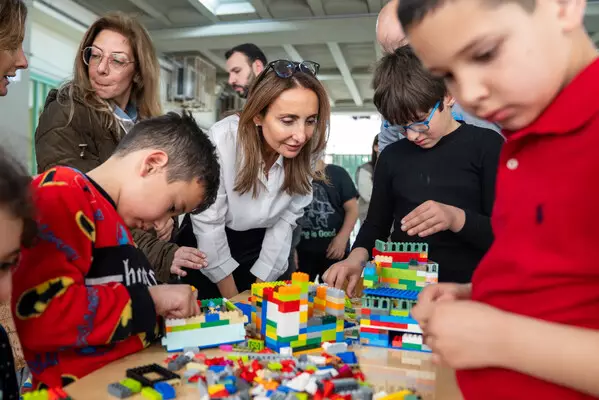
During her first official mission as Director of ECW, Maysa Jalbout met with H.E. Minister Rima Karami, alongside the Inter-Agency Support Group (IASG) Education Sector co-leads UNICEF and Save the Children and civil society partners, to assess urgent needs and coordinate a swift, collective response to the crisis.
Lebanon is facing a severe humanitarian situation, with over one million people displaced and more than 250,000 children across the public school system experiencing disruption to their education. This latest escalation compounds years of overlapping crises including– economic collapse, the Beirut port explosion and the current escalation of regional conflict.
As part of this joint effort, ECW is launching an immediate emergency response that will focus on the areas most affected by the escalation of hostilities, ensuring safe access to learning, psychosocial support and protection services for the most vulnerable children.
In parallel, ECW will initiate the development of a new multi-year investment, expected to begin within the next six months, aimed at strengthening the resilience of Lebanon's education system and supporting sustainable learning outcomes.
Together, these investments are expected to reach more than 150,000 crisis-affected children and adolescents, prioritising those most at risk of exclusion.
"Education Cannot Wait – the global fund for education in crises – stands with the children of Lebanon. Education during crises is essential to children's mental health, protection and future. With our partners, we will do everything we can to help 150,000 children resume their learning," said Maysa Jalbout, Director of ECW. "The needs are far greater than any single actor can meet. While many donors continue providing multi-year support for children's access to quality and inclusive education in Lebanon, the gaps remain significant and require urgent additional support to reach all children."
H.E. Minister Rima Karami underscored the urgency of the moment and the need for a new way of working.
"Lebanon has carried the weight of successive crises for over many decades and today we are once again called to protect our children and our future. This crisis is not only creating new needs – it is threatening the very stability that the Lebanese people have sacrificed so much to maintain. We must act collectively, and we must act differently. Our partnership with Education Cannot Wait reflects this commitment, and we call on the international community to stand with us in scaling this effort," said the Minister of Education and Higher Education.
The new ECW-supported response will be guided by the following key priorities:
- Localisation and national ownership, with a strong commitment to channelling significant resources through local actors and partners.
- Equity and inclusion, ensuring equitable access to education for all children, with a particular focus on girls, children with disabilities and those most marginalised.
- Learning continuity and quality, supporting both immediate access and improved learning outcomes over time.
- Well-being and protection, integrating mental health and psychosocial support into education responses.
- Flexibility and adaptability, enabling rapid adjustment to evolving needs on the ground.
The initiative also presents a critical opportunity for additional partners to step forward. ECW and MEHE are calling on donor governments, philanthropic organisations, and the private sector to match and scale this effort, ensuring that the response meets the full scope of needs.
Notes to Editors
- ECW's investments to date in Lebanon total US$25.8 million, reaching 826,000 crisis-affected children and adolescents with access to safe, inclusive and quality education – including those displaced by the escalating regional conflict.
- B-roll and high-resolution photos are available here.
ABOUT EDUCATION CANNOT WAIT
Education Cannot Wait (ECW) is the global fund for education in crises. The Fund provides rapid, flexible funding to locally led education responses that protect learning for refugee, internally displaced and other children, while strengthening systems to sustain learning and resilience in fragile and conflict-affected contexts. ECW works with governments, public and private funders, UN agencies, civil society organisations, and other humanitarian and development aid actors so that no child is left behind.
As global crises intensify and the education financing gap widens, ECW calls on public and private sector partners to scale up investments so millions more crisis-affected girls and boys can learn and rebuild their futures.
Additional information available at: www.educationcannotwait.org
For press inquiries:
Estefanía Jiménez: esjimenez@un-ecw.org
On her first day as ECW Director, Maysa Jalbout visits Lebanon to reaffirm ECW's commitment to the country's children, announce new emergency funding and mobilise urgent international support.
BEIRUT, April 2, 2026 /PRNewswire/ -- Education Cannot Wait (ECW) today reaffirmed their strong partnership with Lebanon's Ministry of Education and Higher Education (MEHE) to protect the right to education for children impacted by the rapidly escalating crisis in Lebanon.
During her first official mission as Director of ECW, Maysa Jalbout met with H.E. Minister Rima Karami, alongside the Inter-Agency Support Group (IASG) Education Sector co-leads UNICEF and Save the Children and civil society partners, to assess urgent needs and coordinate a swift, collective response to the crisis.
Lebanon is facing a severe humanitarian situation, with over one million people displaced and more than 250,000 children across the public school system experiencing disruption to their education. This latest escalation compounds years of overlapping crises including– economic collapse, the Beirut port explosion and the current escalation of regional conflict.
As part of this joint effort, ECW is launching an immediate emergency response that will focus on the areas most affected by the escalation of hostilities, ensuring safe access to learning, psychosocial support and protection services for the most vulnerable children.
In parallel, ECW will initiate the development of a new multi-year investment, expected to begin within the next six months, aimed at strengthening the resilience of Lebanon's education system and supporting sustainable learning outcomes.
Together, these investments are expected to reach more than 150,000 crisis-affected children and adolescents, prioritising those most at risk of exclusion.
"Education Cannot Wait – the global fund for education in crises – stands with the children of Lebanon. Education during crises is essential to children's mental health, protection and future. With our partners, we will do everything we can to help 150,000 children resume their learning," said Maysa Jalbout, Director of ECW. "The needs are far greater than any single actor can meet. While many donors continue providing multi-year support for children's access to quality and inclusive education in Lebanon, the gaps remain significant and require urgent additional support to reach all children."
H.E. Minister Rima Karami underscored the urgency of the moment and the need for a new way of working.
"Lebanon has carried the weight of successive crises for over many decades and today we are once again called to protect our children and our future. This crisis is not only creating new needs – it is threatening the very stability that the Lebanese people have sacrificed so much to maintain. We must act collectively, and we must act differently. Our partnership with Education Cannot Wait reflects this commitment, and we call on the international community to stand with us in scaling this effort," said the Minister of Education and Higher Education.
The new ECW-supported response will be guided by the following key priorities:
- Localisation and national ownership, with a strong commitment to channelling significant resources through local actors and partners.
- Equity and inclusion, ensuring equitable access to education for all children, with a particular focus on girls, children with disabilities and those most marginalised.
- Learning continuity and quality, supporting both immediate access and improved learning outcomes over time.
- Well-being and protection, integrating mental health and psychosocial support into education responses.
- Flexibility and adaptability, enabling rapid adjustment to evolving needs on the ground.
The initiative also presents a critical opportunity for additional partners to step forward. ECW and MEHE are calling on donor governments, philanthropic organisations, and the private sector to match and scale this effort, ensuring that the response meets the full scope of needs.
Notes to Editors
- ECW's investments to date in Lebanon total US$25.8 million, reaching 826,000 crisis-affected children and adolescents with access to safe, inclusive and quality education – including those displaced by the escalating regional conflict.
- B-roll and high-resolution photos are available here.
ABOUT EDUCATION CANNOT WAIT
Education Cannot Wait (ECW) is the global fund for education in crises. The Fund provides rapid, flexible funding to locally led education responses that protect learning for refugee, internally displaced and other children, while strengthening systems to sustain learning and resilience in fragile and conflict-affected contexts. ECW works with governments, public and private funders, UN agencies, civil society organisations, and other humanitarian and development aid actors so that no child is left behind.
As global crises intensify and the education financing gap widens, ECW calls on public and private sector partners to scale up investments so millions more crisis-affected girls and boys can learn and rebuild their futures.
Additional information available at: www.educationcannotwait.org
For press inquiries:
Estefanía Jiménez: esjimenez@un-ecw.org
** This press release is distributed by PR Newswire through automated distribution system, for which the client assumes full responsibility. **
Education Cannot Wait Launches Urgent Support to Protect Learning for Crisis-Affected Children in Lebanon