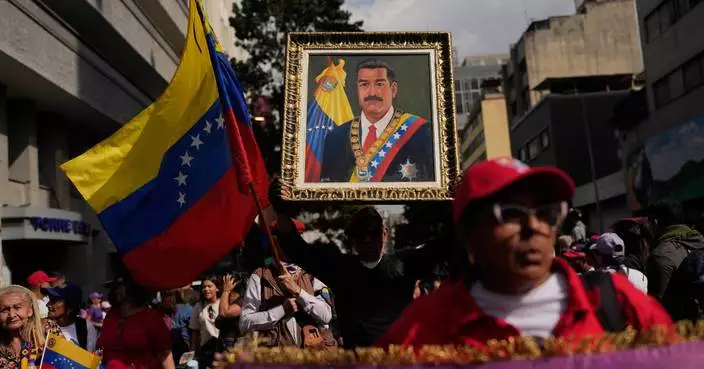
WASHINGTON (AP) — There are few signs that President Donald Trump’s supporters wanted the United States to become more embroiled in foreign conflicts ahead of its military actions in Venezuela — even as many Republicans show initial support for his military strike there, according to an Associated Press analysis of recent polling.
Most Americans wanted the U.S. government to focus in 2026 on domestic issues, such as health care and high costs, rather than foreign policy issues, an AP-NORC poll conducted last month found. Meanwhile, polling conducted in the immediate aftermath of the military operation that captured Venezuelan President Nicolás Maduro suggested that many Americans are unconvinced that the U.S. should step in to take control of the country.
And despite Trump’s suggestion that the U.S. may take a more expansive role in the Western Hemisphere, Republicans in polling last fall remained broadly opposed to the U.S. getting more involved in other countries’ problems.
There’s still room for public opinion to shift as Trump's administration clarifies its next steps for Venezuela. But it could be a challenging issue for the Republican president, particularly given Americans’ desire for the government to fix economic issues at home.
Heading into the new year, Americans were less likely to want the government to focus on foreign policy than they had been in recent years.
About one-quarter of U.S. adults listed foreign policy topics — such as the Russia-Ukraine conflict, Israel or general involvement overseas — as something they wanted the government to prioritize in 2026, according to an open-ended AP-NORC question that asked respondents to share up to five issues they wanted the government to work on in the coming year. That was down from the prior two years, when roughly one-third of Americans considered foreign issues an important focus. Almost no one specifically named Venezuela.
Maduro pleaded not guilty to federal drug trafficking charges on Monday in New York. His capture followed U.S. strikes on boats that the Trump administration said were carrying drugs from Venezuela to the U.S. Despite the Trump administration’s focus on the issue of drug trafficking, it doesn’t register at the top of Americans' lists of issues for the government to focus on. Few Americans mentioned drug-related issues as a priority, and it was primarily a Republican issue. About 1 in 10 Republicans mentioned it, compared with hardly any Democrats or independents.
Instead, Americans overall were more focused on domestic issues — including health care, economic worries and cost-of-living concerns — as top priorities for the government.
Americans are split about the U.S. capturing Maduro — with many still forming opinions — according to a poll conducted by The Washington Post and SSRS using text messages over the weekend. About 4 in 10 approved of the U.S. military being sent to capture Maduro, while roughly the same share were opposed. About 2 in 10 were unsure. Republicans broadly approved of the action, while Democrats were largely opposed to it.
Nearly half of Americans, 45%, were opposed to the U.S. taking control of Venezuela and choosing a new government for the country. About 9 in 10 Americans said that the Venezuelan people should be the ones to decide the future leadership of their country.
In December, a Quinnipiac poll found that about 6 in 10 registered voters opposed U.S. military action in Venezuela. Republicans were more divided: About half were in support, while about one-third were opposed and 15% didn’t have an opinion.
Only about 1 in 10 Republicans wanted the U.S. to take a “more active role” role in solving the world’s problems, according to an AP-NORC poll from September. They were much less likely than Americans overall, or Democrats and independents, to say the U.S. should become more involved. Most Republicans, 55%, said the current U.S. role in global issues was “about right.”
It could be a tricky position for a president who ran on a promise of putting “America first” and ending the country’s involvement in “forever wars.” About 7 in 10 voters who backed Trump in the 2024 presidential election said that they wanted the U.S. to take a “less active” role in solving the world’s problems, according to AP VoteCast, a survey of interviews with registered voters in all 50 states.
In December, Americans were largely divided on whether Trump was keeping his “America First” campaign promise, according to a Fox News poll. About half felt he was keeping that promise, and a similar share felt he had abandoned it.
But at least in that poll, which was conducted before the military operation that removed Maduro, Trump's supporters still were largely behind him: About 1 in 10 Americans who voted for Trump in 2024 felt he had deserted the “America First” promise, while the overwhelming majority felt he had kept it.
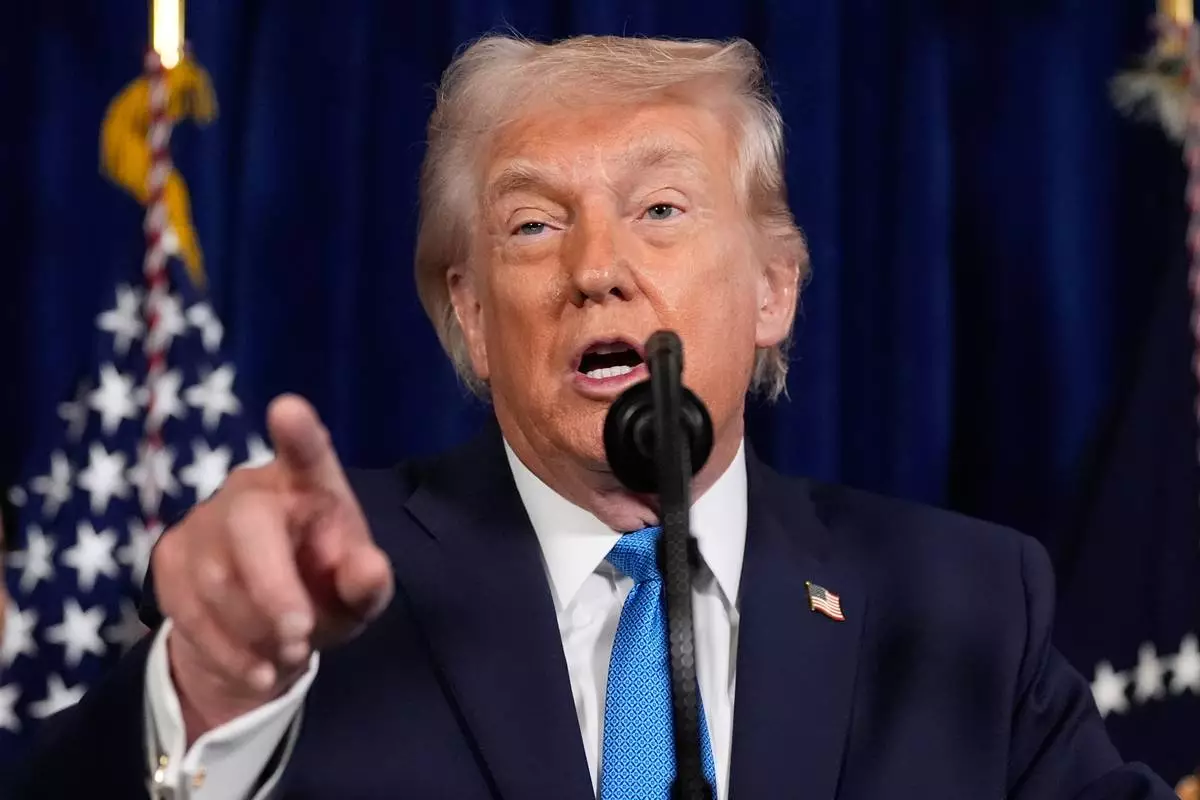
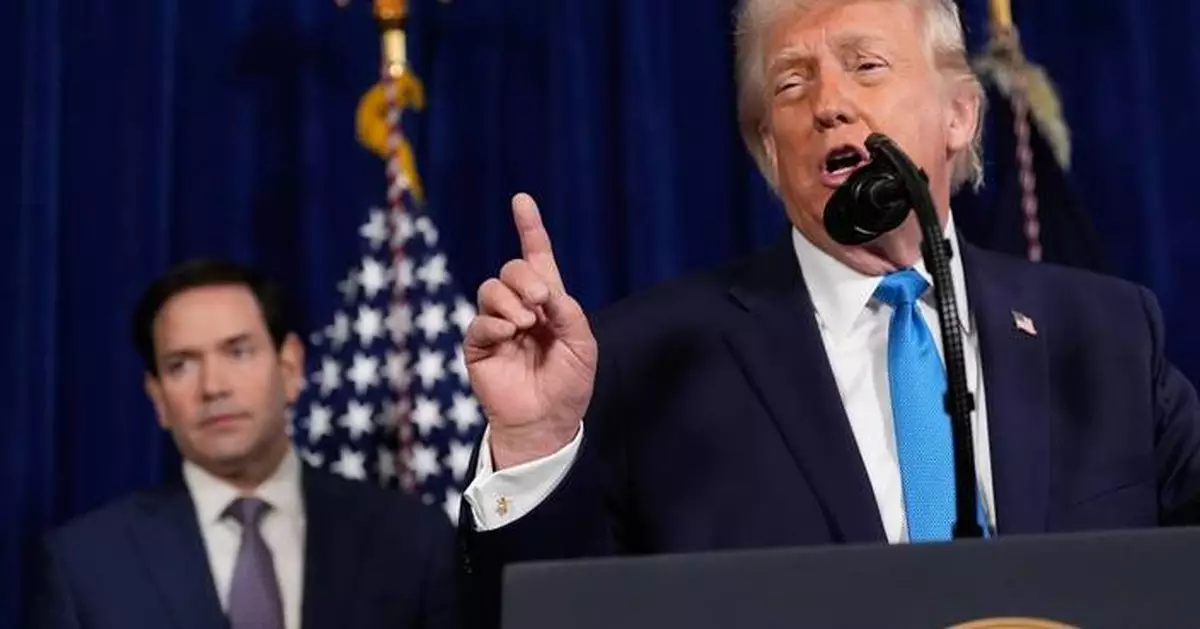
President Donald Trump speaks during a news conference at Mar-a-Lago, Saturday, Jan. 3, 2026, in Palm Beach, Fla. (AP Photo/Alex Brandon)
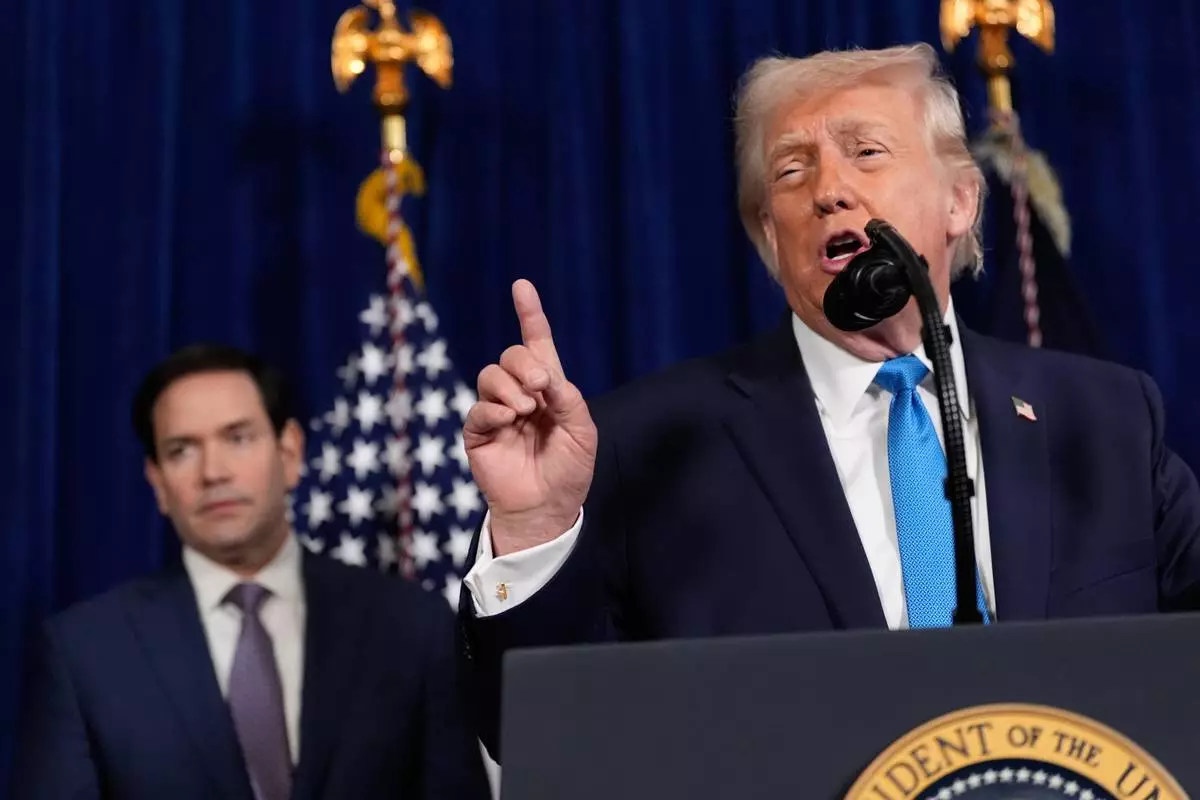
President Donald Trump speaks during a news conference at Mar-a-Lago, Saturday, Jan. 3, 2026, in Palm Beach, Fla., as Secretary of State Marco Rubio listens. (AP Photo/Alex Brandon)
U.S. Secretary of State Marco Rubio said he plans to meet with Danish officials next week after the Trump administration doubled down on its intention to take over Greenland, the strategic Arctic island that is a self-governing territory of Denmark.
President Donald Trump has argued that the U.S. needs to control the world’s largest island to ensure its own security in the face of rising threats from China and Russia in the Arctic, and the White House has refused to rule out using military force to acquire the territory.
Rubio told a select group of lawmakers that it was the administration’s intention to eventually purchase Greenland, as opposed to using military force.
The remarks, first reported by the Wall Street Journal, were made in a classified briefing Monday evening on Capitol Hill, according to a person with knowledge of his comments who was granted anonymity because it was a private discussion.
On Wednesday, Rubio told reporters that Trump has been talking about acquiring Greenland since his first term. “That’s always been the president’s intent from the very beginning,” Rubio said. “He’s not the first U.S. president that has examined or looked at how we could acquire Greenland.”
He was on Capitol Hill for a briefing with the entire Senate and House, where questions from lawmakers centered not only on the administration’s operation to capture former Venezuelan leader Nicolás Maduro — but also on Trump’s recent comments about Greenland.
Tensions with NATO members escalated after the White House said Tuesday that the “U.S. military is always an option.” Danish Prime Minister Mette Frederiksen warned earlier this week that a U.S. takeover would amount to the end of NATO.
“The Nordics do not lightly make statements like this,” Maria Martisiute, a defense analyst at the European Policy Centre think tank, told The Associated Press on Wednesday. “But it is Trump, whose very bombastic language bordering on direct threats and intimidation, is threatening the fact to another ally by saying ‘I will control or annex the territory.’"
Rubio did not directly answer a question about whether the Trump administration is willing to risk the NATO alliance by potentially moving ahead with a military option regarding Greenland.
“I’m not here to talk about Denmark or military intervention, I’ll be meeting with them next week, we’ll have those conversations with them then, but I don’t have anything further to add to that," Rubio said, telling reporters that every president retains the option to address national security threats to the United States through military means.
The leaders of France, Germany, Italy, Poland, Spain and the United Kingdom joined Frederiksen in a statement Tuesday reaffirming that the mineral-rich island, which guards the Arctic and North Atlantic approaches to North America, “belongs to its people.”
Danish Foreign Minister Lars Løkke Rasmussen and his Greenland counterpart, Vivian Motzfeldt, have requested a meeting with Rubio in the near future, according to a statement posted Tuesday to Greenland's government website. Previous requests for a sit-down were not successful, the statement said.
Thomas Crosbie, an associate professor of military operations at the Royal Danish Defense College, said an American takeover would not improve upon Washington's current security strategy.
“The United States will gain no advantage if its flag is flying in Nuuk versus the Greenlandic flag,” he told the AP. “There’s no benefits to them because they already enjoy all of the advantages they want. If there’s any specific security access that they want to improve American security, they’ll be given it as a matter of course, as a trusted ally. So this has nothing to do with improving national security for the United States.”
Denmark’s parliament approved a bill last June to allow U.S. military bases on Danish soil. It widened a previous military agreement, made in 2023 with the Biden administration, where U.S. troops had broad access to Danish airbases in the Scandinavian country.
Rasmussen, in a response to lawmakers’ questions, wrote over the summer that Denmark would be able to terminate the agreement if the U.S. tries to annex all or part of Greenland.
But in the event of a military action, the U.S. Department of Defense currently operates the remote Pituffik Space Base, in northwestern Greenland, and the troops there could be mobilized.
Crosbie said he believes the U.S. would not seek to hurt the local population or engage with Danish troops.
“They don’t need to bring any firepower. They don’t to bring anybody.” Crosbie said Wednesday. “They could just direct the military personnel currently there to drive to the center of Nuuk and just say, ‘This is America now,’ right? And that would lead to the same response as if they flew in 500 or 1,000 people.”
The danger in an American annexation, he said, lies in the “erosion of the rule of law globally and to the perception that there are any norms protecting anybody on the planet.”
He added: “The impact is changing the map. The impact I don’t think would be storming the parliament.”
French Foreign Minister Jean-Noël Barrot said he spoke by phone Tuesday with Rubio, who dismissed the idea of a Venezuela-style operation in Greenland.
“In the United States, there is massive support for the country belonging to NATO – a membership that, from one day to the next, would be compromised by … any form of aggressiveness toward another member of NATO,” Barrot told France Inter radio on Wednesday.
Asked if he has a plan in case Trump does claim Greenland, Barrot said he would not engage in “fiction diplomacy.”
While most Republicans have supported Trump’s statement, Senators Jeanne Shaheen and Thom Tillis, the Democratic and Republican co-chairs of the bipartisan Senate NATO Observer Group, have criticized Trump’s rhetoric.
“When Denmark and Greenland make it clear that Greenland is not for sale, the United States must honor its treaty obligations and respect the sovereignty and territorial integrity of the Kingdom of Denmark,” their statement on Tuesday said. “Any suggestion that our nation would subject a fellow NATO ally to coercion or external pressure undermines the very principles of self-determination that our Alliance exists to defend.”
Kim reported from Washington. Geir Moulson in Berlin, Mark Carlson in Brussels and Ben Finley in Washington contributed to this report.

FILE - Danish military forces participate in an exercise with hundreds of troops from several European NATO members in the Arctic Ocean in Nuuk, Greenland, Sept. 15, 2025. (AP Photo/Ebrahim Noroozi, File)
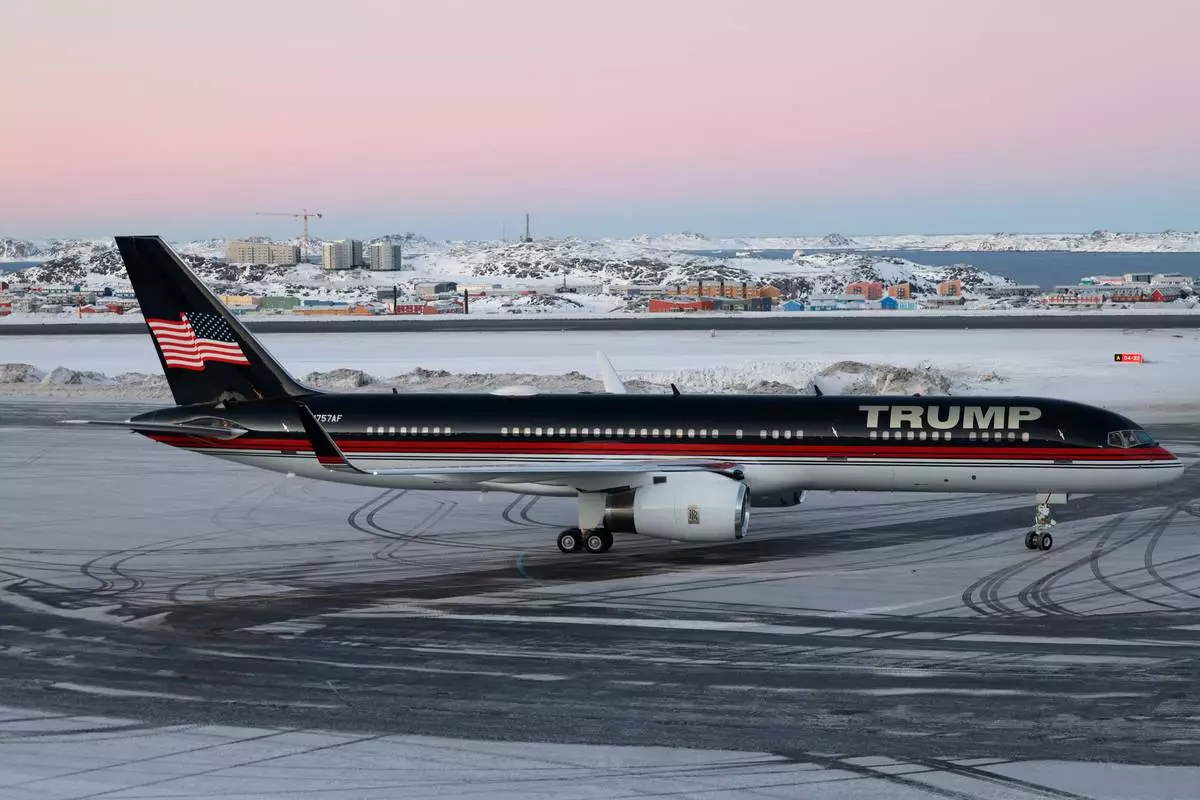
FILE - A plane carrying Donald Trump Jr. lands in Nuuk, Greenland, Jan. 7, 2025. (Emil Stach/Ritzau Scanpix via AP, file)
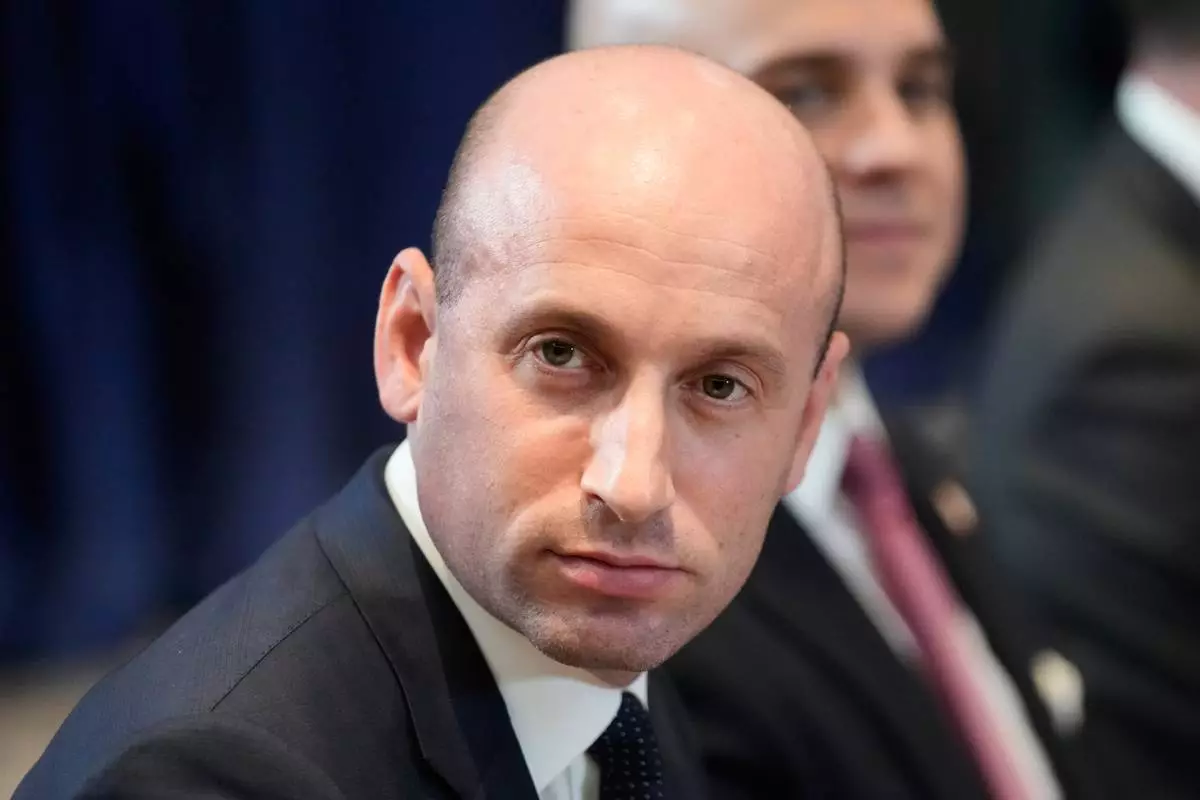
FILE - United States Homeland Security Advisor Stephen Miller reacts on the sidelines of the ASEAN Summit in Kuala Lumpur, Malaysia, Sunday, Oct. 26, 2025. (AP Photo/Mark Schiefelbein), File)
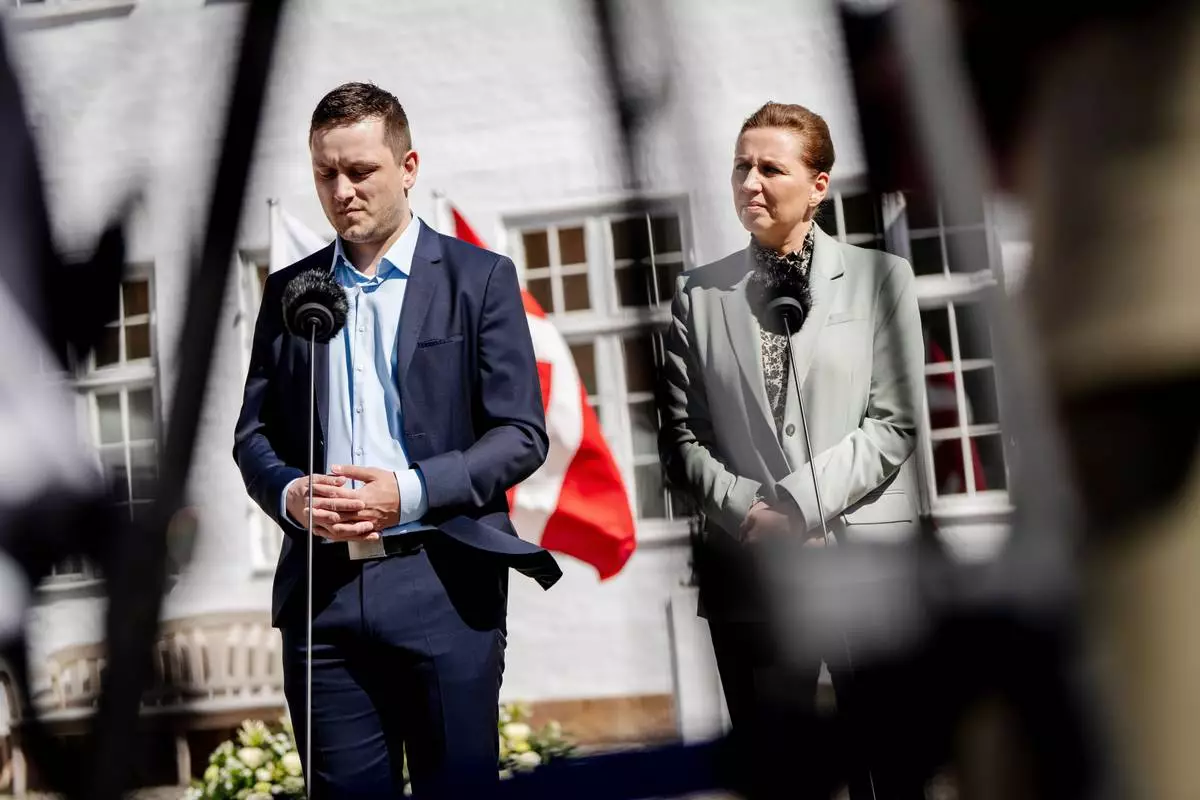
CORRECT THE ORDER OF SPEAKERS, FILE - Denmark's Prime Minister Mette Frederiksen, right, and Greenland's Prime Minister Jens-Frederik Nielsen, left, speak on April 27, 2025, in Marienborg, Denmark. (Mads Claus Rasmussen/Ritzau Scanpix via AP, File)