NEW YORK--(BUSINESS WIRE)--Jan 6, 2026--
HELP USA today announced that internationally acclaimed contemporary artist Mickalene Thomas has been named 2026 Art of Resilience Artist. Thomas will create a permanent, site-specific mural for a newly built families-with-children transitional shelter in the Highbridge section of the Bronx, marking a significant collaboration between the artist and the national housing and homeless services provider.
This press release features multimedia. View the full release here: https://www.businesswire.com/news/home/20260106638577/en/
Art of Resilience, launched in 2022, is HELP USA’s trauma-informed art and music therapy program, operating in shelters and supportive housing across New York City. Led by certified therapists embedded within HELP USA’s clinical case management teams, the program supports individuals and families experiencing homelessness as they process trauma, build coping skills, and gain guidance on their path to recovery. Each year, the program is amplified through a high-profile artist commission and benefit that raises awareness and funding for this work.
Thomas’s mural will span approximately 160 square feet and will be permanently installed in the lobby of the new Bronx shelter, a 194-unit facility developed by Court Square and Hudson Meridian and designed by Curtis + Ginsburg. Serving as the first point of arrival, the work will reflect themes central to Thomas’s practice, including empowerment, visibility, and self-validation, values aligned with HELP USA’s mission to support families during moments of transition and recovery.
“Having an artist of Mickalene Thomas’s caliber engage with this work helps shine a light on the reality of homelessness and affirms that the people we serve deserve to be seen, treated with dignity, and surrounded by the same quality and care we expect in any place we call home,” said Dan Lehman, President and CEO of HELP USA.
Thomas joins a distinguished group of Art of Resilience artists, including Derrick Adams (2023), Baseera Khan (2024), and Shantell Martin (2025), each of whom created permanent works for HELP USA sites in Brooklyn; and emerging artist Madjeen Isaac (2025), whose oil-on-canvas work was acquired to grace the entryway of a new supportive housing site in Brooklyn.
As part of the Art of Resilience initiative, each artist produces a limited-edition print series based on their original design. These works are available for purchase exclusively through HELP USA, with 100 percent of proceeds supporting art and music therapy programs in NYC.
Art of Resilience Benefit
The collaboration with Mickalene Thomas will launch at the Art of Resilience Benefit on March 6, 2026, at the National Arts Club in New York City. The benefit brings together artists, patrons, and supporters to celebrate creativity as a tool for resilience and recovery. The event is co-chaired by Addavail Coslett, Atenedoro Gonzalez, Alexis Rose, Christina Senia, and Eden Williams.
Tickets begin at $350, with sponsorship opportunities ranging from $1,200 to $25,000. One hundred percent of proceeds support HELP USA’s art and music therapy programs.
Learn more: https://www.helpusa.org/event/aor-2026/
About HELP USA
HELP USA is marking 40 years as a national leader in the effort to end homelessness. Founded in 1986 through an innovative public-private partnership, the organization delivers homelessness prevention, shelter, supportive services, and affordable housing nationwide. HELP USA operates more than 70 sites and serves over 30,000 individuals and families each year, helping people stabilize and move toward long-term housing and security.
Learn more at www.helpusa.org.
About Mickalene Thomas
Mickalene Thomas is an internationally acclaimed contemporary artist whose work explores identity, power, beauty, and representation. Working across painting, collage, photography, video, and installation, Thomas is known for her bold visual language and richly layered compositions that center self-definition and empowerment. Her work is held in major museum collections worldwide and has been the subject of numerous solo exhibitions and retrospectives at leading cultural institutions. Through her practice, Thomas challenges dominant narratives while affirming the visibility and humanity of communities historically excluded from the art canon.
Learn more at www.mickalenethomas.com.

© Jon Jenkins
Americans should eat more whole foods and protein, fewer highly processed foods and less added sugar, according to the latest edition of federal nutrition advice released Wednesday by the Trump administration.
Health Secretary Robert F. Kennedy Jr. and Agriculture Secretary Brooke Rollins issued the 2025-2030 U.S. Dietary Guidelines for Americans, which offer updated recommendations for a healthy diet and provide the foundation for federal nutrition programs and policies. They come as Kennedy has for months stressed overhauling the U.S. food supply as part of his Make America Healthy Again agenda.
“Our message is clear: Eat real food,” Kennedy told reporters at a White House briefing.
The guidelines emphasize consumption of fresh vegetables, whole grains and dairy products, long advised as part of a healthy eating plan. Officials released a new graphic depicting an inverted version of the long-abandoned food pyramid, with protein, dairy, healthy fats and fruits and vegetables at the top and whole grains at the bottom.
But they also take a new stance on “highly processed” foods, and refined carbohydrates, urging consumers to avoid “packaged, prepared, ready-to-eat or other foods that are salty or sweet, such as chips, cookies and candy." That's a different term for ultraprocessed foods, the super-tasty, energy-dense products that make up more than half of the calories in the U.S. diet and have been linked to chronic diseases such as diabetes and obesity.
The new guidance backs away from revoking long-standing advice to limit saturated fats, despite signals from Kennedy and Food and Drug Commissioner Marty Makary that the administration would push for more consumption of animal fats to end the “war” on saturated fats.
Instead, the document suggests that Americans should choose whole-food sources of saturated fat — such as meat, whole-fat dairy or avocados — while continuing to limit saturated fat consumption to no more than 10% of daily calories. The guidance says “other options can include butter or beef tallow,” despite previous recommendations to avoid those fats.
The dietary guidelines, required by law to be updated every five years, provide a template for a healthy diet. But in a country where more than half of adults have a diet-related chronic disease, few Americans actually follow the guidance, research shows.
The new recommendations drew praise from some prominent nutrition and medical experts.
"There should be broad agreement that eating more whole foods and reducing highly processed carbohydrates is a major advance in how we approach diet and health,” said Dr. David Kessler, a former FDA commissioner who has written books about diet and nutrition and has sent a petition to the FDA to remove key ingredients in ultraprocessed foods.
“The guidelines affirm that food is medicine and offer clear direction patients and physicians can use to improve health,” said Dr. Bobby Mukkamala, president of the American Medical Association.
Other experts expressed relief after worrying that the guidelines would go against decades of nutrition evidence linking saturated fat to higher LDL or “bad” cholesterol and heart disease.
“I guess whoever is writing these had to admit that the science hasn't changed,” said Marion Nestle, a nutritionist and food policy expert who advised previous editions of the guidelines. “They haven't changed in any fundamental way except for the emphasis on eating whole foods.”
The new document is just 10 pages, upholding Kennedy's pledge to create a simple, understandable guideline. Previous editions of the dietary guidelines have grown over the years, from a 19-page pamphlet in 1980 to the 164-page document issued in 2020, which included a four-page executive summary.
The guidance will have the most profound effect on the federally funded National School Lunch Program, which is required to follow the guidelines to feed nearly 30 million U.S. children on a typical school day.
The Agriculture Department will have to translate the recommendations into specific requirements for school meals, a process that can take years, said Diane Pratt-Heavner, spokesperson for the School Nutrition Association. The latest school nutrition standards were proposed in 2023 but won't be fully implemented until 2027, she noted.
The new guidelines skip the advice of a 20-member panel of nutrition experts, who met for nearly two years to review the latest scientific evidence on diet and health.
That panel didn’t make recommendations about ultraprocessed food. Although a host of studies have showed links between ultraprocessed foods and poor health outcomes, the nutrition experts had concerns with the quality of the research reviewed and the certainty that those foods, and not other factors, were the cause of the problems.
The recommendations on highly processed foods drew cautiously positive reactions. The FDA and the Agriculture Department are already working on a definition of ultraprocessed foods, but it’s expected to take time.
Not all highly processed foods are unhealthy, said Dr. David Ludwig, an endocrinologist and researcher at Boston Children’s Hospital.
“I think the focus should be on highly processed carbohydrates,” he said, noting that processing of protein or fats can be benign or even helpful.
The guidelines made a few other notable changes, including a call to potentially double protein consumption.
The previous recommended dietary allowance called for 0.8 grams of protein per kilogram of body weight — about 54 grams daily for a 150-pound person. The new recommendation is 1.2 to 1.6 grams of protein per kilogram of body weight. An average American man consumes about 100 grams of protein per day, or about twice the previously recommended limit.
Makary said the new advice supersedes protein guidance that was based on the “bare minimum” required for health.
Ludwig also noted that the earlier recommendation was the minimum amount needed to prevent protein deficiency and higher amounts of protein might be beneficial.
“I think a moderate increase in protein to help displace the processed carbohydrates makes sense,” he said.
Officials with the American Heart Association, however, called for more research on protein consumption and the best sources of protein for optimal health.
“Pending that research, we encourage consumers to prioritize plant-based proteins, seafood and lean meats and to limit high-fat animal products including red meat, butter, lard and tallow, which are linked to increased cardiovascular risk,” the group said in a statement.
The guidelines advise avoiding or sharply limiting added sugars or non-nutritive sweeteners, saying “no amount” is considered part of a healthy diet.
No one meal should contain more than 10 grams of added sugars, or about 2 teaspoons, the new guidelines say.
Previous federal guidelines recommended limiting added sugars to less than 10% of daily calories for people older than 2, but to aim for less. That's about 12 teaspoons a day in a 2,000-calorie daily diet. Children younger than 2 should have no added sugars at all, the older guidance said.
In general, most Americans consume about 17 teaspoons of added sugars per day, according to the U.S. Centers for Disease Control and Prevention.
The new guidelines roll back previous recommendations to limit alcohol to 1 drink or less per day for women and 2 drinks or less per day for men.
Instead, the guidance advises Americans to “consume less alcohol for better health." They also say that alcohol should be avoided by pregnant women, people recovering from alcohol use disorder and those who are unable to control the amount they drink.
The Associated Press Health and Science Department receives support from the Howard Hughes Medical Institute’s Department of Science Education and the Robert Wood Johnson Foundation. The AP is solely responsible for all content.
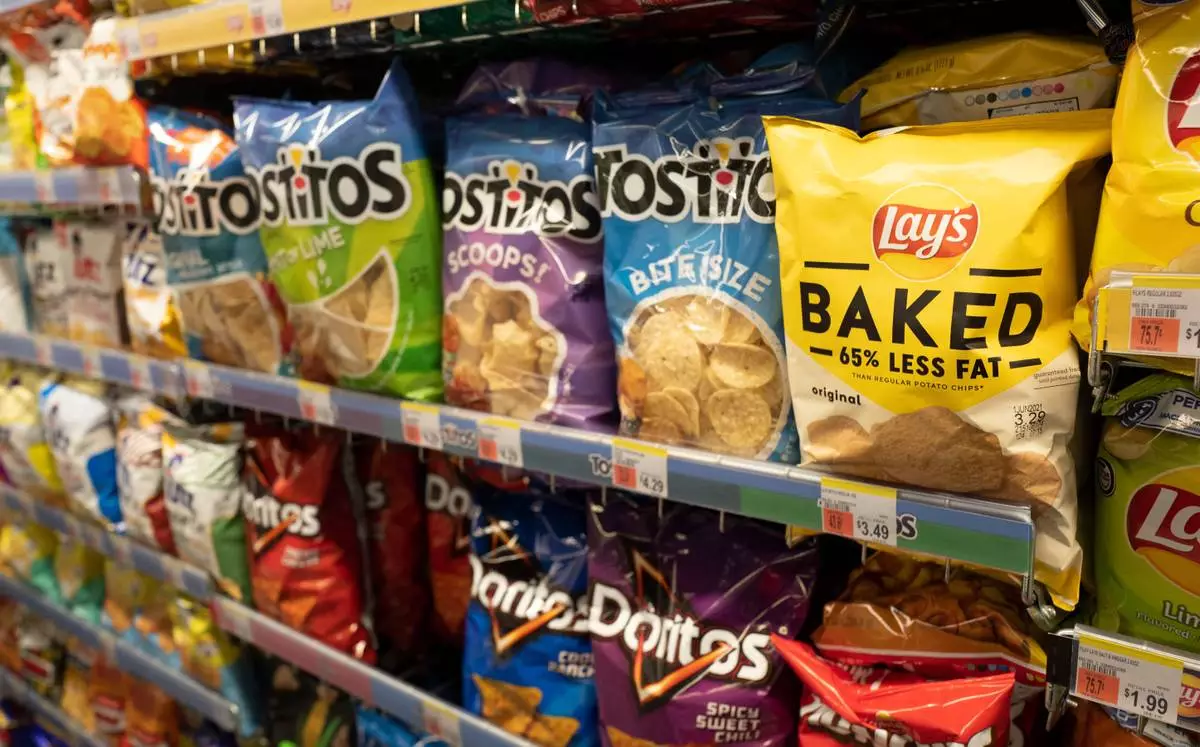
FILE - Potato chips are displayed in pharmacy Duane Reade by Walgreens, Thursday, March 25, 2021, in New York. Walgreens reports earnings March 31, 2021. (AP Photo/Mark Lennihan, file)

FILE - A woman looks at products in the aisle of a store as her daughter naps in the shopping cart in Waco, Texas, on Dec. 14, 2010. (AP Photo/Tony Gutierrez, File)

FILE - The label on a can of tomato soup is seen in Zelienople, Pa., June 14, 2018. (AP Photo/Keith Srakocic, File)
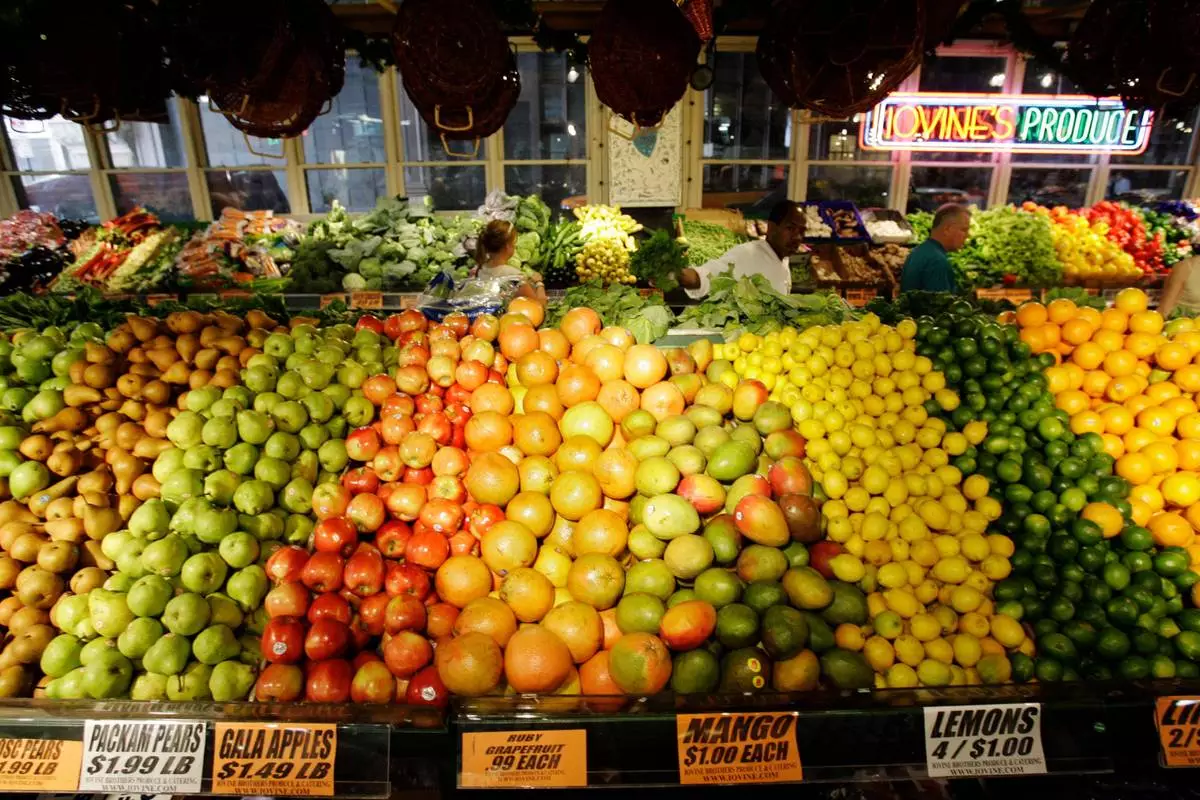
FILE - Fruit are displayed at Iovine Brothers Produce in Philadelphia, May 29, 2007. (AP Photo/Matt Rourke, File)