Skip to Content Facebook Feature Image

Japan's nuclear watchdog halts plant's reactor safety screening over falsified data

News

Japan's nuclear watchdog halts plant's reactor safety screening over falsified data
News

News

Japan's nuclear watchdog halts plant's reactor safety screening over falsified data

2026-01-07 21:31 Last Updated At:21:40

TOKYO (AP) — Japan's nuclear watchdog said Wednesday it is scrapping the safety screening for two reactors at the Hamaoka nuclear power plant in central Japan, after its operator was found to have fabricated data about earthquake risks.

It was a setback to Japan's attempts to accelerate nucler reactor restarts. Less than a quarter of commercial nuclear reactors are operational in the wake of the 2011 Fukushima Daiichi meltdowns, but rising energy costs and pressure to reduce carbon emissions have pushed the government to prioritize nuclear power.

Chubu Electric Power Co. had applied for safety screening to resume operations at the No. 3 and 4 reactors at the Hamaoka plant in 2014 and 2015. Two other reactors at the plant are being decommissioned, and a fifth is idle.

The plant, about 200 kilometers (125 miles) west of Tokyo, is located on a coastal area known for potential risks from so-called Nankai Trough megaquakes.

The Nuclear Regulation Authority said it started an internal investigation last February, after receiving a tip from a whistleblower that the utility had for years provided fabricated data that underestimated potential seismic risks.

The regulator suspended the screening for the reactors after it confirmed the falsification and the utility acknowledged the fabrication in mid-December, said Shinsuke Yamanaka, the watchdog's chair. The NRA is also considering inspecting the utility headquarters.

“Ensuring safety is the first and foremost responsibility for nuclear plant operators," Yamanaka said, adding that seismic data was clearly fabricated. “It is outrageous and it's a serious challenge to safety regulation.”

The scandal surfaced Monday when Chubu Electric President Kingo Hayashi acknowledged that workers at the utility used inappropriate seismic data with an alleged intention to underestimate seismic risks. He apologized and pledged to establish an independent panel for investigation.

The screening, including data that had been approved earlier, would have to start from scratch or possibly be rejected entirely, Yamanaka said. The NRA will decide on the case next week, without waiting for the utility's probe results, he said.

Public opinion in Japan remains divided due to lingering safety concerns after the 2011 Fukushima Daiichi meltdowns.

Of Japan's 57 commercial reactors, 13 are currently in operation, 20 are offline and 24 others are being decommissioned, according to NRA.

This aerial photo shows Hamaoka nuclear power plant, owned by the Cubu Electric Power Co., in Omaezaki, central Japan, March 26, 2025. (Minoru Iwasaki/Kyodo News via AP)
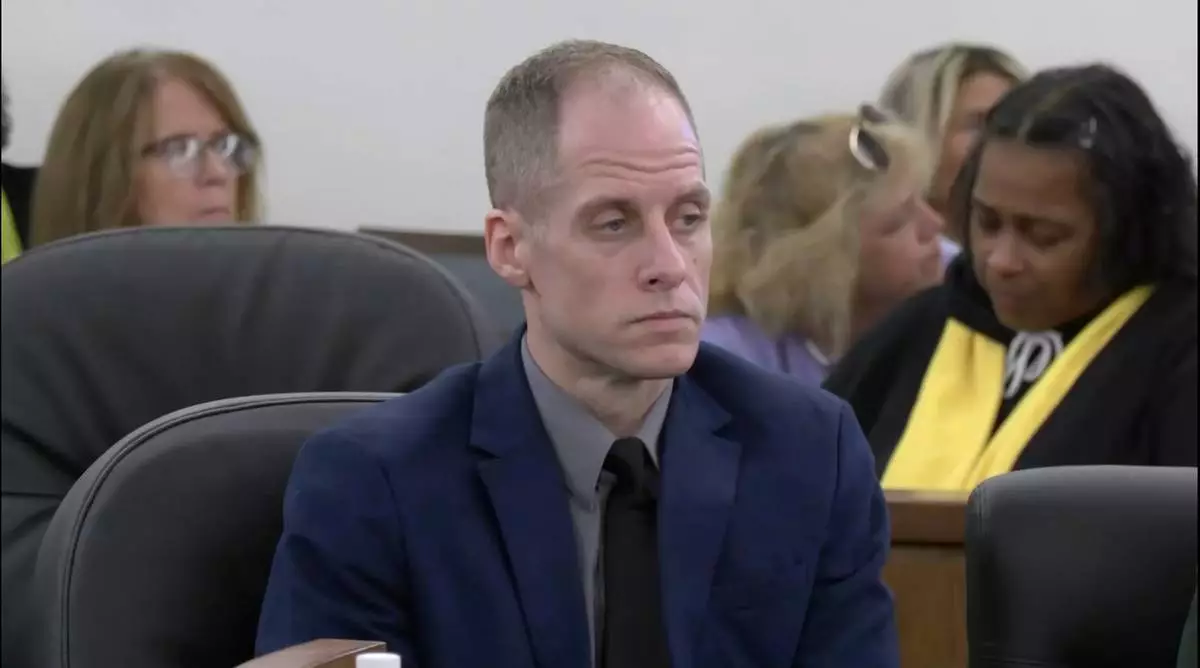
This aerial photo shows Hamaoka nuclear power plant, owned by the Cubu Electric Power Co., in Omaezaki, central Japan, March 26, 2025. (Minoru Iwasaki/Kyodo News via AP)

BEIRUT (AP) — Lebanon's military said Thursday it had concluded the first phase of a plan to fully deploy across southern Lebanon and disarm non-state groups, notably Hezbollah.

Israel said the development was encouraging but “far from sufficient," and its Foreign Ministry said the group still has dozens of compounds and other infrastructure.

The effort to disarm Hezbollah comes after a Washington-brokered ceasefire ended a war between the group and Israel in 2024.

The military's statement, which did not name Hezbollah or any other armed groups, came before President Joseph Aoun met with Prime Minister Nawaf Salam and his government to discuss the deployment and disarmament plans. Both said disarming non-state groups was a priority upon beginning their terms not long after the ceasefire went into effect.

Lebanon's top officials have endorsed the military announcement.

A statement by Aoun’s office ahead of the Cabinet meeting called on Israel to stop its attacks, withdraw from areas it occupies, and release Lebanese prisoners. He called on friendly countries not to send weapons to Lebanon unless it's to state institutions — an apparent reference to Iran which for decades has sent weapons and munitions to Hezbollah.

Speaker Nabih Berri, a key ally of Hezbollah who played a leading role in ceasefire talks, issued a statement saying the people of southern Lebanon are “thirsty for the army's presence and protection."

Israel maintains that despite Lebanon’s efforts, Hezbollah is still attempting to rearm itself in southern Lebanon.

“The ceasefire agreement brokered by the United States between Israel and Lebanon states clearly, Hezbollah must be fully disarmed," a statement from Israeli Prime Minister Benjamin Netanyahu’s office read. “This is imperative for Israel’s security and Lebanon’s future.”

Israel's Foreign Ministry said in a later statement that the group is “rearming faster than it is being disarmed," and showed a map of alleged Hezbollah compounds, launch sites, and underground networks south of the Litani River.

The text of the ceasefire agreement is vague as to how Hezbollah’s weapons and military facilities north of the Litani River should be treated, saying Lebanese authorities should dismantle unauthorized facilities starting with the area south of the river.

Hezbollah insists that the agreement only applies south of the Litani, while Israel maintains that it applies to the whole country. The Lebanese government has said it will eventually remove non-state weapons throughout the country.

Information Minister Paul Morcos said after the Cabinet meeting that the army will start working on a plan for disarmament north of the Litani river that will be discussed by the government in February. He added that the army will also continue the process of weapons “containment” in other parts of Lebanon, meaning that they will not be allowed to be used or moved.

The agreement is seen as a procedure to implement prior United Nations Security Council agreements that call for disarmament of non-state groups and the withdrawal of all occupying forces, and for the Lebanese state to have full control of its territory.

The Lebanese military has been clearing tunnels, rocket-launching positions, and other structures since its disarmament proposal was approved by the government and went into effect in September.

The government had set a deadline of the end of 2025 to clear the area south of the Litani River of non-state weapons.

“The army confirms that its plan to restrict weapons has entered an advanced stage, after achieving the goals of the first phase effectively and tangibly on the ground,” the military statement read. “Work in the sector is ongoing until the unexploded ordnance and tunnels are cleared ... with the aim of preventing armed groups from irreversibly rebuilding their capabilities.”

Hezbollah did not immediately comment on the Lebanese announcement.

Officials have said the next stage of the disarmament plan is in segments of southern Lebanon between the Litani and the Awali rivers, which include Lebanon’s port city of Sidon, but they have not set a timeline for that phase.

Israel continues to strike Lebanon near daily and occupies five strategic hilltop points along the border, the only areas south of the Litani where the military said it has yet to control.

Regular meetings have taken place between the Lebanese and the Israelis alongside the United States, France, and the U.N. peacekeeping forces in southern Lebanon, known as UNIFIL, to monitor developments after the ceasefire.

Lebanon’s cash-strapped military has since been gradually dispersing across wide areas of southern Lebanon between the Litani and the U.N.-demarcated “Blue Line” that separates the tiny country from Israel. The military has also been slowly confiscating weapons from armed Palestinian factions in refugee camps.

Israel accuses Hezbollah of trying to rebuild its battered military capacity and has said that the Lebanese military’s efforts are not sufficient, raising fears of a new escalation. Lebanon, meanwhile, said Israel's strikes and control of the hilltops were an obstacle to the efforts.

Lebanon also hopes that disarming Hezbollah and other non-state groups will help to bring in money needed for reconstruction after the 2024 war.

Hezbollah says it has been cooperative with the army in the south but will not discuss disarming elsewhere before Israel stops its strikes and withdraws from Lebanese territory.

The latest Israel-Hezbollah conflict began the day after the Oct. 7, 2023, Hamas-led attack on Israel triggered the war in Gaza. The militant group Hezbollah, largely based in southern Lebanon, began firing rockets into Israel in support of Hamas and the Palestinians.

Israel responded with airstrikes and shelling. The low-level conflict escalated into full-scale war in September 2024. Israeli strikes killed much of Hezbollah's senior leadership and left the group severely weakened.

Hezbollah still has political clout, holding a large number of seats in parliament representing the Shiite Muslim community and two cabinet ministers.

People check the site where an Israeli strike destroyed a building at a commercial district, in the southern port city of Sidon, Lebanon, Tuesday, Jan. 6, 2026. (AP Photo/Mohammed Zaatari)

People check the site where an Israeli strike destroyed a building at a commercial district, in the southern port city of Sidon, Lebanon, Tuesday, Jan. 6, 2026. (AP Photo/Mohammed Zaatari)

FILE - Lebanese army soldiers walk through a tunnel dug into a mountain that was used by Hezbollah militants as a clinic and storage facility near the Lebanese-Israeli border in the Zibqin Valley, southern Lebanon, Nov. 28, 2025. (AP Photo/Bilal Hussein, File)

FILE - Lebanese army soldiers walk through a tunnel dug into a mountain that was used by Hezbollah militants as a clinic and storage facility near the Lebanese-Israeli border in the Zibqin Valley, southern Lebanon, Nov. 28, 2025. (AP Photo/Bilal Hussein, File)

Recommended Articles