Skip to Content Facebook Feature Image

Mexico becomes crucial fuel supplier to Cuba but pledges no extra shipments after Maduro toppled

News

Mexico becomes crucial fuel supplier to Cuba but pledges no extra shipments after Maduro toppled
News

News

Mexico becomes crucial fuel supplier to Cuba but pledges no extra shipments after Maduro toppled

2026-01-08 04:01 Last Updated At:04:10

MEXICO CITY (AP) — As the United States prepares to seize control of Venezuelan oil and the administration of U.S. President Donald Trump hardens its stance toward Cuba, Mexico has emerged as a key fuel supplier to Havana.

It’s a role that could further complicate already strained relations with the Trump administration, even though the Mexican government insists that exports to the island have not increased.

Mexican President Claudia Sheinbaum acknowledged on Wednesday that “with the current situation in Venezuela, Mexico has become an important supplier” of crude oil to Cuba, but asserted that “no more oil is being sent than has been sent historically; there is no specific shipment.”

She added that those shipments are made via “contracts” or as “humanitarian aid,” but offered no concrete figures on the number of barrels exported.

Following the 1959 revolution that toppled dictator Fulgencio Batista, the U.S. imposed a trade embargo on Cuba in response to the nationalization of American-owned property. Under the embargo — long denounced by many countries, including Mexico — Cubans have suffered economic and energy crises, driving hundreds of thousands of Cubans to migrate, especially to the United States.

Blackouts that last up to eight hours and long lines at gas stations are routine across Cuba.

José Martínez, a 65-year-old former construction worker and resident of Old Havana whose power goes out daily, said the upheaval in Venezuela will impact Cuba.

“The blackouts are going to intensify with all this,” he said, adding that he believes the U.S. attacked because they want Venezuela's oil. “They own the world.”

Meanwhile, street vendor Yeison Gálvez, 37, worries about the impact on transportation: “For as long as I can remember, we’ve depended on Venezuela for fuel. We’re going to be walking even more."

It's unclear if any country would increase oil shipments to Cuba after the U.S. attack on Venezuela.

The Mexican government has avoided commenting on its future plans. Exports to Cuba represent a very small percentage of total exports — 3.3% — but their economic profitability is questionable, and Pemex’s production continues to decline.

From January to Sept. 30, 2025, Mexico shipped 19,200 barrels per day to Cuba: 17,200 barrels of crude oil and 2,000 barrels of refined products, according to the most recent report that state-owned oil company Petróleos Mexicanos submitted to the U.S. Securities and Exchange Commission.

Pemex did not immediately respond to a request for data.

Jorge Piñón, of the Energy Institute at the University of Texas at Austin, who tracks shipments using oil tracking services and satellite technology, shared similar data this week with The Associated Press for the same period. He had tracked 22,000 barrels per day and said that the figure dropped to 7,000 barrels after U.S. Secretary of State Marco Rubio’s visit to Mexico City in September 2025.

Meanwhile, in the last three months, Maduro’s government exported an average of 35,000 barrels a day to Cuba, approximately a quarter of the island’s total demand, according to Piñón.

The academic saw no likelihood that Mexico would increase its shipments: “The U.S. government would go bonkers,” he said.

“There will be more pressure from the United States regarding Cuba,” said Oscar Ocampo of the Mexican Institute for Competitiveness, adding that oil will predictably be one of the areas under pressure, a view shared by many experts.

Mexico has historically sent oil to Cuba, especially during periods of power blackouts and social unrest.

After widespread protests in Cuba in 2021, Mexico sent one of its largest humanitarian aid shipments, which included 100,000 barrels of fuel. And in October 2024, it sent more than 400,000 barrels in just a few days following serious blackouts in Cuba, according to data provided at the time by Piñón.

“The way this has been done also incentivizes opacity,” Ocampo said, because since 2023, the shipments have been made via private Pemex subsidiary, Gasolinas Bienestar, whose financial situation “is not transparent.”

In its report to the SEC, Pemex states that the shipments to Cuba were valued at approximately $400 million and were “sales” made through contracts at market price. But Ocampo says it cannot clearly be determined whether that was the case or if they were discounted shipments, with some kind of quid pro quo — perhaps the deployment of doctors — or as humanitarian aid.

The foreseeable lack of profitability in supplying oil to Cuba comes as 2025 is set to become the year in which Pemex exported the least amount of crude oil, “with less than 600,000 barrels per day, when just a couple of years ago we exported more than 1 million,” Ocampo said.

Associated Press reporters Andrea Rodríguez in Havana and Dánica Coto in San Juan, Puerto Rico contributed.

Follow AP’s coverage of Latin America and the Caribbean at https://apnews.com/hub/latin-america
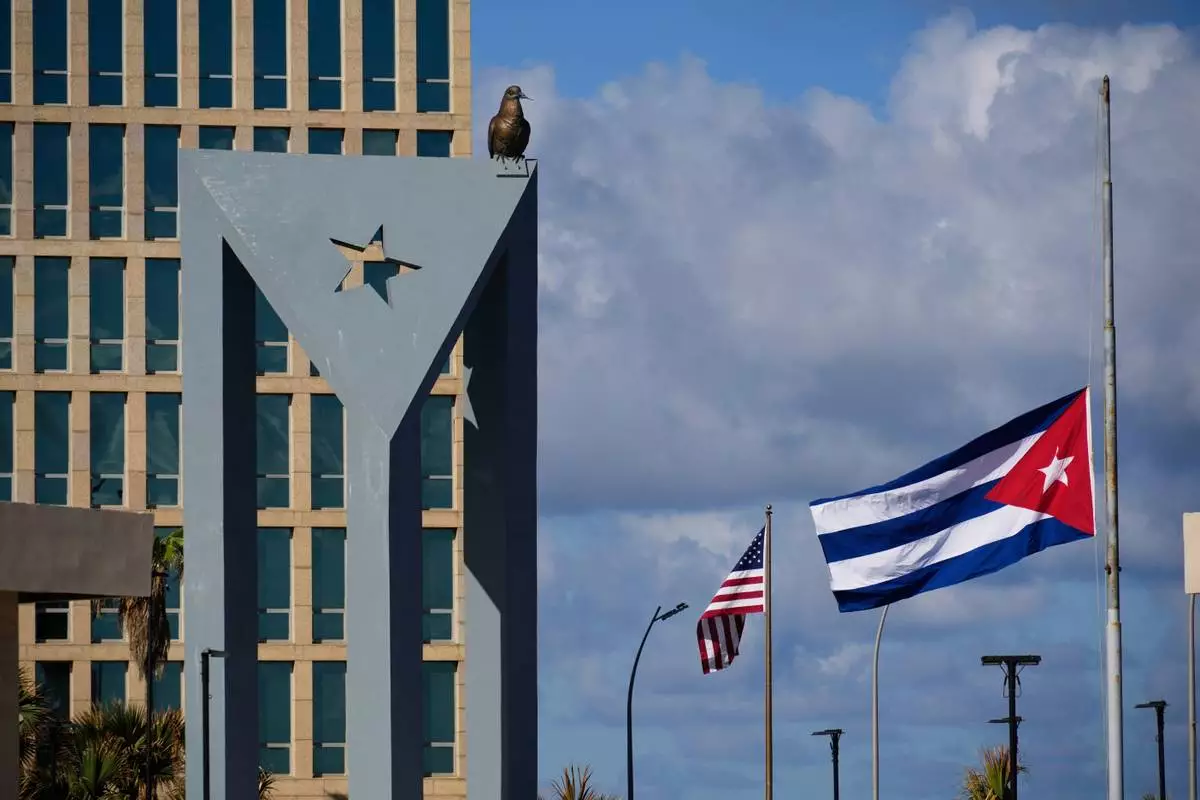
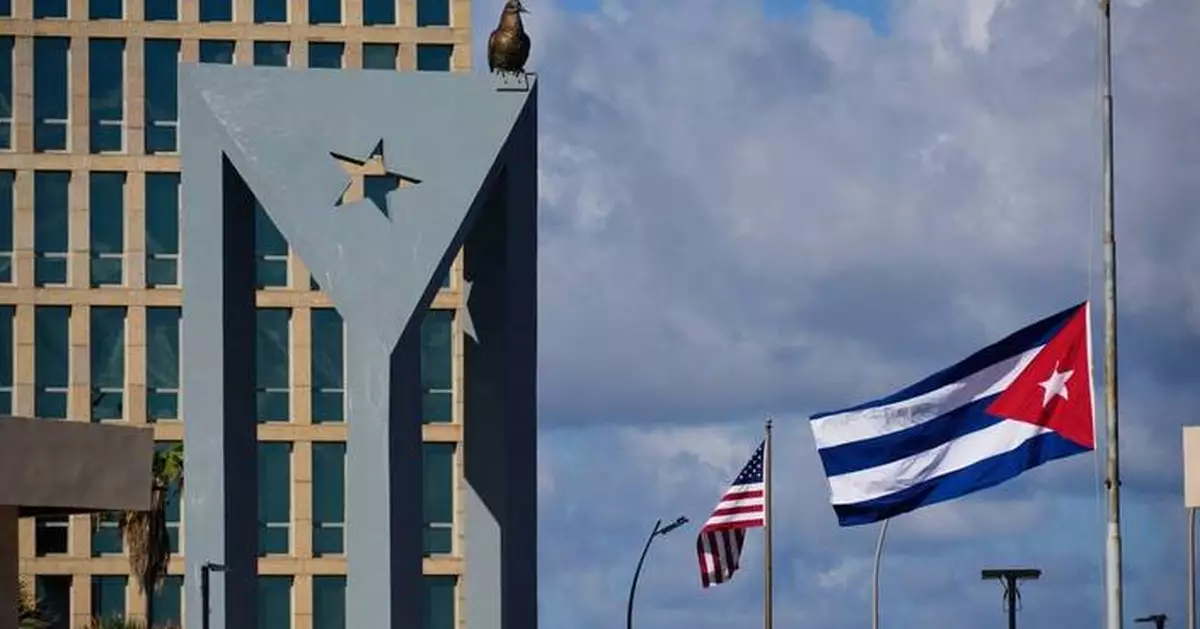
The Cuban flag flies at half-mast at the Anti-Imperialist Tribune near the U.S. embassy in Havana, Cuba, Monday, Jan. 5, 2026, in memory of Cubans who died two days before in Caracas, Venezuela during the capture of Venezuelan President Nicolas Maduro by U.S. forces. (AP Photo/Ramon Espinosa)
The Cuban flag flies at half-mast at the Anti-Imperialist Tribune near the U.S. embassy in Havana, Cuba, Monday, Jan. 5, 2026, in memory of Cubans who died two days before in Caracas, Venezuela during the capture of Venezuelan President Nicolas Maduro by U.S. forces. (AP Photo/Ramon Espinosa)

MOGADISHU, Somalia (AP) — Somalia's government on Thursday denied an allegation by the U.S. government that authorities in Mogadishu destroyed an American-funded warehouse belonging to the World Food Program and seized food aid earmarked for impoverished civilians.

The U.S. State Department said Wednesday that it has suspended all assistance from Washington to Somalia’s federal government over the allegations, saying the Trump administration has "a zero-tolerance policy for waste, theft and diversion of life-saving assistance.”

A senior U.S. State Department official said authorities at the Mogadishu port demolished the warehouse of the World Food Program, a Rome-based U.N. agency, at the direction of President Hassan Sheikh Mohamud “with no prior notification or coordination with international donor countries, including the United States.” The official spoke on condition of anonymity to discuss private reporting from American diplomats in the region.

Somalia’s foreign ministry said that the food in question wasn't destroyed and that “the commodities referenced in recent reports remain under the custody and control of the World Food Program, including assistance provided by the United States.”

The foreign ministry said expansion and repurposing works at the Mogadishu port are underway as part of broader developments, but ongoing activities there have not affected the custody and distribution of humanitarian assistance.

Somalia “remains fully committed to humanitarian principles, transparency, and accountability, and values its partnership with the United States and all international donors,” it said. It gave no other details.

The WFP told The Associated Press in a statement that its warehouse in Mogadishu port had been demolished by port authorities. The organization said the warehouse contained 75 metric tones of specialized foods intended for the treatment of malnourished pregnant and breastfeeding women and girls and young children.

In a later update, the WFP said it had “retrieved 75 metric tons of nutritional commodities” without explaining further details on how the material was retried.

“The warehouse is crucial for WFP’s emergency operations at a moment when almost a quarter of the population (4.4 million people) are facing crisis levels of hunger or worse in Somalia,” the statement said.

Located in the Horn of Africa, Somalia is one of the world’s poorest nations and has been beset by chronic strife and insecurity exacerbated by multiple natural disasters, including severe droughts, for decades.

The U.S. provided $770 million in assistance for projects in Somalia during the last year of Democratic President Joe Biden’s administration, but only a fraction of that went directly to the government.

The U.S. suspension comes as the Trump administration has ratcheted up criticism of Somali refugees and migrants in the United States, including over fraud allegations involving child care centers in Minnesota. It has slapped significant restrictions on Somalis wanting to come to the U.S. and made it difficult for those already in the United States to stay.

It wasn't immediately clear how much assistance would be affected by the suspension because the Trump administration has slashed foreign aid expenditures, dismantled the U.S. Agency for International Development and not released new country-by-country data.

South Sudan, another African country facing conflict and food shortage, is also heavily affected by U.S. aid restrictions. On Thursday, the U.S. suspended foreign assistance to a county in South Sudan's Jonglei state, and similar assistance to Western Bahr el-Ghazal state was under review, the U.S. Embassy in South Sudan said in a statement.

That statement charged that South Sudanese officials “take advantage of the United States instead of working in partnership with us to help the South Sudanese people.”

The U.S. measures “follow continued abuse, exploitation, and theft directed against U.S. foreign assistance by South Sudanese officials at national, state, and county levels,” it said.

There was no immediate comment from South Sudan's government.

Matthew Lee contributed reporting from Washington and Vanessa Gera from Warsaw, Poland. Machol reported from Juba, South Sudan.

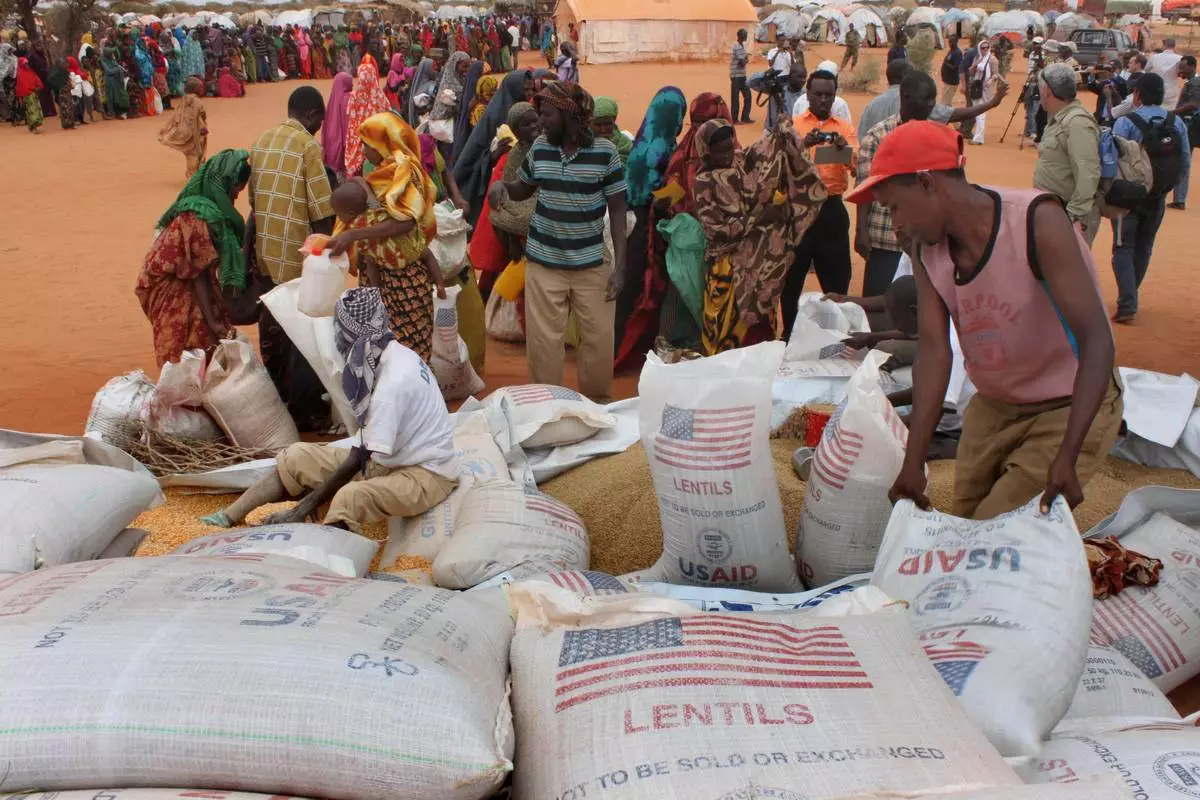
FILE - Workers distribute food aid from the World Food Program at a refugee camp in Dolo, Somalia on July 18. 2012. (AP Photo/Jason Straziuso, file)

FILE - Workers distribute food aid from the World Food Program at a refugee camp in Dolo, Somalia on July 18. 2012. (AP Photo/Jason Straziuso, file)

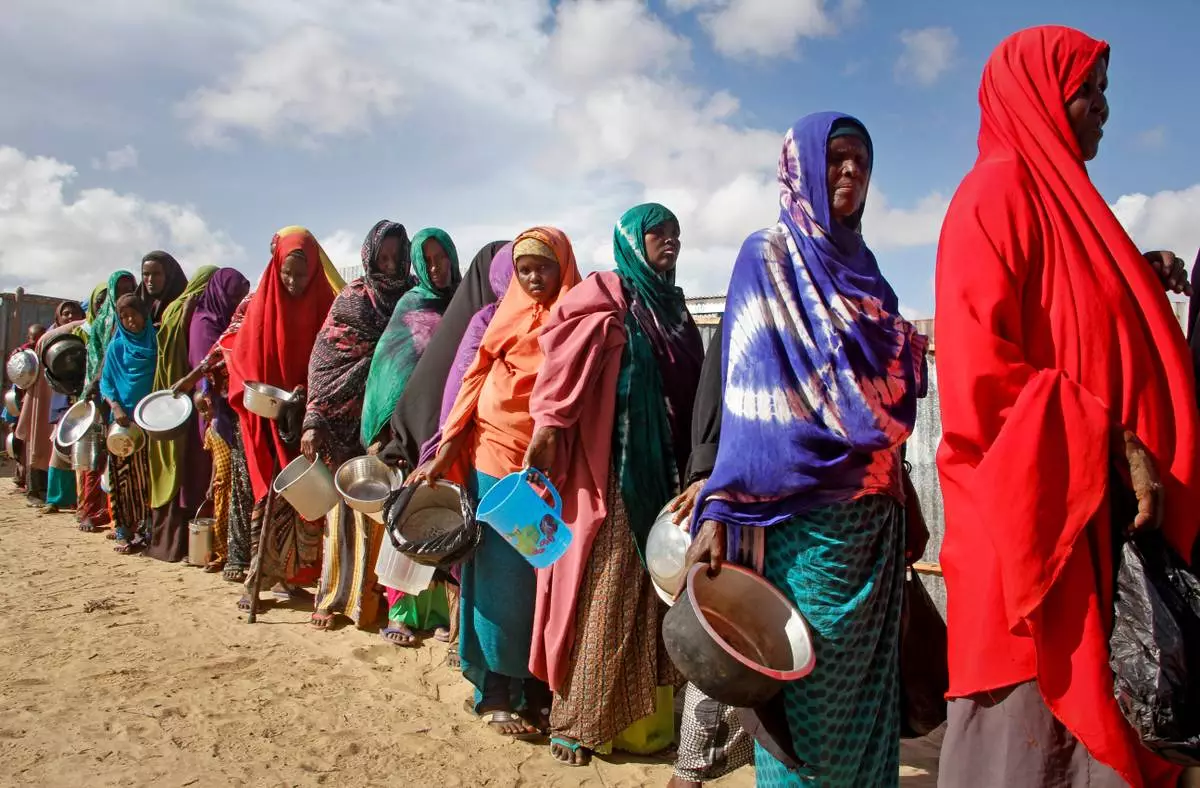
FILE - In this May 18, 2019 file photo, newly-arrived women who fled drought line up to receive food distributed by local volunteers at a camp for displaced persons in the Daynile neighborhood on the outskirts of the Somalian capital Mogadishu. (AP Photo/Farah Abdi Warsameh, file)

FILE - In this May 18, 2019 file photo, newly-arrived women who fled drought line up to receive food distributed by local volunteers at a camp for displaced persons in the Daynile neighborhood on the outskirts of the Somalian capital Mogadishu. (AP Photo/Farah Abdi Warsameh, file)

Recommended Articles