A warehouse containing medications for dialysis and nephrology treatments in Venezuela was among the targets of the U.S. military strikes on January 3, with medical supplies seen scattered around the facility.
Footage released on Tuesday by TeleSUR, a television network in Latin America headquartered in Venezuela, showed bullet holes on the wall and damaged equipment in the warehouse at the port of La Guaira, located in the state of the same name, in the north-central part of the country.
The Venezuelan Institute of Social Security (IVSS), part of the Ministry of Health, stated in a press release that the military attacks against health programs deliberately sought to limit the availability of supplies for the care of more than 9,000 kidney patients.
It warned that the "criminal action" by the Donald Trump administration violates the United Nations Charter and the right to health.
"Faced with the cowardly and terrorist attacks of U.S. imperialism, the Bolivarian Government also reports that it remains steadfast in its struggle, guaranteeing proper care for patients with kidney disease," it stated.
The state of La Guaira was one of the regions most affected by the bombings carried out by the United States in the early hours of January 3, during which President Nicolas Maduro and his wife were "captured and taken out of Venezuela," according to Trump on the social network Truth Social.
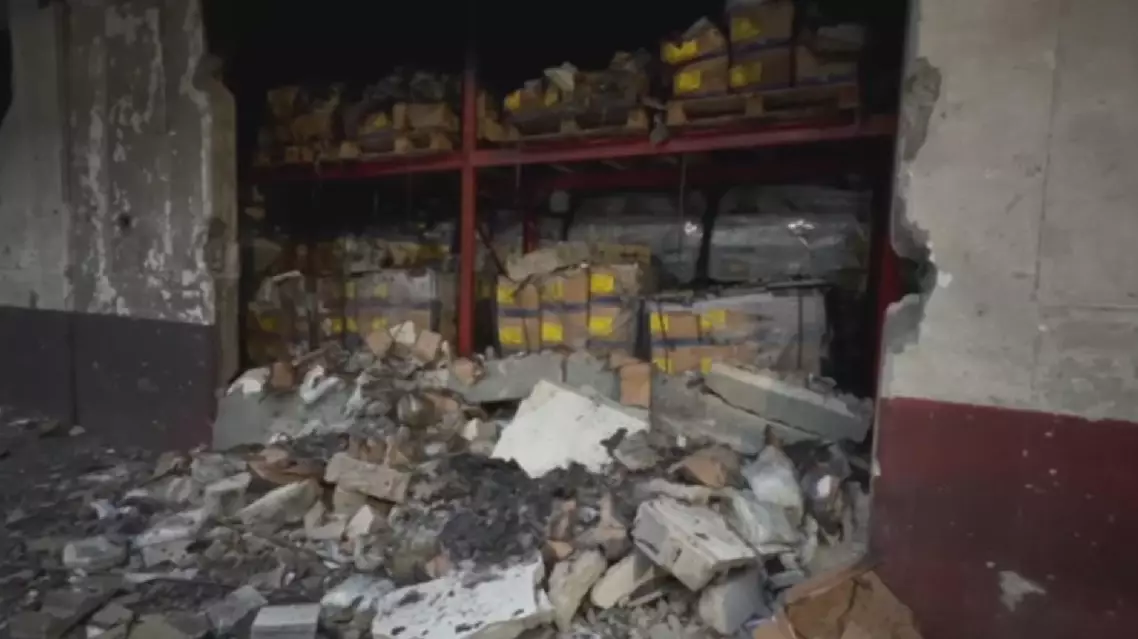
Venezuela's La Guaira medication warehouse among targets bombed in U.S. strikes
The Chinese naval hospital ship, Silk Road Ark, carried out a medical rescue drill in Atlantic waters during its Mission Harmony 2025, testing its capability to provide medical support during long-distance deployments.
The drill marked the vessel's first overseas medical-support exercise in unfamiliar waters in 2026, designed to simulate real-world emergency response scenarios far from home ports.
It brought together the hospital ship, a sea-based medical facility and shipborne helicopters in a coordinated rescue operation.
The exercise was conducted against a simulated backdrop of a commercial vessel in distress on the high seas with multiple casualties. After receiving the emergency signals, a shipborne helicopter immediately took off under an aerial evacuation plan, transferring simulated injured personnel to the triage area for rapid assessment and emergency treatment.
As part of the exercise, medical teams practiced a time-sensitive rescue approach, combining casualty transfer, triage and treatment to ensure prompt and accurate assessment of injuries under operational conditions.
"We followed the principle of providing treatment while transferring and carrying out triage and rescuing, ensuring that casualties are correctly assessed at the earliest time possible. If a patient is in a critical condition, we must carry out necessary emergency treatment in the triage area. Once vital signs are relatively stable, the patient is then transferred to an appropriate treatment unit," said Jiang Yingbo, a member of the Mission Harmony 2025.
Severely injured patients were transferred to intensive care units for further observation and treatment after surgery. A medical expert group then conducted timely consultations to formulate targeted treatment plans.
Under complex sea conditions in distant waters, the drill covered multiple training modules including maritime evacuation, triage, emergency treatment and surgery, strengthening the military medical ship's integrated emergency medical response, and enhancing the navy's far-sea medical support capability, according to the authorities.
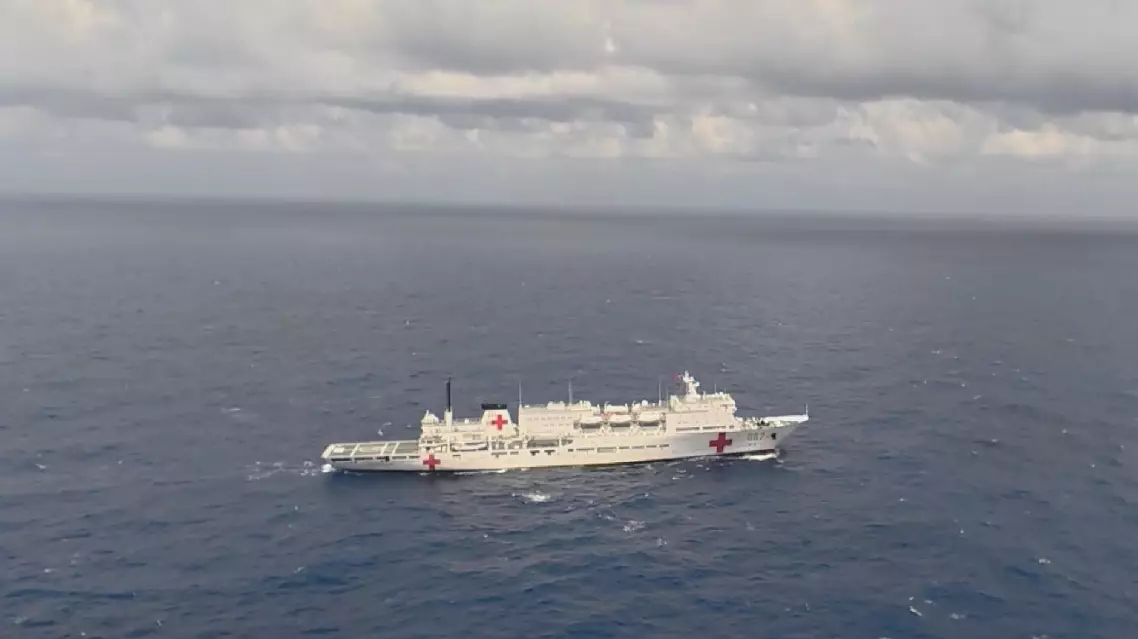
Chinese navy hospital ship drills medical rescue in Atlantic waters